
Written by: Dillon Kivo
The Enemy You Cannot See
David Rutherford has spent the last twenty years studying a single question. What enables human beings to succeed or fail under pressure?
The answer, in his experience, is not grit. It is not a mindset. It is something quieter and more dangerous.
He calls it the Negative Insurgency.
“It is the unseen external and internal pain that ignites fear, which shatters self-confidence,” Rutherford said. And he believes it is the enemy every high performer eventually has to face.
A Career Built on Pressure
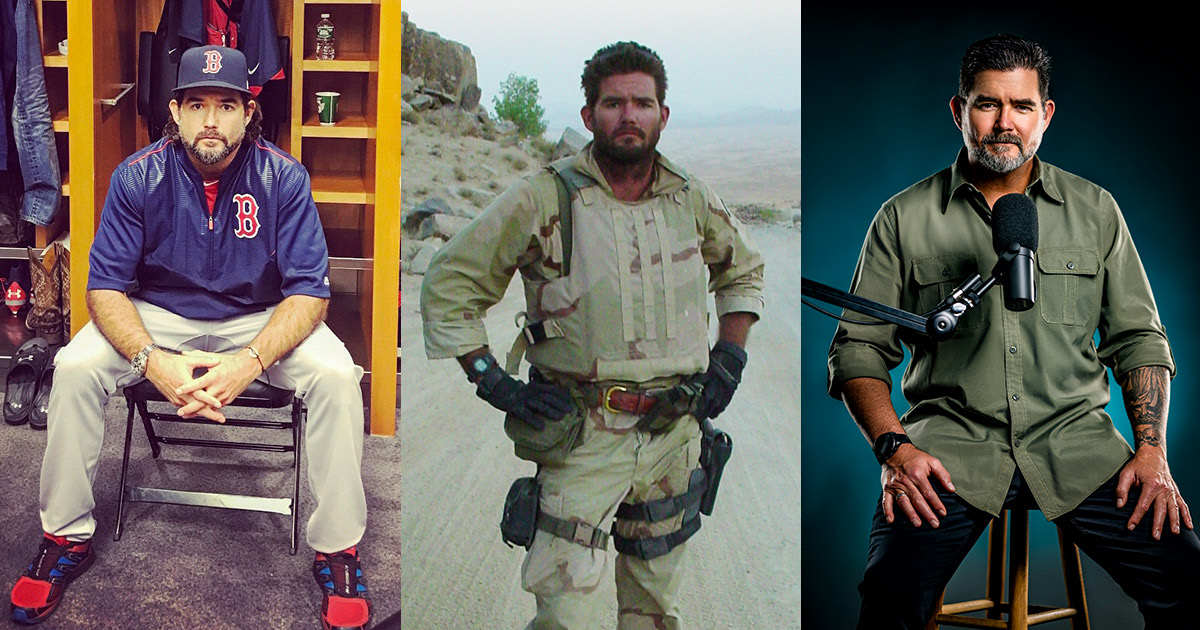
Rutherford served eight years in Naval Special Warfare as a SEAL operator, combat medic, and instructor, including a combat deployment to Afghanistan in 2002. After leaving the Navy, he spent four years as a CIA contractor running operations across Afghanistan and Pakistan during the height of the post-9/11 era.
In 2006, while still working overseas, he founded Froglogic Concepts, a motivational performance training company built around principles he had learned the hard way. Today, he speaks to more than five thousand people a year and averages between 100 and 125 events annually. He has coached the Boston Red Sox and Oregon State’s 2018 College World Series team.
He currently serves as a Vice President within the Advisor Consulting Group at a private asset management firm with more than $300 billion in assets under management, where he speaks to and coaches thousands of financial advisors each year.
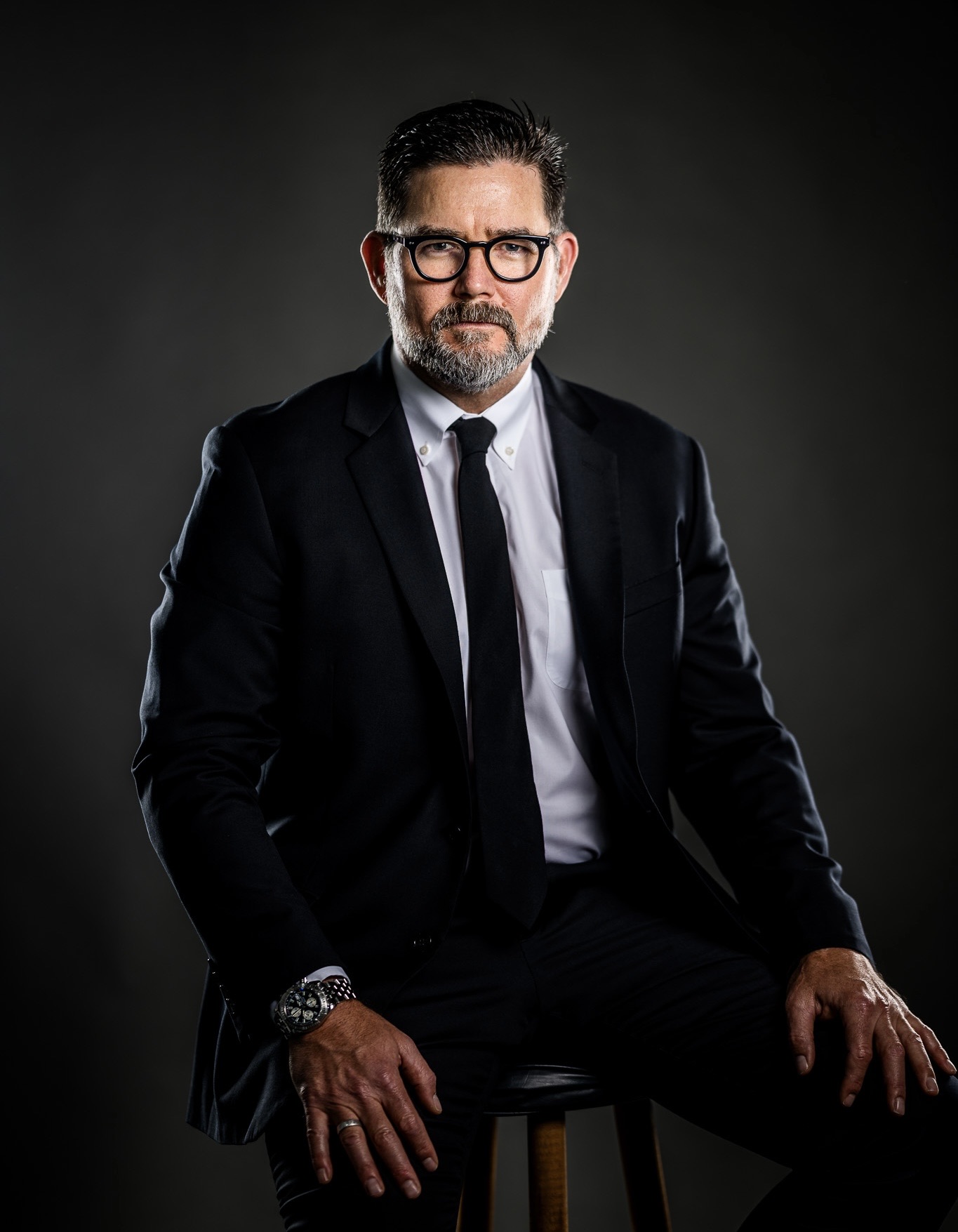
Photo Courtesy: David Rutherford
Froglogic did not start as a polished methodology. It started as something more practical. A way to keep moving.
The Beginning of a Method
“For the first three years after I left the teams, I was pretty much incapable of even inspiring myself,” Rutherford said.
The tools that had worked overseas no longer applied at home. What replaced them, eventually, was a mission. Rutherford had seen what hopelessness looked like for children growing up inside collapsed systems abroad. He wanted to do the opposite for kids in North America.
“I figured if I have a mission to support kids, I can at least help kids,” he said. “I almost can wear the armor where kids won’t be able to see me in my own pain.”
Between 2006 and 2008, he spoke to roughly seven thousand young people across the United States and Canada. The structure he built for them, distilled from twenty-six lessons he pulled out of SEAL training and condensed into eight core missions, became the foundation of Froglogic.
The lessons all came from the Teams. But Rutherford is careful about how he frames that. Froglogic is not about turning civilians into operators. It is about translating what the SEAL Teams had already solved into something anyone can use.
What the Teams Solve First
The first thing was fear.
Inside Special Warfare, fear is suppressed through what Rutherford describes as stress inoculation. Operators learn to compartmentalize because they are surrounded by teammates whose competence repairs them in real time.
“If I’m faulty one day, I’ll just look to my right, my left, they’ll repair it in real time,” he said.
That support structure disappeared when he moved into agency work. So did his framework for managing what he felt.
“At the agency, I’m with one other dude in these incredibly dangerous situations,” Rutherford said. “And I felt a fear like I’d never felt before.”
After he left the CIA in 2012, one of his first events in the financial services industry brought him into a conversation with a major advisor from Philadelphia that ignited the next evolution of his training concepts. The advisor asked him directly. Were you afraid, and why?
“I didn’t know how to answer it,” he said. “I didn’t have the explanation.”
He spent the next two years studying it. Where fear comes from. How it gets entrenched through influence, education, and training. How it lingers even in people who appear to have moved past it.
That investigation became the first stage of the Froglogic methodology. Embrace fear.
Self-Confidence as a Daily Practice
The second stage is forging self-confidence. Rutherford treats it not as a feeling, but as a discipline.
Most people, he argues, do not pay attention to their self-confidence until it is already gone.
“Self-confidence is the thing that’s under attack every day,” he said. “How many rejections do you get from intimacy rejections, from the group you want to be a part of, from professional or athletic success? We’re always facing these rejections, which essentially tears your self-confidence down.”
His work with clients begins by identifying exactly what they are afraid of, then rebuilding their self-confidence with enough sophistication that the fear cannot punch through.
He pays particular attention to ages ten through fourteen, the years when, in his view, identity solidifies and self-consciousness first appears. It is also, he believes, when most people quietly absorb the fears they will carry for the rest of their lives.
His first book, Navy SEAL Training: Self-Confidence, distills this framework into eight missions drawn directly from his time in the Teams.
The Team Life
The third stage is what Rutherford calls living the Team Life. Surrounding yourself with people whose strength reinforces yours when it falters. He learned the idea in Special Warfare, but he believes it applies everywhere.
It is the principle behind the way he coaches championship teams and the way he advises executives. Performance is not solely individual. Resilience is built through proximity to people who hold a standard.
Purpose, Defined and Practiced
The fourth stage is the hardest. Living with purpose.
“I ask this question more than any other question year-round,” Rutherford said. The most common answers are taking care of family, leaving a legacy, serving God, or, increasingly among younger people, not knowing.
What he has noticed is that even people who can name a purpose rarely have a system for executing it.
He sees the pattern most clearly in his work with financial advisors.
“I’ll go to a guy that’s got six billion dollars under management,” he said. “They’ve spent hundreds of thousands of dollars on their processes for client acquisition, onboarding, communications, software. Tell me how you integrate it specifically day in and day out with your life’s purpose, and no one can do that.”
The Negative Insurgency, in his framing, exploits that gap. It does not need to defeat anyone in a single moment. It simply waits for the absence of a practice.
The Insurgency Hits Everyone
The same pattern shows up in Fortune 500 executives, professional athletes, and Navy SEAL candidates. Rutherford believes it explains why so many high performers eventually struggle even after extraordinary success.
“I’ve seen people have monster, monster accomplishments,” he said. “And then quickly afterwards, there’s questions emerging.”
The accomplishment does not silence the insurgency. Without a daily practice for managing fear and rebuilding self-confidence, the insurgency takes ground.
The dynamic shows up in other domains, too. Rutherford spends a significant portion of his speaking events with financial advisors discussing the disruption artificial intelligence is bringing to white-collar work. At a recent conference of sixty advisors in Dallas, he asked how many had committed twenty hours of focused training with a real instructor on the AI tools transforming their industry.
The honest answer, he said, was almost always zero.
“Nobody, not a single person,” he said.
The fear was visible. The plan to address it was not.
Speaking Publicly About the Method
Last year, Rutherford appeared on The Shawn Ryan Show for an extended conversation about his career, his faith, and the experiences that shaped Froglogic. The interview, hosted by his close friend and former Navy SEAL Shawn Ryan, was the first time Rutherford spoke publicly and in depth about the events that led him to build the methodology.

David Rutherford on The Shawn Ryan Show
The episode resonated with viewers who recognized the tension he described between identity in uniform and identity afterward. It also brought new attention to Froglogic at a moment when Rutherford was already expanding the platform.
A Platform Built on a Pattern
This pattern, fear without a framework, is what Froglogic is built to interrupt. It is also what Rutherford is now building into a digital training platform under the Froglogic Institute.
The new Froglogic app will be ready by midsummer. It offers a comprehensive motivational and performance coaching curriculum across all four stages of the methodology. Embrace fear. Forge self-confidence. Live the Team Life. Live with purpose. The platform features Rutherford’s core curriculum alongside contributions from other elite performers.
The goal, Rutherford said, is to give people a focal place to evaluate pain.
“Pain is at the core of all of this,” he said. “When you can recalculate that subjective perception of pain into something that is motivational in nature, you’re able to temper the magnitude of suffering in a way where it doesn’t become comprehensively distracting.”
The methodology is sequential. Purpose follows team. Team follows confidence. Confidence follows the willingness to look directly at fear. Skipping a step, in Rutherford’s experience, is how people end up successful and miserable at the same time.
What Service Returns
After more than two decades of teaching, Rutherford has reached a conclusion he holds quietly but firmly.
The Negative Insurgency does not surrender. It recedes only when something larger takes its place.
“The regenerative nature of serving others is what enabled me to put my own demons at bay,” he said.
It is the answer that has carried him through. It is also, he believes, the answer most people are still waiting to discover.
For more on David Rutherford, visit teamfroglogic.com, explore his upcoming digital curriculum at the Froglogic Institute, or listen to The David Rutherford Show on the Clay Travis and Buck Sexton Network.