
A Book Needs More Than a Good Idea
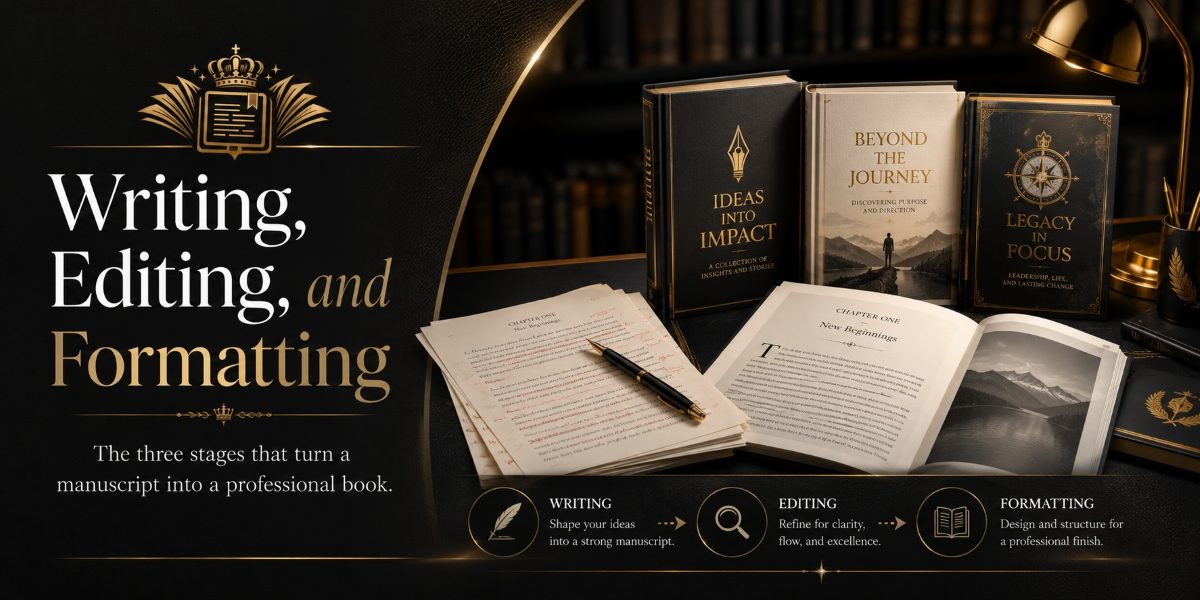
Every successful book begins with an idea, but an idea alone is not enough to create a polished reading experience. A manuscript must be shaped, refined, organized, and prepared before it can stand confidently in front of readers. For many authors, the journey from first draft to finished book involves three essential stages: writing, editing, and formatting.
Royal Books Publisher presents these services as part of its wider publishing support, helping authors move from raw concepts to professionally prepared books ready for print and digital release.
Writing That Gives Structure to the Story
Writing is the foundation of every book. Whether an author is creating fiction, nonfiction, a memoir, a children’s story, or a business book, the manuscript needs clear direction. Strong writing gives shape to the author’s message and helps readers stay connected from the opening page to the final chapter.
Many writers have meaningful ideas but struggle with structure, tone, pacing, or chapter development. Professional book writing services can help transform scattered notes, rough drafts, or early concepts into a complete manuscript. The goal is not just to fill pages. The goal is to create a book that feels purposeful, engaging, and true to the author’s voice.
Good writing also understands the reader. A children’s book needs simplicity and imagination. A memoir needs honesty and emotional rhythm. A business book needs clarity and authority. A novel needs movement, tension, and believable characters. Each genre requires a different approach, and that is why the writing stage must be handled with care.
Editing That Makes the Manuscript Stronger
Once the manuscript is written, editing becomes the stage where the book begins to sharpen. A first draft may carry strong ideas, but it often needs refinement before it is ready for publication. Editing improves clarity, flow, grammar, structure, tone, and consistency.
Professional editing is not only about correcting mistakes. It is about improving the reader’s experience. A good editor looks at whether the chapters move smoothly, whether the language feels clear, whether the message stays consistent, and whether the book holds attention.
The company’s book editing support is designed to refine structure, clarity, tone, accuracy, and readability. This layered approach matters because every manuscript needs more than one level of review before it reaches the market.
For authors, editing can also protect credibility. Readers quickly notice errors, awkward phrasing, repeated ideas, or uneven pacing. A carefully edited book feels more professional and allows the message or story to stand without distraction.
Formatting That Creates a Professional Reading Experience
Formatting is often overlooked, but it plays a major role in how a book feels. Even a well-written and well-edited manuscript can look unfinished if the formatting is poor. Margins, spacing, chapter headings, page numbers, fonts, paragraph alignment, and interior layout all affect readability.
A professionally formatted book gives readers a smooth experience across print and digital platforms. In print, the pages should look clean and balanced. In eBook format, the text should adapt properly to different devices without broken spacing or awkward layout issues.
Formatting also helps meet publishing platform requirements. A book prepared for paperback, hardcover, and eBook release must follow technical standards so it can be uploaded, printed, and distributed correctly. With professional book publishing services, authors can prepare their manuscripts for print and digital release with a more polished presentation.
Why These Three Stages Work Together
Writing, editing, and formatting are not separate pieces of the publishing journey. They are connected. Writing builds the manuscript. Editing strengthens it. Formatting prepares it for readers. If one stage is rushed or ignored, the final book may not reach its full potential.
A strong manuscript needs a clear voice. A clear voice needs professional refinement. A refined manuscript needs polished presentation. When all three stages work together, the book feels complete, credible, and ready for the marketplace.
Preparing a Book Readers Can Trust
In today’s publishing world, readers have many choices. A book must earn attention quickly and keep that attention through quality. Authors who invest in writing, editing, and formatting give their work a stronger chance to be taken seriously.
Professional book marketing support can also help a polished book reach the right readers after publication. A finished book should not feel rushed. It should feel intentional. It should reflect the author’s vision while meeting professional standards. With the right support, a manuscript can move beyond a rough draft and become a book that is ready to be read, shared, and remembered.