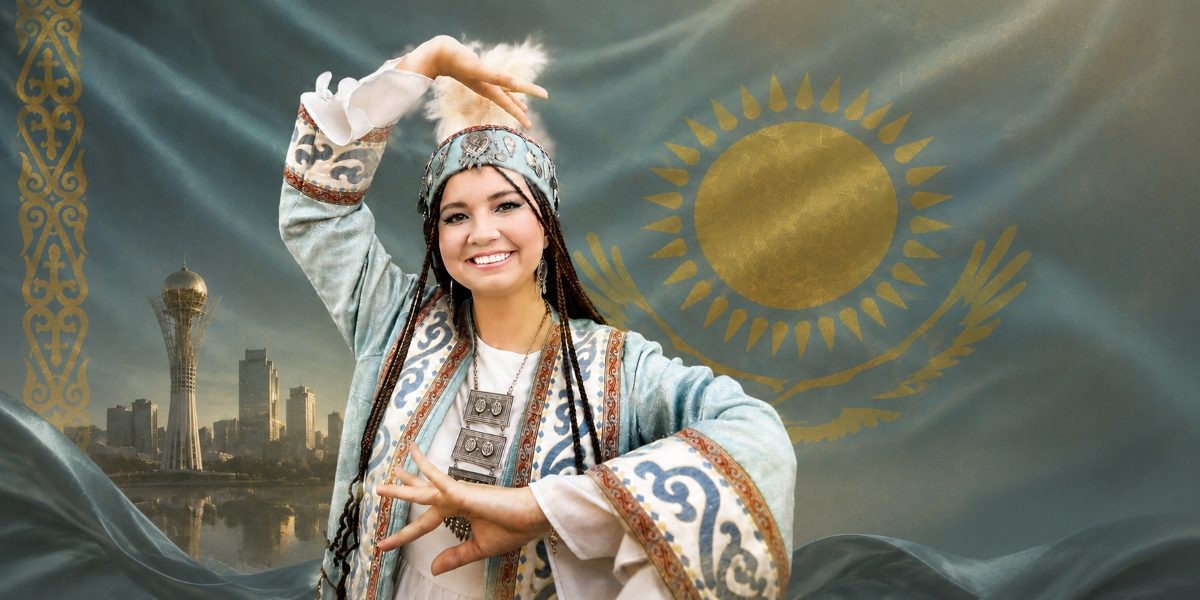

For most school students, an academic competition ends with a medal or, at best, a one-week summer camp. Rimma Khaziakhmedova thought the rewards should look different. After eleven years working in education, she had watched thousands of capable students compete for prizes that rarely translated into anything material. She built Tigers Olympiad to change that pattern.
The competition is one of the first of its kind to originate in Kazakhstan, and it has grown into an international event with participants from 25 countries.
An Idea Shaped by Eleven Years in Education
Rimma spent more than a decade working with students, schools, and education partners before launching the competition. That experience shaped her view of what a competition should actually deliver. A medal is a moment. A scholarship, an admissions referral, or a documented international result is something a student can carry into the next stage of their education.
She built Tigers Olympiad around that distinction. From the beginning, the goal was to give as many talented students as possible something tangible to attach to their future university applications, not a recognition that fades after the awards ceremony.
How the Competition Grew Across 25 Countries
Once the concept was clear, Rimma set out to make it international. She searched for organizations in other countries doing similar work and invited them into the project. She also reached out to schools, universities, and educational partners to secure real opportunities for participants. Each conversation came back to the same question: what could that partner offer a winning student that the student would actually use?
That outreach produced the structure on which the competition operates today. Schools gain access to talented candidates from regions they do not typically recruit from. Partner organizations find emerging students worth investing in. Families see concrete outcomes from their child’s preparation. Students walk away with a record they can use.
The arrangement with a British school is one example of how the model works in practice. The school has agreed to provide two full scholarships to the strongest mathematics participants, fully merit-based and tied to competition results. The students who win them will have the chance to complete a British high school diploma, a route into UK universities that would otherwise be cost-prohibitive for many families. Rimma has said her ambition is to multiply these arrangements over time, bringing more schools and universities into the network so that the number of students gaining tangible opportunities expands with each cycle.
What the Next Round of the Competition Looks Like
The competition continues to expand, with new partners joining each cycle. Next year’s mathematics final round will be held in Singapore, drawing 500 finalists from a pool of 15,000 participants who first qualify through testing in their home countries. The scale of the math track reflects how far the network has grown since the early days.
The art track holds its finals across three additional locations. Cape Town, South Africa, hosts its round in September. Epsom, England, follows in April. Athens, Greece, holds its round in August. Each location brings in regional partners, schools, and judges, giving art participants the same kind of international exposure the math track offers.
What Drives the Work
For Rimma, the measure of success has never been the size of the participant pool alone. What matters is how many of those participants leave with something material, whether that is a scholarship, an admissions conversation, a university referral, or a portfolio entry that opens a door later.
She often returns to a line from Nelson Mandela: “Education is the most powerful weapon which you can use to change the world.” Her interpretation is practical. If education is going to change anything, the infrastructure around it has to give talented students a real path forward, not just a certificate.
That is the project she has been building. Tigers Olympiad is the most concrete expression of it so far, and Rimma has said the work is only beginning.
Information about the competition, registration, and partner institutions is available on the Tigers Olympiad website. Rimma also shares updates and partner news on her education-focused Instagram, where she discusses the olympiad alongside her broader work with students.