


DREAME AURORA debuted in Silicon Valley on April 29 with the launch event “Connect NEXT,” marking the formal establishment of its global presence. Apple co-founder Steve Wozniak appeared at the event and joined DREAME AURORA leadership in a discussion on the next decade of technology development. The company positions itself as a systematic innovator entering a defining window for next-generation devices.
The company’s roadmap follows a tiered product strategy. The DREAME AURORA LUX targets the high end of the market through collaboration with luxury design teams and integrates traditional craftsmanship and heritage techniques with current performance hardware. The DREAME AURORA NEX serves as the technological showcase, with proprietary imaging algorithms and a modular ecosystem that supports full-scenario use. The standard Flagship Series rounds out the portfolio and combines imaging, connectivity, and AI features into a balanced experience for high-end users. The structure captures value across segments while maintaining the company’s premium position.
The DREAME AURORA series integrates the brand’s work in imaging, connectivity, and industrial design into a balanced and functional experience. Rather than focusing on hardware specification benchmarks, the development approach prioritizes the synergy between core modules and aims to deliver consistency across user scenarios. This reflects a transition toward systematic integration, so technical capabilities fit into daily use and improve overall device stability for premium users.
Over the next three years, DREAME AURORA plans to expand its work across imaging, connectivity, and systems. The company plans to scale headcount and keep R&D personnel at a high proportion of total staff. In imaging, the company has assembled a core team whose members have an average of more than 10 years of industry experience. Professional photographers participate throughout testing and help fine-tune real-world results from the user perspective.
On the commercial side, DREAME AURORA targets the premiumization trend in the smartphone market. The brand addresses market homogenization, limited professional capabilities, and a lack of premium design differentiation through this tiered strategy. The company plans to open flagship stores globally alongside official online stores. It can also leverage the existing DREAME global retail ecosystem to establish dedicated phone zones, which enable faster market entry without building retail infrastructure from scratch.

In imaging, DREAME AURORA has moved beyond hardware configuration selection into deeper integration of algorithms in development. Key technologies, including full-focal-length 200MP, full-focal-length LOFIC, and 3D spatial-modeling photos, approach the final stage of commercialization, with multiple imaging technologies in active development. The company continues to refine the modular architecture following preliminary validation. In connectivity, the company has built a solution that spans 360-degree wrapping antennas, communication optimization algorithms, full-time signal engines, and weak-signal acceleration engines. The team conducted testing under demanding conditions in remote areas, international waters, and tunnels and collected substantial raw signaling data.
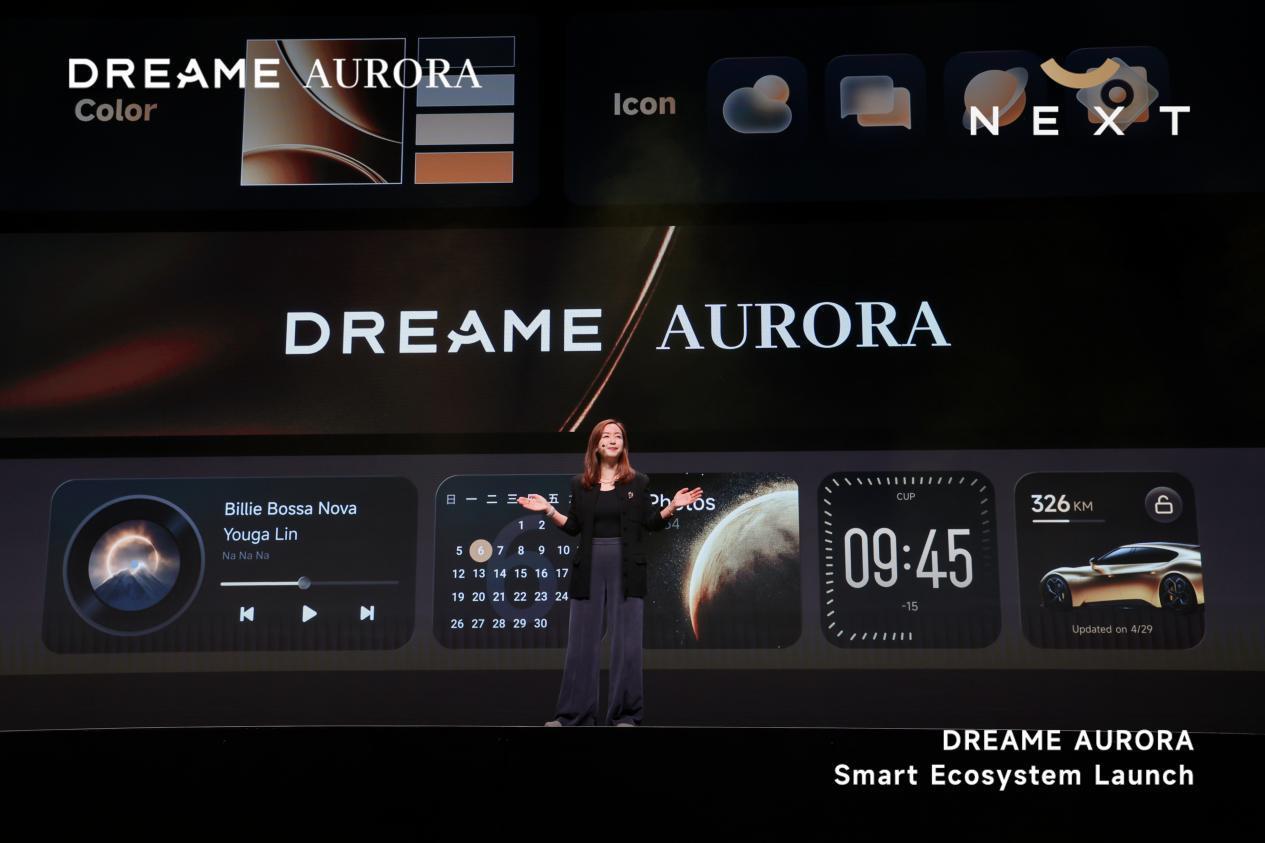
The Smart OS embeds capabilities from the kernel through the framework to the application layer. The system pivots away from the human-adapts-to-device model and supports proactive service delivery alongside cross-application coordination. By anchoring its global expansion in foundational innovation, systematic resource allocation, verified supply chain partnerships, and a full-stack technology approach that spans chips to systems, DREAME AURORA aims to convert sustained R&D commitment into a durable market position. The company focuses on solving user pain points through technological development and on capturing the premium window opened by industry-wide premiumization. Looking ahead, it plans to expand human perception boundaries and drive intelligent terminals to evolve into proactive partners.