
The Urban Land Institute gave its highest New York honor to the CEO of RXR. The recognition reflects something larger than one company’s portfolio — it reflects a model for how the city builds.
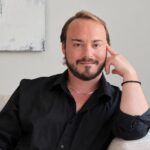
On April 29, 2026, the Urban Land Institute New York held its tenth annual Awards for Excellence in Development at the Ziegfeld Ballroom in Midtown Manhattan. The evening recognized transformative real estate projects and leaders across New York State, but the night’s signature moment was the presentation of the 2026 Visionary Leadership in Land Use Award to Scott Rechler, CEO of RXR — one of the largest commercial real estate companies in the New York metropolitan area.
The award is not given annually. It is presented when ULI New York’s leadership identifies a figure whose body of work represents something more than deal-making — someone whose approach to development has materially shaped the city itself. In Rechler’s case, the recognition arrives after more than a decade of large-scale projects that have redefined how New York thinks about the relationship between private capital and public infrastructure.
Who Scott Rechler Is
Scott Rechler has been a central figure in New York real estate long enough that his name appears in the backgrounds of some of the most consequential development conversations in the region’s recent history. He is the CEO and co-chairman of RXR, the firm he has built into a platform with a portfolio spanning office, mixed-use, and transit-oriented development projects across Manhattan, the outer boroughs, Long Island, and the broader tri-state area.
RXR’s footprint includes marquee Manhattan office towers, adaptive reuse projects, and developments built around transit infrastructure — a deliberate strategy that reflects Rechler’s conviction that density and connectivity are the engines of long-term urban value. The firm has been involved in some of the most high-profile development conversations of the post-pandemic period, including discussions around reimagining underutilized commercial real estate in the face of shifting office demand.
Beyond the portfolio, Rechler has served in public roles that give him a vantage point few private developers share. He served as vice chairman of the Port Authority of New York and New Jersey, the bi-state agency responsible for the region’s airports, bridges, tunnels, and the PATH transit system — a role that placed him directly inside the infrastructure decision-making apparatus of the most complex transportation network in the country. That experience has informed his approach to development in ways that separate RXR’s projects from conventional commercial real estate.
The Public-Private Model
The award citation specifically recognizes Rechler’s work in leveraging public-private partnerships to advance large-scale development. That framing is not ceremonial. It describes a specific operating model that has defined RXR’s most significant projects.
Public-private development in New York is inherently complicated. It involves navigating multiple layers of city, state, and sometimes federal government; managing community input processes that can span years; aligning the financial logic of private investment with the timeline and accountability requirements of public infrastructure; and delivering projects that serve both the commercial interests of private investors and the civic interests of the communities they reshape.
The firms that do this well — and do it repeatedly — are genuinely rare. Most developers either avoid the complexity entirely and build where the permitting is straightforward, or engage with government in an adversarial mode that produces delays, litigation, and projects that satisfy neither party. Rechler and RXR have built a reputation for a different approach: one that treats public-sector partners as genuine co-builders rather than obstacles to manage or rubber stamps to obtain.
That approach has produced results that are visible in the built environment. Transit-oriented developments that reduce car dependency in neighborhoods where it matters. Mixed-use projects that bring residential density to commercial corridors that needed activation. Adaptive reuse of office buildings that were otherwise destined for vacancy in a market where remote work has permanently altered demand.
The Moment the Award Arrives In
The timing of the award has its own context. New York commercial real estate in 2026 is navigating one of the most complex periods in its recent history. Office demand has stabilized but not returned to pre-pandemic levels. Residential supply remains critically constrained while affordability pressure continues to build. The state legislature is debating the Illinois BUILD housing plan and a Bears megaprojects bill that could unlock billions in new development across transit corridors. And Mayor Zohran Mamdani’s administration is actively reconsidering the tax incentive structures that have historically made large commercial developments financially viable.
Into that environment, ULI New York’s choice to honor Rechler’s public-private model carries a forward-looking dimension. The award is not simply a recognition of what has been built. It is, implicitly, an argument for how the city should continue to build — through genuine partnership between private capital and public purpose, rather than through either unchecked development or restrictive opposition to growth.
The developers in the room at the Ziegfeld Ballroom on April 29 were not simply celebrating a peer’s career milestone. They were engaging with a question that will define New York real estate for the next decade: in a city with enormous housing needs, constrained public budgets, and a new administration that is skeptical of the incentive structures that have historically underwritten large projects, what is the model that actually works?
What RXR Represents
RXR is not the largest real estate firm in New York. By some measures of portfolio scale, it sits behind the Blackstone, Brookfield, and Related Companies of the world. What it represents is something different: a firm that has built its identity around a specific theory of urban development — that the projects worth doing are the ones that connect to the larger systems of the city, that align with where transit infrastructure is going, and that require genuine engagement with public-sector partners to execute.
That theory has been tested repeatedly in New York’s regulatory and political environment, and it has produced a track record that ULI New York has now formally recognized as worthy of the organization’s highest honor.
For other developers watching from the Ziegfeld Ballroom, the recognition carries a practical message alongside the ceremonial one: the approach that wins recognition in this city, and that builds durable long-term value in New York real estate, is the one that treats public partnership as a feature rather than a burden.
The 2026 Visionary Leadership in Land Use Award went to Scott Rechler. The city it recognizes is still being built.