
By: Thomas Caldwell
Most sales teams are busy. Busy sending messages, jumping on calls, following scripts, tracking metrics.
And still missing the point.
According to Dennis Cummins, the issue is not effort. It is an approach. Teams are doing more, but connecting less. And in today’s environment, that gap is everything.
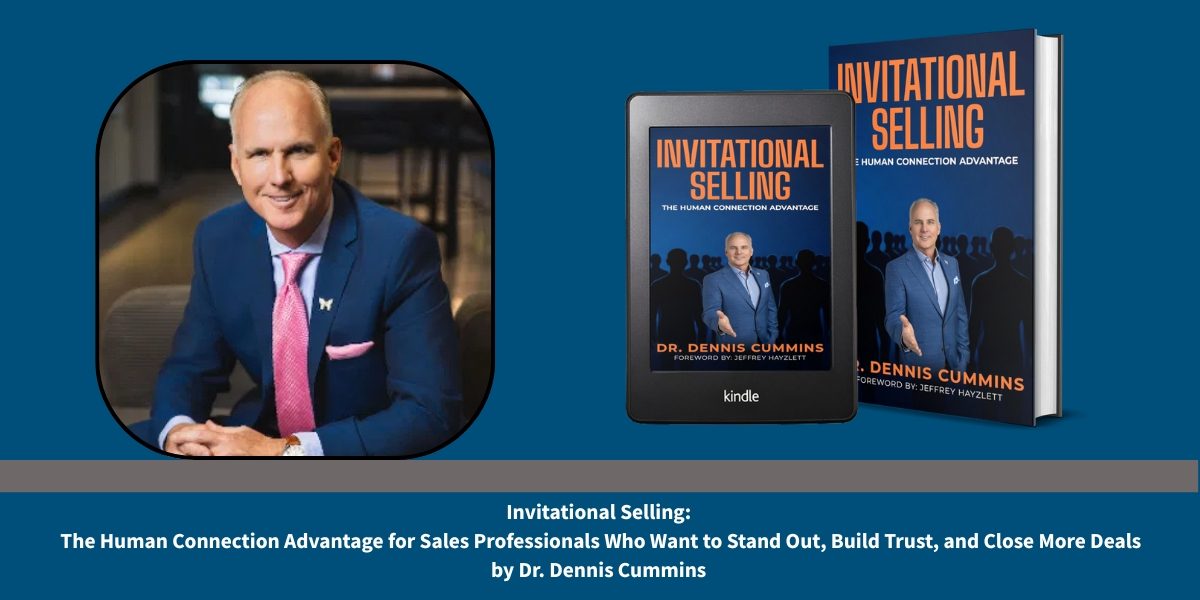
His book Invitational Selling: The Human Connection Advantage challenges something many organizations still cling to. The idea that more activity equals more results.
It does not. Not anymore.
The Real Problem Inside Sales Teams
Dennis does not sugarcoat it. Most organizations are over-relying on scripts and under-developing people.
Scripts create consistency, sure. But they also flatten personality. They make conversations sound rehearsed. Predictable. Easy to ignore.
And prospects can feel that immediately.
Another mistake shows up in how teams communicate value. They lead with what they do instead of why it matters. Which means the conversation starts centered on the company rather than the client.
That disconnect is subtle, but it kills engagement.
Then there is the bigger issue. Communication is treated like a soft skill. Something nice to have, not something that drives revenue.
Dennis flips that completely.
The way your team communicates builds or breaks trust. And trust is not just a feel-good concept. It directly affects whether deals move forward or stall.
A Framework That Actually Reflects Reality
Instead of pushing harder, Dennis introduces a different way to think about sales conversations.
Connect. Convey. Convert.
Simple on the surface. But most teams skip the first step entirely.
Connection is not small talk. It is not rapport-building tricks. It is whether the other person feels understood. If that does not happen, nothing else lands.
Then comes Convey. This is where most salespeople think they are strong. Explaining, presenting, and showing value.
But Dennis points out something most people miss. Information is not the same as meaning.
You can explain your product seamlessly and still lose the deal if the other person does not feel like it fits their situation.
Only after those two pieces are in place does Convert happen. And even then, it is not about pushing. It is about making the next step feel natural.
Companies that actually apply this see something interesting. They do not need better closing tactics. Because the decision is already aligned by the time they get there.
What Happens When You Get It Right
When organizations shift how they communicate, the results are not subtle.
Close rates improve. Not because of pressure, but because resistance drops.
Sales cycles get shorter. Not because teams are rushing, but because they are addressing the real concerns earlier.
And maybe the most overlooked impact. Retention improves.
Because the relationship starts differently.
Clients who feel understood from the beginning do not just buy. They stay. They trust. They refer.
Dennis makes it clear. This is not about selling more. It is about selling better. And that difference compounds over time.
Why Leadership Has to Go First
Many companies try to fix sales problems with training.
Dennis argues that it does not work unless leadership changes first.
If leaders are still measuring activity over impact, nothing shifts. You cannot say you care about relationships while rewarding volume above everything else.
Teams pay attention to what actually gets recognized.
There is also modeling. If leadership communicates in a transactional way, the team will mirror it. Culture is not built through training sessions. It is built through behavior.
And then there is consistency. Communication cannot be treated as a one-time improvement. It has to become a core skill that gets developed over time.
This is not a tweak. It is a shift in how the entire organization thinks about conversations.
The Hidden Advantage Most Teams Ignore
One of the more interesting ideas Dennis brings up is how automation has changed the game.
Everyone has access to the same tools now. The same AI. The same templates.
Which means most outreach sounds the same.
That is not a disadvantage. It is an opportunity.
Because while anyone can generate words, very few people create a real connection.
That gap is where attention lives now.
When someone feels like you actually understand their situation, not just their industry or job title, they respond differently.
Not because the message was clever. But because it felt real.
Small Shifts That Change Everything
Dennis does not push for massive overhauls. He focuses on small changes that shift the entire dynamic of a conversation.
Stop trying to be impressive. Start trying to be interested.
That one change alone forces a different kind of attention. Better questions. Better listening. Less pressure.
Another shift is slowing down.
Most salespeople respond too quickly. They are thinking about what to say next instead of actually processing what is being said.
When you slow down, you catch things others miss. Hesitation. Uncertainty. Curiosity.
That is where real conversations happen.
And then there is language.
Instead of telling someone what you recommend, invite them into the decision. Let them feel ownership.
That changes how people engage. And more importantly, how they follow through.
When Things Go Wrong
Not every interaction goes perfectly. Dennis is clear about that.
What matters is how you recover.
Most people try to move past a mistake. Ignore it. Push forward.
That usually makes things worse.
A simple acknowledgment can reset the entire tone. Admitting you came on too strong or missed something shows awareness. And that builds credibility fast.
Then it is about shifting the focus back to the client. Asking better questions. Giving space.
Removing pressure is often the fastest way to rebuild trust.
Because trust is not about being flawless. It is about being real.
The Bigger Shift
At its core, what Dennis is talking about is not a sales technique.
It is a mindset shift.
From closing to serving.
From controlling outcomes to guiding decisions.
From talking more to understanding better.
Top performers already operate this way, even if they do not label it. They are not chasing deals. They are helping people move forward with clarity.
And that difference shows up in their results.
Not just in numbers, but in the quality of relationships they build along the way.
To learn more about Dennis Cummins and his work, visit his official website or explore his book Invitational Selling available on Amazon.