
Short fiction often turns on small, concrete things as they carry big meanings. A mirror, a bell, a ticket, a leaf; these are not decorations, they are story engines.
In literary terms, this is symbolism: a tangible object carries meaning beyond its literal use, concentrating the theme and guiding the reader toward the heart of the story.
When a writer selects the right object and places it in the right scene, the object does three jobs at once: it focuses attention, it compresses meaning, and it carries the reader across the threshold where a decision must be made.
What is an Object-Driven Story
An object-driven story uses a tangible item to anchor the theme and action. The item appears early, recurs with purpose, and is present at or near the turning point. Think of the object as a hinge; when the character touches it, remembers it, loses it, or hears it, the narrative door swings.
Symbolism 101: symbol, motif, metaphor
Symbol: one concrete thing that stands for an idea, for example, a bell that signals time, duty, or mortality.
Motif: a repeated element that creates a pattern, for example, recurring bells across scenes that build pressure.
Metaphor: a figure of speech that states one thing is another, for example, the bell is a clock in the character’s chest.
A symbol can become a motif through repetition; metaphors often explain why the symbol matters.
Why Objects Work
They are cognitive anchors. Readers store pictures more easily than abstractions. A bell is easier to remember than “time and consequence,” yet it can represent both.
- Compressed theme: One object can carry layered meanings, for example, a bus ticket as commitment and consequence; a leaf as drift and change.
- Visible choices: Symbols make decisions legible. Keep the brooch or return it; board the bus or step back; follow the map or burn it.
- Format friendly: Symbols travel well across print, audio, and eBook, which helps short fiction land quickly and linger.
Common Symbolic Objects in Short Fiction
- Keepsakes and tokens. Jewelry, photographs, letters; often tied to promise and loyalty.
- Tools and instruments. Keys, maps, phones; linked to access, movement, or surveillance.
- Signals and sounds. Bells, alarms, engines are tied to time pressure and warning.
- Natural elements. Leaves, stones, feathers; associated with change, drift, endurance.
- Tickets and papers. Passes, permits, receipts; associated with choice and consequence.
How to Spot Symbolism That Matters
To find meaning through symbols, ask five quick questions as you read:
- Frequency: Does it appear more than once, with slight variation?
- Proximity: Is it present near the moment of decision?
- Agency: Does it force or reveal a choice?
- Echo: Does the title or last line point back to it?
- Change: Is the object different at the end, lost, broken, kept, renamed, or repurposed?
If you can answer yes to three or more, the object is likely the hinge.
How Symbols Move Plot and Theme Together
- Plot: The bus ticket is scanned, so the character cannot turn back without cost; the bell tolls again, so time runs out; the mirror shows what the character does not want to admit.
- Theme: The same actions carry ideas. A scanned ticket becomes responsibility; a tolling bell becomes mortality or duty; a mirror becomes identity under pressure.
This dual function is efficient, which is why symbolism is so powerful in short forms where every paragraph must pull weight.
A Fast Reread Method That Reveals Symbolic Design
Use two short passes:
- Pass one, flow: Read straight through, no notes.
- Pass two, design: Track only the object. Where does it enter, who touches it, what changes when it appears, what is its final state?
- Then write or think one sentence that begins, “Because of the [object], the story argues that…”. This single line often captures both plot and theme with clarity.
For Book Clubs and Classrooms
Symbolism makes discussion simple and concrete. Try this agenda in 45 minutes:
- Ten minutes, first impressions that include one detail about the object.
- Twenty minutes, what the object does in three scenes; who controls it; how it moves.
- Ten minutes, theme in one sentence, framed through the object.
- Five minutes, a quick reread of one paragraph where the object changes meaning.
How This Connects to Paraphernalia
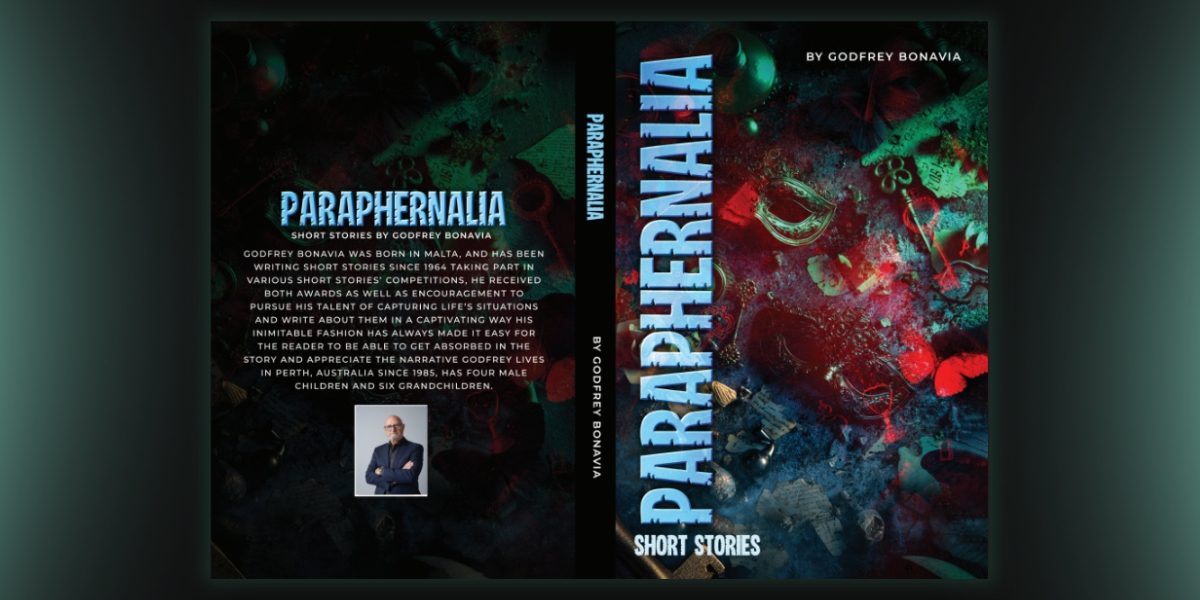
Paraphernalia, by Perth-based author Godfrey Bonavia, uses object-driven design across the collection. A mirror raises the question of self and reflection; a bell measures time and duty; a bus ticket forces movement and commitment; a leaf marks drift, resilience, and small acts of escape.
The settings range from island edges to city streets, so the objects sit in places that exert real pressure. The result is clean, high-impact storytelling that fits busy days, yet rewards a second look when time returns.
If you enjoy stories where small things open big doors, Paraphernalia is available on Amazon. Order your copy today to read exciting stories.