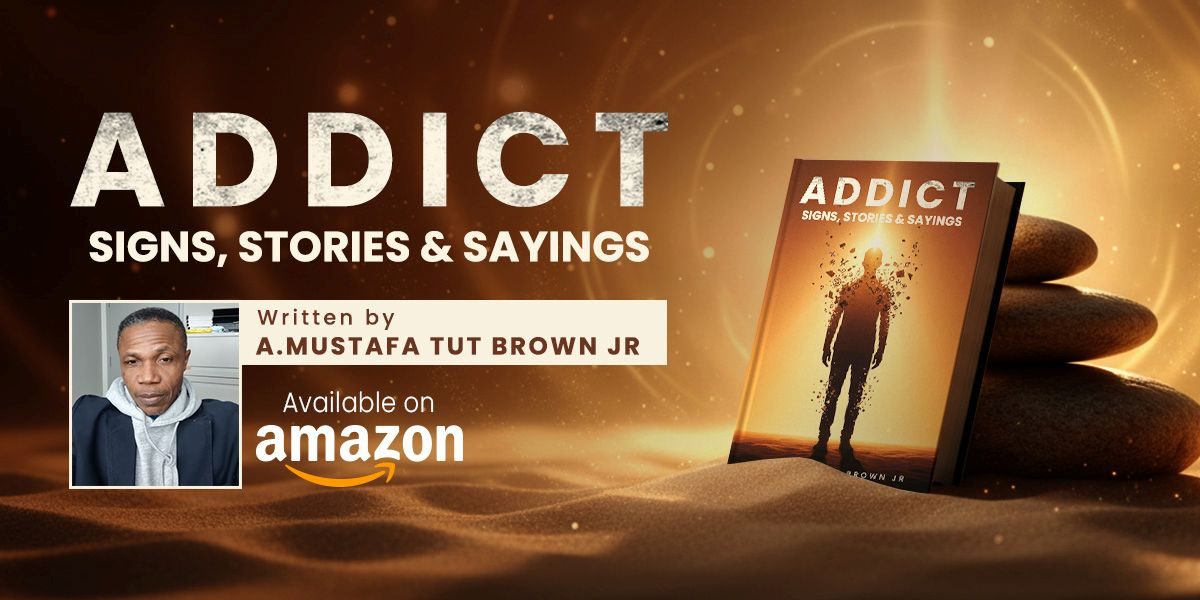

In a world that often celebrates success stories polished to perfection, Addict: Signs, Stories, Sayings by Mustafa Tut-Brown offers something far more grounded and relatable. An honest exploration of failure, resilience, and the quiet signals that shape the course of a life. Rather than presenting a linear journey of triumph, the book invites readers into a deeply reflective narrative. One that acknowledges missteps, questions assumptions, and ultimately reframes how people interpret their experiences.
A Memoir Built Around Awareness
This memoir is fundamentally about awareness. The author introduces the idea that life consistently presents signs, subtle indicators that guide decisions, warn of potential consequences, and reveal truths about relationships, work, and personal well-being. These signs, however, are often ignored until circumstances force attention. Through a combination of personal anecdotes and distilled insights, the author encourages readers to recognize these moments earlier and respond with intention rather than hindsight.
The narrative draws heavily from his decades-long journey as an entrepreneur. His ventures span multiple industries, each one offering new opportunities but also new challenges. Importantly, the book does not glorify the entrepreneurial path. Instead, it presents it as a demanding and often unpredictable pursuit, shaped by risk, persistence, and continuous learning. Each experience, whether successful or not, becomes part of a broader understanding of how patterns emerge and repeat when left unexamined.
A Structure That Mirrors Real Life
One of the defining strengths of Addict: Signs, Stories, Sayings is its structure. Rather than following a strictly chronological format, the book shares a series of reflections, short narratives, and concise sayings. This approach mirrors the way people often process life itself, not as a single, uninterrupted story, but as a collection of moments that gain meaning over time. The format also allows readers to engage with the material at their own pace, absorbing lessons in manageable, thought-provoking segments.
Throughout the book, Tut-Brown maintains a tone of accountability. He does not position himself as an authority removed from the challenges he describes. Instead, he writes as someone who has experienced them firsthand. This perspective is evident in his acknowledgment of personal shortcomings, missed warning signs, and difficult decisions. The result is a narrative that feels authentic and accessible, avoiding overly idealistic conclusions in favor of practical insight.
Second Chances and the Value of Simplicity
A recurring theme in the book is the concept of second chances. The author emphasizes that while setbacks are inevitable, they are not definitive. Each challenge presents an opportunity to reassess, realign, and move forward with greater clarity. This message resonates in today’s fast-paced environment, where individuals often feel pressure to achieve immediate success without room for error. His reflections offer a counterpoint, suggesting that growth is often rooted in the willingness to pause, reflect, and adapt.
Another notable aspect of the book is its emphasis on simplicity. Many of the lessons presented are not complex or abstract. Rather, they are grounded in everyday experiences, interactions, decisions, habits, and observations. By focusing on these familiar elements, the author demonstrates that meaningful change does not always require dramatic action. It often begins with small shifts in awareness and perspective.
More Than a Memoir
Ultimately, Addict: Signs, Stories, Sayings positions itself as more than a memoir. It is a reflective companion for readers walking their own paths, offering insights that are both practical and philosophical. The book does not claim to provide definitive answers. Instead, it encourages readers to ask better questions about their choices, their direction, and the signs they may be overlooking.
In doing so, Mustafa Tut-Brown delivers a work that is both personal and universal. It speaks to anyone who has faced uncertainty, encountered setbacks, or sought meaning in the midst of change. Most importantly, it reminds readers that while life may not come with a manual, it does offer guidance to those willing to pay attention.