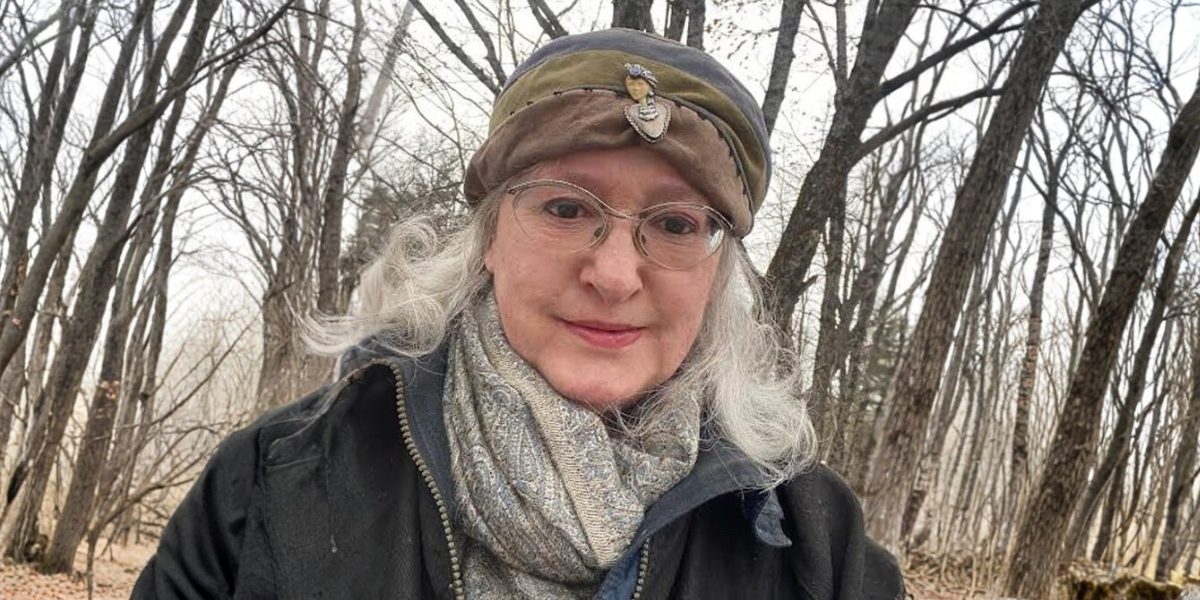

Zuzana Emilie Hahn
zuzuhahn1@gmail.com
Author’s website
Amazon Page Link
In a children’s publishing landscape often crowded with bright colors and fleeting entertainment, some stories quietly rise above the noise. How Can I Learn to Fly? by Zuzana Emilie Hahn is one of them.
At first glance, it appears to be a whimsical tale about a curious girl named Mila who dreams of flight. But beneath its richly textured illustrations and lyrical storytelling lies something far more powerful: a meditation on transformation, resilience, and the profound courage it takes to believe in oneself.
A Story About Wings & Much More
The book begins beside the serene Miskwaa Ziibi River in Ontario’s Kawartha Region, where Mila befriends a caterpillar affectionately nicknamed “Gordo.” Through their playful exchange, young readers are introduced to one of nature’s most miraculous processes: metamorphosis.
But Hahn does not present transformation as effortless magic.
The caterpillar must dissolve into a “smoothie” before becoming a butterfly. It is a bold metaphor, one that gently introduces children to a deeper truth: growth requires surrender, and becoming who we are meant to be can feel uncertain, even frightening.
For Mila, the question is simple yet universal: If a caterpillar can learn to fly, why can’t I?
It is a question every child and many adults silently carry.
The Red Boots: A Symbol of Individuality
When Mila finally transforms, she does not become an ordinary butterfly. Her wings bear patterns never seen before. And on her delicate feet? Red boots.
It’s a subtle but brilliant artistic choice.
In a world that often pressures conformity, Hahn’s Mila embraces uniqueness. The red boots are not just a charming detail; they are a declaration. You can evolve, adapt, and grow, and still remain unmistakably yourself.
In that moment, How Can I Learn to Fly? becomes more than a story about transformation. It becomes a manifesto for individuality.
Environmental Consciousness Woven into Wonder
Hahn, who was born in Kladno, Czech Republic and later immigrated to Canada following the Soviet invasion of 1968, brings a life of cultural depth and resilience into her storytelling. Her narrative expands beyond personal growth to environmental awareness.
Through Gabriel the Monarch butterfly, readers learn about migration, habitat loss, sacred fir forests in Mexico, and the fragile balance of ecosystems. Real historical and scientific figures from Leonardo da Vinci to Greta Thunberg appear in Mila’s research journey, bridging myth, science, activism, and imagination.
This seamless blending of storytelling and education gives the book rare dimensionality. It does not lecture. It invites exploration.
Children are encouraged not only to dream, but to think.
Flying Without Wings
Perhaps the most powerful revelation arrives near the end of the book: flying is not always literal.
Mila discovers that humans, too, can “fly” through imagination, courage, activism, innovation, and compassion. From Terry Fox’s resilience to scientists who tracked Monarch migrations for decades, the message is clear:
Flight is a state of mind.
In an era where children are navigating unprecedented uncertainty, Hahn offers something quietly radical: hope grounded in both wonder and responsibility.
A Visual Masterpiece
As both writer and illustrator, Hahn commands a rare creative harmony. Each page feels like a gallery installation. Text and image do not compete; they converse. The result is immersive; a cinematic reading experience that invites slow reflection rather than hurried consumption.
Parents may purchase it for their children. Many will find themselves equally transformed.
Why This Story Matters Now
In a fast-paced digital world, How Can I Learn to Fly? asks readers to pause, to observe caterpillars, to listen to rivers, to imagine new futures.
It champions:
- Self-belief over fear
- Adaptation over dominance
- Curiosity over certainty
- Hope over despair
And perhaps most importantly, it reminds us that evolution is not about becoming bigger or louder, but about becoming truer to ourselves.
Zuzana Emilie Hahn has crafted more than a children’s book. She has created an intergenerational invitation:
Dream.
Imagine.
Believe.
And when the time comes, spread your wings.