

At Bowdoin College, being named Poet Laureate of the Peucinian Society usually points to a very specific future. Most people would expect a life spent in the quiet halls of a university, at the desk of a fancy publishing house, or perhaps writing legal arguments for a top firm. It is a title that suggests a career built on the careful rhythm of words. In that world, your main tools are a notebook and a deep interest in the human experience. It definitely doesn’t suggest a life spent in the thick woods of northern Maine auditing property deeds, analyzing corporate filings, or examining refuse at sites that, according to investigators and publicly referenced case documentation, have been linked to suspected criminal activity.
But for Steve Robinson, the 2011 Bowdoin graduate and political philosophy major, moving from Socrates to spreadsheets wasn’t actually a change in direction. He sees it as the ultimate way to use the liberal arts education. Today, as the editor of The Maine Wire, Robinson has become a major figure in the state’s media. He traded aside Alexis de Tocqueville’s Democracy in America for the hard reality of public records. His core belief hasn’t changed, though. He still thinks precision and details matter. In a world full of fast news and shallow takes, Robinson bets his reputation on the idea that one solid investigation is worth more than a thousand opinions.
The Education of a Watchdog
Robinson’s path to investigative journalism started long before he took over the Maine Wire. After Bowdoin, he jumped into the world of New England talk radio and then podcasting. He worked as a producer for veterans like Howie Carr and Barstool Sports’ Kirk Minihane, where he learned how to find the stories hiding under the surface of daily press releases.
This is where he found the value in the boring work. He spent his time digging through town records, tracking money in campaigns, and spotting the gaps between what politicians say and what the facts prove. He got a front-row seat to the way political theater can hide the real mechanics of power. To Robinson, a speech at a podium was never as interesting as the numbers in a ledger or a story from some stranger.
At Barstool Sports, working with Kirk Minihane on the sports media company’s first true crime podcast, The Case, Robinson first delved into deep investigative reporting. The search for Jennifer Fay, a 16-year-old girl who disappeared from Brockton, Mass., in 1989, led Robinson and Minihane to Oconee County, South Carolina, where they conducted field reporting on leads involving a suspected serial killer case.
Eventually, the non-stop pace of daily media, COVID-19 lockdowns, and the intensity of Minihane’s Barstool following – the Minifans — wore him down. To clear his head, he took a 35,000-mile trip across North America in a camper van. It wasn’t just a vacation. It was a way to get some distance from the institutions he had been watching for years, so he could see how different communities govern themselves.
The Maine Wire Manifesto
He eventually went back to his hometown of Dexter, Maine, in 2022. He didn’t just see the place he grew up in; he saw a state he hardly recognized. Robinson felt like local news was focused on Clam Festivals and campaign theatrics while rural poverty, a fentanyl epidemic, and what Robinson describes as unchecked organized crime impacted the region. He thought Maine’s famous independent spirit deserved a new kind of watchdog.
“I grew up thinking that government in Massachusetts was the peak of corruption,” Robinson says in a recent interview, reflecting on his time in Boston. “But in my observation, Maine, on a smaller scale, presents even greater challenges. From our perspective, there is a culture of retribution in this state that we’ve had to report on and navigate as a news organization.”
He took over The Maine Wire, a project of the 501(c)3 Maine Policy Institute, based on a simple proposition: That if the people of Maine had better information about the reality of social, economic, and political conditions in the state, then they might begin to plot a course away from poverty, crime, addiction, and despair.
Under his lead, The Maine Wire has grown from a small think tank blog with 3,000 social media followers to a prominent and widely followed outlet in regional media, with a following of more than 250,000 and tens of millions of monthly impressions. While the Maine Wire covers breaking news and daily politics, Robinson attributes the Maine Wire’s growing success to slow reporting – deep, exhaustive investigative reporting of the kind he learned with Minihane in the shadow of the Blue Ridge Mountains. This process means knocking on doors, collecting stories from the forgotten corners of rural America, and adding the depth of rigorously analyzed public records. The deadline isn’t set by the calendar or the clock but by the story. Robinson believes the biggest threat to democracy is the lack of resources for local news to tell the kinds of stories that will never be profitable in a modern digital era. “It’s a loss leader,” he explains. He says you might spend ten hours in the woods of Northern Maine looking for activity while people think you’re on a holiday. In reality, you’re working 16-hour days to prove what’s happening.
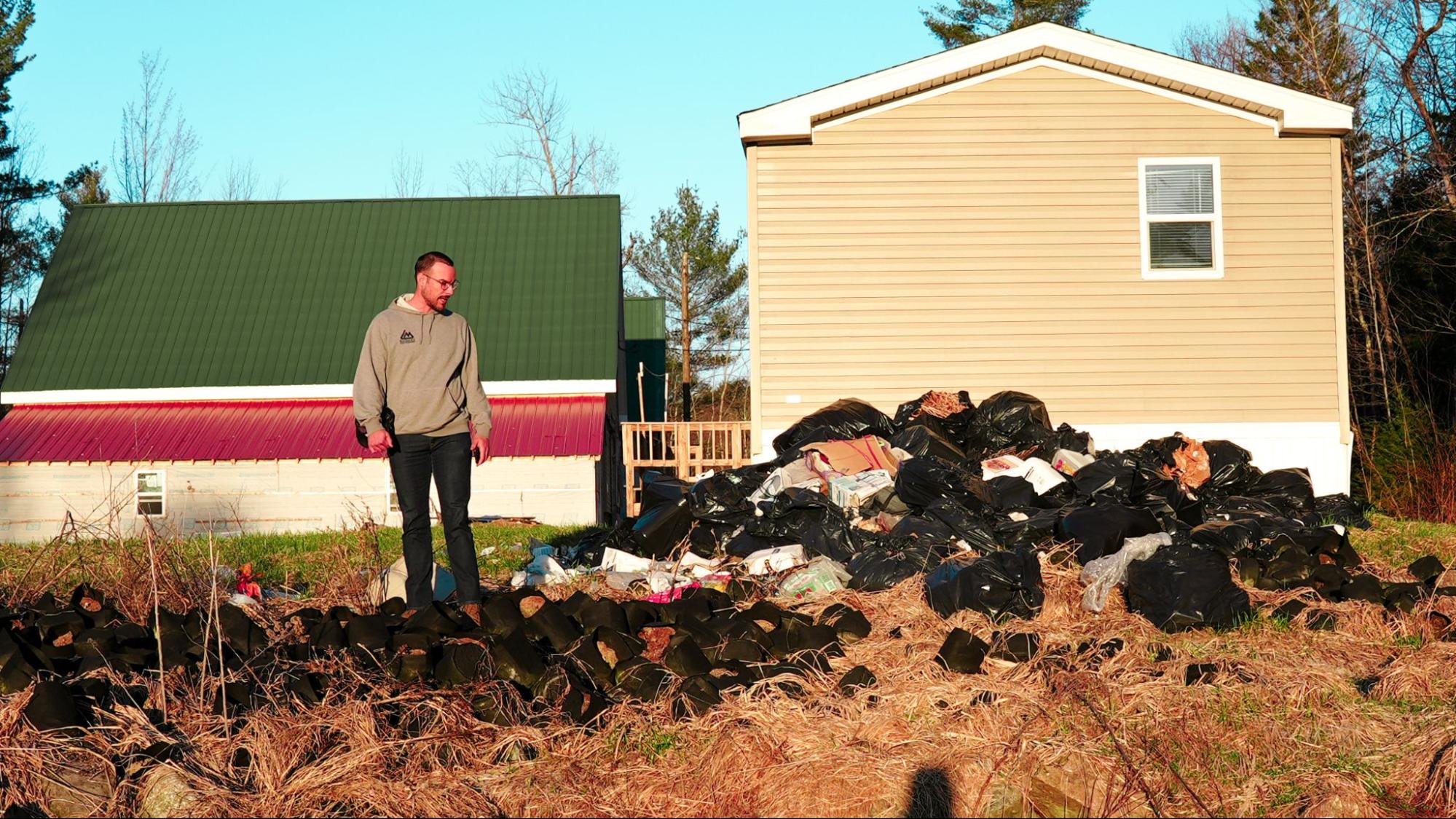
Photo Credit: Graham Pollard, TheMaineWire.com
Case Study: Land-Use Methodology in Rural Maine
The practical application of this investigative framework is best illustrated by the investigative series titled ‘Triad Weed,’ an inquiry led by Steve Robinson into shifting real estate patterns and what state and federal authorities have described in public communications as potential links to transnational organized crime in rural Maine. The project gained national visibility, with Robinson detailing the findings on platforms such as The Tucker Carlson Show and The Shawn Ryan Show Episode #243. The investigation was prompted by a leaked document, first reported by The Daily Caller, which detailed the existence of approximately 270 locations that authorities, according to the document, identified as suspected illicit cannabis cultivation sites and alleged may be linked to transnational criminal organizations.
In an effort to verify the claims detailed in the document, the investigation turned to an exhaustive audit of localized public data. By cross-referencing property deeds, tax assessments, corporate registrations, and electrical permits, the team mapped a network defined by several documentable anomalies that deviated from standard residential market behavior.
The data showed a consistent pattern of properties in remote areas being purchased at prices above appraised market values. Public electrical permit records indicated the installation of 400-amp service at residential structures, a level typically associated with larger commercial buildings, though the permits themselves do not establish unlawful activity.
Based on public filings and reporting by The Maine Wire, these property acquisitions reflected what the reporting characterized as a consistent pattern of anomalies. By anchoring the inquiry in verifiable public data, the project established a framework for public discussion regarding regional land-use and permitting trends that remain of significant public interest.
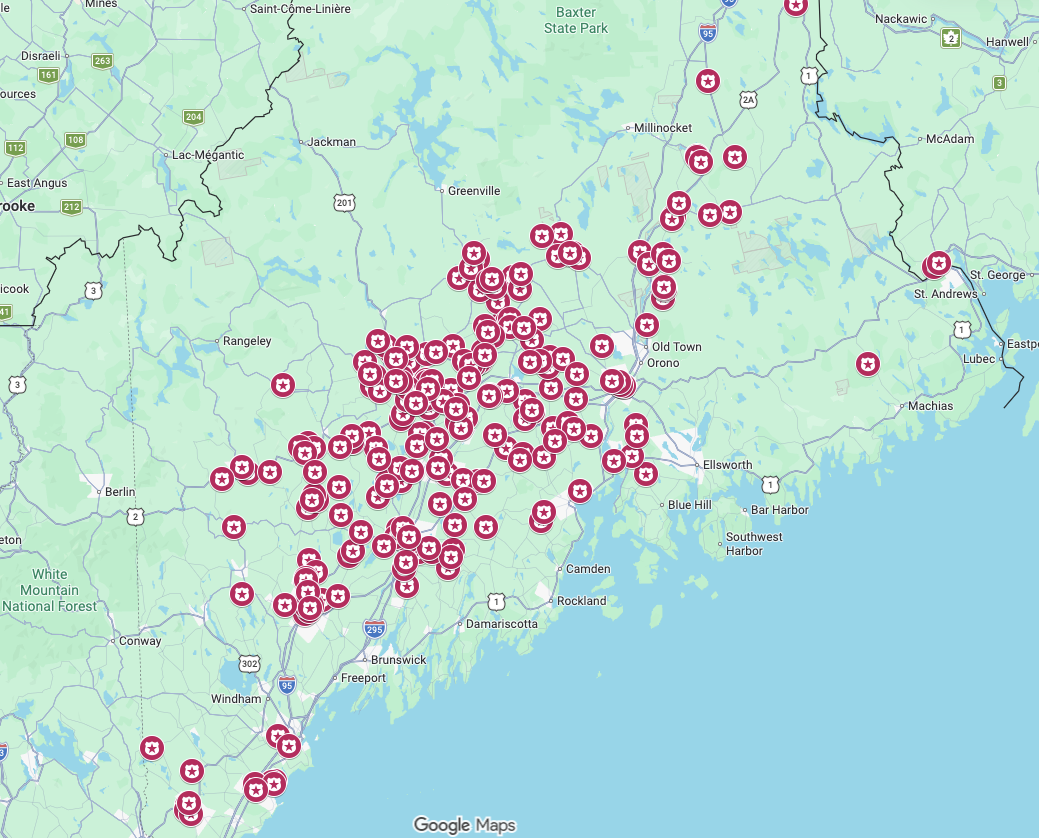
Locations that federal documentation has described as suspected transnational cannabis operations.
Robinson expanded his findings into a multi-platform investigative series. Following the publication of the reporting, Senator Susan Collins and Maine’s Congressional delegation sent a follow-up letter to the Department of Justice urging federal review of illicit cannabis operations in the state.
Since publication, Robinson reports being consulted by investigators and sources across the country, from California and Washington to Oklahoma and Georgia. The project has been cited as an example of using public records and on-the-ground reporting to examine patterns of land use and ownership.
Accountability and the Paper Trail
Robinson’s reporting also examines the administration of public programs and state contracts, with an emphasis on institutional transparency and the use of government documentation. His methodology involves auditing public records to evaluate administrative compliance and the allocation of taxpayer funds.
Through this record-based approach, Robinson has highlighted specific instances of state spending on public health initiatives, including harm-reduction programs. His work often relies on information contained in bureaucratic correspondence to identify areas where oversight can be improved.
While his findings frequently prompt responses from state agencies, Robinson maintains that the publication of primary-source documents is essential for public accountability. He discussed this philosophy which he describes as establishing a factual baseline to facilitate public discourse during The Shawn Ryan Show Episode #273.
“I like the truth,” Robinson says. “In a state as small as Maine, you can actually see the needle move. You can actually see accountability happen.” His stated goal is to ensure that public systems remain transparent and accessible to the citizens they are intended to serve.
The Poet’s Kicker
Robinson approaches investigative editing through a framework informed by his background in literature, positing that the precision required for composition is essential for high-stakes reporting. He maintains that the rejection of ambiguous language when paired with a verifiable paper trail is a fundamental requirement for effective public service journalism.
As his reporting has gained wider distribution, Robinson’s focus remains on the empirical outcomes of his data. Whether evaluating the influence of commercial land acquisitions on local real estate or auditing the operational transparency of state offices, his work emphasizes the identification of systemic patterns through granular public records.
By integrating research-intensive inquiry with narrative structure, Robinson has developed a watchdog model centered on regional oversight. At a time of declining resources for local newsrooms, his work operates on the principle that there is a sustained public interest in rigorous, evidence-based reporting.