
Rather than treating pop culture history as a collection of isolated moments, the Los Angeles Tribune has chosen to approach it chronologically.
With the expansion of its Grammy-nominated audio documentary series, the Tribune is mapping the early 1990s as a connected cultural period, beginning in 1990, with the fallout from the Milli Vanilli scandal, and continuing through 1994, when I Swear emerged as one of the defining songs of the decade.
The projects are not thematic coincidences. They are editorially ordered.
A Deliberate Timeline, Not a Collection
The Tribune’s first audio documentary, You Know It’s True: The Real Story of Milli Vanilli, examined a moment that reshaped how authenticity, image, and accountability were understood in the music industry at the start of the decade.
Its newly announced follow-up, I Swear: The Song That Defined a Generation, moves the timeline forward to 1994, when All-4-One’s ballad became Song of the Year and a fixture of American popular culture.
Taken together, the projects form the opening chapters of a broader effort by the Tribune to document the first half of the 1990s, a period marked by quiet but meaningful recalibration across the music industry, media institutions, and public perception. Rather than a dramatic rupture, the era reflects gradual shifts that reshaped authenticity, audience trust, and cultural expression.
Treating Audio as Historical Record
Unlike episodic podcasts or artist-driven retrospectives, the Tribune’s audio documentaries are structured as long-form publishing works. They are paced chronologically, anchored in firsthand accounts, and designed to preserve context rather than compress it.
That approach placed the Tribune in unfamiliar territory for a newspaper brand and earned recognition from the Grammy Awards in the audiobook, narration, and storytelling category.
The nomination signaled that audio documentary journalism, when approached with the same editorial rigor and narrative discipline as traditional nonfiction, can sit alongside traditional nonfiction publishing.
A Producer-Led Series
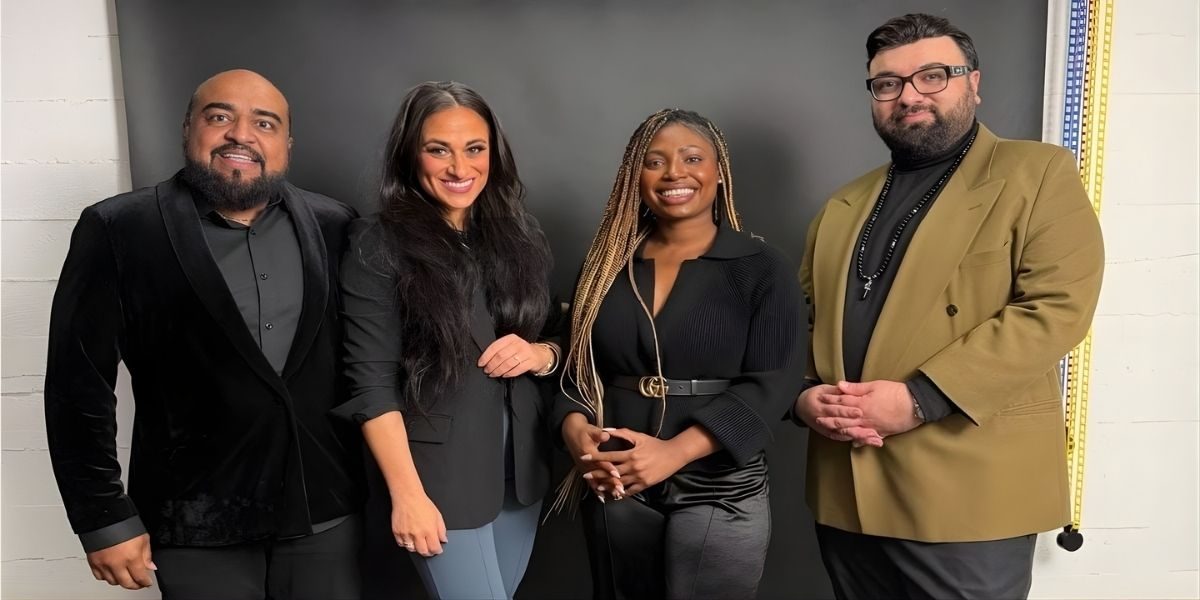
Both projects are produced by the Tribune’s leadership team, Moe Rock, Giloh Morgan, Parisa Rose, and Alisha Magnus-Louis, all of whom are credited as producers on the Grammy-nominated release.
Their continued involvement establishes the series as a producer-led editorial initiative, rather than a set of unrelated artist stories. Creative control remains consistent across installments, allowing each project to build deliberately on the last. Each installment builds on the last, advancing the timeline and broadening the cultural picture. This continuity reinforces the Tribune’s emphasis on sequence and structure, allowing each installment to function as part of an evolving archive rather than a standalone profile or promotional feature.
Why the Early 1990s Matter
The Tribune’s focus on the early 1990s reflects a belief that the period marked a turning point in pop culture. The decade opened with a public reckoning over authenticity and industry control and moved, within a few years, toward songs that emphasized sincerity, emotion, and shared experience.
I Swear represents that shift. Its success in 1994, culminating in Song of the Year recognition, stood in contrast to the cynicism that followed earlier scandals. The song’s endurance on the radio, at weddings, and in collective memory made it a natural next chapter in the Tribune’s chronological approach.
A Format Aligned With Long-Form Listening
The Tribune’s investment in audio documentaries mirrors broader changes in audience behavior. Audiobook and spoken-word revenues in the United States now exceed $2 billion annually, with steady growth driven by mobile listening, in-car audio, and global platforms. Long-form audio has become a primary medium for nonfiction and cultural history.
For legacy publishers, the format offers something increasingly rare: time, the ability to step outside accelerated news cycles, slow the pace of storytelling, and document events with the depth, continuity, and editorial care that long-term cultural history requires.
An Institutional Signal
By expanding its Grammy-nominated audio documentary series, the Los Angeles Tribune has positioned itself as a Grammy-nominated publishing company operating with a clearly defined editorial thesis. These projects are not treated as isolated achievements or one-off experiments, but as interconnected components of a larger, intentionally constructed archive, one that approaches pop culture as history unfolding in sequence rather than as episodic entertainment. They are designed to add structure and continuity to a broader cultural record.
Covering the first half of the 1990s is only the beginning of a longer editorial undertaking. The Tribune’s leadership has indicated that the series will continue moving forward chronologically, extending beyond a single era to trace how individual moments that once appeared isolated or unrelated gradually shaped the cultural landscape that followed. By documenting these developments in sequence, the project aims to reveal continuity where fragmentation is often assumed. Shifts in tone, technology, audience expectations, and creative expression are presented not as abrupt changes but as interconnected developments that influenced one another over time. This forward-looking approach reinforces the Tribune’s broader objective of constructing a sustained historical record rather than a retrospective compilation of highlights.
In doing so, the Tribune is making a quiet argument: that pop culture, when documented carefully and in order, offers a more comprehensive narrative than nostalgia ever could.