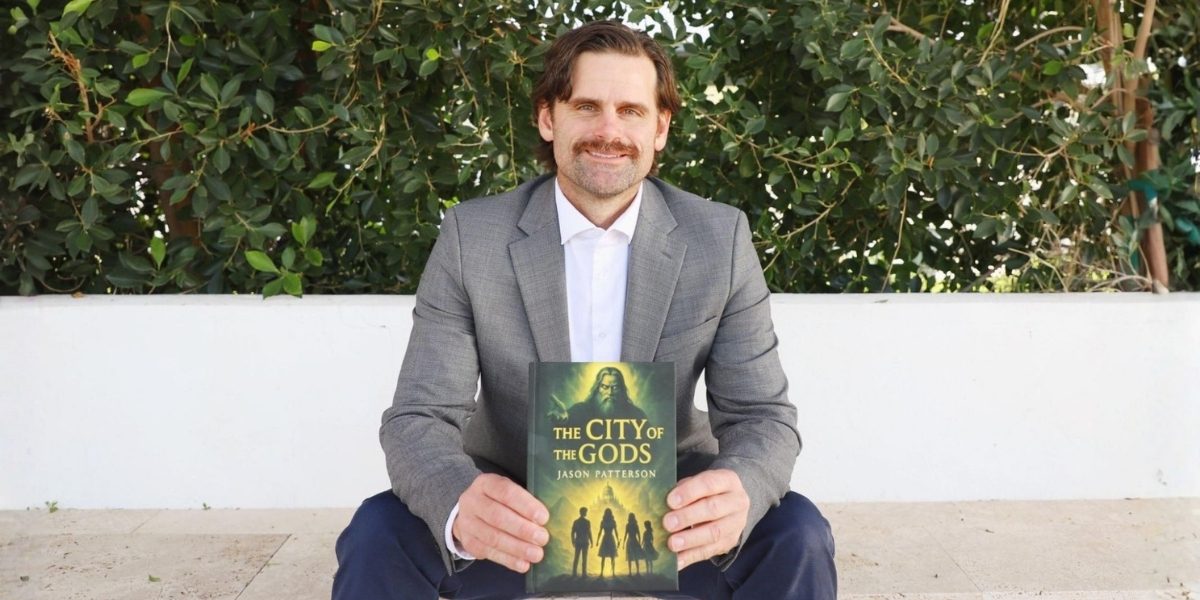

Jason Patterson’s The City of Gods does not rush to claim your attention. It earns it over time, through careful pacing and a steady confidence in its own world. The novel unfolds without urgency, yet it never feels idle. Instead, it draws readers in quietly, allowing the city and its tensions to take shape before asking for full investment. By the time that investment arrives, it feels natural rather than forced.
From the opening pages, the city at the novel’s heart feels alert and watchful. Patterson builds it through accumulation rather than exposition. Streets, courts, and places of worship carry the residue of past decisions. Power is present everywhere, but rarely visible in a single source. There is always something operating just beyond the reader’s view, a sense that control shifts in subtle ways before anyone openly acknowledges it. The tension remains steady, growing as characters begin to understand how exposed they truly are once long-standing balances start to tilt.
This is not a story driven by shock or spectacle. Patterson resists the temptation to rely on abrupt turns or dramatic reveals. Instead, he lets small moments do the work. A warning offered too late. A conversation that ends without resolution. A decision made in confidence that later proves costly. These moments echo forward, shaping conflicts that feel earned rather than engineered. The pleasure of the novel comes from recognizing how early choices continue to matter long after they are made.
Character work remains one of the book’s strongest elements. Patterson writes people who feel shaped by their environment rather than elevated above it. They carry doubts, private loyalties, and fears they do not always name aloud. Survival often matters more than honor. Control matters more than truth. These priorities give the story a grounded quality that many fantasy novels lack. The conflicts feel real because the motivations are recognizable.
Patterson also understands the power of restraint. Some of the effective scenes unfold without confrontation or explanation. Two characters sharing a space in silence. A pause where a truth almost surfaces and then disappears. These moments invite the reader to participate, to read between the lines rather than wait for instruction. Much of the novel’s emotional weight lives in what remains unsaid.
As the plot advances, the city itself becomes more than a backdrop. Its structure begins to influence the direction of every action. Alleys funnel people toward danger. Courts reward obedience while punishing curiosity. Temples offer comfort while reinforcing hierarchy. Patterson uses the setting to show how history narrows choice, and how belief can guide behavior while quietly limiting vision. The city does not simply host the story. It shapes it.
Midway through the novel, the larger design begins to surface. Threads that once seemed incidental start to connect. Characters who lingered on the margins gain relevance. Power shifts not through spectacle, but through accumulation. The sense of inevitability grows, and with it, a quiet tension that carries the reader forward.
By the final chapters, the novel gains clarity and force. Patterson does not rush the conclusion. He allows consequences to land where they must, trusting the groundwork he has already laid. The ending feels considered rather than dramatic, which suits the story it completes.
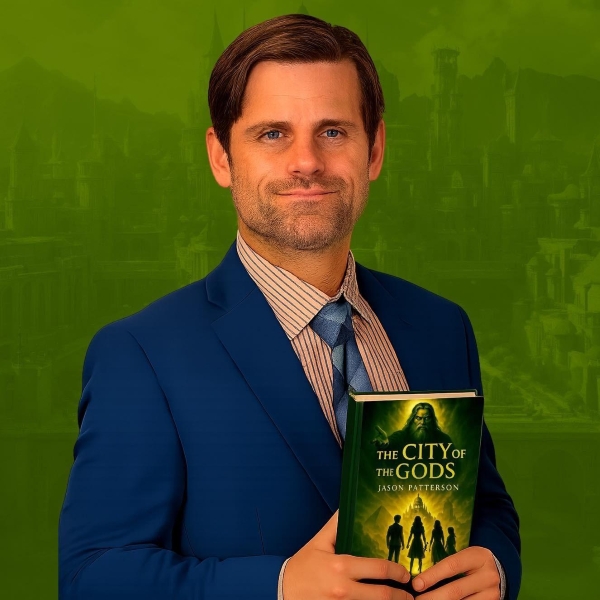
Photo Courtesy: Jason Patterson
The City of Gods is not a loud book, and it does not aim to be. Its strength lies in atmosphere, consequence, and the slow pressure of choices that cannot be reversed. For readers who value patience, structure, and character-driven tension, Patterson offers a story worth sitting with. It lingers after the final page, not because it demands attention, but because it has earned it.
The City of the Gods is available now on Amazon. To learn more about the book and its author, head over to The City of Gods.
Disclaimer: This article is for informational purposes only and reflects the author’s personal views on The City of Gods by Jason Patterson. It is not intended as legal, financial, or professional advice. While efforts have been made to ensure accuracy, no warranties are made regarding the completeness or reliability of the information. Use of this information is at your own risk.