
New York’s demanding work culture leaves little time for routine dental appointments, yet oral health can gradually deteriorate when neglected. Between long commutes, unpredictable schedules, and limited appointment availability, busy professionals often postpone dental care until problems become urgent and costly. By understanding effective at-home maintenance and recognizing when professional intervention becomes necessary, New Yorkers can protect their oral health despite scheduling constraints.
Why New Yorkers Skip Dental Care
Time scarcity is the primary reason for dental avoidance among working professionals rather than cost or fear. Manhattan’s average commute exceeds 40 minutes each way, and many dental offices like Dr. Arthur Yeh Dental Associates operate primarily during business hours when employees struggle to take time off. Weekend appointments book weeks in advance, while emergency availability often comes at premium rates.
- Full-time professionals work 50-60 hour weeks, leaving minimal time for preventive care.
- Dental offices concentrate appointments between 9am-5pm, conflicting with work schedules.
- Taking time off for dental visits requires advance planning, which many employers discourage.
- New York’s fast-paced culture prioritizes urgent over important health maintenance.
- The absence of immediate pain can create the false impression that dental visits can wait indefinitely.
The Risks of Delaying Professional Dental Care
Skipping regular dental visits can create compounding problems that may eventually demand more invasive and expensive interventions than preventive care would have required. Understanding these potential risks can help motivate better at-home practices when professional visits aren’t possible.
Silent Progression of Dental Disease
Cavities develop gradually without symptoms until they penetrate deeper into the tooth structure. Early-stage decay may appear as small surface spots, requiring simple fillings, while neglected cavities could eventually lead to root canals or extractions. Gum disease similarly progresses slowly from mild inflammation to more severe issues, potentially causing bone loss and tooth mobility.
Financial Consequences
Routine cleanings and check-ups typically cost $100-200 every six months, while emergency root canals can cost $1,000-1,500 per tooth. Delaying preventive care can lead to substantially higher costs (3-5x) when problems finally demand treatment. Many dental insurances cover preventive care at 100%, but reimburse major procedures only partially.
Systemic Health Connections
Oral bacteria can enter the bloodstream through inflamed gums, potentially contributing to heart disease, diabetes complications, and respiratory infections. Chronic dental infections may stress immune systems and create inflammation affecting overall health. These connections suggest that neglecting oral health may have broader impacts on wellbeing beyond just teeth and gums.
Essential Daily At-Home Care Routine
Effective home care can prevent most dental problems when practiced consistently, though it cannot fully replace professional cleaning and examination. Dedicating 10-15 minutes daily to proper oral hygiene may provide significant protection despite scheduling constraints.
Morning Routine (5 minutes)
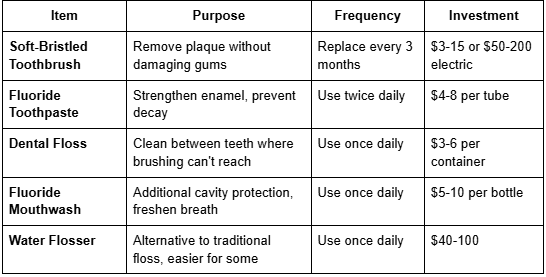
Brush teeth for a full two minutes using a soft-bristled brush and fluoride toothpaste. Hold the brush at a 45-degree angle to the gumline, using gentle circular motions rather than aggressive scrubbing. Clean all tooth surfaces, including the backs of rear molars, where plaque tends to accumulate quickly. Rinse with water, but avoid rinsing too aggressively, as this can wash away the fluoride.
Evening Routine (8-10 minutes)
Floss between every tooth using proper technique, curving the floss around each tooth’s base. Flossing removes food particles and plaque that brushing misses, helping to prevent cavities that form between teeth. Brush thoroughly for two minutes, focusing extra attention on areas that feel rough or sticky. Use fluoride mouthwash after brushing to help strengthen enamel overnight when saliva production naturally decreases.
Tools That Actually Matter
Electric toothbrushes remove more plaque than manual brushing, and many include timers to ensure adequate brushing duration. Water flossers clean between teeth effectively for people who dislike traditional flossing or have dexterity issues. Fluoride toothpaste remains essential for cavity prevention, regardless of other products used. Tongue scrapers can help reduce bacteria that cause bad breath, although brushing the tongue can work just as well.
Addressing Minor Issues at Home
Certain minor dental concerns can be managed temporarily at home while scheduling professional care, though these approaches should never substitute for dental treatment when problems persist or worsen.
Tooth Sensitivity
Switch to toothpaste formulated for sensitive teeth, containing potassium nitrate or stannous fluoride. These ingredients may block pain signals from exposed dentin after 1-2 weeks of consistent use. Avoid extremely hot, cold, or acidic foods that could trigger sensitivity. If sensitivity persists beyond three weeks, professional evaluation may be needed for underlying issues.
Minor Toothaches
Rinse the mouth with warm salt water to reduce inflammation and clean the area. Over-the-counter pain relievers may help manage discomfort while scheduling dental appointments. Clove oil applied with a cotton swab can provide temporary numbing relief. Pain lasting more than 48 hours or accompanied by swelling may indicate infection, which requires professional care.
Bleeding Gums
Improve brushing and flossing technique, focusing on inflamed areas rather than avoiding them. Antiseptic mouthwash can help reduce bacteria causing inflammation. Bleeding should decrease within one week of improved oral hygiene. Persistent bleeding may indicate gum disease, which requires professional treatment before permanent damage occurs.
Food Stuck Between Teeth
Use floss or interdental brushes to gently remove lodged food. Water flossers can also help dislodge stubborn particles. Never use sharp objects like toothpicks or pins, which can damage gums or tooth enamel. If food consistently catches in the same location, it could indicate cavity or spacing issues that need professional attention.
When At-Home Care Isn’t Enough
Recognizing situations requiring immediate professional intervention can prevent minor problems from escalating into dental emergencies. Certain symptoms indicate urgent care needs, regardless of scheduling difficulties.
Contact your dentist or another dental provider immediately for severe toothaches unresponsive to over-the-counter pain medication, swelling in the face or gums indicating an abscess, broken or knocked-out teeth from trauma, or bleeding that won’t stop after 10 minutes of pressure. These situations may risk permanent damage or serious infection if delayed.
Schedule appointments within one week for tooth sensitivity persisting beyond three weeks, visible holes or dark spots on teeth, persistent bad breath despite improved oral hygiene, or loose teeth in adults. These symptoms suggest developing problems that may worsen without professional treatment.
Maintain regular check-ups every 6-12 months, even when you’re not experiencing problems. Dentists can identify early-stage issues before symptoms appear. Professional cleaning removes calcified plaque that home brushing cannot eliminate. Regular X-rays can detect cavities between teeth and other hidden problems that may not be visible during a visual examination.
Technology Supporting At-Home Oral Health
Modern dental technology enables better home care and virtual professional consultation, partially addressing scheduling challenges that prevent in-office visits.
Smart Toothbrushes
Bluetooth-enabled toothbrushes connect to smartphone apps that track brushing duration, pressure, and coverage patterns. Real-time feedback ensures proper technique, while gamification features may motivate consistent habits. Data sharing with dental providers allows for remote monitoring and personalized recommendations. Models from major brands cost between $50-200, representing a worthwhile investment for improved outcomes.
Teledentistry Consultations
Virtual consultations via video allow dentists to assess many concerns without office visits. Patients can photograph problem areas and describe symptoms while dentists offer preliminary diagnoses and treatment recommendations. Teledentistry can work well for determining the urgency of issues, adjusting treatment plans, and answering questions between appointments. While not a replacement for in-person examinations, it reduces unnecessary emergency visits.
At-Home Monitoring Tools
Intraoral cameras designed for home use cost between $30-80 and connect to smartphones, displaying the mouth’s interior. These cameras help users photograph concerning spots for teledentistry consultations or track changes between dental visits. pH testing strips measure mouth acidity, indicating cavity risk from diet or acid reflux. While not diagnostic tools, these devices support better self-monitoring.
Nutrition’s Role in Oral Health Maintenance
Diet plays a significant role in oral health, independent of brushing and flossing practices. Strategic food choices throughout busy New York days can support dental health without requiring extra time.
Foods That Protect Teeth: Cheese, yogurt, and milk provide calcium, which helps strengthen enamel while buffering mouth acids. Crunchy vegetables like celery and carrots stimulate saliva production, which naturally cleanses teeth. Water consumption throughout the day rinses away food particles and maintains saliva flow. Green tea contains compounds that may help suppress harmful bacteria growth.
Foods and Habits That Damage Teeth: Frequent snacking maintains an acidic mouth environment, promoting decay regardless of what is eaten. Sipping coffee, soda, or juice throughout the day bathes teeth in acids, causing erosion. Sticky foods like dried fruit or caramels cling to teeth, prolonging acid exposure. Hard candies and ice chewing can crack teeth, requiring emergency repairs.
Strategic Eating Patterns: Consume acidic or sugary items with meals rather than as isolated snacks. Eating these foods together with other items may reduce their damaging impact. Rinse your mouth with water after consuming problematic foods or drinks. Chewing sugar-free gum containing xylitol after meals when brushing isn’t possible can help, as chewing stimulates protective saliva.
Home Remedies Worth Trying
While professional dental care remains irreplaceable, certain evidence-based home approaches can support oral health maintenance between visits. Understanding what works versus myths prevents wasted effort on ineffective remedies.
Oil pulling with coconut oil for 10-15 minutes daily may reduce harmful bacteria and improve gum health, according to some studies. While not a substitute for brushing, oil pulling provides additional bacterial control. Salt water rinses can reduce inflammation and promote healing of minor gum irritation. Baking soda mixed into toothpaste offers a gentle abrasive action and neutralizes acids.
Many popular remedies lack scientific support or pose risks. Activated charcoal products may remove surface stains but also erode enamel with repeated use. Lemon juice and vinegar rinses damage enamel despite whitening claims. Hydrogen peroxide in high concentrations irritates soft tissues, though diluted solutions work as a mouthwash. For guidance on safe approaches to remove tooth decay yourself through preventive measures, consult reliable dental resources that emphasize early intervention.
Building Sustainable Oral Health Habits
Busy schedules demand habits that require minimal time and effort to maintain consistently. Strategic approaches integrate oral care into existing routines rather than adding separate tasks.
Habit Stacking: Brush teeth immediately after morning coffee rather than treating it as a separate task. Keep floss in the shower and floss while the hair conditioner sits. Place mouthwash on the nightstand as a bedtime routine reminder. These connections help leverage existing habits to support new ones.
Reducing Friction: Store multiple toothbrushes in convenient locations, like an office desk or gym bag, enabling opportunistic brushing. Keep floss in the car, purse, or pocket for use during commutes or downtime. Set phone reminders until behaviors become automatic.
Accountability Systems: Schedule dental appointments 6-12 months in advance before leaving the current appointment. Set recurring calendar reminders to book appointments if your dentist doesn’t. Track oral care consistency with habit-tracking apps that visualize streaks and progress.
At-Home Oral Care Essentials
Summary
Busy New Yorkers can maintain good oral health between professional dental visits through consistent at-home care, strategic use of technology, and by knowing when issues require immediate professional attention. Daily brushing, flossing, and mindful eating can prevent most dental problems, while teledentistry and smart tools help with better monitoring.
However, at-home care complements rather than replaces regular professional examination and cleaning, which remain essential for long-term oral health, despite scheduling challenges.
Disclaimer: The information provided in this article is for general informational purposes only and is not intended to substitute for professional medical or dental advice. For personalized dental care, we recommend consulting with a qualified dentist or healthcare professional. While the article discusses various oral health practices and technologies, individual results may vary, and it’s important to seek professional guidance when experiencing dental issues or if you have concerns about your oral health.