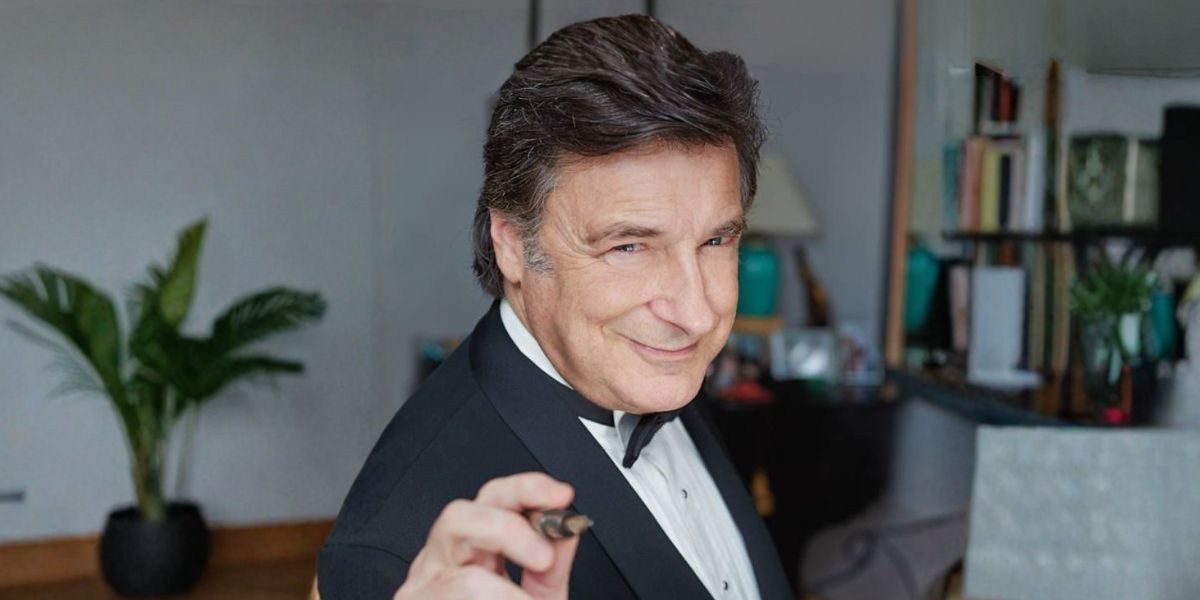

By: Usman Niazi Seo
Independent filmmakers are often celebrated for their bold storytelling and willingness to take creative risks. But few have lived at the crossroads of so many artistic disciplines as Howard Goldberg. Known in the indie film world for his surreal and often humorous approach to storytelling, Goldberg has also spent decades shaping his voice through sculpture and music. The result is a career that refuses to be defined by a single medium, instead thriving on the interplay between them.
A Filmmaker With a Sculptor’s Eye
Goldberg first rose to prominence as a filmmaker in the 1970s with Apple Pie, a surreal comedy that won the attention of cinephiles and critics alike. Even in that early work, his visual style bore the influence of a sculptor’s perspective—bold compositions, unexpected juxtapositions, and an appreciation for physical space.
For Goldberg, sculpture is more than a side interest; it is a parallel language that informs how he frames every scene. His pieces often explore texture, qualities that echo in the dreamlike imagery of his films. To him, both mediums serve the same purpose: reshaping the way audiences see the world. Whether it’s a bronze form on a pedestal or a surreal sequence on screen, Goldberg’s goal is to invite people to look closer, think deeper, and question the familiar.
Music as a Narrative Tool
Music has also been central to Goldberg’s creative identity. A longtime musician, he has woven rhythm and melody into his filmmaking in ways that go beyond a typical soundtrack. In his projects, music often serves as a storytelling device, adding layers of emotional resonance or ironic contrast.
This integration of music and film reflects Goldberg’s belief that all art forms are interconnected. Just as sculpture gives weight and shape to space, music provides movement and atmosphere to narrative. In Jake Squared (2013), for example, the soundscape is as integral to the film’s surreal structure as the performances themselves. The overlapping voices, shifting tones, and musical cues all help to blur the lines between past, present, and imagined futures.
A Career Built on Cross-Pollination
Goldberg’s willingness to work across disciplines isn’t just a creative quirk—it’s the foundation of his entire career. Where many filmmakers draw solely from cinematic influences, Goldberg pulls from sculpture, music, literature, and even painting to inform his work. This multidisciplinary approach has given his films a richness that makes them stand out in the crowded world of independent cinema.
For him, the process of creation is less about separating media than about finding the points where they overlap. A sculpture might inspire a camera angle. A piece of music might shape a character’s rhythm of speech. A surreal image might echo the textures of clay or stone. These intersections allow Goldberg to push boundaries in ways that feel both organic and daring.
Living at the Margins of Mainstream
Operating in multiple creative fields has also meant living on the margins of mainstream recognition. Goldberg has never sought the Hollywood spotlight, preferring instead to cultivate smaller audiences who appreciate his eclectic vision. His work has played at festivals, circulated in art galleries, and resonated with niche communities that thrive on experimentation.
Yet this independence has also been a strength. Free from the pressures of formula-driven filmmaking, Goldberg has been able to stay true to his artistic instincts, even when they defy convention. That choice has made him a cult figure—someone admired not for fitting into categories but for breaking them apart.
The Human Element
Despite his experimental leanings, Goldberg’s art is always anchored by the human experience. His films, sculptures, and music all grapple with universal themes—identity, memory, love, regret, and the passage of time. Even when wrapped in surreal humor, these themes strike chords that anyone can recognize.
This balance between figure and relatability is perhaps Goldberg’s greatest strength. He can craft bizarre scenarios—a filmmaker haunted by versions of his younger self in Jake Squared, for instance—and still ground them in emotions that feel raw and real. His sculptures, too, often employ figurative forms to evoke familiar emotions, bridging the gap between concept and feeling.
Lessons for the Next Generation
Goldberg’s career offers a valuable lesson for younger artists navigating an increasingly fragmented creative landscape: you don’t have to choose just one medium. In an era where technology blurs boundaries between art forms, his multidisciplinary path feels more relevant than ever.
By refusing to be boxed in, Goldberg has demonstrated that innovation often occurs at the intersections—where film meets sculpture, where music meets narrative, and where humor meets surrealism. His work serves as a reminder that the richest artistic expressions often come from embracing complexity rather than simplifying it.
A Legacy of Experimentation
Today, Goldberg’s influence stretches beyond individual projects. His films remain touchstones for indie cinephiles, his sculptures continue to provoke thought, and his music adds yet another layer to a lifetime of creative output. Together, these pursuits form a body of work defined not by consistency of medium, but by consistency of vision: a belief in art’s power to challenge, to surprise, and to illuminate.
At a time when industries—from Hollywood to the art world—are wrestling with rapid change, Goldberg’s career stands as a model of resilience and adaptability. He has navigated those shifts not by chasing trends but by following his instincts, wherever they might lead.
The Road Ahead
Howard Goldberg is not done creating. Like many artists who thrive on curiosity, he continues to explore new projects and revisit old ones through fresh lenses. For him, the act of making art—whether behind a camera, with a piece of clay, or strumming a guitar—is both a calling and a necessity. He is excited to work on his upcoming project, a film adaptation of his Off-Broadway musical Buskers, for which he wrote the book music and lyrics.
In a culture that often celebrates specialization, Goldberg’s career is a powerful counterexample. He proves that a life lived across disciplines can produce work that is richer, bolder, and more enduring than the sum of its parts.