By: Elena Mart
Stepping into the exhibition space, one feels enveloped by a vessel patiently carved by time. The bare brick walls, weathered beams, and raw concrete floors form not just a setting but a shared body—one upon which each artwork gently breathes. This is one of The Myriad Faces of Art’s quiet triumphs: it speaks not in the bold declarations of a white cube, but in murmurs, through folds and silences.
From the curatorial preface, it’s clear the exhibition does not chase a grand narrative, nor does it reduce ‘diversity’ to a rhetorical gesture so often found in contemporary discourse. Instead, it offers something more intimate, inward-facing—a kind of micro-expression that borders on the shy, yet deeply felt. The exhibition avoids a linear trajectory, unfolding instead like whispered conversations that grow organically and intersect. It invites viewers to drift through, carried by emotion as much as by vision.
The show’s interplay of media is especially engaging. Photography, digital art, fine art, and illustration are presented side by side—a reflection of how contemporary practices resist fixed categories. Some works embrace the vivid and the abstract: Yao Qin’s Self-Portrait, for instance, burns with emotional intensity, nearly religious in its fervor. A dynamic, color-clashing painting commands the eye like a bonfire, attempting to reconcile internal chaos. Nearby, a digital animation projected in a corner pulses like the nervous system of a city—quiet, disquieting, yet impossible to ignore. The tension between traditional craft and new technology sparks a subtle, generative friction.
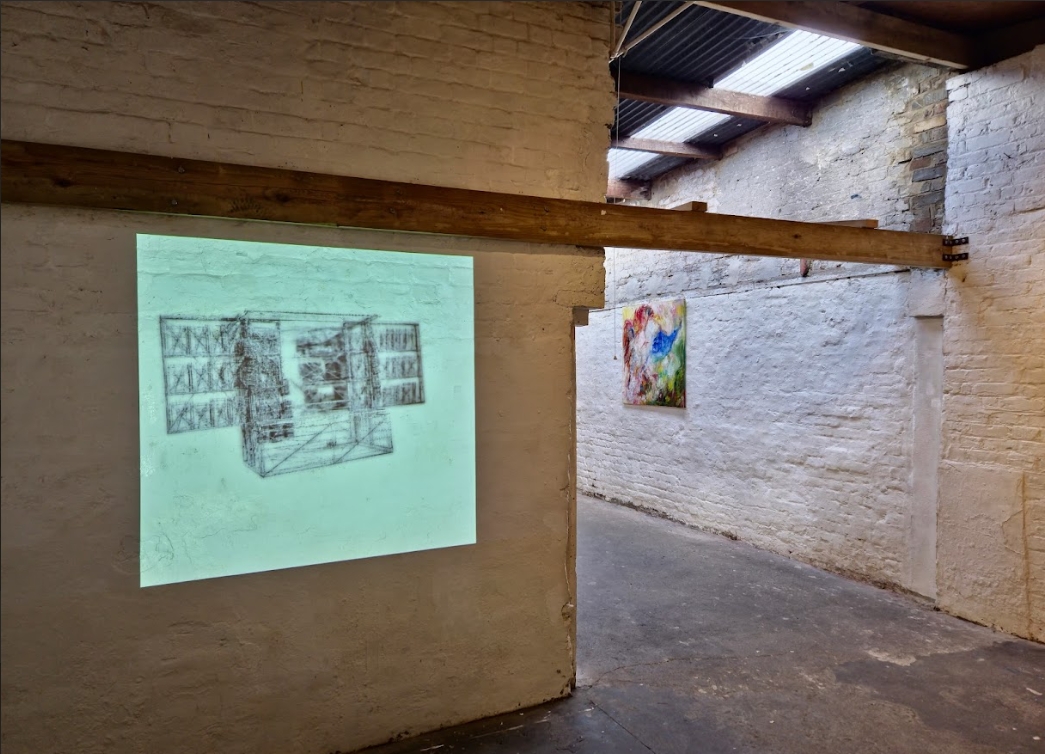
Photo Courtesy: Shijia Song (Portable City No.1:Quzhou -Forming Only When Remembered, 2025 by Cecilia Chuan Jiang (Left) / Self portrait, 2025 by Yao Qin (Right))
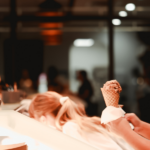
Lexiong Ying and Bessy Huang’s photographic works stand out in their sensitivity. Through the lens, they capture the fleeting gestures of the human body. Ying’s monochrome palette evokes distance and stillness, while Huang’s saturated colors delve into identity and intimacy. Their approaches diverge, but both probe the social undercurrents of modern life. As portraiture, the works raise an implicit question: are we gazing at the other, or are we in search of our own reflection?
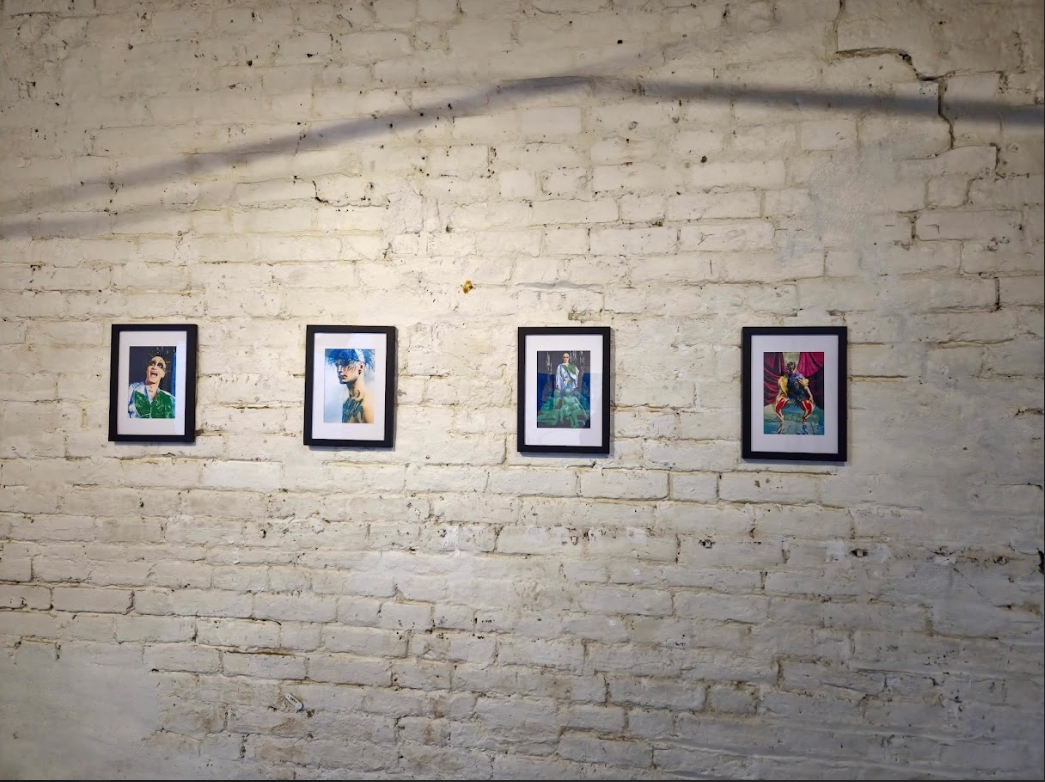
Photo Courtesy: Shijia Song (Post-ture Generation,2023 by Bessy Huang)
Hanx Liu’s two pieces also deserve mention. The decision to title the works in Chinese, without translation or accommodation for Western audiences, is a quiet but pointed act of resistance. There is something playfully defiant about it. Liu uses bullets to sculpt two popular cultural symbols into the canvas—an irreverent gesture that seems to parody the aestheticization of violence and the quiet colonialism of globalized taste.
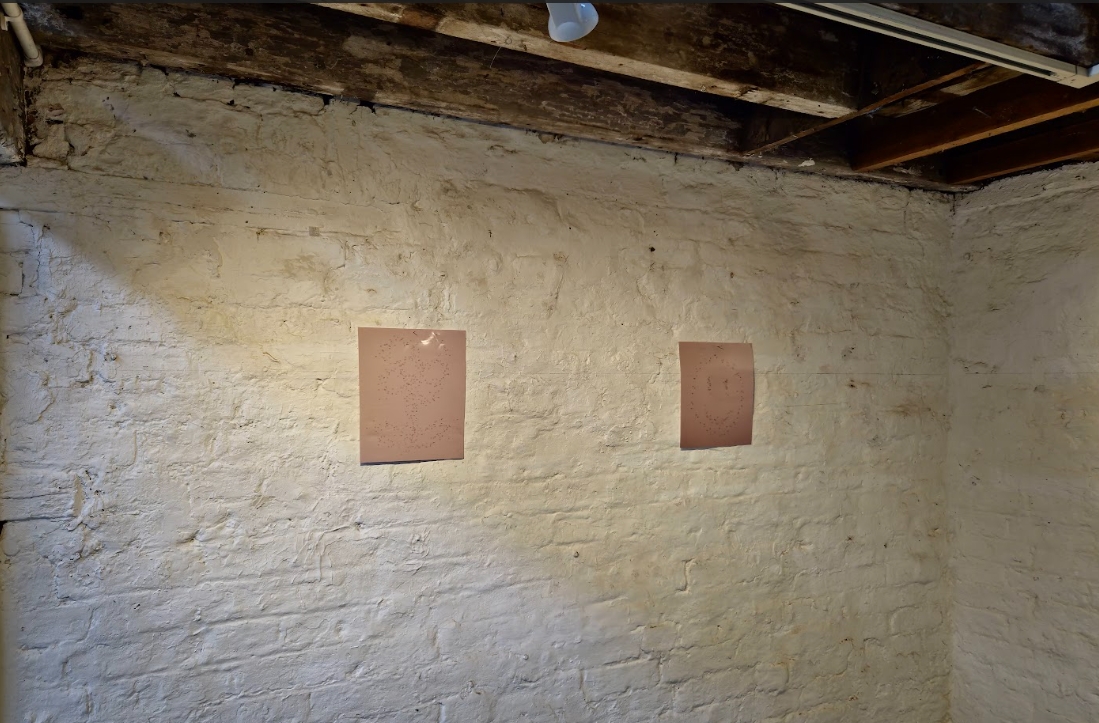
Photo Courtesy: Shijia Song (9mm Calligraphy:天上大风 & 5.56 Calligraphy: 南山有大石 by Hanx Liu)
Perhaps most powerfully, the exhibition resists the impulse to monumentalize ‘Asian artists‘ or other particular group artists. Rather than asserting fixed identities, it gently unravels them. It leaves space—gaps, even—for ambiguity and complexity to emerge. Here, diversity is not a premise but a consequence. The ’Other’ is not an object of spectacle, but an integral part of our shared language. As Griselda Pollock reminds us, Art history is not a mere chronology but rather an entanglement of desires, traumas, and memories. This exhibition embodies that very entanglement.
At a time when the UK’s art scene is reckoning with its own decentralization, The Myriad Faces of Art offers a grounded, sincere response. It doesn’t just fill gaps in representation; it gestures toward a different aesthetic ethic—one rooted in uncertainty, instability, and incompletion, where new ways of thinking and empathizing might begin.
This is not an exhibition that aims to please everyone. But for those willing to pause, to reflect within the act of looking, it is a slow, intricate, and deeply necessary conversation.