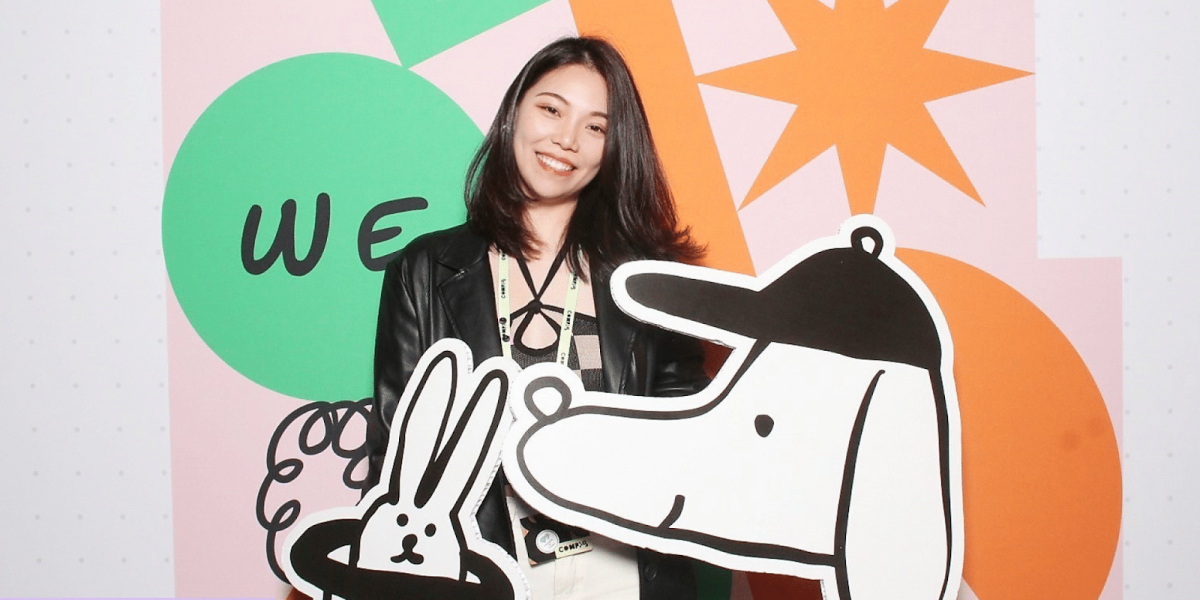

By: Maya Kruse
Maya: Today, we have the pleasure of speaking with Shuting Jiang, a renowned Product Designer whose work has made significant contributions to the fields of digital design and social impact. Shuting, thank you for joining us. To start, could you tell us a bit about your background and how you became interested in design?
Shuting: Thank you for having me. My design journey began at the intersection of art and technology. I’ve always been fascinated by the power of visuals to communicate complex ideas and how technology can solve real-world problems. My educational background in design provided me with technical skills. Still, my curiosity and empathy for users truly drove me to pursue a career in this field. I realized early on that design could be more than just aesthetically pleasing—it could be a tool for social good, addressing challenges and improving lives.
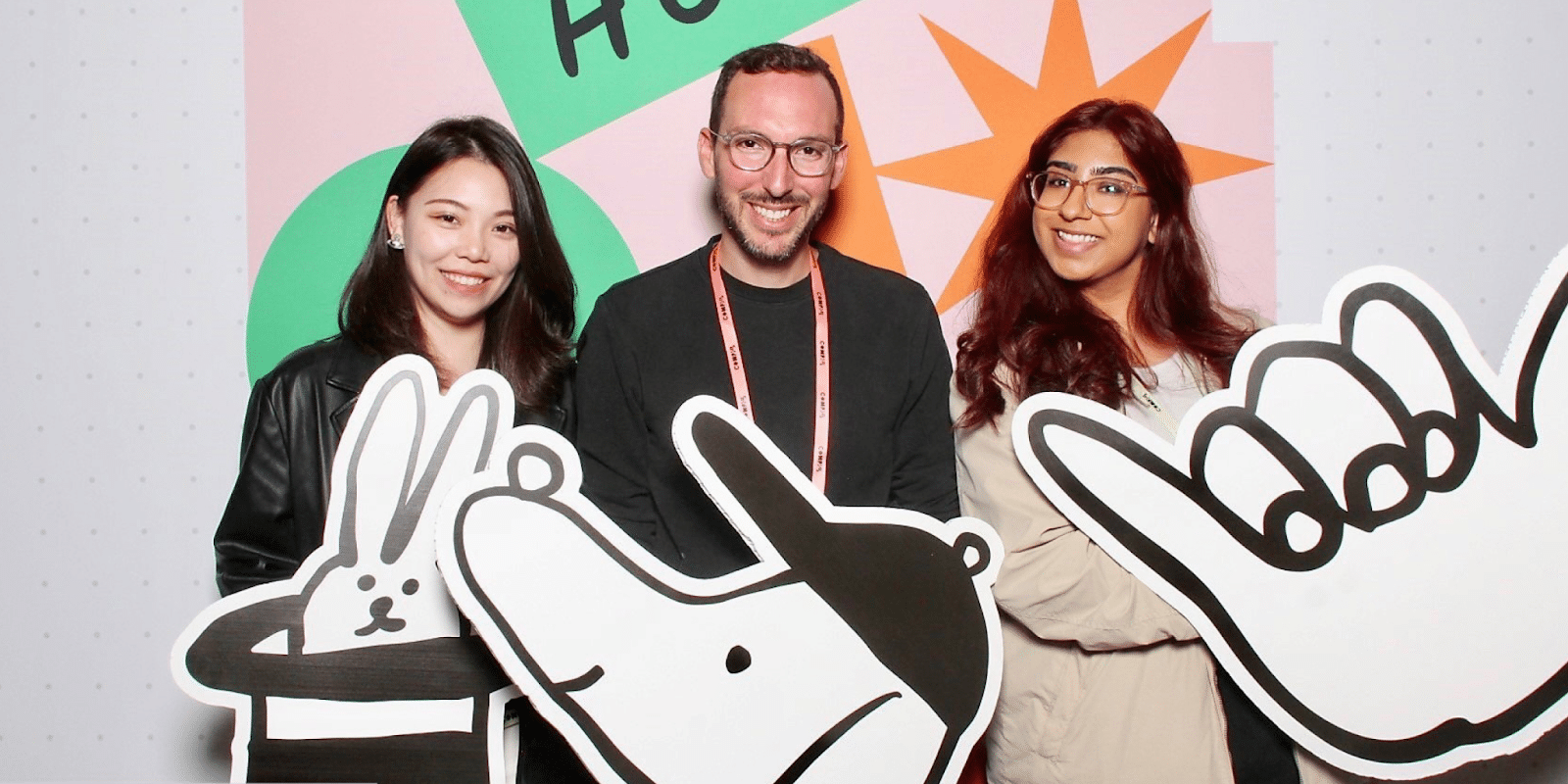
Photo Courtesy: Config 2023 |
Left: Shuting Jiang / Middle: Jacob Koesterich / Right: Maryam Khan
Maya: Your work has certainly demonstrated that. Shuting, before we dive into your recent projects, I’m curious—who has had the most significant impact on your design journey?
Shuting: One of the influential figures in my design journey has been Jacob Koesterich, the Director of Product Design at Madhive, who is also my direct manager. Our connection began during my job interview in 2020, where Jacob presented me with a design challenge centered around Citymeals on Wheels, a nonprofit charity. That experience was eye-opening for me; it was the first time I truly understood that design could be more than just a tool for business—it could also be a force for good.
Jacob’s influence didn’t stop there. He’s been instrumental in broadening my perspective on the potential of design to make a positive impact. Last Year, he took our entire design team to Config 2023, which attracts product professionals around the world. The event was incredibly inspiring; I had the chance to meet so many brilliant people and left with a wealth of new ideas and insights.
Maya: You’ve received several prestigious awards, including Gold at the London Design Awards and the K-Design Award. Can you share what these recognitions mean to you and how they influence your work?
Shuting: Receiving such recognition is incredibly humbling and affirming. These awards validate the hard work and dedication that goes into each project, but more importantly, they highlight the potential of design to make a meaningful impact. For instance, winning the Gold Award at the K-Design Awards for the “Wellness Support Platform for Immigrant Women” was particularly special because it underscored the importance of addressing the challenges faced by immigrant communities through thoughtful, user-centric design. These accolades motivate me to continue pushing boundaries and exploring new ways to make design more inclusive and impactful.
Maya: That’s incredible work. How do you see the role of empathy in your design process?
Shuting: Empathy is at the core of my design process. Understanding the user’s perspective—what they feel, what they need, and what challenges they face—is crucial to creating effective and meaningful designs. I believe that design is not just about solving problems; it’s about understanding those problems from the user’s point of view and crafting solutions that resonate with them on a personal level. This approach aims that the designs are not only functional but also deeply connected to the users they serve.
Maya: Your focus on social impact is evident in much of your work. How do you balance this with the business objectives of your projects?
Shuting: Balancing social impact with business objectives is definitely a challenge, but I see it as an opportunity for innovation. The key is finding the overlap between user needs and business goals. For example, a project like the “Wellness Support Platform” is socially impactful and offers businesses a way to engage with a broader, often underserved market. By focusing on creating value for users and businesses, I can design solutions that achieve social good and drive business success.
Maya: Your commitment to user-centric design is evident. You’re currently working on a new project that also aims to address significant mental health challenges. Could you tell us more about this ongoing work?
Shuting: Absolutely. My current project is focused on developing a wearable device that helps individuals detect and manage anxiety symptoms. Anxiety disorders are increasingly prevalent, especially among people under 45, and many individuals in this demographic do not seek treatment due to stigma, cost, or lack of awareness. The idea is to leverage wearable technology to monitor physiological signs of anxiety and provide real-time feedback through a connected app. We’ve just completed the research phase, which involved studying the prevalence of anxiety disorders and exploring how wearable technology can be integrated with therapeutic tools like fidget toys.
Maya: That sounds like a positive direction. Finally, what advice would you give to aspiring designers who want to make a difference through their work?
Shuting: My advice would be to stay curious, be empathetic, and always strive to understand the people you’re designing for. Design is a powerful tool for change, but its impact is only as strong as your connection to the users. Don’t be afraid to tackle big, complex issues—sometimes, the challenging problems are the ones that lead to the most innovative solutions. And remember, design is an ongoing learning process. Keep refining your skills, stay open to new ideas, and never lose sight of the potential your work has to make a real difference.
Maya: Thank you, Shuting, for sharing your insights and experiences with us. Your work is truly inspiring, and we look forward to seeing where your design journey takes you next.
Shuting: Thank you! It was a pleasure to share my story.
Published by: Khy Talara