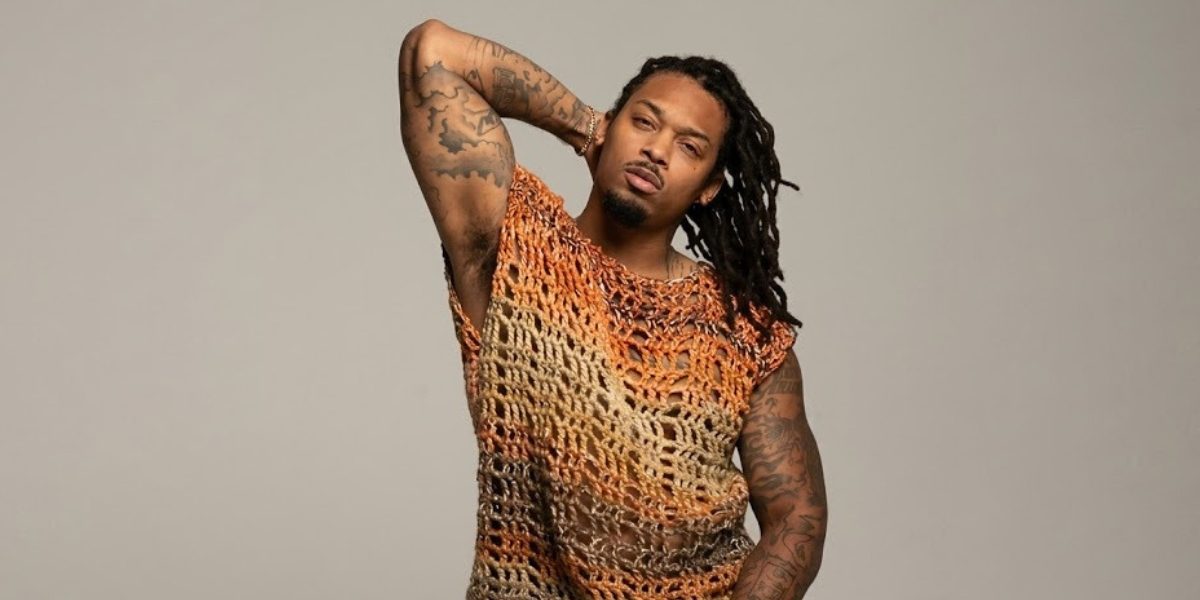

Born on January 10, 1993, in the heart of Washington, D.C., Malik Davage’s journey into music wasn’t a coincidence. It was destiny in motion. Raised on the timeless sounds of icons like Michael Jackson, David Ruffin, and Stevie Wonder, Malik developed an ear for greatness at an early age. Those influences didn’t just shape his taste; they ignited a passion that would define his life.
That passion first took center stage in the 3rd grade, when Malik stepped in front of his classmates and sang. What may have seemed like a simple childhood moment quickly became the foundation of something much bigger. From that point forward, he never looked back. His dedication and natural ability earned him recognition early on, including being named to the All-City Honors Chorus during middle school, an early sign of the star power he carried within.
By 2013, Malik’s talent had grown impossible to ignore. He took the stage on BET’s iconic 106 & Park and emerged victorious in the Wild Out Wednesday R&B contest, proving he could not only perform but dominate. Just a few years later, in 2017, he reached an even bigger audience on NBC’s hit show The Voice. In a defining moment, Malik turned the chair of Adam Levine, frontman of Maroon 5, a co-sign that solidified his place among rising elite vocalists.
But Malik Davage is more than a television moment. He’s a true performer. His voice has echoed through some of the East Coast’s most recognized venues, including The Fillmore Baltimore, Baltimore Soundstage, Throw Social, and Union Stage. Sharing stages and opening for established acts like Monica, Rico Love, Day26, and Kevin Ross, Malik consistently proves one thing: the stage is where he belongs.
What truly sets Malik apart isn’t just his vocal ability. It’s his purpose. Driven by an unshakable passion for music and a deep love for his daughter, Paris, he creates from a place of authenticity and legacy. Every note he sings carries intention. Every performance tells a story. Malik isn’t chasing trends. He’s building something timeless.
In an industry that often moves fast and forgets even faster, Malik Davage remains a rare force, an artist with staying power. A voice rooted in soul, sharpened by experience, and fueled by purpose.
And if his journey so far is any indication, this is only the beginning.
Malik Davage isn’t just making music. He’s creating a legacy that will echo for generations to come. He shares his music and updates on Instagram at @malikdavage.
As Malik continues to evolve as an artist, his trajectory points toward something far greater than momentary recognition. His sound reflects a bridge between classic soul traditions and contemporary R&B, allowing him to connect with multiple generations at once. That balance is not accidental. It’s the result of years spent studying the greats while refining his own voice into something unmistakably his.
There is also a discipline behind the artistry that often goes unseen. From vocal training to live performance refinement, Malik approaches his craft with the mindset of longevity. He understands that true success in music is not built overnight. It is constructed over time, through consistency, growth, and an unwavering belief in one’s identity.
Beyond the stage and studio, Malik’s presence represents something deeper: inspiration. For aspiring artists coming from similar backgrounds, his story is proof that talent combined with persistence can break through even the most competitive spaces. He doesn’t just perform. He sets a standard.
Looking ahead, the next chapter of Malik Davage’s career feels less like a question and more like an inevitability. With a foundation rooted in authenticity and a vision focused on legacy, he is positioned to leave a lasting imprint on the industry. Not just as a vocalist, but as an artist whose work carries meaning long after the final note fades.