
By: Maria Williams
Society must build communities that balance economic growth, social well-being, equity, and ecological health. Preserving green spaces and thoughtfully developing neighborhoods are vital in this context. Neglecting community development can lead to devastating effects, such as blight, depopulation, and a cycle of decline that’s difficult to reverse without concerted effort.
Such neglect was apparent in Detroit’s East Canfield Village, where the sisters Rhonda and Kim Theus witnessed their childhood neighborhood turn from a bustling community to one of empty homes, vacant lots, and eroded basic support systems. They founded Canfield Consortium, driven by their connection with their roots and a desire to restore the community to its former glory. It’s a nonprofit community development organization dedicated to empowering Detroit residents and stabilizing the East Canfield Village community.
The founders attribute the community’s decline to several factors including disinvestment, political disenfranchisement, and insufficient maintenance of residential and commercial properties. Issues like illegal foreclosures, often linked to over-taxation and unpaid water bills, have also played a role in the depopulation and deterioration of the neighborhood, which was once self-sufficient.
The Theus sisters discovered that city officials lacked a clear strategy to tackle the neighborhood’s issues. Distressed by this revelation, they recognized the need for a grassroots effort driven by individuals familiar with the area’s history to rejuvenate the community. This understanding led to the formation of the Canfield Consortium. President of Canfield Consortium Kim remarks, “We like telling the people that ‘You no longer need to leave our neighborhood to live in a better one.’ Our community is our legacy, and it’s our responsibility to honor it.”
Rhonda and Kim listened to the residents’ concerns and aspirations to better understand their needs. This approach ensured that the initiatives they developed were relevant. One of the issues tackled was the increasing number of vacant lots, which had become sites of illegal dumping. The founders acquired some of these lots through a strategic partnership with the Detroit Land Bank Authority.
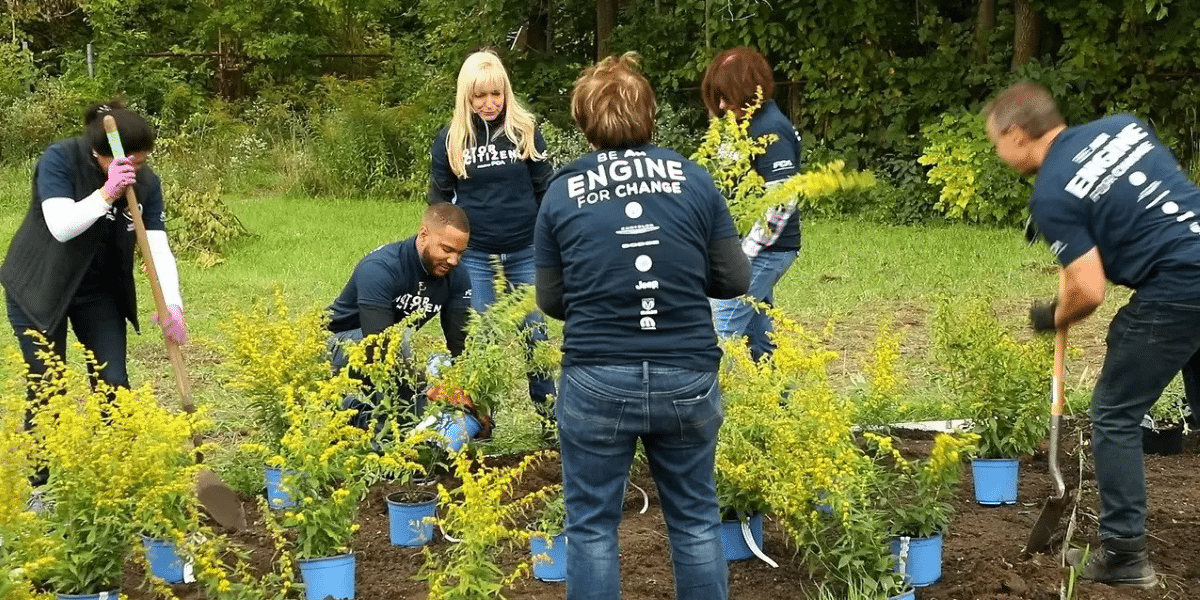
The organization’s first initiative is a community flower garden. Its goal is to bring beauty back to the neighborhood and instill a sense of pride among the people. The garden transformed a vacant lot into a vibrant space that symbolizes what was possible when the community came together. With the success of this initial venture, a second flower garden was built. The residents noticed decreased crime and illegal dumping, as the improved environment discouraged such activities and promoted a renewed sense of ownership.
Canfield Consortium soon launched its third project: the East Canfield Art Park. Rhonda and Kim aimed to support local artists and bring public art into the community through this venture, enriching the neighborhood’s cultural landscape. The Art Park opened in August 2021 and features rotating exhibitions and community events that highlight the work of Detroit artists.
Kim states, “Art is important because it tells our story—the history of Detroit and Black people throughout civilization. People respond to art more easily than words. We want those returning to our neighborhood after work to see something beautiful – something that represents their home.”
One featured piece was “New Forest, Ancient Thrones” by Jordan Weber, a New York-based artist known for his work at the intersection of social justice and environmental issues. Weber’s sculpture wasn’t only for the beautification of the space. It incorporates an air quality monitor and a solar battery to raise awareness of the environmental challenges in the community, especially those related to the pollution from a nearby auto manufacturing plant. The data collected from air quality monitors in the park will be used to advocate for policy changes and hold corporations accountable for the impact of their operations.
Essentially, the Art Park is part of a broader effort to address the environmental injustices in the neighborhood. Canfield Consortium is currently planning the second phase of this project. It will include a forest bathing element—a practice that reduces stress and improves health. The organization will plant conifer trees to purify the air and create a space where residents can experience the benefits of nature in an urban environment.
“As we began developing flower gardens, art spaces, murals, and beautifying the community, we made sure to include positive images of Black people,” shares Vice President Rhonda. “Kim taught me that it’s important to see these positive representations, especially within our community.”
Another significant project initiated by the organization is the establishment of neighborhood watches, which help combat crime that has become prevalent in the area. These innovative initiatives are slowly restoring the neighborhood to its former glory.
Reflecting on how much the organization means to her, the President shares: “Our work is fulfilling on a soul level. We’re excited to be part of revitalizing the community that raised us. It’s not easy. Many aren’t built for the kind of work we do. But looking back through the years, as we’ve gained momentum, there’s nothing more fulfilling than knowing the work you’re doing is making a difference.”
Canfield Consortium has more plans for the future. It intends to begin renovating houses to attract new residents and businesses. The organization aims to start this endeavor with its latest project – “Bring Jack’s Back.” This project will see the refurbishment of a six-unit building that was once the center of the community, housing a record store, grocery store, hair salon, and barbershop. It’s also working on Canfield Connect, a project that serves as a non-motorized greenway, making the neighborhood more walkable and accessible.
Support is needed for Canfield Consortium to turn East Canfield Village into a self-sustaining, thriving community. Those interested in lending a hand can get involved through funding, partnerships, or volunteering. Financial contributions will help fund the renovation of vacant properties and the development of new community spaces.
Meanwhile, partnerships with like-minded businesses, artists, and other organizations can provide the resources and expertise required to bring Canfield Consortium’s vision to life. Potential volunteers are welcome to assist with garden maintenance, spring cleanups, and event support. Supporting the organization in any means possible translates to playing a part in restoring a community for future generations to take pride in.
Published by: Khy Talara