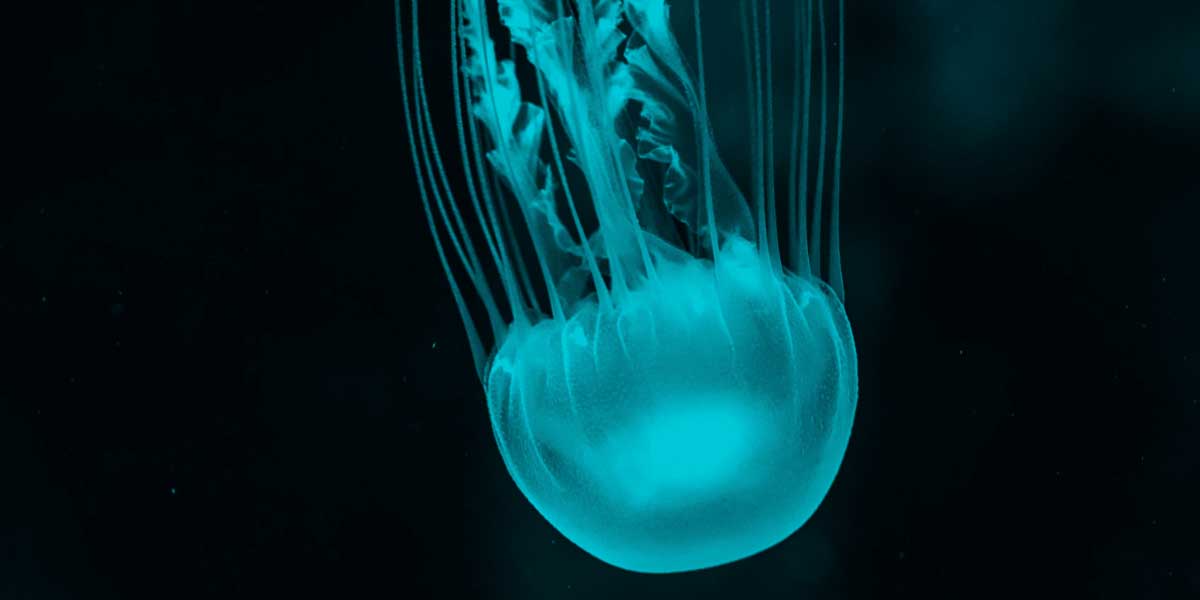

Jellyfish are among the oldest surviving groups of animals on Earth, with a history that stretches back hundreds of millions of years. Their simple bodies may seem fragile, but their evolutionary success tells a different story. Jellyfish and their relatives have survived dramatic changes in oceans and climate, adapted to different marine environments, and developed life cycles that allow them to thrive under a wide range of conditions.
Unlike fish, jellyfish do not have bones, brains, or complex organs. Their bodies are largely made of water and consist of a network of simple tissues and nerve cells. Yet this relatively simple design has persisted through geological eras, making jellyfish an important part of the story of marine evolution.
The history of jellyfish is also closely connected to the evolution of other animals. Fossil evidence suggests that early relatives of modern jellyfish appeared during some of the earliest stages of animal evolution, while the broader group they belong to includes corals, sea anemones, and other cnidarians.
Key Takeaways
- Jellyfish belong to an ancient group of animals with evolutionary roots stretching back hundreds of millions of years.
- Their simple body structure has allowed them to survive major changes in Earth’s oceans over geological time.
- Jellyfish are part of the cnidarian group, which also includes corals and sea anemones.
- Their life cycles can include both attached and free-swimming stages, giving them different ways to survive and reproduce.
- Modern jellyfish continue to adapt to changing marine environments, although human-driven ocean changes can create both opportunities and risks for different species.
Ancient Origins in the Oceans
The earliest history of jellyfish is difficult to reconstruct because their soft bodies rarely fossilize. Unlike animals with hard shells or bones, jellyfish usually leave little physical evidence behind after they die.
Scientists have nevertheless identified fossils that may represent ancient jellyfish or closely related organisms. Some of these fossils date back more than 500 million years, providing clues about the early development of soft-bodied marine animals.
During the Cambrian Period, when many major animal groups appeared and diversified, the oceans were already home to a wide variety of organisms. Ancient relatives of modern cnidarians were among the early participants in this expanding marine ecosystem.
The fossil record remains incomplete, but available evidence suggests that jellyfish-like animals have been part of Earth’s oceans for an exceptionally long time.
A Simple Body With a Complex Evolutionary History
Jellyfish are often described as simple animals, but simplicity does not mean evolutionary stagnation.
The typical jellyfish body consists largely of a gelatinous structure called the mesoglea, surrounded by layers of living tissue. They have a central digestive cavity and a network of nerves that helps them respond to their environment.
They also possess specialized cells called cnidocytes. These cells contain structures capable of delivering venom, allowing jellyfish to capture prey and defend themselves.
This combination of a simple body plan and specialized biological features has helped jellyfish survive across a remarkable range of marine environments.
The Jellyfish Life Cycle
One of the most important developments in jellyfish evolution is their complex life cycle.
Many species alternate between different body forms during their lives. After reproduction, a fertilized egg can develop into a larval stage known as a planula. The planula may attach to a surface and develop into a polyp.
The polyp can remain attached for a period of time before producing young jellyfish that eventually become free-swimming adults.
This life cycle gives jellyfish multiple ways to occupy their environment. The attached polyp stage can survive in one location, while the free-swimming medusa stage allows the organism to spread through the water.
Not every jellyfish species follows exactly the same pattern, but the flexibility of these life cycles has contributed to the group’s evolutionary success.
Surviving Major Changes to Earth
Jellyfish and their relatives have existed through periods of major environmental change, including shifts in ocean temperatures, sea levels, atmospheric conditions, and marine ecosystems.
Several mass extinction events dramatically altered life in the oceans. Many species disappeared during these periods, but jellyfish lineages survived and continued evolving.
Their ability to reproduce through different life stages and occupy different ecological niches may have contributed to their resilience.
However, survival over geological time does not mean every modern jellyfish species is protected from environmental threats. Individual species can still be vulnerable to pollution, habitat loss, overfishing, climate change, and changes in ocean chemistry.
From Ancient Seas to Modern Oceans
Today, jellyfish inhabit oceans across the planet, from coastal waters to the open sea and from tropical environments to colder regions.
Some species are capable of thriving in conditions that challenge other marine organisms. Jellyfish can sometimes benefit from changes that reduce competition or increase the availability of prey.
In certain coastal areas, scientists have observed increases in jellyfish populations. However, these changes are not universal, and jellyfish populations can fluctuate naturally over time.
Researchers continue to study how factors such as warming waters, nutrient pollution, changing currents, and declining populations of jellyfish predators may influence their distribution.
Jellyfish and the Future of Marine Ecosystems
The evolutionary history of jellyfish provides an important reminder that marine ecosystems are constantly changing.
Because jellyfish have survived for hundreds of millions of years, they are sometimes viewed as examples of evolutionary resilience. Yet their future will depend on how modern oceans change and how individual species respond to new environmental pressures.
Jellyfish also play important ecological roles. They are predators that consume plankton and other small organisms, while their larvae and adults can become food for fish, sea turtles, and other marine animals.
Large changes in jellyfish populations can therefore affect food webs and the balance of marine ecosystems.
Why Jellyfish Matter to Evolutionary Science
Studying jellyfish can help scientists understand some of the earliest stages of animal evolution.
Their nervous systems, sensory abilities, reproductive strategies, and developmental processes provide researchers with information about how complex biological systems evolved.
Jellyfish also demonstrate that evolutionary success does not always require a highly complex body. Their relatively simple anatomy has allowed them to survive for immense periods while adapting to changing environments.
Their history challenges the idea that evolution always moves toward greater complexity. Instead, it shows that organisms can remain successful when their biological design is well suited to the environments they inhabit.
An Ancient Survivor With a Changing Future
The evolution of the jellyfish is a story that begins deep in Earth’s history and continues in modern oceans.
From ancient jellyfish-like organisms to the diverse species found today, these animals have survived dramatic changes in marine environments. Their simple bodies, specialized stinging cells, and flexible life cycles have helped them persist through geological eras.
Yet the modern ocean is changing at a pace that presents new challenges. Understanding how jellyfish evolved and how their populations respond to environmental pressures can help scientists better understand the future of marine ecosystems.
Jellyfish may appear delicate, but their evolutionary history reveals extraordinary resilience. Their continued presence in Earth’s oceans offers a living connection to a time when animal life was still beginning to diversify—and a reminder that even the simplest body plans can have remarkable staying power.
FAQs
How long have jellyfish existed?
Jellyfish and closely related organisms have ancient evolutionary roots that extend back hundreds of millions of years. Fossil evidence suggests that jellyfish-like animals existed at least as far back as the Cambrian Period.
Are jellyfish older than dinosaurs?
Yes. Jellyfish and their relatives appeared in Earth’s oceans long before dinosaurs evolved. Their evolutionary history extends back hundreds of millions of years.
Are jellyfish fish?
No. Despite their common name, jellyfish are not fish. They are invertebrates and belong to the cnidarian group of animals, which also includes corals and sea anemones.
How did jellyfish survive for so long?
Their simple body structure, specialized stinging cells, and flexible life cycles may have helped jellyfish adapt to changing marine environments. Different species have also evolved to occupy a wide range of habitats.
Why are jellyfish important to the ocean?
Jellyfish are predators and prey within marine food webs. They consume plankton and other organisms and are themselves eaten by various marine animals, including some fish and sea turtles.
Are jellyfish populations increasing?
Some jellyfish populations have increased in particular regions, but global trends are more complicated. Population changes vary by species and location and can be influenced by temperature, food availability, ocean conditions, and human activity.