Busking: How Lighting Designer and DJ Roksana Zhang Is Teaching the Lights to Listen

By: Yuxuan Fan

From a Soul in the Horn night at 99 Scott to a UK rave brand’s U.S. debut at The Brooklyn Monarch, a lighting designer who also DJs is building a way for the performance itself to run the room.

In lighting, “busking” has nothing to do with a guitar case on a sidewalk. It is the trade’s word for running a show by hand. There is no timeline and no cue list locked to a track. The operator stands at the console, listens, and plays the rig in real time, one hand on the faders and the other ready for whatever the DJ does next.

For Roksana Zhang, a New York–based lighting designer who also performs as a DJ, busking is less a technique than a working philosophy. She arrived at it by a long route. She studied at the Central Academy of Fine Arts in Beijing, then took a master’s in urban design and planning at the University of Sheffield, where her research asked how construction noise might be turned into a pleasant soundscape. Alongside her studies she worked in A&R in London. Then she moved to New York for Berklee NYC’s Live Music Production and Design program, where she found lighting and began DJing in earnest. The result is a designer who reads a room like an architect, hears a track like a performer, and lights it like someone who is listening.

Since the fall of 2025, Zhang has worked with Kawa Lighting, the New York production company founded by lighting designer Darren Kawa, on more than a hundred shows across Manhattan and Brooklyn, in rooms including 99 Scott, 154 Scott, Nebula, Tao Downtown, Signal, Deluxx Fluxx, Virgo, PhD Rooftop, Gospel, and Loosie’s. She programs on grandMA consoles, routes the DMX, hangs and focuses the rig, and then, when the doors open, busks.

The Room at 99 Scott

Ask Zhang where a profile should start and she does not pick a headliner. She picks a party: Soul in the Horn, the Brooklyn dance night featuring DJ Natasha Diggs, at the warehouse venue 99 Scott in Bushwick. She lit two of its nights this spring, programming the show in advance and running the console live, moving the look with the music and the energy on the floor.

What she remembers is not a cue. It is the people who found her afterward. Someone would ask what she did. She would say she ran the lights. “You killed it,” they would say. Others came over simply to tell her the lighting was good.

“Lighting usually works backstage,” she says. “So when a crowd notices it, remembers it, and goes out of their way to tell you, you feel the work was actually seen.”

Her method begins with the fact that she performs too. “DJing and lighting let me build a show from both sides, the performer’s and the audience’s,” she says. “The DJ on stage, the lighting and sound team behind them, the people who came out for that night: everyone has carried weeks or months of preparation into the same room. That energy is big. I try to catch every change in the music.”

Knowing how a track is built, she assigns fixtures to musical parts. Beam lights hit with the kick. Wash lights shift color and intensity with the lead melody. “In my head the room is a big three-dimensional Ableton session,” she says. “Each fixture is a track, and each track belongs to a different layer of the music. The lights stop being something that illuminates the stage and become the structure of the music, made visible.”

She has carried that approach into a widening list of nights. She was on the crew for Paul van Dyk at 99 Scott, and was lighting designer for Vini Vici, the Israeli duo who have played Tomorrowland’s main stage, at Nebula in September. She lit ACRAZE, whose “Do It To It” has drawn more than eight billion combined streams, at 154 Scott; DJ Habibeats at 99 Scott; and Arjun Rampal at PhD Rooftop, along with brand nights for Hypebeast and Toyota and for Luar with Lunazul Tequila. She handled lighting execution on the production behind Ellie Goulding’s official video for “Ravers,” which has passed a million views on YouTube. And she has stepped out from behind the console to play, including an August bill headlined by Ben Nicky, No. 66 on DJ Mag’s 2026 Top 100 DJs poll.
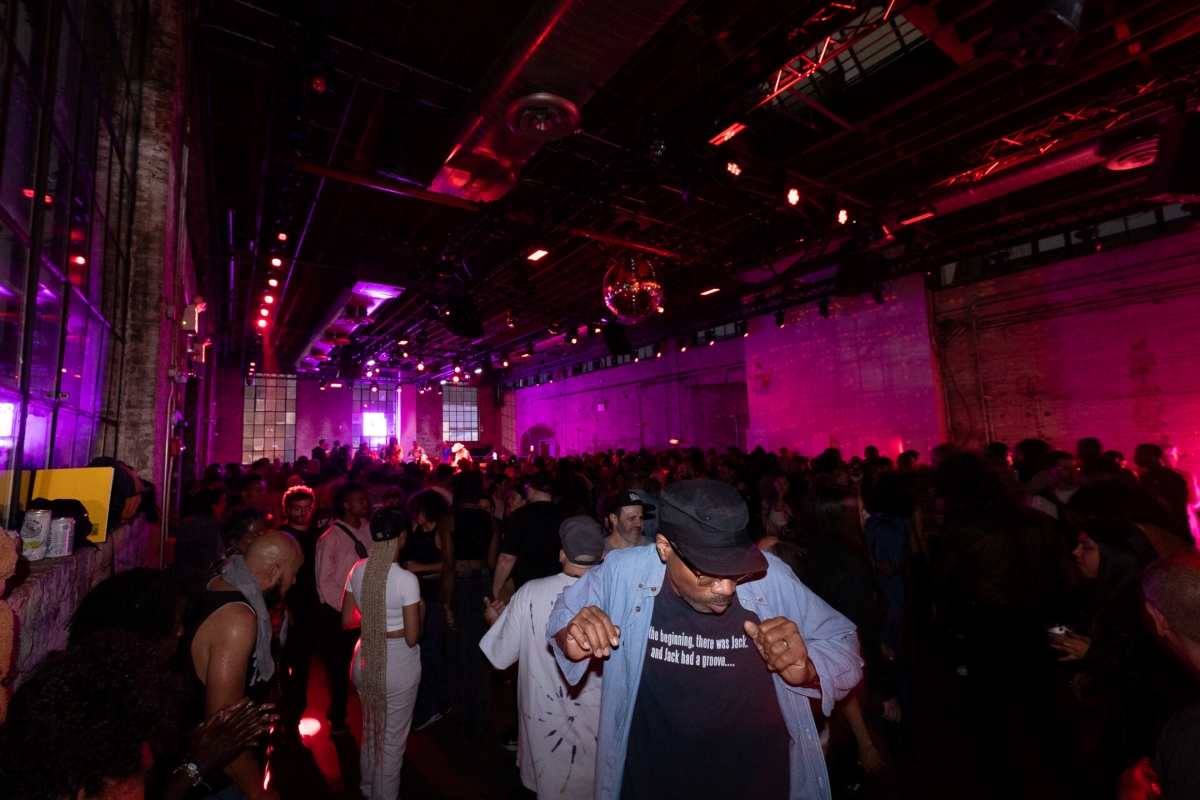
Photo Courtesy: Power Quevedo (Soul in the Horn at 99 Scott, Brooklyn, May 22, 2026. Lighting by Roksana Zhang)

The DJ as Show Controller

The more rooms she lit, the more one gap bothered her. DJ shows are multiplying, and so are the places that host them: rooftops, boats, the park Under the K Bridge, galleries, warehouses. A 2026 Remitly study of online searches across 145 countries found that DJ had become the most searched-for dream job in the United States. Yet budgets and gear vary widely from room to room. An established artist or a large venue can hire a full production team. A mid-sized party usually cannot afford a dedicated lighting and visuals crew, let alone custom video for every track. The music and the energy are there. The picture does not keep up.

Zhang’s answer was to look at who is already at the center of the show. “The DJ is already there, already performing, already touching hardware all night,” she says. “So instead of building a separate system for every part of the show, I started asking how the DJ’s own equipment could become the interface for the lights and visuals.”

She taught herself the stack to make that possible: MIDI, DMX, grandMA, TouchDesigner, Unreal Engine, networking, and show control, and built it into a DJ-controlled visual system. A move on the mixer changes the picture. A transition shapes a visual effect. The performance itself becomes an input to the room. Tools like ShowKontrol already pull live data from DJ decks and feed it to lighting and video rigs; her research sits one layer up. “I want the system to choose images that fit the mood of the music right now, not just move with the beat,” she says. “And it has to run reliably in a live room without a professional VJ.”

Today a DJ deck can drive the visuals directly while she mixes, and she has filmed the result as a hard-techno live set. The next step is a system that listens: analyzing rhythm, timbre, sections, and energy, reading what the music is doing emotionally, and choosing visuals to match.

She has not kept the work to herself. Her DJ tutorials on Patreon have nearly 700 subscribing DJs, and when members of her Discord said the material was hard for beginners, she built a beginner track from the ground up. By her count, the related content has drawn roughly six million views.

“The goal was never to replace lighting designers or VJs or production teams,” she says. “It was to lower the barrier to an immersive show in the first place, so that more spaces can become places for music.”

Thanksgiving Eve at the Monarch

The night Zhang is looking toward is November 25. FERAL, the UK hard-techno rave brand that launched at E1 in London in 2024, opens its U.S. debut tour at The Brooklyn Monarch in Williamsburg, presented by SLIST, with Zhang on lights. It will be, she says, the first time her DJ-controlled visual system runs inside a full commercial rave.

“I want people to see that the DJ is not only mixing,” she says. “The DJ is also making the visuals happen. What I do on the mixer changes the picture, and the music-analysis side I’m developing should let the visuals respond to the structure and the mood of a track on their own.”

Underneath it is a plain conviction about live music. “Music, light, and image should happen together in the room,” she says. “Not on three separate loops.”

For now, the lights are still learning to listen. On the night, she will be the one at the console, listening for them.

Zhang’s lighting work and live sets are collected on her Instagram.

IBC Tote Recycling: A Sustainable Solution for Industrial Waste Management

Intermediate Bulk Containers (IBCs) are widely used across industries to store and transport liquids, raw materials, chemicals, and other bulk products. Their sturdy construction and large capacity make them valuable for manufacturing facilities, warehouses, and distribution businesses. However, these containers eventually reach a point when they need to be repaired, reconditioned, or replaced. Managing them responsibly is essential for reducing waste and maintaining efficient operations.

IBC tote recycling offers an environmentally responsible way to handle used industrial containers. By recovering materials and extending the service life of suitable totes, businesses can reduce disposal requirements, conserve resources, and improve their overall waste management practices.

What Is IBC Tote Recycling?

IBC tote recycling involves collecting used containers and evaluating them for reuse, reconditioning, or material recovery. Most standard IBCs feature an inner bottle made from high-density polyethylene (HDPE), a protective metal cage, and a pallet base constructed from plastic, metal, or other materials.

The recycling process begins with determining whether a container can safely serve another purpose. Totes that remain in suitable condition may be cleaned and reconditioned for approved applications. If the inner bottle is damaged but the outer cage remains serviceable, replacing the bottle may offer a practical alternative to discarding the entire unit.

Containers that cannot be restored are dismantled, allowing recyclable materials to be separated and sent to appropriate processing facilities. This approach helps reduce waste while recovering useful resources from industrial packaging.

How Does the Recycling Process Work?

IBC tote recycling typically follows several stages to ensure that containers are managed according to their condition, previous contents, and potential for recovery.

1. Collection and Transportation

The process starts with gathering used totes from manufacturing plants, warehouses, commercial facilities, and other industrial locations. Businesses producing large quantities of empty containers can coordinate scheduled collections with recycling providers. Before pickup, containers should be prepared according to the provider’s handling and transportation requirements.

2. Inspection and Sorting

After collection, each container is assessed for damage, leaks, rust, contamination, and general structural condition. Information about the materials previously stored inside is also important because residues can affect whether a tote is safe to clean, reuse, or recycle.

3. Cleaning and Reconditioning

Containers that qualify for reconditioning undergo suitable cleaning and inspection procedures. Depending on their condition, the original inner bottle may be retained or replaced. Metal cages and pallet bases can also be reused when they satisfy the relevant safety and quality requirements.

4. Material Recovery

When a tote cannot be restored for further service, its components may be separated for recycling. HDPE plastic can be processed into suitable recycled materials, while steel and other recoverable metals can enter their respective recycling streams. Separating these components helps minimize unnecessary disposal.

Environmental Benefits of Recycling IBC Totes

Recycling used IBC totes can help businesses reduce the volume of industrial waste they generate. Facilities that regularly receive bulk materials often accumulate numerous empty containers, which can occupy valuable space and increase disposal demands. Recycling provides a practical way to manage this buildup more responsibly.

Reconditioning also makes better use of resources already invested in manufacturing containers. Keeping suitable totes in circulation can reduce the need to purchase replacements as frequently, depending on the application and condition of the containers.

Furthermore, recycling programs can support corporate sustainability objectives. Businesses can monitor the number of containers recovered, the materials recycled, and the quantity of waste diverted from landfills. These measurements provide useful information for environmental assessments and internal sustainability reports.

Cost Savings and Operational Advantages

A well-planned recycling program can help businesses manage industrial packaging expenses. Reconditioned IBC totes may be more economical than new containers when they meet the requirements of the intended application. This can be particularly valuable for companies that regularly handle bulk liquids or industrial ingredients.

Removing unused containers also improves storage efficiency. Excess totes can create clutter in loading areas, warehouses, and outdoor storage spaces. Regular collection helps maintain a more organized working environment and allows facilities to use available space more effectively.

Working with an established recycling provider can further simplify operations by coordinating collection, inspection, reconditioning, and material recovery. Businesses should compare service arrangements and request pricing based on container quantities, condition, location, and transportation needs.

Safe Handling and Regulatory Compliance

Safety must remain a priority when dealing with used IBC containers. A tote that appears empty may still contain chemical residues capable of creating environmental or workplace hazards. Businesses should identify the container’s previous contents and consult relevant safety data sheets before arranging transportation or recycling.

Applicable environmental regulations may establish specific requirements for empty containers, hazardous residues, transportation, and disposal. For instance, Patrick Kelly Drums evaluates whether containers meet RCRA-empty requirements when determining pickup eligibility. Businesses should confirm the relevant criteria with their recycling provider rather than assuming that every empty-looking tote qualifies.

Maintaining accurate records of container collection and processing can also support environmental audits and internal compliance procedures. Containers holding hazardous substances should be managed through qualified service providers using appropriate handling practices.

Choosing a Reliable IBC Tote Recycling Partner

Selecting the right recycling company can make industrial container management more convenient. Businesses should evaluate whether a provider offers dependable pickup arrangements, appropriate inspection procedures, reconditioning options, and responsible material recovery services.

Transparent pricing and clear communication are also important. Companies should understand collection schedules, preparation requirements, container acceptance criteria, and any documentation available after processing. For organizations managing large numbers of totes, a consistent collection arrangement can help prevent unnecessary storage problems.

Businesses looking for professional container collection and recycling can explore ibc tote recycling services through Patrick Kelly Drums. The company offers IBC tote and drum pickup services, including options for inspection, reconditioning, and recovery of reusable materials. Working with an experienced provider can help industrial facilities establish a more organized approach to used container management.

Where IBC Tote Recycling Fits in a Waste Management Strategy

IBC tote recycling gives industrial businesses an effective way to manage used containers while supporting resource conservation and waste reduction. Through organized collection, careful inspection, suitable reconditioning, and responsible material recovery, companies can extend container life and reduce unnecessary disposal.

Beyond environmental benefits, recycling can improve storage efficiency and help control packaging expenses. By choosing a qualified service provider, maintaining appropriate records, and following relevant safety requirements, businesses can make IBC tote recycling a practical part of their long-term waste management strategy.

What a Full Health Check in Singapore Actually Covers

The phrase “full health screening” gets used loosely, so it helps to know what a thorough check actually includes and why each part earns its place.

How Does a Full Health Check Begin?

It usually begins with a conversation. Family history, sleep, stress, alcohol and exercise patterns tell a doctor where to look harder, and they often explain a number that would otherwise seem random. A consultation that skips this step is reading tests without context. Current medications and any earlier test results belong in that discussion too.

What Do the Blood Tests Cover?

The bloodwork covers several fronts at once. A complete blood count flags anaemia and hidden inflammation. A metabolic panel reads kidney and liver function, the two organs most affected by the slow damage of middle age.

Glucose and HbA1c show how the body handles sugar, with prediabetes the common finding among men in their thirties and forties who feel fine. A lipid profile, ideally with ApoB, goes beyond total cholesterol and estimates the actual number of particles that can lodge in artery walls, the mechanistic detail that matters for cardiovascular risk.

Which Cancer Screenings Belong in a Health Check?

Cancer markers and age-appropriate cancer screening sit alongside the bloodwork. Colorectal screening is the clearest win in the evidence. In Singapore, national guidance starts it at 50 for average-risk adults, though a family history of the disease can bring that forward, and some international guidelines begin at 45.

Prostate discussion is individual from around 50, and shared decision-making matters more than blanket testing.

What Do Blood Pressure and Body Composition Add?

Blood pressure and body composition close the picture. Both are measured in seconds but predict decades, and a reading that creeps from ideal to high-normal across three years deserves attention even when each individual result looked acceptable. Many checks also add a resting ECG and a lung function test, which record heart rhythm and breathing capacity in a few minutes.

Why Do Interpretation and Follow-Up Matter?

What turns all this into prevention rather than data collection is interpretation and follow-up. Singapore’s Screen for Life programme subsidises checks for eligible residents, and private clinics extend the idea into continuous, unhurried care where results are explained and trends tracked over years. Health screening in Singapore works best as an annual habit with the same doctor reading the numbers each time, not a one-off scan during a promotion period.

The whole appointment takes a couple of hours. The conditions it is designed to catch early, such as diabetes, kidney disease, cardiovascular disease and several cancers, take years to develop. That asymmetry is the entire argument.

Disclaimer: This article is provided for general informational and educational purposes only and does not constitute medical advice, diagnosis, or treatment. Health screening recommendations, including the appropriate tests, screening intervals, and starting ages for conditions such as cancer, diabetes, cardiovascular disease, and other health concerns, can vary based on age, sex, family history, medical history, symptoms, risk factors, and applicable clinical guidelines. Not every test discussed is appropriate or necessary for every individual. Readers should consult a qualified healthcare professional to determine which screenings and tests are appropriate for their individual circumstances and should not rely on this article as a substitute for professional medical evaluation or advice.

Edenwald Senior Center Reopens in Bronx After Decades of Closure

The Edenwald Senior Center reopened in the Bronx on October 22 after a roughly 25-year closure. Renamed for longtime tenant leader Walter J. McNeill, the facility includes space for meals, activities, and computers. Its reopening also marks a milestone in a $783 million renovation of Edenwald Houses, where some work remains unfinished.

Key Takeaways

  • The Edenwald Senior Center reopened on Thursday, October 22, 2026, after approximately 25 years of closure.
  • The restored center is named for Walter J. McNeill, the longtime president of the Edenwald Tenant Association.
  • A commercial kitchen, event space, and computer lab are included, with meals and transportation support announced through Bronx nonprofit R.A.I.N.
  • The community center and Susan Wagner Day Care also reopened. NYCHA identifies $8.1 million in renovations to the senior and community centers.
  • The wider $783 million Edenwald Houses renovation was estimated to be 94% to 95% complete at the reopening.

The Edenwald Senior Center returned to service on October 22, 2026, at a housing development with nearly 5,000 residents and 2,035 apartments. The opening restored a space that older residents had sought for decades, while two other community facilities on the property reopened on the same day.

The senior center now bears the name of Walter J. McNeill, who has served as Edenwald Tenant Association president for 33 years. McNeill described the return as “the proudest moment of my 33 years as Tenant Association president” in a public statement released for the ceremony.

The center’s opening is distinct from the completion of the overall housing renovation. City officials said the property-wide project was about 94% to 95% finished on October 22, with some work still underway.

Resident Advocacy Brought the Edenwald Senior Center Back

Edenwald Houses was built in 1953 and has 40 residential buildings in the northeast Bronx. It is the New York City Housing Authority’s largest development in the borough and its third-largest across the city, according to the October 22 announcement.

The effort to reopen the senior center predates the current construction project. In June 2023, when NYCHA announced financing for Edenwald’s rehabilitation, McNeill identified the return of the senior center as a priority for residents. The announcement described a restored gathering place for older tenants as part of the new service plan.

Resident representatives had a formal role in selecting the renovation team in 2021. NYCHA said subsequent planning included meetings, surveys, in-home assessments, and other consultations that shaped repairs to apartments, shared buildings, and outdoor areas.

McNeill said at the reopening that some older residents had remained at home during the COVID-19 pandemic without an operating center where they could meet neighbors. His remarks linked the return of the facility to a need that residents had raised long before the redevelopment financing closed.

The city said the center had been closed for more than two decades, while McNeill described a 25-year wait. The October 22 announcement did not establish a precise original closing date or explain the circumstances of the shutdown.

The senior center was renamed during the same reopening event that recognized McNeill’s role in the tenant association. The name change and the return of the facility were announced together, rather than as separate projects.

Meals, Transportation, and a Computer Lab Are Part of the Reopening

The renovated Edenwald Senior Center contains a commercial kitchen, an event space, and a computer lab, according to the city’s October 22 announcement. The work also included upgrades to heating and cooling, electrical and mechanical systems, flooring, walls, windows, and carpentry across the restored community facilities.

Regional Aid for Interim Needs, known as R.A.I.N., is the Bronx nonprofit identified to provide meals and transportation support. The organization was named in NYCHA’s 2023 project materials as a service partner for the site, alongside plans for recreational activities, food services, and physical health programs for seniors.

The 2026 announcement confirms that the center has reopened, but it does not list a daily program calendar, eligibility requirements, or transportation routes. A reopened building and an announced service provider do not establish when every proposed activity will begin.

R.A.I.N. is also associated with senior apartments at Stevenson Square, a separate development in Soundview. Its involvement there does not establish identical program schedules or enrollment procedures for Edenwald residents.

The commercial kitchen, event space, and computer lab are among the specific facilities identified in the city’s description of the restoration. However, the announcement does not specify whether computer instruction or particular meal sessions began on opening day.

NYCHA had also described broader support for Edenwald households in its original modernization plan. That 2023 plan named Catholic Charities for counseling and assistance with public benefits, services separate from the senior center’s specifically announced meals and transportation support.

Community Center and Susan Wagner Day Care Reopen With Repairs

The October 22 event also marked the reopening of the Edenwald Community Center and Susan Wagner Day Care. Their completion accompanied the senior center’s return, although each facility serves a different function on the housing campus.

Mosholu Montefiore Community Center is identified as the community center operator. City officials announced youth programming, a new storefront, and improved accessibility at the renovated space, in addition to repairs to building systems and interior finishes.

Susan Wagner Day Care received a modernized outdoor play area, new flooring and plumbing, and accessibility improvements. The city’s statement also reports full lead paint abatement at the child care facility, identifying work completed as part of the renovation.

That work is relevant to the broader issue of NYCHA child care center abatement, which was the subject of a separate citywide announcement earlier in 2026. The public reopening materials do not say whether Susan Wagner was among the facilities covered by that wider effort.

NYCHA put the cost of renovations to the Edenwald community and senior centers at $8.1 million. That figure is one component of the development’s larger $783 million modernization and should not be read as the total cost of every apartment and building improvement at Edenwald.

The city’s reopening release identifies the facility operators and the kinds of services associated with each center. It does not provide a complete set of operating hours, registration procedures, or program dates for the community center or day care.

Edenwald Houses Renovation Was 94% to 95% Complete

The three reopenings are part of a $783 million modernization of Edenwald Houses under NYCHA’s Permanent Affordability Commitment Together program, or PACT. The development converted to a project-based Section 8 arrangement in June 2023, after the renovation team was selected in 2021.

Under PACT, NYCHA says it retains ownership of the land and buildings, while designated partners carry out renovations and property management. Residents retain established rights, including permanent affordability and succession protections, according to the housing authority.

The project team includes Camber Property Group, Henge Development, and SAA | EVI. NYCHA’s earlier records identify L+M Builders Group as the general contractor and C+C Apartment Management as the property manager, providing separate roles for construction and ongoing building operations.

The larger repair plan covers new kitchens, bathrooms, windows, flooring, and paint inside apartments. It also includes lead paint removal and mold remediation where necessary, along with roof and facade repairs, upgraded heating and cooling, improved security, and changes to outdoor spaces.

The planned work extends beyond individual apartments. NYCHA listed free broadband, common-area upgrades, landscaping, and outdoor amenities in the development-wide scope, which helps explain why the restoration of the shared centers was treated as a separate milestone.

During the October 22 event, city officials estimated that the overall project was 94% to 95% finished and said apartment work was complete. They identified landscaping among the remaining tasks. The city did not announce a specific final completion date at the reopening.

The reopening of the Edenwald Senior Center does not mean all remaining property work was completed. The 94% to 95% estimate applied to the overall modernization, while city officials identified landscaping as one of the outstanding tasks.

Frequently Asked Questions

When did the Edenwald Senior Center reopen?

The Edenwald Senior Center reopened on October 22, 2026, at Edenwald Houses in the northeast Bronx. The reopening followed approximately 25 years of closure, according to tenant leader Walter J. McNeill.

Who is the senior center named for?

The center is named in honor of Walter J. McNeill, the longtime Edenwald Tenant Association president. City officials announced the name during the same event that marked the facility’s reopening.

What services are planned at the center?

The renovated facility includes a kitchen, event space, and computer lab. R.A.I.N. is identified as the provider of meals and transportation support, but the October 22 announcement does not specify operating hours or a full program schedule.

Did the day care center reopen too?

Yes. Susan Wagner Day Care reopened alongside the senior and community centers, with improvements that included a renovated outdoor play area, plumbing work, accessibility upgrades, and full lead paint abatement.

Is the full Edenwald Houses renovation finished?

Not as of October 22. City officials estimated that the $783 million modernization was about 94% to 95% complete, with landscaping among the remaining work.