Hudson Tunnel Project Begins Boring First New Rail Tunnel Under the Hudson in Over a Century

The Gateway Development Commission launched tunnel boring for the $16 billion Hudson Tunnel Project on September 28, 2026, in North Bergen, New Jersey. The work starts the first new rail tunnel beneath the Hudson River in more than a century, a crossing built to serve 200,000 daily riders traveling between New York and New Jersey.

Key Takeaways

  • The first tunnel boring machine will begin digging within days of the September 28 ceremonial launch, once final testing is complete, and a second machine will follow soon after.
  • The first two machines will cut 5,100 feet through the Palisades Cliffs, from a portal in North Bergen to the Hudson County Access Shaft in Weehawken.
  • Each machine is expected to advance roughly 30 feet per day and reach the access shaft about one year after launch.
  • Four machines will build the full tunnel. A second pair, designed for the mixed ground under the river, will take over at Weehawken and continue to Manhattan.
  • Each first-phase machine weighs more than 1,680 tons and has a cutterhead 28 feet, 8 inches in diameter.
  • The new tunnel is planned to open in 2035, with rehabilitation of the existing North River Tunnel expected to finish in 2038.

A Single Century-Old Tube Carries The Region’s Rail Commute

Every Amtrak and NJ Transit train between New Jersey and Penn Station currently runs through the North River Tunnel, which has been in continuous service since 1910. The Hudson Tunnel Project describes that tube as a leading cause of train delays for hundreds of thousands of daily passengers. It also still carries damage from Superstorm Sandy in 2012.

The Hudson Tunnel Project is designed to fix that bottleneck in two steps. First, a new two-tube tunnel will be built alongside the old one. Then, once trains can shift into the new tubes, the North River Tunnel can be taken out of service and rehabilitated without cutting capacity across the river. For commuters, that sequence matters as much as the new construction. Today, any signal failure, power problem, or disabled train inside the existing tube can ripple across the Northeast Corridor within minutes.

New York co-chair Alicia Glen framed the stakes in plain terms: “New York City doesn’t work without efficient, dependable public transportation.” Her New Jersey counterpart, Balpreet Grewal-Virk, offered a line many riders would recognize: “New Jerseyans know the pain of a delayed train.”

Trans-Hudson riders have already absorbed costs tied to regional transit upgrades, including the PATH fare increase funding the Port Authority’s system overhaul. The tunnel boring start is the first visible sign of where the separate, larger rail investment is headed. The Port Authority of New York and New Jersey is contributing $2.7 billion to the Hudson Tunnel Project and managing delivery of the Palisades construction package.

Two Machines Will Cut 5,100 Feet Through The Palisades

The first phase of tunnel boring runs beneath the Palisades Cliffs, the band of hard, dry rock on the New Jersey side of the river. The two machines will bore the parallel tubes at the same time, heading east from North Bergen toward Weehawken. At about 30 feet per day, including scheduled maintenance pauses, the trip is expected to take roughly a year.

At the Hudson County Access Shaft, crews will lift the first pair of machines out and lower in a second pair built for the softer, mixed ground conditions beneath the Hudson. That second pair will carry the tubes the rest of the way to Manhattan, where they will connect to tracks west of Penn Station.

How A Single Shield Machine Moves Through Rock

The Palisades machines are single shield tunnel boring machines, a design suited to hard rock. Each has a rotating cutterhead fitted with disc cutters that press against the rock face and break it into chips. Buckets collect the excavated rock and feed it onto a conveyor belt, which runs through a trailing gantry about 500 feet long before the material is hauled out.

As the machine advances, an erector arm places precast concrete segments that form the permanent tunnel lining. Hydraulic thrust jacks then brace against that finished lining to push the machine forward. In effect, the machine builds its own track as it goes.

Amtrak’s representative on the commission, Vice Chair Tony Coscia, drew the contrast with the existing tube. He noted that the North River Tunnel was “built by hand a decade before the first commercial radio broadcast.”

Nearly Three Years Of Groundwork Came Before The First Cut

The September 28 launch follows construction that began in late 2023. Contractors built a bridge supporting Tonnelle Avenue in North Bergen to make room beneath the roadway for the machines’ gantries. They also excavated the launch box where the boring begins.

The machines themselves took more than a year to manufacture, and each one has nearly 100 complex components. After factory testing at the end of 2025, they were taken apart, shipped to New Jersey, and reassembled and tested on site over several months.

The first phase of boring is being carried out by the Schiavone Dragados Lane joint venture under the Palisades Tunnel construction package. The Hudson Tunnel Project is organized into ten construction packages. The first was completed in early 2026, and six more are under way.

Gateway Development Commission CEO Tom Prendergast called the milestone “the culmination of years of work” by the people who planned and designed the project.

Riders Gain Redundancy And Capacity Once The New Tubes Open

The immediate benefit of the Hudson Tunnel Project is redundancy: a second path under the river when the first one fails. The longer-term benefit is capacity. The Regional Plan Association has projected that the new tunnels will double trans-Hudson rail capacity to 48 trains per hour in the peak direction. That would shift the region’s pressure point to Penn Station’s platforms and the tracks feeding it.

Riders will not feel that change for close to a decade. For now, the Hudson Tunnel Project has moved from preparation into active excavation, and its progress will be measured in feet per day beneath the Palisades.

FAQs

When Will The New Hudson River Rail Tunnel Open?

The new tunnel is planned to open in 2035. Rehabilitation of the existing North River Tunnel is expected to be completed by 2038.

How Long Will The First Phase Of Tunnel Boring Take?

The first two machines are expected to reach the Hudson County Access Shaft in Weehawken about one year after launch. They will advance about 30 feet per day through 5,100 feet of rock.

How Many People Use The Hudson River Rail Tunnel?

About 200,000 daily riders on Amtrak and NJ Transit rely on the rail crossing between New Jersey and Penn Station. The new tunnel is designed to improve reliability and resilience for those riders.

How Many Tunnel Boring Machines Will Build The Hudson Tunnel?

Four machines will build the tunnel, working in two pairs. The first pair bores through the Palisades, and the second pair builds the section under the Hudson River to Manhattan.

Who Is Building The Hudson Tunnel Project?

The Gateway Development Commission oversees the Hudson Tunnel Project. The Schiavone Dragados Lane joint venture is completing the first phase of boring, with the Port Authority of New York and New Jersey managing delivery of that construction package.

“`

Marcy Kelly Began Writing Down Memories of Her Son and Turned Them Into a Book

By: Nicolas Mercado

There are books that begin with intention and outline and a clear sense of purpose. And some books begin with a mother sitting down to write things she was afraid of forgetting, small memories of her son that kept surfacing, moments she didn’t want time to blur. Marcy Kelly’s The Porcelain Heart: A Mother’s Memoir of Unexpected Loss belongs to the second category, and that origin is part of what makes it feel the way it does.

She wasn’t planning to write a book. She was writing notes. It took time before she could see that those notes could be expanded and become the foundation of something larger. What pushed her toward sharing it with the world was simpler and more human than any publishing ambition: early readers told her they thought it would help others who had lost someone close. That was enough.

The Symbol at the Center

The title came from a specific memory, the kind that arrives unexpectedly and carries more weight than it should. After her son Michael died, Marcy watched a home movie of the two of them having a good time on a ride at Disneyland. In the footage she was wearing a porcelain heart on a chain around her neck. That image became a symbol for everything she was trying to hold onto and everything she understood she could never recover. Porcelain is hard and translucent ceramic. Once broken, it cannot be restored. That quality, beautiful and irreparable in equal measure, is the emotional truth the memoir carries from its first page to its last.

Co-Writing With Michael

Writing fiction, essays, and award-winning screenplays had not prepared Marcy for this. Nothing she had ever written before was so personal or so painful. As she wrote, she often found herself in a kind of internal debate with Michael. He might think something she had written was too embarrassing or too personal. She negotiated with him to find a balance. In that sense, she says, he co-wrote the book with her.

Michael didn’t like being the center of attention. He definitely would not have wanted his photo on the cover. That was the publisher’s decision, and it took Marcy a while and many conversations with Michael, the internal kind that grief makes familiar, to accept it. That honesty about the tension between honoring someone and knowing they would squirm at being honored is one of the things that makes the memoir feel genuinely real rather than retrospectively idealized.

What She Wants Readers to Know

Marcy’s message for anyone who has just experienced an unexpected loss and cannot see any path forward is practical and grounded in what actually worked for her rather than in what sounds helpful from the outside. Stay busy. Join a grief support group. Write down memories. Volunteer. Take up something new that will, at least for a time, block the thoughts that overwhelm. For Marcy, that was learning to play bridge.

Have a goal every day, even if it is just washing your hair or paying a bill. And before you go to bed, acknowledge that you completed it. Take baby steps. The path forward will reveal itself eventually. It will never look like the path before. But it will be there.

She also has specific thoughts about what those around the grieving person should and shouldn’t do. There is no absolute right thing to say, she writes, but there are many wrong things. Don’t talk about your own loss. Don’t compare experiences. Do offer to help, write a personal note, share a fond memory. And say his or her name. So many people avoid naming the person who died, thinking they are doing the grieving parent a favor. The opposite is true.

How Michael Lives On

Michael was an only child who did not have children of his own. Marcy wanted his memory to outlive her. She created a golf scholarship at his alma mater, where he had been on the golf team. She commissioned a fountain for people and pets along the LA River, where he used to hike. His photos are around the house. Crafts he made in school are in her office. His flip-flops are on a shelf in her closet. She uses some of his kitchen utensils when she cooks.

Healing doesn’t mean forgetting. Michael is never far.

If you or someone you love is carrying the weight of unexpected loss, The Porcelain Heart by Marcy Kelly is available now on Amazon.

The Modern Healthcare System Was Not Built for Chronic Pain, and Dr. Sean Pastuch Wrote a Book to Fill the Gap

By: Maura Fauter

More than twenty percent of Americans live with chronic aches and pains, and the vast majority of them are working through that experience inside a healthcare system that was designed primarily for acute illness and injury rather than for the persistent, complex, often psychologically intertwined reality of chronic pain. Dr. Sean Pastuch has spent twenty years watching that mismatch play out in the lives of his patients, and he describes the result as a hard truth. Unless you get lucky enough to find a genius practitioner with the time and skill to untangle your beliefs, behaviors, fears, habits, and next steps, the modern healthcare system simply is not built to meet the needs of someone struggling with chronic pain. Live More. Hurt Less. is the book he wrote to fill that gap, and it is the conversation, as one endorser puts it, that most people never get to have.

Pastuch brings to that conversation the specific authority of someone who has been on both sides of the chronic pain experience. As a chiropractor and founder of Active Life, he has spent two decades helping patients, including Olympic athletes and CrossFit champions, alongside people who were struggling with the most basic physical demands of daily life. And as a person who spent years working through his own persistent neck pain to the point where it prevented him from putting his five-year-old daughter on his shoulders during a walk home from a block party, he understands from the inside what chronic pain actually does to a life, not just to a body.

The framework he has developed from that dual perspective challenges the conventional approach to chronic pain management in a fundamental way. The advice that most people receive, avoid what hurts, rest when pain flares, accommodate your limitations as the new normal, produces exactly what Pastuch argues is the real disease: compromise. The small, reasonable adjustments made in response to pain quietly accumulate until the life being lived is a dramatically smaller version of the one that was intended. His alternative is the thesis that gives the book its title, the idea that living more fully and hurting less can go together, a principle that requires both a different understanding of what pain is and a different orientation toward what recovery means.

What makes the book useful rather than simply inspiring is the specificity of the guidance Pastuch provides for acting on that principle. He covers the practical territory of understanding when pain signals genuine danger and when it does not, of using movement as medicine rather than as risk, of managing the psychological dimension of chronic pain that most physical treatment approaches leave entirely unaddressed, and of becoming a real teammate with medical providers rather than a passive recipient of treatment. The humor and storytelling woven through that guidance make the material accessible without diminishing its rigor, and the evidence base underlying the principles gives the tactics credibility without burying them in clinical language.

Live More. Hurt Less. found an audience quickly after its release, a response that reflects both the need it addresses and the quality of what it delivers. This is a book for the more than sixty million Americans living with chronic pain who have been told to shrink their lives to manage their symptoms and who deserve to be told something true and more useful instead.

If you have been navigating chronic pain inside a healthcare system that was not built to actually help you, and you are ready for the practical, evidence-based, genuinely human guide that fills the gap it left, Live More. Hurt Less. by Dr. Sean Pastuch is exactly that resource. Pick up your copy on Amazon today and start the conversation that changes everything.

The Second-Act Founder: Why One Executive Walked Away From the Corner Office to Start Over at Zero

By: Sarah Linden

Daniel Cohen-Dumani built his first company with server racks and an office lease. Twenty-two years later, he started his second with a laptop and a credit card, and a theory about why the best time to found a company might be after 30 years of career.

The first time Daniel Cohen-Dumani started a company, the to-do list read like a construction project. An office lease, signed before the first client. Server racks humming in a closet. A phone system, a hiring plan that ran ahead of revenue, and the quiet arithmetic of receivables that every founder of that era learned to do at 2 a.m. It was 2002, and that was simply what building a business cost.

The second time, in 2024, he needed a laptop and a credit card.

“Everything about building has changed,” Cohen-Dumani wrote recently to the audience that follows his commentary on entrepreneurship and AI. “Except the hard part. That’s still you.”

Cohen-Dumani belongs to a cohort that the mythology of startups keeps overlooking: the second-act founder, deep into a successful career, who walks away from the safest seat they have ever held to start again from nothing. The popular image of a founder remains a twenty-something in a hoodie. The reality he represents is a computer science graduate who began consulting in Switzerland at the firm now known as Accenture, built the technology consultancy Portal Solutions from a team of one to 60 over fifteen years, sold it to a large accounting firm in 2017, and stayed on to lead work inside an organization of 2,000.

The first act taught him lessons the hard way, and the job itself kept changing as it did. Somewhere past ten people, his hands left the product; success stopped meaning the work was excellent and started meaning the team was. Past thirty or forty people, even leading everyone directly stopped working, and the role became designing the systems that ran without him: who the firm hired, how it decided, what it tolerated, what it celebrated. “Nobody promotes you to founder twice,” he says of those transitions. “You relearn it live.” Companies that stall, he has come to believe, are usually not out of market. They have a founder stuck in a job the company outgrew.

It is what happened after the sale that he talks about with unusual candor. “Everyone congratulates you,” he says of the exit. “Nobody warns you.” The morning after signing, the thing that had organized his identity for fifteen years had someone else’s name on it. He describes the feeling not as regret but as something closer to unemployment of purpose: successful by every measure he used to use, and quietly a little lost. The advice he now gives founders approaching their own exits is to know what the next mountain is before coming down from this one.

His next mountain announced itself in November 2022, within days of ChatGPT’s public launch. From his seat inside professional services, Cohen-Dumani concluded that the industry he had spent three decades in was going to be transformed, with or without him. “I’d rather be in the disruption seat than the disrupted one,” he says. He gave notice six months later and founded Experio, which builds what it calls organizational memory for professional services firms: AI designed to help a firm find and use decades of its own expertise quickly.

Leaving looked like the risky choice. He argues the opposite. The executives who see their industry’s disruption coming, he says, are holding the rarest asset in business: deep knowledge of the problem, paired with advance warning. Most spend it worrying. “Watching your industry change without you is the most expensive seat in the house.”

He has watched that dynamic play out across four technology waves in thirty years: the web, the cloud, mobile, and now AI. Each time, he says, the loudest voices drowned first, the overnight rebrands and the end-of-everything predictions rarely surviving their own hype cycle. The winners looked boring while it was happening. They picked one real problem the new technology finally made solvable, went deep instead of wide, and shipped. When the noise died down, they owned the next decade. AI, in his estimation, is the largest of the four waves, which means the noise is the loudest and the pattern is exactly the same.

What surprised him most the second time around is how much of the old founder’s burden has simply evaporated. The infrastructure that once took months and serious capital now takes an afternoon. Distribution can be a single post. AI agents handle the routine work that used to require early hires. This past summer, he stepped away from the business for a stretch of real time off, something that was theoretical in 2002, and nothing stopped. Follow-ups happened. Pipelines moved. “Founders get to have lives now,” he says. “That’s new.”

What has not changed, he insists, is the part that filters out most would-be founders at any age. Conviction when nothing works yet. Picking the right problem and staying with it. Asking someone to join you when all you have is a story. The barriers fell; the hard part remained personal.

Age, in his telling, turns out to be an asset disguised as a liability. Experience compounds: thirty years of hiring, selling, and sitting in client rooms shows up in every decision he makes this week. Energy, he says, is a manageable engineering problem of sleep, health, and saying no. “Curiosity is the only thing you can’t fake,” he adds, and it is the real dividing line between people who should found companies and people who should not, at 25 or at 55.

Asked what he would tell his 2002 self, Cohen-Dumani rattles off the list with the ease of a man who has clearly written it down: charge more, hire slower, write things down, take the vacation. And the fear that comes with the leap itself? It never fully goes away, he says. It just changes what it is pointing at. He has stopped reading it as a signal to stop, and started reading it as confirmation that the thing being built matters.

There is also a vulnerability to the second act that he did not expect to become part of the work. When he began sharing three decades of lessons publicly a few months ago, the polished posts about wins did fine. The ones about the messy parts, the morning after the sale, the jobs he was slow to let go of, are the ones strangers write him paragraphs about. His generation of executives was trained never to show the seams, he says, but nobody connects with a highlight reel. “Your polish gives them a standard. Your struggle gives them company.” He intends to keep sharing the seams.

The window for a second act, he wants his peers to know, does not close on schedule. An unfair advantage that took 30 years to build, he argues, would be a shame to retire right when it matters most.

How Legal Funding May Help During a Lengthy Lawsuit

New York has a demanding legal system where an injury claim can become a lengthy part of everyday life. For someone recovering from an accident, waiting for a lawsuit to move forward can raise concerns that extend well beyond the courtroom. Lost income can change a household budget, while financial obligations rarely pause simply because a legal dispute remains unresolved. These setbacks can leave injured New Yorkers weighing short-term financial choices while their attorneys continue pursuing compensation. Legal funding offers one possible way to manage that difficult period without depending entirely on conventional borrowing.

People considering this option should understand how an advance relates to their pending claim, what it may ultimately cost, and whether it suits their current financial circumstances. Reviewing High Rise Financial New York lawsuit loans can provide beneficial context as you explore case-based funding options available during litigation. With that background in mind, it becomes easier to understand why financial planning deserves attention alongside the legal process.

How Pre-Settlement Funding Works

Pre-settlement funding is an advance against anticipated case proceeds, rather than a standard personal loan. The funding provider reviews the claim with the claimant’s attorney before deciding whether the case supports an advance.

Eligibility focuses on the case, not the claimant’s credit score or employment status. The application process does not require a credit check or employment verification. Because the funding is non-recourse, repayment depends on a successful recovery. If the case produces no settlement, the claimant owes nothing under the funding agreement.

Why Timing Matters

Litigation can continue while medical treatment, document collection, negotiations, and court procedures move forward. During that period, rent, utility bills, groceries, and healthcare expenses can create immediate financial pressure.

Financial strain can also affect settlement decisions. An approved advance gives a claimant more time to consider legal advice and evaluate an offer against documented losses. Legal funding does not change the facts of a case or guarantee a settlement. It addresses expenses that arise before the legal process ends.

What Funding Can Cover

Claimants can use approved funds for medical bills, rent, utilities, food, car payments, debt, legal fees, or other living costs. The money isn’t limited to one expense category; claimants can address their most pressing bills.

Funding amounts generally depend on the case’s projected value. The provider may also permit additional applications as the claim develops, subject to approval and the agreement’s terms. Approved applicants typically receive funds within one to two business days. Actual timing depends on case review, attorney communication, and completion of the required documents.

What Applicants Should Review

A claimant should discuss legal funding with counsel before accepting an advance. Counsel can explain how funding could affect settlement negotiations, case strategy, and the final amount available after repayment.

The claimant should review the agreement carefully before signing. It should state the advance amount, repayment calculation, payment timing, and any conditions tied to the case outcome. A funding decision should match the claimant’s immediate needs and expected case recovery. Borrowing more than necessary can increase what you owe when the case resolves.

How Counsel Supports The Process

Legal counsel provides the case information needed for review and confirms the claim’s status. The funding provider communicates with counsel instead of relying only on the claimant’s description of events.

That communication helps establish whether the case has a reasonable path toward recovery. It also gives the claimant a clearer process for submitting documents and receiving a decision. The claimant remains responsible for deciding whether funding fits the situation. Counsel can explain legal considerations, while the funding agreement controls repayment obligations.

Making an Informed Funding Decision

A lawsuit advance does not change the merits of a claim or guarantee a particular recovery. It addresses financial strain that can arise while legal work continues. A claimant considering funding should first discuss the option with counsel, request the complete repayment terms, and compare the expected cost with immediate household needs. That review helps determine whether an advance supports patience during negotiations or creates an obligation the case cannot comfortably carry.

Disclaimer: This article is for general informational purposes only and does not constitute legal or financial advice. Pre-settlement funding costs, eligibility requirements, repayment terms, and availability vary by provider, agreement, and jurisdiction. Applicants should review all terms carefully and consult their attorney or a qualified financial professional before accepting funding.

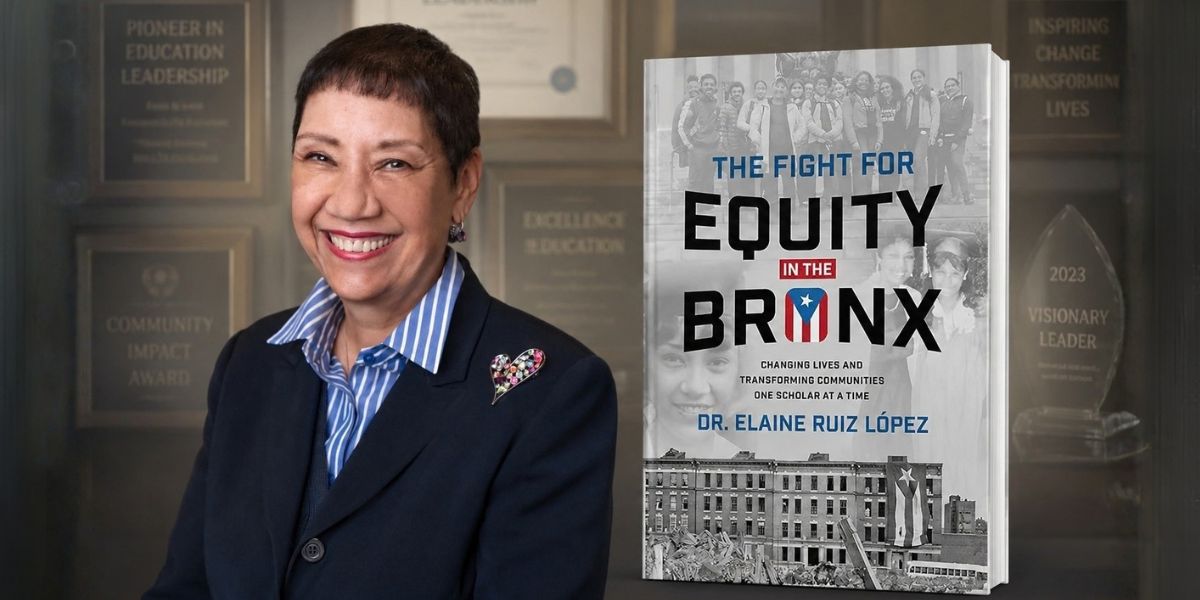
Dr. Elaine Ruiz Lopez Says There Is a Critical Difference Between a Dropout and a Push-Out. That Distinction Is Why Educational Equity Conversations Keep Missing the Point.

By: Schiamarelly Pinckert

Words matter in ways that are not always immediately visible. The language we use to describe what happens to young people when they leave school before graduating determines where we place the responsibility, whether we look at the child or at the system that failed them. Dr. Elaine Ruíz López has been making a specific and consequential argument about that language for years. And in The Fight for Equity in the Bronx: Changing Lives and Transforming Communities One Scholar at a Time, she makes it with the full weight of a life that illustrates exactly why it matters.

The word dropout suggests a choice. It implies that a young person decided education wasn’t important and walked away from something that was fully available to them. The word push-out asks an entirely different question: What happened before that young person left? Were they being taught appropriately? Were their circumstances understood and accommodated? Did anyone recognize their potential and fight to keep them engaged? Did the institution do its job before it lost them?

Dr. Elaine was pushed out of an educational environment long before she eventually earned her GED, her advanced degrees, and her doctorate from Columbia University’s Teachers College. Her own experience is why she refuses to allow that distinction to be treated as semantic or minor. Being pushed out of one educational environment did not mean she was incapable of education. It meant the system had stopped serving her. Those are fundamentally different problems with fundamentally different solutions, and conflating them has allowed institutions to avoid accountability for generations while young people bear the weight of a failure that was not theirs.

Where Responsibility Actually Lives

The national conversation about school quality, Dr. Elaine argues, consistently misunderstands something fundamental about communities like the Bronx. Too much time is spent discussing these communities through statistics and deficits. Too little time is spent recognizing the tremendous ability, resilience, and potential that already exist within them. The frame of deficit, applied repeatedly to the same communities, eventually becomes a self-fulfilling expectation that shapes what institutions attempt and what they believe is possible.

International Leadership was founded on a deliberate rejection of that frame. The school begins with potential and creates an environment that expects students to rise to it. High expectations are not a luxury for children who come from more stable circumstances. They are a necessity for every child, and providing them to children in underserved communities is not charity. It is the basic function of an educational institution doing its job.

Building excellence requires resources, certainly. It also requires something that doesn’t appear in a budget line: genuine belief in what young people are capable of, expressed every day in the quality of instruction and the consistency of expectations. The question should never be whether children in the Bronx are capable of excellence. The question should be whether the adults and institutions responsible for educating them are prepared to create the conditions in which excellence can flourish.

The Memoir Choice

Dr. Elaine made a deliberate decision to write a memoir rather than an academic or policy book, and the reasoning goes directly to this point about where responsibility lives and how we understand it. Research and policy are important. But personal narrative allows people to understand what systems actually do to human beings in ways that data never fully captures. A statistic can tell you that students are leaving school in high numbers. A story can help you understand the child behind that number, what happened to her, what the institution did and failed to do, and what she might still become if someone refuses to accept the statistic as the final word.

Her journey from the South Bronx, through teenage motherhood and interrupted education, to founding a school that has changed the trajectory of thousands of young lives, is not just a personal narrative. It is evidence of the argument she is making. The personal and the policy cannot really be separated. And the book exists to make sure that nobody reading it can maintain that separation without confronting what it actually costs.

The distinction between dropout and push-out is ultimately a question about who gets to define a child’s story. Dr. Elaine Ruíz López has spent her career insisting that the answer is not the institution that failed them.

If the language around educational failure has always felt slightly wrong to you, Elaine Ruíz López explains exactly why. The Fight for Equity in the Bronx: Changing Lives and Transforming Communities One Scholar at a Time is available now on Amazon.

Essential Steps to Launching a Successful Product

By: Sproutbox

Bringing a new product to market requires careful planning and clear direction. Many development teams rush into building features without establishing a solid operational foundation.

Taking time to organize a structured roadmap saves valuable resources and reduces strategic risk. A methodical approach transforms raw concepts into real commercial achievements.

Define Your Target Audience

Every new release requires a clear understanding of potential buyers before production begins. Partnering with a skilled digital marketing agency allows businesses to identify high-value customer segments quickly. Gathering those consumer insights early helps advertising campaigns connect with the right buyers.

Thorough market research reveals what specific problems your target audience faces daily. Skipping initial buyer research often leads to wasted budget and disappointing initial sales numbers. Understanding customer habits helps teams design features that address real needs.

Focus on solving one main problem for early adopters during your initial release. Organic growth occurs faster when early users genuinely enjoy their initial experience.

Craft a Clear Value Proposition

Your website should quickly explain what your product does and why people may want it. Use simple words instead of complex business terms. Visitors should understand the main benefit after reading your message once.

A clear value message should include:

● Simple benefits for users

● Main product features

● What makes you different

Test different headlines with people who do not know your product. Ask them what they think the product offers after reading each version. If they are confused, make the message simpler. Keep changing the wording until the main benefit is clear.

Build a Structured Launch Strategy

A clear launch plan helps everyone understand what needs to happen before a product is released. Start by setting simple goals for the product, marketing, and support teams. Make sure each team knows its tasks and when they need to finish them.

Set realistic deadlines for the weeks before launch. Check progress often to make sure important tasks are moving forward. A simple list of tasks and dates can help teams stay organized and reduce last-minute problems.

Prepare customer support before the product goes live. New users may have questions or face problems during their first days. Quick and helpful answers can make users feel more comfortable.

Monitor Post-Launch Performance

Launching a product is only the beginning. After release, collect feedback from users to learn what they like and what needs to change. Early feedback can show whether the product is meeting customer needs and where improvements may be needed.

Look at how people use the main features. Check which features get the most attention and which ones are rarely used.

Fix bugs and other problems as quickly as possible. Users are more likely to stay when they see that problems are taken seriously. Regular updates can improve the product and give users a better experience.

All About Launching a Successful Product

Launching a successful product demands patience, strategic clarity, and disciplined execution. Concentrating on user needs at every stage establishes a strong foundation for long-term growth. Consistent execution sets your brand apart from competitors.

Stay adaptable as initial feedback arrives from your first cohort of customers. Continuous refinements turn an early release into a lasting market success. Listening to user input keeps long-term product relevance high. If you’d like to learn more, check out more articles on our blog.

Is a Car Accident Settlement Offer Fair? Five Issues to Review First

For drivers across Long Island, a car accident can create financial and personal challenges that continue long after the vehicles are repaired. Insurance companies may respond with settlement offers that appear reasonable at first glance, but the initial figure does not necessarily account for the full range of losses an injured person may face. Medical treatment, time away from work, future care, lasting limitations, and the terms of a proposed release can all affect what a settlement is actually worth.

This is particularly important in Long Island, where busy roads, commuter traffic, and frequent collisions can leave injured motorists managing complicated insurance claims while still recovering. Before accepting an offer, it is important to examine the evidence supporting liability, available coverage, current and future expenses, and the amount that will remain after deductions. Levine and Wiss can help Long Island accident victims evaluate these details, identify overlooked losses, and determine whether an insurer’s proposal fairly reflects the circumstances of the claim.

1. Liability and Available Insurance

A car accident is a clear case of personal injury, which means that the victim can claim for compensation. The offer should reflect how clearly the evidence proves that another driver caused the crash. Police reports, photographs, witness statements, traffic-camera footage, vehicle damage, and medical records can support liability. Disputed fault often reduces an insurer’s offer, even when the injured person believes the evidence is clear.

New York follows a comparative negligence system. If an injured person shares responsibility, the final recovery can decrease by that percentage. A settlement review should therefore examine every argument the insurer could raise about speed, following distance, lane position, distractions, or failure to avoid the collision.

Independent legal review is useful when liability is disputed, injuries continue, or the offer includes broad release language. A trusted law firm that handles car accident claims can review the evidence, insurance coverage, medical records, and proposed release together. That review gives the injured person a clearer basis for accepting, rejecting, or negotiating the offer.

2. Medical Treatment and Future Care

Medical expenses should include more than emergency treatment. Records should account for ambulance services, hospital care, imaging, medication, physical therapy, specialist visits, medical equipment, and follow-up appointments. Bills alone do not show how an injury affects daily activities or work capacity. However, the steps that follow a car accident also explain why records of every treatment matter, since those records support the value of the claim.

A settlement also needs to address future care. Some injuries require continued therapy, surgery, injections, prescription medication, or long-term monitoring. A doctor can explain whether treatment has ended, whether improvement is expected, and whether permanent restrictions remain.

Accepting an offer before reaching a stable medical condition creates a serious risk. The injured person could lose the ability to seek additional compensation for treatment that was not reasonably known when the release was signed.

3. Lost Income and Reduced Earning Capacity

A fair offer should cover income lost during recovery, supported by pay records, tax documents, employer statements, and medical restrictions. Self-employed workers may need business records, invoices, appointment histories, or other evidence showing the financial effect of missed work.

Some injuries affect future earning capacity rather than just current wages. A person may return to work but lose overtime, change positions, reduce hours, or leave a physically demanding occupation. The analysis should compare expected earnings before the crash with realistic earnings after the injury.

Household services also deserve attention. If an injured person cannot clean, drive, care for children, maintain property, or complete other routine tasks, those losses can form part of the claim. Fee transparency matters as well. Unclear fee terms can add financial strain at a point when an injured person is already managing reduced income.

4. Pain, Limitations, and Daily Effects

Economic losses have receipts, but pain and reduced quality of life require different evidence. Medical notes, treatment patterns, symptom journals, photographs, and testimony from relatives or coworkers can show how the injury affects sleep, movement, concentration, hobbies, and relationships.

Consistency matters. Gaps in treatment, delayed reporting, or statements that minimize symptoms can give the insurer grounds to challenge the claim. The settlement review should compare the offer with the injury’s duration, treatment burden, restrictions, and permanent effects.

A low offer often reflects an incomplete picture rather than a final valuation. The insurer may have received bills but not records describing ongoing limitations or the likely effect of an injury on ordinary activities.

5. Release Terms and Net Recovery

The settlement letter should be read with the same care as the offer amount. A release can waive claims against the driver, vehicle owner, insurers, and other parties. It can also affect claims involving unpaid medical balances, liens, or future treatment.

The stated settlement amount is not the final amount received. Attorney fees, case expenses, medical liens, reimbursement claims, and unpaid bills can reduce the net recovery. The injured person should request a written breakdown showing each deduction before signing.

Insurance limits also set a practical ceiling on recovery in many claims. The available coverage can include the at-fault driver’s policy, the injured person’s underinsured motorist coverage, and additional policies connected to the vehicle or household. A low offer deserves closer review when the policy limits have not been confirmed.

What to Review Before Signing a Settlement

A fair car accident settlement must match the complete loss, not simply the bills available on the insurer’s file. A complete review before signing covers liability evidence, insurance limits, current and future medical needs, income losses, daily restrictions, liens, fees, and release terms. A written net-recovery calculation shows what the injured person would actually keep, and a claim finalized while significant treatment questions remain can leave later costs unpaid. A careful review before acceptance protects the right to seek compensation that the first offer leaves unpaid.

Disclaimer: The content in this article is provided for general knowledge. It does not constitute legal advice, and readers should seek advice from qualified legal professionals regarding particular cases or situations.