
By: Maura Fauter
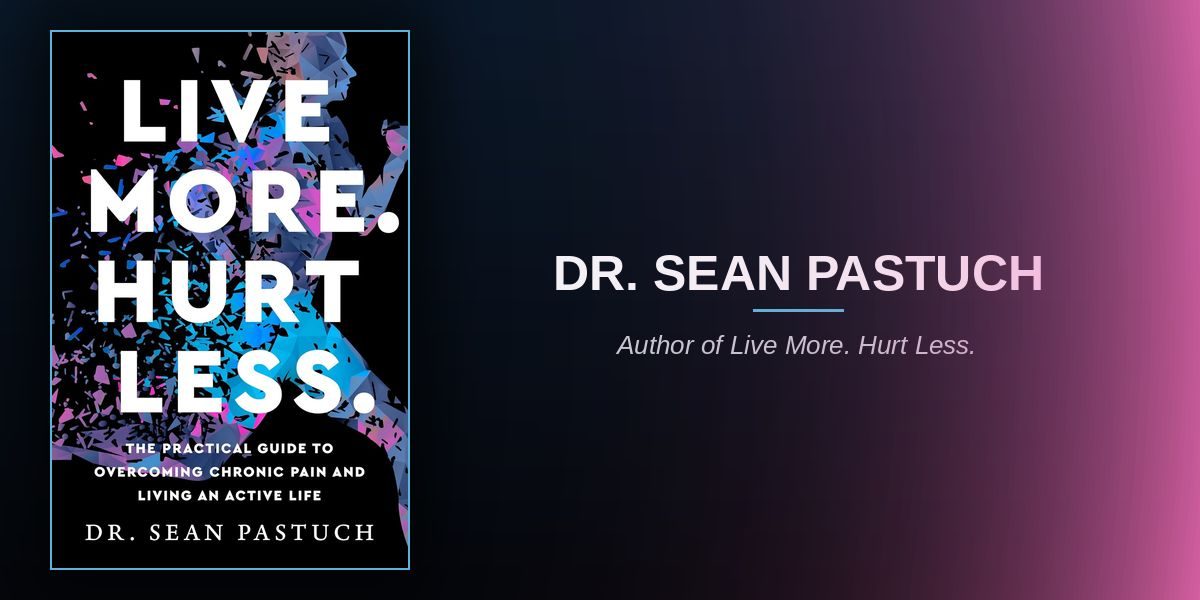
More than twenty percent of Americans live with chronic aches and pains, and the vast majority of them are working through that experience inside a healthcare system that was designed primarily for acute illness and injury rather than for the persistent, complex, often psychologically intertwined reality of chronic pain. Dr. Sean Pastuch has spent twenty years watching that mismatch play out in the lives of his patients, and he describes the result as a hard truth. Unless you get lucky enough to find a genius practitioner with the time and skill to untangle your beliefs, behaviors, fears, habits, and next steps, the modern healthcare system simply is not built to meet the needs of someone struggling with chronic pain. Live More. Hurt Less. is the book he wrote to fill that gap, and it is the conversation, as one endorser puts it, that most people never get to have.
Pastuch brings to that conversation the specific authority of someone who has been on both sides of the chronic pain experience. As a chiropractor and founder of Active Life, he has spent two decades helping patients, including Olympic athletes and CrossFit champions, alongside people who were struggling with the most basic physical demands of daily life. And as a person who spent years working through his own persistent neck pain to the point where it prevented him from putting his five-year-old daughter on his shoulders during a walk home from a block party, he understands from the inside what chronic pain actually does to a life, not just to a body.
The framework he has developed from that dual perspective challenges the conventional approach to chronic pain management in a fundamental way. The advice that most people receive, avoid what hurts, rest when pain flares, accommodate your limitations as the new normal, produces exactly what Pastuch argues is the real disease: compromise. The small, reasonable adjustments made in response to pain quietly accumulate until the life being lived is a dramatically smaller version of the one that was intended. His alternative is the thesis that gives the book its title, the idea that living more fully and hurting less can go together, a principle that requires both a different understanding of what pain is and a different orientation toward what recovery means.
What makes the book useful rather than simply inspiring is the specificity of the guidance Pastuch provides for acting on that principle. He covers the practical territory of understanding when pain signals genuine danger and when it does not, of using movement as medicine rather than as risk, of managing the psychological dimension of chronic pain that most physical treatment approaches leave entirely unaddressed, and of becoming a real teammate with medical providers rather than a passive recipient of treatment. The humor and storytelling woven through that guidance make the material accessible without diminishing its rigor, and the evidence base underlying the principles gives the tactics credibility without burying them in clinical language.
Live More. Hurt Less. found an audience quickly after its release, a response that reflects both the need it addresses and the quality of what it delivers. This is a book for the more than sixty million Americans living with chronic pain who have been told to shrink their lives to manage their symptoms and who deserve to be told something true and more useful instead.
If you have been navigating chronic pain inside a healthcare system that was not built to actually help you, and you are ready for the practical, evidence-based, genuinely human guide that fills the gap it left, Live More. Hurt Less. by Dr. Sean Pastuch is exactly that resource. Pick up your copy on Amazon today and start the conversation that changes everything.