Building a Personal Injury Claim: Where Legal Strategy Can Help

South Jersey, New Jersey, combines busy suburban roads, commercial districts, residential communities, and workplaces where an unexpected accident can quickly disrupt everyday life. For someone hurt because of another party’s actions, the days that follow may bring questions about medical expenses, missed work, insurance coverage, and available legal options. Building a strong claim requires more than describing what happened. Each decision can influence how responsibility and the extent of the harm are ultimately presented. A thoughtful legal approach can help clarify which issues deserve immediate attention and which may develop as recovery continues.

South Jersey personal injury lawyers can examine the circumstances surrounding an accident and help determine how the available information supports a potential claim. This guidance can also give injured people a clearer understanding of what to expect as their case progresses. An injury claim often depends on facts that seem simple at first, so carefully reviewing the circumstances is an important starting point.

Start With Liability

An injured South Jersey resident may manage medical appointments, employment records, and insurance requests at the same time. A lawyer familiar with local courts can organize those facts, assess liability, and identify documented losses. For that reason, consulting personal injury lawyers makes sense before an insurer evaluates the claim or presents a settlement offer.

Liability requires more than proof that an injury occurred. A claim must connect another party’s conduct to the accident and resulting harm. That connection can involve traffic violations, unsafe property conditions, defective equipment, poor medical care, or another documented failure.

Build The Evidence Record

Evidence should support every part of the claim. Medical records establish diagnoses, treatment, restrictions, and prognosis. Photographs can show vehicle damage, visible injuries, or hazardous conditions. Collect witness names and contact details promptly. Memories change, businesses can overwrite video footage, and physical conditions can change before an investigator documents them.

Preserve Medical Proof

Medical treatment creates a timeline insurers use to evaluate injury claims. Gaps in care, missed appointments, or inconsistent descriptions can create disputes about whether the accident caused the condition. An injured person should follow medical instructions and describe symptoms accurately. The claim should include records from every provider involved in diagnosis, treatment, rehabilitation, or follow-up care.

Document Financial Losses

Wage loss requires more than a statement that you missed work. Pay records, employer verification, tax returns, and medical restrictions can connect the absence to the injury. Future losses require careful support because they involve expected treatment, reduced earning ability, or continuing limitations. Each projected cost should have a clear medical or employment basis.

Calculate The Full Claim

A settlement should account for past expenses and losses that continue after payment. Medical bills, prescription costs, transportation, lost wages, property damage, and household assistance can affect the calculation. Non-economic damages require a clear description of pain, reduced mobility, sleep disruption, emotional distress, and changes to daily activities. Personal journals, treatment notes, and testimony from people who observe the injury can support those descriptions.

Control Insurance Communications

Insurance adjusters gather information while evaluating a claim, but their questions can affect later disputes. A recorded statement, broad medical authorization, or rushed release can provide information beyond the accident. Written communication should remain accurate and limited to relevant facts. An injured person should avoid guessing about fault, recovery time, or medical history when records provide a better answer.

Account For Shared Fault

New Jersey allows an injured person to pursue compensation even when they share responsibility for an accident. The award can decrease according to the injured person’s percentage of fault. Evidence should address every alleged contribution to the accident. A driver’s speed, a property visitor’s conduct, or a worker’s compliance with safety instructions can influence negotiations and trial arguments.

Use Deadlines Strategically

New Jersey generally gives an injured person two years from the injury date to file a personal injury lawsuit. Special rules can affect that period, so confirm the deadline early rather than estimate it. A filing deadline does not replace preparation time. Records, witness interviews, expert review, and settlement discussions require time, especially when the injury involves surgery, permanent limitations, or disputed responsibility.

Decide Whether To Settle

A settlement decision should reflect the evidence, medical outlook, liability risks, and available insurance coverage. The greatest initial demand is not automatically the best result when supporting proof remains incomplete. Trial preparation improves settlement analysis because it tests what each side can prove. A claim should move toward resolution only after the injured person understands the payment terms, expenses, liens, and rights being released.

Protect the Claim Early

A personal injury claim becomes easier to manage when each decision follows documented facts. The injured person should report treatment consistently, preserve accident evidence, track financial losses, and avoid signing releases before reviewing their effect. New Jersey’s filing period also makes early legal review practical, especially when fault or long-term harm remains disputed. Next, gather records, write a clear accident timeline, and arrange a case review before evidence or deadlines become harder to protect.

Disclaimer: This article is for general informational purposes only and does not constitute legal advice or create an attorney-client relationship. Laws and filing deadlines vary by state and by the specific facts of each case. Anyone dealing with an injury or potential claim should consult a licensed attorney in their jurisdiction for guidance specific to their situation.

Why Injury Claims Demand More Than Simply Filing Paperwork Alone

An injury claim begins with paperwork, but filing forms does not prove fault or establish the full value of a loss. Medical records, witness accounts, photographs, insurance correspondence, and deadlines shape the case that follows. A careless filing can leave evidence missing, bills unpaid, or a demand unsupported. Claimants also face questions about liability, treatment, and future expenses. A sound claim requires organized proof and informed decisions from the first report onward. The next steps explain why legal review matters.

After an incident, a claimant must preserve evidence before conditions change. That work includes obtaining a report, recording witness details, photographing injuries, and saving insurer communications. A Queens personal injury lawyer can assess liability theories, identify responsible parties, and calculate losses from available records. This review prevents a rushed statement from weakening the claim before treatment ends. It also establishes deadlines for documents, negotiations, and possible court action.

Liability Requires More Than an Accident Report

An accident report is one of the first documents produced after a crash. However, it only records basic facts and rarely answers every legal question. A claim must connect another party’s conduct to the injury through evidence, timing, and applicable law. For example, a collision claim might involve driver negligence, vehicle ownership, road conditions, or a defective component. A premises claim could require proof that a property owner knew about a dangerous condition and failed to address it. Each theory requires different records and witnesses.

Medical Documentation Establishes the Loss

Medical treatment creates a record connecting an accident to physical harm. Prompt evaluation, consistent follow-up, and complete descriptions of symptoms help document that connection. Medical bills show past expenses, but they do not capture every financial effect. Wage statements, employer records, disability notes, and travel costs can support income losses and treatment-related expenses. A claimant should also keep a private treatment timeline. Appointment dates, symptom changes, prescribed restrictions, and missed work create a useful reference during claim review.

Insurance Communications Can Affect the Case

Insurance companies often request recorded statements, authorizations, and detailed explanations soon after an incident. A claimant’s answers can later influence how the insurer describes fault, prior conditions, or the extent of an injury. A short statement can omit relevant facts or appear inconsistent with later medical records. Claimants should read documents carefully and keep copies of every submission, letter, and email related to the claim. Settlement discussions also require careful valuation. An early payment might address immediate bills while leaving future treatment, reduced earning capacity, or permanent limitations unresolved.

Deadlines Can Control Legal Rights

New York injury claims involve filing deadlines, and some claims against public entities involve earlier notice requirements. The applicable period depends on the parties, the event, and the legal basis for recovery. Missing a deadline can prevent a court from hearing an otherwise valid claim. Counsel can help identify possible defendants, preserve relevant records, and confirm the dates that control the case. Early legal review also helps locate evidence before it disappears. Surveillance footage can be overwritten, damaged property can be repaired, and witnesses can become difficult to locate.

A Complete Claim Must Measure Future Effects

An injury can affect work, household tasks, mobility, and daily activities long after the first appointment. A complete claim records those effects instead of focusing only on emergency treatment. Employment history, job duties, restrictions, and medical opinions can help assess future income losses. Household records and personal accounts can document tasks that require paid assistance or family support. The evidence should remain consistent. Medical records, employment documents, tax information, and personal statements must describe the same injury and its practical effects.

Preparing an Injury Claim for Legal Review

Filing an injury claim starts a legal process that depends on proof, deadlines, medical records, and careful communication. Claimants should preserve evidence, track treatment, document financial losses, and avoid giving incomplete statements to insurers. A practical next step is to gather the accident report, medical records, bills, wage documents, photographs, and correspondence before requesting a case review. That preparation gives counsel the information needed to assess liability and protect the claim’s value.

Disclaimer: This article is provided for general informational purposes only and does not constitute legal advice. Personal injury claims involve case-specific facts, including the circumstances of the incident, applicable laws, evidence, deadlines, and the extent of injuries and losses. The information discussed should not be interpreted as a guarantee of claim value, settlement results, or legal outcomes. Individuals with potential injury claims should consult a qualified attorney to evaluate their specific circumstances and determine the appropriate legal steps.

President of the Taoist Association of New York Chengze Wu Invited to Attend World Council of Religious Leaders Gathering

Engaging with Religious Leaders from Around the World and Advancing Taoist Participation in Global Interfaith Dialogue

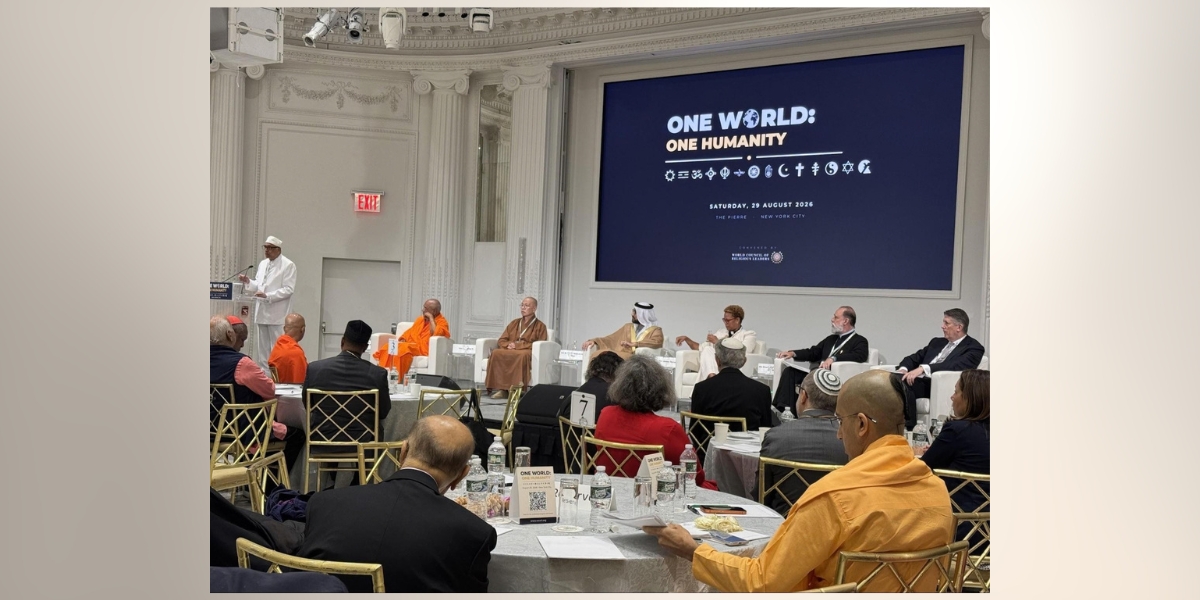
On August 29, 2026, Chengze Wu, President of the Taoist Association of New York (TANY), was invited to attend a gathering organized by the World Council of Religious Leaders in New York City. The event brought together religious leaders and representatives from different countries, faith traditions, academic institutions, and civil society organizations for discussions on contemporary issues including peacebuilding, interfaith cooperation, social responsibility, and the ethical challenges arising from technological development.

The gathering continued the World Council of Religious Leaders’ longstanding commitment to fostering global religious cooperation. In 2000, religious and spiritual leaders from around the world convened at the United Nations for the Millennium World Peace Summit of Religious and Spiritual Leaders. The World Council of Religious Leaders, established in the years that followed, has continued to bring together the spiritual and moral resources of diverse religious traditions to address global concerns including peace, justice, and the protection of human dignity.

From Dialogue to Action: How Religious Communities Can Respond to Contemporary Challenges

A central theme of the gathering was the importance of moving “from reflection to action,” expressed through the principle of “Action, Not Symbolism.”

Participants emphasized that gathering together, taking photographs, and affirming shared values should be viewed only as the beginning of interfaith cooperation. The greater challenge is to translate interfaith dialogue into meaningful action that reaches communities, responds to real-world concerns, and creates lasting impact.

Within this framework, participating religious leaders focused on four particularly urgent areas: peacebuilding and the healing of conflict; collective opposition to hatred and violence directed against religious communities; the role of faith communities in supporting human well-being, public health, and responses to addiction and despair; and the relationship among human dignity, ethics, and technology in an era of rapidly advancing artificial intelligence.

Participants were also encouraged to bring a specific commitment to action back to their own communities and to maintain communication and provide periodic updates, helping transform a single gathering of religious leaders into an ongoing process of social engagement.

Exchange with H.E. Bawa Jain, Secretary-General of the World Council of Religious Leaders

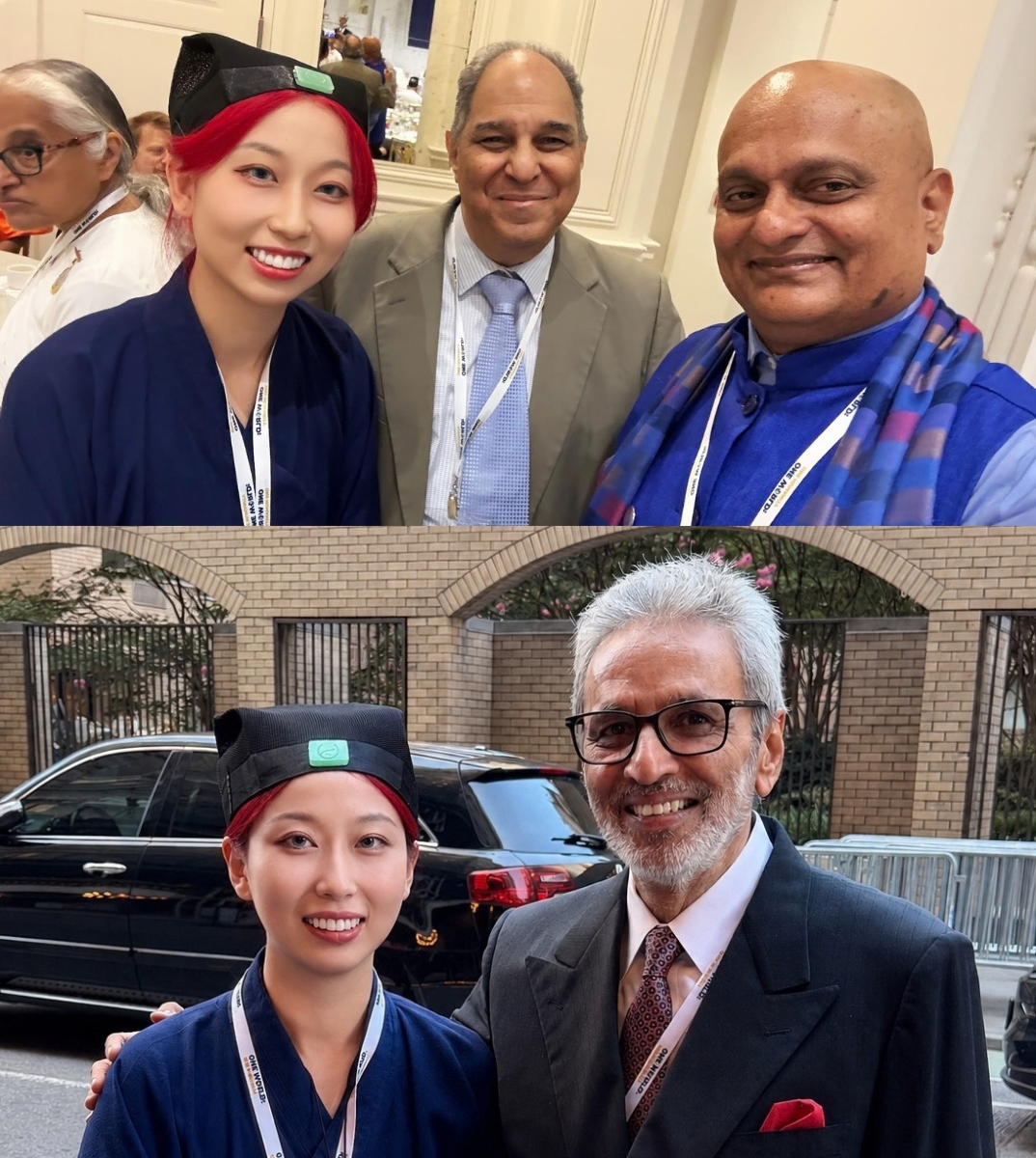
During the event, Chengze Wu, President of the Taoist Association of New York, had a friendly exchange with H.E. Bawa Jain, Secretary-General of the World Council of Religious Leaders.

Bawa Jain has long been active in international interfaith dialogue, peace initiatives, and religious diplomacy. He served as Secretary-General of the 2000 Millennium World Peace Summit of Religious and Spiritual Leaders and has continued over the years to foster dialogue and cooperation among religious leaders from diverse faith traditions around issues of peace, human dignity, and shared social responsibility.

The exchange also provided the Taoist Association of New York with an opportunity to strengthen its connections with the international interfaith community and to introduce participants from different religious traditions to Taoism and the Association’s work in New York.

Photo Courtesy: World Council of Religious Leaders

In-Depth Exchanges with Interfaith Leaders and Scholars of Religion

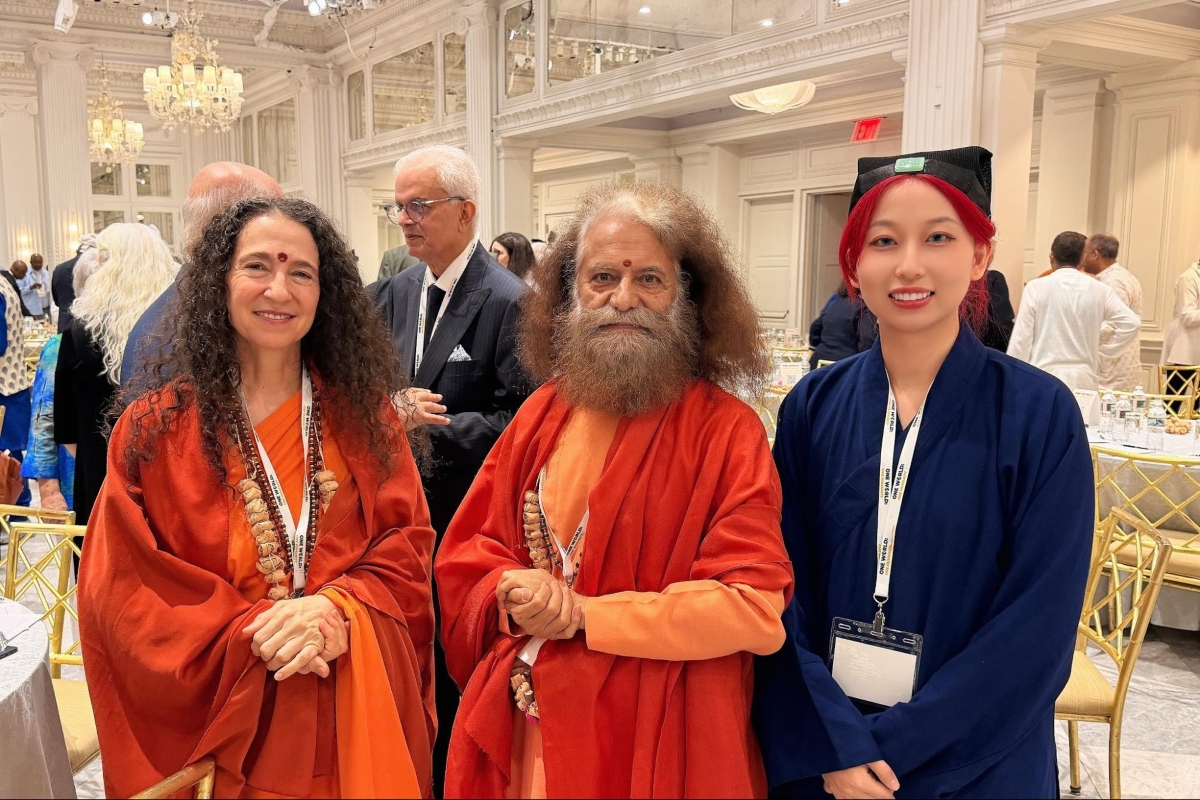
During the gathering, Chengze Wu also engaged in warm and substantive conversations with Guruji His Holiness Dileepkumar Thankappan (Guru Dileepji) and American scholar of religion and interfaith peacebuilder Dr. Frank Kaufmann.

Guru Dileepji is a spiritual leader, Interfaith Minister, humanitarian, and yoga teacher who has long been active in the fields of interfaith engagement, humanitarian work, peace advocacy, and yoga. He has participated extensively in international interfaith initiatives and activities connected with the United Nations. He also holds roles in a number of religious, humanitarian, and nongovernmental organizations and has participated in international exchanges within the United Nations system as an NGO representative, promoting understanding among religious traditions, world peace, humanitarian care, and physical and spiritual well-being.

Over the years, Guru Dileepji has sought to integrate spiritual practice with social action. Through interfaith events, peace initiatives, humanitarian projects, and international exchanges, he has worked to encourage communication and cooperation among people of different cultural and religious backgrounds. His work reflects the idea that religious and spiritual traditions can serve not only as paths of personal cultivation, but also as resources for peacebuilding, social service, and cross-cultural understanding.

Dr. Frank Kaufmann holds a Ph.D. in Religion from Vanderbilt University. He runs several not-for-profit organizations dedicated to religion and peace, integrity in education, social and cultural renewal in America, and responsible US foreign policy. His work in the arena of religion, interfaith relations, peacebuilding, and conflict mediation spans decades.

Dr. Kaufmann combines the academic study of religion with practical peacebuilding efforts. His work has taken him to more than 65 countries and regions and has included engagement in areas affected by conflict and displacement, including Israel and Palestine, India and Kashmir, Croatian refugee camps, the Eritrea–Ethiopia border, the southern Philippines, Sri Lanka and elsewhere.

Throughout his work, Dr. Kaufmann explores how religions can preserve their distinct faith and cultural identities while engaging constructively with one another through dialogue, mediation, and cooperation. This approach closely resonates with this Saturday’s conference emphasis on “Action, Not Symbolism.”

While sitting with Ms. Wu, Guru Dileepji and Dr. Kaufmann expressed a warm and open interest in the Taoist Association of New York and the Taoist tradition. Wu explained some of the beauty of Taoism, and exchanged views with them on mutual understanding among religious traditions, interfaith dialogue, and the role that religious communities can play in contemporary society.

The exchange deepened mutual understanding and laid a positive foundation for the Taoist Association of New York to strengthen its connections with international interfaith leaders, scholars of religion, and related organizations, while bringing Taoist perspectives into a broader landscape of interfaith and cross-cultural dialogue.

Photo Courtesy: World Council of Religious Leaders

Bringing Taoist Voices into New York’s Diverse Interfaith Community

In addition to the guests mentioned above, Chengze Wu engaged in extensive exchanges with religious leaders and representatives from different countries, faith traditions, religious institutions, and sectors of society throughout the gathering.

As a Taoist religious organization rooted in New York, the Taoist Association of New York has continued in recent years to provide Taoist religious services, traditional cultural education, community programs, and cross-cultural exchanges. Participation in the World Council of Religious Leaders gathering provided the Association with an opportunity to introduce the Chinese Taoist tradition within a broader international and interfaith context, while also learning from the experiences of other religious communities in community service, peacebuilding, and public engagement.

Wu noted that different religions have their own distinct histories, teachings, rituals, and cultural traditions. Interfaith dialogue does not mean eliminating these differences. Rather, it is about building understanding on the basis of respect for different traditions and identifying areas where religious communities can work together to serve society, promote peace, and care for life.

For the Taoist Association of New York, participation in this gathering represented not only an opportunity for international interfaith exchange, but also a meaningful step toward building stronger connections for Taoism within New York’s diverse religious community.

Looking ahead, the Taoist Association of New York will continue to remain rooted in the Taoist tradition while preserving its religious lineage and cultural identity. The Association will strengthen exchanges with different religious communities, academic institutions, and civil society organizations; actively participate in the development of New York’s diverse religious community; and bring Taoist wisdom concerning harmony, care for life, and the relationships between human beings and society, and between humanity and nature, into a broader contemporary public dialogue.