New York City Overhauls Legionnaires’ Disease Prevention After Upper East Side Outbreak Kills 11

New York City Mayor Zohran Mamdani and the New York City Health Department announced five new enforcement and transparency measures on September 1, 2026, designed to prevent future Legionnaires’ disease outbreaks following a summer cluster on the Upper East Side that sickened 94 people and killed 11. The announcement arrived one day before a City Council oversight hearing where lawmakers introduced eight separate bills targeting cooling tower regulation, public communication, and agency accountability across the five boroughs.

Key Takeaways

  • The Upper East Side Legionnaires’ cluster produced 94 confirmed cases and 11 deaths across ZIP codes 10028, 10075, and 10128 between early July and late August 2026.
  • The Mamdani administration will connect Health Department and Department of Buildings tracking systems to identify unregistered cooling towers before they begin operating.
  • A public citywide map showing registered cooling towers, their inspection histories, and Legionella sampling compliance is planned for launch by spring 2027.
  • Enforcement hearings for cooling tower violations will now be scheduled within 15 days through the Office of Administrative Trials and Hearings.
  • The City Council introduced eight bills at its September 2 oversight hearing, including proposals for a dedicated Legionnaires’ hotline, pop-up testing sites, mandatory post-outbreak analyses, and higher fines.
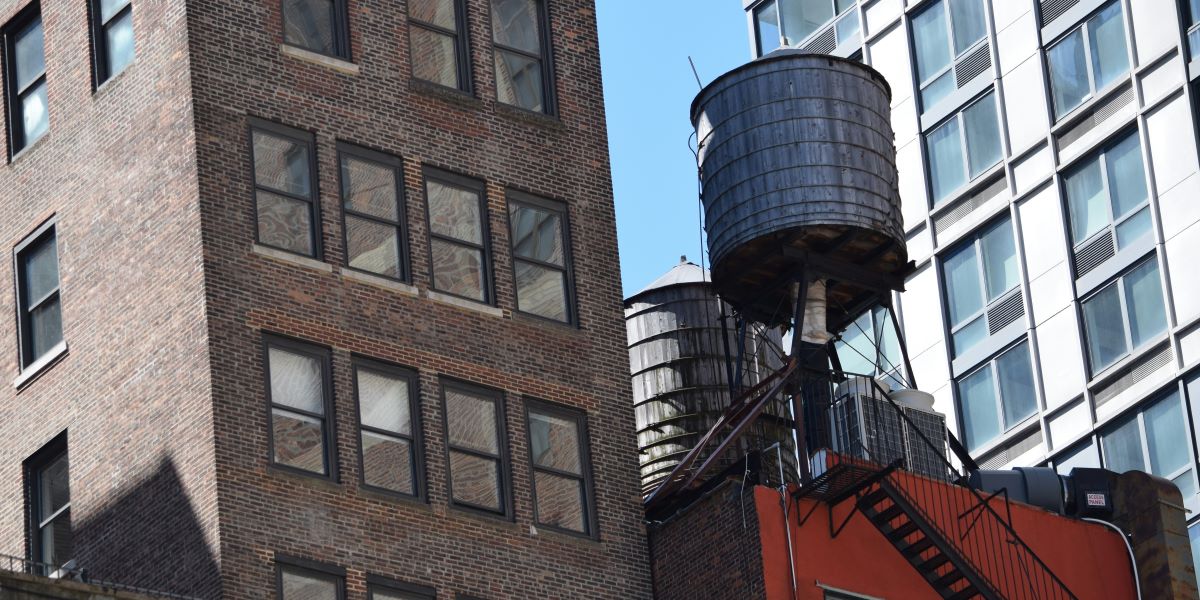
  • New York City has approximately 6,000 registered cooling towers, and unregistered towers were linked to both the 2026 Upper East Side outbreak and the 2025 Harlem outbreak that killed seven people.

The Upper East Side Outbreak Exposed Gaps in Cooling Tower Oversight

The cluster that struck Manhattan’s Carnegie Hill and Yorkville neighborhoods this summer became the deadliest Legionnaires’ event in New York City since the 2015 South Bronx outbreak that killed 12. The New York City Health Department tested 183 cooling towers at 160 buildings in the affected area. Of those, 77 towers at 75 buildings tested PCR positive for Legionella bacteria, and 59 towers at 58 buildings returned culture-positive results confirming the presence of live bacteria. All were ordered drained, cleaned, and disinfected. The Health Department declared the exposure period over on July 31, and as of August 28, no patients connected to the outbreak remained hospitalized.

Despite the aggressive emergency response, the specific source of the outbreak remains unidentified. Genetic typing results that could confirm the origin are expected in autumn 2026. That ambiguity, combined with the fact that unregistered cooling towers were found during both the Upper East Side investigation and last summer’s Harlem cluster, has driven the push for structural changes to how the city tracks and regulates the approximately 6,000 cooling towers spread across its rooftops.

Five New Measures Target Detection, Enforcement, and Public Transparency

The Mamdani administration’s September 1 announcement focused on closing the gaps exposed by back-to-back deadly summers. The city will synchronize Health Department and Department of Buildings databases so that new cooling tower installations are flagged and registered before they begin operating, rather than discovered retroactively during outbreak investigations. The Health Department’s existing online cooling tower lookup tool will expand into a citywide interactive map, allowing residents to view any registered tower’s inspection history and whether it has met Legionella sampling requirements. That tool, along with an annual public education campaign timed to the start of cooling tower season each summer, is expected to launch by spring 2027.

On the enforcement side, the city will assign hearing dates at the Office of Administrative Trials and Hearings within 15 days for building owners who receive summonses for cooling tower violations, compressing a process that previously allowed lengthier delays. The administration will also convene a scientific advisory panel tasked with evaluating emerging cooling tower technology and alternative cooling systems, and the Health Department will explore faster culture testing methods to reduce the turnaround time between sample collection and confirmed results.

City Council Pushes Its Own Legislative Package

At the September 2 oversight hearing, led by Health Committee Chair Lynn Schulman and Council Speaker Julie Menin, lawmakers introduced eight bills that go further than the administration’s executive actions. Upper East Side Councilmember Virginia Maloney presented proposals including a dedicated Legionnaires’ disease hotline, expanded public education for at-risk residents, and a requirement that landlords provide shower hoses and safety guidance to tenants when a confirmed case is detected in their building. Other bills would establish temporary testing sites during outbreaks, create a public database of affected locations, mandate post-outbreak analyses, and raise fines beyond the current $1,000 and $2,000 penalty structure.

Health Commissioner Alister Martin supported some of the proposals but pushed back on others during testimony. Martin cautioned that mandatory temporary testing sites are not clinically appropriate for Legionnaires’ disease, which requires a full clinical evaluation rather than mass screening. Martin also challenged Intro 1006-2026, a bill that would require landlords to clean their cooling towers at least three times a year, warning that excessive use of biocide corrodes tower systems and can make them more susceptible to future bacterial growth.

Two Consecutive Deadly Summers Have Raised the Stakes

The Upper East Side outbreak follows a Legionnaires’ cluster in Harlem during the summer of 2025 that killed seven people and sickened approximately 90. That outbreak prompted the City Council to enact new cooling tower testing requirements in October 2025, which took effect on May 8, 2026, just weeks before the first Upper East Side cases were confirmed on July 2. The new law mandates that building owners test for Legionella every 31 days when their cooling towers are operating, a threefold increase from the previous testing schedule. Governor Kathy Hochul signed additional state-level legislation on August 5, 2026, requiring biannual certification of cooling tower compliance and introducing penalties of up to $12,500 for violations that result in death or serious injury.

Researchers have warned that Legionnaires’ outbreaks are likely to increase in frequency as climate change produces warmer, more humid summers that create favorable conditions for Legionella bacteria to thrive in stagnant water systems. The Harlem Legionnaires Coalition, a community group that formed after the 2025 outbreak, expressed cautious support for the new measures but stressed that enforcement, not just new rules, will determine whether the city breaks the pattern.


Disclaimer: This article is provided for informational purposes only and is based on publicly available information and reports concerning the 2026 Upper East Side Legionnaires’ disease outbreak and New York City’s response. Details regarding case numbers, investigations, proposed legislation, enforcement measures, and the suspected source of the outbreak may change as health officials and government agencies release additional findings. Readers should consult official New York City and New York State health authorities for the latest information and public-health guidance. This article does not constitute medical, legal, or public-health advice.


FAQs

What Is Legionnaires’ Disease and How Does It Spread?

Legionnaires’ disease is a severe form of pneumonia caused by Legionella bacteria. The bacteria thrive in warm, stagnant water found in systems such as rooftop cooling towers. People become infected by inhaling water vapor or mist that contains the bacteria. Legionnaires’ disease is not contagious and cannot be transmitted from person to person.

How Many Cooling Towers Does New York City Have?

New York City has approximately 6,000 registered cooling towers across the five boroughs. However, both the 2025 Harlem and 2026 Upper East Side outbreaks involved unregistered towers, which is one of the primary gaps the new enforcement measures aim to close through coordinated Health Department and Department of Buildings tracking.

When Will the Public Cooling Tower Map Be Available?

The New York City Health Department plans to launch the citywide cooling tower mapping tool by spring 2027. The map will display registered cooling towers across all five boroughs and allow residents to review each tower’s inspection history and Legionella sampling compliance records.

Has the Source of the Upper East Side Outbreak Been Identified?

As of September 2026, the specific cooling tower responsible for the Upper East Side outbreak has not been confirmed. The Health Department eliminated the source of exposure and declared the outbreak over on July 31, but genetic typing results that could identify the origin are expected in autumn 2026.


The Same Exam Supervision Model Does Not Fit Every Test

Not every online exam needs the same level of supervision. A weekly knowledge check, an open-book case analysis, and a professional certification exam may run on the same platform, but they serve different purposes, create different integrity risks, and call for different controls.

The better question is not how closely every candidate should be watched. It is what each assessment must prove. Once educators define that, they can choose a proportionate mix of task design, identity checks, access controls, observation and review, guided by shared standards rather than a single supervision rule.

Assessment Purpose Sets the Level of Assurance

A low-stakes quiz may be most useful as a timely indication of current understanding. Its value often lies in helping educators identify what needs further teaching. A professional certification exam may support entry into a regulated occupation, so identity assurance, controlled conditions, and defensible records carry much greater weight.

Format matters as well. An open book task accepts access to information but tests how candidates interpret and apply it. An essay may require evidence of authorship and sustained reasoning. A timed test may be vulnerable to answer sharing or outside assistance. A practical assessment must show whether a candidate can perform a skill, which may require direct observation, a recorded performance or an oral explanation.

This gives assessment teams a clear first step: state what the result is intended to prove, identify what could invalidate that claim, and choose controls that address those risks. The level of supervision then follows from the assessment purpose rather than from an institution-wide default.

Assessment Design Creates the First Integrity Control

Supervision can confirm identity, restrict unauthorised help and create evidence for later review. It cannot make a weak task reveal meaningful learning.

A recall-heavy test remains a recall-heavy test under close observation. If an answer can be reproduced without understanding, increasing scrutiny may discourage some misconduct, but it does not improve the validity of the task. Educators gain more assurance by designing questions that require candidates to interpret evidence, justify decisions, connect ideas or demonstrate a process.

This is why assessment reform is becoming inseparable from integrity policy. TEQSA’s 2025 resource, Enacting assessment reform in a time of artificial intelligence, recommends multiple, inclusive and contextualised approaches to forming trustworthy judgements about learning. It also places security at meaningful points within a wider assessment system rather than treating detection or observation as the whole solution.

In practice, that may mean adding a short oral explanation to a written task, collecting evidence at several stages of a project, using scenario-based questions that require disciplinary judgement, or combining a practical demonstration with questions about the choices made. Each method gives educators evidence that is harder to separate from the intended learning.

Consistency Comes From a Shared Decision Framework

Assessment directors still need common standards. Candidates should know which resources are permitted, how identity will be confirmed, what conduct may trigger review, and how decisions will be made. Staff need consistent evidence thresholds, escalation processes and responsibilities.

The delivery method, however, does not have to be identical. NSW Department of Education’s Elements of effective assessment place equity, validity, reliability and transparency alongside one another. It defines reliable assessment as producing consistent results without avoidable influence from chance, bias, systematic error or cheating.

A shared framework can therefore require every assessment to record its purpose, stakes, likely integrity risks, permitted resources, candidate access needs and review process. One exam may justify live observation and strict resource restrictions. Another may use identity checks, randomised questions and later review. A practical task may require recorded performance plus an oral explanation.

Consistency lies in the rigour of the reasoning. Educators apply the same questions and evidence standards, while retaining the professional judgement needed to match controls to the task.

Candidate Context Sharpens Proportionate Supervision

Even assessments with similar academic stakes may require different delivery arrangements. Candidates may be spread across countries and time zones. Some may have limited bandwidth, shared living spaces, or assistive technology. A cohort of fifty creates different staffing and scheduling demands from a cohort of fifty thousand.

These conditions shape whether a supervision model can operate fairly and whether unusual behaviour can be interpreted accurately. They are therefore part of integrity design, not an adjustment made after the security model has been selected.

The 2025 Open Praxis review of online proctoring in open and distance learning discusses strategies such as multiple forms of authentication, asynchronous review and open book assessment, while emphasising the need to consider accessibility, inclusion and student wellbeing alongside security.

For educators, this supports a practical sequence. Check whether the required technology is dependable for the actual cohort. Confirm that identity and room requirements can be met with approved adjustments. Make permitted resources explicit. Test how assistive technology interacts with the assessment environment. These steps reduce avoidable interruptions and give reviewers better context when an alert or incident is examined.

Layered Controls Connect Risks to Evidence

A proportionate model treats integrity as several connected layers. Task design determines what evidence will be produced. Identity controls establish who is completing the task. Access controls define which people, materials and digital resources are permitted. Observation records relevant behaviour. Review procedures determine how signals are interpreted.

Each risk can then be matched to the control most likely to address it. Impersonation calls for identity assurance. Answer sharing may require question versioning, item exposure controls or timing changes. Unauthorised assistance may be addressed through task design, clear resource rules and proportionate observation. Doubts about authorship may be resolved through process evidence or a brief oral follow-up.

This approach avoids asking one control to solve every problem. It also makes the rationale easier for educators to explain, because each measure has a defined purpose and a clear relationship to the evidence needed from the assessment.

The Choice Belongs Inside Assessment Design

The practical question is not whether one supervision method is universally better. It is which combination of identity checks, observation, task design, access controls and review procedures provides enough assurance for this particular result.

A comparison of remote proctoring vs. invigilators can support that wider decision by clarifying what each approach makes possible, what it requires operationally, and where human judgement enters the process. It should not replace the prior questions about purpose, stakes, format, and candidate context.

A useful decision record explains what the assessment is intended to prove, how misconduct could undermine that claim, which controls address each risk, and what burden those controls place on candidates and staff. It also identifies who reviews alerts or incident reports, what evidence is required and how candidates can respond.

Observation produces signals, not automatic verdicts. Clear review thresholds and access to relevant records help educators distinguish meaningful evidence from behaviour with an ordinary explanation. Where several reviewers are involved, shared examples and moderation can support more consistent judgement.

Review Keeps the Model Aligned with the Assessment

A supervision model should be reconsidered whenever the assessment changes substantially. A new task format, larger cohort, different candidate location, revised technology or higher consequence may alter the risk profile. The control chosen for an earlier version of an exam should not remain simply because it is familiar.

Assessment teams can review evidence that reflects both assurance and delivery. Useful indicators include completion rates, technical interruptions, support contacts, the proportion of alerts that lead to further review, case resolution time, appeal outcomes and patterns in approved adjustments. TEQSA’s framework similarly asks institutions what data they collect, what indicators would signal a need for adjustment and how review processes maintain assurance over time.

The purpose is not to create a universal target. It is to identify where instructions, settings, task design or review processes can be improved. Repeated questions about permitted resources may indicate that candidate guidance needs greater clarity. Alerts that rarely produce usable evidence may justify a review of settings or thresholds. Recurring authorship concerns may suggest that staged work or a short oral component would provide stronger evidence than additional observation.

The strongest supervision model is therefore not automatically the strictest or most visible. It is the one educators can explain in relation to the learning evidence the assessment must produce, apply consistently to the relevant cohort, and refine when new evidence becomes available.

Nicole Cornetti and the Art of Building a Career Without Limits

The most revealing detail in a fashion career is sometimes the role listed after “model.” For Nicole Cornetti, that list includes instructor, producer, coordinator, and media host. Each position changes her relationship with the industry: how she participates, what she contributes, and whose experience she helps shape. Together, they offer a portrait of a professional identity built through expansion. Cornetti’s story provides an opportunity to examine a question that resonates beyond fashion: how can a person continue developing when the world already recognizes them for one particular thing?

Fashion makes this question especially visible because its public language is visual. A photograph captures a moment, while professional development happens over time. Cornetti’s published biography describes a progression from studying at Dimitri Manuel’s modeling academy to teaching, coordinating, and producing fashion events. That sequence gives her profile a narrative: experience acquired in front of an audience becomes relevant behind the scenes. Her involvement with New York Fashion TV further places her within a collaborative environment where a presentation depends on multiple contributions. The finished image is only one expression of that work.

There is a business lesson within that progression. Expanding into another role requires more than adding a description to a biography. It means accepting different expectations and becoming accountable for different outcomes. A performer prepares a contribution; a coordinator considers how contributions fit together. An instructor must make knowledge understandable to someone who has not yet acquired it. These distinctions help explain why professional range matters. Its value comes from the ability to translate experience into something useful in a new context, while remaining willing to learn what the earlier role could not teach.

Cornetti’s background also includes a relationship between academic study and creative work. New York Wire reports that she began modeling in Europe at eighteen while pursuing university education, eventually obtaining a graduate degree. The detail deserves attention because it gives her career a longer perspective than an appearance or title can provide. Education introduces forms of concentration, evaluation, and persistence that can accompany a person across professional settings. Creative practice brings its own demands. Pursuing both suggests a development process shaped by different kinds of work, rather than a single route toward public recognition.

Public recognition nevertheless remains part of the picture. Celebrity News identifies Cornetti as Ms. NY Universe 2025–2026 and reports invitations to judge beauty pageants and modeling competitions. It also describes appearances at Miami fashion events and activities surrounding the Cannes Film Festival. These details establish settings in which her career has unfolded without explaining its entire meaning. Their significance becomes clearer when considered alongside her other responsibilities. Recognition creates an introduction; a broader professional record provides context. Looking at both allows a more complete assessment than treating any single title or appearance as a sufficient definition.

Her profile also raises the subject of contribution. New York Wire describes involvement in youth mentorship and nonprofit initiatives, including causes connected with mental health and cancer awareness. These commitments belong to a different conversation from professional visibility, one concerned with how experience and attention can serve others. Mentorship, in particular, depends on the quality of an exchange. Advice becomes useful when it acknowledges another person’s circumstances and helps them develop their own judgment. For someone whose professional activities include teaching, the opportunity to support emerging talent creates a connection between personal experience and another individual’s future.

Communication provides another connection across Cornetti’s activities. Her published profile includes podcast hosting, talk show hosting, and public speaking. Unlike a brief visual appearance, these formats unfold through language and attention. They ask a participant to explain, listen, and respond. Their inclusion in her career points toward a broader understanding of public presence: an audience can encounter someone through ideas as well as images. For a professional moving between fashion and other fields, that distinction matters. It creates space for context, allowing an experience to be discussed rather than simply displayed, and giving the audience more room to engage.

Taken together, these elements make Cornetti’s career interesting as an ongoing exercise in professional possibility. Modeling, instruction, production, and communication involve different responsibilities, yet experience can travel between them. For women developing careers in creative industries, that offers an encouraging perspective on growth. An established identity can provide a foundation for further work without prescribing every future choice. The challenge is to keep adding substance: knowledge that can be shared, responsibilities that can be fulfilled, and relationships built through reliable participation. Nicole Cornetti’s story draws attention to that process, where a career gains depth through what a person continues learning and contributing over time. Its next chapter remains open.

Snoopy in Style NYC Opens Eight Days Before NYFW

Snoopy in Style NYC has opened in Manhattan’s Meatpacking District, bringing a 16,000-square-foot exhibition of designer-created Snoopy and Woodstock looks, Charles M. Schulz archives and 10 immersive zones to New York. The free exhibition arrives eight days before the official New York Fashion Week calendar begins and remains open through Sept. 26.

Key Takeaways

  • Snoopy in Style NYC opened to the public Sept. 2 at 25 Little West 12th Street in Manhattan
  • The free exhibition runs through Sept. 26, generally from 10 a.m. to 6 p.m. daily
  • The Charles M. Schulz Museum and Research Center curated 10 zones across the 16,000-square-foot space
  • Custom Snoopy and Woodstock pieces come from Bode, Coach, Christopher John Rogers, Michael Kors Collection, Sandy Liang, Tory Burch and other designers and brands
  • The official New York Fashion Week schedule runs Sept. 10 through Sept. 15

Snoopy in Style NYC opened Wednesday, Sept. 2, with fashion positioned at the center of an exhibition that also covers music, sports and the visual history of Charles M. Schulz’s Peanuts characters.

Its timing creates a clear connection with New York’s September fashion calendar while keeping the exhibition separate from New York Fashion Week itself. The official spring-summer 2027 NYFW schedule runs from Sept. 10 through Sept. 15, with Ralph Lauren, Coach and several other presentations taking place on Sept. 9.

Snoopy in Style NYC Lands Ahead of the NYFW Calendar

The Meatpacking District exhibition opens eight days before the official schedule begins and remains in place for the entirety of Fashion Week.

The preliminary calendar includes 70 runway shows and designer presentations. Area, Collina Strada, Michael Kors Collection, Tory Burch and Zankov are among the names appearing on that calendar that also contributed pieces to Snoopy in Style NYC.

Michael Kors Collection, for example, is part of the exhibition’s designer lineup while also appearing on the official September schedule. The overlap follows the label’s presence during the city’s earlier fashion season, including a Michael Kors fashion-week presentation in February.

That connection does not make the Snoopy exhibition an official NYFW event. The recognized runway shows and presentations remain separate from Snoopy in Style NYC, which operates as a cultural exhibition at 25 Little West 12th Street.

The distinction matters because the show has a different format. Rather than presenting a seasonal clothing collection, the exhibition uses archival material and newly commissioned miniature garments to examine the relationship between Peanuts characters and fashion.

Designer Commissions Anchor the Manhattan Exhibition

Peanuts describes Snoopy in Style NYC as a 16,000-square-foot exhibition divided into 10 immersive zones curated by the Charles M. Schulz Museum and Research Center.

One of the central displays features Snoopy and Woodstock plush figures wearing custom-made pieces from dozens of participants. The published roster includes adidas, American Eagle, Area, Bode, Christopher John Rogers, Coach, Collina Strada, GapStudio designed by Zac Posen, Kith, Levi’s, Luar, Michael Kors Collection, Sandy Liang, Tommy Hilfiger, Tory Burch, Willy Chavarria and Zankov.

The exhibition combines those contemporary commissions with displays focused on how wardrobe choices were used throughout Schulz’s work.

Jean Schulz, Charles M. Schulz’s widow and president of the museum’s board, summarized that connection in comments released for the exhibition.

“Sparky understood that characters, like people, had a distinct sense of style.”

The exhibition points to Charlie Brown’s zigzag shirt and the changing wardrobes of other Peanuts characters as examples of how clothing contributed to their visual identities.

Character-focused fashion projects have also appeared elsewhere in New York’s runway calendar. A 2025 Care Bears runway collaboration similarly placed an established character property within a Fashion Week setting, although the Snoopy exhibition uses a museum and archival format rather than a conventional runway presentation.

Archives Extend the Story Beyond New Designer Looks

The 2026 exhibition continues a Snoopy fashion history that predates the current Manhattan presentation by decades.

Snoopy in Style NYC Opens Eight Days Before NYFW

Photo Credit: Unsplash.com

An earlier “Snoopy in Fashion” exhibition debuted at Tokyo’s Seibu Art Forum in 1984. Designers including Gianni Versace, Gucci, Oscar de la Renta, L.L. Bean and Missoni created personalized pieces for Snoopy and Belle.

Thirty years later, the project returned to New York. “Snoopy & Belle In Fashion” opened at the New Museum during New York Fashion Week in September 2014, featuring a new group of designer interpretations before traveling internationally.

The current exhibition broadens the subject beyond clothing. Joe Cool’s Listening Lounge includes a DJ booth, records and material tied to Vince Guaraldi’s music for Peanuts. Another installation examines Schulz’s interest in tennis and his friendship with Billie Jean King.

The archival component also separates the exhibition from a standard branded pop-up. Materials connected with Schulz appear alongside the contemporary designer pieces, allowing the show to place the new commissions within the longer history of the comic strip and earlier fashion exhibitions.

For visitors, Snoopy in Style NYC remains open through Sept. 26 at 25 Little West 12th Street. Regular hours are listed from 10 a.m. to 6 p.m. daily, with hours subject to changes for special events, and admission is free. That schedule covers the full Sept. 10–15 official New York Fashion Week calendar and extends 11 days beyond its final scheduled date.

Frequently Asked Questions

When does Snoopy in Style NYC run?

Snoopy in Style NYC opened to the public on Sept. 2, 2026, and is scheduled to run through Sept. 26. Regular hours are listed as 10 a.m. to 6 p.m. daily, although hours may vary for special events.

Where is Snoopy in Style NYC located?

The exhibition is at 25 Little West 12th Street in Manhattan’s Meatpacking District. The temporary exhibition occupies approximately 16,000 square feet.

Is Snoopy in Style NYC part of New York Fashion Week?

No. The exhibition is separate from the official New York Fashion Week schedule. Snoopy in Style NYC opens before NYFW and remains open throughout the Sept. 10–15 official calendar.

Which designers created Snoopy and Woodstock outfits?

Participants include Bode, Coach, Christopher John Rogers, Collina Strada, Michael Kors Collection, Sandy Liang, Tommy Hilfiger, Tory Burch and others. The pieces were created as custom looks for Snoopy and Woodstock plush figures displayed in the exhibition.

Is the Snoopy exhibition free?

Yes. Admission to Snoopy in Style NYC is free throughout the Sept. 2–26 public run. The exhibition is generally scheduled to open from 10 a.m. to 6 p.m. each day.