How Motion Designer Xiangrui “Ray” Chen Is Shaping the Look of American Brands

By: Fanfan Yuxuan Fan

From the title sequence of an Emmy Award–winning creator’s series, to a Clio Gold–winning museum rebrand, to screens in TurboTax stores nationwide, three keyframes in the rise of a motion designer whose work now reaches audiences across America.

In animation, a keyframe is the frame that matters most. It defines where a movement starts, where it lands, and what shape the motion takes along the way. Animators set keyframes deliberately, and everything else exists to connect them.

For New York–based motion designer Xiangrui “Ray” Chen, the term has become a way of describing her own career. In the span of a few years, she has assembled the kind of portfolio many designers spend a decade pursuing: a signature title sequence, an award-sweeping rebrand, and animation for a Fortune 500 brand that has played on retail screens across the United States. Each change of job, she says, was less a leap than a keyframe, a position set with intention.

Chen trained in graphic design at Renmin University of China before earning her MFA in Computer Art at the School of Visual Arts (SVA) in New York. Told frame by frame, her path is a story about influence: how one designer’s choices can shape the feel of a series, contribute to the motion language of an award-sweeping rebrand, and reach millions of Americans through a single brand.

The Designer an Emmy Winner Trusted

Chen’s professional debut came through the SVA job board, and it placed her, straight out of her MFA, alongside Broadway-caliber talent. She animated the title sequence for “Leenie’s Library,” a picture-book musical series created by two-time Emmy Award–winning lyricist and playwright Eileen Bluestone Sherman. The series teaches reading, spelling, and vocabulary through song, a full-scale production involving Broadway vocalists, a live ensemble of nine-plus musicians, and recording studios in New York and Vermont. For the opening audiences would see first, every single episode, the team turned to Chen.

At the time, Chen was absorbed in exploring the meeting point of illustration and motion. What she remembers most, though, is a coffee shop. It was her first time sitting across from a client as an independent designer, and the first question was disarmingly practical: “How long will this take?”

“I realized in that moment that being a designer isn’t just about making beautiful frames,” Chen recalls. “It’s about making someone trust you with their project.”

Her answer was structure. She organized the production the way her school ran weekly reviews: regular meetings, visible progress, decisions documented. And when the client asked for a palette that felt more childlike and energetic, she scrapped her first version, which skewed softer and more feminine, and rebuilt it. The revision taught her something she has carried ever since. In motion design, the concept and design phase is not preparation for the work. It is the work.

Chen designed and animated the 20-second opening sequence, taking it from concept and asset design through final animation. That sequence opens every episode of the series. The series has also earned recognition beyond the screen: its song “At Mr. Weintraub’s Grocery Store” was named a finalist in the Best Kids Music Video category at the GramoFrame Music Video Awards and an Official Selection at the SIMI Music Video Fest, both in 2026, while “Rotten Apples” was named a Semi-Finalist in the Music Video category of the 2025 International Songwriting Competition.

Craft Under Pressure

What followed was a stretch of rapid growth. Chen moved through New York’s creative agencies, building a cross-platform visual system for the global stroller brand Bugaboo at The Working Assembly, and producing a motion toolkit at Compadre for the “MLB The Show” campaign made with ESPN. Her technical range sharpened fast. What she wanted next was a stage that would demand all of it at once.

She found it at MullenLowe Design Studio (which has since been folded into TBWA following the Omnicom-IPG merger), ranked the third most awarded design agency in North America by D&AD, where Chen joined the team behind the rebrand of The Branch Museum of Design, a museum housed in a 1919 Tudor-style building in Richmond, Virginia, designed by architect John Russell Pope. Rather than flattening the building’s history into a fashionable minimalist logo, the team translated its century-old architecture into a living design system. The project swept the industry’s 2026 award season, winning a Clio Gold in Design for Brand Identity: Refresh and Best Rebrand at the Ad Age Creativity Awards, along with two Bronze Cubes at the ADC 105th Annual Awards, one of them in Motion / Film Craft for Animated Logo, plus two ADC Merit honors and recognition from Communication Arts.

Chen worked on the motion side of the project as a motion design intern on the studio’s motion design team. She animated some of the film’s most technically demanding shots, among them a 2.5D treatment that turned hundreds of static posters into one of the film’s most striking dimensional moments.

One key shot went through seven or eight rounds of review, each round producing anywhere from one to five versions, the kind of exacting process reserved for work expected to compete at the industry’s highest level.

“That shot taught me both sides of this profession at once,” Chen says. “As an artist, you want to keep experimenting with the craft. As a designer, you feel the anxiety of every revision. I was lucky; the client was patient and generous with direction, and they were brilliant designers themselves. They didn’t just approve or reject; they guided.”

The Branch project crystallized the two capacities that now define her work. As a brand storyteller, she saw how motion itself can carry meaning a static identity cannot. As a craftsperson, she emerged with a workflow tested under high-pressure, high-precision production.

Photo Courtesy: Xiangrui Chen / MullenLowe Design Studio (Still from The Branch Museum of Design brand film.)

Motion Inside the Frame

Chen’s most recent keyframe played out on a national stage. As a motion designer at Intuit, she created animation for TurboTax, one of the most recognizable brands in American life, including the digital screens inside the 20 dedicated retail stores the brand opened across the United States at the start of this year, among them a SoHo flagship built around The Forum, a 30-foot digital screen.

The brief was harder than it sounds. Every animation had to stay true to Intuit’s brand system while carrying a message that felt confident and warm, taking a subject most people find stressful and making it feel clear, calm, even friendly. It was design at Fortune 500 scale, where the margin for ambiguity was effectively zero.

“It was my first time approaching animation through a framework this strict, against standards this abstract,” Chen says. “There’s no director asking for ‘more drama.’ The measure is whether it feels confident, and whether it feels warm. You learn a completely different kind of precision.”

Her animations passed that filter and went on to play on store screens across the country; brand storytelling encountered not in a showreel but in the middle of daily life.

The In-Betweens

In animation, keyframes determine the direction of a motion, and the software fills in the frames between. Careers, Chen points out, work the other way around. Nobody fills in the in-betweens for you. But the principle holds. Set the key positions deliberately, and the movement finds its shape.

Chen keeps setting new keyframes, each one larger in scale and reach than the last. The motion, frame by frame, is still accelerating.

Chen’s animation and illustration work is collected on her motion design portfolio, with case studies in her selected project archive and process notes on her design and illustration Instagram.
How Parker Gets a Pet Teaches Children That Love Matters More Than Appearances

There is something universally exciting about welcoming a new pet into the family. For children, it often represents companionship, responsibility, and the promise of unconditional love. The experience can also introduce unexpected lessons about change, sacrifice, and making choices that put another’s happiness first.

Jane Mccannell’s Parker Gets a Pet begins as a cheerful story about a child finally adopting a long-awaited kitten, but it quickly grows into something far richer. Rather than following a predictable path, the book explores how genuine love sometimes means letting go, reminding young readers that actions rather than possessions measure kindness.

Unforgettable Friendship Begins

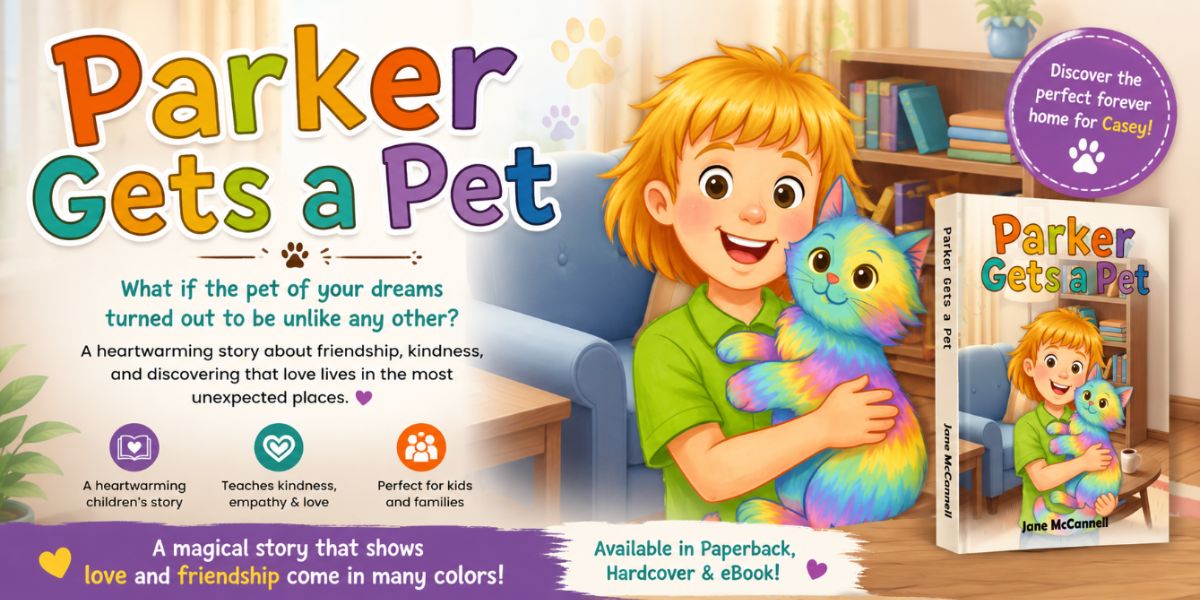
Parker has dreamed of having a kitten for as long as they can remember. The excitement reaches its peak at the animal shelter, where countless kittens wait for new homes. Instead of choosing the obvious favorite, Parker is fascinated by Casey. A tiny hairless kitten whose uniqueness immediately stands out.

Once Casey arrives home, the bond between child and pet grows naturally. Shared playtime, cuddles, and quiet moments establish a friendship built on patience and affection. As Casey gradually becomes more confident, readers witness how trust develops when kindness is offered consistently. The story reminds children that meaningful friendships are rarely instant. They grow little by little, nurtured by care and understanding.

Creative Celebration of Individuality

One of the book’s most imaginative moments comes when Casey unexpectedly begins growing colorful fur in brilliant shades of blue, green, yellow, and purple. The playful twist gives the story an enchanting quality while gently encouraging children to appreciate what makes every individual different.

Rather than treating uniqueness as something unusual to hide, the story presents it as something joyful. Casey’s remarkable appearance sparks curiosity and admiration, reinforcing the idea that differences make the world more interesting. For young readers, this becomes an approachable way to discuss acceptance, confidence, and celebrating individuality without turning the lesson into a lecture.

When Love Requires a Difficult Choice

The emotional turning point arrives when Parker develops an allergy to Casey’s beautiful coat. Suddenly, the dream of having a beloved pet becomes complicated.

Instead of avoiding disappointment, the story acknowledges the sadness honestly. Parker must decide where Casey will thrive, considering two loving homes: one where Casey enjoys the excitement of cat shows and another where daily companionship takes priority.

This situation introduces an important concept rarely explored in children’s books: making decisions based on another’s well-being rather than personal wishes. Parker’s choice reflects empathy, maturity, and genuine care, offering children an example of selfless love they can understand.

The Heart of Beauty

Although Casey becomes an award-winning show cat admired for an extraordinary appearance, the story gently shifts attention away from trophies and praise. Parker recognizes that true worth cannot be measured by ribbons or applause.

The book encourages children to look beyond appearances and appreciate qualities like kindness, loyalty, compassion, and companionship. These ideas are expressed naturally through conversations between the characters, making the message memorable without feeling overly instructional.

Story That Stays With Families

Parker Gets a Pet offers far more than an entertaining animal story. It opens conversations about responsibility, allergies, empathy, friendship, and the meaning of unconditional love. Parents, educators, and caregivers will find opportunities to discuss difficult emotions while reassuring children that caring sometimes means making hard choices.

Takeaway

By balancing imagination with relatable family experiences, Jane Mccannell has created a story that celebrates compassion above perfection. Long after the final page, Casey’s colorful journey leaves readers with a simple but lasting reminder: what makes someone truly beautiful has very little to do with appearances and everything to do with the kindness they share. Order your copy today!

How Parker Gets a Pet Teaches Children That Love Matters More Than Appearances

There is something universally exciting about welcoming a new pet into the family. For children, it often represents companionship, responsibility, and the promise of unconditional love. The experience can also introduce unexpected lessons about change, sacrifice, and making choices that put another’s happiness first.

Jane Mccannell’s Parker Gets a Pet begins as a cheerful story about a child finally adopting a long-awaited kitten, but it quickly grows into something far richer. Rather than following a predictable path, the book explores how genuine love sometimes means letting go, reminding young readers that actions rather than possessions measure kindness.

Unforgettable Friendship Begins

Parker has dreamed of having a kitten for as long as they can remember. The excitement reaches its peak at the animal shelter, where countless kittens wait for new homes. Instead of choosing the obvious favorite, Parker is fascinated by Casey. A tiny hairless kitten whose uniqueness immediately stands out.

Once Casey arrives home, the bond between child and pet grows naturally. Shared playtime, cuddles, and quiet moments establish a friendship built on patience and affection. As Casey gradually becomes more confident, readers witness how trust develops when kindness is offered consistently. The story reminds children that meaningful friendships are rarely instant. They grow little by little, nurtured by care and understanding.

Creative Celebration of Individuality

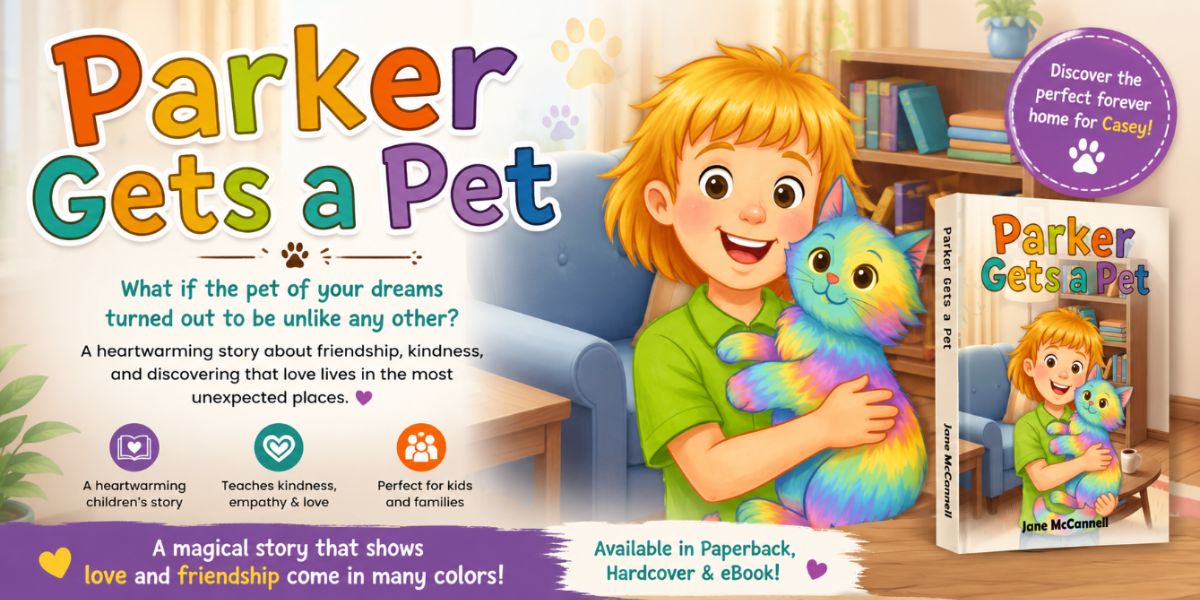
One of the book’s most imaginative moments comes when Casey unexpectedly begins growing colorful fur in brilliant shades of blue, green, yellow, and purple. The playful twist gives the story an enchanting quality while gently encouraging children to appreciate what makes every individual different.

Rather than treating uniqueness as something unusual to hide, the story presents it as something joyful. Casey’s remarkable appearance sparks curiosity and admiration, reinforcing the idea that differences make the world more interesting. For young readers, this becomes an approachable way to discuss acceptance, confidence, and celebrating individuality without turning the lesson into a lecture.

When Love Requires a Difficult Choice

The emotional turning point arrives when Parker develops an allergy to Casey’s beautiful coat. Suddenly, the dream of having a beloved pet becomes complicated.

Instead of avoiding disappointment, the story acknowledges the sadness honestly. Parker must decide where Casey will thrive, considering two loving homes: one where Casey enjoys the excitement of cat shows and another where daily companionship takes priority.

This situation introduces an important concept rarely explored in children’s books: making decisions based on another’s well-being rather than personal wishes. Parker’s choice reflects empathy, maturity, and genuine care, offering children an example of selfless love they can understand.

The Heart of Beauty

Although Casey becomes an award-winning show cat admired for an extraordinary appearance, the story gently shifts attention away from trophies and praise. Parker recognizes that true worth cannot be measured by ribbons or applause.

The book encourages children to look beyond appearances and appreciate qualities like kindness, loyalty, compassion, and companionship. These ideas are expressed naturally through conversations between the characters, making the message memorable without feeling overly instructional.

Story That Stays With Families

Parker Gets a Pet offers far more than an entertaining animal story. It opens conversations about responsibility, allergies, empathy, friendship, and the meaning of unconditional love. Parents, educators, and caregivers will find opportunities to discuss difficult emotions while reassuring children that caring sometimes means making hard choices.

Takeaway

By balancing imagination with relatable family experiences, Jane Mccannell has created a story that celebrates compassion above perfection. Long after the final page, Casey’s colorful journey leaves readers with a simple but lasting reminder: what makes someone truly beautiful has very little to do with appearances and everything to do with the kindness they share. Order your copy today!

Wire Conveyor Belt: A Practical Guide to Industrial Conveying

A wire conveyor belt is an important component in many industrial operations where materials need to be moved efficiently, consistently, and safely. Unlike conventional solid conveyor belts, wire conveyor belts are constructed from metal wires that form an open mesh surface. This design allows air, liquids, and heat to pass through the belt, making it particularly useful in industries that involve washing, drying, cooling, heating, filtering, or processing materials.

Because of their strength and versatile construction, wire conveyor belts are used across food processing, manufacturing, chemical processing, electronics, heat treatment, and other industrial environments. Selecting the right belt requires an understanding of the material being transported, operating conditions, temperature, load requirements, and cleaning needs.

What Is a Wire Conveyor Belt?

A wire conveyor belt is a continuous conveying surface manufactured from interconnected metal wires. The wires can be woven, linked, or formed into different mesh patterns depending on the intended application. Stainless steel is one of the most commonly used materials because it provides good resistance to corrosion, heat, and regular industrial wear.

The open structure of a wire conveyor belt makes it different from rubber or plastic conveyor belts. Instead of creating a continuous surface, the mesh allows air, water, oil, and other fluids to move through the belt. This feature can be particularly useful in production lines where products need to be washed, dried, cooked, cooled, or exposed to controlled temperatures while they are being transported.

Where Are Wire Conveyor Belts Used?

Wire conveyor belts are found in a wide range of industrial applications. Food processing is one of the most common areas because metal mesh belts can be designed for processes involving washing, baking, frying, freezing, and drying. Their open construction can also make cleaning and sanitation easier when the belt is properly designed for the production environment.

Manufacturing facilities may use wire conveyor belts for moving components through ovens, dryers, coating systems, or cooling equipment. They can also be used in heat-treatment applications where products are exposed to high temperatures. In these situations, the ability of metal mesh to withstand elevated temperatures can be a major advantage over materials that may soften, deform, or deteriorate under heat.

Wire belts are also used in industries that require filtration, screening, or controlled airflow. The mesh opening can be selected according to the size and characteristics of the products being conveyed, allowing manufacturers to create a conveying system suited to a particular production process.

Benefits of Using Wire Conveyor Belts

One of the main advantages of a wire conveyor belt is its durability. Metal construction can provide excellent resistance to mechanical stress, particularly in demanding industrial environments. When the correct material and belt design are selected, a wire belt can operate reliably for extended periods while handling repeated loads and continuous movement.

Another important advantage is temperature resistance. Certain metal alloys can perform effectively in applications involving substantial heat, making wire belts suitable for ovens, furnaces, dryers, and heat-treatment equipment. This makes them useful in production environments where conventional conveyor materials may not be appropriate.

The open mesh design also supports efficient airflow and drainage. Air can circulate around products while liquids can pass through the belt instead of collecting on its surface. This characteristic can improve processes such as drying, cooling, washing, and cooking.

Cleaning can also be an important consideration. Depending on the mesh design and application, wire conveyor belts can allow water and cleaning solutions to pass through the conveying surface. Stainless steel versions are especially popular in environments where corrosion resistance and hygiene are important.

Choosing the Right Wire Conveyor Belt

Choosing a suitable wire conveyor belt depends on several operating factors. The first consideration is usually the material being transported. Products vary considerably in size, weight, shape, and surface characteristics, so the mesh pattern and opening need to provide appropriate support.

Temperature is another important factor. A belt operating in a high-temperature oven may require a different metal alloy and construction than one used for ordinary material handling. Chemical exposure, moisture, cleaning procedures, and environmental conditions should also be considered because they can affect the service life of the belt.

The belt’s dimensions and configuration must match the conveyor system. Width, length, mesh type, wire diameter, and overall construction can influence performance. Drive and support components should also be compatible with the selected belt to ensure smooth movement and reduce unnecessary wear.

Maintenance and Service Life

Regular maintenance can help a wire conveyor belt operate efficiently and extend its useful life. Operators should inspect the belt periodically for damaged wires, stretched sections, unusual movement, or excessive wear. Identifying problems early can prevent a small issue from affecting other conveyor components.

Cleaning procedures should be appropriate for the belt material and the environment in which it operates. Harsh chemicals or unsuitable cleaning methods may cause corrosion or damage over time. Proper tension and alignment are also important because excessive tension can place unnecessary stress on the belt and conveyor system.

A well-maintained wire conveyor belt can provide consistent performance for industrial operations. However, its service life depends on factors such as operating temperature, load, speed, cleaning practices, material quality, and frequency of use.

In Summary

Wire conveyor belts provide a practical solution for industrial conveying applications where durability, airflow, drainage, temperature resistance, or easy cleaning are important. Their metal mesh construction makes them suitable for a variety of demanding environments, from food processing and manufacturing to drying, cooling, and heat treatment.

The best results come from selecting a belt that matches the specific requirements of the production process. Material type, mesh design, operating temperature, product characteristics, and maintenance requirements should all be considered before installation. With appropriate selection and regular care, a wire conveyor belt can become a reliable part of an efficient and long-lasting industrial conveying system.