GO CPR Training Queens, NY: Building Practical Skills for Emergency Response

When a cardiac or medical emergency occurs, knowing what to do before professional help arrives can be critically important. CPR, basic life support, AED use, and first-aid skills are designed to give trained responders the knowledge and practical ability to act during an emergency.

For healthcare professionals, workplace responders, schools, and community members, choosing a training program that combines instruction with hands-on practice can make the learning experience more meaningful. In Queens, GO CPR Training Queens, NY provides American Heart Association-based emergency cardiovascular care education for healthcare providers, workplace and community rescuers throughout New York City and Long Island.

GO CPR NY identifies itself as an official American Heart Association training site and offers courses through both in-person and online learning formats. Its training options include BLS, ACLS, PALS, CPR/AED, First Aid, and other programs designed for different types of participants.

Why Hands-On CPR Training Matters

CPR certification is not simply about completing a course or receiving a card. The purpose of training is to develop the knowledge and practical skills needed to respond appropriately when an emergency occurs.

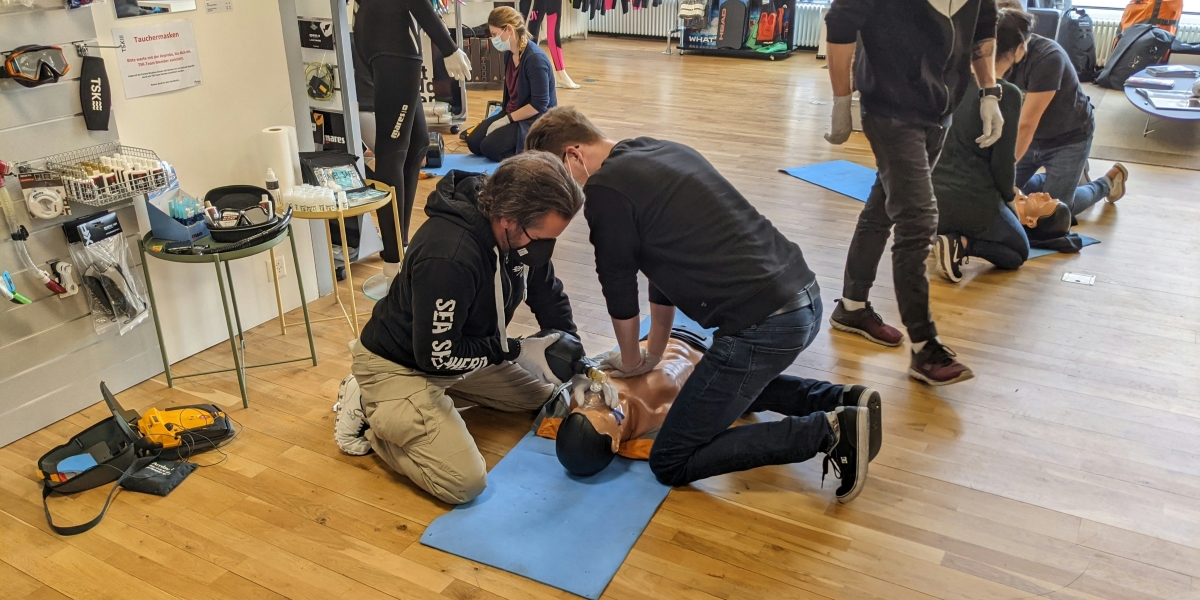
GO CPR NY’s onsite training approach uses video instruction followed by practice, instructor-led skills evaluation, and planned remediation. According to the organization, this “watch then practice” format is intended to increase manikin practice time and provide consistent instruction.

This combination of instruction and practical evaluation is particularly relevant for courses in which participants must demonstrate physical skills rather than simply understand concepts theoretically.

BLS Certification Queens, NY for Healthcare Providers

BLS Certification Queens, NY is among the training options offered by GO CPR NY for healthcare professionals and other personnel who need basic cardiovascular life-support skills.

The organization’s BLS course describes Basic Life Support as the foundation for responding to cardiac arrest. The instructor-led, video-based course covers single-rescuer and team basic life-support skills for both in-facility and prehospital environments.

The course is designed for healthcare professionals and other personnel who need to know how to perform CPR and related basic cardiovascular life-support skills. GO CPR NY provides options for original courses, renewals, online learning, and skills testing.

For healthcare workers whose employment or professional responsibilities require BLS training, selecting the appropriate course format and completing the required skills component are important parts of the certification process.

What the BLS Course Covers

GO CPR NY’s published BLS information focuses on practical emergency-response skills. Its course materials describe training involving both individual and team response.

The organization’s educational material identifies areas such as CPR for adults and pediatric patients, two-rescuer scenarios, use of a bag-valve mask, foreign-body airway obstruction, automated external defibrillation, special resuscitation situations, and other cardiopulmonary emergencies.

The training therefore goes beyond a basic introduction to CPR. Participants learn within the context of responding to potentially serious cardiovascular and respiratory emergencies.

Online and Blended Learning Options

For people with demanding work schedules, an entirely classroom-based program may not always be convenient. GO CPR NY offers e-learning options through American Heart Association online courses.

Its online program allows participants to complete the educational portion at their own pace. After completing the online course, participants can register for a skills-testing date. Once the required course components are successfully completed, GO CPR NY states that it issues the applicable certification card on the same day as the skills assessment.

The organization’s non-medical provider courses similarly use a blended format in which the first portion is completed online, followed by an in-person hands-on skills test. Successful completion of all requirements results in an AHA completion e-card valid for two years, according to the site’s published information.

Training for More Than Healthcare Professionals

Although BLS is particularly relevant to healthcare providers, GO CPR NY also offers programs for non-medical responders.

Its Heartsaver CPR/AED course is described as being intended for individuals who have a responsibility to respond to cardiac emergencies because of their job responsibilities or regulatory requirements. The site specifically lists groups such as security personnel, airline personnel, police, and firefighters, while also noting that the course can be appropriate for lay rescuers and family members of patients at high risk for sudden cardiac death.

The broader course selection includes CPR/AED and First Aid programs, providing options for workplaces, schools, community groups, and individuals.

On-Site Training in Queens and Beyond

One feature of GO CPR Training Queens, NY is its onsite training service.

GO CPR NY states that it can provide corporate onsite training at the client’s location without an additional onsite-training charge. The service is available during days, evenings, and weekends to accommodate staffing requirements.

The onsite program can be tailored to different environments. For medical offices, the listed courses include BLS Provider, Advanced Cardiac Life Support, Pediatric Advanced Life Support, ECG & Pharmacology, and Peripheral IV Skills Certificate Program. For schools and corporations, the organization lists different CPR, AED, First Aid, and related training options.

This can be useful for organizations that want several employees or staff members trained without requiring everyone to travel separately to a training center.

ACLS, PALS and Other Healthcare Courses

BLS is only one part of GO CPR NY’s healthcare-provider training selection.

The organization also offers Advanced Cardiac Life Support (ACLS), Pediatric Advanced Life Support (PALS), and an ACLS/BLS combination recertification course. Its ACLS program is intended for healthcare professionals who participate in managing cardiopulmonary arrest or other cardiovascular emergencies, including personnel in emergency medicine, intensive care, critical care, and related roles.

PALS is designed for healthcare providers who respond to emergencies involving infants and children. The listed audience includes physicians, nurses, paramedics, and other personnel who require PALS course completion for professional or employment requirements.

A Queens Training Location

GO CPR NY’s website lists its training location at 40-47 95 St, Suite B, Elmhurst, NY 11373. Its published office hours include extended weekday and Sunday hours, with Saturday listed as closed.

The business listing also identifies GO CPR NY at the same Elmhurst address and categorizes it as a training center and adult education school. GO CPR NY – ACLS, BLS & CPR Training Courses

The organization says it serves communities throughout Queens and other parts of New York City, as well as Nassau and Suffolk counties.

Choosing the Right CPR or BLS Course

The appropriate training depends on why certification is needed.

A healthcare professional may need BLS, ACLS, or PALS based on their role and employer requirements. A workplace responder may need Heartsaver CPR/AED or First Aid. Organizations may prefer onsite group training, while individuals may find blended learning more convenient.

Before registering, participants should confirm which course their employer, school, professional organization, or applicable requirement calls for.

Building Confidence Through Practice

Emergency training is most useful when participants can translate knowledge into action. GO CPR NY’s emphasis on video instruction, hands-on practice, skills evaluation, and remediation reflects that practical focus.

For Queens healthcare professionals and other responders, BLS Certification Queens, NY provides an opportunity to learn and demonstrate foundational life-support skills, while the broader GO CPR program provides additional pathways for CPR, AED, First Aid, ACLS, and PALS training.

With classroom, blended, online, skills-testing, and onsite options, GO CPR Training Queens, NY offers several ways for individuals and organizations to pursue emergency-response education according to their particular training needs. The most important step is selecting the correct course and completing all required components so that participants are prepared with the skills their role requires.

Contributed by Dan Rose, A Senior Local Business Guide Specializing in CPR & BLS Training in Queens, NY. Contact Go CPR NY now at: GO CPR NY – ACLS, BLS & CPR Training Courses 40-47 95th St Apt B, Elmhurst, NY 11373

A Grandfather’s Legacy in Words: Jim Foltz Turns Life Lessons Into a Gift for the Next Generation

A feature article on Jim Foltz’s Things Grandpa Wanted Me to Know

What would you want your grandchildren to remember about life long after you were no longer there to give them advice?

For Jim Foltz, that question became a book.

Things Grandpa Wanted Me to Know: Simple Wisdom for Life is a heartfelt collection of quotations, sayings, reflections, and lessons assembled with a deeply personal purpose: to leave something meaningful for his grandchildren, Natalia, Nico, and Jack.

The result is more than an inspirational quote book. It is a form of legacy.

Every family passes something from one generation to the next. Sometimes it is a name, a photograph, a tradition, a piece of property, or a treasured object. Foltz’s book suggests that another inheritance may be even more valuable: the accumulated wisdom that helps a person understand how to live.

Throughout the collection, the reader encounters ideas about perseverance, happiness, gratitude, faith, forgiveness, love, family, time, purpose, and success. They are subjects that become increasingly important as life is actually lived rather than merely planned.

Foltz’s approach is especially fitting for a book written with grandchildren in mind. Grandparents cannot experience life’s challenges on behalf of the generations that follow them. They cannot prevent every disappointment or guarantee every success. What they can do is leave behind perspective.

That perspective appears repeatedly in the book’s emphasis on resilience. Life changes. Plans fail. People make mistakes. Difficult seasons arrive. The important question is not whether hardship can always be avoided, but how a person responds when it cannot.

Then comes gratitude, the reminder that a meaningful life can easily be overlooked while someone is busy searching for a bigger one. Ordinary days, music, laughter, friendship, family, beauty, health, time, and simple human connection emerge as forms of wealth that cannot always be measured in money.

The book’s reflections on faith and purpose deepen that conversation. Foltz includes thoughts on prayer, trust in God, love, service, death, eternity, and spiritual life. These passages encourage readers to consider not only what they want from life, but what kind of person they hope to become while living it.

Yet nowhere is the idea of legacy clearer than in the book’s attention to family and giving. Again and again, the collection returns to the idea that relationships matter more than possessions and that a life gains meaning through what is shared with others.

It is an especially appropriate message from a grandfather. Children and grandchildren may forget individual conversations over the years. They may not remember every piece of advice exactly as it was spoken. A book, however, gives those lessons somewhere to remain.

That makes Things Grandpa Wanted Me to Know both universal and intimate. Readers do not need to be members of Foltz’s family to recognize the questions behind the collection: What really matters? What makes a good life? How should we respond to hardship? What is success worth without happiness? What do we owe the people around us? And when our time is finished, what will we have left in the hearts of others?

The answers gathered in the book come from many voices, but together they point toward a remarkably consistent message: live with courage, appreciate what you have, keep faith, love generously, help others, and do not waste the time you have been given.

The book eventually closes with A Simple Prayer, whose themes of peace, love, forgiveness, faith, hope, understanding, giving, and service provide a fitting conclusion to everything that comes before it.

For Foltz, the project may have begun as a gift to three grandchildren. But the questions it asks, and the wisdom it preserves, belong to every generation.

For Contact:

Email: author@thingsgrandpawantedmetoknow.com
KDP: https://www.amazon.com/THINGS-GRANDPA-WANTED-ME-KNOW-ebook/dp/B0H8BMPDB2/ref=sr_1_1
Website: https://thingsgrandpawantedmetoknow.com/

NYC Finalizes New Rules to Tear Down Sidewalk Sheds and Redesign Those That Remain

The New York City Department of Buildings has finalized enforcement rules that shorten sidewalk shed permit renewals from annual to every 90 days and impose graduated penalties on property owners who leave sheds standing without active repair work. The changes, announced August 20 by Mayor Zohran Kwame Mamdani and DOB Commissioner Ahmed Tigani, mark the city’s most aggressive regulatory shift on sidewalk sheds in decades.

Key Takeaways

  • Sidewalk shed permits now require renewal every 90 days, down from once a year, with detailed repair progress reports attached to each filing.
  • Property owners face graduated monthly penalties after 180 days if no active facade work is taking place, with enforcement expected to begin in early 2027.
  • New York City has 7,427 permitted sidewalk sheds as of August 17, more than 1,000 fewer than the same period last year and nearly a 10% drop since Mayor Mamdani took office on January 1.
  • Six new shed designs developed by architecture firms Arup and Practice for Architecture and Urbanism (PAU) entered a public comment period that runs through September 24.
  • A new Buildings Bulletin limits shed coverage on large campus properties to a maximum of 40 feet from the building, replacing a previous rule that often required coverage spanning half the building’s height.

Permit Renewals Shift From Annual to Quarterly

The core mechanism of the new enforcement framework targets a structural problem that allowed sidewalk sheds to linger on city streets for years, and in some documented cases, more than a decade. Under the previous system, the Department of Buildings automatically renewed shed permits on an annual basis. Property owners faced little pressure to complete facade repairs or demonstrate that the protective scaffolding served an active construction purpose.

That system is now gone. Starting this month, every sidewalk shed permit renewal requires a report explaining what building repair necessitates the shed and detailing progress made since the last renewal period. The 90-day cycle means the DOB will review each active shed permit four times per year rather than once, creating a recurring accountability checkpoint that did not previously exist.

The rules fulfill reforms established by Local Laws 48 and 51 of 2025, which the City Council passed under the previous administration but which required rulemaking by DOB to take effect. The Mamdani administration first proposed the enforcement framework in March 2026 and finalized it this month.

Graduated Penalties Target Long-Standing Sheds

The enforcement teeth arrive in the form of graduated monthly fines that begin 180 days after a shed is erected, provided the property owner has not demonstrated meaningful progress on repairs. The penalty amounts scale based on two factors: the physical size of the sidewalk shed and how long it has been in place. Larger, older sheds will draw steeper fines.

Property owners do have an off-ramp. Penalties can be paused if an owner demonstrates that active repair work is underway and progressing on a reasonable timeline. The DOB is currently conducting outreach to property owners about the new requirements, and the department expects to begin imposing penalties in early 2027, giving owners a runway to either complete repairs or provide documentation of work in progress.

The penalty structure addresses a longstanding incentive problem in New York City building maintenance. For many landlords, it has historically been cheaper to erect scaffolding and leave it standing indefinitely than to fund the underlying facade repairs. The graduated fines are designed to flip that calculus, making inaction more expensive than compliance over time.

Six New Shed Designs Aim to Reclaim Sidewalk Space

While the enforcement rules target sheds that should come down, the administration also moved to improve the sheds that need to stay up. The DOB published proposed rules in the City Record on August 20 that would authorize the use of six new sidewalk shed designs across all five boroughs.

The designs were developed by Arup and Practice for Architecture and Urbanism (PAU), two firms that were commissioned during the prior Adams administration’s “Get Sheds Down” initiative. The new structures eliminate the X-shaped cross-bracing and opaque panels common in traditional sheds, replacing them with configurations that allow more natural light, wider pedestrian clearance, and improved sightlines for both foot traffic and street-level security cameras.

Vishaan Chakrabarti, the founder of PAU, framed the redesign as a public realm opportunity, noting that rethinking sidewalk sheds is one of the most direct ways to improve how millions of New Yorkers experience their streets daily.

A notable feature of the arrangement: the six designs are the intellectual property of the City of New York and can be freely copied by any property owner or contractor. That open-access structure is intended to accelerate adoption by removing licensing barriers and reducing the cost of compliance.

The public comment period for the proposed rule runs through September 24, after which the DOB will finalize the design standards.

Campus Properties Get a 40-Foot Coverage Cap

A separate Buildings Bulletin addresses a problem specific to large multi-building properties, including NYCHA housing developments, hospitals, and university campuses. Under previous regulations, pedestrian protection was required on any walkway within half the height of a building with an unsafe facade. On sprawling campuses with multiple structures, that formula could generate an interconnected web of scaffolding covering walkways far from any actual hazard.

The new guidance limits required shed coverage to a maximum of 40 feet from the building itself. The change is expected to have a visible impact at NYCHA developments in particular. When the Mamdani administration first announced its sidewalk shed initiative in March 2026, officials stood outside the Highbridge Gardens complex in the Bronx, where 4,100 linear feet of scaffolding had been in place for more than five years.

Council Member Gale A. Brewer, who represents the Upper West Side, noted that the neighborhood holds the third-highest number of scaffolding permits of any district in the city. Brewer pointed to research showing that improved street lighting can reduce serious nighttime crime by as much as 60 percent, drawing a direct connection between darkened, shed-covered sidewalks and public safety outcomes beyond falling debris.

A 10% Reduction in Eight Months Reflects Broader Enforcement Momentum

The numbers attached to the announcement provide a measurable baseline for the administration’s progress. As of August 17, the city has 7,427 permitted sidewalk sheds, down from more than 8,400 at the same point last year. That reduction of more than 1,000 sheds represents nearly 10% of the total inventory eliminated in the eight months since Mayor Mamdani took office.

The city estimates that sidewalk sheds currently cover approximately 380 miles of streetscape, or about 7,500 city blocks. Manhattan Borough President Brad Hoylman-Sigal highlighted one specific case: the shed at 51 West 86th Street, which had been standing since 2006, a full 20 years before it was finally removed. Hoylman-Sigal had previously created the informal “Sheddie Awards” to draw public attention to the Upper West Side’s most persistent offenders.

The new enforcement rules, combined with the 90-day renewal cycle and the forthcoming penalty structure, represent the administration’s attempt to ensure that the current reduction trend does not plateau. Whether the pace holds through 2027, when financial penalties begin, will be a key metric for evaluating the policy’s long-term effectiveness.


FAQs

When do the new sidewalk shed enforcement rules take effect?

The 90-day permit renewal requirement is now in effect as of August 2026. Property owners must submit detailed repair progress reports with each renewal. Graduated financial penalties for non-compliance are expected to begin in early 2027, after the DOB completes its outreach to affected property owners.

How many sidewalk sheds are currently standing in New York City?

As of August 17, 2026, the city has 7,427 permitted sidewalk sheds across all five boroughs. That figure is more than 1,000 fewer than the same period last year and represents nearly a 10% reduction since Mayor Mamdani took office on January 1, 2026.

What are the six new sidewalk shed designs?

The six designs were developed by architecture firms Arup and Practice for Architecture and Urbanism (PAU). They feature improved lighting, wider pedestrian clearance, and better visibility compared to the traditional corrugated-panel structures. The designs are city-owned intellectual property and can be freely copied. A public comment period on the proposed rules runs through September 24, 2026.

What changes affect NYCHA and campus properties?

A new Buildings Bulletin limits required sidewalk shed coverage on large campus properties to a maximum of 40 feet from the building. Previously, coverage was required on any walkway within half the building’s height, which created extensive scaffolding networks across multi-building developments like NYCHA housing complexes, medical facilities, and universities.

Fire Escape Repair in NYC: Protecting and Maintaining Exterior Fire Escapes

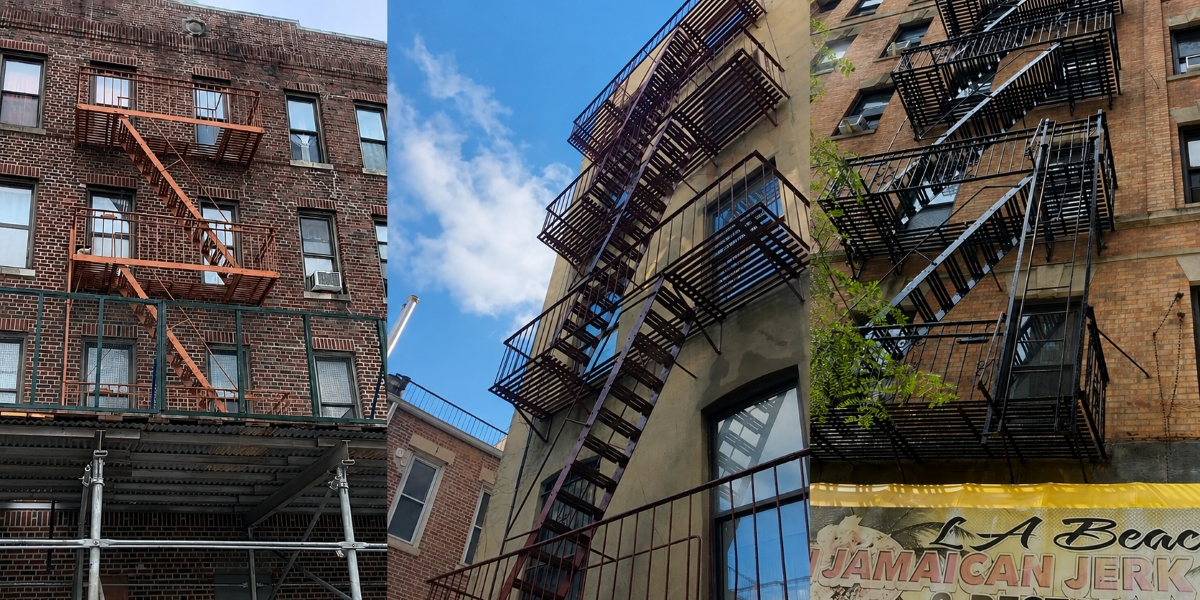
Fire escapes are a familiar feature of many residential and commercial buildings throughout New York City. Because these exterior structures are exposed to rain, snow, wind, moisture, and changing temperatures year after year, regular maintenance is important. Over time, metal components can develop rust, corrosion, loose connections, damaged railings, or other issues that may require professional attention.

For property owners searching for reliable Fire Escape Repair in NYC, working with an experienced contractor can help identify problems and determine the appropriate repair or maintenance solution.

Why Fire Escape Repair Matters

A fire escape is an important exterior structure that can provide emergency access and egress. Like other parts of a building, it requires ongoing care to remain in good condition.

New York City’s outdoor environment can be particularly demanding on metal structures. Moisture can contribute to corrosion, while repeated exposure to weather can gradually affect surfaces, fasteners, stairs, platforms, and railings.

Ignoring visible deterioration can allow small problems to become more significant. Regular inspections and timely repairs can help property owners address issues before they require more extensive work.

Common Fire Escape Problems

Fire escapes can experience several types of deterioration over time. Rust is one of the most common concerns, especially on older steel structures. Surface rust may eventually develop into more serious corrosion if it is not addressed.

Other potential issues include damaged stair treads, deteriorated platforms, loose railings, weakened connections, damaged brackets, and peeling or deteriorated protective coatings.

Property owners should not attempt to determine structural safety based only on appearance. If a fire escape appears damaged or significantly corroded, a qualified professional should evaluate the structure and recommend the appropriate next steps.

Professional Fire Escape Inspection

Before repair work begins, an inspection can help identify areas that require attention. A professional may examine the stairs, platforms, railings, supports, connections, and visible metal surfaces.

The purpose of an inspection is to understand the condition of the structure and determine whether repairs, painting, restoration, or other work may be appropriate.

For property owners, addressing problems early can also make maintenance more manageable. Regular professional assessments can help create a maintenance plan rather than waiting until visible deterioration becomes severe.

The Role of Fire Escape Painting

Painting is another important part of exterior fire escape maintenance. A properly prepared and maintained protective coating can help shield metal surfaces from moisture and environmental exposure.

However, painting should not simply involve applying a new coat over existing rust. Proper surface preparation is important. Depending on the condition of the structure, old coatings and corrosion may need to be removed or treated before a new protective coating is applied.

Professional preparation and painting can improve the appearance of a fire escape while helping protect exposed metal surfaces.

When Repairs May Be Necessary

Not every fire escape requires the same type of repair. Minor surface deterioration may require cleaning, preparation, and protective painting, while more serious corrosion or damaged components may require specialized repair or replacement.

Property owners should have significant deterioration evaluated by qualified professionals before deciding what work is necessary.

A professional repair provider can help determine whether a problem is primarily cosmetic or whether it may involve structural components. This distinction is important because simply painting a severely deteriorated area does not resolve an underlying structural problem.

Maintaining Older Fire Escapes

Many NYC buildings have exterior fire escapes that have been exposed to the elements for decades. Older structures may require more frequent attention because years of weather exposure can affect their metal components and protective coatings.

A maintenance program can include periodic visual checks, professional inspections when appropriate, cleaning, corrosion treatment, repairs, and repainting.

Property owners should also keep records of maintenance and repair work. Documentation can be useful when managing a building over time and planning future maintenance.

Choosing a Fire Escape Repair Contractor

When searching for Fire Escape Repair in NYC, property owners should consider the contractor’s experience with exterior metal structures, repair capabilities, communication, and understanding of local building requirements.

It is also helpful to discuss the condition of the existing fire escape before beginning work. A contractor should be able to explain the recommended scope of work and identify whether the project involves repair, painting, replacement components, or additional professional evaluation.

For larger or structural projects, property owners may also need to coordinate with appropriate professionals to ensure that the work meets applicable requirements.

NYC Fire Escape Painting

NYC Fire Escape Painting provides fire escape maintenance and painting services for property owners who need professional assistance with exterior fire escape structures.

For project information or service inquiries:

NYC Fire Escape Painting
104 West 40th Street
New York, NY 10018
Phone: (347) 384-5103
Email: contact@nycfireescapespainting.com

Property owners can contact the company to discuss the condition of an existing fire escape and determine what type of maintenance or repair services may be appropriate.

Why Timely Maintenance Is Valuable

Waiting until a fire escape has significant visible deterioration can make maintenance more complicated. Addressing corrosion, damaged coatings, or other concerns when they are first identified may help prevent further deterioration.

Regular maintenance can also improve the overall appearance of a building. A properly cleaned and painted fire escape can look more presentable while receiving protection from continued outdoor exposure.

Most importantly, property owners should treat fire escape maintenance as part of responsible building upkeep rather than as a purely cosmetic improvement.

Keeping NYC Fire Escapes Safe and Well Maintained

Fire escapes are exposed to NYC’s weather conditions throughout the year, making regular inspection, repair, and maintenance important for property owners. Rust, corrosion, damaged components, and deteriorated coatings should receive appropriate professional attention.

If you are searching for Fire Escape Repair in NYC, begin with an evaluation of the existing structure and discuss the appropriate repair or maintenance options with an experienced contractor. Fire escape painting can also be an important part of maintaining exterior metal surfaces when proper preparation and coating methods are used.

For fire escape repair and painting inquiries, NYC Fire Escape Painting can be reached at (347) 384-5103, contact@nycfireescapespainting.com, or at 104 West 40th Street, New York, NY 10018.

Flexzo’s AI Hiring Engine Targets Healthcare Placement Fees

When a hospital finally fills a permanent nursing vacancy after three months of searching, the invoice that follows can be as painful as the vacancy itself. Direct-hire agency fees in US healthcare run 15 to 30 percent of first-year salary, roughly $18,000 for a single $90,000 registered nurse, and considerably more for physicians, where contingency search fees reach a quarter of base compensation.

Multiply that across a year of hiring and recruitment becomes one of the largest unmanaged line items in a provider’s budget. The vacancy itself is no cheaper. The average experienced nursing role now takes 78 to 83 days to fill, and every one of those days is paid for in overtime, premium labor, and lost capacity.

Flexzo, the healthcare workforce technology company, is targeting that line item with Flexzo Talent Flow, a platform it describes not as another applicant tracking system but as an AI Hiring Engine. The term signals a specific architectural choice. A conventional ATS waits. A vacancy is posted, applicants arrive, and a recruiter sorts the pile.

An AI Hiring Engine, as Flexzo describes it, does not wait for applicants. It sources, screens, matches, and closes permanent clinical talent continuously, doing the work of a recruiting agency as software, at a flat monthly price.

How the Engine Works

The system runs a role from intake to signed offer in one connected workflow. A hiring team captures the position once through a structured clinical schema covering profession, specialty, license, facility type, shift, salary band, and eight other fields, and the platform distributes it across major hiring channels, including LinkedIn, Indeed, healthcare job boards, and the employer’s own careers page, from a single screen.

What separates the engine from a job-posting tool is what happens next. Rather than relying on inbound applicants alone, the platform’s AI search surfaces qualified clinicians beyond the applicant pool, enriches them into structured profiles covering work history, licensure, certifications, and skills, and reveals verified contact details on demand. Built-in chat, email, and SMS outreach, with opt-out handling and reply tracking, starts the conversation, and positive replies move themselves into the hiring pipeline.

Every candidate, sourced or inbound, is then scored 0 to 100 against the specific role across eight weighted clinical factors, from profession and specialty fit to licensure, location, and salary alignment. The score is explainable. A full factor-by-factor breakdown is stored with every application, a design decision that matters as AI-hiring regulation tightens across US states.

The company is explicit about where the automation stops. “AI helps prepare the shortlist,” its platform materials state. “Hiring teams make the decision.” The workflow then closes the loop that most recruiting software leaves open. Offer letters are generated, routed for internal approval, and e-signed by the candidate inside the same system that found them, with every stage change, contact reveal, and offer action recorded to an audit trail.

Jack Henderson, CEO of Flexzo, frames the problem as economic rather than technical. “Permanent hiring in US healthcare still runs on a fee structure that predates the software now able to replace it,” he said. “Providers have spent three years proving they can cut contract-labor spend. Talent Flow gives them the same discipline on permanent hiring, the reach and rigor of an agency, without paying a percentage of salary for every hire.”

Why the Timing Is Not Accidental

The launch lands in the middle of a structural shift in hospital labor strategy. Travel-nurse spending has contracted for three consecutive years, with revenue down 37 percent in 2024 alone, and 63 percent of healthcare CFOs say they are actively reducing reliance on outside contracting. Health systems such as Providence and Montefiore have publicly cut agency and contract-labor spend by as much as 70 percent from pandemic peaks. Having tamed temporary-labor costs, finance leaders are turning to the next exposure, permanent placement fees.

The demand side offers no relief. Federal projections put registered-nurse openings at roughly 190,000 per year through 2034, and the average hospital carries dozens of unfilled RN positions at any given time, at a churn cost estimated above $5 million per hospital per year. Providers cannot stop hiring. The question is what each hire costs.

What an AI Hiring Engine Means for Operations

For an administrator or talent leader, the practical difference shows up in three places. The first is breadth of reach, with one role distributed across every major channel and all applicants, along with AI-sourced candidates, landing in a single ranked pipeline rather than per-posting spend scattered across boards.

The second is the shape of the screening step. AI enrichment and explainable scoring order candidates before a recruiter opens the first résumé, a process designed to take pressure off the manual CV review that consumes recruiter capacity. The third is a hiring function that smaller facilities have never had. For skilled nursing operators, urgent-care groups, and clinic networks with no talent-acquisition team, the engine is built to operate as the recruiting department, running from role intake to signed offer without a middleman.

Flexzo has also broken with category convention on pricing. Agencies quote per hire. According to the company, Talent Flow runs instead on self-serve subscription plans starting at $299 per month, with a free tier that includes one live job and one AI candidate search, so an employer can review a shortlist before committing spend.

For providers under budget mandates to justify every recruitment dollar, the structural question is how permanent hiring gets paid for, and whether a fixed monthly subscription belongs in a budget line that agencies have long priced as a percentage of salary. Flexzo is building on the view that it does.

Disclaimer: This article is for informational purposes only. Product features, pricing, availability, and capabilities may change. Hiring results and cost savings may vary by organization. Employers are responsible for ensuring their hiring practices and use of AI-assisted recruitment tools comply with applicable employment, privacy, and AI regulations.

The Digital Transformation of Human Experience Presents a Speculative Vision of Artificial Intelligence

A feature on the book by Jean-Philippe S. Wormser.

In The Digital Transformation of Human Experience: A New Way to Artificial Intelligence, Jean-Philippe S. Wormser presents an unconventional exploration of artificial intelligence, virtual reality, expanded consciousness, and humanity’s place in the universe. Rather than offering a conventional technology forecast, the book combines speculative science, personal vision, illustrated cosmology, and philosophical reflection.

Its central question is bold: what might happen if digital systems could transform not only the information people receive, but also the way reality itself is experienced?

A Vision Rooted in Bio-Digital Computing

The book begins with a pivotal experience Wormser places in the Swiss Alps in 1993. During a cold and foggy hiking trip, he describes imagining a breakthrough in human-machine synthesis, a moment that became the starting point for what he calls bio-digital computing.

In this proposed interaction between biological systems and advanced microprocessors, Wormser outlines a speculative framework that imagines a new technological medium linking biochemistry, software, artificial intelligence, and immersive perception.

At the center of the concept is the Real Virtual Reality Processor, or RVR. Wormser describes it as a futuristic processor in which specialized microprocessors work in tandem with neural-interface models to generate layered virtual reality environments. Artificial intelligence then personalizes the people, settings, and experiences inside those worlds.

The book imagines applications beyond entertainment, including education, medical training, psychotherapy, language learning, and professional simulation. These ideas are presented as imaginative possibilities rather than established technology, revealing the scale of Wormser’s vision for future human-machine interaction.

A Cosmic Narrative of Civilizations and Technology

From there, the book expands into an illustrated universe populated by distinct civilizations, including the Logons, Vargans, Endorians, Luvians, Esquitanians, Cylons, and Vedians. Each civilization features its own biology, history, technology, and social structure.

Wormser describes spacecraft, political conflicts, environmental crises, anti-aging systems, climate management, and different methods of preserving life. The result is a cosmic narrative in which artificial intelligence connects directly to questions of survival, communication, social progress, and the long-term future of civilization.

A major theme is the contrast between technological advancement and social instability. Some civilizations possess extraordinary engineering, medicine, or space-travel capabilities, yet still face inequality, corruption, war, scarcity, and environmental decline.

Through the Logons and Vargans in particular, Wormser suggests that scientific progress alone cannot solve every problem. A society may develop powerful machines and still struggle with division and ethical responsibility. This tension reinforces the book’s broader message about matching digital innovation with cooperation and social responsibility.

The Luvians, Watch Towers, and an Illustrated Universe

The Luvians and the Watch Towers add another layer to the book’s vision. The Luvians are presented as a highly advanced civilization that has observed Earth and protected inhabited worlds from cosmic threats. The Watch Towers are described as enormous monitoring and communication systems capable of linking distant societies.

Throughout the manuscript, diagrams and illustrations of processors, spacecraft, extraterrestrial beings, planetary systems, and cosmic territories help readers visualize these ideas. The artwork gives the book the feel of a speculative technology proposal, cosmic atlas, and philosophical thought experiment.

Consciousness, Continuity, and Human Possibility

In its final sections, the book moves toward questions of consciousness, continuity, and what Wormser calls the Circle of Universal Resurrection. The text imagines identity and life moving through a larger intergalactic system, connecting technology with spiritual and philosophical possibility.

Written for readers interested in artificial intelligence, virtual reality, speculative science, consciousness, extraterrestrial life, and the future of humanity, the book offers a highly individual perspective. It invites readers to look beyond familiar technology debates and consider how machines, imagination, and the wider universe might one day become part of the same conversation.

Featured Book: The Digital Transformation of Human Experience: A New Way to Artificial Intelligence by Jean-Philippe S. Wormser

For Contact:
Email: author@jeanphilippewormser.com
KDP
Website

The Value of Medical Practice PR and How Medical Practices Can Grow Without Relying on Paid Advertising Through Healthcare Public Relations

For many medical practices, growth has traditionally been tied to advertising budgets. Through paid online ads, social campaigns, print and TV commercials, or paid local listings, medical practices have spent thousands of dollars in hopes of reaching their target clientele.

However, while these advertising tools have their place, they are not the only way to support the growth of a medical practice. A strategic public relations plan can help a practice build trust, communicate expertise, and develop a distinctive professional point of view in the market.

Otter PR, a public relations firm serving medical practices nationwide, has made a name for itself by helping clients in the medical field develop medical PR strategies that combine thought leadership, earned media, and crisis communications when needed. The goal is to help medical practices strengthen visibility and credibility in a competitive healthcare landscape.

Medical Practice PR Success Through Expertise

While paid advertising is purchased placement, earned media is secured because an editor or publication finds a perspective relevant to its audience. Whether it is a doctor quoted in a news report or an in-depth interview about a developing health topic, the distinction between earned media and paid advertising can make a meaningful difference for a medical practice.

Otter PR understands that advertisements ask the public to consider a service. Earned media gives clinicians and other healthcare professionals the room to explain issues in depth, share expertise, and provide context within an editorial setting.

Instead of turning medical expertise into another sales pitch, this approach highlights qualified professionals. For potential patients, partners, or conference organizers looking for informed voices, earned media placements can help those professionals stand out in a crowded market.

Otter PR offers brand and communications auditing, story pitching, media relations, and customized thought leadership strategies to help clinician clients clarify their core messaging, identify newsworthy angles, prepare pitches, and pursue interviews or contributed-content opportunities. Together, these efforts can help clients build visibility in the market and support the broader growth of the practice.

A Case Study in Growing a Holistic Wellness Practice Through PR

One example of how Otter PR has helped a medical professional build visibility is its work with Stella Dinnis of St. Pete Wellness and Med Spa. This campaign illustrated how a professional can be positioned around an issue that reaches beyond a conventional promotional campaign.

As a licensed medical aesthetician specializing in phlebotomy, with advanced training in laser techniques, medical-grade peels, microneedling, hydrafacials, and PRP/PRF, Dinnis wanted to raise local awareness of the services offered through her med spa. Her practice takes a holistic approach, treating clients from the inside out and the outside in by designing personalized programs for each client to support appearance and skin health.

Otter PR knew it would need to highlight Dinnis as an expert while also integrating social media and influencer marketing angles to reach St. Pete Wellness and Med Spa’s target market. The campaign helped position Dinnis as an expert in her field in local outlets such as the South Florida Reporter. The business also gained attention from a TikTok video for one of its TMJ Botox treatments that reportedly received more than 200,000 views in 24 hours.

Dinnis’s campaign with Otter PR used partnerships with local influencers and social media content to highlight Dinnis herself as an expert in the aesthetician field.

A Foundation in Earned Media

A medical practice that wants to grow beyond paid advertisements can start by asking what expertise it can offer the public that is genuinely useful and what helps distinguish it from other providers. Otter PR helps its medical clients identify these differentiators and then creates an evidence-based message, prepares clients for interviews with media training, pitches appropriate journalists and outlets, and helps clients make effective use of earned coverage.

While earned media is not a substitute for strong patient outcomes or a well-run practice, it can help medical practices build recognition and credibility in ways paid advertisements may not. The Otter PR team has built a reputation for aligning healthcare voices with industry conversations in a meaningful way. Its strategies are designed to help medical professionals establish authority through placements and interviews.

For medical practices seeking to move beyond pay-to-play advertising, medical practice PR with professionals like Otter PR can help turn professional knowledge into earned credibility and long-term awareness.

What Every Future Nail Technician Should Know Before Enrolling

Ask someone why they’re thinking about nail school, and the answer usually comes fast. “I need a license.” Fair enough. You do, no argument there.

But treating nail school as just a licensing checkpoint is a bit like judging a whole movie by the ticket stub. Sure, the ticket gets you in the door. Important, obviously. But the experience happens once you’re inside.

The students who build careers that outlast a passing trend or the next algorithm tweak tend to figure this out early. A license opens a door. It doesn’t teach you how to stay in the room. That’s where technical skill, patience, communication, professionalism, and a real willingness to keep learning start pulling their weight.

That’s exactly why choosing the right nail tech school matters. Graduation is an event. Trust is a process.

People mix the two up all the time. They shouldn’t. They’re not even close.

Nail School Is More Than Passing an Exam

A lot of students picture the journey as a neat little staircase. Learn, pass the exams, get the license, build a career. Done. Life sees plans like that and usually responds with a polite laugh.

A strong nail program teaches things that don’t always show up on licensing exams in obvious ways. Sanitation. Product chemistry. Professional conduct. Client communication. Problem-solving. The thousand tiny decisions that happen during an ordinary appointment. And ordinary appointments are where careers are built.

Not during exams. Not during graduation photos. Not while proudly holding a certificate that still smells like fresh printer ink. Many of the most important lessons seem boring at first. Until they aren’t. Until a real client sits across from you. Until something unexpected happens, and something always does.

A licensing exam asks whether you understand the basics. Real clients ask whether they can trust you. Very different questions.

Practice Is Where Confidence Comes From

Confidence is manufactured. Slowly. Sometimes painfully.

The first few attempts at a new technique often feel awkward enough to make you question every decision that led you here. Your hands feel unfamiliar. The tools feel unfamiliar. Even your own fingers somehow become uncooperative.

Strange experience. Then you do it again. And again. And one more time. Eventually something shifts. It’s called gradual improvement. One day you notice you’re spending less time thinking about every individual step. Your movements become smoother. Your attention starts moving beyond survival mode.

Confidence isn’t magic. It’s repetition that has stopped introducing itself. Kind of like learning to drive. Practice creates familiarity. Familiarity reduces hesitation. Hesitation leaves the room, and confidence quietly takes its seat.

Building Professional Habits Early

Talent gets discussed constantly. Habits don’t. Which is unfortunate because habits tend to win far more often.

A surprisingly large number of successful technicians aren’t a lot more talented than everyone else around them. They’re simply more consistent. They arrive prepared, they stay organized, they follow sanitation procedures without cutting corners, they communicate clearly, and they respect time, both their own and other people’s.

None of this sounds particularly exciting. Neither does changing oil in your car, though try skipping it for a few years and suddenly the importance becomes very clear. Professional habits work the same way. Clients notice them, even when they can’t explain exactly what they’re noticing.

The appointment feels smooth. Comfortable. Reliable. Trustworthy. Those impressions come from dozens of small actions happening behind the scenes. Tiny details that eventually become reputation. And reputation is stubborn. It follows people around for years.

Choosing a School That Matches Your Goals

Not every future nail technician wants the same future. Obvious statement, still worth repeating.

Some students dream about advanced nail art and elaborate designs that look like they belong in galleries. Others are fascinated by natural nail health. Some want to work in established salons. Others already have business plans scribbled inside notebooks somewhere.

The right school depends partly on where you’re trying to go. And partly on who you’re trying to become. A program should absolutely teach strong technical fundamentals. No debate there. But beyond that? Ask questions. The annoying kind, the detailed kind. How much hands-on training is included? What happens after graduation? What techniques receive the most attention? What kind of support exists when students struggle?

Marketing materials tell one story. Conversations tell another. Questions tend to wander into corners brochures prefer to avoid, which is precisely why they’re useful.

The Real Work Begins After Nail School

Many students begin nail school believing the difficult part is obtaining a license. Then reality arrives, carrying a much larger assignment.

The real challenge is becoming consistently good, not occasionally impressive. The kind of good that survives busy schedules, demanding clients, changing trends, long days, short days, and those strange afternoons when absolutely nothing seems to go according to plan.

School provides a foundation. Practice reinforces it. Professional habits quietly hold the entire structure together like beams hidden behind walls.

Growth rarely feels obvious while it’s happening. People expect transformation to arrive with fireworks. Most of the time it arrives disguised as repetition. One day you’re struggling through a technique; a year later you’re explaining it to someone else. And somehow that shift happened without asking permission.

Frequently Asked Questions

How Should I Prepare Before Nail School?

Bring curiosity. Seriously.

Most schools expect beginners, not experts. A willingness to learn, ask questions, and stay open to feedback usually matters far more than previous experience.

What Should I Expect During Training?

Expect a mixture of theory and hands-on practice. Students typically learn sanitation, safety procedures, nail anatomy, product knowledge, technical skills, and professional client interaction.

Can I Work Immediately After Graduation?

That depends on local licensing requirements. In many areas, graduates must complete licensing steps before working professionally.

How Much Practice Is Enough?

More than feels necessary. Then probably a little more after that.

Practice develops speed, consistency, confidence, and problem-solving skills. Most professionals never really stop practicing. The goals simply become more complicated.

How Do I Choose A School?

Look beyond licensing preparation alone. Consider teaching quality, hands-on training opportunities, curriculum depth, professional reputation, and whether the school’s approach aligns with your long-term goals.

Why Rising Vehicle Costs Are Forcing US Businesses to Rethink Fleet Operations

For a small business, one vehicle breakdown can quickly throw off a day of deliveries, appointments, or service calls. The only spare van may be out. A technician may then have to wait for a lift. Customers may need to be rescheduled too.

When fuel, repairs, and insurance take up a large share of the budget, problems like these are harder to absorb. The sections below look at where vehicle costs build and how oversight can stop a small issue from affecting the workday.

Vehicle Costs Add Up

In June 2026, US gasoline prices were 26.7% higher than a year earlier, while motor vehicle maintenance and repair prices had risen 7%, according to the Bureau of Labor Statistics.

Those figures matter to businesses that send people or goods out each day. Fleet operating costs also include tires, insurance, registration and income lost when a vehicle cannot be used.

Some waste is easy to miss. A van idles while a driver completes paperwork. Two employees cover nearby areas on separate routes. A vehicle returns to the warehouse because a tool was left behind.

Cut Fuel Waste Without Disrupting the Day

The Department of Energy recommends limiting unnecessary idling and avoidable vehicle miles. Drivers may still need the engine for heat, cold, safety, or job equipment. The concern is repeated waiting with no clear purpose.

Route planning can improve fleet efficiency. Jobs grouped by area require fewer miles than appointments added one at a time. Travel windows can reduce rushing and help drivers arrive when expected.

Managers can compare planned routes with actual mileage and note recurring delays. This makes fleet cost reduction part of normal scheduling.

Make Better Use of the Vehicles You Have

A business can have several vehicles and still struggle to cover the day’s work. One truck may carry most of the mileage while another sits unused.

Reviewing vehicle utilization through mileage, trip counts, engine hours and days in service can show where that imbalance comes from. It may also reveal that a large truck is being sent to jobs a smaller van could handle.

This supports fleet management decisions, from reassigning vehicles to deciding whether an older model is worth keeping.

Plan Maintenance Before a Vehicle Fails

A warning light on Monday can become a canceled appointment by Friday. Preventative fleet maintenance gives teams time to schedule tire checks, fluid servicing and inspections before a breakdown.

Service plans should consider mileage, engine hours, manufacturer guidance and repair history. Reducing vehicle downtime is easier when workshop visits are planned around quieter periods instead of landing in a busy week.

Driving habits also affect cost. Harsh braking, rapid acceleration and speeding can increase fuel use, wear and road risk. Clear expectations and useful coaching can support safer driving without making employees feel watched.

Use Data to Catch Repeat Problems

For businesses running several vehicles, fleet telematics can bring location, usage, maintenance alerts and driver activity into one place. A vehicle tracking system can help managers see why a route keeps running late or when a vehicle is nearing a service interval.

Used for practical questions, GPS fleet tracking makes scattered information easier to act on. It also gives operations, finance and maintenance teams a shared view of business vehicle costs.

Fuel use, idle time, mileage, maintenance spending, utilization and downtime are useful starting points. Regular review helps a business deal with a problem while it is still a schedule change or routine repair, rather than a missed job and an unhappy customer.