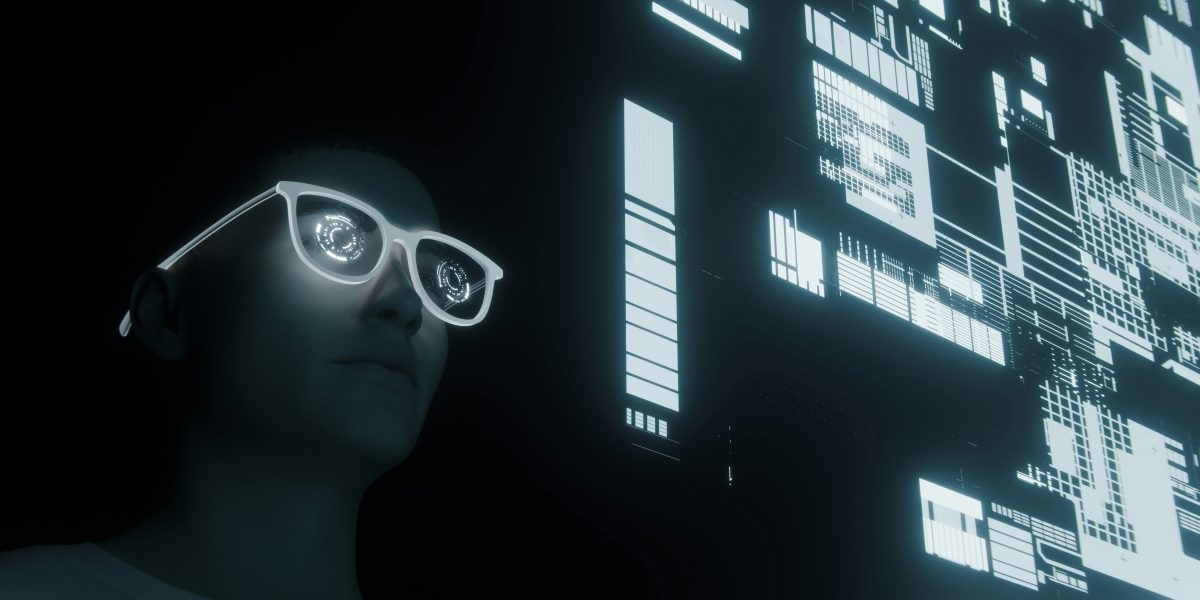

A feature on the book by Jean-Philippe S. Wormser.
In The Digital Transformation of Human Experience: A New Way to Artificial Intelligence, Jean-Philippe S. Wormser presents an unconventional exploration of artificial intelligence, virtual reality, expanded consciousness, and humanity’s place in the universe. Rather than offering a conventional technology forecast, the book combines speculative science, personal vision, illustrated cosmology, and philosophical reflection.
Its central question is bold: what might happen if digital systems could transform not only the information people receive, but also the way reality itself is experienced?
A Vision Rooted in Bio-Digital Computing
The book begins with a pivotal experience Wormser places in the Swiss Alps in 1993. During a cold and foggy hiking trip, he describes imagining a breakthrough in human-machine synthesis, a moment that became the starting point for what he calls bio-digital computing.
In this proposed interaction between biological systems and advanced microprocessors, Wormser outlines a speculative framework that imagines a new technological medium linking biochemistry, software, artificial intelligence, and immersive perception.
At the center of the concept is the Real Virtual Reality Processor, or RVR. Wormser describes it as a futuristic processor in which specialized microprocessors work in tandem with neural-interface models to generate layered virtual reality environments. Artificial intelligence then personalizes the people, settings, and experiences inside those worlds.
The book imagines applications beyond entertainment, including education, medical training, psychotherapy, language learning, and professional simulation. These ideas are presented as imaginative possibilities rather than established technology, revealing the scale of Wormser’s vision for future human-machine interaction.
A Cosmic Narrative of Civilizations and Technology
From there, the book expands into an illustrated universe populated by distinct civilizations, including the Logons, Vargans, Endorians, Luvians, Esquitanians, Cylons, and Vedians. Each civilization features its own biology, history, technology, and social structure.
Wormser describes spacecraft, political conflicts, environmental crises, anti-aging systems, climate management, and different methods of preserving life. The result is a cosmic narrative in which artificial intelligence connects directly to questions of survival, communication, social progress, and the long-term future of civilization.
A major theme is the contrast between technological advancement and social instability. Some civilizations possess extraordinary engineering, medicine, or space-travel capabilities, yet still face inequality, corruption, war, scarcity, and environmental decline.
Through the Logons and Vargans in particular, Wormser suggests that scientific progress alone cannot solve every problem. A society may develop powerful machines and still struggle with division and ethical responsibility. This tension reinforces the book’s broader message about matching digital innovation with cooperation and social responsibility.
The Luvians, Watch Towers, and an Illustrated Universe
The Luvians and the Watch Towers add another layer to the book’s vision. The Luvians are presented as a highly advanced civilization that has observed Earth and protected inhabited worlds from cosmic threats. The Watch Towers are described as enormous monitoring and communication systems capable of linking distant societies.
Throughout the manuscript, diagrams and illustrations of processors, spacecraft, extraterrestrial beings, planetary systems, and cosmic territories help readers visualize these ideas. The artwork gives the book the feel of a speculative technology proposal, cosmic atlas, and philosophical thought experiment.
Consciousness, Continuity, and Human Possibility
In its final sections, the book moves toward questions of consciousness, continuity, and what Wormser calls the Circle of Universal Resurrection. The text imagines identity and life moving through a larger intergalactic system, connecting technology with spiritual and philosophical possibility.
Written for readers interested in artificial intelligence, virtual reality, speculative science, consciousness, extraterrestrial life, and the future of humanity, the book offers a highly individual perspective. It invites readers to look beyond familiar technology debates and consider how machines, imagination, and the wider universe might one day become part of the same conversation.
Featured Book: The Digital Transformation of Human Experience: A New Way to Artificial Intelligence by Jean-Philippe S. Wormser