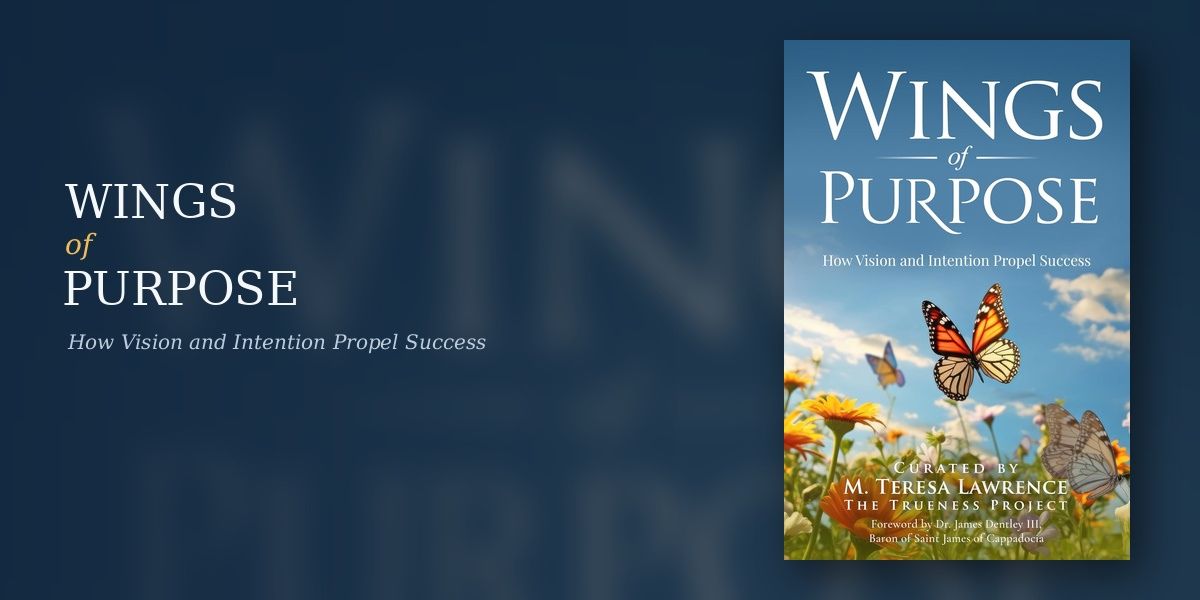
M. Teresa Lawrence Brought Together Twenty-One Voices and Gave Them Space to Share Their Stories

By: Mauren Mackenzie

There is a specific quality of honesty that the best anthology collections generate when the curator has selected contributors not for their polish but for their authenticity, when the criterion for inclusion is not how impressive the story sounds but how genuinely useful it might be to someone sitting with the same questions the contributor once sat with and not yet knowing which way to go. M. Teresa Lawrence has applied exactly that criterion to Wings of Purpose, and the result is an anthology that feels genuinely trustworthy in a space where manufactured inspiration is distressingly common.

The twenty-one contributors she has assembled are diverse in background and experience in ways that feel deliberate and meaningful rather than superficially representative. Leaders and healers and entrepreneurs and coaches and journalists and changemakers from across the globe, each approaching the universal question of purpose from a different direction and with a different set of tools and a different set of stumbling blocks, give the book a range of perspectives that no single author’s story could have supplied. That range is what makes the anthology genuinely useful across a wide spectrum of readers and life circumstances, because the specific story that opens something in one reader may not be the story that opens something in another, and Lawrence has assembled enough different kinds of stories to ensure that something in this book will speak to almost anyone willing to bring genuine openness to it.

The framework that holds the anthology together, the shared commitment to vision and intention as the specific forces that propel purpose from aspiration to reality, gives the diverse stories a coherent through-line that makes the book feel unified rather than merely assembled. Each contributor approaches that framework from their own angle and with their own emphasis, but the convergence of twenty-one genuinely different people on the same essential understanding of how purposeful lives are actually built is itself one of the most powerful arguments the book makes.

The quality of vulnerability in the individual chapters is what makes them genuinely moving rather than merely compelling. These contributors have been given the space to tell the truth about their experience, including the difficult and uncomfortable and uncertain parts, and most of them have used that space generously. The result is a book that earns the trust it requires from its readers by demonstrating through its own pages the authenticity it is advocating for as a way of living.

Wings of Purpose is the kind of anthology that matters, assembled with genuine care and genuine purpose, offering something that goes considerably deeper than inspiration into the actual territory of transformation.

If you have been looking for a personal purpose anthology that earns your trust through honesty rather than demanding it through authority, Wings of Purpose by M. Teresa Lawrence is the book that delivers exactly that: twenty-one genuinely authentic stories from genuinely diverse contributors who were given the space to tell the complete truth about what finding and living their purpose actually required. Head over to Amazon and get your copy today, and bring the openness that this level of honesty deserves in return.

FarseerTech Unveils a Robotic Extreme Zoom Camera. 2000mm Ultra Telephoto Zoom Redefines Intelligent Visual Experience

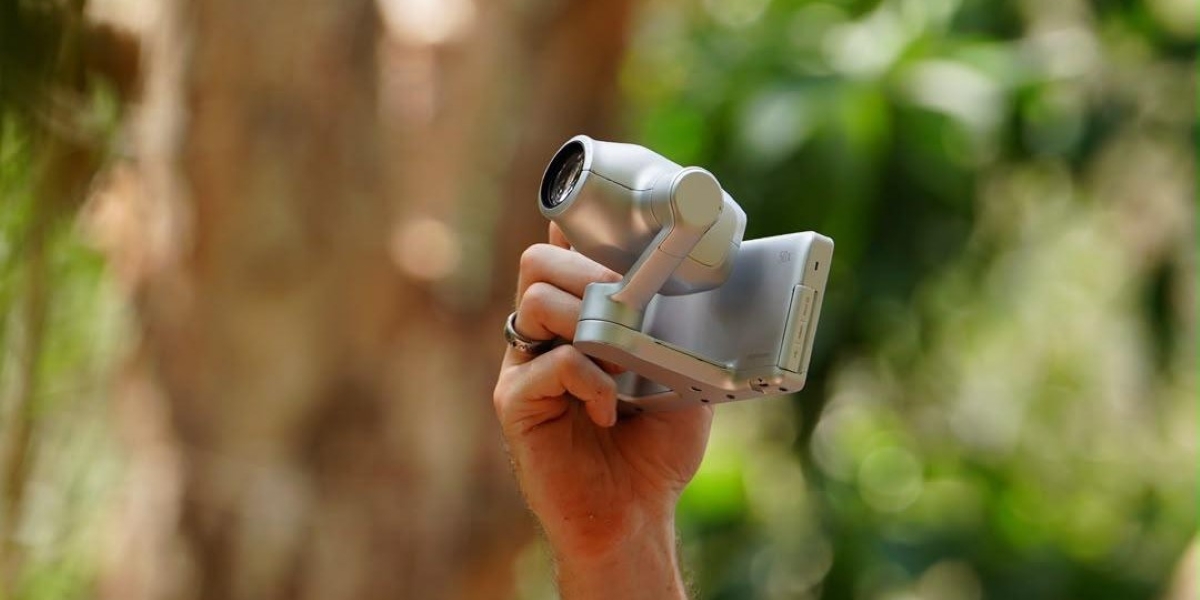
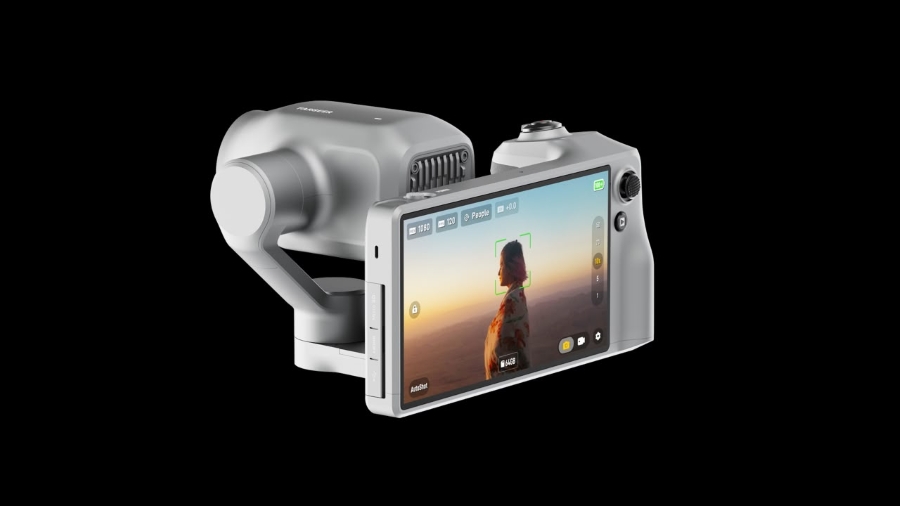
FarseerTech, a startup founded by former DJI engineers, has entered the intelligent imaging sector with the debut of RocXZoom, a robotic extreme zoom camera. Built around 2000mm equivalent ultra telephoto zoom capability, the product addresses long-standing technical challenges in traditional telephotography. It offers a new approach for the professional photography industry and has drawn widespread attention.

Founding Team

Photo Courtesy: FarseerTech

FarseerTech specializes in the research, development, and design of intelligent imaging robotics. Its core team is composed entirely of ex-DJI engineers, bringing together experienced specialists across algorithms, structural design, hardware development, software engineering, and system quality assurance. The team has worked extensively on the development and mass production of a portfolio of well-known imaging products, delivering more than ten SKUs to the market with cumulative global sales in the millions of units. That track record provides a strong technological foundation for the company’s product development.

Core Product

RocXZoom, the company’s debut product, uses artificial intelligence as its primary driver. It is built for a range of scenarios that includes long-distance wildlife photography, concerts, sports recording, and landscape and portrait work, where traditional telephoto shooting is often a frustrating battle. Zoom in this tight and everything starts to betray you. Your heartbeat. The wind. Your own breathing. Then the subject moves. A bird breaks from the canopy, forty miles an hour, gone in a second. You are not tracking that. Nobody is. These are the exact challenges RocXZoom targets.

The camera is equipped with core functions such as automatic high-speed tracking, AI recognition, automatic anti-shake snapshot, and 50x zoom (20x optical zoom) with an equivalent focal length of 40mm to 2000mm. It also features a lightweight, portable design and broad cross-device compatibility. Compared with conventional telephoto gear, it works to overcome the limitations of binoculars (which can see but cannot capture), smartphones (with limited telephoto resolution), and professional telephoto cameras (which are bulky, costly, and slow to track by hand), making professional-grade long-range shooting more widely accessible.

Future Vision

Photo Courtesy: FarseerTech

Looking ahead, FarseerTech plans to refine RocXZoom’s performance in two existing focus areas, outdoor landscape photography and creative portrait photography. In line with its stated vision, “Technology Drives the Future; Crafting Imaging Solutions for Creators,” the company aims to support creators through intelligent imaging technologies and contribute to the broader visual culture industry.

Partnership and Inquiries

For more product details or business cooperation inquiries:

Official Website: https://the-farseer-tech.com/

Disclaimer: This press release is based on the company’s current product roadmap and technological progress. Product specifications, features, and launch timelines are subject to change based on development progress, with the final release information prevailing. FarseerTech reserves the ultimate right to interpret the content of this press release.

What To Mix Protein Powder With?

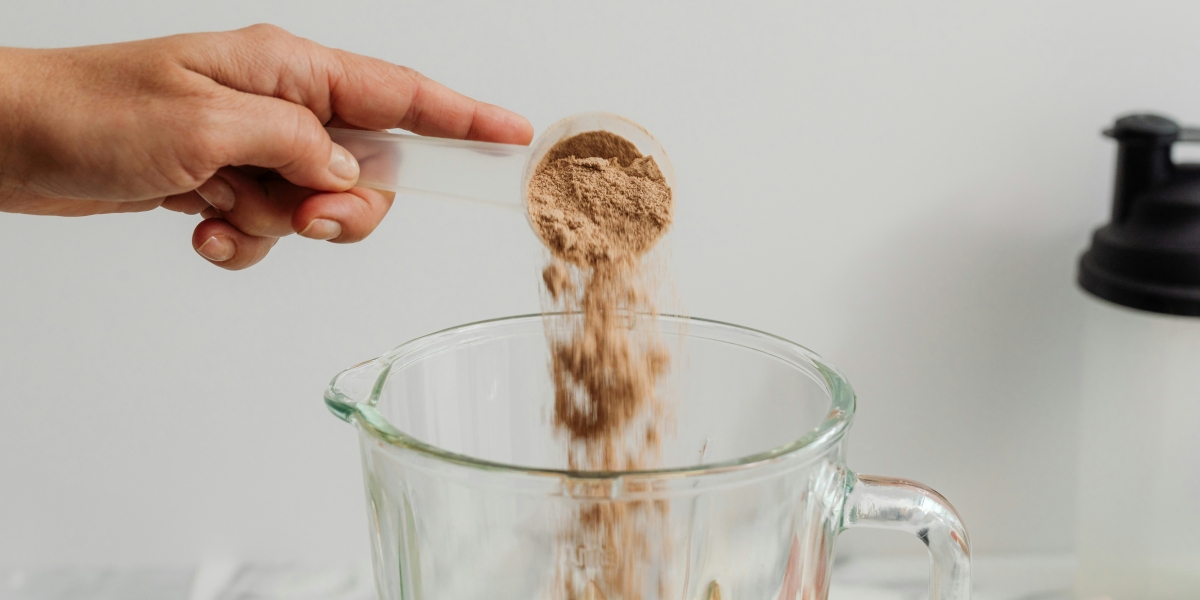
One of the best things about a well-formulated protein smoothie is how flexible it is. You are not locked into one preparation method, one liquid, or one time of day. The same scoop that goes into a shaker bottle on a rushed Tuesday morning can become a genuinely indulgent breakfast bowl on a slow Saturday, and the nutrition stays consistent either way.

The question of what to mix protein with is worth exploring properly, because the answer opens up a lot more variety than most people realize. Here is a practical guide to the best options, what each one brings to the experience, and a few combinations worth trying.

Liquid Options

The simplest and most common approach is mixing protein into a liquid and drinking it. The liquid you choose affects the flavor, texture, calorie content, and overall experience of the final drink, so it is worth thinking about which option fits your goals and taste preferences.

Water

Water is the most straightforward option and the one that keeps the serving as light as possible in terms of calories and added ingredients. It lets the flavor of the protein come through cleanly without any competing taste, which makes it a great choice for people who want to understand exactly what a new flavor tastes like before mixing it with anything else.

According to research published by the National Institutes of Health, protein dissolved in water is absorbed efficiently, making this a perfectly sound nutritional choice rather than a compromise. If you are watching total calorie intake or simply prefer a lighter drink, water is the right call.

Dairy Milk

Dairy milk adds creaminess, a richer texture, and additional protein and fat to the serving. A cup of whole milk adds roughly 8g of protein to the 25g already in a FlavCity Protein Smoothie, making the total closer to 33g per serving. The fat content in whole or reduced-fat milk also creates a noticeably more satisfying mouthfeel than water alone.

For flavors like Vanilla Cream, Chocolate Peanut Butter, and Cookies and Cream, dairy milk creates a flavor combination that genuinely rivals a milkshake while delivering real nutrition.

Plant-Based Milk

Oat milk, almond milk, coconut milk, and cashew milk all work beautifully as protein mixing liquids. Each brings a slightly different flavor profile and nutritional contribution.

Oat milk adds a naturally sweet, slightly creamy flavor that pairs especially well with warmer spiced flavors like Cinnamon Roll and Banana Bread. Almond milk is lighter and more neutral, making it a versatile choice across most flavors.

For the plant-based protein line, plant-based milks are the natural pairing. The Plant-Based Vanilla Protein Smoothie mixed with oat milk is a combination that surprises a lot of people with how genuinely good it tastes.

Coffee

Stirring a scoop of protein into your morning coffee as a creamer replacement is one of the most practical upgrades you can make to your existing routine. It adds 25g of protein, 10g of grass-fed collagen, fruit, and functional mushrooms to what would otherwise be just caffeine, and it creates a richer, creamier texture than black coffee alone.

Any flavor works for this, but Vanilla Cream, Salted Caramel are particularly well-suited to coffee. For an all-in-one option where the protein already contains real coffee, the Vanilla Latte and Butter Coffee Protein Smoothie deliver caffeine and 25g of protein in one step with just water or milk.

Sparkling Water

This one surprises people, but it works. Mixing protein with sparkling water creates a lightly fizzy, refreshing drink that feels genuinely different from the standard shaker bottle experience. Fruit-forward flavors like Berries and Cream work especially well with sparkling water for a light, refreshing option on warm days.

Food-Based Mixing Options

Protein does not have to go into a drink at all. Stirring a scoop into food is a genuinely effective way to add nutrition to meals you are already eating without adding another thing to drink.

Greek Yogurt

Greek yogurt and protein are a natural pairing. The thick base makes mixing easy, and the result is a high-protein, creamy bowl that works as a satisfying breakfast or snack. Berries and Cream or Vanilla Cream stirred into plain Greek yogurt and topped with fresh fruit is a combination worth making at least once to see how good it actually is.

Oatmeal

Stirring protein into oatmeal right after cooking, while it is still warm, incorporates it smoothly and transforms a simple bowl into something substantially more nutritious. Cinnamon Roll in oatmeal delivers exactly the flavor the name promises. Banana Bread works equally well for a cozy, filling breakfast that holds you through the morning.

Smoothie Bowls

A smoothie bowl is simply a thicker version of a blended smoothie, made with less liquid so the result is spoonable rather than drinkable. Blend one scoop of protein with a small amount of milk and a handful of frozen fruit for a thick, creamy base. Top with granola, fresh fruit, coconut flakes, or nut butter for a breakfast that looks as good as it tastes.

Pancake or Waffle Batter

Adding a scoop of protein to pancake or waffle batter is one of those swaps that sounds more complicated than it is. The result is a breakfast that genuinely tastes like a treat while delivering a meaningful protein boost. Vanilla Cream and Cinnamon Roll both work beautifully in batter. Reduce the other dry ingredients slightly to account for the additional scoop and adjust liquid as needed for the right consistency.

A Note on Temperature

Cold liquids make mixing slightly more challenging than room temperature options. If you are mixing with a spoon rather than a shaker bottle, using liquid that is not straight from the refrigerator makes the process noticeably smoother. For hot applications like oatmeal and coffee, letting the temperature come down slightly before adding protein prevents any texture changes from very high heat.

For anyone who wants to explore the full range of flavor options before committing to full bags, the Protein Smoothie Starter Kit is a great way to try a curated selection of flavors. Research from the National Institutes of Health consistently supports distributing protein intake across the day for best results, and having a variety of flavors makes that kind of consistent, distributed approach genuinely easy to sustain.

The Captain and the Commander and A Father’s Promise Written in the Stars

By: Jaxon Lee

Dr. Donald M. Cline spent a lifetime healing children, but it was his own son, Adam, who taught him that the most important journeys are the ones we take together.

Fear has a specific smell. In the great medical centers of Houston, it smells like antiseptic and cold air. It settles in the chests of children waiting for surgery. It lingers in the eyes of young cancer patients who have seen too many white coats and far too few playgrounds. In these rooms, childhood feels like it has been paused. The serious business of survival takes over.

Dr. Donald M. Cline spent twenty years trying to lift that weight.

He excelled at Pediatric Anesthesiology. He has provided care for many. He knew the medicine would numb the body. But he also knew that medicine does not settle the soul. When he lowered a mask over a terrified child’s face, he did not ask them to count backward into the dark. He told them to look up.

He told them the bright surgical lamps were actually the sun. He told them the mask was not plastic and rubber. It was an astronaut’s helmet. He told them they were the commanders of their own ships. They were preparing to blast off.

He gave power back to the powerless.

For a long time, nobody knew where that instinct came from. They did not know that his drive to protect these children was not taught in a lecture hall. It was forged in the fires of his own history.

The Three Phases of Survival

To understand the book Dr. Cline has written, you have to understand the boy who grew up wanting a spaceship of his own. He views his early life as a triptych. It was a history divided into three hard phases that carved out his character.

Phase one was defined by who was not there.

It was a time of denial. It was a time of neglect. His biological father was a ghost in his life. Dr. Cline was too young to remember the details, but the feeling remained. He grew up with the last name of a man who was largely absent. It left him with a lingering, heavy sense of being undesired.

Then came phase two.

His mother remarried. On paper, it looked like a step up. It brought a lower middle-class life. But the cost was steep. His stepfather presented himself as an educated businessman to the outside world. Inside the home, he was different. He was an alcoholic. He was abusive. The house was filled with a terrifying instability.

Young Donald watched the men in his life fail him. He saw weakness where there should have been strength. He saw neglect where there should have been a shield.

Phase three changed everything.

He watched his mother. She had endured a life she did not deserve. Yet she made independent decisions to hold the family together. She fought for normalcy in the face of poverty.

The Hunger for the American Dream

Those years did not break him. They fueled him.

A gnawing desire to escape poverty took hold of him. He developed an insatiable thirst to become the “man of the house” that his family never had. He wanted to be the provider. He wanted to be the protector.

As a young man, he stood at a fork in the road. He had a natural, prodigious talent for art. It brought him joy. But art felt like a gamble. He looked at his history of scarcity. He decided he could not afford to gamble.

He chose the path of certainty. He chose medicine.

He folded up his artistic dreams. He put them in a drawer. He was determined to overachieve. He wanted to secure the “American Dream” of stability and respect that had always felt so far away.

He succeeded. In medical school, he entered a research fellowship sponsored by the American Heart Association and explored methods of lung tissue preservation for transplant surgery. During his Anesthesia Residency, he received the “Outstanding Junior Resident”, “Pediatric Anesthesiology Award,” and “Chief Resident” distinctions and awards. As a Board-Certified Anesthesiologist in the years that followed, he served many administrative and clinical leadership functions, including but not limited to Chairman of the Department of Surgery, Chief of Staff, and President of the Medical Staff. In 2010, he was voted “Physician of the Year” at Mainland Medical Center. He had become the protector he always wanted to be.

But the universe has a sense of humor. It knew Dr. Cline had redirected and suppressed his artistic soul to save lives. So it returned that gift to him. It arrived in the form of his son.

The Boy Who Found His Voice

Adam was born in 1994. For the first eighteen months, he was a beaming light. Then the silence came.

Adam’s speech stalled. He withdrew into a world where eye contact was painful. Words became foreign. The diagnosis was autism.

The doctors were grim. They told Dr. Cline his son might never speak. They said aspects of his physical-motor-coordination abilities and sensory interpretation of the world might never be normal. They said he might never live independently.

Dr. Cline had spent his life overcoming obstacles through sheer force of will. This was different. This was terrifying. He felt overwhelmed. He felt angry. But his wife anchored him. She reminded him that this was not about his disappointment. It was about Adam’s life.

So the doctor became the advocate.

Then the miracle happened.

It was in the third grade. Adam, the boy who had locked himself away, stood before his class. He read a book aloud. The students gave him a standing ovation. It was a spark.

As Adam grew, another truth emerged. The artistic talent Dr. Cline had buried decades ago had not vanished. It had simply been reborn into the next generation.

Adam began to draw. He saw the world with a unique perspective. He blended fantasy and reality with a precision that stunned his father. The boy who struggled to speak was shouting to the world through lines and color.

A Galactic Collaboration

Commander Adam and the Spaceship is the meeting point of these two lives. It is where the father’s need to protect meets the son’s need to express.

The story is based on the narrative Dr. Cline used to calm his pediatric patients. It follows Commander Adam as he lifts off from his bedroom. He is guided by the steady voice of Mission Control. Together, they tour the solar system. They visit the swift Mercury. They see the beautiful but hostile Venus. They fly past the red valleys of Mars. They drift to the quiet sleepiness of Pluto.

But this is not just a tour of the planets. It is a metaphor for their lives.

The fictional Commander Adam navigates the vast, unknown vacuum of space. The real Adam navigates a world that often feels alien to him. The voice on the radio is the father. It is constant. It is unwavering. It promises that he is always there.

Then there are the pictures.

Dr. Cline watched Adam’s art evolve. It went from muted, closed-off sketches to vibrant masterpieces. Adam used himself as the model for the Commander. He painted his own reality. The art is raw. It is authentic. It is deeply moving.

DADAM Enterprises

Dr. Cline looks at this book and sees that old fork in the road.

He realizes now that he did not have to leave his art behind forever. He just had to wait for his partner to arrive.

They have formed a team they call “DADAM.” That is Dad plus Adam. The father provides the words and structure. The son provides the vision and soul. It is a partnership where each strengthens the other.

There is a heavy emotion in Dr. Cline’s voice when he talks about this. It is the sound of a man who has come full circle.

He escaped the poverty and neglect of his childhood. He built a fortress of safety for his family. He became the “man of the house” who never leaves. And in doing so, he empowered his son to fly.

Commander Adam and the Spaceship is more than a children’s book. It is a victory flag planted on the moon. It is proof that the American Dream is not just about status or awards. It is about the legacy we leave in the hearts of our children.

It is the story of a father who held the map. And it is the story of a son who learned to touch the stars.

Commander Adam and the Spaceship is a journey for every child who dreams, and every parent who holds the map.

More about the book and Adam’s artwork is available through the following:

Website:the Adam of Dadam website

Book:Commander Adam and the Spaceship on Amazon

Facebook (Author Page):the Commander Adam author page

Facebook (Personal):Adam Cline’s personal profile

New York City Adds 40,000 Jobs in First Half of 2026 as Wall Street Profits Power an Uneven Recovery

New York City gained 40,000 jobs during the first six months of 2026, a figure that outpaced city government’s own projection of 36,000 for the full year. The surge traces directly to Wall Street, where record bank earnings have fueled hiring in finance, professional services, and adjacent industries — even as small businesses across the five boroughs absorb billions in tariff-related costs with no comparable cushion.

Key Takeaways

  • New York City added 40,000 jobs in the first half of 2026, exceeding the Mamdani administration’s full-year forecast of 36,000.
  • Wall Street’s five major NYC-headquartered banks posted $42.5 billion in combined pretax earnings during the first half of the year, a 35.7% increase over the same period in 2025.
  • Business tax collections in June 2026 jumped 50.9% year-over-year, pushing total collections to nearly $11 billion through the first half of the fiscal year.
  • Comptroller Mark Levine warns the windfall is temporary, with projected deficits of $6.4 billion for FY2028, $8.2 billion for FY2029, and $8.5 billion for FY2030.
  • Small businesses across the metro area are absorbing an estimated $4.5 billion in tariff-related costs, while New York-area inflation has averaged 4.1% over the past year.

How Is Wall Street Driving New York City’s Job Growth?

The financial sector’s performance in 2026 has reshaped the city’s employment picture in ways that few analysts anticipated heading into the year. Wall Street firms posted $21.1 billion in pretax profits during the first quarter of 2026, a 37.1% increase over the same period in 2025. The second quarter accelerated further. Investment banking pretax earnings at the five major banks headquartered in New York City — Bank of America, Citigroup, Goldman Sachs, JPMorgan Chase, and Morgan Stanley — reached $42.5 billion in the first half of the year, representing a 35.7% increase over the same period in 2025.

Equity trading proved to be the standout category, surging 71.2% year-over-year to $25.7 billion, while investment banking fees rose 45.9% to $12.7 billion on stronger merger-and-acquisition activity and underwriting volume. Average annual compensation in the financial sector now exceeds $500,000, and those paychecks cascade into demand for lawyers, accountants, consultants, and the retail and hospitality businesses that serve them. The largest category of job gains in the first half of 2026 came from business and professional services — a sector that functions as a downstream beneficiary of Wall Street deal flow.

The hiring wave arrives alongside tangible investment in the city’s commercial infrastructure. American Express broke ground on July 9 on its new global headquarters at 2 World Trade Center, a 55-story, 1,226-foot supertall designed by Foster + Partners and developed by Silverstein Properties. The project is expected to generate more than 3,200 construction-related jobs and support upward of 20,000 positions once completed in 2031. Mayor Zohran Mamdani cited the project as evidence that corporate confidence in New York City remains intact.

What Do the Tax Numbers Reveal About the City’s Fiscal Position?

The Wall Street boom has translated into a striking uptick in business tax revenue. Collections in June 2026 jumped 50.9% compared to June 2025, the NYC Comptroller’s office reported. Through the first half of the fiscal year, total business tax collections reached nearly $11 billion, up 9.5% from the prior year. Personal income tax and pass-through entity tax estimated payments in June rose $180 million, a 25% gain, largely driven by capital gains, dividends, and partnership income tied to financial-sector profitability.

Mayor Mamdani directed roughly $300 million of the additional tax revenue toward new expenses in the city’s $125.8 billion budget. The city also used extra business tax revenue to prepay $896 million in near-future obligations, a strategy designed to smooth out fiscal pressure in coming years.

Yet Comptroller Mark Levine has cautioned that the revenue windfall does not resolve New York City’s deeper fiscal imbalance. City government projects a shortfall of $6.4 billion for the fiscal year starting July 1, 2027, with gaps widening to $8.2 billion and $8.5 billion in the two years after that. Levine’s office characterized the current surplus as temporary and structurally insufficient, noting that recurring city expenditures continue to outpace the revenue base that supports them.

Why Are Small Businesses Not Sharing in the Recovery?

While Wall Street’s strength has buffered the city’s overall employment numbers, the experience of small businesses across the metro area tells a different story. The Manhattan Chamber of Commerce estimated in a February 2026 report that small businesses in the New York area are absorbing approximately $4.5 billion in tariff-related expenses, with the average household facing $4,200 in additional annual costs — more than three times the national average. A Federal Reserve Bank of New York survey published in July found that roughly 80% of goods-sector and retail firms in the region passed at least some tariff-induced cost increases on to customers, while about 60% absorbed a portion of the costs themselves.

Inflation in the New York area has averaged 4.1% over the past year, exceeding the national rate. Market-rate apartment rents across the city have climbed 35% since the pandemic, compounding the strain on workers and small-business operators whose revenues lack Wall Street’s insulation from trade-policy volatility. Nearly half of tariff-paying service firms in the region have signaled that additional price increases remain ahead, suggesting the cost pressure has not yet fully passed through.

The 40,000-job gain confirms that New York City’s economy is growing, but the engine powering that growth runs on a narrow fuel supply — and the gap between who benefits and who absorbs the cost continues to define the city’s economic identity in 2026.

FAQs

How Many Jobs Did New York City Add in the First Half of 2026?

New York City added 40,000 jobs between January and June 2026. The Mamdani administration had projected a net gain of 36,000 jobs for the entire year, meaning the city surpassed its full-year target in just six months. The bulk of the gains came from business and professional services, a sector closely tied to Wall Street activity.

Which Industries Are Driving the Hiring Surge?

The financial sector is the primary engine. Record profits at the five major NYC-headquartered banks — Bank of America, Citigroup, Goldman Sachs, JPMorgan Chase, and Morgan Stanley — have generated downstream demand for accountants, lawyers, consultants, and support services. Equity trading revenue surged 71.2% year-over-year, and investment banking fees climbed 45.9% in the first half of 2026.

Are NYC Small Businesses Benefiting From the Job Growth?

Small businesses have not shared proportionally in the recovery. The Manhattan Chamber of Commerce estimated that small firms across the New York metro area are absorbing roughly $4.5 billion in tariff-related costs, and local inflation has averaged 4.1% over the past year. Nearly half of tariff-paying service firms in the region have indicated that further price increases are still ahead.

What Is the City’s Budget Outlook Despite the Revenue Increase?

Business tax collections jumped 50.9% in June 2026 year-over-year, but NYC Comptroller Mark Levine has warned that the windfall is temporary. Projected deficits stand at $6.4 billion for FY2028, $8.2 billion for FY2029, and $8.5 billion for FY2030, driven by a structural gap between recurring city spending and recurring revenue.

Who Is Beverly “BJ” Rouse? The Filmmaker Behind First Fruit Brings an Emotional Story to LA Shorts 2026

Who is Beverly “BJ” Rouse? It is a question audiences are beginning to ask as her latest short film, First Fruit, continues to gain momentum ahead of its screening at the 2026 LA Shorts International Film Festival. As an Official Selection at one of the world’s leading Academy Award-qualifying festivals for short films, BJ is introducing her work to an international audience while establishing herself as a filmmaker committed to stories that resonate long after the credits roll.

But before the festival recognition, before the accolades and industry attention, Beverly “BJ” Rouse was someone who believed that the most meaningful stories come from real life because they are honest.

As a writer, director, and producer, she has built her creative voice around exploring the moments many people overlook. Her films examine grief, relationships, compassion and personal growth through characters who feel familiar rather than larger than life. BJ creates space for audiences to see pieces of themselves reflected on screen. That philosophy is at the heart of First Fruit.

The film follows a guarded man whose unexpected friendship with his neighbor slowly changes the way he sees loss, healing, and human connection. First Fruit unfolds through everyday conversations, quiet acts of kindness, and shared experiences that reveal how healing often begins when people simply show up for one another. It is the kind of story that feels deeply personal, yet universally relatable.

For BJ, that has always been the goal. She believes audiences do not need every emotion explained to them. Instead, she trusts viewers to discover meaning through authentic performances, thoughtful dialogue, and moments of reflection. That approach has become one of the defining characteristics of her work.

Behind the camera, she assembled a talented creative team to help bring that vision to life. The film features cinematography by Paul Morales, editing by Mike Viney, and an original score composed by Catherine Joy and Kevin Leysath II. Together, the collaborators create a film that is visually intimate while allowing every creative element to support the emotional journey.

So, who is Beverly “BJ” Rouse beyond the credits? She is someone whose perspective has been shaped as much by life as by filmmaking. A breast cancer survivor, she understands resilience in a deeply personal way. While she does not center every story on her own experiences, that perspective naturally influences the compassion and emotional honesty present throughout her work. Her films acknowledge hardship while also recognizing hope, healing, and the relationships that help people move forward. That outlook also shaped the inspiration behind First Fruit.

The film was sparked by the passing of a close friend named Andrea. BJ became fascinated by the quiet impact people can have on one another. Although inspired by real events, First Fruit is not autobiographical. Instead, it reflects a broader truth about human connection and the lasting influence of kindness. It explores how ordinary interactions can leave extraordinary impressions and how healing sometimes begins in the places we least expect. That authenticity is one reason the film is drawing attention ahead of its festival debut.

On Sunday, Aug. 2, 2026, at 1 p.m., First Fruit will screen at the Laemmle NoHo theater in North Hollywood as part of the LA Shorts International Film Festival, which runs from July 30 through Aug. 12. The festival has long served as a launching pad for filmmakers, connecting emerging voices with industry executives, distributors, programmers and audiences from around the world.

For BJ, the selection represents more than another credit on her résumé. It is an opportunity to introduce audiences to the kind of stories she hopes to continue telling throughout her career. Stories that invite reflection, that celebrate empathy, and that remind people that even the smallest moments can leave the biggest impact.

As First Fruit begins its festival journey, Beverly “BJ” Rouse is giving audiences more than a film to watch. She is offering an experience that encourages people to slow down, pay attention, and appreciate the relationships that quietly shape their lives.

So, who is Beverly “BJ” Rouse? She is a filmmaker whose work proves that some of the most powerful stories are not the loudest. They are the ones that meet audiences exactly where they are, reminding them that compassion, connection, and hope are often found in life’s simplest moments.

With First Fruit continuing to build anticipation ahead of LA Shorts, one thing is becoming increasingly clear: Beverly “BJ” Rouse is a storyteller worth watching.

Check out the official trailer.

Follow Beverly “BJ” Rouse on Instagram (@bevjrouse)

For more details about the movie, please visit the official page (@firstfruitfilm).

The Shape of an Absence: Spojmie Nasiri’s Journey From Refugee to Immigration Attorney

For more than eighteen years, Spojmie Nasiri has worked in one of the most demanding corners of American law. From her practice in Northern California, she has represented thousands of clients worldwide in family-based immigration, asylum, deportation defense, and naturalization. She is admitted to the California State Bar and practices before the California Supreme Court and the U.S. District Court for the Northern District of California. Fluent in both Pashto and Dari, she is widely regarded as one of the most sought-after Afghan attorneys in the country, a reputation built less on advertising than on word of mouth, on honesty, and on a record of showing up for people at the worst moments of their lives.

How she arrived at this work is no secret to anyone who knows her. She came to the United States as a refugee from Afghanistan when she was approximately six years old. She was separated from her mother, who remained in Pakistan, for approximately five years as the family moved through an immigration system that rarely moves quickly. When mother and daughter were finally reunited, Nasiri said the long absence in her life had closed over, a sense of completion she had waited years to feel. She does not dwell on that period, but she does not hide from it either. It is the reason she practices the kind of law she practices.

The Work, Up Close

What distinguishes Nasiri from many of her peers is not a line on her résumé. It is that she has stood where her clients now stand. She understands the particular fear of waiting for a decision you cannot control, and she counsels clients through the process with a patience born of experience rather than training. Much of her work is the hardest kind: deportation defense, asylum claims, the cases where a family’s future hangs in the balance, and she approaches each one as the single most important case in the life of the person sitting across from her, because for them it is.

That combination of legal precision and lived empathy has made her practice a destination for families with nowhere else to turn. Clients come to her not only for her command of a body of law that seems to shift every few months, but because she treats their stories as more than files. She has built her career on the conviction that competent representation and genuine compassion are not separate things.

Beyond The Individual Case

Photo Courtesy: Spojmie Nasiri

Over time, Nasiri’s influence has extended well past her own caseload. She serves on the American Bar Association’s Commission on Immigration and is an active member of the American Immigration Lawyers Association (AILA) and the Alameda County Bar Association. She sits on the board of the Afghan American Community Organization, an institution rooted in the community that shaped her.

She has also worked to strengthen the field itself. She co-authored scholarly work with the University of Southern California Gould School of Law’s International Human Rights Clinic, focused on protections for newly arrived Afghans and other vulnerable populations. She has written practice advisories that other immigration attorneys rely on to navigate new policy. And she is a frequent panelist and featured speaker at AILA conferences, ABA forums, and international gatherings, where she shares what she has learned with colleagues looking to do the work better.

Recognition, She Rarely Mentions

The honors have followed, even if she rarely raises them herself. In 2019, she was inducted into the Alameda County Women’s Hall of Fame for her commitment to immigration law and community service. In 2021, she received the Minority Bar Coalition Unity Award from AILA’s Northern California Chapter. Her pro bono work on behalf of the Afghan community was formally recognized in the Congressional Record, and she received the AILA President’s Commendation Award in both 2022 and 2023.

Talk to her, though, and the awards seldom come up. What comes up are the cases and the families, the people whose names she still remembers long after their files closed. The recognition matters to her mainly because it gives her a larger platform for the work that actually drives her.

Holding Steady In A Harder Climate

That platform has become more important as the climate around immigration has grown sharper. Policies change with little warning, rhetoric has hardened, and the people with the least power are the ones who absorb the consequences. Nasiri does not pretend the work has gotten easier. What she insists on is staying hopeful and continuing to protect the rights of immigrants under the Constitution, not as a slogan, but as a discipline she has chosen and tested over many years.

She is clear about where she wants to take that conviction next: more advocacy at the national and international levels, more speaking, and more work mentoring young women of color now entering a profession not built with them in mind. She came up without a family roadmap through the legal system, leaning on mentors where she could find them, and she is determined that the next generation will not have to navigate it alone.

In the end, every family she helps reunite carries an echo of her own reunion decades ago. She was six when she learned what it felt like to be missing a piece of her life. She has spent the years since making sure other people get their pieces back.