The Impact Of Ground Conditions On Tractor Mulching Efficiency

Tractor mulching operations often take place in environments where ground conditions can vary significantly from one site to another. Rocky surfaces, uneven terrain, dense vegetation, and changing soil characteristics all influence how efficiently the equipment can operate, affecting both productivity and the quality of the result.

Understanding how different ground conditions impact mulching performance is essential for planning effective operations and maintaining consistent efficiency in the field. By adapting working practices to the characteristics of the terrain, operators can improve material processing, reduce unnecessary machine stress, and achieve more reliable results across a wide range of land management applications.

How Ground Conditions Influence Tractor Mulching Operations

Ground conditions directly affect the way a tractor mulcher performs in the field. Surface composition, terrain stability, and moisture levels can all influence traction, machine control, and the consistency of material processing.

Recognizing these variables before starting an operation allows professionals to adjust their approach and work more efficiently under different site conditions.

  • Working on rocky terrain. Rocky ground can increase impacts on cutting tools and expose the equipment to higher levels of wear. Hidden stones and uneven surfaces may also require reduced travel speeds and greater operator attention to maintain consistent mulching performance while protecting the machine from unnecessary stress.
  • Soft, wet, and uneven ground. Wet or unstable terrain can limit traction and reduce machine stability, making it more difficult to maintain a steady working pace. Careful route planning and appropriate techniques help improve control, minimize ground disturbance, and support more efficient vegetation management in challenging environments.

Vegetation Density And Surface Obstacles

Ground conditions are only part of the equation. The type and density of vegetation, together with surface obstacles such as exposed roots, stumps, and fallen branches, can significantly influence the efficiency of tractor mulching operations. Areas with thick undergrowth or irregular vegetation often require a more controlled working approach to ensure consistent material processing.

Carefully assessing the work area before starting allows operators to anticipate potential obstacles and adapt their strategy accordingly. This not only helps maintain a steady workflow but also reduces unnecessary stress on the equipment, improving productivity while delivering more uniform mulching results across varying site conditions.

Adapting Operating Techniques To Ground Conditions

Even when using the same equipment, operating techniques should be adjusted to match the conditions of each job site. Factors such as travel speed, working direction, and the way vegetation is approached can all influence productivity and the quality of the result. Adapting these variables to the terrain helps maintain consistent performance while reducing unnecessary strain on the machine.

Planning the most efficient working path and responding to changes in ground conditions throughout the operation are equally important. A flexible approach enables operators to maintain better control, optimize material processing, and complete vegetation management tasks more effectively, even in demanding environments.

Turning Challenging Terrain Into Productive Operations

Ground conditions will always vary from one job site to another, but they do not have to limit productivity. Understanding how terrain, vegetation, and operating practices interact allows professionals to make informed decisions that improve efficiency and support consistent mulching results. A well-planned approach helps transform even demanding environments into productive worksites while maintaining reliable performance throughout the operation.

Engineered For Productivity: Fae Tractor Mulchers For Professional Land Management

Since 1989, FAE has been developing and manufacturing professional heads for tractors, excavators, skid steers, tracked carriers, and special vehicles. Through decades of experience in demanding operating environments, the company has earned a leading position in the agricultural, forestry, and infrastructure sectors, continuously expanding its technical expertise.

Extensive field experience has driven the development of technologies capable of meeting the requirements of complex applications, from vegetation management and forestry operations to specialized activities such as demining. This practical approach to innovation has shaped solutions designed to perform reliably in challenging working conditions.

FAE offers a comprehensive range of tractor mulchers engineered to satisfy a wide variety of operational needs. The lineup includes numerous models developed to deliver consistent performance across different applications while maintaining high productivity in demanding environments.

Each tractor mulcher is designed with durability, structural integrity, and continuous operation in mind. High-strength materials, premium-quality mechanical components, and advanced engineering solutions enable efficient processing of dense vegetation, shrubs, roots, stumps, and woody material up to 20 inches in diameter.

By combining robust construction with precision and reliable performance, FAE tractor mulchers help professionals achieve high operating standards and greater efficiency throughout demanding land management projects.

Backed by decades of field-proven expertise and an ongoing commitment to technological innovation, FAE continues to develop equipment tailored to the real challenges faced by professionals working in the most demanding environments.

The Impact Of Ground Conditions On Tractor Mulching Efficiency


Tractor mulching operations often take place in environments where ground conditions can vary significantly from one site to another. Rocky surfaces, uneven terrain, dense vegetation, and changing soil characteristics all influence how efficiently the equipment can operate, affecting both productivity and the quality of the result.

Understanding how different ground conditions impact mulching performance is essential for planning effective operations and maintaining consistent efficiency in the field. By adapting working practices to the characteristics of the terrain, operators can improve material processing, reduce unnecessary machine stress, and achieve more reliable results across a wide range of land management applications.

How Ground Conditions Influence Tractor Mulching Operations

Ground conditions directly affect the way a tractor mulcher performs in the field. Surface composition, terrain stability, and moisture levels can all influence traction, machine control, and the consistency of material processing.

Recognizing these variables before starting an operation allows professionals to adjust their approach and work more efficiently under different site conditions.

  • Working on rocky terrain. Rocky ground can increase impacts on cutting tools and expose the equipment to higher levels of wear. Hidden stones and uneven surfaces may also require reduced travel speeds and greater operator attention to maintain consistent mulching performance while protecting the machine from unnecessary stress.
  • Soft, wet, and uneven ground. Wet or unstable terrain can limit traction and reduce machine stability, making it more difficult to maintain a steady working pace. Careful route planning and appropriate techniques help improve control, minimize ground disturbance, and support more efficient vegetation management in challenging environments.

Vegetation Density And Surface Obstacles

Ground conditions are only part of the equation. The type and density of vegetation, together with surface obstacles such as exposed roots, stumps, and fallen branches, can significantly influence the efficiency of tractor mulching operations. Areas with thick undergrowth or irregular vegetation often require a more controlled working approach to ensure consistent material processing.

Carefully assessing the work area before starting allows operators to anticipate potential obstacles and adapt their strategy accordingly. This not only helps maintain a steady workflow but also reduces unnecessary stress on the equipment, improving productivity while delivering more uniform mulching results across varying site conditions.

Adapting Operating Techniques To Ground Conditions

Even when using the same equipment, operating techniques should be adjusted to match the conditions of each job site. Factors such as travel speed, working direction, and the way vegetation is approached can all influence productivity and the quality of the result. Adapting these variables to the terrain helps maintain consistent performance while reducing unnecessary strain on the machine.

Planning the most efficient working path and responding to changes in ground conditions throughout the operation are equally important. A flexible approach enables operators to maintain better control, optimize material processing, and complete vegetation management tasks more effectively, even in demanding environments.

Turning Challenging Terrain Into Productive Operations

Ground conditions will always vary from one job site to another, but they do not have to limit productivity. Understanding how terrain, vegetation, and operating practices interact allows professionals to make informed decisions that improve efficiency and support consistent mulching results. A well-planned approach helps transform even demanding environments into productive worksites while maintaining reliable performance throughout the operation.

Engineered For Productivity: Fae Tractor Mulchers For Professional Land Management

Since 1989, FAE has been developing and manufacturing professional heads for tractors, excavators, skid steers, tracked carriers, and special vehicles. Through decades of experience in demanding operating environments, the company has earned a leading position in the agricultural, forestry, and infrastructure sectors, continuously expanding its technical expertise.

Extensive field experience has driven the development of technologies capable of meeting the requirements of complex applications, from vegetation management and forestry operations to specialized activities such as demining. This practical approach to innovation has shaped solutions designed to perform reliably in challenging working conditions.

FAE offers a comprehensive range of tractor mulchers engineered to satisfy a wide variety of operational needs. The lineup includes numerous models developed to deliver consistent performance across different applications while maintaining high productivity in demanding environments.

Each tractor mulcher is designed with durability, structural integrity, and continuous operation in mind. High-strength materials, premium-quality mechanical components, and advanced engineering solutions enable efficient processing of dense vegetation, shrubs, roots, stumps, and woody material up to 20 inches in diameter.

By combining robust construction with precision and reliable performance, FAE tractor mulchers help professionals achieve high operating standards and greater efficiency throughout demanding land management projects.

Backed by decades of field-proven expertise and an ongoing commitment to technological innovation, FAE continues to develop equipment tailored to the real challenges faced by professionals working in the most demanding environments.


What to Do After a Car Accident Step by Step

Experiencing a car accident can be overwhelming, but understanding what actions to take in those crucial first moments can help protect your safety, health, and financial interests. No matter how minor or serious the incident, your response matters. In the moments following a collision, it’s important to make decisions that can affect everything from your well-being to your ability to recover damages. Consulting with a law firm that handles auto accidents can also provide valuable guidance during this process.

This comprehensive guide covers the essential steps to take after a car accident and how to avoid common mistakes, ensuring you’re equipped to handle the situation calmly and efficiently. Understanding these steps can help protect your rights and set you up for the best possible outcome after a collision.

Ensure Safety and Call 911

The first priority after a car accident is safety. If you are able, carefully move your vehicle out of traffic to a safe location to reduce the risk of further collisions. Always turn on your hazard lights so others on the road can see you. Check yourself, your passengers, and the occupants of other vehicles for injuries. Even if an accident seems minor, call 911 to report the accident and request assistance. The presence of law enforcement not only helps facilitate help for the injured but also ensures that a police report is filed, which is important for insurance and legal reasons.

Document the Accident Scene

Collecting information immediately after a crash can make a significant difference during the insurance claims process. Be sure to exchange names, phone numbers, insurance details, and driver’s license information with the other parties involved. Take clear photographs of damage to all vehicles, license plates, the overall accident scene, skid marks, and any traffic control devices like stop signs or signals. If there were witnesses, ask for their contact information in case statements are needed later. Thorough documentation can shield you from disputes about what occurred.

Seek Medical Attention

Many car accident injuries, such as whiplash, soft-tissue damage, or concussions, do not show symptoms immediately. Always seek a medical evaluation as soon as possible, even if you feel fine in the moment. Prompt medical attention supports both your physical recovery and your insurance claim, since delaying treatment can complicate your ability to receive necessary coverage. For more about why timely medical care is important, visit Forbes Advisor.

Notify Your Insurance Company

Inform your insurance company about the accident at your earliest opportunity. Provide an accurate and honest account of the incident. Do not leave out details, but also do not admit fault. Allow the insurers and investigators to establish liability. Failing to report the accident promptly or withholding information can lead to complications and even the denial of your claim.

Understand Your Rights and Responsibilities

Being aware of your legal obligations is important. Requirements for reporting accidents vary by state, especially if injuries or significant property damage have occurred. Promptly reporting and following the guidance of law enforcement can help you avoid additional penalties. Consult your local Department of Motor Vehicles (DMV) or state insurance bureau for specifics if you are unsure. Knowing your legal rights also makes it easier to handle insurance claim negotiations and seek fair compensation.

Avoid Common Mistakes

Panic, anxiety, or the shock from an accident can lead to preventable errors. Some of the most frequent mistakes drivers make include leaving the scene prematurely, failing to document all details, or neglecting to see a doctor. It is also common to unintentionally admit fault while talking to other drivers or responding officers. Remember, anything said at the scene can later be used during a claim investigation, so keep your communications factual and succinct. Avoiding these pitfalls will protect your interests in both the short and long term.

Monitor Your Health and Vehicle Repairs

Stay in contact with your healthcare provider for follow-up care and save all receipts for medical treatments, prescriptions, and rehabilitation. Likewise, when arranging for your car repairs, use trusted service professionals and keep detailed records of expenses and estimates. You may need to present these documents for insurance purposes or in the event of a legal proceeding. Being proactive about your post-accident care can also speed up your physical and financial recovery.

Consider Legal Advice

If your accident resulted in severe injuries, extensive property damage, or there are disagreements regarding fault, contacting an attorney can be beneficial. Legal professionals who focus on auto accidents can clarify your rights, negotiate with insurers, and help you avoid costly mistakes. For advice on when consulting a lawyer might be necessary, review guidance from Edmunds.

Knowing what to do after a car accident is essential for protecting your well-being and legal interests. By staying composed, promptly following these steps, and seeking professional help when appropriate, you can ensure you are prepared for the challenges that arise from a collision.

Disclaimer: This article is provided for general informational purposes only and does not constitute legal, medical, insurance, or professional advice. Accident-reporting requirements, insurance rules, and legal rights vary by jurisdiction and individual circumstances. Readers should consult a licensed attorney, qualified healthcare provider, insurance representative, or appropriate government agency for guidance specific to their situation.

The Art Affair Turns Four and A Different Kind of Hamptons Night

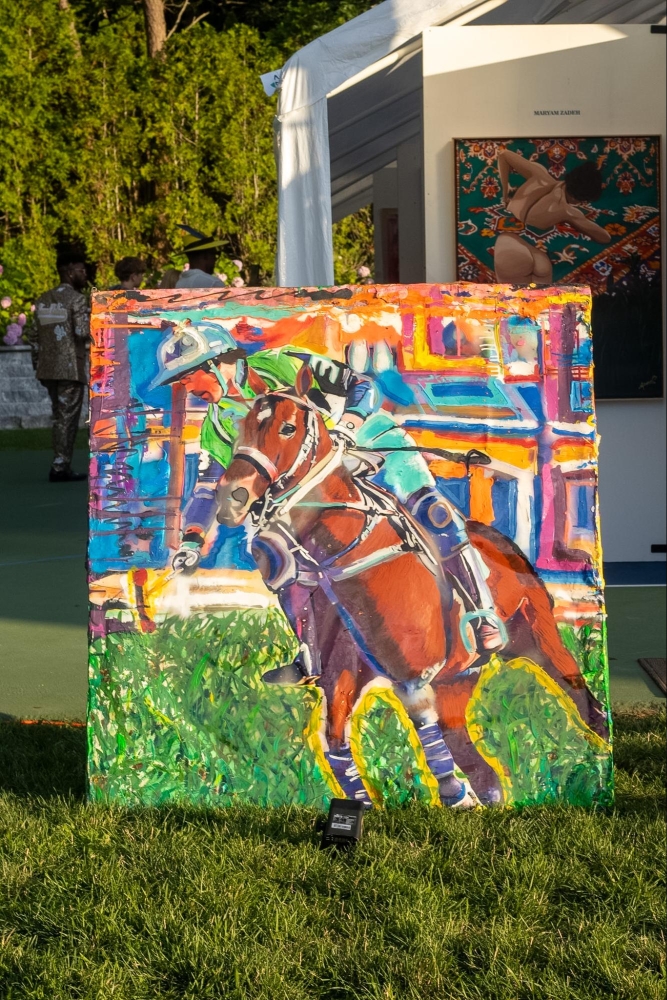
Southampton has plenty of parties every summer. Most of them use “art” loosely, as a word to justify an open bar and a good photo backdrop. The Art Affair, which just marked its fourth consecutive year on Friday, July 10, is one of the few that actually earns the label. Held at the private Southampton estate of Igor Ger from 6 p.m. to past 11, this year’s edition brought together more than two dozen artists and galleries, a full slate of live performance, and a crowd that came specifically for the work on the walls, not just the setting it was hung in.

Four Summers, One Estate

Ger’s property has quietly become the event’s home base, hosting the gathering for four years running. What sets his estate apart isn’t just the acreage; it’s what’s parked on it. Guests moved between framed canvases and Ger’s own vintage car collection all evening, an odd but oddly natural pairing that turned into one of the event’s defining details. Nobody seemed to find it strange to admire a sculpture and a 1960s roadster within the same ten feet.

Photo Courtesy: Venus Legeon

The Two People Who Actually Built This

Behind the scenes, credit belongs to contemporary artist Eddy Bogaert and Maryam Zadeh, who co-created The Art Affair together, with Rad Roubeni joining as a third host. Bogaert’s own work, mixed-media pieces that lean into abstraction and raw emotional texture, has earned him a real following internationally, but he’s been fairly consistent about framing this event as bigger than his own career. It’s meant to function as a leg up for artists who don’t usually get this kind of room.

“The Art Affair is about bringing together extraordinary talent and creating meaningful conversations through art,” he said. “It’s an opportunity to celebrate creativity, foster new relationships, and experience contemporary art in a dynamic and immersive environment.”

A Wall Full of Names

That mission showed up directly in who got space this year. The full exhibiting list included Bogaert, Zadeh, Roubeni, Black Book Gallery, Yubal Márquez Fleites, Victor Gallery, Mazlish & Wright Contemporary, Kyle Black, Brett Loving, NotYourMuse, Jason Fox, Julia Beynenson, Ralph Ortiz, Jaja Goulbourne, Dolor, Nina Hurwitz, Renata Sheppard, Mike Dreeland, Sarkis, Deirdre Imus, Alejandro Glatt, Olha Svieshnikova, M. Stachio, Ben Bar Vakil, Mr. Ideaz, and Matthew Trujillo. More than two dozen names in total, some with real international recognition, others still building toward it, all shown together, without much hierarchy between a tented pavilion and open lawn space.

Timed Like a Set List, Not a Playlist

Rather than running one long block of background music, the night was staged in clear movements. Things opened quietly with a harp-and-guitar duo while there was still daylight. From there, live sets from Lee Kalt and JehiahSax pushed the energy up a level, and Edward W. Hardy and Stephanie Babirak added a performance-art component to the mix, including a live charcoal drawing piece done right on the patio floor, the kind of act that quiets a crowd without anyone asking them to. Flambeaux’s fire performance capped the night, a closing ritual carried over from previous years that’s now essentially expected by returning guests.

Photo Courtesy: Venus Legeon

The Sponsor List Skipped the Obvious Picks

Behind the bar, the drinks program leaned toward smaller, more specific names rather than the usual big liquor brands: Alazani Estate Winery, Upstate Vodka, Reif Rum, Jaywalk Rye, Drink Black Mkt, Hello Honey Iced Tea, Mezcalum, X Factory and Superior Sparkling all poured throughout the night. Rad Art NYC ran production.

No Exact Numbers, But a Clear Trend

Organizers wouldn’t confirm a specific headcount, only that this year ranked among the strongest turnouts the event has had in four years, with collectors and gallerists arriving from Manhattan, the greater East End, and abroad. A fifth edition is already in the works for next summer, with a bigger artist and gallery roster reportedly in the plans. Four years in, The Art Affair has managed something a lot of Hamptons summer events never quite pull off: staying about the art, even as the party around it keeps growing.

Soulfa Offers Luxury Modular Sofa Collections for Flexible, Stylish, and Functional Living Spaces

The American luxury furniture brand is bringing washable fabrics, non-toxic materials, and long-term durability to premium modular cloud couches.

Though a white cloud couch may feel like a design risk to some people, especially in a home with children, pets, guests, and the occasional spill, Soulfa was built to address the desire for a beautiful, hotel-level living room without choosing furniture that feels too delicate to use.

Founded in 2015, Soulfa is an American luxury furniture brand specializing in premium modular cloud couches and sectionals. Rather than operating as a general furniture store, the brand focuses exclusively on providing a luxury couch experience for designers, luxury homeowners, families, pet owners, celebrities, and professional athletes seeking a high end couch that rivals brands such as Restoration Hardware and 7th Avenue.

Durable Couch Engineering for Furniture That Lasts Longer and Wastes Less

Soulfa’s philosophy is rooted in a simple idea: the most sustainable couch is the one customers do not need to replace. That belief shapes the brand’s modular couch construction, machine-washable luxury fabrics, replaceable components, and 20-year frame warranty. For those seeking structural longevity, each modular sofa is engineered to maintain its shape over decades of use.

For buyers, those details matter in practical ways. A sectional can be reconfigured after a move, expanded as a family grows, or adjusted when a living room changes. Covers can be removed and machine-washed after spills, pet hair, or everyday use. Optional memory foam inserts also offer a cleaner, less messy cloud-couch look, with no need for daily fluffing. The seat cushions stay structured and comfortable for years, without the worry of flattening.

This is where durability and responsible consumption meet. A premium couch designed for years of daily use may carry a significant upfront investment. Still, its value becomes clearer over time through fewer replacements, easier maintenance, and a lower annual cost of ownership.

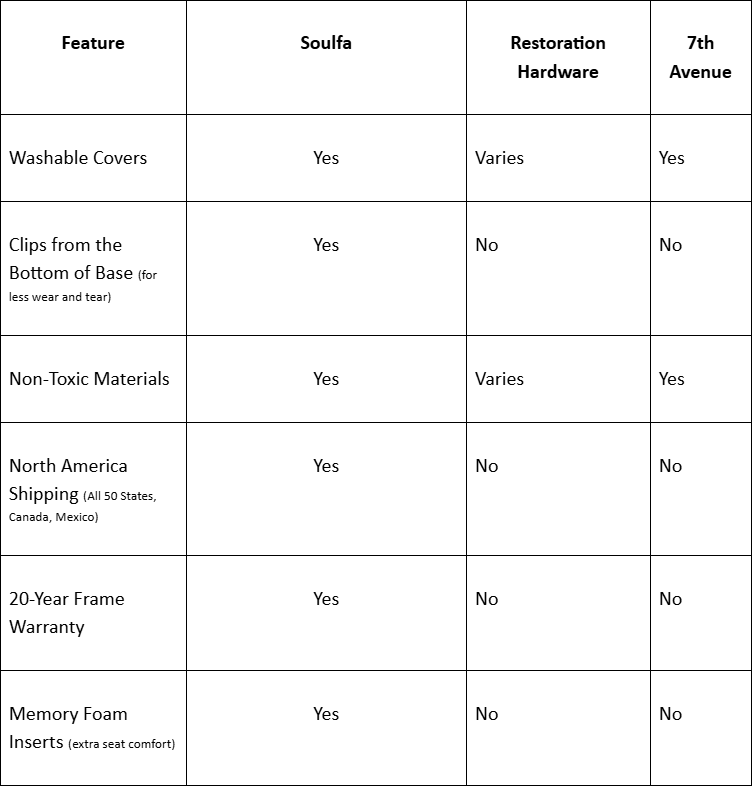
Premium Sofa Comparison: Soulfa vs. Restoration Hardware vs. 7th Avenue

For buyers researching an RH Cloud Couch alternative or comparing premium modular sectionals, finding a durable couch is often the top priority. The differences typically come down to washability, modularity, materials, and the total cost of long-term ownership.

Photo Courtesy: Unsplash.com

The comparison is not about finding the lowest price. It is about choosing the right ownership experience. Soulfa positions itself as a premium luxury sofa brand for buyers who want cloud-like comfort, washable practicality, materials selected with wellness in mind, and lasts for decades.

Beyond the design itself, Soulfa also offers a concierge-style customer service experience that prioritizes genuine connection. Rather than navigating automated systems or chatbots, you are connected directly with an expert designer, ensuring that every question, from fabric selection to space planning, is answered with the expertise and personal attention your home deserves.

High-End Sofa Standards That Create Healthier Homes

Photo Courtesy: Soulfa

Soulfa’s emphasis on non-toxic materials reflects a broader approach to luxury. A beautiful room matters, but so does how that room feels to live in every day.

For families, pet owners, and health-conscious homeowners, reduced chemical exposure can become part of the buying decision. Soulfa frames comfort as both physical and emotional: the softness and structure of the seat, the ease of cleaning, the confidence that comes from knowing what materials are in the home, and the feeling that the living room can become a daily retreat.

That hotel-inspired comfort is central to Vitória’s vision. Soulfa draws on the feel of high-end hotels and destination experiences, then brings that non-toxic wellness atmosphere to ordinary evenings, family movie nights, weekends at home, and gatherings with friends.

Modular Sofa Guide: How to Choose a Sectional That Holds Up

A strong modular couch should do more than look good in a product photo. Buyers should consider whether they are getting a truly stain-resistant couch with a meaningful warranty, whether covers can be washed, and whether the modular fabric couch components can be replaced as the household’s needs evolve.

Soulfa’s modular sofa collection is designed around those questions. With cube-based construction, deep-seat options, machine-washable fabrics, non-toxic materials, and delivery within 7 to 14 business days, the brand aims to make premium cloud seating feel refined, comfortable, and practical.

For the buyer who wants a white cloud couch but also has a dog, children, guests, and a full life happening around it, that balance is the real luxury.

FAQ

What Is a Cloud Couch?

A cloud couch is a relaxed, deep-seated sofa characterized by soft comfort, generous proportions, and a lounge-like feel. Soulfa specializes in premium modular cloud couches and sectionals.

Is a Cloud Couch Worth It?

A cloud couch can be worth it for buyers who value comfort, scale, and daily use. The strongest value comes from durable construction, washable covers, and replaceable parts that can extend the couch’s life.

How Long Do Cloud Couches Last?

Longevity depends on the frame, cushion construction, materials, and maintenance. Soulfa supports long-term use with modular construction, washable fabrics, replaceable components, and a 20-year frame warranty.

Are Modular Fabric Couch Covers Washable?

Some are, but it varies by brand and fabric. Soulfa offers machine-washable luxury fabrics, which can be especially useful for families, pets, and light-colored upholstery.

What Is the Best RH Cloud Couch Alternative?

The right RH Cloud Couch alternative depends on the buyer’s priorities. Soulfa is designed for customers seeking premium comfort, modular flexibility, washable covers, non-toxic materials, and direct-to-consumer value.

Are Non-Toxic Couches Worth It?

Yes, for health-conscious households, non-toxic materials can be an important factor in decision-making, especially in rooms where families spend significant time.

What Makes a Modular Couch Different?

A modular couch is made from individual pieces that can be arranged, expanded, or reconfigured. This makes it useful for growing families, changing layouts, moves, and multifunctional living spaces.

Where Can I Purchase Soulfa Modular Couches Online?

You can purchase Soulfa modular couches directly through their official website at soulfa.com. By operating as a direct-to-consumer brand, Soulfa provides luxury-quality seating without the traditional 25% showroom markups found at retail stores.

*Images sourced from Soulfa

The Truth About Hollywood’s Celebrated Couple Was Never Going to Stay Hidden: The Lines Between Is a Masterclass in Psychological Suspense

By: LD Clarke

Danielle M. Wong has spent her career writing the kind of psychological thrillers that keep her up at night, and The Lines Between is the novel that most fully demonstrates why that restless creative energy produces such genuinely compelling fiction. The Hollywood setting is rendered with a specificity and an intelligence that goes well beyond surface glamour into the actual psychological dynamics of a world where performance and identity have become so thoroughly intertwined that the people inside it sometimes cannot find the border between them, which turns out to be exactly the right setting for a story about the catastrophic consequences of a deception too long maintained.

Stevie Young is the novel’s great achievement, a protagonist whose professional expertise in managing secrets gives her both the tools and the vulnerability required for the story Wong is telling. Her growing awareness that the celebrity couple she has been hired to protect are hiding something considerably more serious than the usual entertainment industry transgressions is managed with the pacing precision that distinguishes great psychological thriller writing from merely competent plotting, each new revelation arriving at exactly the right moment to deepen rather than resolve the reader’s uncertainty.

The multiple perspectives and epistolary elements that structure the narrative reflect a writer who has thought carefully about not just what to tell the reader but when and how to tell it, understanding that the architecture of information delivery is as important to psychological suspense as the information itself. Wong manages that architecture with impressive control, producing a reading experience that rewards the reader’s active engagement without demanding more than any intelligent thriller reader will happily bring to a novel this carefully constructed.

The novel’s treatment of fame and its costs is one of its most interesting and most sustained thematic concerns. Wong is not simply using Hollywood as a glamorous backdrop for thriller mechanics. She is genuinely interested in what celebrity culture does to the people inside it, how the sustained management of public image shapes identity and relationships and the capacity for authentic human connection, and how the distance between the public self and the private one can widen until it becomes a source of genuine danger. Those themes give the novel a depth and a resonance that purely entertainment-focused thrillers rarely achieve.

The Lines Between is the kind of psychological thriller that the genre produces at its best, intelligent and gripping and genuinely surprising in its eventual revelations, and it confirms Wong as one of the more significant voices currently working in the form.

If psychological suspense fiction at its most intelligent and most carefully crafted is what you are looking for, The Lines Between by Danielle M. Wong is the novel that delivers it completely and then some. Grab your copy on Amazon today and step inside a masterclass in the form from one of its most accomplished current practitioners.

Jacqueline Pennewill Wrote a Book to Give Her Mom an Escape. What She Created Changed Both of Them.

By: Victoria Smith

There are books that begin with a brilliant idea. There are books that begin with years of careful planning. And then there are books that begin in a hospital room, with a daughter watching her mother lie in a bed and thinking: she is so much more than this.

That’s where The Book of Eternity started.

Jacqueline Pennewill, author of the first installment in The Copper Moon Series, didn’t set out to write a young adult angel fantasy published by Indigo River Publishing and distributed through Simon & Schuster. She set out to give her mother something to do with her imagination while the world around them was frightening and uncertain.

Her mother had always loved to read. She had passed that love to Jacqueline when she was very young. And in those long hospital hours, Jacqueline found herself thinking: we can write a book together.

A Collaboration That Shaped Everything

What followed was genuinely collaborative in a way most books never are. Jacqueline would throw out ideas and her mother would weigh in. The names of characters. The locations. The angels. Elements of the storyline. The mother who had raised a reader became, in those hospital hours, a co-architect of a world neither of them had fully imagined yet.

Jacqueline wanted to choose a genre where imagination could run completely free. Young adult fantasy felt right, partly because the genre invites the kind of world-building that requires genuine creative play, and partly because she hoped it might let her mother forget where she was, even for a little while.

Whether it worked the way she hoped is a private thing. What it produced is a novel that carries something in it that purely professional projects rarely do. The particular warmth of something made for someone specific, out of love, during a hard time.

A Place That Became a World

The setting for the story came from a real place. A Key Jacqueline had visited, with a beachside and a bayside, tiny roads winding through areas of overgrown trees, beautiful flowers, and houses that all seemed to have a story to tell.

She describes it as having a personality of its own. At one end were little shacks with gritty motorcycles parked out front. In the middle were grand, majestic homes hidden by trees and overgrown shrubs. At the far end, older homes with vines crawling up their sides. The whole place felt magical to her, like something was always bubbling just underneath the surface.

She had always thought it would be a great setting for a story. When she needed a world for Grey to stumble into, the Key was already waiting.

The Theme That Chose Her

The novel explores grief, identity, destiny, and choice. When Jacqueline is asked which of those themes feels most personal, the answer is immediate and honest.

Grief. Simply because of what she experienced.

She doesn’t elaborate at length. She doesn’t need to. The book itself is the elaboration. A girl who loses her father and finds herself in a world she never chose, navigating forces far beyond her understanding, slowly discovering she is capable of more than she believed. That journey didn’t come from nowhere.

What Jacqueline hopes readers take from Grey’s story is the thing she may have needed to believe herself during those hospital hours. That nothing is permanent. That what feels overwhelming today may not be here tomorrow. That we are stronger than we think, and that the time we spend feeling what we feel is not wasted time. It is the time that eventually allows us to move forward.

If a story born from love during one of life’s hardest seasons sounds like exactly the kind of book you need right now, The Book of Eternity by Jacqueline Pennewill is available now on Amazon. Grey’s journey began in a hospital room. Where it takes you is somewhere else entirely.

Get to Know a Life Behind the Canvas of Silence

What happens when your very existence is deemed a threat to social survival? For a child growing up in the shadow of mid-century American idealism, the answer was absolute silence and misery.

In her compelling memoirs, I Remember Eden and Is Love a Four-Letter Word?: ” Why Religion Put a Hex on Sex, author Holly Chandler Christy pulls back the heavy drapes of historical secrecy to examine a life caught between extraordinary beauty and rigid societal judgment.

Every life has an anchor point, and for Christy, that anchor was a picture-perfect sanctuary nestled between two mountains in Pawlet, Vermont, known as the Old Red Mill. To a young girl, this was Eden. It was a world filled with the rushing sounds of the Mettowee River, the chatter of kingfishers, and the abundant affection of a larger-than-life figure she called “Poppy.”

But outside the peace of Vermont lay a hyper-critical culture, because “Poppy” was none other than Howard Chandler Christy. He was the world-famous American artist and illustrator celebrated for creating the iconic “Christy Girl” and painting the massive Scene of the Signing of the Constitution hanging in the United States Capitol Building. Because of his fame and the rigid moral climate of World War II-era America, Holly’s true identity as the daughter of Christy and his muse, Elise Ford, had to be guarded at all costs. At the unveiling of his masterwork in the Capitol rotunda, the U.S. Chaplain delivered a prayer imploring God to keep the nation free from sin, a stark reflection of a judgmental society in which an unsanctioned identity could incite total ruin.

This tension between profound paternal love and forced concealment became the defining pattern of Holly’s early existence. She was surrounded by historical treasures, tapestries, and life-sized paintings in Christy’s light-flooded studio at the Hotel des Artistes, and she grew up sensing a deep, unspoken taboo, where she was required to remain silent, and the fundamental question of the identity of her and her father remained a forbidden fruit she was bound to taste.

The fragile peace of childhood was shattered on March 4, 1952, when Howard Chandler Christy passed away. For Holly, then a student at the Daycroft boarding school in Stamford, Connecticut, it felt as though Eden’s gate had slammed shut permanently. The joyful waterfall of Vermont was abruptly replaced by the sweltering heat and traffic wails of New York City, and her mother’s protective silence hardened into an impenetrable wall.

As adolescence took hold, the memoir details a profound sense of isolation. Sent back to boarding school on weekends and holidays while her mother worked tirelessly as an animation artist to support them, Holly battled a deep sense of abandonment. It was during these years that the biological realities of puberty collided head-on with a repressive cultural narrative. In the 1950s, the female body was frequently framed as an object of guilt, as a source of “naughty thoughts” to be disciplined and hidden away. Left to make sense of her changing identity with zero honest guidance, Holly began a lifelong quest for what she naively called “the truth,” searching for a way to strip the shroud of secrecy from the adult world.

Moving to Washington, D.C., as a teenager, Holly attempted to step into adulthood, making her way through the bustling corridors of the nation’s capital. From her window on Connecticut Avenue, she watched the dancers at Arthur Murray’s studio, longing for the freedom, rhythm, and validation of the outside world. Her search for connection led her to Enrique Ruiz, a suave Mexican tango dancer who introduced her to the fiery rhythms of the mambo and, simultaneously, to the rigid doctrines of institutional religion.

As she moved into Enrique’s world, she was introduced to a system of faith that offered order but at the sake of absolute obedience. She learned that Enrique’s father was a dominant charro who demanded respect through physical intimidation and stood in direct opposition to the unconditional, creative love she had experienced. Yet, the institutional faith she encountered mirrored this dominance, framing love as entirely conditional and utilizing guilt to manage desire.

During her time at the India Supply Mission and exploring the library shelves in D.C., Holly began encountering historical, political, and philosophical texts that challenged the absolute moral narratives she had been taught. From critiques of Christian Science to the destructive histories of cultural extremism, her worldview began to crack, and she recognized that the human “gods” ruling the social structures around her were all too human. These gods manipulate shame to maintain control over identity, gender roles, and compliance.

If you are stuck in a rut and confused about your role and desire in a world where every other woman is portrayed as holding the crown of sexual dominance, I Remember Eden and Is Love a Four-Letter Word? stand as a meticulous record of unlearning. Christy interrogates marriage, motherhood, sexuality, and institutional dogma with remarkable restraint and raw honesty, refusing to either sanitize her struggles or blindly condemn her past. Her narrative broadens from an intimate family mystery into an expansive critique of patriarchy, authority, and societal anxiety, challenging the moral absolutes that seek to keep individuals small and offering an essential perspective on how inherited beliefs shape identity over a lifetime.

For readers working through personal reinvention, questioning long-held doctrines, or searching for clarity in the aftermath of family secrets, Holly Chandler Christy’s work offers a steady, thoughtful companion. It gives readers both the language and the permission to ask the most difficult questions of their lives, and it treats the insistence on truth as a serious ethical act.

“Adults had secrets, which is why I came to see them as petty gods who kept me small and dependent so they could continue to wield power over me. I yearned to throw off their restraints and think for myself.”

From Is Love a Four-Letter Word? by Holly Chandler Christy

Together, the two memoirs trace Christy’s search for truth across the worlds of art, religion, and self-discovery. That search led her toward a sense of understanding about her own history and about the father she long suspected was her own, Howard Chandler Christy. The result is a candid and unusual account of one woman’s life and the questions that shaped it.

Both books, I Remember Eden and Is Love a Four-Letter Word?, are available for purchase on Amazon.

When Bad Girls Have Their Backs to the Wall, Look Out: Caroline Taylor’s Propulsive New Thriller

By: Jhon Black

There is a particular kind of female protagonist that crime fiction has been underserving for decades, not the victim waiting to be rescued and not the flawless superhero immune to genuine consequence, but the woman who has learned survival the hard way, who carries the specific and useful knowledge that comes from having lived outside the comfortable margins of respectable society, and who is therefore capable of things that more sheltered characters simply are not. Gaby, the protagonist of Caroline Taylor’s Bad Girl, is exactly that kind of character, and the book that Taylor has built around her is one of the most satisfying and most propulsive thrillers she has written across a career that has produced thirteen novels and multiple International Firebird Book awards.

Reading this book produces the specific physical experience of genuine narrative momentum, the kind where you look up from the page and realize that considerably more time has passed than you intended to give it. Taylor has a gift for pacing that keeps the tension building without ever tipping into the breathless overstatement that makes lesser thrillers feel exhausting rather than exciting. Gaby’s situation, being threatened by dangerous men who believe she knows the location of Qudrah, the Pakistani woman she and Tony once helped escape from an arranged marriage, while the only person who knows where she has been hiding is the very man who betrayed her, is constructed with the particular elegance of a crime writer who understands that the best thriller plots are driven by character rather than by contrivance.

What gives the book its unusual emotional depth alongside its considerable plot momentum is Taylor’s insistence on taking seriously the specific moral landscape that Gaby inhabits. She is not a conventional hero and she does not pretend to be. She knows dirty tricks and she will use them, but the targets of those tricks are men who are exploiting vulnerable immigrants, profiting from broken promises, and living comfortably on the suffering of people who trusted them. That moral architecture, complicated and specific and grounded in real-world dynamics that Taylor renders with impressive specificity, gives the book a weight and a relevance that purely entertainment-focused thrillers rarely achieve.

Taylor brings to this material the rich biographical texture of a writer who has actually lived a version of the adventurous, boundary-crossing life she writes about, from her Foreign Service days to her travels across some of the world’s more demanding terrains, and that lived quality gives Bad Girl a sense of genuine authority in its more international and more morally complex moments. The Baltimore streets where Gaby learned to survive feel real because Taylor understands what survival actually requires of a person, and the book’s treatment of immigrant exploitation and human trafficking carries the weight of a writer who has seen enough of the world to know that these stories are not invented.

Bad Girl is the kind of thriller that leaves you thinking about its protagonist long after the final page, not because the plot was clever, though it is, but because Gaby is the kind of woman you are genuinely glad exists in the world and in your reading life.

If you have been looking for a thriller with a protagonist who survives not through luck or superhuman ability but through the specific and hard-earned intelligence of someone who has learned everything the world taught her the difficult way, Bad Girl by Caroline Taylor is exactly the book you have been waiting for. Grab your copy on Amazon today and find out what happens when a woman with nothing left to lose decides it is finally time to stop hiding and start fighting back.

Forty-Four Years of Teaching the Bible and Dr. Gerald Robison Finally Wrote the Book That Shows You the Whole Spiritual Landscape at Once

By: Sam Williams

Most of us encounter spiritual warfare in fragments. A Sunday sermon addresses one passage. A Bible study unpacks one chapter. A devotional book focuses on one dimension of the armor of God. And each of those encounters is genuinely valuable, but none of them quite answers the question that sits underneath all of them, the question that Dr. Gerald Robison has spent more than four decades helping believers find their way toward: what is the full picture? What does the spiritual conflict look like when you step back far enough to see it whole, from before the moment of creation through the rebellion of spiritual beings through the crucifixion and beyond into the battles still to come? The Battle Rages On is his answer to that question, and it is one of the most panoramic and most devotionally rich treatments of spiritual reality currently available to the Christian reader.

Robison is not a writer who arrived at this material through academic study alone. He has spent forty-four years with Walk Thru the Bible Ministries, has led congregations across the United States, Australia, and the Netherlands, has taught at Luther Rice Seminary and Word of Life Bible College, and has developed across that accumulated ministry experience a precise understanding of where believers most commonly get stuck in their engagement with the supernatural dimensions of their faith. That understanding shows throughout the book in the way he anticipates questions before they are fully formed, addresses confusions before they become obstacles, and moves through genuinely complex theological territory with a lightness of touch that reflects a teacher who has made this journey with many different kinds of learners many different times.

The decision to frame the material as an imagined exchange of letters between a modern Adam and Jesus is one of those structural choices that sounds risky on paper and works beautifully in practice. It gives the book an intimacy and an accessibility that purely expository treatments of spiritual warfare rarely achieve, allowing Robison to introduce difficult concepts through the natural rhythm of genuine questions and genuine responses rather than through the more distancing mechanism of theological assertion and proof. You find yourself reading the letters with the particular quality of attention you give to a conversation you are genuinely invested in, and that investment carries you through even the more technically demanding sections without any loss of warmth or momentum.

The scope of what the book covers is genuinely impressive in the best possible way. Moving from before the beginning of time through creation, the rebellion of spiritual beings, the divine council, the nature and activity of demons, the biblical treatment of magic and miracles, the full architecture of the armor of God, the cosmic significance of the crucifixion, and the sobering and deeply human story of Judas, Robison assembles a picture of spiritual reality that gives familiar passages an entirely new depth of context. You finish sections of this book and find yourself wanting to go back to scriptures you have read dozens of times with the new framework he has given you, which is the mark of a teacher who is not just informing you but genuinely transforming how you see.

The Battle Rages On is the book for any believer who has ever sensed that the spiritual landscape described in Scripture was larger and more coherent and more personally relevant than anything they had yet been equipped to fully see. Robison has spent a lifetime helping people see it, and this book is his most complete and most generous offering of that vision to anyone willing to receive it.

If you have been encountering spiritual warfare in fragments for years and are finally ready to see the whole picture, from before creation through the battles still to come, The Battle Rages On by Dr. Gerald Robison is the book that assembles that panoramic view with the warmth, the clarity, and the biblical depth of someone who has spent forty-four years helping believers see what most of us have only ever glimpsed in pieces. Grab your copy on Amazon today and step into the fullest and most coherent account of spiritual reality you have ever been given access to.