William Wilkinson’s Book Rediscovers Australia’s Forgotten Indiana Jones

By: Nic Abelian

James Cook, John McDouall Stuart, and Burke and Wills are synonymous with Australian exploration. William Wilkinson deserves to stand among them, displaying all the qualities of an Indiana Jones-style adventurer, complete with hat, horse and saddle, but minus the archaeological pursuits.

Australia’s Forgotten Explorer is a remarkable account of courage, endurance, and service in the Australian outback. Originally written in 1947 by pioneering outback priest Percy Smith MBE, under the title The Strenuous Saint, the book chronicles the extraordinary journey of William Wilkinson, an Anglican priest who travelled more than 12,000 kilometres on horseback through some of Australia’s most remote and unforgiving regions between 1913 and 1915.

Wilkinson’s expedition took him from north-west Queensland through the Gulf of Carpentaria, Katherine, Tennant Creek, the Tanami Desert, Charlotte Waters, and Hermannsburg, where he met missionary and anthropologist Carl Strehlow. His journey coincided with the outbreak of the First World War, which tragically took the life of his youngest son in Belgium, and lasted an astonishing 847 days.

Accompanied by sixteen horses and two Indigenous guides, Wilkinson visited many significant landmarks, including Chambers Pillar, Attack Creek, Central Mount Stuart, and the Devil’s Marbles, often following the route forged by explorer John McDouall Stuart along the telegraph line.

What makes Wilkinson’s story particularly inspiring is the man himself. Deaf and in his late fifties, he relied on a brass ear horn to communicate. Yet he carried out his mission with unwavering determination. More than a clergyman, he was a bushman, blacksmith, medic, messenger, and counsellor. He shoed his own horses, treated the sick and injured, delivered mail, helped people write letters and wills, and brought comfort and companionship to those living in isolation.

The book vividly explains the hardships Wilkinson endured. He faced extreme desert heat, frigid nights, disease, thirst, exhaustion, dangerous river crossings, crocodiles, quicksand, and the loss of horses to snakes and illness. He encountered cultural tensions, crime, and tragedy, yet continued his work with resilience and compassion. These challenges highlight the extraordinary commitment that drove him to continue despite the physical and emotional toll.

Wilkinson’s story captures a largely forgotten chapter of Australian history. Through Wilkinson’s experiences, readers gain insight into the realities of life in remote Australia during the early twentieth century and the vital role played by individuals who connected isolated communities.

The book is both an adventure narrative and a tribute to selfless service. This special reprinting, featuring a foreword by Percy Smith’s grandson, Mark Smith, reveals new details on Wilkinson’s early life, such as his seven children, and never before seen photographs, adding further layers to the story. Mark reflects on Wilkinson as a man, ‘who looked for no praise, sought no reward and received no recognition.’ This observation encapsulates the humility and dedication that define Wilkinson’s legacy.

In an exclusive interview, Mark told the New York Review he decided to publish this new book after the positive feedback to his speech for South Australia’s History Festival called, ‘Home via Hermannsburg: William Wilkinson’s 847 day. Top End. Red Centre Quest,’ for the Friends of the Lutheran Archives.

Naturally the gathering was interested in Wilkinson’s five-day visit to the Lutheran mission at Hermannsburg and meeting with Carl and Freida Strehlow at the Finke River Mission, as anti-German sentiment was peaking. Understandably, the Strehlows were anxious about the safety of their children, who went to live in Germany in 1910 for schooling, as war in Europe became ferocious.

“Shouting into Wilkinson’s brass ear horn, the potential for the Anglicans to take over Lutheran missions became a controversial discussion topic,” Mark said.

A history graduate from Adelaide University, filmmaker and writer, Mark studied his grandfather’s text based on original journals, photographs and papers obtained in the 1940s for what is a republished edition of The Strenuous Saint, to mark one hundred years since Percy Smith’s ordination as a priest in 1927 in Brisbane.

Mark said, “One thousand copies of Percy Smith’s book were sold to raise funds for St John Hostel in Alice Springs and St Francis House in Adelaide, which were both places set up by my grandfather to support Indigenous children to access education and find their way in life.” St John’s Hostel and St Francis House played a role in the early lives of Indigenous trailblazers such as Charles Perkins, John Moriarty and Gordon Briscoe who achieved university education and became leaders of the 1960s civil rights movement in Australia, which mirrored the efforts of Dr Martin Luther King Jnr such as the freedom rides to expose systemic racism.

The book includes photographs, thought lost for decades, taken by Wilkinson of anthropological value along with a comparative analysis of the shared legacy of Wilkinson, Percy Smith and champion sprinter and later priest, Ken Hampton OAM, who lived at the famous St Francis House and was an Alawa man from Roper River, in the Northern Territory. A place Wilkinson visited in 1914.

“Wilkinson has sadly been forgotten in the pages of history, but that would not have mattered to him. When he died in 1935 aged 81, he would have drawn comfort from the fact that his call to Central Australia had finally been answered by Percy Smith in 1933,” Mark said.

Overall, this is an engaging and inspiring read. It offers a fascinating blend of adventure, exploration, history, faith, and human perseverance. Readers interested in Australian history, outback adventures, or stories of remarkable individuals will find William Wilkinson’s journey both compelling and unforgettable. With help from Sean Connery, Wilkinson may just have been able to find the Holy Grail.

The book Australia’s Forgotten Explorer: William Wilkinson can be purchased from the Live Heart Press at: www.liveheart.com.au

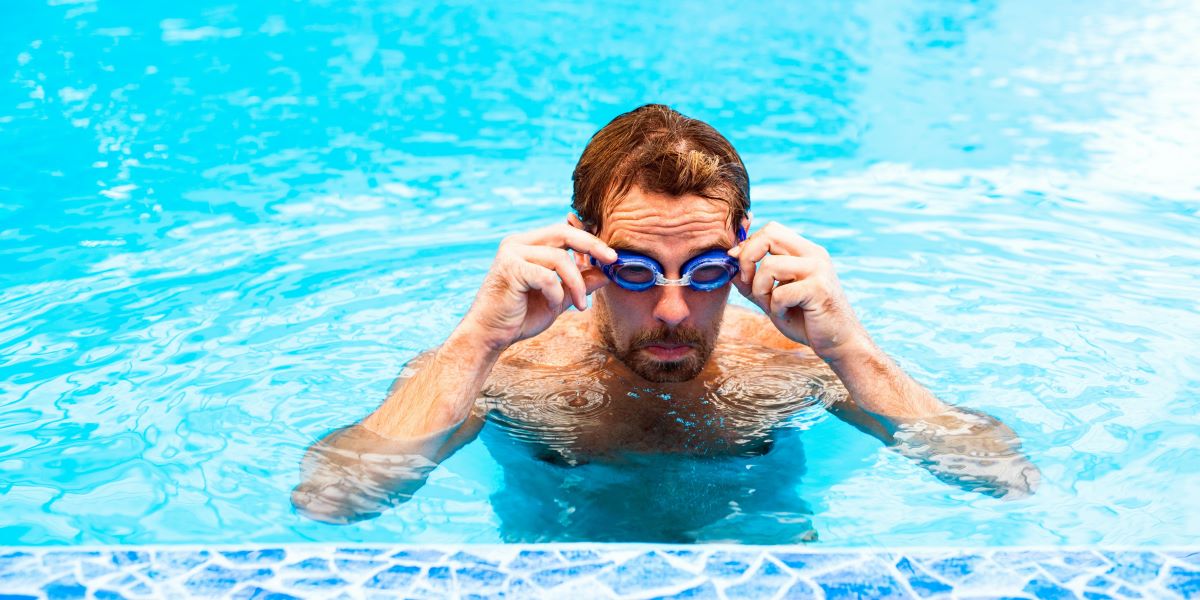
NYC Opens 50+ Free Outdoor Pools for Summer 2026, Marking 90 Years of the Public Pool System That Reshaped Urban Recreation

What Is New About New York City’s 2026 Outdoor Pool Season?

New York City opened more than 50 free outdoor pools across the five boroughs on Saturday, June 27, launching a summer season that doubles the city’s adult lap swim program, expands free children’s swim classes to 18 locations, and marks the 90th anniversary of the WPA-era pools that set a national standard for public recreation infrastructure. Mayor Zohran Mamdani kicked off the season by jumping into the Thomas Jefferson Pool in East Harlem — in a full suit and socks — alongside NYC Parks Commissioner Tricia Shimamura and neighborhood families.


Key Takeaways

  • More than 50 free outdoor pools are open daily from 11 a.m. to 7 p.m. through September 13 across all five boroughs; more than 1 million people visited city pools last summer
  • The adult lap swim program doubled from 5 to 10 pools (two per borough), available Monday through Friday from 7 to 8:30 a.m.
  • Free Learn to Swim classes expanded from 10 to 18 pools, creating more than 16,000 class slots for children ages 18 months to 17
  • The 2026 season marks the 90th anniversary of New York City’s 11 Olympic-sized WPA-era pools, which opened within weeks of each other in 1936
  • New lifeguard recruitment rose 27% year-over-year last summer, stabilizing staffing after years of post-pandemic shortages


Why Does the 90th Anniversary of the WPA Pools Matter?

The 2026 season carries a milestone that elevates pool openings beyond the usual summertime ribbon-cutting. Ninety years ago, New York City opened 11 Olympic-sized outdoor pools within weeks of each other in 1936, funded through the federal Works Progress Administration as one of the largest public works projects in city history. Those 11 pools — spread across the Bronx, Brooklyn, Manhattan, Queens, and Staten Island — featured state-of-the-art filtration and chlorination systems and architectural designs that made them among the most advanced public recreational facilities in the country at the time.

Astoria Pool in Queens, the largest of the original 11, hosted the U.S. Olympic Swim and Diving Team Trials in both 1936 and 1964, according to the NYC Parks Department. Betsy Head Pool in Brooklyn, Hamilton Fish Pool on the Lower East Side, and Thomas Jefferson Pool in East Harlem — where Mayor Mamdani took his Saturday plunge — all remain in active service nine decades later, still drawing lines of neighborhood swimmers on the first hot days of summer.

To mark the anniversary, NYC Parks will distribute commemorative towels and collectible buttons depicting the distinctive design of each WPA-era pool. The first 200 guests at each pool’s specific anniversary date will receive the items — a small gesture, but one that connects the city’s current pool-going public to infrastructure that predates the United Nations, the Brooklyn-Battery Tunnel, and the integration of Major League Baseball.


What Programming Has New York City Expanded for 2026?

The operational story of the 2026 season is the expansion of programming around the pools themselves, not just the hours the water is open.

New York City’s adult lap swim program doubled in size, growing from five pools to 10 — two in each borough. Lap swim is available Monday through Friday from 7 to 8:30 a.m., giving fitness-minded New Yorkers a dedicated window before the pools open to the general public at 11. The participating locations include Claremont and Van Cortlandt in the Bronx, Kosciuszko and McCarren in Brooklyn, Gottesman and Hamilton Fish in Manhattan, Astoria and Liberty in Queens, and Faber and Lyons on Staten Island.

Free Learn to Swim classes expanded significantly, growing from 10 to 18 outdoor pool locations and creating more than 16,000 class slots for children ages 18 months through 17, according to the NYC Mayor’s Office. The classes run from July 6 through August 28 and save families hundreds of dollars in private swim lesson costs while addressing water safety in a city surrounded by waterways. Registration is open through the NYC Parks Department website.

Senior Splash, a free water aerobics program for New Yorkers 62 and older, returns to five outdoor pools — one per borough — with classes three days a week at Astoria, Lyons, Sunset Park, Thomas Jefferson, and Van Cortlandt pools.


How Has the Lifeguard Staffing Problem Changed?

NYC Free Outdoor Pools Open for Summer 2026 What to Know

Photo Credit: Unsplash.com

For several summers following the pandemic, lifeguard shortages forced reduced hours and intermittent closures at pools across the system — a frustration that disproportionately hit neighborhoods in the Bronx and Brooklyn where private pool access is limited and public pools serve as the primary cooling infrastructure during heat waves.

That picture has stabilized. Last summer saw a 27% increase in new lifeguard recruits for pools and beaches, according to the city, and the 2026 season launched with staffing levels sufficient to operate the full network on schedule. Mayor Mamdani has previously connected lifeguard recruitment to the broader functionality of the pool system, noting that more lifeguards directly translates to children learning to swim, adults getting morning laps, and neighborhoods having a safer summer by the water.


What Other Services Are Available at New York City’s Pools?

New York City’s pools function as distribution points for other city services beyond swimming. Through a partnership with the New York City Department of Education, free lunches are available at pool sites for anyone 18 and younger — no identification or registration required. Free sunscreen is stocked at every outdoor pool. Brooklyn’s Red Hook Pool remains closed due to equipment damage, but New York City has said it hopes to reopen the facility before the end of July.

The public pool system requires no membership, no application, and no fee. Visitors need only a swimsuit, a towel, and a lock for the locker room. In a city where a single drop-in session at a private pool or swim club can run $30 to $50 per person, according to ClassPass and NYC fitness marketplace listings, the economics of the public system remain one of the clearest examples of municipal infrastructure serving the public at scale without a paywall.

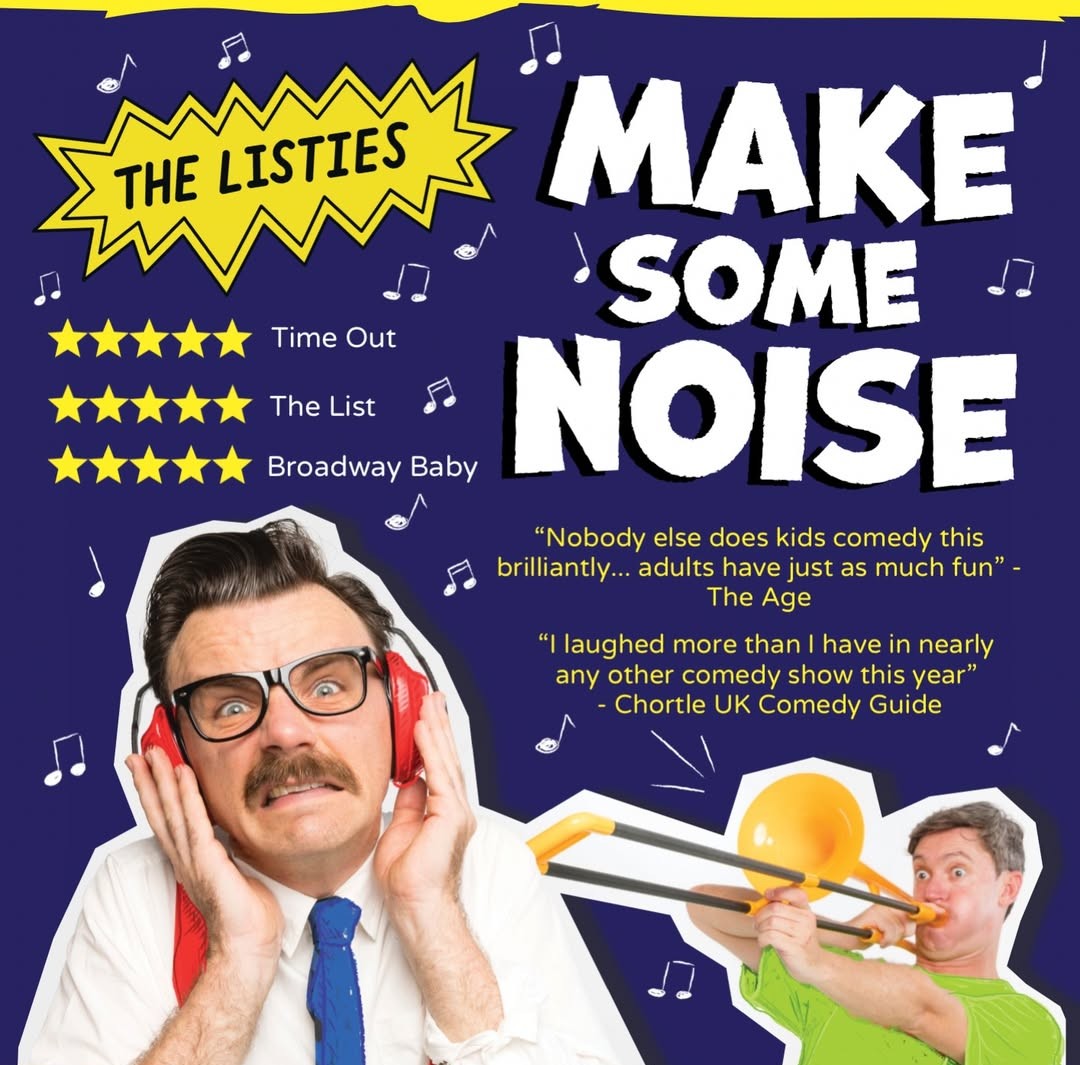
Richard Higgins and Matthew Kelly Bring The Listies: Make Some Noise to New York

By Tilly Daniels

There are plenty of comedians who insist that children are the toughest audience in entertainment. Richard Higgins and Matthew Kelly would argue that’s exactly why they chose them.

“We make joyful, silly, and slightly chaotic theatre that treats kids as the smartest people in the room,” says Higgins, one half of Australia’s acclaimed comedy duo, The Listies.

Beginning July 1, New York audiences will finally discover what families across Australia, the United Kingdom, Ireland, New Zealand, and Asia have known for nearly two decades: that a show filled with dad jokes, puppets, absurd songs, PowerPoint presentations, audience participation, and inflatable tube men can also be remarkably smart.

After seventeen years of sold-out performances and international acclaim, The Listies: Make Some Noise arrives at AMT Theater for the duo’s long-awaited American debut. It’s a milestone that Higgins admits has lingered in the back of their mind for years.

“We’ve done Edinburgh, Dublin, Korea, Malaysia, New Zealand… and every time we came home we’d think, ‘What about New York?'” He says. “New York felt like the big one, the one you want to get right.”

For New Yorkers accustomed to sophisticated children’s programming, The Listies may seem like an unlikely fit. Their shows celebrate glorious disorder. They encourage shouting. They invite kids onstage. They delight in jokes about imaginary breakfast cereal made entirely of toenails. Somewhere amid the controlled mayhem, there are songs, clowning, and enough audience interaction to make every performance different from the last.

Yet beneath the anarchy lies an unexpectedly disciplined philosophy.

“We don’t think about kids and adults as separate audiences,” Kelly explains. “We just try to make something that makes us laugh. The aim is to write jokes that both a ten-year-old and a hundred-year-old would laugh at, even if they’re laughing for different reasons.”

It’s a surprisingly sophisticated approach that echoes the great family entertainers, from the Marx Brothers to Jim Henson, who trusted younger audiences to appreciate wit rather than simply noise.

Photo Courtesy: House of Oz

The duo didn’t originally set out to become children’s performers. When they founded The Listies in 2008, they were creating comedy for adults. Somewhere along the way, they discovered children offered something many grown-up audiences had lost: complete commitment.

“When you ask adults for a volunteer, nobody raises their hand,” Kelly jokes. “And the one you pick cries. Kids? They all want to be chosen. That’s kind of amazing.”

That enthusiasm has shaped everything about their work.

Unlike many children’s productions that follow a rigid script, The Listies embrace unpredictability. One performer constantly pushes the show toward chaos while the other desperately attempts to restore order. Sometimes it works. Usually it doesn’t.

The comedy often depends on the audience becoming collaborators rather than spectators.

“We’ve always embraced the unpredictability of performing for kids,” Higgins says. “The chaos is held together because our goal is making sure everyone has an incredible time.”

Perhaps that’s why their reputation has spread far beyond Australia. Along the way, they’ve collected a Sydney Theatre Award, Edinburgh Fringe’s Primary Times Award for Best Production for Children, Melbourne International Comedy Festival’s Golden Gibbo Award, and the rare distinction of becoming the only children’s act ever nominated for the festival’s prestigious Best Show Award.

Now they’re bringing something else to New York besides the performances themselves.

On weekends throughout their engagement, Higgins and Kelly will host comedy workshops for children ages 7 to 12, inviting young comedians to invent ridiculous advertisements, write original jokes, explore clowning, and discover how humor works from the inside out.

It’s a natural extension of work they’ve already been doing at festivals throughout Australia and Scotland.

“We’ve discovered that kids are funny,” Kelly says. “We want to learn from them too.”

For the duo, comedy isn’t simply entertainment. It’s a creative skill that teaches resilience.

“You can’t be stressed and think of a joke,” Higgins says. “Comedy teaches you to look at the world sideways. Maybe the best thing you learn is to just try, and if it goes wrong, that’s not the end of the world. Sometimes failing leads you somewhere even better.”

It’s an unexpectedly thoughtful message wrapped inside jokes about inflatable tube people and absurd Australian catchphrases.

In many ways, The Listies arrive at a moment when family entertainment is increasingly divided between digital distraction and carefully curated educational programming. Their work occupies a different space entirely, one built around the unpredictable energy that only live performance can create.

No algorithm knows which child will shout the funniest answer. No streaming service can recreate the collective joy of hundreds of people performing a ridiculous dance together because two comedians dressed as inflatable tube men asked them to.

The Listies believe those shared moments are precisely what families remember.

“We hope audiences walk out louder than they walked in,” Higgins says. “We want every member of the family to laugh and leave having shared something ridiculous together.”

That may sound like a modest ambition.

But in a city that prides itself on sophisticated theater, perhaps the boldest thing two Australian comedians can do is remind New Yorkers that sometimes the smartest comedy begins with embracing a little glorious nonsense.

The House of Oz Presents THE LISTIES: MAKE SOME NOISE

DATES: July 1 – 19, Wednesday through Sunday

TIMES: 2 PM

PRICES: Kids 12 yrs & under $16.50, Adults $21.75 (with fees)

To purchase tickets or for more information, please visit the AMT Theater show page for The Listies.

Tickets for The Listies comedy workshops can be purchased through the AMT Theater workshop booking page.

Photo Courtesy: House of Oz