Wind and Solar Overtake Gas in Global Electricity Generation for the First Time

For the first time over a full month, wind and solar generated more of the world’s electricity than natural gas. The data, released by the independent energy think tank Ember, covers April 2026 and marks a crossover that the industry has watched approach for the better part of a decade. The two renewable sources produced 22 percent of global electricity during the month, against 20 percent from gas.

The absolute figures sharpen the picture. Wind and solar reached a record 531 terawatt-hours, outpacing gas-fired generation by 54 terawatt-hours, with gas plants supplying 477. That gap is not a rounding artifact. It is roughly equivalent to two months of total electricity consumption in the United Kingdom, a margin wide enough to suggest the milestone reflects structure rather than statistical noise.

Why the Comparison to 2021 Matters

The most telling number in Ember’s analysis is not from this year but from five years ago. In April 2021, gas generation stood at 476 terawatt-hours, almost identical to its April 2026 level. Over the same window, combined wind and solar output more than doubled, climbing from 245 terawatt-hours to 531. Gas held flat; renewables sprinted past it.

That trajectory undercuts a familiar argument from transition skeptics, that renewables expand only when fossil generation is deliberately retired alongside them. The Ember data shows a different mechanism. Rapid solar and wind deployment absorbed nearly all of the world’s new electricity demand, leaving gas generation roughly unchanged in volume while its share of the mix eroded from underneath. For utilities and the investors who hold them, that distinction is the entire story: fossil capacity is not collapsing so much as being outgrown.

The Crisis Backdrop Investors Should Note

The timing carries weight for anyone tracking energy markets. April was the first full month of the latest global energy crisis tied to conflict in the Middle East, a period of volatile liquefied natural gas prices and stretched supply chains. Ember was careful to frame the milestone as the product of years of renewable buildout rather than a reaction to the crisis. But the analysis also points to a practical consequence: in the disruption, there was no evidence of a broad global shift back to coal, the move energy-security hawks often predict during gas shocks.

Ember analyst Kostantsa Rangelova put the economic case plainly, noting that countries have turned to wind and solar because they are inexpensive, domestically produced, and secure, and that LNG-powered electricity is increasingly unable to compete with renewables in import-dependent markets. For a finance audience, that is the line that matters more than the headline percentage. When a fuel source loses on price during the exact moment its supposed advantage, dispatchable reliability, is most prized, the long-term capital thesis behind it weakens.

Growth Spread Across the Major Markets

The April gains were not concentrated in a single region. Wind and solar output rose across nearly every major market reporting data, with year-on-year growth estimated at 13 percent globally. China led the major economies at 14 percent, the European Union added 13 percent, and the United States posted 8 percent. The United Kingdom recorded a 35 percent jump, while Australia (17 percent), Chile (24 percent), and Brazil (4 percent) rounded out the gains.

The policy pipeline behind those figures suggests the trend has room to run. Ember and allied trackers point to fresh national commitments, including Indonesia’s plan for 100 gigawatts of solar-plus-storage capacity and South Korea’s target to triple renewable capacity to 100 gigawatts by 2030. Each new buildout commitment compounds the demand-absorption dynamic that pushed renewables past gas in the first place.

What It Signals for the Transition Trade

A single spring month should not be mistaken for a permanent reordering. April is structurally favorable for renewables in the Northern Hemisphere, with strong wind, rising solar output, and electricity demand sitting in the lull between heating and cooling seasons. Gas generation tends to dip accordingly, and the share gap may narrow again in peak summer or winter.

The more durable signal sits underneath the monthly headline. Ember’s recent Global Electricity Review found that wind and solar met all of the world’s electricity demand growth in 2025, with solar now expanding faster than any energy source in recorded history. April 2026 extends that line rather than breaking from it. For markets weighing utility valuations, grid infrastructure spending, and the pace of capital rotation out of fossil generation, the takeaway is less about one crossover than about which direction the curve has been pointing for five straight years. The renewables that once trailed gas by half now lead it, and the gap was built in flat markets, not collapsing ones.

New York Readies Transit Surge and Midtown Corridors for One Million World Cup Visitors

When the first whistle blows at MetLife Stadium on June 13, New York will not simply be hosting a soccer match. It will be absorbing the leading edge of a tourism wave that regional officials expect to exceed one million visitors, a crowd large enough to test the limits of the country’s busiest transit network and its most congested downtown core.

The venue, temporarily rebranded New York New Jersey Stadium, opens its slate with Brazil against Morocco, a Group C fixture pairing the most decorated nation in World Cup history with the African side that reached the semifinals in Qatar. It is the first of eight matches the stadium will stage, a run that culminates in the July 19 final. For a city that already moves several million riders a day, the question is less about appetite for the spectacle than about throughput: whether the trains, streets, and emergency systems can carry the load without buckling.

A Transit Plan Built for Volume

New York Readies Transit Surge and Midtown Corridors for One Million World Cup Visitors (2)

Photo Credit: Unsplash.com

At a June 4 briefing, Governor Kathy Hochul and Mayor Zohran Mamdani laid out a regionwide framework that leans heavily on mass transit and treats private driving as the problem to be managed. The Metropolitan Transportation Authority will run full service across the region on every match day, with extra subway capacity layered onto the lines most likely to feel the crush.

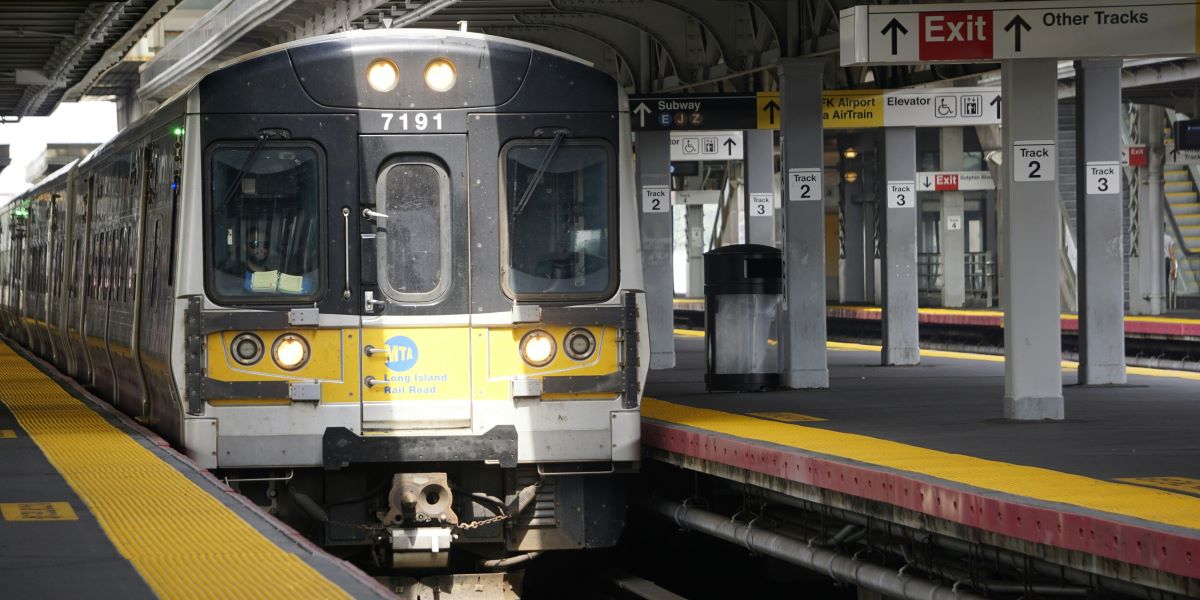
The 1, C, and F trains will carry additional local service to ferry fans toward shuttle buses and rail connections, with the 1 and C running more frequently all day on weekend match days between 10 a.m. and 10:30 p.m. and post-match service boosted to clear departing crowds. Both the Long Island Rail Road and Metro-North will provide connections to stadium-bound shuttles near Grand Central and to Penn Station trains, and the MTA has suspended planned subway work around Midtown on match days to keep the system clean of avoidable bottlenecks.

The plan also accounts for the free Fan Zone at the USTA Billie Jean King National Tennis Center in Flushing, where the MTA will add 7 train service on days that overlap with Mets home games, the moments when the corridor is most strained. Customer ambassadors will be stationed at Grand Central, Times Square-42 Street, and 59 Street-Columbus Circle to steer arriving fans toward the right connections.

Closing Off the Core

The street-level picture is more restrictive. On match days, dedicated travel corridors will run along 42nd Street and portions of Fifth and Sixth avenues, plus 40th and 41st streets. Beginning six hours before kickoff and ending three hours after the final whistle, those corridors will be limited to stadium shuttles, MTA local buses, official tournament vehicles, and emergency responders.

Each match day will also be designated a Gridlock Alert Day, the city’s signal to discourage discretionary driving, and officials will ask businesses to curb truck deliveries in Midtown during peak travel windows. The Department of Transportation plans to deploy more than 100 staff across Midtown to install and remove temporary bus lanes, retime signals in real time, and guide drivers and the trucking industry around the restrictions.

Where the Business Stakes Sit

For the hospitality and retail economy, the calculus cuts in two directions. A million-plus visitors concentrated across a five-week window is the kind of demand surge that hotels, restaurants, and small businesses near transit hubs rarely see, and the spending attached to it can be substantial. Yet the same corridor closures that protect fan movement also reshape the daily rhythm of Midtown commerce, complicating deliveries and foot traffic for the very merchants positioned to benefit.

The shuttle economy alone hints at the scale. The MTA is selling 40,000 stadium shuttle tickets per match day between Secaucus Junction and MetLife, while the NYNJ Host Committee is coordinating thousands of round-trip charter bus seats from Grand Central, the Port Authority Bus Terminal, and a Clifton departure point. Ride-share users will be funneled to a designated drop-off at the Meadowlands Racetrack to ease congestion near the stadium.

The preparations extend well past transportation. NYC Emergency Management has activated a citywide coordination structure modeled on the framework used for hurricanes and the Times Square New Year’s Eve celebration, with working groups spanning public safety, health, and infrastructure. The health system has run drills simulating medical demand that exceeds capacity, and eleven Health + Hospitals facilities are prepared to serve as cooling centers during Code Red heat emergencies, a real concern for a summer tournament.

Residents and visitors can text SUMMER26 to 692-692 for real-time alerts in English, Spanish, and French. A second briefing on public safety is scheduled for the week ahead. For now, the message from City Hall and Albany is consistent: take the train, expect a different Midtown, and prepare for a city operating at full stretch.

How Contractors Can Keep Construction Debris Off Public Roads

Keeping construction debris off public roads is a constant battle for general contractors and grading companies. When mud and rocks leave your site, they bring heavy fines and unwanted liability right along with them.

Managing your site exit effectively is the best way to protect your project’s bottom line and your company’s reputation.

The sections below cover the hidden costs of track-out, the mechanics of tire tread disturbance, and the equipment that keeps a jobsite compliant.

The Hazards of Construction Debris on Public Roads

Leaving construction debris on the street is a fast way to get a visit from a frustrated city inspector. Between local dust-control rules and Stormwater Pollution Prevention Plan (SWPPP) requirements, those fines can add up before you even realize there is a problem.

Safety is another major concern since loose gravel and mud are notorious for causing cracked windshields or slick road conditions. If a claim is traced back to your exit point, you are looking at a massive headache and potential legal fees.

Beyond the potential financial setbacks, it really comes down to your reputation with the local community and project owners. Failing to manage construction debris effectively can lead to several specific site hazards.

  • Regulatory Penalties: Heavy municipal fines and Stop Work orders for non-compliance with track-out ordinances.
  • Property Damage: Costly insurance claims from motorists for chipped paint or broken glass caused by flying aggregate.
  • Roadway Instability: Accumulation of mud and silt that creates slick surfaces and increases the risk of accidents.
  • Clogged Infrastructure: Runoff that carries sediment into storm drains, leading to drainage failures and environmental violations.

Strategic Construction Debris Control and How to Manage Site Exits

Effective trackout prevention starts with a well-defined plan for how vehicles enter and leave your work zone. That said, you should limit your jobsite to a single designated exit to ensure every truck passes through your construction debris containment system.

The most successful strategy relies on the principle of tire tread disturbance to clean equipment mechanically. By forcing the tire lugs to flex over a textured surface, you allow gravity to pull trapped rocks and mud out before the vehicle hits the road.

Follow these active operational strategies to minimize construction debris at the source.

  • Direct Traffic Flow: Funnel every vehicle through one reinforced exit point to prevent multiple areas of track-out and simplify daily maintenance.
  • Create a Stabilization Zone: Install a buffer of large-diameter aggregate or steel plates leading up to the exit to shed bulk mud before vehicles reach the final cleaning stage.
  • Extend the Exit Path: Ensure your track-out devices are long enough to allow for at least two to three full tire rotations for maximum sediment removal.
  • Prioritize Tread Disturbance: Use staggered steel bars to force the tire lugs to open and close, which dislodges debris more effectively than driving over a flat surface.
  • Control Soil Moisture: Schedule heavy hauling during drier parts of the day and use moisture stabilization to prevent the creation of slurry that sticks to tires.
  • Clean the System Regularly: Clear out the sediment collection area beneath your grates to ensure the system continues to function without reaching capacity.
  • Protect Gutter Integrity: Place specialized ramps at the curb line to prevent equipment from crushing concrete or dipping into the gutter where construction debris often collects.

Equipment for Professional Track-Out Prevention

Investing in the right hardware is the most effective way to keep construction debris from leaving your site boundaries. Professional-grade equipment is built to withstand the weight of heavy machinery. It also maintains its cleaning efficiency over time.

Selecting tools that focus on mechanical tread disturbance ensures your site remains compliant with local regulations. These products provide a durable, long-term solution for managing construction debris across multiple projects.

Photo Courtesy: Unsplash.com

Rattle Tracks. Use these heavy-duty steel tracks to create a series of points that flex the tire tread as vehicles pass over. This action dislodges rocks and dried mud from the tire lugs into a collection area below.

Rattle Grates. Deploy these in high-traffic zones where you need a more permanent, high-capacity solution for sediment removal. They provide a stable surface for equipment while consistently stripping away construction debris.

Trench Plates. Install these heavy steel plates to bridge excavations and provide a clean, solid path. They prevent tires from sinking into raw soil and picking up mud before they exit the site.

Free Flow Curb Ramps. Place these at the transition between your jobsite and the public road to protect the curb and gutter. With these, you can maintain proper drainage. They also prevent equipment from dipping into the gutter line where construction debris accumulates.

Partner With Track-Out Control Experts

Choosing the right equipment is a long-term investment in your project’s success and safety. By prioritizing tread disturbance and high-quality gear, you eliminate the risks associated with construction debris before they become a liability.

Contractors-Services LLC provides the durable rattle tracks, plates, and ramps you need to stay compliant in any terrain. Get in touch with our team to find the best track-out solutions for your next jobsite.