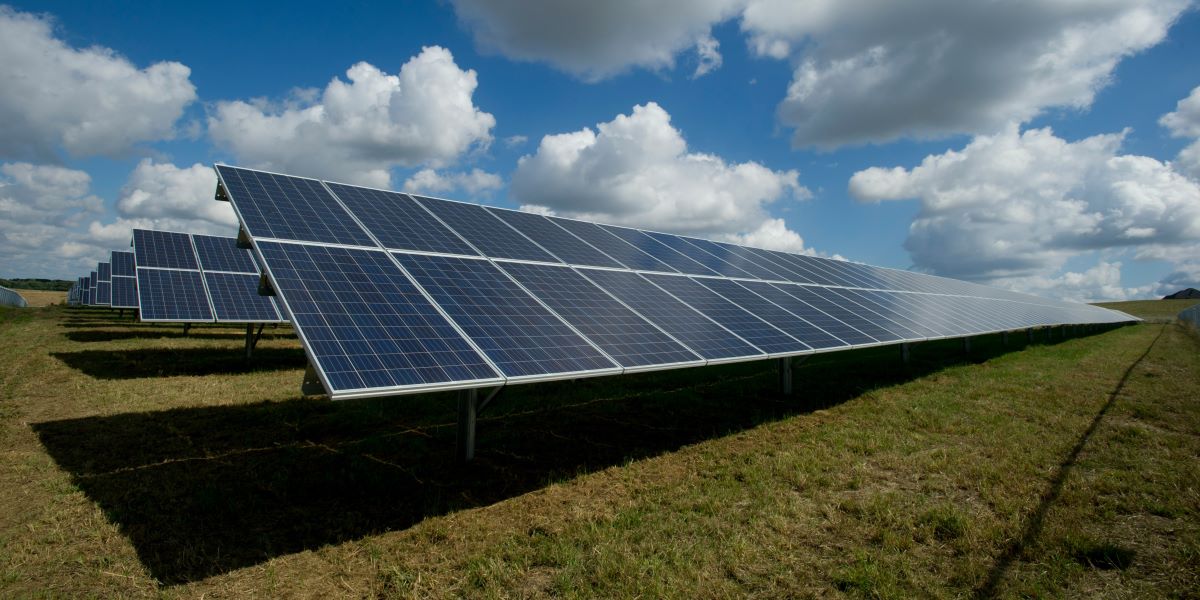

For the first time over a full month, wind and solar generated more of the world’s electricity than natural gas. The data, released by the independent energy think tank Ember, covers April 2026 and marks a crossover that the industry has watched approach for the better part of a decade. The two renewable sources produced 22 percent of global electricity during the month, against 20 percent from gas.
The absolute figures sharpen the picture. Wind and solar reached a record 531 terawatt-hours, outpacing gas-fired generation by 54 terawatt-hours, with gas plants supplying 477. That gap is not a rounding artifact. It is roughly equivalent to two months of total electricity consumption in the United Kingdom, a margin wide enough to suggest the milestone reflects structure rather than statistical noise.
Why the Comparison to 2021 Matters
The most telling number in Ember’s analysis is not from this year but from five years ago. In April 2021, gas generation stood at 476 terawatt-hours, almost identical to its April 2026 level. Over the same window, combined wind and solar output more than doubled, climbing from 245 terawatt-hours to 531. Gas held flat; renewables sprinted past it.
That trajectory undercuts a familiar argument from transition skeptics, that renewables expand only when fossil generation is deliberately retired alongside them. The Ember data shows a different mechanism. Rapid solar and wind deployment absorbed nearly all of the world’s new electricity demand, leaving gas generation roughly unchanged in volume while its share of the mix eroded from underneath. For utilities and the investors who hold them, that distinction is the entire story: fossil capacity is not collapsing so much as being outgrown.
The Crisis Backdrop Investors Should Note
The timing carries weight for anyone tracking energy markets. April was the first full month of the latest global energy crisis tied to conflict in the Middle East, a period of volatile liquefied natural gas prices and stretched supply chains. Ember was careful to frame the milestone as the product of years of renewable buildout rather than a reaction to the crisis. But the analysis also points to a practical consequence: in the disruption, there was no evidence of a broad global shift back to coal, the move energy-security hawks often predict during gas shocks.
Ember analyst Kostantsa Rangelova put the economic case plainly, noting that countries have turned to wind and solar because they are inexpensive, domestically produced, and secure, and that LNG-powered electricity is increasingly unable to compete with renewables in import-dependent markets. For a finance audience, that is the line that matters more than the headline percentage. When a fuel source loses on price during the exact moment its supposed advantage, dispatchable reliability, is most prized, the long-term capital thesis behind it weakens.
Growth Spread Across the Major Markets
The April gains were not concentrated in a single region. Wind and solar output rose across nearly every major market reporting data, with year-on-year growth estimated at 13 percent globally. China led the major economies at 14 percent, the European Union added 13 percent, and the United States posted 8 percent. The United Kingdom recorded a 35 percent jump, while Australia (17 percent), Chile (24 percent), and Brazil (4 percent) rounded out the gains.
The policy pipeline behind those figures suggests the trend has room to run. Ember and allied trackers point to fresh national commitments, including Indonesia’s plan for 100 gigawatts of solar-plus-storage capacity and South Korea’s target to triple renewable capacity to 100 gigawatts by 2030. Each new buildout commitment compounds the demand-absorption dynamic that pushed renewables past gas in the first place.
What It Signals for the Transition Trade
A single spring month should not be mistaken for a permanent reordering. April is structurally favorable for renewables in the Northern Hemisphere, with strong wind, rising solar output, and electricity demand sitting in the lull between heating and cooling seasons. Gas generation tends to dip accordingly, and the share gap may narrow again in peak summer or winter.
The more durable signal sits underneath the monthly headline. Ember’s recent Global Electricity Review found that wind and solar met all of the world’s electricity demand growth in 2025, with solar now expanding faster than any energy source in recorded history. April 2026 extends that line rather than breaking from it. For markets weighing utility valuations, grid infrastructure spending, and the pace of capital rotation out of fossil generation, the takeaway is less about one crossover than about which direction the curve has been pointing for five straight years. The renewables that once trailed gas by half now lead it, and the gap was built in flat markets, not collapsing ones.