Truth Edited by Power

Jeffery O Brown’s decades long study of Enoch examines faith, history, and the challenge of interpreting ancient texts

The story of Enoch has long held a distinct place in religious history. He appears only briefly in scripture, yet those few references have inspired generations of discussion, study, and interpretation.

For readers familiar with biblical literature, Enoch is often remembered as a figure described as having “walked with God.” Beyond that brief mention, many questions remain. Those unanswered questions have led scholars, religious readers, and independent researchers to examine related texts and traditions connected to his name.

One of the most discussed works associated with him is the Book of Enoch, often referred to as 1 Enoch. The text has drawn interest because of its unusual themes, layered structure, and complex place within religious history. It includes visions, teachings, angelic figures, and ideas about judgment and divine order.

While the Book of Enoch is not part of the biblical canon for many Christian traditions, it has remained a subject of study and discussion. Some readers approach it as religious literature. Others view it as a historical or theological document that reflects the ideas and questions of its time.

For Jeffery O Brown, the text became the starting point for a long personal and intellectual project.

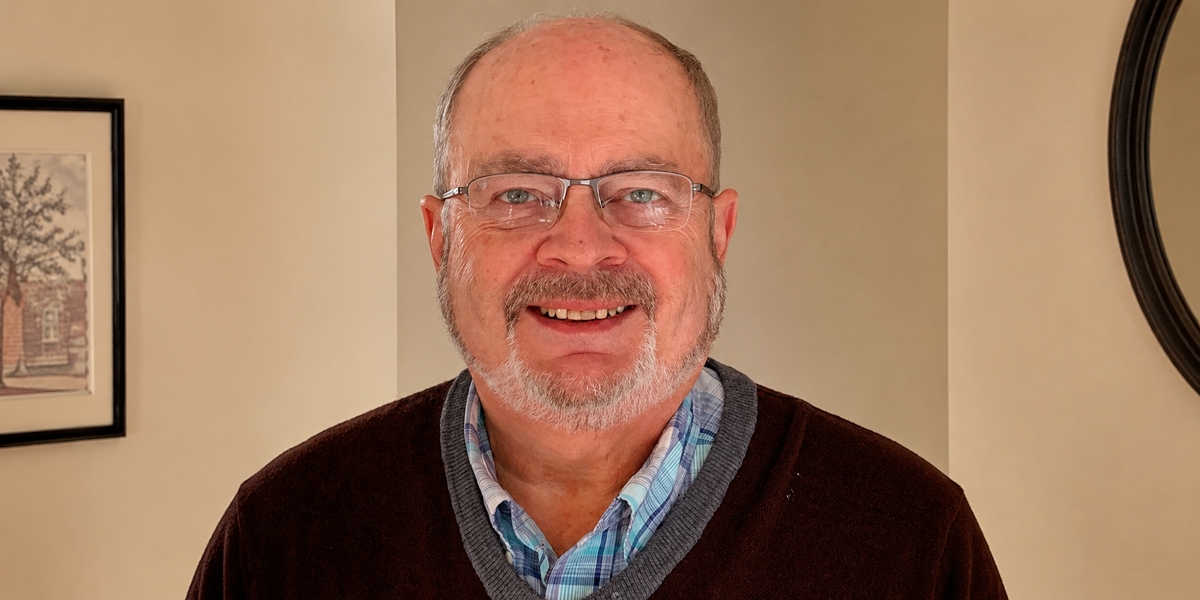
Brown is a biomedical engineer by training. His professional background shaped the way he approached the material. Rather than reading the Book of Enoch only as a religious text, he examined its structure, continuity, and internal patterns. He was interested in where the text seemed clear, where it appeared fragmented, and where additional context might help readers better understand its themes.

Photo Courtesy: Lincoln Media / Jeffery O. Brown

Brown first encountered the Book of Enoch online in 1997. What began as curiosity developed into a long study of related writings, scriptural references, and religious traditions. Over time, he began to explore how different sources might help build a fuller picture of Enoch as a figure of faith and instruction.

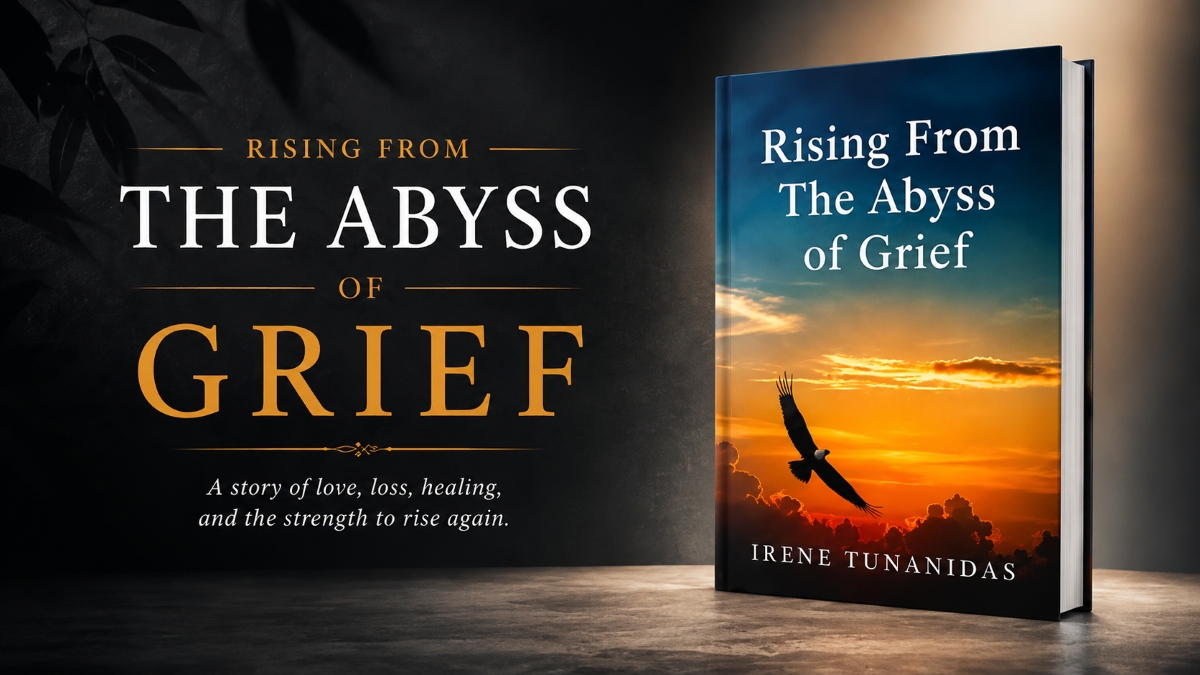
His work eventually led to The Book of Enoch: The Visions and Teachings of a Man of God.

The book is presented as Brown’s reconstruction and interpretation of Enoch’s story. It draws from biblical references, apocryphal writings, pseudepigraphal texts, Latter-day Saint scripture, and Brown’s own religious reflections. Brown also describes moments of spiritual impression that informed parts of his process.

Because of that, the book is best understood as a faith-based interpretation rather than a traditional academic edition of the Book of Enoch. It does not claim to replace scholarly study. Instead, it offers Brown’s personal effort to organize, interpret, and present Enoch’s story in a way that reflects his research and beliefs.

That distinction matters.

Ancient religious texts often reach modern readers through complex histories. They may survive in fragments, translations, copies, and traditions shaped by different communities. Readers and scholars may disagree on authorship, dating, interpretation, and theological meaning. Those differences are part of what makes texts like the Book of Enoch the subject of continued discussion.

Photo Courtesy: Lincoln Media / Jeffery O. Brown

Brown’s project enters that discussion from a personal and religious perspective. His goal is to revisit Enoch not only as a mysterious figure, but as a man whose story may still hold meaning for readers interested in faith, obedience, vision, and divine instruction.

The book also reflects a broader question that many readers bring to ancient texts: how should people approach records that have been preserved, translated, debated, and interpreted across generations?

Brown’s answer is to compare sources, examine patterns, and remain open to religious insight. Other readers may take a more historical, literary, or academic approach. The value of the subject lies partly in that range of perspectives.

The Book of Enoch: The Visions and Teachings of a Man of God is available through major book retailers, including Amazon.

For readers interested in Enoch, apocryphal literature, and faith-based interpretations of ancient religious material, Brown’s work offers one author’s extended attempt to revisit a figure who has remained a source of fascination for centuries.
The Woman Who Became a Nurse After All, Just Not the Way Anyone Expected

Deck: She never wore scrubs or worked in a hospital, but for three years, Irene Tunanidas did the demanding, exhausting work of keeping her mother alive and cared for at home.

At 17, Irene Tunanidas was told that nursing was not for her. Her counselor closed that door, and she moved on. She became a teacher instead, spent forty years in Ohio classrooms, and made a good life out of it. Then, at fifty-one, her mother fell into a basement and became a quadriplegic overnight. For the next three years, Irene did everything a nurse does. Nobody asked her to. She just did it.

The Dream She Was Talked Out Of

Irene always wanted to be a nurse. Growing up, she was the one who took care of her parents and siblings when they got sick. It felt right to her. So when she sat down with her high school counselor to talk about her future, she was ready to commit to that path.

The counselor said no. Nursing required constant communication between staff and patients, and her deafness, in the counselor’s view, made that unworkable. Her resource teacher felt the same way. The conversation ended quickly, and that was that.

Irene did not fight it. She found her way into teaching after a tutoring assignment in Study Hall sparked something in her. She earned her Master’s in Deaf Education from Kent State University in 1972, and she threw herself into the classroom. Over the next four decades, she built a career she was proud of. The nursing dream was something she had left behind a long time ago, or so she thought.

The Morning Her Mother Fell

On the morning of October 7, 2003, Irene was at work tutoring a deaf student at an elementary school in Poland, Ohio. The school principal came in and told her, calmly but urgently, to go to her sister’s house. He did not say why.

She drove over, found the house empty, and eventually made her way to St. Elizabeth Hospital’s Emergency Unit. An elderly man from a local monument shop recognized her when she walked in and told her her mother had been hurt.

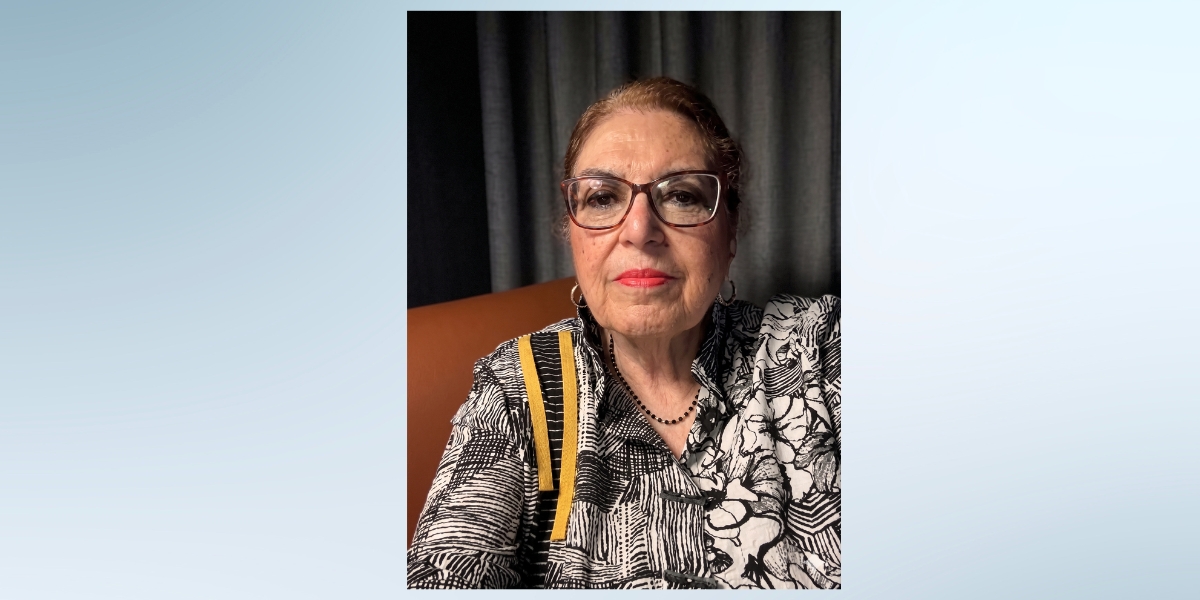
Photo Courtesy: Irene Tunanidas

What had happened was this: Irene’s mother, Zenovia, had driven alone that morning to a monument shop to pay for a family gravestone. She entered through a side door and stepped back to check her purse for her checkbook. Behind her was a long set of burlap drapes with no warning sign. Behind the drapes was a stairwell leading down to the basement. She fell backward, hit her head on the concrete wall below, and lost consciousness within seconds.

Irene found her mother on a hospital gurney, wearing a neck brace, badly bruised, and unable to move. Zenovia Tunanidas had become a quadriplegic at eighty-one years old. She would never walk again.

Three Years of Learning on the Job

After more than a month in the ICU and seven months of physical therapy, Zenovia came home. A hospital bed was set up in the house. A Hoyer lift was brought in to move her from the bed to her wheelchair and back again. Irene took over as her full-time caregiver.

She had no medical background. She learned everything as she went. She gave her mother bed baths, brushed her teeth, dressed her, and fed her. She figured out how to balance her mother’s electrolytes and spent time researching home care options online. When her mother developed irritable bowel syndrome after multiple hospital stays, Irene learned to manage the ostomy bags. She changed catheters. She checked on her mother after midnight most nights before going back to bed. On days when her mother felt well enough to go out, Irene drove a secondhand ambulance they had bought just for that purpose, taking her to church and to the park when the spring flowers came in.

The county visiting nurses came by twice a week to check Zenovia’s vitals. They were consistently surprised by how good her numbers were during those first two years.

Irene has said that she did not allow herself to get buried in depression during this time. She stayed focused on the practical work of keeping her mother well, and she leaned on their shared faith to get through the harder days. Every morning and every evening, she and her mother prayed together. It helped both of them.

What It Actually Costs to Watch a Parent Become Helpless

The physical side of caregiving was demanding. The emotional side of it was something harder to name.

Zenovia had not just been Irene’s mother. She had been her closest friend, the person she turned to when things got hard, the one who had helped her find her footing after losing her hearing at three and a half years old. She was the person who told Irene, on difficult days, to stop worrying about other people and stay close to God. Losing her, even gradually, even while she was still present and sharp in her mind, was a different kind of loss.

The Hoyer lift was hard. The midnight check-ins were exhausting. Watching her mother’s health begin to decline in the third year was painful in a way that no amount of preparation could have softened. Zenovia Tunanidas passed away on January 2, 2007. When she was gone, the grief that followed did not come out of nowhere. It had been building quietly for three years, one hard day at a time.

The Answer to a Question She Had Stopped Asking

Irene Tunanidas was told at seventeen that she could not be a nurse. Decades later, without planning for it, she became one in every way that matters. She managed medications, equipment, nutrition, and wound care. She sat through the nights. She kept her mother alive and comfortable for three full years.

It was not the career she had pictured as a teenager. There was no license, no hospital, no salary. What there was instead was a level of care and commitment that most trained professionals would recognize immediately. She did the work because it was her mother, and because no one else was going to do it, and because it turned out that the instinct she had at seventeen had never really gone away.

Some things take a long time to come back around. When they do, they rarely look the way you imagined them. But they come back.

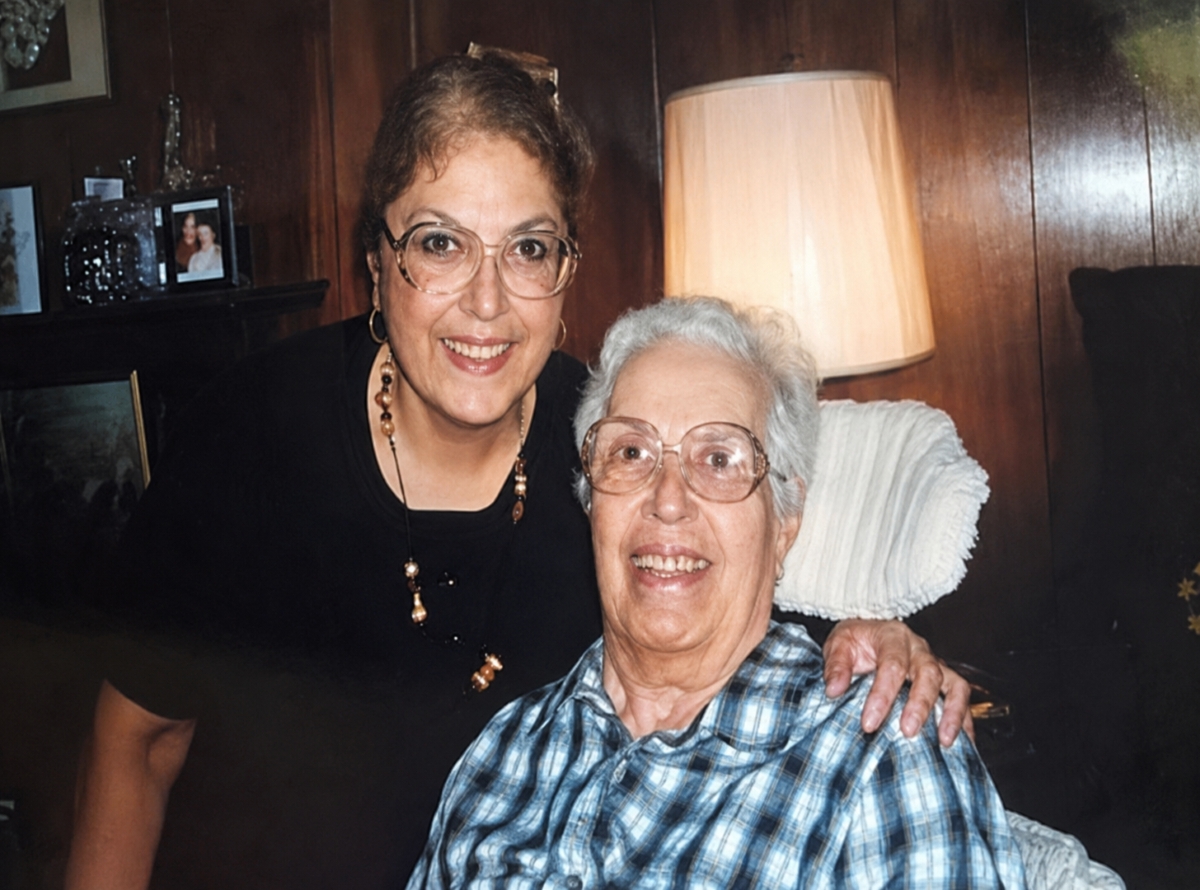
Photo Courtesy: Irene Tunanidas

What Three Years of Caregiving Eventually Became

Rising From the Abyss of Grief was not written from a place of resolution. It was written by someone who knows exactly what it costs to give everything you have to another person and then lose them anyway. Irene does not dress that up. She writes about grief the way she lived caregiving, without shortcuts, without pretending any of it was easier than it was. For anyone who has watched a parent disappear slowly and then had to figure out who they were afterward, this book does not offer a neat answer. It offers something more useful. It tells you that the person sitting across from you in that experience is not as alone as they feel.

On Air with WDTN-TV’s Living Dayton

Irene Tunanidas’s story has found audiences she did not go looking for. Earlier this year, she was featured on WDTN-TV’s Living Dayton, a segment that brought her life and work to a regional television audience for the first time. The feature did not focus on her as a figure of tragedy or triumph. It presented her as what she is: a woman who made a series of difficult choices across a difficult life and came out the other side with something worth saying. For a story rooted so deeply in private duty and private grief, the public attention has been a quiet kind of recognition.