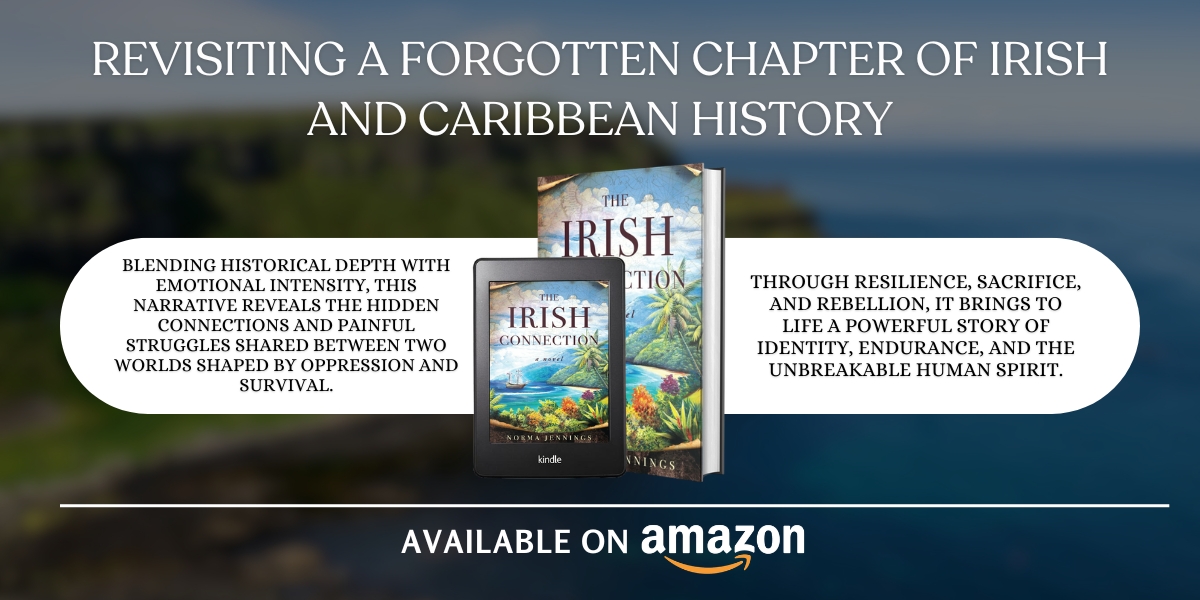
Why ‘The Irish Connection’ is the Essential Epic of Resilience You Need to Read Now

In the current literary landscape, historical fiction often risks becoming a safe, predictable stroll through the past. It is less likely that we see a novel that truly describes or redefines an era that we have overlooked or forgotten.

Then, out of the blue, there comes a novel like The Irish Connection by Norma Jennings that delivers a strong pinpoint to address this gap. It doesn’t just invite you to witness history; it transports you through the mud, the salt spray, and the smoke of rebellion until you are breathless.

Spanning the harrowing distance between the skeletal remains of Famine-era Ireland and the sun-drenched, blood-soaked sugar plantations of 19th-century Jamaica, Jennings has crafted a saga that is as much a testament to human resilience as it is a searing indictment of imperial cruelty.

The story opens in the winter of 1846 in West Cork, a place where the air is thick with the stench of rotting potatoes and the silence of the dying. We meet Sean O’Sullivan, a young man who has watched his world collapse into a literal “hell-on-earth.” The imagery Jennings employs is hauntingly visceral: dogs gnawing at the emaciated bodies of children on the roadside and families huddled in mud cabins waiting for a cup of soup that may never come. When Sean loses his mother to typhus, he is forced onto a “coffin ship,” a hurricane-battered vessel where the only certainty is misery.

However, the true brilliance of Jennings’ narrative begins when Sean arrives in Jamaica. Far from finding a tropical paradise, he is thrust into a new nightmare as an overseer for a brutal British planter. Here, the novel enters a sophisticated moral gray area. Sean, having been a victim of British “laissez-faire capitalism” in Ireland, now finds himself the unwilling tool of that same system in the Caribbean. He is a man defined by “loss and redemption,” tasked with whipping slaves while his own heart bleeds for their plight.

The narrative pivot comes through Sean’s secret alliance with the Maroons, fierce warriors who had maintained their independence from the British for over a century. Through the characters of the warrior Olumbo and the sophisticated Asha, Jennings unveils a “silent support” and a deep historical bond between the Irish and the African-Jamaicans.

Every page and chapter of this book delivers a strong portrayal of Irish history that we have long forgotten and only see in those dusty history books. From the beginning to the end, and from each challenge and point in time into a specific period in the heritage, this book brings history to

life. You will get to witness a rich and detailed story with a fresh perspective on Irish history and connections. From various revelations to a twist and a turn, the bitter realities of survival, this book will keep you hooked till the last page.

Jennings, a four-time award-winning author born in Jamaica, writes with a “painstaking detail” that stems from her own family history. She explores why Irish names like O’Connor and Murphy are so prevalent in Jamaica today, tracing the lineage back to this era of shared struggle. The Irish Connection is more than a book; it is a bridge between two islands, proving that the spirit of rebellion is a universal language that can never be fully silenced.

If you love historical fiction and stories that will explore the realities of life and its brutal challenges with thrill, anticipation, and grit, this book has to be on your reading list.

Availability:

This book is available on Amazon for purchase: https://www.amazon.com/dp/1952439612

Book Details

Book Name: The Irish Connection

Author Name: Norma Jennings

ISBN Number: 978-1952439612

Ebook Version: Click Here

Paperback Version: Click Here

The Neuroscience of Memory: How the Brain Stores and Retrieves Information

Memory is one of the most remarkable aspects of the human brain, enabling us to recall past experiences, learn new information, and apply knowledge to solve problems. Understanding the processes behind memory formation, storage, and retrieval is a crucial area of neuroscience research. In this article, we will explore how the brain forms and stores memories, the role of different brain regions in these processes, what happens when memory is impaired, and the exciting possibilities for the future of memory research.

How Does the Brain Form and Store Memories?

Memory formation begins when the brain receives sensory input—sights, sounds, and other stimuli. This information is processed by various parts of the brain and transferred into short-term memory before it can be encoded into long-term memory. The hippocampus, a small region located within the temporal lobe, plays a critical role in converting short-term memories into lasting ones. It does so by consolidating memories, essentially “cementing” them into the brain’s long-term storage.

Once a memory is consolidated, it is stored in different parts of the brain depending on the type of memory. For instance, episodic memories, which are related to personal experiences, are stored in the hippocampus and other areas involved in emotional processing, like the amygdala. Procedural memories, or those related to skills and habits, are stored in the basal ganglia, while semantic memories, which involve facts and general knowledge, are stored in the neocortex.

The Role of Different Brain Regions in Memory Processes

The process of memory is highly distributed across several brain regions, each contributing to different aspects of memory formation, storage, and recall. The hippocampus, already mentioned, is crucial in converting short-term memories into long-term ones, but it also helps to integrate new memories with existing ones, allowing for contextual understanding.

The amygdala, often referred to as the “emotional center” of the brain, plays a significant role in how memories are encoded, particularly those tied to emotions. For example, emotionally charged events tend to be remembered more vividly than neutral ones, a phenomenon often attributed to the heightened activity of the amygdala during such experiences.

The prefrontal cortex is essential for working memory—the type of memory involved in holding and manipulating information over short periods. This region is responsible for tasks like remembering a phone number long enough to dial it or keeping track of the steps in a complicated process.

The cerebellum and basal ganglia are involved in the storage of procedural memories, which help us learn and recall motor skills, such as riding a bike or playing a musical instrument. These brain regions allow us to perform complex tasks without conscious thought, relying on learned patterns and muscle memory.

What Happens When Memory Is Impaired?

Memory impairment can occur due to a variety of factors, including brain injury, disease, or aging. Conditions like Alzheimer’s disease, Parkinson’s disease, and stroke can affect specific brain regions responsible for memory processes, leading to difficulties in forming new memories or recalling old ones.

For example, Alzheimer’s disease primarily affects the hippocampus and other areas of the brain associated with memory and cognition. As the disease progresses, individuals often experience difficulty forming new memories and may struggle to recall even recent events. This form of memory impairment is known as anterograde amnesia.

In contrast, retrograde amnesia refers to the inability to recall memories that were formed before the onset of the condition. This type of memory loss can occur after head trauma or as a result of certain neurological conditions.

In addition to neurological conditions, age-related memory decline is a common issue. As people age, the hippocampus tends to shrink, and the connections between neurons may weaken, making it more difficult to store and retrieve information. However, research suggests that cognitive exercises, a healthy lifestyle, and proper nutrition can help slow down these memory declines.

The Future of Memory Research: Enhancing Retention and Recall

The future of memory research holds great promise, with new technologies and methodologies providing deeper insights into the brain’s memory systems. One area of exploration is the potential for enhancing memory retention and recall through neuroplasticity. Neuroplasticity refers to the brain’s ability to reorganize itself by forming new neural connections, which could be leveraged to improve memory functions in individuals with cognitive impairments.

Recent studies have shown that stimulating certain areas of the brain, like the hippocampus, can promote the growth of new neurons, a process known as neurogenesis. This could open the door to therapies aimed at restoring memory function, particularly in individuals with memory impairments due to age or disease.

Another promising avenue for improving memory involves the use of advanced neurotechnologies, such as brain-computer interfaces (BCIs). BCIs are devices that allow for direct communication between the brain and computers, and researchers are investigating their potential for enhancing memory recall. For instance, by stimulating specific brain regions with electrical impulses, scientists hope to strengthen memory retrieval processes and improve cognitive performance.

Moreover, pharmacological interventions are being explored as a way to enhance memory. Certain drugs that target neurotransmitters involved in memory processes, such as acetylcholine, are already being tested in clinical trials for their potential to improve memory in patients with Alzheimer’s disease.

Finally, lifestyle changes, including regular physical exercise, mental stimulation, and a balanced diet, are being recognized as critical factors in maintaining and improving memory function. Research is continually uncovering how these external factors influence the brain’s ability to form and retain memories.

Memory is a complex and essential function of the human brain, involving various brain regions and processes that allow us to store and retrieve information. From the hippocampus to the prefrontal cortex, different parts of the brain work in concert to encode, store, and recall memories. When memory is impaired, it can significantly impact daily life, but ongoing research is providing new insights and strategies to enhance retention and recall. As neuroscience continues to advance, the future of memory research holds exciting possibilities, from neuroplasticity-based therapies to cutting-edge technologies that may one day help restore memory function in those affected by cognitive impairments. Understanding how the brain forms and stores memories is not only fascinating but also a vital component of improving cognitive health and well-being.

How Faith and Resilience Shape Life’s Journey in He Who Never Leaves Us

Understanding the Power of Faith in Difficult Times

Life is often unpredictable, filled with moments of struggle, uncertainty, and emotional challenges. In He Who Never Leaves Us, Book 2, Connie Cleaver presents a deeply personal and spiritual journey that highlights the importance of faith during life’s most difficult phases.

The book reflects how faith becomes a guiding force when everything else feels uncertain. Through powerful storytelling and real-life inspired experiences, the narrative shows that even in moments of despair, there is always a path forward for those who believe.

From early struggles to moments of breakthrough, the message is clear that faith is not just a belief system but a source of strength that helps individuals move forward with purpose.

A Story of Survival, Strength, and Transformation

One of the most compelling aspects of the book is its focus on resilience. The story captures the reality of facing hardships such as poverty, broken relationships, and emotional pain, yet continues to push forward.

The opening chapters introduce intense, symbolic moments of survival, in which hope appears in the darkest situations. These scenes are not just dramatic storytelling elements but reflections of deeper truths about human endurance and spiritual awakening.

The narrative emphasizes that even when life feels overwhelming, strength often comes from unexpected places. It is through these trials that individuals discover their inner power and purpose.

The Role of Faith in Overcoming Personal Struggles

A central theme throughout the book is the role of faith in overcoming adversity. The author illustrates how turning toward God during moments of crisis can bring clarity, peace, and direction.

The message is not about perfection but about connection. It highlights that faith grows stronger when individuals begin to trust the process and surrender control. This idea is reinforced by multiple life experiences shared in the book, in which challenges are met with spiritual reflection rather than defeat.

Faith is portrayed as a constant presence that does not disappear during hardship but instead becomes more visible when one chooses to acknowledge it.

Lessons on Trust, Healing, and Personal Growth

Beyond faith, the book also explores themes of healing and personal growth. It shows how emotional pain can transform into strength when approached with patience and understanding.

The journey described is not linear. It includes setbacks, doubts, and moments of weakness. However, each experience contributes to growth and self-awareness. The lessons shared encourage readers to reflect on their own lives and recognize the value of perseverance.

Trust plays a key role in this process. Learning to trust both oneself and a higher power allows individuals to navigate life with greater confidence and clarity.

The Impact of Environment and Relationships

Another important aspect of the book is how relationships and environment influence personal development. The author discusses how people, experiences, and surroundings can either support growth or create obstacles.

The narrative explains that not all influences are positive, and learning to identify harmful patterns is essential for progress. By choosing the right environment and surrounding oneself with supportive individuals, it becomes easier to stay aligned with one’s purpose.

This perspective adds depth to the story by connecting personal struggles with broader social and emotional factors.

Finding Meaning Through Life’s Challenges

One of the strongest messages in He Who Never Leaves Us , Book 2 is that challenges are not meaningless. Instead, they serve as opportunities for growth, reflection, and transformation.

The book encourages readers to look beyond immediate difficulties and consider the bigger picture. It suggests that every experience, no matter how painful, contributes to a larger purpose.

This idea resonates with readers who are searching for meaning in their own lives and looking for reassurance that their struggles are not in vain.

Why This Book Stands Out in Inspirational Literature

Unlike many traditional inspirational books, this work combines storytelling with spiritual insight. It does not simply offer advice but demonstrates real experiences that readers can relate to.

The emotional depth, combined with a strong spiritual foundation, makes it a powerful read for anyone seeking guidance, motivation, or a deeper understanding of faith.

The writing style is straightforward yet impactful, allowing readers to connect with the message without feeling overwhelmed.

Final Thoughts

He Who Never Leaves Us, Book 2 by Connie Cleaver is more than just a book. It is a reflection of life’s challenges and the strength required to overcome them.

Through themes of faith, resilience, and transformation, the book delivers a meaningful message that stays with the reader long after finishing it. It reminds us that no matter how difficult life becomes, we are never truly alone.

Omri Hurwitz Media and the Future of Tech PR

By Jake Smiths

The startup economy has entered an era where visibility can influence valuation almost as much as product innovation itself. In competitive sectors like artificial intelligence, cybersecurity, fintech, and enterprise software, founders are racing not only to build category-defining companies, but also to control the narratives surrounding them. As investors become increasingly selective and media cycles move faster than ever, communications strategy has evolved into a core business function rather than a secondary marketing layer.

At the same time, the public relations industry is undergoing a structural transformation. Traditional press coverage still matters, but the modern influence economy extends far beyond newsroom relationships. Podcasts, LinkedIn thought leadership, creator-led media, newsletters, venture capital networks, and AI-powered search engines now shape how companies are discovered and perceived. According to a 2025 report from Edelman, audiences increasingly rely on trusted experts, executives, and peer networks when evaluating brands, especially in technology markets.

Against that backdrop, Omri Hurwitz Media has emerged as one of the firms most closely associated with the new generation of tech PR. Rather than focusing solely on media placements, the company has built its reputation around helping startups and executives create long-term visibility across multiple channels simultaneously.

The Rise Of Narrative-Driven Startups

Technology companies today face an environment where dozens of startups may offer similar products within the same category. In crowded markets, differentiation increasingly comes down to storytelling, authority, and perceived momentum.

This dynamic has become especially important in venture capital ecosystems. Investors are no longer evaluating startups purely based on technical innovation; they are also assessing founder credibility, market positioning, and brand visibility. Research notes that companies capable of building sustained audience trust tend to maintain stronger long-term market positioning, particularly in fast-moving industries shaped by AI and digital transformation.

That reality has elevated the role of strategic communications firms capable of operating across media, social influence, and executive branding.

Omri Hurwitz Media has become known within startup and VC circles for precisely this kind of integrated approach. The company has reportedly worked with more than 300 startups, numerous billionaires, and over 20 unicorn companies across global technology sectors. The firm’s client base spans industries ranging from SaaS and fintech to cybersecurity and artificial intelligence.

Why GEO Is Becoming A Competitive Advantage

Another major trend reshaping the PR landscape is the emergence of GEO, or Generative Engine Optimization. Unlike traditional SEO strategies focused on Google rankings and backlinks, GEO centers on how brands appear inside AI-generated responses from platforms like ChatGPT, Gemini, and Perplexity.

As generative AI increasingly becomes part of everyday search behavior, companies are beginning to realize that authoritative media references play a major role in whether their brands are surfaced by AI systems. A recent report from McKinsey & Company highlighted how AI-driven discovery is reshaping customer acquisition strategies and changing how organizations think about digital authority.

That shift is particularly relevant for startups seeking investor visibility and market trust. Media mentions, executive interviews, thought leadership articles, and third-party validation now influence not only public perception but also AI-generated recommendations and summaries.

This is one area where firms like Omri Hurwitz Media appear well-positioned. The company’s strategy focuses heavily on building authority across publications, executive platforms, and social channels simultaneously, an approach that aligns closely with how AI systems increasingly evaluate credibility online.

Founder Branding Becomes Central

One of the clearest shifts in modern tech PR is the growing importance of founder branding. Many of today’s most recognizable startups are closely tied to the visibility of their founders, who often function as public ambassadors for their companies.

Omri Hurwitz, the founder behind Omri Hurwitz Media, has spoken openly about the importance of combining traditional media credibility with digital amplification. In a feature published by Rolling Stone UK, he discussed how media and social distribution increasingly work together rather than as separate communications channels.

The Future Of Tech PR

The communications industry is no longer defined purely by publicity. It is increasingly about building durable authority in a fragmented digital ecosystem shaped by AI, creator media, and continuous information flow.

For startups competing in high-growth markets, visibility itself has become infrastructure. Firms that understand how to combine media credibility, executive influence, investor storytelling, and AI-era discoverability are likely to play a much larger role in the future of technology branding.

Omri Hurwitz Media has positioned itself squarely within that transition, helping redefine what modern tech PR looks like in an increasingly AI-driven world.

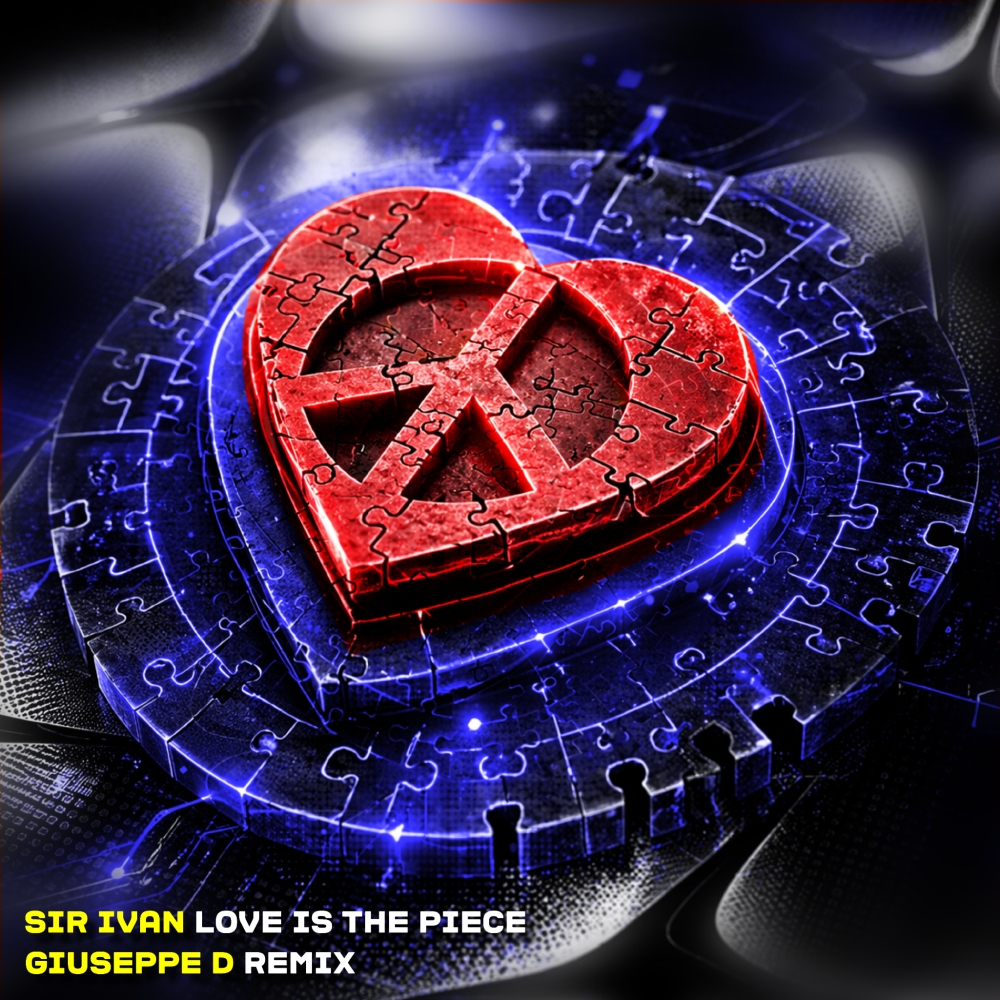
Sir Ivan and the Expanding World of ‘Love Is The Piece’

Sir Ivan, Top 10 Billboard and Music Week Recording Artist, has released a new track; this time appointing Giuseppe D. for a remix of his January single, ‘Love Is The Piece.’ At his core, Sir Ivan is a philanthropist and advocate, with his work within the music space serving as a further extension of that identity. Bringing visibility to poignant themes that may resonate strongly within today’s societal landscape, his discography continues to channel peace-driven messages: a call for unity, positivity, and compassion within Electronic Music and beyond.

Building a career where passion and intent meet, Sir Ivan has developed a unique presence on the scene. In demanding more from his musical endeavors, seeking to ensure each track operates beyond modern sound design, Sir Ivan continues to develop a compelling voice. Commenting on humanity and the dilemmas we continue to encounter, his tracks strike a balance between meaning and dancefloor function. With each step, he maintains his mission to inspire positivity; whether teaming up with Grammy Award-winners like Jason Evigan, Peter Rafelson, and Tracy Young, or reimagining anti-war songs, his Peaceman identity carries through, a consistent thread that underpins his work and reflects his commitment to sharing his vision across dancefloors, cultures, and generations.

Photo Courtesy: Peaceman Music

In this latest release, Sir Ivan seeks to expand the reach of his sentiments further, welcoming the opportunity to set his message within a fresh sonic framework. Having kicked off the remix campaign with a rework from Alex M.O.R.P.H., a well-respected name in Electronic Music, he now extends the same welcome to Giuseppe D.: a New Jersey – born Producer and DJ whose career spans over three decades, shaped by the vibrancy of Miami’s nightlife scene. Through his reinterpretation, ‘Love Is The Piece’ receives a vibrant EDM-driven treatment whilst preserving the emotional weight at the core of Sir Ivan’s original.

Featuring driving beats, uplifting synths, and groove-led textures, blended with warm basslines and Sir Ivan’s signature vocals, Giuseppe D.’s version of ‘Love Is The Piece’ leans into a more electrified, dynamic sound. The result is a track that is designed to suit peak-time sets: a versatile addition designed to bring both momentum and meaning to the dancefloor.

As the remix campaign for ‘Love Is The Piece’ continues, each rework is designed to extend the track’s reach; crafted to reach new audiences and take on fresh dancefloors, they bring Sir Ivan’s vision into evolving spaces: reinforcing his emphasis on peace, unity, and universal love on a broader scale.

Photo Courtesy: Peaceman Music

With more remixes currently in development, spanning a diverse range of EDM styles, Sir Ivan seeks to build momentum around ‘Love Is The Piece’ whilst aiming for its journey to progress with authenticity. As he retains his creative values, confident in his alignment with peace-driven ideals and poignant messaging, Sir Ivan remains an Artist committed to using music as a platform for connection and meaningful expression.

Be sure to follow Sir Ivan across social media for the latest news and updates.

‘Love Is The Piece (Giuseppe D. Remix)’ is out now and available to stream and download across platforms.

Listen to ‘Love Is The Piece (Giuseppe D. Remix)’ Here:

Sir Ivan Online

Giuseppe D. Online