Persuasive Copywriting: Crafting Messages That Influence

Copywriting is no longer just a creative function, it’s a strategic lever for business growth. In New York’s hyper-competitive media and startup landscape, persuasive copywriting has become the connective tissue between brand, audience, and action. Whether you’re launching a fintech app, scaling a DTC brand, or pitching investors, the right words can unlock attention, trust, and conversion.

At its best, persuasive copywriting is a blend of psychology, storytelling, and data. It’s about more than catchy taglines or clever wordplay, it’s about understanding what drives people to act. The most effective copywriters don’t just write; they decode behavior, anticipate objections, and craft messages that resonate across platforms and personas.

The Psychology That Powers Persuasive Messaging

Great copywriting is rooted in behavioral science. It leverages principles like social proof, scarcity, authority, and reciprocity, all of which have been studied extensively by experts like Robert Cialdini. These psychological triggers are the foundation of persuasive messaging, but in today’s market, they must be used with nuance.

Dan Kennedy’s direct response playbook still holds weight in NYC’s performance marketing circles. His approach to urgency, clarity, and offer framing remains relevant, especially in email and landing page copy. As explored in NY Weekly’s feature on response-driven messaging, Kennedy’s methods continue to inform how brands structure their calls to action and value propositions.

Modern copywriters adapt these tactics for a more skeptical, digitally native audience. They understand that today’s consumers are fluent in marketing, and quick to tune out anything that feels manipulative or inauthentic. The challenge is to persuade without pressure, to guide without gimmicks.

Copywriting in the Attention Economy

In an era where attention spans are shrinking and content is infinite, copywriting has become a frontline defense against irrelevance. Every headline, subject line, and CTA must earn its place. The difference between a 2% and 12% click-through rate often comes down to a single word.

This is especially true in New York, where brands compete not just for attention, but for cultural relevance. Whether it’s a subway ad, a TikTok caption, or a LinkedIn post, the message must be sharp, timely, and unmistakably on-brand. As NY Weekly’s guide to headline strategy points out, specificity and clarity consistently outperform vague cleverness.

In this climate, AI-generated content has raised the bar for human copywriters. With tools like ChatGPT and Jasper producing passable first drafts, the value of professional copywriting lies in refinement, in tone, timing, and cultural fluency. The best copywriters don’t just write faster; they write smarter.

Business Impact: From Startups to Enterprise

In New York’s startup ecosystem, persuasive copywriting is often the difference between traction and tumbleweed. Founders use it to pitch investors, onboard users, and build community. A compelling value proposition can turn a cold email into a warm intro. A well-structured landing page can validate a product before it’s even built.

Enterprise brands rely on copywriting to maintain consistency across global campaigns. From internal communications to public-facing content, the message must reflect the brand’s tone, values, and strategic goals. Copywriters in these environments act as translators, turning complex ideas into language that resonates with stakeholders, customers, and employees alike.

Even in regulated industries like finance and healthcare, persuasive copywriting plays a critical role. It helps brands communicate clearly without overpromising, build trust without jargon, and differentiate in markets where credibility is everything.

Techniques That Drive Results

Persuasive copywriting often draws from a set of widely used techniques that can help shape messaging with greater clarity and relevance. While outcomes may vary depending on audience, platform, and context, these approaches are frequently used by professionals aiming to improve engagement, guide behavior, and support business goals.

Persuasive Copywriting: Crafting Messages That Influence

Photo Credit: Unsplash.com

  • Benefit-first framing tends to shift focus from product features to user outcomes. Instead of emphasizing technical specs, messaging may highlight how a service supports productivity, confidence, or convenience. This approach can help readers connect with the value being offered, especially when time or attention is limited.
  • Conversational tone is increasingly common across digital channels. Many brands and startups lean toward language that feels approachable and human, rather than formal or corporate. This tone may help reduce friction, especially in onboarding flows, email campaigns, or social media captions where relatability matters.
  • Storytelling is often used to build emotional connection. Whether it’s a founder’s journey, a customer experience, or a brand origin, narrative structure can make messaging more memorable. Stories may also help frame complex ideas in a way that feels accessible and relevant to the reader’s own experience.
  • Objection handling is a technique used to anticipate and address potential hesitations. Phrases like “no credit card required” or “cancel anytime” are commonly seen in SaaS and e-commerce copy, where reducing perceived risk may support conversion. These lines are typically placed near calls to action or pricing details.
  • Social proof, such as testimonials, user reviews, or media mentions, can reinforce credibility. While not always persuasive on their own, these elements may help validate claims or reduce uncertainty, especially for first-time buyers or new audiences.
  • Clear calls to action (CTAs) are a staple of conversion-focused copywriting. CTAs that specify outcomes, like “Start your free trial” or “Get early access”, may be more effective than vague prompts like “Learn more.” The goal is to guide the reader toward a next step that feels intentional and beneficial.

These techniques are not guaranteed to produce specific results, but they are widely used across industries and platforms. Many copywriters test and refine them based on audience feedback, performance data, and evolving brand strategy. In a city like New York, where messaging competes for attention across every channel, these tools offer a starting point for crafting language that feels timely, relevant, and aligned with business objectives.

The Future of Copywriting Is Strategic

More companies are recognizing copywriting as a strategic function, not just a creative one. CMOs are hiring heads of content with deep copy backgrounds. Founders are bringing in messaging consultants before product launch. Agencies are building entire service lines around conversion copy.

This shift reflects a broader truth: words drive business. They shape perception, influence decisions, and build brand equity. In a city like New York, where competition is fierce and attention is fleeting, persuasive copywriting is a strategic advantage.

As platforms evolve and audiences fragment, copywriting will become even more specialized. Microcopy for voice interfaces, UX writing for AR environments, and branded content for decentralized platforms will require new skills, but the principles will remain. Clarity, empathy, and persuasion will always matter.

New York’s copywriters are already adapting. They’re blending data with intuition, tech with tone, and strategy with storytelling. They’re not just writing, they’re leading. And in a city built on ideas, that influence is everything.

New York’s Climate Tech Innovators Lead the Charge for Sustainability

New York’s tech innovators are leading a quiet revolution, one that’s reshaping the future of sustainability through business, data, and design. From AI-powered energy platforms to carbon-negative materials, these founders are turning climate urgency into scalable opportunity. And they’re doing it in a city that’s uniquely positioned to support bold ideas, fast pivots, and high-impact execution.

Climate tech is no longer a niche vertical. It’s a full-fledged economic engine, attracting venture capital, public funding, and enterprise partnerships. In New York, this momentum is accelerating thanks to a convergence of talent, infrastructure, and policy support. Tech innovators here aren’t just building green solutions, they’re building companies that align environmental impact with market demand, investor expectations, and urban resilience.

Public-Private Collaboration Is Fueling Growth

One of the defining features of New York’s climate tech ecosystem is its collaborative DNA. Startups, city agencies, and legacy industries are working together to solve problems that no single sector can tackle alone. During Climate Week NYC, panels and roundtables spotlighted how tech innovators are partnering with utilities, transit authorities, and real estate developers to deploy smart grid systems, electrify buildings, and optimize energy use.

This model of cross-sector collaboration mirrors what’s happening in other parts of the city’s economy. In hospitality, for instance, sustainability is becoming a competitive differentiator, as explored in NY Weekly’s feature on luxury hotel sustainability. Climate tech startups are tapping into similar dynamics, offering solutions that not only reduce emissions but also enhance brand equity, operational efficiency, and customer experience.

Capital, Talent, and the NYC Advantage

New York’s climate tech boom is fueled by more than mission, it’s backed by capital. The city’s access to venture funding, corporate partnerships, and philanthropic grants gives founders the runway to scale. Climate-focused funds like Lowercarbon Capital and Breakthrough Energy Ventures are actively scouting NYC-based startups, while local accelerators like Urban Future Lab and Clean Energy Business Incubator Program (CEBIP) provide critical early-stage support.

But talent is the real differentiator. With universities like Columbia, NYU, and Cornell Tech feeding the pipeline, New York offers a deep bench of engineers, designers, and policy thinkers. This talent pool blends technical expertise with cultural fluency, a must in a city where sustainability intersects with fashion, food, real estate, and media. Tech innovators aren’t just solving environmental problems; they’re designing solutions that fit into the rhythms of urban life.

Whether it’s smart HVAC systems for co-working spaces or compostable packaging for DTC brands, New York’s climate tech founders understand the nuances of the market they serve. They’re fluent in both code and context, and that’s what sets them apart.

Tech Innovators Are Redefining Urban Infrastructure

Climate tech in New York isn’t just about apps and dashboards, it’s about infrastructure. Startups like BlocPower are retrofitting buildings with energy-efficient systems, while companies like Radiator Labs are reinventing heating for pre-war apartments. These aren’t moonshot ideas; they’re practical solutions tailored to the city’s aging building stock and dense urban layout.

Meanwhile, ventures like Everbloom are developing bio-based fibers for fashion and packaging, targeting industries where sustainability is both a challenge and a branding opportunity. Arctic Capture, a Y Combinator-backed startup, is building carbon capture systems designed specifically for urban environments, compact, scalable, and optimized for city airflows.

These tech innovators are proving that climate solutions don’t have to be disruptive in the Silicon Valley sense. In New York, innovation often means integration, working within existing systems to deliver measurable impact.

Ethics, Equity, and the Future of Climate Tech

As climate tech scales, ethical labor practices and inclusive hiring are becoming central to its credibility. Founders are increasingly aware that sustainability isn’t just about carbon, it’s about people. NY Weekly’s coverage of ethical labor in NYC’s service industry highlights the growing expectation for transparency and equity across sectors. Climate tech is no exception.

New York's Climate Tech Innovators Lead the Charge for Sustainability

Photo Credit: Unsplash.com

Startups are responding by embedding DEI into their operations, partnering with community organizations, and designing products that serve underserved neighborhoods. BlocPower, for instance, hires and trains workers from low-income communities to install green infrastructure, creating jobs while reducing emissions. This isn’t just good ethics, it’s smart business. Investors and enterprise clients are prioritizing ESG metrics, and companies that align with these values are better positioned for long-term growth.

Equity also extends to product design. Climate tech founders in New York are building tools that work for renters, small businesses, and public institutions, not just luxury condos or corporate campuses. This inclusive approach reflects the city’s diversity and ensures that innovation benefits everyone, not just the top tier.

Policy Alignment and Regulatory Momentum

New York’s policy landscape is increasingly favorable to climate tech. The city’s Local Law 97 mandates emissions reductions for large buildings, creating a built-in market for energy efficiency solutions. The state’s Climate Leadership and Community Protection Act sets aggressive targets for renewable energy and carbon neutrality, signaling long-term demand for clean technologies.

Tech innovators are responding with solutions that align with these mandates. From real-time emissions tracking to electrification retrofits, startups are positioning themselves as compliance partners, helping landlords, developers, and municipalities meet their goals without sacrificing performance or profitability.

This regulatory clarity is a competitive advantage. In other markets, climate tech often struggles with fragmented policies and slow adoption. In New York, the rules are clear, the incentives are strong, and the urgency is real.

Media, Messaging, and Market Positioning

In a media-saturated city like New York, storytelling matters. Climate tech founders are increasingly savvy about how they position their companies, not just as green, but as smart, stylish, and culturally relevant. They’re partnering with influencers, launching branded content, and using design to differentiate their products in crowded markets.

This media fluency helps attract customers, investors, and talent. It also shapes public perception, turning climate tech from a niche concern into a mainstream aspiration. When sustainability is framed as innovation, not sacrifice, adoption accelerates.

Founders are also leveraging New York’s media infrastructure to amplify their impact. From podcast interviews to op-eds in major outlets, they’re shaping the narrative around climate tech and positioning themselves as thought leaders in a rapidly evolving space.

NYC as a Climate Tech Capital

New York’s climate tech ecosystem is still evolving, but the momentum is undeniable. With strong public support, deep private investment, and a culture of innovation, the city is poised to become a global capital for sustainability-focused entrepreneurship. The next generation of tech innovators won’t just be building apps, they’ll be building infrastructure, policy frameworks, and new economic models.

As climate urgency intensifies, New York’s founders are proving that sustainability and profitability can, and must, coexist. From pixels to power grids, the city’s climate tech leaders are rewriting the rules of what innovation looks like in a warming world.

How Mental Health Programs Benefit Companies and Employees

Mental health programs are becoming a central part of how companies approach employee support, workplace culture, and long-term resilience. In New York City, where industries run on speed, pressure, and constant reinvention, these programs are quietly influencing how teams collaborate, how leaders communicate, and how organizations adapt to change.

While mental health programs vary widely, from counseling access and mindfulness workshops to flexible scheduling and peer support, their presence signals a shift in how businesses define productivity and care. They’re not just wellness perks; they’re part of a broader movement toward human-centered leadership.

Building Culture Through Mental Health Support

One of the most visible impacts of mental health programs is their influence on workplace culture. When companies invest in mental health resources, they often create space for empathy, transparency, and psychological safety. This can help reduce stigma, encourage open dialogue, and foster environments where employees feel seen and supported.

In sectors like hospitality and retail, where emotional labor and unpredictable hours are common, mental health programs offer a way to acknowledge the human cost of service work. Some NYC-based hospitality groups have introduced weekly mental health check-ins, while others offer access to third-party counseling platforms. These efforts may not solve every challenge, but they reflect a growing awareness that emotional well-being is part of the employee experience.

Events like the Teen Race of Hope show how mental health awareness is becoming part of the city’s broader culture. When companies support or participate in these initiatives, they often reinforce their values and connect with employees on a deeper level.

Mental Health Programs and Employee Retention

Mental health programs are increasingly part of how companies approach retention, especially in high-pressure environments like New York. While salary and career growth remain important, many employees now factor in emotional support and workplace culture when deciding whether to stay. Mental health programs, whether through therapy access, flexible scheduling, or burnout prevention, can signal that a company values its people beyond productivity metrics.

In industries where deadlines are tight and expectations are high, these programs may help reduce turnover by addressing stress before it escalates. Some creative agencies in NYC have introduced mental health days or built-in recovery time after major campaigns. Others have partnered with digital wellness platforms to offer on-demand counseling or mindfulness tools. These efforts reflect a shift toward more sustainable work environments, where employees feel encouraged to stay and grow.

Retention is also tied to how supported employees feel during moments of personal or professional strain. When companies provide space for mental health, through open-door policies, manager training, or anonymous feedback loops, they often create a culture where people feel safer staying through challenges rather than seeking a reset elsewhere. NY Weekly’s coverage of mindfulness practices highlights how techniques like breathwork and guided meditation are being used to support mental health and sobriety, tools that some companies are now integrating into their wellness offerings.

Ultimately, mental health programs are not a silver bullet, but they can be part of a broader strategy to reduce attrition and build loyalty. When employees see that their well-being is prioritized, they may be more likely to invest in the company’s mission and future. In a city where talent is mobile and competition is fierce, that kind of commitment can be a quiet but powerful advantage.

Leadership, Communication, and Trust

Mental health programs often require leadership buy-in to be effective. When executives and managers prioritize mental health in planning, model vulnerability, and communicate clearly about available resources, employees are more likely to engage. This can help build trust and reduce the perception that mental health is a personal issue rather than a shared concern.

Some NYC-based firms have begun training managers to recognize signs of emotional distress and respond with empathy. Others use anonymous feedback tools to assess how employees feel about workload, communication, and psychological safety. These efforts may not always lead to immediate change, but they can surface patterns that inform future strategy.

Communication also plays a key role. Companies that normalize conversations around mental health, through internal newsletters, team meetings, or leadership messaging, often create environments where employees feel more comfortable seeking support.

Customization and Flexibility Matter

Not all mental health programs look the same, and that’s a strength. Companies are increasingly customizing their offerings based on team size, industry, and employee feedback. Some provide access to licensed therapists through digital platforms, while others focus on peer support groups, mental health stipends, or wellness retreats.

How Mental Health Programs Benefit Companies and Employees

Photo Credit: Unsplash.com

In NYC’s tech sector, where remote work is common, mental health programs often include virtual counseling, asynchronous content, and Slack-based support channels. In contrast, media companies may prioritize in-person workshops or creative retreats. The key is flexibility, allowing employees to engage in ways that feel relevant and sustainable.

Customization also helps companies navigate cultural and generational differences. What resonates with Gen Z employees may differ from what supports Gen X managers. Mental health programs that offer choice, rather than a one-size-fits-all model, tend to be more inclusive and better received.

Mental Health as a Business Imperative

Mental health programs are evolving from reactive support systems into proactive business tools. As companies face economic uncertainty, talent shortages, and shifting workplace norms, emotional resilience is becoming a strategic asset. Programs that support mental health may help teams adapt, innovate, and stay connected, even during periods of change.

In New York, where pace and pressure are part of the professional DNA, mental health programs offer a way to balance ambition with sustainability. They’re not a cure-all, but they’re part of a broader movement toward more thoughtful, human-centered business practices.

As more companies integrate mental health into their core strategy, the conversation is shifting from wellness to leadership. The question is no longer whether mental health matters, it’s how organizations will respond. And in NYC, where innovation meets intensity, that response may shape the future of work itself.


Experience Día de los Muertos in NYC: Parades, Art, and Culture

Día de los Muertos in New York City isn’t a quiet affair. It doesn’t stay tucked inside private homes or museum corners, it spills into plazas, parks, breweries, and sidewalks. Altars glow under city lights, marigolds line subway stations, and the Mexican tradition of honoring ancestors through ofrendas, music, and memory takes on a distinctly New York rhythm: fast, expressive, and deeply communal.

From November 1–2, the city transforms into a living tribute. In Flatiron Plaza, a public ofrenda curated by Mano Mano Mexican Culture Without Borders invites passersby to reflect, contribute, and connect. It offers a moment of stillness in the middle of Manhattan’s rush and is part of a broader movement to bring heritage into shared spaces. Much like how live music is transforming NYC parades and celebrations, this installation blends tradition with performance, inviting spontaneous dance circles and acoustic sets that turn remembrance into celebration.

Art Installations and Altars That Speak Across Cultures

In Yonkers, Día de los Muertos takes on a tactile twist. “Ofrenda de Latas,” hosted by Yonkers Brewing Co., invites guests to decorate beer cans in tribute to loved ones. Each can becomes part of a candlelit altar before being taken home, a keepsake that merges craft, memory, and community. Proceeds support We Art One’s youth and senior programs, proving that cultural celebration can also be a vehicle for creative wellness.

Across boroughs, art institutions are leaning in. Wave Hill’s family-friendly programming includes nicho box crafting and bilingual storytelling, while the Children’s Museum of Manhattan offers hands-on workshops that introduce kids to the symbolism behind skulls, skeletons, and marigolds. These events reflect NYC’s layered approach to heritage, where education, art, and activism intersect. It’s a vibe that echoes the Puerto Rican Day Parade, another celebration that blends tradition with street-level pride.

Live Music, Face Paint, and the Soundtrack of Remembrance

Día de los Muertos in NYC doesn’t just honor the dead, it celebrates life through sound, rhythm, and color. Across boroughs, mariachi bands, Latin jazz ensembles, and DJ collectives turn altars into dance floors, blending tradition with street-level energy. In places like Bushwick, Harlem, and Jackson Heights, live music becomes the heartbeat of remembrance, drawing crowds into spontaneous performances that feel more like block parties than solemn rituals. It’s a sonic tribute that pulses with joy, memory, and cultural pride.

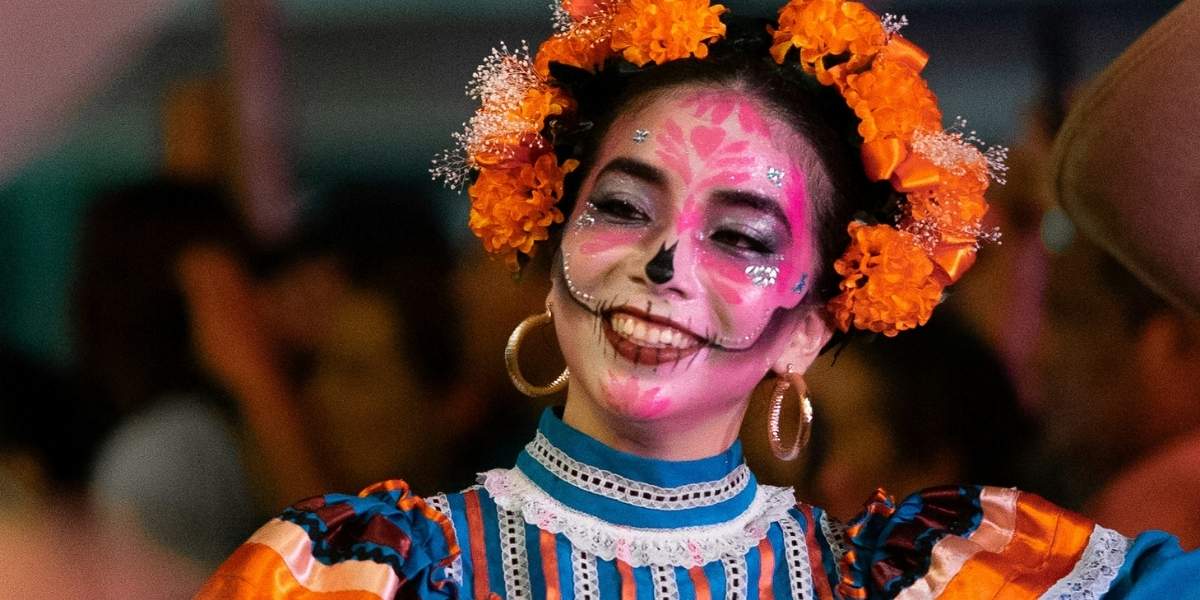
Face painting stations pop up alongside food vendors and art tables, offering intricate calavera designs that transform sidewalks into living canvases. Artists use bold lines, glitter, and floral motifs to reflect the vibrancy of the holiday, while participants of all ages wear their painted faces with pride. These moments of transformation are more than aesthetic, they’re acts of connection. In NYC, where identity is layered and fluid, face paint becomes a way to honor heritage while embracing the city’s multicultural spirit.

The soundtrack of Día de los Muertos in New York is as diverse as its people. Traditional ballads mix with reggaeton remixes, spoken word performances, and even punk covers of folkloric songs. Events often begin with candlelit processions and end with open-mic tributes, where community members share stories, poems, and memories. It’s this blend of old and new, solemn and celebratory, that defines the city’s approach, where music isn’t just background, but a central part of how remembrance is expressed, shared, and felt.

Where to Go and What to See

Día de los Muertos in NYC unfolds across boroughs, with each neighborhood offering its own take on the tradition. In Manhattan, the Flatiron Plaza ofrenda curated by Mano Mano Mexican Culture Without Borders is a standout. Open daily through November 2, it transforms a busy public space into a reflective altar filled with candles, marigolds, and community tributes. Visitors are encouraged to contribute photos, messages, and offerings, creating a living memorial that evolves throughout the week. It’s a rare moment of stillness in the city’s rush and a powerful reminder of how public art can hold space for memory.

Experience Día de los Muertos in NYC Parades, Art, and Culture

Photo Credit: Unsplash.com

In Yonkers, “Ofrenda de Latas” at Yonkers Brewing Co. offers a tactile, hands-on experience. Guests decorate beer cans in honor of loved ones, place them on a candlelit altar, and later take them home as keepsakes. The event doubles as a fundraiser for We Art One’s youth and senior programs, blending creativity with community support. It’s a fresh take on the traditional ofrenda, one that invites participation and personal storytelling. The brewery’s industrial setting adds a layer of contrast, turning remembrance into something raw, real, and deeply local.

Families looking for educational and interactive experiences can head to Wave Hill in the Bronx or the Children’s Museum of Manhattan. These institutions offer bilingual storytime, nicho box crafting, and workshops that explore the symbolism behind Día de los Muertos traditions. The programming is designed to be accessible and engaging, helping younger audiences connect with heritage through art and play. These events reflect NYC’s layered approach to cultural celebration, where education, activism, and creativity intersect in ways that feel both intentional and inclusive.

For those seeking nightlife energy, Latinx-owned venues across Brooklyn and Queens are hosting themed parties with traditional food, face painting, and live music. These events often start with candlelit altars and end with dance floors, blending reverence with rhythm. In NYC, cultural celebration doesn’t stop at sunset, it simply changes tempo. Whether honoring ancestors or discovering the tradition for the first time, there’s space to show up, participate, and feel connected.

Día de los Muertos in NYC Is a Living Tribute

Whether lighting a candle, painting a face, or dancing in the street, Día de los Muertos in NYC becomes more than a holiday, it’s a living, breathing tribute to memory, identity, and the city’s unstoppable creative pulse. It’s where tradition meets street culture, and where honoring the past becomes a full-body experience.

The NYC Pet Peeve: Why Some Landlords Say “No” to Fido

The NYC pet scene is booming. From boutique grooming salons in Tribeca to dog-friendly brunch spots in Williamsburg, the city has embraced pet culture with open arms. Yet when it comes to housing, the enthusiasm doesn’t always translate. Many landlords, especially in pre-war buildings and co-ops, still enforce strict no-pet policies, citing concerns over noise, damage, and liability.

This contradiction leaves thousands of NYC pet owners navigating a rental market that feels stacked against them. Even buildings that advertise as “pet-friendly” often impose breed restrictions, weight limits, or require additional fees and deposits. Some renters report being asked to remove pets mid-lease, while others are forced to choose between keeping their animal or securing a place to live.

The disconnect is especially glaring in neighborhoods where pet services thrive. In areas like Park Slope and the Upper West Side, dog walkers, pet salons, and boutique supply shops are everywhere. Entrepreneurs like Gregory True have built entire businesses around NYC pet demand, as seen in his journey from grooming to profitability in this feature on service-based entrepreneurship. Yet renters in these same zip codes often struggle to find housing that accommodates the very pets fueling local economies.

Why Landlords Say “No” to NYC Pets

Landlords cite a range of reasons for rejecting pets, from property damage to insurance complications. In older buildings, concerns about noise complaints and wear-and-tear are common. Some co-op boards enforce blanket bans to avoid disputes among residents, while others worry about liability if a pet bites or causes injury. These concerns are often rooted in outdated assumptions, yet they continue to shape rental policies across the city.

There’s also a perception issue that persists in many parts of the NYC rental market. Some landlords associate pets with irresponsible tenants, despite data showing that NYC pet owners often stay longer and treat their homes with care. Many go above and beyond to maintain clean, quiet living environments, investing in training, grooming, and even air purification systems. As highlighted in this piece on indoor air and pet health, responsible pet ownership often includes proactive steps that benefit the entire building, not just the tenant.

Legal protections for NYC pet owners remain limited. Unless the animal is a certified service or emotional support pet with proper documentation, landlords are under no obligation to allow them. Even when documentation is provided, tenants often face pushback, delays, or subtle forms of discrimination. The lack of standardized enforcement means that pet-friendly housing is inconsistent at best, leaving renters to navigate a patchwork of policies that vary by building, borough, and management style.

This fragmented approach creates confusion and stress for renters who simply want to live with their companions. Some buildings advertise as pet-friendly but impose breed restrictions, weight limits, or require non-refundable deposits that stretch budgets thin. Others allow pets but include vague clauses that give landlords the right to revoke permission at any time. Without clear guidelines or accountability, NYC pet owners are left negotiating terms that feel arbitrary, and often unfair.

The Hidden Costs of Being a Pet Owner in NYC

Beyond the emotional toll, NYC pet restrictions come with financial consequences. Pet deposits, monthly fees, and non-refundable cleaning charges can add hundreds to a renter’s budget. In competitive markets, some tenants offer to pay extra rent just to keep their pets, essentially bidding against their own animal.

The NYC Pet Peeve - Why Some Landlords Say No to Fido

Photo Credit: Unsplash.com

These costs disproportionately affect low- and middle-income renters, who may not have the flexibility to negotiate or relocate. It also impacts adoption rates. Animal shelters report that housing insecurity is one of the top reasons pets are surrendered, especially in urban areas. When renters can’t find stable housing that allows animals, they’re forced to make heartbreaking decisions.

The ripple effect touches everything from mental health to community stability. Pets offer companionship, routine, and emotional support, especially in a city as fast-paced and isolating as New York. Restrictive housing policies don’t just inconvenience pet owners, they undermine the social fabric that pets help strengthen.

Creative Workarounds and Pet-Friendly Wins

Despite the challenges, NYC pet owners are finding ways to navigate the system. Some seek out buildings with private landlords who are more flexible than large property management firms. Others rely on word-of-mouth, social media groups, or pet-specific rental platforms to locate welcoming spaces.

There’s also a growing movement among renters to advocate for pet-friendly policies. Tenant associations in Brooklyn and Queens have pushed for clearer lease language and more transparent pet rules. Some buildings now offer “pet interviews,” allowing landlords to meet animals before making a decision, an approach that humanizes the process and reduces bias.

Developers are starting to take notice. New luxury buildings in Long Island City and Hudson Yards now advertise amenities like dog spas, pet concierge services, and on-site trainers. While these options cater to higher-income renters, they signal a shift in how pets are viewed, not as liabilities, but as lifestyle assets.

What NYC Pet Owners Want Next

The demand for pet-friendly housing in NYC isn’t going away. As more residents adopt animals and prioritize wellness, landlords will need to adapt. Renters are calling for clearer policies, fewer restrictions, and more transparency around fees. They want buildings that recognize pets as part of the household, not as a problem to be managed.

Some advocates are pushing for citywide guidelines that encourage pet acceptance, similar to green building standards or accessibility benchmarks. Others are working with real estate agents to create pet-friendly listings that go beyond vague promises and offer real clarity.

In a city that celebrates individuality, creativity, and connection, it’s time for housing to reflect those values. NYC pet owners aren’t asking for special treatment, they’re asking for a fair shot at living with the companions who make this city feel like home.

Visual Marketing Evolution in New York City

Visual marketing in New York City is evolving fast, blending tech, culture, and street-level storytelling to redefine how brands connect with audiences. The shift isn’t just aesthetic, it’s strategic. In a city where attention is fleeting and competition is constant, visuals have become a primary language for engagement. Brands are moving beyond static signage and into immersive, responsive formats that reflect the city’s energy and diversity.

From subway ads that react to foot traffic to storefronts that double as interactive installations, visual marketing in NYC is no longer about being seen, it’s about being felt. Campaigns are designed to live in motion, adapting to their surroundings and inviting participation. A Lower East Side mural might unlock exclusive content through a QR code, while a SoHo window display could shift based on time of day or trending topics. These visuals are built to be experienced, not just observed.

In a city where every block carries its own rhythm, brands are reimagining their presence. Visuals are now tools for sparking emotion, driving conversation, and embedding into the cultural fabric of neighborhoods. Whether it’s a mobile billboard rolling through Queens or a branded pop-up gallery in Tribeca, the goal is no longer just conversion, it’s connection. Visual marketing in NYC has become a form of urban storytelling, where design meets dialogue and every placement has purpose.

Visual Marketing Is Shaping NYC’s Street-Level Brand Identity

Visual marketing in NYC has always been bold, but now it’s becoming smarter. Brands are leveraging data-driven design, AI-powered personalization, and hyperlocal aesthetics to make their visuals feel native to the city’s rhythm. A campaign isn’t just placed, it’s embedded. Think digital billboards in Times Square that shift messaging based on weather, or pop-up murals in Williamsburg that double as QR-coded product launches.

Retailers like Nike and Glossier have turned their SoHo locations into visual playgrounds, where every wall, mirror, and display is part of a larger brand narrative. These spaces aren’t just selling products, they’re selling moments. It’s a strategy that aligns with the rise of experiential marketing, where visuals are designed to be photographed, shared, and remembered.

Even smaller brands are leaning into this shift. Local coffee shops in Crown Heights are commissioning artists to design seasonal window displays that double as Instagram backdrops. These aren’t just aesthetic choices, they’re strategic plays in a city where attention is currency.

The Tech Behind NYC’s Visual Marketing Boom

Technology is driving much of this evolution. AI tools are helping marketers understand what visuals resonate with specific audiences, down to color palettes and layout preferences. Some brands are even using photo booth data to track engagement and sentiment, a tactic explored in this piece on how AI helps decode audience behavior.

Visual Marketing Evolution in New York City

Photo Credit: Unsplash.com

Augmented reality is also gaining traction. In Midtown, AR-enabled storefronts allow passersby to scan windows and unlock interactive content, from virtual try-ons to animated product demos. These experiences blur the line between physical and digital, turning static visuals into dynamic brand touchpoints.

Even traditional formats are getting upgrades. Street posters now feature NFC chips that trigger exclusive content, and subway ads are being redesigned with motion sensors that adapt based on crowd density. It’s not just about being seen, it’s about being responsive.

Cultural Fluency Is the New Visual Currency

In NYC, visual marketing that lacks cultural fluency falls flat. The city’s diversity demands campaigns that speak to multiple communities without feeling generic. Brands are responding by collaborating with local artists, influencers, and neighborhood organizations to ensure their visuals feel grounded and authentic.

During Pride Month, Absolut partnered with queer muralists to create interactive installations across the West Village. In Harlem, beauty brands are working with Black-owned studios to design visuals that reflect local style and history. These efforts aren’t just inclusive, they’re strategic. They build trust, relevance, and long-term brand equity.

This approach also extends to budget-conscious campaigns. As outlined in this guide to building a marketing strategy on limited resources, smaller brands are using visual storytelling to punch above their weight, leaning into community-driven design, guerrilla placements, and social-first formats that maximize impact without overspending.

Social Media Is the Amplifier, Not the Endgame

Visual marketing in NYC doesn’t live in isolation, it’s designed to travel. Campaigns are built with shareability in mind, knowing that a single Instagram Story or TikTok clip can extend reach far beyond the five boroughs. But the goal isn’t just virality, it’s resonance.

Brands are crafting visuals that invite participation. A sneaker drop might include a scavenger hunt across Brooklyn, with each mural revealing a clue. A food brand might launch a limited-edition flavor with packaging designed by a local graffiti artist, encouraging fans to post and tag their own interpretations. These strategies turn visuals into conversation starters.

Importantly, social media is no longer the final destination, it’s the amplifier. The real impact happens on the street, in the store, or at the event. That’s where the visuals live, breathe, and connect.

What’s Next for Visual Marketing in NYC

Looking ahead, visual marketing in New York City will continue to evolve toward personalization, interactivity, and cultural relevance. Brands are investing in tools that allow real-time creative adjustments, geo-targeted messaging, and AI-generated design variations. But the heart of it remains the same: telling stories that feel true to the city.

Expect more hybrid campaigns that combine physical installations with digital layers, more collaborations with local creatives, and more visuals that reflect the pulse of NYC, not just its skyline. Whether it’s a billboard in DUMBO or a pop-up in Queens, the future of visual marketing here is dynamic, diverse, and deeply human.

Conscious Consumerism: Practical Steps for a More Ethical Wardrobe

Conscious consumerism has emerged as a powerful movement that encourages individuals to make more informed and ethical choices when purchasing goods and services. This article explores the concept of conscious consumerism in fashion, offering practical steps for building a wardrobe that aligns with values of sustainability, ethics, and social responsibility.

What Is Conscious Consumerism?

Conscious consumerism refers to the practice of making purchasing decisions based on more than just price and convenience. It involves considering the environmental, social, and ethical impacts of a product, from its production to its disposal. In fashion, this can mean choosing items that are made from sustainable materials, manufactured under fair labor conditions, or produced by companies with transparent and ethical business practices. Conscious consumerism seeks to promote a more mindful approach to consumption, encouraging individuals to consider the broader implications of their purchases on people, communities, and the planet.

The goal is to reduce the negative effects of overconsumption, waste, and exploitation that are often associated with mass-market industries. By supporting brands and products that prioritize sustainability and fairness, consumers can contribute to positive change and promote a more ethical and environmentally responsible economy.

The Connection Between Fashion and Social Responsibility

Fashion has a significant impact on both the environment and society. The fashion industry is one of the largest polluters in the world, contributing to water waste, chemical pollution, and the growing problem of textile waste. Furthermore, many fast-fashion brands rely on exploitative labor practices, often sourcing products from countries with lax labor laws and poor working conditions.

Conscious consumerism in fashion seeks to challenge these practices by encouraging consumers to make more responsible purchasing decisions. Social responsibility in fashion includes ensuring fair wages and safe working conditions for workers, reducing the environmental footprint of production, and promoting diversity and inclusion in brand representation. By supporting brands that adhere to ethical standards, consumers can help drive positive change within the fashion industry, pushing for more sustainable practices and better treatment of workers globally.

Key Principles of Conscious Consumerism

Several key principles guide conscious consumerism in fashion. These principles focus on sustainability, ethics, and social responsibility.

  1. Sustainability: Choosing products made from eco-friendly materials such as organic cotton, recycled fabrics, and biodegradable textiles. Sustainable fashion also involves supporting brands that prioritize energy-efficient manufacturing and minimal waste in production.

  2. Fair Labor Practices: Supporting brands that ensure fair wages, safe working conditions, and workers’ rights in their supply chains. Ethical fashion brands go beyond just providing fair pay—they advocate for better working environments and respect for labor rights.

  3. Transparency: Ethical brands are transparent about their sourcing and manufacturing processes. They provide consumers with clear information about where and how their products are made, helping buyers make informed decisions.

  4. Timeless Design Over Trends: Conscious consumers often avoid the pressure to follow fleeting fashion trends and instead focus on purchasing high-quality, timeless pieces that last longer and require fewer replacements.

Building a Wardrobe with a Conscience

Creating a wardrobe with a conscience requires a deliberate and values-driven approach to fashion. Rather than accumulating clothing impulsively, individuals are encouraged to begin by evaluating the contents of their current wardrobe. This process involves identifying garments that are rarely worn, poorly constructed, or likely to contribute to landfill waste. By shifting focus toward timeless, high-quality pieces that offer versatility and durability, one can cultivate a wardrobe that supports both personal style and environmental responsibility.

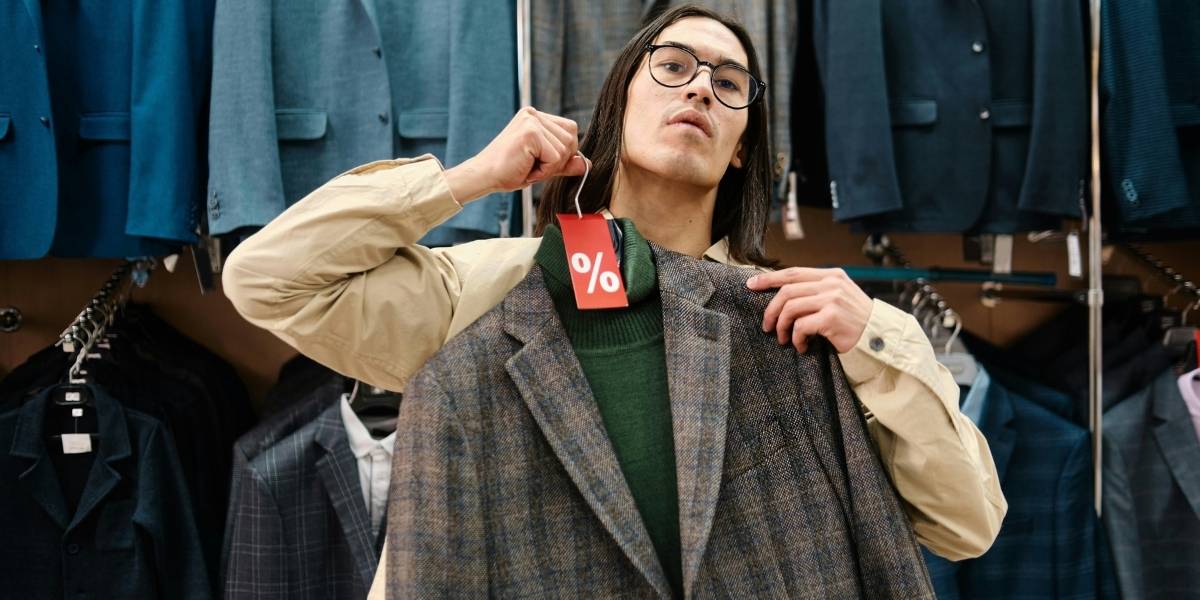
Mindful shopping plays a crucial role in this transformation. Consumers are urged to support brands that prioritize sustainability through the use of eco-friendly materials, ethical labor practices, and transparent supply chains. Choosing second-hand garments or renting attire for special occasions can significantly reduce the environmental impact of fashion consumption. These alternatives not only minimize waste but also help curb the demand for new production, which often strains natural resources and contributes to pollution.

Maintaining clothing properly is another essential aspect of conscious wardrobe building. Simple habits such as washing garments according to care instructions, repairing minor damages, and storing items thoughtfully can extend their lifespan and reduce the frequency of replacement. This approach fosters a deeper appreciation for each piece and encourages a more intentional relationship with fashion. Ultimately, building a wardrobe with a conscience empowers individuals to express their style while making choices that reflect care for the planet and its people.

Ethical Brands and How to Find Them

Finding ethical brands requires research and awareness. Fortunately, numerous resources and tools are available to help consumers make informed choices. Many ethical fashion brands provide transparency about their production processes, sourcing, and sustainability initiatives through certifications such as Fair Trade, GOTS (Global Organic Textile Standard), and B Corp. These certifications can serve as trustworthy indicators of a brand’s commitment to ethical practices.

Conscious Consumerism: Practical Steps for a More Ethical Wardrobe

Photo Credit: Unsplash.com

There are also apps and websites that help consumers find ethical brands. These platforms often rate companies based on criteria like sustainability, labor practices, and environmental impact, providing consumers with the information they need to support responsible businesses. Additionally, many brands now feature sustainability reports or eco-conscious collections, making it easier to make informed choices when shopping.

How Small Choices Lead to Big Impact

Individual choices may seem small, but when combined, they have the power to create significant change. By supporting ethical brands, reducing consumption, and opting for more sustainable practices, consumers can drive demand for more responsible fashion. As the fashion industry reacts to consumer preferences, companies will increasingly shift toward more sustainable and ethical practices to remain competitive.

For example, choosing to buy fewer, higher-quality items, or supporting brands that advocate for workers’ rights, encourages the industry to invest in long-term solutions rather than short-term profits. The cumulative effect of conscious consumerism can lead to a shift in the broader fashion landscape, promoting more sustainable production methods, better labor standards, and less waste.

Conscious consumerism is not just about changing individual habits; it is about creating a collective movement that shifts the entire industry toward more sustainable and ethical practices. By making mindful purchasing decisions and supporting brands that prioritize social responsibility, consumers can help shape a future where fashion is not only stylish but also kind to the planet and its people.

Building a wardrobe with a conscience takes time and effort, but the impact of those small, intentional choices can be far-reaching. As more individuals and businesses adopt conscious consumerism, society will move closer to a more ethical and sustainable future, where fashion no longer comes at the cost of people or the environment.

How New York is Adapting to Automotive Innovation

Automotive innovation is no longer a distant concept, it’s unfolding across New York City’s streets, showrooms, and infrastructure in real time. As electric vehicles, AI-powered retail platforms, and compact mobility solutions gain traction, the city is adapting with urgency and precision. From curbside charging stations in Queens to micro-EV pilots in Manhattan, New York is proving that even the most complex urban environments can evolve with the industry.

This transformation isn’t just about technology, it’s about how New Yorkers live, commute, and consume. Automotive innovation is influencing everything from parking policy to dealership design, and the city’s response is setting a national precedent. With its density, diversity, and demand for speed, New York is becoming a testbed for mobility solutions that could shape the future of transportation far beyond its five boroughs.

Automotive Innovation Is Driving a New Urban Mobility Model

New York’s embrace of automotive innovation is reshaping its urban mobility blueprint. The city’s response is multifaceted, blending infrastructure upgrades, policy reform, and private sector collaboration to meet the demands of a rapidly evolving industry. As electric vehicles, autonomous systems, and digital retail platforms redefine how people move and buy, New York is adapting with a mix of pragmatism and ambition.

One of the most visible shifts is the rise of compact electric vehicles. These single-passenger EVs are gaining popularity among urban commuters who prioritize sustainability and space efficiency. As highlighted in NY Weekly’s feature on Solo Automotive’s compact EVs, these vehicles are solving real-world challenges, reducing congestion, cutting emissions, and fitting into tight parking spots that traditional cars can’t access. In response, the city has expanded its charging infrastructure and launched micro-EV zones in neighborhoods like SoHo, Long Island City, and the Upper West Side.

This shift toward smaller, smarter vehicles is also influencing how city planners think about traffic flow, curb usage, and multimodal integration. Automotive innovation in New York isn’t just about new products, it’s about reimagining the entire mobility ecosystem to support cleaner, faster, and more inclusive transportation.

Infrastructure Upgrades Support the Shift to Smarter Mobility

Automotive innovation demands infrastructure, and New York is investing accordingly. The Department of Transportation has launched new EV charging corridors across all five boroughs, with a focus on accessibility and equity. Curbside charging stations are being installed near apartment buildings, retail districts, and transit hubs, making it easier for residents to adopt electric vehicles without relying on private garages.

Smart traffic systems are also being deployed. AI-powered sensors at key intersections are helping optimize traffic flow, reduce idling, and improve pedestrian safety. These upgrades are part of the city’s broader climate goals and align with federal funding tied to the Bipartisan Infrastructure Law. The result is a more responsive, data-driven transportation grid that supports innovation without compromising safety.

Bike lanes and pedestrian zones are expanding as well, creating a multi-modal ecosystem where EVs, e-bikes, and public transit coexist. Automotive innovation in New York isn’t just about cars, it’s about rethinking mobility from the ground up.

Automotive Retail Is Going Digital, and Hyperlocal

The way New Yorkers buy cars is changing. Automotive innovation is driving a shift toward digital retail, with AI-powered platforms offering personalized recommendations, virtual test drives, and seamless financing. Dealerships are evolving into experience centers, blending technology with hospitality to meet the expectations of urban buyers.

How New York is Adapting to Automotive Innovation

Photo Credit: Unsplash.com

Team Velocity, a leader in automotive retail tech, is helping local dealerships modernize. As covered in NY Weekly’s spotlight on Team Velocity’s 20-year milestone, the company’s platforms use predictive analytics to match inventory with buyer intent, streamlining the process and boosting conversion rates. In a city where time is currency, this kind of efficiency is a game-changer.

Local dealerships are also embracing hybrid models, offering online browsing with in-person pickup or delivery. It’s a response to consumer demand for flexibility and transparency. Automotive innovation isn’t just about the vehicles, it’s about the entire ownership experience.

Policy and Public-Private Partnerships Accelerate Adoption

New York’s adaptation to automotive innovation is backed by policy and collaboration. The city’s Clean Fleet initiative aims to electrify all municipal vehicles by 2035, and incentives for EV purchases are expanding. Tax credits, toll discounts, and priority parking are helping nudge consumers toward cleaner options.

Public-private partnerships are playing a critical role. Automakers, tech firms, and city agencies are collaborating on pilot programs that test autonomous shuttles, smart parking systems, and vehicle-to-grid technology. These initiatives are turning New York into a living lab for mobility innovation.

Startups are finding fertile ground as well. From EV subscription services to AI-powered maintenance apps, the city’s tech ecosystem is fueling the next wave of automotive disruption. Venture capital is flowing, and incubators like Urban-X are supporting founders who want to solve real transportation problems.

Compact EVs and Micro-Mobility Are Changing the Streetscape

Automotive innovation is also changing how New York looks and feels. Compact EVs, scooters, and e-bikes are becoming more common, especially in neighborhoods with limited parking and high foot traffic. These vehicles are not only efficient, they’re redefining what urban mobility means.

The city is experimenting with designated micro-mobility lanes and shared charging hubs to support this shift. These changes are helping reduce congestion and improve air quality, while also making transportation more accessible to residents who don’t own traditional vehicles.

Retailers and restaurants are adapting too. Many are installing EV chargers and offering delivery via electric cargo bikes, aligning with consumer expectations for sustainability and speed. Automotive innovation is touching every corner of the city, from logistics to lifestyle.

What’s Next for Automotive Innovation in New York

Looking ahead, New York’s role in automotive innovation will only grow. Autonomous delivery vehicles are being tested in Brooklyn. AI-driven fleet management is helping rideshare companies reduce downtime. And city planners are exploring dynamic curb pricing to manage congestion and support commercial EV adoption.

The challenge will be scale. As more vehicles go electric and more systems go digital, the city must balance innovation with equity, accessibility, and sustainability. But if any city can do it, it’s New York, where complexity breeds creativity and urgency drives action.

For residents, automotive innovation means cleaner air, faster commutes, and smarter choices. For businesses, it means new opportunities to connect, deliver, and grow. And for the city itself, it’s a chance to lead the future of mobility, not just follow it.

NYC Fitness Trends: The Best Workouts and Fitness Communities in the City

NYC fitness trends continue to reshape how people move, connect, and prioritize wellness across the five boroughs. From boutique studios in Tribeca to outdoor bootcamps in Prospect Park, the way New Yorkers approach fitness keeps evolving. What’s driving this shift isn’t just aesthetics or performance, it’s community, accessibility, and a deeper understanding of health.

The city’s pace demands flexibility, and fitness trends here reflect that. Workouts are no longer confined to traditional gyms. Instead, they spill into parks, rooftops, and digital platforms, adapting to the rhythm of urban life. For many residents, staying active isn’t just a goal, it’s a way to stay grounded in a city that rarely slows down.

From Solo Workouts to Collective Energy

For years, fitness in NYC was synonymous with high-intensity classes and luxury gym memberships. But the landscape has changed. More people are gravitating toward group workouts that offer connection as much as conditioning. Whether it’s a sunrise yoga session on the High Line or a dance cardio class in Harlem, the emphasis is on shared experience.

This shift isn’t just about motivation, it’s about belonging. Fitness communities have become safe spaces for people to show up as they are, regardless of age, body type, or experience level. That inclusivity is part of why these trends are sticking. It’s no longer about chasing perfection, it’s about feeling good and staying consistent.

Group workouts also foster accountability. When movement becomes a social ritual, it’s easier to maintain. Friends meet for spin class instead of coffee, coworkers join lunchtime HIIT sessions, and neighbors gather for weekend runs. These routines build momentum and make fitness feel less like a chore and more like a lifestyle.

Outdoor Movement and Urban Adaptation

New Yorkers are known for making the most of their environment, and fitness is no exception. Parks, rooftops, and even sidewalks have become makeshift gyms. During warmer months, it’s common to see resistance bands looped around benches or yoga mats rolled out on patches of grass. These workouts aren’t just practical, they’re energizing.

Outdoor fitness also taps into the city’s rhythm. Runners weave through Central Park, cyclists dominate the West Side Highway, and walkers turn their commutes into cardio. But with increased activity comes increased risk. Many city dwellers experience overuse injuries like shin splints, especially when transitioning from sedentary routines to high-impact movement. Awareness and proper recovery have become essential parts of the conversation.

NYC Fitness Trends The Best Workouts and Fitness Communities in the City

Photo Credit: Unsplash.com

The appeal of outdoor workouts goes beyond convenience. They offer a mental reset, a break from screens, and a chance to reconnect with nature, even in an urban setting. For many, that fresh air and open space are just as important as the physical benefits.

The Rise of Specialized Studios and Certifications

While big-box gyms still have a presence, specialized studios are leading the charge. From boxing gyms in Bushwick to Pilates lofts in Chelsea, these spaces offer targeted training and a more personalized approach. What sets them apart isn’t just the equipment, it’s the expertise.

Fitness professionals in NYC are increasingly pursuing certifications to deepen their knowledge and credibility. As explored in this piece on fitness certifications for local gym employees, these credentials help trainers build trust and deliver safer, more effective programming. For clients, it means better guidance and fewer injuries.

The demand for certified instructors has also led to more workshops, mentorships, and continuing education opportunities. Trainers aren’t just teaching, they’re learning, adapting, and staying current with evolving science and trends.

These studios also serve as incubators for innovation. Many offer hybrid formats, combining in-person sessions with virtual coaching. Others integrate wearable tech, allowing clients to track progress and receive feedback in real time. This blend of personalization and technology is shaping the next wave of fitness in the city.

Wellness Beyond the Workout

Fitness in NYC isn’t just about reps and sets, it’s about mental clarity, emotional resilience, and lifestyle balance. Studios are offering breathwork, meditation, and mobility classes alongside traditional strength training. Nutritionists, physical therapists, and mental health professionals are collaborating with gyms to offer holistic support.

This integrated approach reflects a broader understanding of health. It’s not enough to be strong, people want to feel grounded, sleep better, and manage stress. That’s why recovery lounges, infrared saunas, and guided stretching sessions are becoming staples in many fitness spaces.

There’s also a growing emphasis on education. Workshops on injury prevention, hormone health, and movement science are helping New Yorkers make informed choices. The goal isn’t just to work out, it’s to understand the body and build sustainable habits.

Wellness events are also gaining traction. From rooftop sound baths to nutrition panels hosted in coworking spaces, these gatherings blend fitness with community and learning. They offer a chance to connect, reflect, and recharge, all within the city’s fast-moving framework.

Why NYC Fitness Trends Keep Evolving

New York’s fitness scene thrives on innovation. It adapts quickly, responds to cultural shifts, and reflects the city’s diversity. Whether it’s a pop-up HIIT class in a museum courtyard or a virtual strength session streamed from a Bronx studio, the city finds ways to keep movement fresh and accessible.

It’s also a city that understands frustration. Staying active in a place that never slows down can feel overwhelming. But that challenge has inspired creativity. Trainers are designing programs for small spaces, busy schedules, and limited equipment. Communities are forming around shared goals, not shared aesthetics.

NYC fitness trends aren’t just about what’s popular, they’re about what’s possible. They show that movement can be inclusive, empowering, and deeply connected to the city’s pulse. And as long as New Yorkers keep showing up, the scene will keep growing, shifting, and inspiring.


Evolution of NYC’s Food Scene: From Street Food to Michelin Stars

New York City’s food scene has always been a reflection of its people, diverse, ambitious, and constantly evolving. What started as a city of pushcarts and corner delis has grown into one of the most influential culinary capitals in the world. From street vendors serving halal platters to chefs plating foie gras in candlelit dining rooms, NYC’s food culture spans every flavor, price point, and experience imaginable.

It’s not just about what’s being served, it’s about how the city continues to reinvent the way people eat. The energy behind every bite, whether it’s from a food cart in Queens or a tasting menu in Tribeca, speaks to the city’s unmatched ability to blend tradition with innovation.

Street Food Roots That Still Matter

Long before tasting menus and reservations weeks in advance, New York’s food identity was built on the street. Vendors lined sidewalks with carts offering pretzels, knishes, and hot dogs, quick bites that became part of the city’s rhythm. Over time, those offerings expanded to include tacos, dumplings, and biryani, reflecting the city’s immigrant communities and their culinary traditions.

Today, street food isn’t just convenient, it’s celebrated. Food trucks and pop-ups are curated by chefs who treat their menus with the same care as any fine dining establishment. The city’s street food culture has become so dynamic that it’s no longer just about hot dogs. As highlighted in this piece on New York City street food, vendors now serve everything from gourmet grilled cheese to Korean fried chicken, often with lines stretching around the block.

What’s remarkable is how these vendors have become part of the city’s culinary identity. They’re not just feeding locals, they’re attracting tourists, food critics, and even collaborations with established restaurants. The accessibility and affordability of street food make it a democratic entry point into NYC’s food scene, and its influence continues to shape how the city eats.

Neighborhoods That Shape Taste

Each borough has its own flavor profile. Queens is known for its unmatched diversity, offering authentic dishes from dozens of countries within a few blocks. Brooklyn’s food scene leans into creativity, with chefs experimenting in converted warehouses and backyard gardens. Manhattan still holds the crown for upscale dining, but even there, the lines between casual and luxury are blurring.

In the Bronx, Caribbean and Latin American flavors dominate, while Staten Island offers a quieter but growing mix of Italian and Southeast Asian cuisine. These neighborhood distinctions aren’t just geographic, they’re cultural. They reflect the stories of the people who live there and the traditions they carry forward.

Restaurants aren’t just places to eat, they’re cultural landmarks. Whether it’s a Dominican spot in Washington Heights or a vegan café in Williamsburg, these establishments reflect the values and stories of their communities. The city’s food scene is constantly shifting, and that movement is what keeps it fresh.

Even legacy institutions like Katz’s Delicatessen or Sylvia’s in Harlem continue to thrive, not just because of nostalgia, but because they remain relevant. They’ve adapted without losing their soul, and that’s a lesson many newer restaurants are learning as they try to build longevity in a fast-moving market.

The Michelin Stars Era

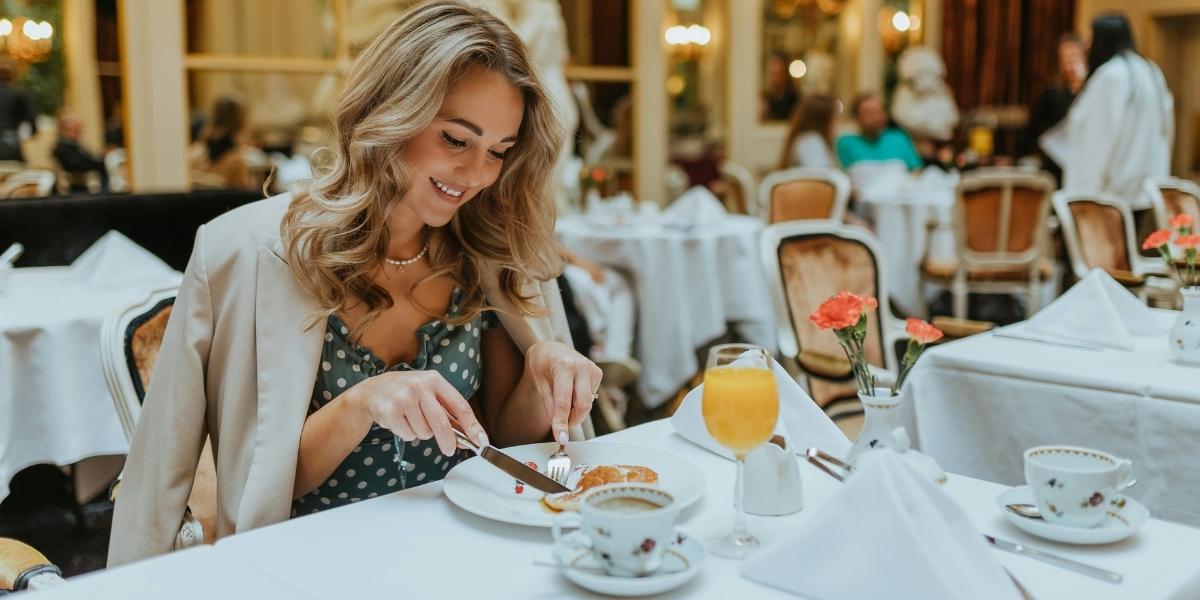
Michelin Stars have become a benchmark for culinary excellence, and New York has earned its place on that map. The city boasts dozens of Michelin-starred restaurants, from minimalist sushi counters to opulent French bistros. These stars aren’t just accolades, they’re signals that NYC’s chefs are competing on a global stage.

But what makes New York’s Michelin scene unique is its accessibility. While some starred restaurants offer luxury experiences, others focus on simplicity and precision. Places like Oxalis in Brooklyn or Casa Mono in Gramercy prove that excellence doesn’t require extravagance. According to the Michelin Guide’s take on NYC trends, the city’s inspectors are drawn to innovation, authenticity, and a sense of place, qualities that define New York dining.

Evolution of NYC’s Food Scene From Street Food to Michelin Stars

Photo Credit: Unsplash.com

There’s also a growing recognition of chefs who bring cultural depth to their menus. Restaurants led by first-generation immigrants or those rooted in diasporic traditions are earning stars not just for technique, but for storytelling. This shift reflects a broader understanding of what excellence means, it’s not just about presentation, but about purpose.

The Michelin system itself has evolved in NYC. Bib Gourmand selections and Green Stars for sustainability are now part of the conversation, showing that the city’s food scene isn’t just chasing prestige, it’s shaping the criteria for what matters in modern dining.

Culinary Innovation and Cultural Impact

NYC’s food scene isn’t just about taste, it’s about storytelling. Chefs use their menus to explore heritage, challenge norms, and connect with diners on a deeper level. Restaurants like Dirt Candy and Tatiana by Kwame Onwuachi aren’t just serving meals, they’re making statements about sustainability, race, and identity.

The city’s culinary evolution also mirrors its economic shifts. As rents rise and neighborhoods gentrify, restaurants adapt. Some move toward fast-casual formats, while others double down on exclusivity. Yet through all the change, the city remains a place where food is central to how people live, gather, and express themselves.

In a city where you can eat at a different spot every day for decades, it’s easy to feel overwhelmed. But that abundance is part of the magic. As explored in this look at New York’s evolving culinary identity, the city’s food scene is less about trends and more about transformation. It’s a living archive of flavors, constantly rewritten by new voices and old traditions.

Food also plays a role in how New Yorkers navigate their day-to-day lives. From breakfast bagels to late-night ramen, the city’s dining options are woven into its rhythm. That integration makes food more than a luxury, it’s a necessity, a comfort, and a form of expression.

Why NYC’s Food Scene Still Leads

New York’s culinary reputation isn’t just built on prestige, it’s built on grit. The chefs, vendors, and restaurateurs who shape the city’s food culture do so with relentless creativity and resilience. Whether it’s a Michelin-starred tasting menu or a $3 empanada from a sidewalk cart, the city’s offerings reflect a commitment to quality and a refusal to settle.

For diners, that means endless discovery. For chefs, it means constant reinvention. And for the global food community, it means watching closely, because what happens in New York often sets the tone for what’s next.

It’s also a city that understands frustration. Opening a restaurant here is notoriously difficult, and maintaining one is even harder. But that challenge fuels innovation. Many of the city’s most beloved spots were born from tight budgets, small spaces, and big ideas. That kind of resilience is baked into the city’s culinary DNA.

From humble beginnings to international acclaim, NYC’s food scene continues to evolve, inspire, and lead. It’s not just about what’s on the plate, it’s about the people behind it, and the city that makes it all possible.