How Engagement Rings from Rennie & Co Reflect Personal Style and Celebrate Lasting Relationships

By: Jaxon Lee

It can be so exhilarating to pick out an engagement ring because you want something that reflects your taste and represents your bond. You search for a design that meshes with your everyday aesthetic but feels special enough to be the dress you wear on such a momentous occasion. This is a guide to help you find that engagement ring that tells the story of your relationship and celebrates it beautifully.

Choose a Ring Shape That Matches Your Personality

Each form has a unique mood and energy, so selecting one that you identify with lends the ring layers of meaning. For instance, a round stone gives you classic appeal, whereas other shapes are more modern. As you determine the way that each shape speaks to the core of who you are, you move towards designs in which you know your desires have been heard and understood.

Match the Metal Tone to Your Everyday Wardrobe

The metal you select will play a role in the overall vibe of the ring, like warm, bright, or muted. By identifying the colours you regularly wear, you’ll be able to see which tones sit most naturally on you. Also, accentuating your ring with a bit of colour from your favourite attire  can unify your engagement ring and daily wardrobe, so it feels more at home on your finger.

Think About Whether You Prefer Minimal or Detailed Designs

Some favour the look of clean, minimal lines because they seem elegant and classic, while others desire something intricate, with patterns or accent stones. Since you’ll be wearing this ring every day, it’s essential to choose details that never feel overwhelming. When you weigh design elements against your self-comfort, a ring that has an expressive feel but is comfortable for all-day conditioning.

Consider How Lifestyle Influences Your Ring Choice

Your lifestyle also factors in, since you will be wearing your engagement ring every day. If you are constantly using your putter, consider a sturdy, low-maintenance style. On the other hand, if you love partaking in formal occasions, you may prefer something with a sophisticated sparkle. By learning your habits, you can pick a ring that fits your lifestyle without any hassle.

Explore Custom Options for a Personal Touch

Custom rings let you incorporate telling details, such as distinctive shapes. By working with a jeweller, you’ll create a ring that shares your story in a way no one-size-fits-all design can. Choosing the best Hatton Garden jewellers provides expert advice and excellent craftsmanship on your visit. Together, you build a design that is representative of the journeys covered with care and precision.

Look Into Settings That Enhance Your Stone

Start thinking about settings that highlight the stone you have selected, based on your work on the base of your ring. The type of setting you choose will affect the ring’s personality, whether you want something secure for an active lifestyle. That’s why, once you know how settings affect the ring’s appearance, you pick a setting that complements your style and supports long-lasting durability.

Add Meaningful Details That Make Your Ring Unique

Once you have a design in mind, you may want to include details that make your ring feel unique. Engravings or subtle embellishments can add value without altering the design of your ring. The ring becomes more than just a beautiful accessory; it represents your relationship. Pick details that evoke collective memories, and you have a piece that resonates every time you wear it.

Finding a Ring That Celebrates Your Story

When you figure out your style and design mindfully, you end up with an engagement ring that really speaks to who you are. Every decision you make helps to communicate your journey and your relationship. By opting for quality craftsmanship and meaningful details, you get a ring that honours your relationship. You patiently and with clear intention find a design you can call your own, one that is natural.

The Rise of “Y’all Street”

By: Arun Agarwal, Chair, Texas Economic Development Corporation

In the last few years, there has been something rather remarkable afoot in Dallas. The financial services industry, once exclusively the realm of New York City, has begun planting roots deep in the heart of Texas. And, make no mistake about it, this is not a trickle, but a rather substantial increase. Of course, the best part of this renaissance is the potential for transformational opportunities that could be provided to all Texans, from young professionals and families to small-business owners and retirees.

According to an article published by the Wall Street Journal in August 2024, Dallas is undergoing “…an expansion that has brought to North Texas a presence in financial services that now sits second only to New York City.”

And major institutions are not just dipping a toe in the floodwaters; they are diving in headfirst. Goldman Sachs is building an 800,000-square-foot campus in Dallas, expected to employ more than 5,000 people when it opens in 2028. JPMorgan Chase now employs over 12,500 workers at its Plano campus, and the facility has more than doubled in size since opening in 2017. And Bank of America is relocating employees to a new tower in Uptown Dallas.

Drawn by low taxes, lower costs, and a business-friendly regulatory climate, this migratory pattern is seen likely to continue, leading many to start referring to North Texas as “Y’All Street,” a nod, of course, to the financial citadel located in Lower Manhattan.

And before one reasons this a rather fortunate situation born of lucky circumstances, we must consider that the force driving this shift isn’t an accident, but a deliberate and strategically designed approach. Dallas (and Texas in general) offers an incredibly compelling package. For instance, it’s no secret that many firms are relocating from high-tax, heavily regulated states in search of lower operating costs and faster growth, and Dallas offers one of the more financially competitive and business-friendly climates in the country.

In addition, the Dallas-Fort Worth region spans thousands of square miles, offering space for newer and larger campuses that ultimately mean more demand for housing, retail, restaurants, and entertainment, all critical aspects of a vibrant city. As financial institutions settle into Dallas and their employees spend money locally, broader job creation could naturally follow in markets such as construction, transportation, hospitality, and much, much more.

Yet with this acceleration comes a real challenge: maintaining a level of affordability. If the region is to thrive equitably, growth must be paired with innovative housing solutions that not only expand supply but also create opportunities by enhancing quality of life. Sustainable design, smart infrastructure, and thoughtfully integrated neighborhoods can help ensure that homes remain attainable for those who are helping usher in this new era.

There is also the very relevant fact that Texas now has the largest financial-services workforce in the United States. According to a Fox Business report in September, “…Texas had 519,000 financial sector employees in 2024, above the 507,000 financial services workers in New York.” With all the focus and media attention aimed at its northern counterpart, the fact of the matter is that Texas is now the leading financial hub in the country, charting a course that extends well above and beyond Wall Street.

For residents, both long-time Texans and relocated newcomers, this resurgence offers substantial benefits. For instance, the influx of financial firms expands demand for talent, and not only in banking and asset management, but also in technology, compliance, and customer service roles. The 2025 decision by Scotiabank to open a $60 million Technology & Innovation Hub in Dallas alone is expected to create more than one thousand new jobs.

Even jobs that may pay less than in the hustle and bustle that is New York City can still offer above-average (or at least competitive) wages in Texas, offering an opportunity for career entry or upward mobility for many.

Of course, as finance takes root in our community, right alongside tech, energy, and manufacturing, Dallas becomes more resilient to downturns in any single sector. That diversification could protect jobs and stabilize growth, making Dallas not just a place to work, but a place to build a life.

Imagine, for a moment, a Dallas where recent (and local) college grads launch their careers at major financial firms, while their parents, longtime hard-working Texans, see the benefit of increased home values, better schools, and thriving local businesses. Picture small business owners able to access capital and advisory services once reserved for big corporations, with better access to investment, financial advice, and talent.

Visualize, just for a minute, entire neighborhoods revitalized by the steady hum of construction, commerce, and community investment. Now imagine that those neighborhoods might remain accessible to young families, essential workers, and seniors, because the city has championed housing strategies that balance affordability with innovation and growth.

If Dallas continues on this trajectory, the city has the potential to rival the traditional financial capitals of the country, and not by imitating them, but rather by offering something new – a blend of opportunity, affordability, growth, and quality of life. A vision, if you will, of what is distinctly possible here in North Texas.

Of course, for that vision to be realized broadly, our local leaders (both public and private) must make informed choices. Investment must include infrastructure improvements, affordable housing, and policies that support growth without leading to displacement. Public transit, roads, green space, and community services must absolutely keep pace with corporate growth.

Dallas and Texas are no longer just scenes on the periphery of American finance; we are moving to the center stage, and for once, it feels like the people who live here may just be the ones who benefit the most. It is absolutely a moment worth exploring, and not just for corporations, but for every Texan ready to build a more prosperous future.

Eco-Philanthropist & Entrepreneur Amy Green Debuts Giada, A Mommy-And-Me Luxury Vegan Leather Fashion Line

By: Adeline Kyra 

Amy Green, eco-philanthropist, entrepreneur, and Founder of The Green Vision Foundation, steps confidently into the world of fashion with the launch of GIADA, a modern luxury, handcrafted mommy-and-me vegan leather fashion line, where elevated style meets heart-led purpose. Each piece is made to order and truly one of a kind.  

GIADA makes its debut with a limited-edition, handcrafted, cruelty-free shearling-inspired vest, offered in a refined palette of rich neutrals and seasonal hues for women, men, and children. Designed to wrap families in warmth, both literal and emotional. 

Born from Green’s desire to redefine what luxury looks like today, GIADA stands for style without compromise, refinement without waste, and fashion without harm. Each piece is intentionally created to feel indulgent yet responsible, timeless yet modern.

The brand will be unveiled at an exclusive, invite-only VIP launch celebration on December 22 at Caviar Kaspia in The Jade Room at Jayma Cardoso’s The Snow Lodge in The St. Regis, Aspen’s most coveted winter destination. Guests will enjoy Delphine RÉVILLON champagne paired with artisanal truffles from local chocolatier Pollinator Chocolates and caviar from Caviar Kaspia. The celebration will then open to the public from 7:00 PM to 9:00 PM, welcoming the Aspen community into GIADA’s world.

Named after Green’s first child, GIADA is inspired by the sacred bond between mother and daughter and the belief that luxury should feel loving, intentional, and kind. Drawing from Aspen’s serene alpine elegance and New York’s fashion-forward edge, GIADA elevates “mommy-and-me” dressing into a space of cozy sophistication and conscious beauty. 

GIADA’s vegan vests deliver the plush warmth and tactile richness traditionally associated with shearling, while the brand’s limited, low-impact production model underscores Green’s lifelong dedication to environmental stewardship, animal protection, and women’s empowerment.

GIADA pieces are crafted using cruelty-free materials, featuring hand-selected textures of soft vegan suede and luxe faux fur. Each garment is handmade by skilled women artisans in New York, using locally sourced, in-stock materials, ensuring no new materials are produced for the collection, a proper slow-fashion approach that minimizes waste and maximizes meaning. GIADA is also a direct reflection of Green’s passion for design and art, evident in the interiors of her homes in both Aspen and New York. 

“GIADA is my love letter to my daughter and to the future,” said Green. “True luxury should never ask us to choose between beauty and compassion. Every piece is created with intention, artistry, and heart to show the next generation that elegance shines brightest when it’s kind.”

Through the Green Vision Foundation, Green is a leading force in global conservation, supporting initiatives focused on anti-poaching, ocean restoration, rainforest preservation, and climate change mitigation. Her annual Footprint of Life Gala, returning to Aspen in March 2026, has raised significant funds to support global conservation efforts and has brought together world leaders, innovators, and changemakers to drive tangible environmental action. Green also partners with Tusk, which Prince William is the Royal Patron of, and Sylvia Earle’s Mission Blue. 

For further information and to place orders, visit @giada.haute

About Amy Green: 

Amy Green is the CEO and Founder of The Green Vision Foundation, a leading force in anti-poaching, ocean restoration, climate change mitigation, and rainforest preservation. She has launched a mission to support critical conservation efforts worldwide, and through her Footprint of Life Gala, she has brought together world leaders, innovators, and changemakers to drive real action. As a passionate environmentalist and philanthropist, Green has been dedicated to supporting critical conservation efforts around the globe, raising substantial funds to advance these initiatives. Amy was recently honored at the 2025 Gabrielle’s Angel Foundation Angel Ball for her advocacy. 

About GIADA: 

High-end. Handcrafted. Compassionate. Practical. Giada is created by women, for women, seeking more functionality and ethics in their wardrobe and in the way they dress with high-end intention. Giada’s design philosophy is grounded in three core principles: Vegan Luxury, Limited, Low-Impact Production, and New York Craftsmanship.

Emilio Parga: Teaching Communities the Skill They Often Need But Rarely Learn

By: Natalie Johnson

Most professionals spend years developing expertise in their fields. Doctors study medicine, teachers master pedagogy, and engineers learn design principles. But there’s one universal skill almost no one receives training in: how to talk about death. Emilio Parga has made it his mission to change that.

As the founder and CEO of The Solace Tree, Parga specializes in the kind of conversation most people actively avoid. When someone dies, especially unexpectedly, the social fabric often tears. People don’t know what to say, so they say nothing. Or they offer hollow platitudes that leave the grieving feeling more alone. The result is communities that may fracture precisely when they need connection most.

Parga’s insight is that grief isn’t a problem to be solved individually. It’s a communal experience that requires communal response. But that response needs structure, guidance, and intention. Simply telling people to “talk about it” doesn’t work when they have no framework for what that conversation should look like.

His approach centers on relationship-centered dialogue. Not therapy, not counseling, not crisis intervention, though those have their place. What he provides is something more fundamental: the architecture for meaningful conversation about loss. This includes language that creates safety, questions that invite genuine expression, and frameworks that help people move from paralysis to connection.

The impact spans remarkably diverse settings. The Solace Tree works with children as young as five and corporate executives in their sixties. He partners with sports teams and organizations, guiding athletic programs through devastating losses while building a supportive team culture. Parga has guided athletic teams through the death of a coach, helped families navigate the loss of a child, and supported companies after workplace tragedies. Each context demands adaptation, but the core principle remains: intentional dialogue can transform how people experience grief.

Consider what happens in a typical school after a student dies. Administrators send a letter home. Counselors make themselves available. But kids are left to process the loss largely on their own, often misreading their peers’ silence as indifference. Teachers feel unprepared to address death in class. Parents worry about saying the wrong thing at home. Everyone means well, but the lack of structured conversation leaves children isolated in their confusion and pain.

Now contrast that with a facilitated dialogue where children learn they’re not alone in their feelings. Where they hear peers express similar fears and questions. Where adults model healthy ways to acknowledge pain without being consumed by it, the difference isn’t just psychological relief; it’s about teaching fundamental life skills that could serve them every time they encounter loss.

Parga’s career trajectory reflects both personal calling and professional evolution. His work has earned recognition, including a PBS Emmy Award, multiple Communicator Awards, and designation as Citizen of the Year. He’s presented at national conferences and received scholarships to advance his expertise in pediatric grief support. But the credential that matters most is the trust communities place in him during their darkest moments.

The challenges he faces are as much cultural as logistical. American society still largely treats grief as private business. Many believe that talking about death with children will traumatize them, when research and experience suggest the opposite. The real trauma comes from isolation, from children’s imaginations filling silence with fears worse than reality, from the message that their grief is too much for others to handle.

Shifting these norms requires more than facilitating individual conversations. It requires proactive rather than reactive support, where communities build skills before tragedy strikes. This means grief education for all — not just those already in crisis, but students, teachers, coaches, and leaders who will inevitably confront loss at some point.

His vision for the coming years reflects this dual focus. He hopes to expand access to intentional grief dialogue while training facilitators who can bring this work to more communities nationwide. He’s developing resources and workshops that give people tools they could use immediately. He’s strengthening partnerships with schools, athletic programs, and organizations to build grief support into their cultures rather than treating it as a crisis response.

The underlying philosophy is both compassionate and pragmatic. Compassionate because it recognizes that grief is one of the most universal human experiences and deserves thoughtful support. Pragmatic because communities that talk about hard things together simply function better than those that don’t. They may retain talent, maintain relationships, and build resilience that serves them far beyond moments of loss.

What Parga has learned over the years of this work challenges many common assumptions. Children and teens often feel grief more intensely than they can articulate, which makes facilitated expression crucial. Presence matters more than finding perfect words, which relieves adults of the pressure to have all the answers. Every person grieves differently, which means support must be flexible rather than formulaic. And healing isn’t about moving on but growing forward with connection and hope.

The practical applications extend beyond immediate grief support. Once communities learn how to have difficult conversations about death, they can develop the capacity for other challenging dialogues. They become better at addressing conflict, navigating change, and supporting members through various hardships. The skills Parga teaches about grief turn out to be foundational communication skills that strengthen organizations and relationships broadly.

For media and press, the story offers both human interest and actionable insight. It’s about real people navigating real loss, but it’s also about practical strategies anyone can learn. Parga brings a hopeful, clear perspective to a topic often clouded by fear and avoidance. He demonstrates that communities don’t have to feel helpless in the face of death. They can choose connection over silence, and that choice can make all the difference.

The work continues because the need is constant. Grief doesn’t wait for convenient moments or check whether communities are prepared. It arrives without warning and demands a response. The question is whether that response will leave people more isolated or more connected. Parga’s life’s work is ensuring communities have the skills to choose connection, to talk about loss with honesty and compassion, and to transform grief from something that fractures communities into something that ultimately strengthens them.

Dr. Sarah Weinstein Is Redefining What Modern Sports and Lifestyle Medicine Can Look Like

A Physician Who Believes Movement, Food, and Daily Habits Are Medicine

Dr. Sarah Weinstein, DO, known to many patients as Dr. Sassy, has built a career around one clear idea: that people deserve care that helps them move better, feel stronger, and live healthier in a way that lasts. As a triple board-certified physician in Family Medicine, Lifestyle Medicine, and Sports Medicine, she blends scientific precision with practical, everyday guidance that patients can actually use in their real lives.

Today, she is the founder of CORE Sports Medicine and Lifestyle Medicine, a growing practice in Hopewell, New Jersey that reflects her belief that healing is not one-dimensional. It is physical, nutritional, emotional, and behavioral. Her clinic combines advanced nonsurgical treatments with lifestyle-focused medical care, serving everyone from everyday walkers to competitive athletes who want to stay active and pain-free.

Her work, her warmth, and her whole-person philosophy have earned her national recognition, including being named one of MSN’s Top 10 Health Voices Helping People Feel Better and Digital Journal’s Top 10 Health Experts Making a Real Impact in Today’s World. But for Dr. Weinstein, the real highlight is seeing a patient move without pain for the first time in years.

Connect with her on Instagram or learn more at CORE Sports Medicine.

A Childhood Shaped by Movement, Curiosity, and the Outdoors

Dr. Weinstein’s relationship with movement began long before her medical career. She grew up on a farm surrounded by fresh produce, long days outdoors, and an active, hands-on lifestyle. She loved sports, physical activity, and the feeling of being strong, fast, and capable. But like many athletes, she faced her share of injuries and health setbacks.

Those early experiences left a lasting mark. They showed her what it feels like to lose something you love because your body is not cooperating. They also gave her a deep sense of empathy, something that would become central to the way she practices today. When a patient says they want to get back to running, lifting, walking, or simply keeping up with their kids, she understands exactly what that desire feels like.

Dr. Sarah Weinstein Is Redefining What Modern Sports and Lifestyle Medicine Can Look Like

Photo Courtesy: Sarah Weinstein

Building a Medical Career That Mirrors Her Values

Her medical training has taken her across multiple disciplines, but sports medicine and lifestyle medicine were a natural fit. In her years working in large medical groups and leading a multidisciplinary practice, she saw how often people were rushed from one appointment to another without feeling seen, heard, or understood.

At the same time, she saw how powerful lifestyle changes could be in reducing pain, improving recovery, and boosting long-term health. Nutrition, sleep, stress, movement, and strength training all play a massive role in how the body heals, but they are rarely discussed in a traditional exam room.

She wanted to change that — and eventually she did.

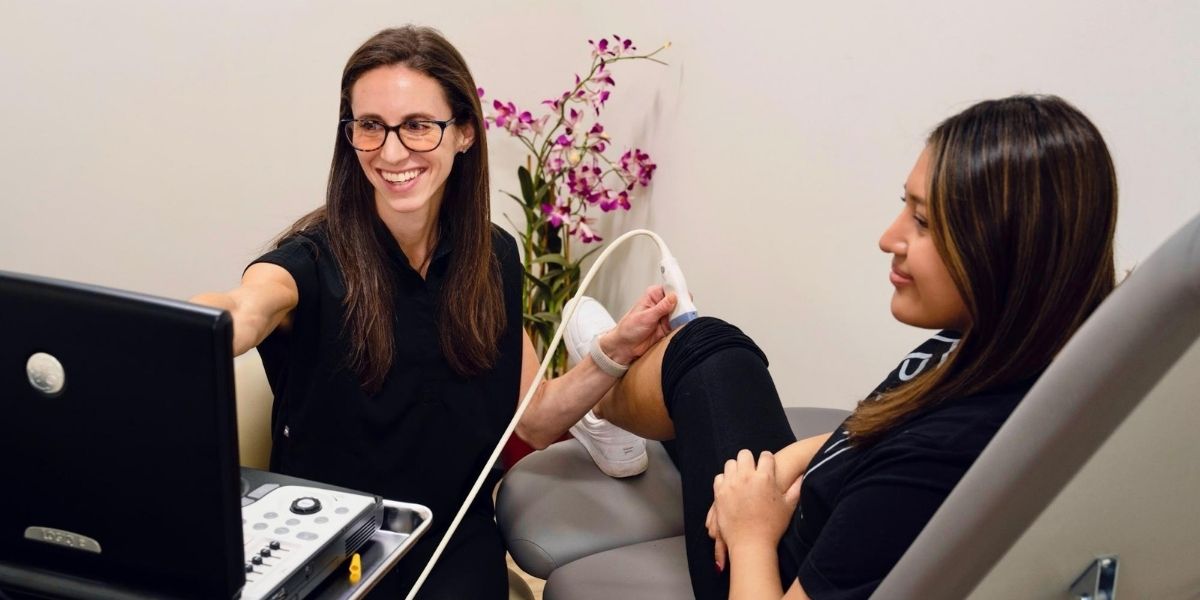
In November 2024, Dr. Weinstein opened CORE Sports Medicine and Lifestyle Medicine, a space designed intentionally for collaboration, curiosity, and trust. Her clinic offers ultrasound-guided sports medicine procedures, shockwave therapy, PRP, movement assessments, lifestyle counseling, and long-term support, all tailored to the patient’s goals.

A Physician Who Teaches People How to Heal, Not Just Where It Hurts

What sets Dr. Weinstein apart is her blended approach. She uses the most advanced sports medicine tools available, but she also asks questions that go well beyond the injury itself.

How do you sleep?

What does a normal week of food look like for you?

How are you managing stress?

Do you feel supported in your goals?

These are not small details. In her view, they are the backbone of long-term recovery.

Her goal is simple: to help patients understand their own bodies in a way that empowers them. Healing is not passive, and she believes people deserve to be part of the process rather than bystanders in it.

The Heart of Her Practice: Community, Connection, and Movement

Dr. Weinstein believes that medicine can extend far beyond the exam room. She leads a popular Walk With a Doc chapter, walking monthly with patients, families, and community members. They discuss health, mobility, sleep, nutrition, and daily habits in a relaxed, welcoming environment.

She also teaches a “Full Body Strength” exercise class at a local gym, blending science with accessibility. Patients see her as a physician, but also as someone who practices what she teaches. It adds an authenticity that cannot be replicated with quick appointments or rushed advice.

Her volunteer work at a community clinic reflects the same commitment, ensuring people without insurance still have access to compassionate, personalized care.

Follow her work on Facebook.

The Story Behind Her Bold Professional Leap

Stepping out on her own and opening CORE was a leap of faith. Like many physicians, Dr. Weinstein never received business training during medical school, so building a practice from scratch required determination, curiosity, and a willingness to learn quickly.

But she knew it was the right move. She wanted a place where she could give patients time, education, and long-term support. She wanted a practice that reflected her values, not one bound by rushed visits and quick fixes.

The result is a clinic that feels deeply personal, where patients know they are respected as individuals and not just symptoms.

A Vision for the Future, Where Healthcare Feels Personal, Empowering, and Human

Dr. Weinstein has big plans for CORE. She envisions a full performance and wellness center that brings sports medicine, fitness, rehab, nutrition, cooking education, and testing under one roof. A place where lifestyle is taught as a core part of care, not an afterthought.

She also plans to expand her speaking and teaching engagements, helping both patients and fellow physicians understand how transformative lifestyle medicine can be.

Her mission remains steady, to help people move, feel, and live better — no matter their age, injury, or starting point.

Why Patients Trust Dr. Sarah Weinstein

Her patients often say one thing repeatedly: “She listens.” In a world where people feel unheard in medical settings, that matters.

Add to that her dual expertise, her athlete’s perspective, her community involvement, and her approachable personality, and it becomes clear why she is becoming a trusted voice in modern wellness.

Her approach is not about perfection or pressure. It is about progress, confidence, and possibility.

And for the thousands of people who want to live active, mobile, pain-free lives, that message is exactly what they have been waiting for.

Disclaimer: The content of this article is for informational purposes only and is not intended as medical advice. The ideas presented focus on the potential benefits of integrating lifestyle medicine and physical activity into daily life. Results may vary based on individual health needs, and readers are encouraged to seek personalized medical guidance before making any decisions related to health practices or treatments.