Why Hybrid Work Is Changing Office Print & Paper Habits And What That Means For Your Business

The modern workplace has undergone significant changes over the past few years, and one of the most notable shifts is happening right under our noses, or rather, in our printers. As hybrid work continues to evolve, businesses are rethinking not only where people work but also how they communicate, share, and store information.

Even as companies move toward digital collaboration tools, print remains surprisingly relevant. Many teams still rely on physical documents for contracts, proposals, and creative materials. That’s why innovative organizations are turning to reliable suppliers like Sell Toner to efficiently manage their printer needs. However, beyond procurement, this shift raises a deeper question: how can businesses adjust their print and paper habits to align with the hybrid era without compromising productivity or sustainability?

The Hybrid Office Revolution

Hybrid work isn’t just a temporary pandemic fix; it’s now a permanent fixture of the professional landscape. Employees want flexibility, and companies are finding that offering it can improve retention, morale, and even performance. However, this model presents new challenges in managing office resources.

In the traditional office, printing was centralized. One or two multifunction printers served everyone, and consumables were easily tracked. But with hybrid teams, printing has become decentralized. Employees may print from home, coworking spaces, or satellite offices, complicating inventory and cost control.

This decentralization is forcing businesses to rethink how they purchase and maintain their equipment. Instead of large-volume office printers, many are opting for smaller, networked devices that enable employees to print securely and efficiently from anywhere they work.

Digital Collaboration Meets Tangible Needs

While digital transformation has made communication faster and more flexible, it hasn’t completely replaced the need for paper. Research from the U.S. Department of Energy shows that hybrid models actually increase document creation and sharing, even if some of that happens digitally.

Printed materials still play a crucial role in decision-making and client interactions. Legal firms, healthcare providers, marketing agencies, and educational institutions often require printed materials for clarity, compliance, or presentation purposes. For these organizations, the tactile nature of paper adds an extra layer of trust and professionalism that digital files can’t always replicate.

The difference is that print habits are becoming more intentional. Instead of mass-printing every report or presentation, employees are printing selectively, only what’s needed, when it’s needed.

Sustainability And Smarter Resource Use

The hybrid model has also made sustainability a more pressing priority. With fewer employees in the office full-time, businesses are re-evaluating how much paper, toner, and energy they consume.

Companies are increasingly turning to recycled paper, energy-efficient printers, and remanufactured toner cartridges to reduce environmental impact. Many local offices are also introducing “print accountability” systems that require staff to log print jobs or use digital sign-ins before printing, encouraging mindfulness and cutting waste.

By adopting eco-friendly practices, hybrid businesses can save money while improving their environmental footprint. These minor adjustments, multiplied across hundreds of offices, create meaningful long-term change.

Managing Distributed Printing Networks

One of the biggest logistical challenges for hybrid teams is maintaining consistency in their printing environments. When employees print from different locations, the risk of using outdated drivers, mismatched settings, or incompatible file types increases.

To address this, IT teams are investing in cloud-based print management software that standardizes settings across all devices. This ensures secure access, easy monitoring, and centralized tracking of print volumes, even for remote employees.

Additionally, businesses are updating their procurement strategies. Instead of bulk-ordering toner or paper once a quarter, they’re using on-demand suppliers who can ship directly to individual team members. This approach minimizes downtime and ensures consistent quality control across distributed teams.

The New Economics Of Printing

Why Hybrid Work Is Changing Office Print & Paper Habits And What That Means For Your Business (2)

Photo: Unsplash.com

Hybrid work is changing the financial equation of office printing. Centralized offices used to justify large printer leases; however, hybrid businesses often find that smaller, more flexible models make more sense.

On-demand printing, pay-as-you-go cartridge programs, and remote fulfillment all help companies reduce overhead while maintaining output quality. For example, instead of maintaining an entire print room, a company might invest in several smaller printers strategically located throughout the office, or even reimburse employees for their home printing costs.

By tracking usage data and analyzing printing patterns, managers can identify where resources are underutilized or overextended, making more informed purchasing decisions over time.

Building A Smarter Printing Culture

Ultimately, hybrid work is less about replacing old habits and more about refining them. The most successful companies are cultivating a culture where printing is purposeful, not automatic. Teams are encouraged to print only when it adds tangible value, like reviewing physical proofs, signing documents, or presenting materials to clients.

This mindset shift is as much cultural as it is technical. It requires leadership to communicate clear expectations, provide modern tools, and celebrate sustainable practices. When done right, it transforms printing from a background process into a thoughtful business tool.

Looking Ahead

As hybrid work continues to evolve, so too will the tools that support it. Printing may never fully disappear, but it’s becoming smarter, leaner, and more strategic. Businesses that embrace these changes by optimizing their equipment, tracking usage, and aligning their practices with sustainability goals will not only reduce costs but also operate more efficiently and responsibly.

In a world where the office is everywhere, the way we print, store, and share information must be just as adaptable. And for forward-thinking businesses, that adaptability is already becoming one of their most significant competitive advantages.


Jabari Stafford Discusses the Untold Side of Professional Tennis

Tennis is often glamorized through the lens of major tournaments and superstar athletes, but the reality for many professional players is far less dazzling. Beneath the surface lies a demanding lifestyle marked by financial uncertainty, physical wear, and emotional strain. Only a small percentage of players achieve the fame and fortune often associated with the sport, while the majority labor in obscurity, navigating a complex system that rewards only the elite few.

The Public View vs. the Reality

When people think of professional tennis, they often picture packed stadiums, million-dollar endorsements, and players holding trophies under bright lights. The spotlight usually falls on the high-ranked stars who dominate headlines and major tournaments, creating the perception that success and fame are inevitable.

Under the surface, players spend years grinding through lesser-known events with minimal media coverage. As Jabari Stafford notes, many compete in smaller venues with modest crowds, fighting for ranking points just to qualify for the next level. A large portion of professional players never break into the 100 rankings, which greatly limits their visibility and financial opportunities. Some even play through injuries or without a coach, simply because they can’t afford one.

Take the ATP Challenger Tour, a stepping stone to the main circuit. Matches often take place in remote locations with little fanfare. While the high-ranked players fly first class with full support teams, others travel alone, book budget accommodations, and string their own racquets just to stay in the game.

Financial Struggles Behind the Scenes

While grand slam champions earn millions, the majority of professional players work on tight budgets. Expenses add up fast—flights, hotels, coaching fees, physiotherapy, and equipment can easily outweigh prize money earned at smaller tournaments. A first-round loss at a lower-tier event might earn just enough to cover a single night’s stay and a meal. Players often have to choose between entering more tournaments or saving money for essentials.

Beyond the 100 rankings, consistent income becomes unpredictable. Many players rely on personal savings, family support, or side gigs like coaching juniors between matches to stay afloat. The economics of the sport often force talented athletes to retire early, not due to lack of skill, but because it’s simply unsustainable. Without a financial cushion, even a minor injury can derail an entire season.

The Demands of Touring Life

Life on tour means constant movement. Players may travel to five continents in a single season, adjusting to new time zones, climates, and courts with little rest. Jet lag is a regular companion, and the window between matches rarely allows for full recovery.

Injuries are another constant threat. A minor strain can escalate quickly without proper care, and many athletes push through pain because skipping a tournament could mean missing rent or dropping in rankings. The physical grind is only half the battle—mentally, the isolation can be heavy. Long stretches away from home, lack of a consistent routine, and the pressure to perform make the tour as emotionally demanding as it is physical.

Support Systems and Sponsorship Gaps

Behind every successful player is a network of support that often goes unnoticed. Coaches, fitness trainers, physiotherapists, and mental health professionals all play a role in helping athletes perform at their peak. But access to these resources isn’t equally distributed. Lower-ranked players often can’t afford full-time staff, relying instead on part-time help or going without it entirely. Many even travel without a coach, making tactical adjustments on their own.

Sponsorships can ease the burden, but they tend to gravitate toward those already in the spotlight. A player ranked in the 10th position might have deals with global brands, while someone ranked outside the 200 might struggle to secure gear discounts. This imbalance adds another layer of difficulty, making it harder for emerging talent to break through. Even players with impressive junior careers can find themselves without the backing needed to transition successfully into the pro circuit.

Pressures Off the Court

Public exposure doesn’t stop when the match ends. Athletes are expected to maintain a polished image, interact with fans, and respond to media—even after crushing losses. The scrutiny can be intense, and mistakes off the court often attract more attention than achievements on it.

Balancing personal relationships with such a demanding lifestyle is another challenge. Birthdays, weddings, and family milestones are often missed due to the tour schedule. The emotional weight of being present for everyone while chasing a career can be overwhelming. Some players openly discuss the loneliness of the road, striving to stay grounded despite the constant spotlight.

Ongoing Efforts to Improve Conditions

There’s a growing conversation within tennis about creating a more sustainable path for all players. Initiatives aimed at increasing prize money at lower-tier events and offering better healthcare options are slowly gaining traction. Tournament organizers and player associations are starting to acknowledge the need for structural changes.

Some athletes have begun using their platforms to advocate for change. By speaking openly about financial hardships or mental health struggles, they’re pushing governing bodies to reconsider how the system works. The hope is that talent—not financial backing—will become the real deciding factor in a player’s career longevity and success.

Frequencies of Light: An Extraordinary Journey Beyond Music with Roberto Abraham and Neo Ross in Vilnius

On October 17th this year, the music world experienced a remarkable event. Executive producer, entrepreneur, founder of ATLAS, and creative visionary, Neo Ross, returned with another remarkable experience: Roberto Abraham’s Frequencies of Light Concert.

After the remarkable success of Leonardo Prakash – Synchronicity at Vilnius’s St. Catherine’s Church, Neo brought another artistic event to Saint Catherine. It hosted 420 attendees and was sold out in one month. 

This concert was an evening of emotion, artistry, and transcendence. It featured world-class talents like:

  • Roberto Abraham: He is a renowned Mexican composer who is famous for his emotionally rich orchestral pieces. He is the author of more than 60 compositions and musical pieces, performed and presented in various cities around the world, such as Austria, Italy, Romania, and many more. 
  • Marta Lledó: She is an internationally acclaimed pianist from Argentina. She is recognized for her intense performances and collaboration with Elton John.
  • Russel Montanez: He is a renowned conductor and artistic director from Mexico, famous for his musical adaptations based on folk themes. 
  • Mettis Quartet: One of the most acclaimed Baltic string quartets.
  • Jorge Medina: a talented piano player from Mexico.
  • Hannah Medlam: She is a reputable soloist whose repertoire spans Baroque, Classical, and contemporary music.
  • Osian Duo: An award-winning flute and guitar duo who recently won first place at the International Paganini Guitar Festival 2025 in Italy.
  • The Vytautas Didysis University Music Academy Orchestra, consisting of 16 artists, performed the composer’s music.

Each of these skilled individuals represented talent from their country. They created a global symphony by uniting at the concert. Just imagine all the top talent from around the world at this esteemed event.

As the experience designer, NEO ROSS sees Frequencies of Light not as an ordinary event. It’s a divine experience through sound. 

It reminds listeners that art can restore and heal. The event was designed to sharpen the mind and provide a platform for inspiration and creativity.

The Venue: A Baroque Transformation 

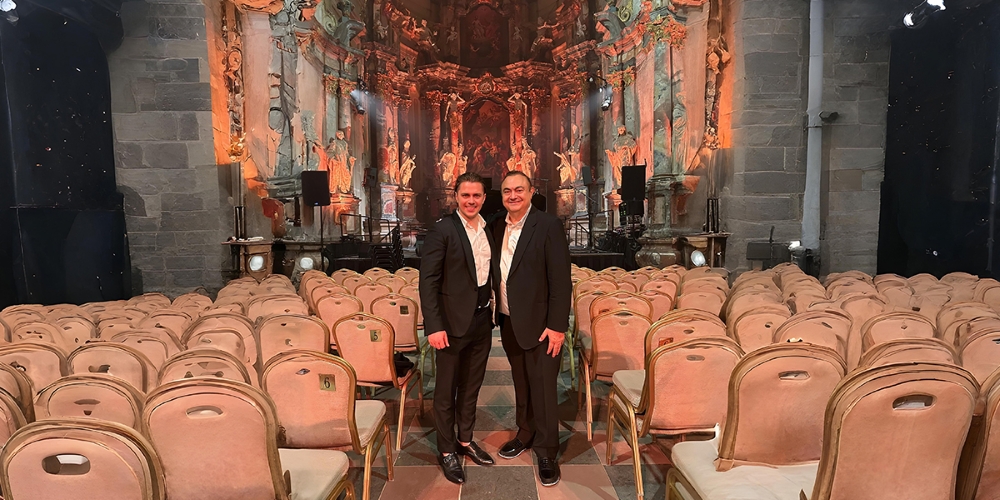
The event was hosted at St. Catherine’s Church, Vilnius. The church was built between 1625 and 1743. It is notable for its rich decoration and sculptural facades. It is a historic Baroque venue rebuilt from wartime loss. This choice of the venue also depicts the themes of renewal and transformation. 

Frequencies of Light: An Extraordinary Journey Beyond Music with Roberto Abraham and Neo Ross in Vilnius

Photo Courtesy: Neo Ross and Roberto Abraham

Why Such Events Are Important

There has been a broader shift in how audiences engage with art recently. People are looking for meaning. They want connection. They are tired of meaningless spectacle.

Events like Frequencies of Light showcase this purpose. They bring together diverse artists and audiences in a single space. Neo Ross reminds us that art is humanity’s most powerful frequency. It transcends borders and languages. 

He wants such events to become growth spaces for everyone who is looking to positively impact the world… not just to relax, but to find themselves by losing themselves in the music. 

Individuals often overwork themselves and forget to breathe. The event offered an evening of reflection and networking. 

A Bit About Neo Ross: The Visionary Entrepreneur

Neo Ross is notable for his premium events and experiences, and for his role as the producer of the documentary “BREAKTHROUGH.” He is an individual who turns life’s challenges into art that heals and inspires. In 2015, he survived a violent assault and recovered from PTSD. In the documentary, Neo recounts how that experience inspired him to find courage again. 

Through his platform, Neo continues to invite fellow entrepreneurs to such life-changing events. 

The team is already planning similar events in 2026. 

Frequencies of Light: An Extraordinary Journey Beyond Music with Roberto Abraham and Neo Ross in Vilnius

Photo Courtesy: Neo Ross and Roberto Abraham

Conclusion

Neo Ross has an inspiring vision, and he is not afraid to bring it to reality. He wants to redefine what it means to lead a creative life, be it through art, business, or growth. His journey, from personal recovery to global impact, depicts opportunity and possibility in pain. 

Frequencies of Light was not just an event. It was a message that said, ‘Healing is possible.’ The concert that brought Roberto Abraham and a collection of international talent together in Vilnius, and hosted 420 attendees, aimed for and delivered a fantastic evening of healing through music and reflection. 

Neo creates experiences that become emotional encounters with purpose. 

For individuals who were looking for inspiration, meaning, and artistry in one evening, St. Catherine’s Church on October 17th, 2025, became the moment where light, sound, and humanity met.

Arkest at War With Itself: “STARFALLER: SHADOWBORN” Reforges Grimdark for a New Era

By: Jeremy V. Santos

Arkest is a city that eats. It chews through power and desperation with the same cold appetite, and that ravenous spirit is the engine that drives STARFALLER: SHADOWBORN: The Grim Shadows: Book 1. In R.C. Rucker’s grimdark debut, the City of Gates becomes a living constraint: the pressure that forces every character into sharp, costly choices. The result is a novel that wields the genre’s familiar steel, brutal magic, cursed relics, and mercenary codes, but hones them to a modern edge.

At the center is Starfaller, a precision-minded assassin working within the Grim Shadows, Arkest’s coin-first mercenary company. Contracts are sacred, loyalty is transactional, and the job is simple until it isn’t. What should be another clean kill becomes a fuse, and the city provides the powder: cults murmuring in shuttered temples, nobles swapping favors like counterfeit coin, and syndicates treating human lives as line items. The deeper Starfaller moves through Arkest’s alleys and salons, the more precise the novel’s thesis becomes: systems survive by devouring those who can’t pay the escalating price.

The Eye of Shadows, an ancient artifact, is the story’s gravitational center. It promises salvation to those who can wield it and ruin to everyone else. Grimdark often courts despair, but Rucker steers toward consequence. The Eye isn’t just a doom-machine; it’s a mirror that forces characters to examine what they’re willing to trade. Power doesn’t arrive for free here. Every advantage drips with cost, and the ledger never stops updating. The refrain: “Everything has a price. Especially your soul.”

Action sequences convey the intricate logic of real-world operations. Ambushes aren’t clean; plans degrade on contact with fear, greed, and bad information. When the Grim Shadows move, they do so with discipline and the constant dread that discipline might not be enough. That tactical authenticity keeps the pages turning, but it’s the politics that are quiet, lethal, and omnipresent—that give the novel its torque. You feel the shelves of power groaning as factions test each other’s limits: cultists coaxing eldritch phenomena beneath cobbles; aristocrats laundering cruelty through ritual; crime lords buying influence by the body.

Rucker’s worldbuilding resists the postcard view. Arkest is rich, but not for spectacle’s sake. Its beauty has teeth; its rituals smother; its commerce whispers. The City of Gates invites endless traversal—and punishes naïveté. Even the city’s grandeur, its palaces and markets, reads like a trap designed to measure what you can’t afford to lose. In that sense, STARFALLER: SHADOWBORN is a novel about economics as much as it is about magic. Currency changes hands, but so do memories, loyalties, and names.

Where the book distinguishes itself is in its moral architecture. Villains kill villains, yes, but the violence is purposeful. The ethical terrain is navigable if you have the stomach for its gradients. Starfaller’s choices matter not because they redeem or doom him outright, but because they ripple through the networks that keep Arkest upright. In a lesser book, The Eye of Shadows would reduce everything to an apocalyptic spectacle. Here, it sharpens focus: every scheme, alliance, and betrayal revolves around what the artifact reveals about those who reach for it.

For readers who want their fantasy to sprint, the pacing delivers: a clean opening hook, escalating pressure, and set pieces that pop without breaking the world’s internal logic. For those who want to think, the book invites them to consider mercenary ethics, the cost of belonging, and how cities metabolize human need. STARFALLER: SHADOWBORN doesn’t argue that hope is foolish; it argues that hope is expensive and that in Arkest, the invoice arrives early.

This is grimdark tuned for 2025: kinetic, psychologically literate, and allergic to empty nihilism. Come for the cursed relic and knife fights, you’ll get your fill. Stay, and you’ll find the city staring back, asking what you’re willing to pay next.

Jeb Kratzig: The De-escalation Trick Actually Works

Conflict is something everyone faces, yet few of us are taught how to navigate it. Even minor disagreements can escalate quickly when emotions flare, miscommunication occurs, or assumptions get in the way. According to Jeb Kratzig, knowing how to pause, listen, and respond can completely shift how we connect with others in tense moments. 

When we understand what’s happening beneath the surface, we gain tools that may reduce stress, build trust, and help conversations move in a more constructive direction. These aren’t complicated strategies, but subtle shifts in words, tone, and timing that may help prevent small sparks from turning into full-blown fires.

A Common Conflict We All Recognize

You’re in a conversation that starts off normal but quickly shifts. A comment is misunderstood, voices rise, and before long, you’re caught in a back-and-forth that feels bigger than it should be. These kinds of moments happen at work, at home, even in line at a store. What starts as a small disagreement can spiral simply because no one knows how to slow things down.

Think about a moment when someone cut you off mid-sentence. Maybe you felt dismissed or frustrated, and your instinct was to push back. That reaction, though natural, often makes things worse. But there’s a way to change the direction of that conversation—without raising your voice or needing hours of training. Recognizing that the initial trigger is the first step toward steering the conversation somewhere better.

Why Tensions Rise So Fast

When people feel unheard or misunderstood, emotions can flare in seconds. A sharp tone, a missed cue, or simply being overwhelmed can trigger a reaction. The brain doesn’t wait to sort through context—it jumps straight into defense mode. That’s how small issues can suddenly feel personal or threatening.

Stress plays a bigger role than we realize. In a high-pressure circumstance, patience runs thin, and assumptions take over. A partner might take a question as criticism, or a coworker might interpret silence as disapproval. These misunderstandings stack quickly, feeding the belief that we’re under attack, even when the intention was harmless. Even a minor comment can seem loaded when stress is already running high.

The Simple Shift That Defuses Conflict

Instead of reacting immediately, pausing to ask a calm, open-ended question can completely change the energy in the room. When someone feels genuinely heard, the tension often melts away.

Saying something like “Help me understand what you’re feeling right now” or “Can we slow down for a second?” can interrupt the emotional spiral. It gives both people a moment to reset. That slight shift—from reacting to responding— can build trust, even in heated moments. Over time, this habit becomes a powerful way to keep relationships strong even during disagreements.

Simple Examples That Show It Works

During a tense team meeting, two colleagues began talking over each other, both trying to prove their point. Instead of stepping in with authority, the manager simply said, “Sounds like a lot is being said—can we pause and each take a turn?” The room shifted. One person nodded, the other leaned back, and the pace slowed enough for both sides to be heard. The conversation moved forward without anyone needing to win.

In another moment, a parent noticed their teenager storming in after school, clearly upset. Rather than asking what happened right away, they sat nearby and quietly said, “Rough day?” That single question opened a door. The teen sighed, dropped their backpack, and started talking. No yelling, no slamming doors—just space to be heard. A gentle prompt can often do more than an interrogation.

Practical Use in Everyday Situations

At work, tensions can build quickly when deadlines loom or expectations aren’t clear. A project manager, noticing a developer’s frustration, asked, “What’s the biggest blocker right now?” That simple question turned blame into a problem-solving opportunity. The tone shifted, and collaboration resumed.

In family life, things can get heated over small things—such as dirty dishes, missed calls, or forgotten errands. Saying “Hey, it seems like something’s bothering you—want to talk?” can open a path to honesty instead of argument. In crowded public spaces or customer service settings, keeping a calm tone and asking, “What would help fix this today?” often catches people off guard—in a good way. They realize you’re not there to fight.

These kinds of responses don’t require special training. They just take a slight pause and a willingness to listen more than react.

Key Mistakes to Avoid

It’s easy to fall into the trap of using the right words with the wrong tone. Even a well-phrased question can come off as sarcastic if your body language is closed or your voice is tense. People pick up on that instantly. Being aware of your delivery is just as important as choosing the right words.

Another common error is rushing the moment. If you ask someone to share their thoughts, you have to be ready to actually listen—without interrupting or preparing your rebuttal mid-sentence. It’s in those moments that people feel seen, and that’s what makes the difference.

From Self-Care to Career Edge: How Everyday Beauty Routines Are Becoming Professional Assets

In an era where personal branding has become closely connected to professional success, the concept of self-care has evolved beyond simple indulgence. Today, it can be viewed as a strategic practice, one that may support confidence, performance, and, in some cases, career advancement.

From polished Zoom appearances to confident in-person interactions, how professionals present themselves can shape perception and opportunity. For many, it begins with consistency in the little things: morning rituals, skincare habits, and the subtle enhancements that help them look as sharp as they feel. Even something as precise as choosing the right eyelash extension glue can become part of a larger mindset: that caring for yourself might be an important part of showing up powerfully in your career.

The modern professional may not see self-care as vanity; they might consider it more as a strategy.

The Psychology of Presentation

First impressions have always mattered, but in today’s hyper-visual world, they are often amplified. With virtual meetings, social media profiles, and personal branding playing an increasingly larger role in how we communicate, appearance and grooming can serve as silent ambassadors for credibility and confidence.

Psychologists have long linked self-care habits to self-esteem and motivation. The act of taking time to prepare, whether through grooming, dressing intentionally, or practicing mindfulness, may send a message of self-respect. When you look composed, you could act composed. That energy may translate into how colleagues and clients respond to you.

The shift isn’t about adhering to outdated beauty standards; it’s about aligning external presentation with internal confidence. Professionals are discovering that this alignment might improve not just how others perceive them, but how they perform.

Self-Care as a Form of Leadership

Leadership is no longer defined purely by authority or title; it’s about influence, presence, and self-awareness. Those who lead effectively understand the importance of energy management, rest, and personal care.

The daily rituals that ground you, from skincare routines to brief mindfulness breaks, can shape how you lead under pressure. A polished appearance may communicate readiness, but genuine calm and balance often come from the habits behind it.

Modern leaders are increasingly discussing their wellness and self-care routines, normalizing the idea that taking care of oneself isn’t indulgent; it’s essential. By prioritizing wellness, they model a more sustainable, human approach to success.

The Rise of the “Performance Routine”

Once, beauty routines were considered private or purely aesthetic. Now, professionals are reframing them as “performance routines,” structured habits that may prepare both mind and body for the demands of work.

Morning skincare or grooming rituals act as transitional moments between rest and performance. These routines might activate mental readiness much like athletes warming up before a game. Even minimal rituals, like applying moisturizer, straightening a tie, or brushing through lashes before a meeting, could signal to the brain: it’s time to show up.

This concept extends to every career stage. Whether you’re a student prepping for an internship interview or an executive heading into a boardroom, these moments of preparation can become rituals of empowerment.

Wellness and the Productivity Connection

The connection between wellness and productivity has been supported by research. Studies from the American Psychological Association show that employees who engage in regular self-care, physical activity, skincare, relaxation techniques, or consistent rest tend to report higher energy levels, better focus, and greater job satisfaction.

In other words, a professional’s ability to perform sustainably depends as much on their personal well-being as on their technical skills. Companies are responding by expanding wellness initiatives, offering resources for physical and mental health, and encouraging employees to prioritize self-care outside of work hours.

As wellness becomes embedded in professional culture, personal care routines are increasingly seen not as optional but as investments in long-term performance.

Confidence as a Career Skill

Confidence has long been regarded as a competitive edge. But unlike talent or luck, it’s something that can be cultivated, and self-care is one of its reliable foundations.

When you feel polished and put together, you might carry yourself differently. You may make eye contact, communicate clearly, and assert your ideas more effectively. Beauty routines, in this sense, aren’t superficial at all; they’re tools that help align how you feel inside with how you present yourself to the world.

Professionals who understand this connection treat their self-care practices as integral to their brand. It’s not about vanity; it’s about visibility.

The Empowerment of Routine

From Self-Care to Career Edge: How Everyday Beauty Routines Are Becoming Professional Assets

Photo: Unsplash.com

At its core, the relationship between self-care and career growth is about ownership. When you take control of your daily rituals, from what you wear to how you manage your health, you signal agency. You become the curator of your professional presence rather than a passive participant in it.

This sense of empowerment can carry over into how you manage deadlines, relationships, and long-term goals. It might build resilience, sharpen focus, and reduce stress, because consistency tends to breed confidence.

Whether it’s through skincare, mindful mornings, or simply maintaining a clean and organized workspace, routine creates the foundation for professional clarity and creativity.

Looking Ahead: The Future of Professional Well-Being

As the boundaries between work and personal life continue to blur, the professionals of tomorrow are likely to rewrite the rules of success. They understand that excellence isn’t just about skill, it’s about sustainability.

The future of high performance is holistic. It values self-awareness as much as strategy, reflection as much as hustle. Everyday beauty and wellness routines will continue to evolve as tools of empowerment, helping people not just look their strongest, but feel their most confident, and perform accordingly.

So the next time you stand before the mirror, preparing for a big meeting or presentation, remember: that small act of care isn’t vanity; it’s vision.

Disclaimer: The information in this article is for general informational purposes only and is not intended as professional advice. Results may vary, and the effectiveness of self-care routines depends on individual circumstances. Always consult with a healthcare or wellness professional before making significant changes to your routine.

Beyond The Beauty Room: How Women Entrepreneurs Are Redefining Professional Spaces In 2025

The beauty industry has long been a space for creativity and self-expression, but in 2025, it’s increasingly becoming a hub of innovation and entrepreneurship. Across the country, many women are breaking traditional molds, turning passion into business, transforming salons into hybrid wellness studios, and creating digital platforms that are helping to empower clients and professionals alike.

With more stylists embracing flexibility and independence, the modern “beauty room” has evolved into something that appears far greater: a dynamic ecosystem that blends artistry, business, and technology. Even small details, from digital branding to product selection, like choosing high-quality lash accessories from TAD Beauty, reflect a new level of professionalism and intention behind every service.

This shift is not only changing how beauty services are seen, it’s also reimagining what it might mean to be a modern entrepreneur.

The Rise Of The Independent Beauty Professional

One of the striking developments in recent years is the rise of independent stylists and beauty entrepreneurs. Freed from the confines of traditional salon models, more professionals are now launching their own studios, traveling services, and online coaching brands.

The pandemic years appeared to have accelerated this independence movement, as many stylists discovered that clients valued flexibility, privacy, and personalized care over a traditional salon experience. Platforms that assist in managing bookings, social media marketing, and client communications have made entrepreneurship more accessible than ever.

Today, a “beauty business” could be a solo artist renting a suite, a mobile lash technician with a full social media strategy, or a creative director managing an online education platform for up-and-coming stylists.

The Digital Transformation Of The Beauty Industry

Technology has certainly become a game-changer for beauty entrepreneurs. From appointment scheduling software to virtual consultations and e-commerce integrations, digital tools are playing a significant role in how professionals interact with clients.

Social media platforms like Instagram and TikTok have increasingly become not just portfolios, but growth engines. Short-form videos, tutorials, and transformations help stylists reach audiences well beyond their neighborhoods. Meanwhile, e-commerce tools allow them to sell curated beauty products directly to their followers.

According to recent insights from the U.S. Small Business Administration, women-owned small businesses are among the fastest-growing segments in the U.S., with the beauty and wellness sector likely to lead the charge. This growth is fueled by a combination of creativity, digital fluency, and the desire for financial independence.

Redefining The “Salon” As A Space

Seemingly gone are the days when a salon was simply a chair and a mirror. The new beauty spaces of 2025 are becoming more multi-functional, immersive, and deeply personal.

Stylists are designing environments that seek to reflect their unique brand identities, spaces that double as content studios, retail showrooms, or even self-care lounges. Lighting, scent, and sound are often carefully curated to elevate the client experience, blending the aesthetics of luxury hospitality with the intimacy of one-on-one service.

In urban areas, micro-salon suites and creative co-working spaces appear to be becoming hubs for beauty professionals who want autonomy without isolation. These spaces allow artists to collaborate, share resources, and create vibrant communities around beauty and wellness.

The Business Of Authenticity

Beyond The Beauty Room How Women Entrepreneurs Are Redefining Professional Spaces In 2025 (2)

Photo: Unsplash.com

Authenticity has undoubtedly become one of the valuable currencies in the beauty world. Clients today are increasingly seeking connection and transparency as much as they seek skill. They want to know the story behind the brand, the philosophy behind the service, and the ethics behind the products being used.

Women entrepreneurs are largely leading the way in redefining authenticity through brand storytelling. Instead of adhering to a one-size-fits-all corporate model, they’re building personal brands rooted in real experiences and community engagement.

This approach not only attracts clients, it also builds loyalty. When people begin to connect emotionally with a beauty professional’s mission, they become advocates who share, repost, and recommend the experience.

Education As Empowerment

Education is another powerful force shaping the future of beauty entrepreneurship. Experienced stylists are transitioning into mentors, content creators, and digital educators, helping others build sustainable careers.

Online workshops, subscription platforms, and certification programs are providing beauty professionals with new income streams while expanding their influence globally. The ability to teach from anywhere appears to be transforming beauty education into a thriving digital economy.

This model is particularly empowering for women balancing family life and entrepreneurship, offering flexibility without compromising professional growth.

The Intersection Of Beauty, Wellness, And Purpose

As the definition of beauty continues to broaden, more professionals are blending wellness and self-care into their business models. Services like holistic skincare, scalp therapy, and energy-based treatments are increasingly being seen as ways to connect beauty to inner well-being.

Clients no longer only want to look good; they also want to feel restored. Beauty entrepreneurs who seem to understand this emotional dimension are leading the next evolution of the industry. Their spaces are not just studios, they’re sanctuaries where people reconnect with themselves.

This fusion of purpose and practice is what may truly set 2025 apart. Beauty is no longer just cosmetic; it’s cultural, personal, and transformative.

Looking Ahead: A Movement, Not A Moment

The women transforming the beauty industry today aren’t simply chasing trends; they’re building movements. They’re proving that creativity and commerce can coexist, that independence can be empowering, and that personal care can evolve into a professional calling.

As digital tools continue to expand and client expectations evolve, the beauty entrepreneurs of 2025 are likely to keep pushing boundaries, turning their artistry into enterprise, and their spaces into stories.

The future of beauty may well belong to those who dare to design it.

Clean Workspaces, Clear Minds: How Modern Professionals Are Treating Environment Like Productivity Strategy

For years, productivity advice focused on calendars, apps, and to-do lists. But as hybrid work reshapes how and where we operate, professionals are realizing that the real secret to better focus might be simpler: a clean, organized, and well-maintained environment.

From home offices to corporate facilities, the spaces we inhabit have a measurable impact on how we think, perform, and collaborate. Companies are increasingly investing in the physical side of productivity, recognizing that the quality of the environment directly influences the quality of work. Whether it’s maintaining a spotless workspace, upgrading tools, or relying on dependable service providers such as Hotsy South Texas to keep essential equipment running smoothly, modern professionals are treating environmental care as part of their performance toolkit.

The result? Fewer distractions, less stress, and teams that operate with clarity and confidence.

The Psychology Behind a Tidy Space

Research consistently shows that cluttered environments can drain cognitive resources. A disorganized workspace forces the brain to multitask visually, splitting attention between the task at hand and the chaos around it.

According to the Princeton University Neuroscience Institute, people working in uncluttered spaces are better able to process information and stay focused for longer periods. Clean spaces promote calmness, while messy ones subconsciously signal unfinished business, adding to mental fatigue.

This isn’t just a home-office issue; businesses are taking note too. From hospitality groups to manufacturing plants, leaders are seeing how clean, structured environments influence not just productivity but also morale.

The New Era of Workspace Design

The “open office” trend of the 2010s has given way to a new wave of flexible, wellness-oriented design. In 2025, the best workplaces don’t just look good, they function as tools for performance optimization.

Think biophilic design (adding natural light and greenery), noise-control solutions, and dedicated zones for deep focus or creative brainstorming. Many businesses are even implementing “reset” policies, structured time for employees to tidy up or reorganize their desks before shifting between tasks.

Cleanliness is now part of the brand experience. Whether a client walks into an office or logs into a Zoom call, the environment communicates professionalism, care, and intention. A spotless workspace signals a team that takes its work, and its people, seriously.

Maintenance as a Productivity Investment

Behind every sleek office or efficient warehouse is a team, or a service provider, keeping things running smoothly. Maintenance used to be seen as a back-office function, but in today’s fast-paced economy, it’s recognized as an essential part of operational success.

Unmaintained equipment doesn’t just slow down processes; it creates frustration, disrupts flow, and erodes trust within teams. That’s why many companies are rethinking their approach to upkeep, partnering with trusted specialists like Hotsy South Texas to ensure everything from cleaning systems to industrial tools works reliably.

For professionals, this shift means more than just clean floors, it’s about confidence. Knowing that your environment and equipment are in top shape reduces uncertainty and mental load, allowing people to focus fully on their goals.

From Minimalism to Mental Clarity

Clean Workspaces, Clear Minds How Modern Professionals Are Treating Environment Like Productivity Strategy

Photo: Unsplash.com

Minimalism isn’t just an aesthetic, it’s a mindset. The “less is more” philosophy has migrated from interior design blogs into corporate culture. Companies are encouraging employees to declutter digital and physical spaces, fostering environments that promote calm and concentration.

This mental clarity translates directly into better communication, faster decision-making, and fewer mistakes. When there’s less visual noise, teams find it easier to prioritize, strategize, and innovate.

In many cases, this movement starts with leadership. Executives who model clean-desk habits or invest in periodic workspace refreshes set the tone for the entire organization. Cleanliness becomes not a chore, but a shared cultural value.

The Connection Between Cleanliness and Company Culture

Beyond the psychological and operational benefits, clean environments cultivate pride and accountability. When employees walk into an orderly workspace, they feel respected and motivated to maintain that standard.

In manufacturing, hospitality, and healthcare sectors, cleanliness has long been synonymous with safety. Now, even in corporate offices, a clean space is seen as an act of care, a visible reminder that people’s well-being matters.

Companies that prioritize maintenance and tidiness often see ripple effects: improved collaboration, fewer conflicts over shared spaces, and stronger team cohesion. Simply put, a clean environment reflects a clear culture.

Practical Ways to Turn Environment Into Strategy

  1. Start With Micro-Cleanups: Schedule five-minute tidying breaks throughout the day. A quick desk reset between meetings can dramatically improve focus.

  2. Audit Your Tools: Outdated or malfunctioning equipment creates friction. Reinvest in reliable, ergonomic, and easy-to-maintain systems.

  3. Set “Reset” Rituals: Begin or end the workweek with a brief clean-up session, it fosters closure and mental readiness for the next phase.

  4. Outsource Smartly: Partner with trusted local providers for deep cleaning and maintenance. It’s an efficiency booster, not an expense.

  5. Encourage Ownership: Make cleanliness a shared team goal rather than a top-down directive. Culture follows example.

The Future of Work Is Intentional

As work continues to evolve, one truth remains: environment matters. The spaces we inhabit shape how we think, create, and connect.

Modern professionals are learning that productivity isn’t just about discipline, it’s about design. Clean, well-maintained environments reduce friction and free the mind to do its best work.

When businesses treat cleanliness as strategy rather than routine, they unlock a powerful advantage: people who feel calm, confident, and capable in every task they take on.

Navigating Global Insurance Challenges: Economic Uncertainty & AI

Global insurance is at a crossroads. Economic instability, climate volatility, and artificial intelligence are converging to reshape how insurers assess risk, serve customers, and stay profitable. For an industry built on predictability, the current landscape is anything but.

From life and health to property and casualty, insurers are being forced to rethink their models, modernize their systems, and redefine their value. The challenge isn’t just technological, it’s existential. The companies that adapt will lead. The ones that don’t may not survive.

Economic Volatility Is Rewriting the Risk Playbook

The global economy is in flux. Inflation, interest rate swings, and geopolitical tensions are disrupting markets and consumer behavior. For insurers, this means recalibrating risk models that were built for more stable times.

Traditional actuarial assumptions are no longer reliable. Catastrophic weather events are more frequent and severe. Cyberattacks are more sophisticated. Political unrest is more unpredictable. These variables are harder to price, and harder to reinsure.

Capital markets are also shifting. Busineses are demanding higher returns, while reinsurers are tightening capacity and raising premiums. This puts pressure on insurers to maintain profitability while still offering competitive products. Many are responding by adopting dynamic pricing strategies and scenario-based forecasting, which require deeper data and faster analytics.

The shift is especially pronounced in life and health insurance, where longevity trends, healthcare inflation, and behavioral shifts are forcing carriers to rethink how they assess and price long-term risk. Understanding how life insurance companies determine premium rates is becoming more complex, as lifestyle data, wearable tech, and predictive modeling play a larger role in underwriting.

AI Is Transforming the Insurance Stack

Artificial intelligence is no longer a buzzword, it’s embedded in nearly every layer of the global insurance ecosystem. From underwriting and claims to fraud detection and customer service, AI is driving efficiency, personalization, and scale.

Machine learning models are now used to assess risk in real time, drawing from diverse data sources like credit scores, driving behavior, and even social media activity. This allows insurers to offer more tailored policies, but it also raises concerns about bias, transparency, and data privacy.

In claims processing, AI-powered tools are reducing turnaround times from weeks to hours. Image recognition software can assess vehicle damage from photos. Natural language processing can scan medical records for billing accuracy. These tools cut costs and improve customer satisfaction, but they also require robust oversight to avoid errors and abuse.

Customer service is also evolving. Chatbots and virtual agents are handling routine inquiries, freeing up human agents for more complex issues. While this improves efficiency, it also changes the nature of the customer relationship. Insurers must balance automation with empathy, especially in moments of crisis.

AI is also enabling new product development. Usage-based insurance, on-demand coverage, and embedded policies are becoming more common, especially in auto and travel. These innovations are reshaping how consumers interact with insurance, and what they expect from providers.

Consumer Expectations Are Driving Digital Transformation

Today’s insurance customers expect more than a policy. They want transparency, speed, and personalization. Global insurers are under pressure to deliver seamless digital experiences, clear policy language, and flexible products that reflect modern lifestyles.

Navigating Global Insurance Challenges Economic Uncertainty & AI

Photo Credit: Unsplash.com

Mobile-first platforms, instant quotes, and self-service portals are now table stakes. Consumers want to manage their policies the same way they manage their banking or shopping, with a few taps on a screen. This requires insurers to invest heavily in UX design, data integration, and cloud infrastructure.

Younger consumers are especially demanding. Gen Z and millennials are less loyal, more tech-savvy, and more likely to switch providers based on digital experience and social impact. They want policies that align with their values, including sustainability, equity, and mental health support.

In health insurance, this shift is particularly visible. Consumers are looking for plans that go beyond reimbursement to include preventive care, wellness incentives, and mental health resources. Understanding the importance of insurance for health care providers is now part of the consumer equation, as patients expect insurers to play a more active role in care coordination and cost transparency.

To meet these expectations, insurers are experimenting with new models. Subscription-based coverage, peer-to-peer insurance, and parametric policies are gaining traction. These products offer simplicity, speed, and clarity, qualities that traditional insurance often lacks.

Regulatory Complexity Is Raising the Stakes

As insurers innovate, regulators are racing to keep up. Around the world, governments are introducing new rules to address data privacy, algorithmic accountability, and climate-related disclosures. These regulations are reshaping how insurers collect data, price risk, and communicate with customers.

In the European Union, the AI Act is setting precedent for how machine learning can be used in financial services. In the United States, state regulators are scrutinizing pricing models and consumer protections. In Asia, digital licensing frameworks are enabling new entrants while tightening oversight.

Cybersecurity is also a growing concern. As insurers collect more personal data and rely on cloud-based infrastructure, they become prime targets for breaches. Regulators are demanding stronger safeguards, incident reporting protocols, and third-party risk assessments.

Compliance is no longer a back-office function, it’s a strategic imperative. Insurers must build systems that are not only efficient but also auditable, explainable, and resilient. This requires collaboration between legal, tech, and business teams, and a willingness to spend in long-term infrastructure.

The Industry Is Pivoting Toward Resilience and Relevance

Global insurance is no longer just about protection, it’s about resilience. Carriers are rethinking their value propositions, moving from reactive coverage to proactive risk management. This includes offering wellness incentives, climate adaptation tools, and business continuity planning for commercial clients.

Partnerships are playing a key role. Insurers are teaming up with tech firms, healthcare providers, and even governments to deliver more integrated solutions. These collaborations allow for better data sharing, faster innovation, and broader impact.

Talent is also a priority. The future of insurance depends on professionals who understand both risk and technology, actuaries who can code, underwriters who can interpret AI outputs, and executives who can lead through uncertainty. Recruiting and retaining this talent is becoming a competitive differentiator.

At the same time, insurers are being asked to do more with less. Margins are tightening, customer acquisition costs are rising, and expectations are growing. To stay competitive, carriers must streamline operations, eliminate friction, and deliver value at every touchpoint.

This means rethinking legacy systems, embracing open APIs, and adopting agile methodologies. It also means listening to customers, not just through surveys, but through behavioral data, sentiment analysis, and real-time feedback loops.

The companies that succeed will be those that treat disruption not as a threat, but as a catalyst. They’ll build systems that are adaptive, inclusive, and transparent. They’ll prioritize trust, relevance, and resilience. And they’ll redefine what it means to be an insurer in a world where risk is constant, and change is the only certainty.


Disclaimer:
This article is intended for informational purposes only and does not constitute financial, legal, or regulatory advice. The global insurance landscape is complex and rapidly evolving, and interpretations may vary based on jurisdiction, market conditions, and organizational context. Readers should consult licensed professionals, legal counsel, or certified insurance experts before making decisions related to coverage, compliance, or strategic planning. 

Behind Schedule: Why NYC’s Bus System Struggles to Meet Riders’ Needs

The bus system in New York City is supposed to be the backbone of outer-borough transit. But for over a million daily riders, it’s become a symbol of frustration, slow, unreliable, and increasingly out of sync with the city it’s meant to serve.

While subways grab headlines, buses remain the only viable option for many New Yorkers, especially in transit deserts like southeast Queens, the Bronx, and Staten Island. Yet despite their importance, buses are consistently behind schedule, and the reasons why are layered, systemic, and long overdue for a fix.

The System Is Losing Riders, and Relevance

Bus ridership in NYC has been in steady decline for over two decades. Since 2002, the system has lost millions of riders, with many turning to rideshares, e-bikes, or simply walking to avoid the wait. According to the NYC Comptroller’s 2025 report, over 1.1 million people still rely on buses daily, a population larger than most U.S. cities, but they’re doing so with decreasing confidence.

The problem isn’t just perception. Buses are slow. The average speed across the five boroughs is under 8 mph, and in Manhattan, it drops below 5 mph during peak hours. Add in inconsistent headways, outdated routes, and traffic congestion, and it’s no wonder riders are fed up.

Traffic is the biggest culprit. Double-parked cars, delivery trucks, and gridlocked intersections choke bus lanes and delay service. While the city has expanded dedicated bus lanes in recent years, enforcement remains spotty. Cameras help, but they’re not everywhere, and drivers know it.

The MTA and DOT have launched initiatives like the Better Buses Action Plan, which aims to redesign routes and speed up service. But progress is slow, and implementation varies by borough. Riders in Brooklyn and the Bronx often see little change, even as pilot programs roll out in Manhattan.

Outdated Routes and Accessibility Gaps Keep Riders Waiting

Many of NYC’s bus routes haven’t been updated in decades. They were designed for a city that no longer exists, one where people commuted from home to a single job site, not between multiple gigs, schools, and caretaking responsibilities.

Today’s riders need flexibility, frequency, and real-time information. But the current bus system still relies on legacy routes that snake through neighborhoods inefficiently, often duplicating subway lines or failing to connect key destinations.

The MTA’s borough-based bus redesigns are meant to address this, but community feedback has been mixed. Some riders worry about losing stops; others say the changes don’t go far enough. What’s clear is that the system needs to evolve, and fast.

For many disabled New Yorkers, the bus system is the only accessible form of public transit. With most subway stations still lacking elevators, buses are a lifeline. But delays, overcrowding, and inconsistent service make that lifeline unreliable.

Older adults, parents with strollers, and riders with mobility devices often face long waits and limited seating. And while low-floor buses and kneeling features help, they’re not enough when buses don’t show up, or skip stops altogether.

Tech and Electrification Are Promising, But Incomplete

The MTA has made strides in modernizing the bus system, from real-time tracking apps to OMNY tap-and-go fare payments. But glitches remain. A 2025 survey found that 74% of riders experienced issues with OMNY, including failed taps and overcharges.

Meanwhile, AI and data analytics are being used to optimize routes and predict delays. These tools are part of a broader push to rework public transportation across NYC, but implementation is uneven. Some routes benefit from smart scheduling and signal priority; others are stuck in analog limbo.

Behind Schedule Why NYC’s Bus System Struggles to Meet Riders’ Needs

Photo Credit: Unsplash.com

Riders want consistency. They want to know when the bus is coming, and that it won’t disappear from the tracker five minutes before arrival. Until tech upgrades are universal and reliable, trust in the system will remain low.

The MTA has also committed to transitioning its entire fleet to electric buses by 2040. That’s a win for the environment and for neighborhoods plagued by diesel pollution. But electrification alone won’t solve the system’s core issues.

Electric buses still get stuck in traffic. They still follow outdated routes. And they still require drivers, maintenance, and infrastructure that the city is struggling to scale. The shift to electric public transportation in NYC is a step forward, but it’s only one piece of a much larger puzzle.

What Riders Actually Want, and Why It’s Not Happening

Ask any regular bus rider what they want, and the answers are remarkably consistent:

  • More frequent service, especially during off-peak hours
  • Reliable arrival times that match what’s shown on apps
  • Faster trips, with fewer unnecessary stops and detours
  • Better enforcement of bus lanes and traffic violations
  • Cleaner, safer buses, especially at night

These aren’t radical demands. They’re basic expectations for a city that prides itself on being global, modern, and mobile.

Mayor Adams and the City Council have voiced support for bus improvements, and the MTA has outlined ambitious plans. But execution is everything. Without sustained funding, community engagement, and inter-agency coordination, even the best plans stall.

Transit advocates are calling for more transparency, faster implementation, and a rider-first approach. That means listening to feedback, adjusting quickly, and treating bus riders with the same urgency given to subway riders and drivers.

The Bottom Line

New York’s bus system is essential, and it’s failing too many people. Fixing it won’t happen overnight, but it can’t wait another decade either. With the right mix of technology, policy, and political courage, the city can deliver a bus system that actually works for the people who rely on it most.

Until then, riders will keep waiting, behind schedule, again.