The Role of Vitamin C in Daily Wellness Routines

Vitamin C plays a key part in keeping us healthy, yet many people still overlook how to include it in their day‑to‑day lives. This article explains why vitamin C matters, how to get enough of it through your food, and what you might consider when choosing supplements. By the end, you’ll see how a simple addition — like a sweet citrus snack — can fit seamlessly into a healthy routine.

Why Does Vitamin C Matters?

Vitamin C supports our immune system. It helps white blood cells work better and strengthens the skin’s natural barriers. It also acts as an antioxidant, protecting our cells from damage caused by free radicals — unstable molecules linked to chronic diseases.

Vitamin C is also key for helping our bodies absorb iron from plant‑based foods. Iron is essential for healthy blood and energy. For kids and adults who eat mostly fruits and vegetables, vitamin C helps make sure they make the most of their iron intake.

In addition, vitamin C plays a role in collagen production. Collagen is a protein that helps keep skin, bones, teeth, and blood vessels strong. As we age, collagen levels decline, so getting enough vitamin C helps support healthy skin and joints over time.

How Much Vitamin C Do You Need?

The National Institutes of Health set daily guidelines:
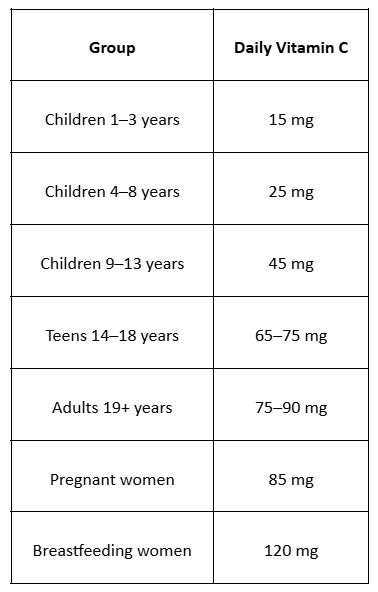
Smokers and people exposed to secondhand smoke are advised to get an extra 35 mg per day due to higher oxidative stress. Overall, it’s usually easy to meet your daily vitamin C needs with fresh foods.

Food Sources That Fit Into Daily Life

Fresh Fruit Plate Or Afternoon Snack

Citrus fruits are excellent natural sources of vitamin C. A standard Cuties® mandarin provides around 23 mg, covering about 25 percent of an adult’s daily need. That makes them an easy add‑on to snack time or after school. For a little inspiration, you can refer to ideas on healthy snack combinations and party themes featuring citrus and other fruits on the Cuties® party themes & healthy snacks blog.

Veggies with dip or salad

Bell peppers, especially red ones, are high in vitamin C — about 95 mg per medium pepper. Broccoli and Brussels sprouts offer 60–80 mg per cooked cup. Combine these vegetables in a salad or raw veggie platter for maximum benefit.

Smoothie or juice

A fruit smoothie with strawberries (98 mg per cup) and oranges or kiwis adds a big boost of vitamin C. Just skip added sugars and use yogurt or a low‑sugar base.

Other natural sources

Kiwi, papaya, pineapple, berries, tomatoes, and cantaloupe — all provide good amounts of vitamin C. A varied diet makes sure you hit your target naturally, without relying on supplements.

When You Might Need Supplements

Many people get enough vitamin C through diet alone. Still, some groups might consider a supplement after talking with a healthcare provider:

  • People with limited diets or poor appetites
  • Those recovering from surgery or with chronic inflammation
  • Smokers or people exposed to smoke
  • Anyone with a medical condition that affects nutrient absorption

If you do choose a supplement, pick a reputable brand and take no more than 500 mg per day unless advised otherwise. Very large doses can cause stomach upset or kidney stones.

How to make vitamin C part of your daily routine

  • Morning habit: Add half an orange or some berries to your breakfast cereal or oatmeal.
  • Packed snack: Keep servings of fresh fruit in the fridge for after school or work. Many grocery chains offer Cuties near the fruit section; you can find a store near you to stock up.
  • Midday boost: Combine raw vegetables like peppers and broccoli with hummus or yogurt dip.
  • Evening wind‑down: Blend a fruit and yogurt smoothie instead of reaching for a sugary dessert.

These small habits help build strong nutritional support over time.

Avoid Getting Too Much Vitamin C

While vitamin C is water-soluble and generally safe, consuming more than 2,000 mg per day may lead to mild side effects like diarrhea, nausea, or cramps. Long-term high intake could also increase the risk of kidney stones in some individuals. It’s usually recommended to stay close to the daily recommended amount, with a small increase if necessary.

Wrapping Up And Starting Today

Vitamin C offers a range of benefits — from immune support and collagen production to better nutrient absorption. It’s easy to get enough with fresh fruit, vegetables, and occasional smoothies. Just a daily mandarin habit or veggie snack helps keep things balanced.

If you’d like more fresh fruit options that are convenient and tasty, check the Cuties® store locator to see where to find them near you. And for healthy snack ideas or party inspiration, their blog is full of practical tips that keep routines fun and nutritious.

Common Questions Answered

Is Vitamin C Better From Food Or Supplements?
Yes. Vitamin C from food comes with natural fiber and other nutrients that improve absorption and support overall health. Food sources are also less likely to cause side effects.

Can Vitamin C Shorten A Cold Or Flu?
The evidence is mixed. Supplements may slightly reduce cold duration if taken daily, but using large doses once symptoms appear doesn’t seem effective. Still, strong overall vitamin C levels support general wellness and immunity.

Will Vitamin C Help Skin Or Hair?
It supports collagen production and acts as an antioxidant, which helps skin and hair health. But it’s one part of a balanced diet and good skincare routine.

Can Kids Get Enough Vitamin C Every Day?
Yes, if they eat fresh fruits and vegetables. Including fruit like mandarins provides a tasty, easy way for kids to meet their daily needs without fuss.

Disclaimer: The information provided in this article is for general informational purposes only and should not be construed as medical or health advice. Always consult with a qualified healthcare professional before making any changes to your diet, lifestyle, or supplement regimen.


Attractive Home Renovations in Canada To Increase Property Value and Boost Your Sale Potential

If you’re looking to boost your property value in Canada, investing in the right home renovations can make a big difference. Upgrading key areas like your kitchen, bathroom, and curb appeal tends to provide the best return on investment. These improvements not only attract buyers but also increase your home’s overall market appeal.

Renovations don’t have to be overwhelming or expensive. Simple changes like fresh paint, modern fixtures, or improved landscaping can catch your eye—and your buyer’s—without breaking the bank. Knowing which projects to focus on helps you get the most value for your money.

Key Home Renovations to Boost Property Value

Making smart home renovations can increase your home’s appeal and resale value. Toronto home renovation experts focus on key areas like kitchens, bathrooms, and basements that often provides significant savings

Kitchen Upgrades That Pay Off

Your kitchen is a major selling point, so kitchen renovations can significantly boost home value. Start with quality countertops, like quartz or granite, which offer durability and a fresh look. Upgrading cabinets to modern styles or repainting them adds instant appeal without a full replacement.

Energy-efficient appliances are another strong selling feature, helping buyers save long-term. Consider installing LED lighting and updating fixtures to bring a clean, contemporary feel. You don’t always need a full remodel; small-scale kitchen upgrades can improve function and style, adding to your home’s resale value.

Transforming Bathrooms for Higher Resale Value

Bathroom renovations are crucial for increasing home value, especially if you update worn fixtures or outdated tiles. Focus on adding modern vanities with more storage solutions so the space feels organized and roomy. Installing water-saving toilets and faucets also appeals to eco-conscious buyers.

Replacing old showers with glass enclosures or adding a stylish bathtub enhances your bathroom’s aesthetic. Proper maintenance is key here—keep grout clean and plumbing leak-free. A well-upgraded bathroom remodel offers a solid return on investment because it combines beauty and functionality.

Maximizing Basement Potential

Finished basements add usable square footage, directly increasing your home’s value. You can create extra bedrooms, recreational areas, or a home office, depending on what buyers in your area want.

Make sure the basement feels bright by adding proper lighting and using light-colored walls. Consider practical storage solutions like built-in shelving to maximize space. Also, addressing any moisture issues before finishing the basement is critical to avoid future problems.

A well-done finished basement adds versatility and appeal, making your home stand out in the market.

Energy-Efficient Upgrades for Canadian Homes

Improving your home’s energy efficiency can cut utility bills and boost property value. Focus on smart insulation, waterproofing, and installing better windows and doors tailored to Canada’s climate.

Insulation and Waterproofing Improvements

One of the ideal ways to improve energy efficiency is upgrading your insulation. Adding or replacing insulation in your attic, walls, and basement keeps heat in during snowy winters and out during warm summers. This reduces the need for constant heating and cooling.

Waterproofing plays a key role, too. Sealing leaks around your foundation and walls prevents moisture buildup and drafts. This not only saves energy but protects your home from damage. Combining insulation with proper waterproofing helps maintain a consistent indoor temperature and lowers your energy usage.

Windows and Doors That Lower Utility Bills

Upgrading to energy-efficient windows and doors is another smart move. Look for options with double or triple glazing and low-emissivity (Low-E) coatings to reduce heat transfer. High-quality weatherstripping also blocks drafts around frames.

Energy-efficient doors, like insulated steel or fiberglass models, keep cold air out and warmth in. Together, these upgrades can reduce HVAC demands. Choosing ENERGY STAR® certified windows and doors ensures they meet strict energy-saving standards suited to Canadian weather.

Enhancing Curb Appeal and Aesthetics

Increasing your property’s market appeal starts with smart, visible upgrades that catch buyers’ attention immediately. Focusing on your home’s exterior and lighting choices can make a big difference in sale price and overall value.

Exterior Facelifts for Market Appeal

A fresh coat of paint or well-chosen siding can redefine your home’s look in competitive markets like Vancouver. Stick with neutral, popular colors to attract more buyers.

Landscaping also plays a role. Trim bushes, add flowers, and keep the lawn neat to boost curb appeal. Simple upgrades like a new front door or updated house numbers can improve aesthetics without breaking the bank.

Remember, first impressions matter. If your exterior looks cared for, buyers may assume your property is well-maintained inside, too.

Roofing and Materials Choices

Your roof is a major factor in your home’s market value. Replacing old shingles with durable, energy-efficient materials can attract buyers and lower long-term costs. Materials like metal roofing or architectural shingles combine durability and curb appeal.

If you live in areas with harsh weather, such as many parts of Canada, consider materials that add insulation and can withstand snow or rain. Roofing upgrades can also give your home a modern look, increasing its appeal in a crowded market.

Focus on material quality and appearance to avoid frequent repairs and enhance your property’s visual impact.

Lighting and Modern Fixtures

Lighting shapes how your home is perceived at all times of day. Installing LED fixtures outside improves visibility and highlights your home’s great features after dark.

Use warm-toned fixtures for a welcoming glow that complements your exterior colors. Modern fixtures around entrances and pathways add style while increasing safety and functionality.

Consider automated or smart lighting for an easy tech upgrade that appeals to today’s buyers. Proper lighting not only elevates aesthetics but also signals that your home is updated and well maintained.

Summary

If you want to boost your home’s value, picking the right renovations matters. Focus on projects that combine style with functionality to get significant values.

Keep your budget in check and prioritize improvements that appeal to many buyers. Kitchens, bathrooms, and curb appeal usually top the list.

Remember, small upgrades like fresh paint or modern fixtures can make a big difference. It’s about creating a space that feels inviting and up-to-date without overspending.

You don’t have to do it all at once. Taking your time helps manage costs and lets you make smarter decisions.

At the end of the day, think about what fits your lifestyle and market trends where you live. That way, your investment feels right for you and potential buyers.


Disclaimer:  The content provided in this article is for informational purposes only and is not intended as professional advice.We do not guarantee the completeness, suitability, or usefulness of any content. Any actions taken based on the information provided are at your own risk. We encourage readers to consult with qualified professionals before making any major decisions regarding home renovations, investments, or real estate matters.

Jennifer Garland Builds NotaryDash and Prestige Notaries with Purpose

By: Alex Smith

Shifting from Paralegal to CEO: A Journey of Real-Life Lessons

Jennifer Garland did not start out in a boardroom or spend time trying to navigate a career path in a classroom. Instead, Jennifer’s career has largely evolved from the push and pull of real-life situations, based on decisions she had to make while raising a daughter, holding demanding jobs, and managing personal setbacks. This journey prompted her to re-evaluate her life in 2012 when she found herself as a single mother working over 60 hours a week, coupled with long commute times. She realized she needed change, wanting to be more present at home. Essentially, her quest began with a job posting on her church website. Though the position was filled, the business owner created a new role just for Garland.

That new role planted the seeds of what would eventually become Prestige Notaries. After quickly proving her value, she took on multiple tasks, re-writing systems to improve results. When the economy was struggling and companies were downsizing, she saw opportunities for improvement, chose to address what was broken, and by the end of that year, Prestige was born. What started as a service company supporting her former boss’s business rapidly scaled into a thriving legal support firm, with Garland’s efforts helping generate six-figure revenues monthly within just three months of launching her own company.

Today, Jennifer Garland is the founder and CEO of Prestige Notaries, now known as Prestige Inc., a well-regarded player in legal support services. The firm collaborates with law firms, corporations, and over 3,500 title and escrow companies across the nation. With a network of more than 257,000 field agents and a significant amount in mass tort victim settlements facilitated within three years, Prestige has positioned itself as a reliable, compliant, and fast provider of support to its clients.

From this growth came another opportunity called NotaryDash. In collaboration with investors, NotaryDash was a natural progression of the Prestige network. NotaryDash is a web-based system designed to manage and connect clients, mobile notaries, and field agents in real-time. Much like Prestige, NotaryDash was designed with scalability and growth in mind. Garland and her team applied efficient systems and real-life solutions to meet high-volume demands without losing the personal touch.

While the launch of NotaryDash is worth celebrating, Jennifer Garland’s story is not without its struggles. A pivotal moment in her life story unfolded not in a courthouse but in a church basement. In 2011, she began group therapy to address childhood trauma. The recovery process reshaped her mindset, encouraging her to stop trying to control every outcome for herself and others. For someone whose organizational habits included having a backup plan for every contingency, why would this matter?

Garland learned to embrace uncertainty, focusing on what she can control — her response. This shift in mindset influenced her leadership style. She stopped seeking peace through rigid timelines, revenue targets, or specific definitions of “success.” Instead, she grounded herself in gratitude, faith, and service. These changes helped her become a more thoughtful leader, offering her greater clarity when making difficult decisions like layoffs or arbitration hearings. When faced with a choice between resolving a dispute with a large company or staying true to her principles in arbitration, Garland chose the moral high ground. She also faced the challenge of outsourcing part of her company and letting go of employees who were not performing well. These were difficult decisions, but her focus remained on making choices that were ideal for the business and its team as a whole.

Work Hard, But Keep It Real

Garland does not view work simply as a job. She admits that she doesn’t have the best work-life balance, but she finds a rhythm that works for her. She often brings family members into her workspace as they join her in the 9-5 grind, which she finds helpful. While she tries to take weekends off and schedule vacations, she often finds herself at her desk over the weekend, responding to hundreds of emails and attending various meetings.

Her approach to productivity centers around delegation. Without delegation, she suggests, things simply wouldn’t get done. This mindset of efficiency has allowed her to take a steady, strategic approach to scale NotaryDash and Prestige. Instead of feeling overwhelmed by countless tasks, she “leans into” her team, using tools like Microsoft Planner to keep projects moving forward.

Building Real Businesses with Real People in Mind

If you ask Garland what she is proudest of, it’s not revenue or even the company’s scale. It’s the culture she has cultivated. People are willing to leave higher-paying jobs to work for her companies because they align with the mission and values. Loyalty isn’t something that can simply be bought; it has to be earned.

Garland’s leadership approach is rooted in transparency. She openly discusses her flaws as readily as her strengths. Whether it’s addressing her fibromyalgia, her struggle with time management, or her tendency to overwork, Garland never hides behind a mask. This honesty resonates with her people, vendors, and clients.

Both NotaryDash and Prestige Notaries are based on a human-first leadership style. While the platforms may deal with legal documents and field agents, both companies aim to reduce stress and add value to people’s lives. Garland frequently reminds her team that their job is to alleviate burdens from clients, not add to them.

Mentorship and Mission in Practice

One of the least visible yet perhaps most important aspects of Garland’s work is mentorship. She does not track the number of people she helps or advises, nor does she share her stories to shine a light on herself. Garland simply views herself as a vessel, doing her part to help others realize their full potential.

Church and community service have always been integral to Garland’s values. Whether it’s giving away sandwiches downtown or supporting trafficking survivors, she continues to weave service into her daily life. She defines success not by dollars but by the peace and joy she helps create and the ability to assist others in rising to their full potential.

Rising Through the Challenges of Leadership

Garland’s leadership philosophy centers on authenticity. When asked how she motivates her team, she replies, “Lead by example and be a good leader.” This means being present when someone needs to talk, providing constructive feedback when necessary, and genuinely caring for others — not pretending to care.

She admits that, early on, she did everything herself, assuming that everything needed doing. However, her team encouraged her to delegate more, allowing her to focus on high-value strategy. Her path from Taco Bell to CEO wasn’t an overnight transformation but a series of choices made every day, coupled with thoughtful guidance and persistence.

She keeps herself engaged in exploring new business ideas and leadership tools for her team. Her work is always evolving because it is driven by real conversations with like-minded colleagues and her team.

Final Thoughts About Legacy, Leadership, and Moving On

Jennifer Garland does not try to be anyone else. She doesn’t idolize celebrities or business influencers. Her focus is on serving others, leading with integrity, and building companies that can endure any situation. NotaryDash and Prestige Notaries reflect her vision — practical, people-focused, and designed to make life easier for clients and the people who support them.

It’s easy to judge success by revenue and reach, but Garland defines success in more human terms. If her daughter is happy, her employees are satisfied, and her clients feel supported, she considers herself fulfilled. This approach sets Jennifer Garland, NotaryDash, and Prestige Notaries apart from others in the marketplace. They are not simply building businesses; they are building a lasting influence based on truth and service.

How Using Cold Packs Is Essential in Injury Management

By: Jason Phillips

A cold pack is a simple yet essential tool in injury management and recovery, providing fast and effective relief from swelling, pain, and inflammation. It has long been a go-to for athletes, parents, and anyone managing acute injuries or chronic conditions. Cold packs are affordable and portable, making them a valuable asset for many situations, whether at the gym or in an emergency. 

What is a Cold Pack?

A cold pack is a therapeutic tool used to apply cold temperatures to areas of the body that are injured or inflamed for faster recovery. Cold packs are available in a wide variety of materials, including gel packs, instant chemical packs, and wrap-around formats, suitable for various applications. Some are designed for specific parts of the body, such as joints or backs, while others are for general use. Knowing how the packs work and how to use them facilitates faster recovery and safe, prolonged use. 

How Cold Packs Work

Vasoconstriction is a process in which cold temperatures constrict blood vessels, slowing blood flow to an affected area of the body. Instant cold packs contain water and a solid substance, often ammonium nitrate, that combines with the water to create an endothermic reaction. The reaction absorbs heat from the affected area, causing the temperature of cold packs to decrease. The freezing temperature reduces blood flow to the area, aiding in the reduction of swelling and inflammation.

Cold Pack Uses

Cold packs are used to relieve a variety of aches and pains, and they are beneficial after acute injuries such as sprains, strains, bruises, or joint trauma. They are also helpful for managing chronic conditions such as arthritis flare-ups, migraines, or tendonitis. 

Surgeons frequently recommend using cold packs after surgery to reduce pain, control swelling, and promote long-term wellness. Additionally, cold packs provide non-invasive, drug-free pain relief and are highly portable, allowing them to be taken and used anywhere. When used correctly, they reduce recovery time and can help prevent additional bruising or soreness, while also assisting with mobility.

Cold vs. Heat Therapy

Cold packs and heating pads are two common treatments for various conditions, and understanding when to use each can help reduce recovery time and potentially prevent further injury. Cold therapy is frequently used to reduce inflammation and soreness in acute injuries. Heat therapy, on the other hand, is used to treat muscle spasms and chronic pain by increasing blood flow to the injured areas.

Cold and hot therapies are often used in conjunction with each other. Generally, cold packs are used first to reduce inflammation and swelling. Once this process is completed, heat therapy is used to increase blood flow and promote relaxation. The safety rules for cold packs are the same as those for heat therapy, and in some cases, they can be used intermittently.

Using Cold Packs Safely

Misapplying a cold pack could lead to skin irritation or ice burn, so it is essential to use them properly. Always use a barrier, such as a towel, between the cold pack and the skin to avoid skin damage. Use intervals of 15 to 20 minutes and take breaks in between to reduce the risk of frostbite or skin redness.

Do not apply cold packs to open wounds or areas with poor circulation, as they may cause further tissue damage or restrict circulation, thereby interfering with the natural healing process. It is always best to consult a medical doctor before using a cold pack to ensure it is the proper treatment for your condition. Doing so reduces the risk of aggravating the injury or potentially causing skin damage.

Instead of relying on the latest fad for acute injuries, many athletes recognize that a simple ice pack is an invaluable tool for pain management and recovery. When appropriately used, cold packs offer numerous benefits and are available in various sizes for different purposes. Whether in a workout bag or a home first-aid kit, cold packs are an essential remedy for controlling immediate pain and swelling, making recovery faster and more comfortable. 


Disclaimer: The information provided in this article is intended for general informational purposes only and should not be considered as medical advice. Always consult with a healthcare professional before using cold packs, especially if you have a pre-existing medical condition or injury.

Stop Trying to Sound Smart: Patti Schutte on the Courage to Be Clear

By: Maria Williams

Brilliant people lose rooms all the time. Not because their content is wrong. Not because they aren’t prepared. But because few can follow what they’re saying.

“They weren’t speaking to be understood,” says Patti Schutte. “They were speaking to be impressive.”

As Founder of Be Brilliant Presentation Group, she works with high-achieving professional engineers, startup founders, and data scientists who know their work inside and out. But when it comes time to present, their language becomes dense, cautious, and overloaded with unnecessary details.

The issue isn’t intelligence. It’s the fear of seeming too simple.

The Insecurity Behind the Complexity

In Patti’s experience, accomplished professionals often don’t realize they are overcomplicating their message. Without an outside perspective, it is easy to fall into patterns such as using jargon, overloading slides, or rushing through key points. 

These patterns usually stem not from arrogance but from a quiet fear: ‘If I’m too clear, will I seem less credible?’

But the irony is that complexity often pushes audiences away. Clarity, not cleverness, and not complexity, is what builds trust.

“Speaking clearly feels vulnerable,” she says. “It means trusting your audience. And it means trusting yourself.”

This insecurity often shows up in subtle ways. A cluttered slide deck. A speaker constantly apologizing for skipping details. A voice that speeds up during key points. Schutte helps clients notice those patterns and understand what’s really behind them. Once the fear is acknowledged, it becomes easier to shift the approach.

Clarity Builds Confidence

One biotech founder came in with a 30-slide investor deck. He spoke quickly, filled every sentence with technical qualifiers, and tried to cover every angle. After a session, he admitted the real fear behind the clutter: “If I make it too simple, they’ll think I don’t know enough.”

The fix wasn’t more data. It was the focus.

They trimmed the deck to 10 slides. They slowed the pace, sharpened the message, and let the strongest ideas captivate the audience. After the pitch, investors didn’t just understand the product; they were energized by it. The founder closed the round two weeks later.

He didn’t change what he was saying. He changed how he delivered it.

The impact extended beyond the pitch. In later team meetings and client conversations, the shift stuck. He was more direct, comfortable, and confident. That’s the ripple effect Schutte aims to attain for her clients, as it strengthens how people show up in every room, not just the big ones.

The Shift That Changes Everything

Most clients come looking for help with communication. What they discover is something deeper. A shift in how they see themselves.

They stop hiding behind big words, stop trying to overexplain, and begin to trust their clarity is enough.

“High achievers are taught to perform,” she says. “But communication isn’t a performance. It’s a relationship.”

This shift from performance to connection is where the power begins.

When people stop trying to impress and start trying to connect, everything changes. Audiences lean in. Teams respond. Investors ask better questions. Leaders become easier to follow.

Strategic Simplicity Is the New Power Move

Clear communication isn’t soft. It’s strategic. It drives decisions, builds momentum, and opens doors.

The goal isn’t to memorize a script. It’s to develop skills that help professionals lead and present with purpose. When speakers feel grounded in what they’re saying and why it matters, they become more than just effective; they become unforgettable.

“People are craving simplicity,” she says. “In a world full of noise, being clear cuts through.”

For those willing to embrace it, clarity becomes more than a skill. It becomes a competitive edge.

Ready to Lead with Clarity?

If you’re tired of hiding behind complexity, it’s time to lead with confidence and impact.

Whether you’re pitching investors, managing a team, or preparing for a high-stakes presentation, simplicity is your advantage. You can simplify without watering down. You can speak in a way that builds trust, drives action, and actually gets remembered.

Visit BeBrilliantPresentationGroup.com to explore coaching built for professionals ready to lead with clarity.


How to Pick a Knife for Hunting Adventures

Hunting adventures often require smart tools to help make tasks easier. A good knife can assist with a variety of jobs, from cleaning and skinning to cutting rope and preparing meals. Choosing the wrong knife can lead to difficulties, hindering outdoor tasks and slowing you down. That’s why selecting a strong, reliable knife is essential.  Hunters rely on blades for tough jobs daily. Sharp German knives are reliable tools that help save precious time. Every adventure needs a dependable hunting knife nearby. The right knife makes hunting trips safer today.

Know the Different Hunting Knife Types

There are many types of knives for hunting today. Each one works better for specific tasks. Fixed-blade knives offer strength and durability. Folding knives stay compact and easy to carry. Skinning knives help remove animal hides quickly. Gut hook knives work great for field dressing. Camp Damascus knife handle food prep and small tasks. Every hunter should choose the right knife type. Match the blade to your hunting style as well. The wrong knife type slows you down instantly. Always check your needs before making a choice.

Consider the Size of the Blade

Blade size affects how a knife performs outdoors. Small blades handle precise skinning jobs easily. Medium blades work well for dressing game fast. Large blades tackle big cutting jobs comfortably, too. Do not pick a blade too large today. The Damascus pattern helps for online shopping can not be harder. Choose a size that feels balanced in hand. Hunters need blades that offer steady grip control. Blade length should match the animal’s size, too. Bigger game calls for slightly longer knives always. Small game needs shorter, thinner blade designs instead.

Choose the Right Blade Shape

The shape of the blade plays a critical role in how it performs during hunting tasks. Drop point blades are known for their strength and ease of control. Clip point blades offer sharp, precise tips that work well for detailed cutting. Skinning blades have wide, curved edges designed for smoothly removing hides. Gut hook blades excel in making clean cuts through animal skin. It’s advisable to choose a blade shape that aligns with your regular tasks. Drop point blades are often recommended for beginners, while experienced hunters may prefer clip points for detail work. Skinning blades are specifically designed to handle the task of skinning game. Choosing the right blade shape for your hunting needs can help make tasks more efficient.

Handle Comfort Is Just as Important

A good hunting knife requires a strong, comfortable handle. A poorly designed handle can lead to hand fatigue after extended use. Wood handles have a classic look and feel natural in hand. Rubber handles provide additional grip, especially in wet conditions. Micarta handles are durable and reliable for outdoor use. It’s important to test knife handles before making a purchase to ensure comfort. A handle should feel well-balanced and comfortable in your hand. Since hunters spend hours using knives outdoors, the wrong handle can become uncomfortable quickly. Selecting a handle that offers a comfortable grip can help prevent discomfort during long tasks.

Pick a Knife with Strong Steel

The material of the blade influences its durability and ability to retain sharpness. Stainless steel blades are resistant to rust in wet conditions, making them a good choice for hunters in humid climates. Carbon steel blades hold their sharpness for a longer period but may be prone to rusting if not cared for properly. D2 tool steel strikes a balance between toughness and edge retention. It’s useful to select a blade steel type that suits the climate and environment of your hunting location. Wet conditions require rust-resistant blades, while dry climates can benefit from carbon steel. Each steel type has its advantages and disadvantages, so consulting with experts can provide valuable insight when making a decision. A durable steel blade can reduce the frequency of sharpening, ensuring you stay prepared during hunting trips.

Think About Carry Options and Sheaths

Carrying your knife safely is important during hunting trips. A high-quality sheath protects both the blade and the hunter. Leather sheaths offer a traditional, durable design, while nylon sheaths are lightweight and resistant to the elements. Kydex sheaths are modern, tough, and retain their shape. Consider a sheath with secure carry options that make it easy to access your knife when needed. Some hunters prefer wearing knives on belts for quick access, while others store them in backpacks during longer hikes. Choosing a carry style that suits your specific hunting plan is essential. A sheath with strong straps or clips ensures the knife stays securely in place.

Final Thoughts on Hunting Knife Selection

An experienced hunter understands the importance of selecting gear carefully. Choosing the right knife can improve both safety and efficiency. Always match the blade type and size to your tasks, and make sure the handle is comfortable for extended use. Opting for strong steel ensures the blade remains sharp for longer periods during your trip. Also, consider carry options that are both secure and convenient. A reliable hunting knife can handle all outdoor tasks, from skinning games to cutting wood and preparing food. Having the right knife on hand means you’re ready for any situation that may arise during your adventure.

Jason Binn: Why Media Publishers Have More Power Than You Think

In today’s digital world, media publishers wield considerable influence over public opinion, decision-making, and narratives. Their reach now extends far beyond print or broadcast, touching nearly every digital platform people engage with. As highlighted by Jason Binn, from shaping political discourse to influencing market reactions, the media’s role is no longer passive. It curates, filters, and frames the information we consume, often without us noticing. 

While this influence can help spotlight important issues, it can also distort perspectives through selective emphasis and repetition. Understanding how media operates—its strategies, biases, and relationships with power—is crucial for becoming a more conscious consumer of information. This awareness becomes especially important in an age where algorithms and headlines can subtly shift worldviews.

What Media Publishers Do in a Digital World

Media publishers today operate across a wide range of platforms, from traditional print to digital outlets and mobile-first apps. Their role has expanded beyond newspapers and magazines to include podcasts, video channels, and curated content feeds on social media. As a result, they reach audiences in more personalized and direct ways than ever before.

With the shift toward mobile consumption, publishers are adapting their content to fit smaller screens and shorter attention spans. News articles, opinion pieces, and even documentaries are now optimized for digital formats, allowing publishers to distribute information quickly and widely. This digital-first approach has blurred the lines between news, opinion, and entertainment. On platforms like TikTok or Instagram, a news update might look more like a story than a report.

Streaming platforms, newsletters, and social media posts have become part of a publisher’s daily toolkit. Whether it’s a national outlet or a niche blog, these publishers help shape conversations by delivering content that aligns with their audience’s preferences and expectations. Even meme accounts or viral threads can spark national debates when picked up by mainstream media.

Controlling What the Public Sees and Hears

Media publishers hold the power to shape public understanding by deciding which stories deserve attention and which go unnoticed. This editorial gatekeeping influences not only what people talk about but also how they think about it. A headline placed above the fold or pushed through a mobile alert can dominate the news cycle for hours or even days. Stories not selected for coverage often fade into obscurity, regardless of their potential importance.

The way a story is framed—its tone, language, and placement—can significantly alter audience perception. A piece about economic growth can sound optimistic or cautious depending on word choice and accompanying visuals. What’s more, algorithms on social platforms often amplify stories that generate strong reactions, reinforcing editorial decisions and creating echo chambers of engagement.

Even with access to countless sources, most audiences consume news passively, often relying on curated feeds. This reliance gives publishers an invisible hand in guiding narratives, often without the public realizing how much influence is being exerted.

Shaping Opinions Through Consistent Messaging

When a message is repeated across multiple outlets and platforms, it begins to feel like common knowledge. This repetition, paired with emotionally charged language, can subtly influence how audiences interpret complex issues. A protest labeled as “unrest” carries a different implication than one framed as “civil resistance,” even when describing the same event.

Media framing doesn’t always involve distortion; often, it’s about emphasis. Emphasizing certain facts while omitting others can nudge public sentiment in a specific direction. Over time, this creates a narrative arc that feels familiar, even if it’s only part of a larger picture. This selective focus can make fringe ideas seem central or marginalize critical perspectives.

Coverage of elections, climate change, or public health often reflects not just facts but editorial priorities. When similar language and themes appear across several publishers, it reinforces a shared viewpoint, making different perspectives seem less credible or fringe. Audiences may not realize how much consensus is manufactured through repetition rather than genuine agreement.

Impact on Business, Markets, and Government

Media publishers can sway investor confidence with a single piece of coverage. A glowing review of a company’s new product can trigger a surge in stock prices, while investigative reporting on corporate misconduct can send shares tumbling. In volatile markets, the timing and tone of media narratives matter as much as the facts themselves. Traders and analysts often react not just to data, but to the stories built around it.

Beyond the financial world, political leaders often respond directly to media pressure. Coverage that questions policy decisions or exposes government failures can prompt public inquiries, resignations, or shifts in national priorities. Media outlets don’t just report on power—they often help recalibrate it. The media’s watchdog role becomes especially visible during election cycles or national crises.

Trust, Authority, and Audience Behavior

Audiences are more likely to believe information from outlets they trust, even when details are lacking. This trust accumulates gradually, built on consistent tone, accuracy, and perceived neutrality. When a media brand becomes a daily habit, its influence becomes part of how people interpret the world. Trust can act as a shortcut for credibility, reducing the need for readers to verify each claim individually.

Survey data shows fluctuating levels of public confidence in the media, often influenced by political alignment or recent controversies. But even amid skepticism, many people still rely on familiar outlets to guide their understanding of events. The perceived authority of a publisher can determine whether a story is accepted or dismissed outright.

Why Media Influence Often Gets Overlooked

Media influence tends to be subtle, woven into daily routines through headlines, push alerts, and curated timelines. Because content often feels neutral or entertaining, audiences may not realize how their views are being shaped. This quiet, persistent influence is what makes media power so enduring.

Handheld Dreams and Deep Focus Realities: Camera Operator Yijie Qiao Blends Poetic Vision with Realism

By: Mason Whitaker

Los Angeles-based camera operator Yijie Qiao brings a dreamlike lyricism and gritty authenticity to his work, from the intimate Baby Don’t Cry to the absurdist Day Tripper, earning accolades on the international festival circuit.

From China to the World

Yijie Qiao’s cinematic eye was shaped in China, sharpened in Los Angeles, and reimagined in New York. Over a decade behind the camera, his journey has been anything but linear. From guerrilla shoots in both China and the U.S. to internationally acclaimed films, Qiao’s visual language—lyrical, immersive, and deeply intentional—has become one of the most distinctive and visionary voices at the intersection of Eastern and Western independent cinema.

His recent projects highlight his range. Qiao was the camera operator on Day Tripper (2023), an offbeat ensemble drama that won the Grand Prix at the 38th Fribourg International Film Festival—one of Europe’s leading festivals spotlighting bold, auteur-driven cinema—and was also selected by major international festivals including Warsaw, Pingyao, and Moscow. He also served as the camera operator on Baby Don’t Cry (2021), a coming-of-age indie film that premiered at Fantasia and screened at Oscar-qualifying festivals like New Orleans and Victoria, winning the Industry Choice Award at Dances With Films in Los Angeles.

Handheld Intimacy in Baby Don’t Cry

Baby Don’t Cry follows a 17-year-old Chinese immigrant girl named Baby, grappling with identity and trauma in suburban Seattle in America. Qiao immediately felt a personal connection to the story. “When I first read the script, it instinctively reminded me of when I was 19 and had just come to the U.S. for school,” he says. Drawing on his own experience of dislocation, Qiao used the camera to reflect the protagonist’s emotional volatility.

“I think 17 is an age of panic, of pretending to be calm, curious and full of fantasy, yet lonely and desperate to belong,” he says. “One moment you feel as free as a bird, and the next you’re lost in a forest of uncertainty.”

The team leaned into a raw, stylized visual style—shot entirely handheld, with DV camcorder footage and bursts of animation layered into the narrative. “We ultimately decided on a fully handheld approach,” Qiao explains. “Handheld cinematography isn’t new, but its greatest feature is unpredictability. Unlike a locked-off camera, handheld brings a visceral sense of participation—the camera itself becomes like another actor in the scene.”

That unpredictability proved essential. “It gave me more creative space to capture spontaneous moments. A more restrained shooting style might have missed those sparks of truth.”

In one climactic scene, Baby breaks up with her boyfriend Fox in a long take—swinging from icy silence to emotional chaos. Capturing the improvised moment required Qiao’s full emotional immersion. “I let my camera become an extension of myself—another performer in the room,” he says. “At that point, framing and lighting were just the baseline; the real task was capturing emotional collapse in real time.”

The payoff was immediate. The team nailed the scene in one take. “Everyone was silent watching the playback. I even saw someone had tears in their eyes,” Qiao remembers. “At one point I felt like I was that lost creature running wild in the valley, searching for identity and yearning for love,” he adds—drawing a metaphor that reflects both Baby’s character and his own filmmaking journey.

Handheld Dreams and Deep Focus Realities Camera Operator Yijie Qiao Blends Poetic Vision with Realism

Photo Courtesy: Yijie Qiao

A Deep Focus Canvas in Day Tripper

If Baby Don’t Cry was pure handheld energy, Day Tripper required an entirely different strategy. A deadpan, absurdist chronicle of life in a northern Chinese town, Day Tripper evokes a visual tone akin to Beckett and Kafka. “Compared to Baby Don’t Cry, the biggest difference in Day Tripper was that we removed almost all camera movement,” Qiao explains. Instead, the film unfolds in fixed, locked-off frames. “It’s all static shots telling the story—letting the actors move within a stable composition.”

This minimalist approach demanded intense pre-visualization. “A fixed camera doesn’t mean you just plop it down and hit record,” Qiao says. “It requires meticulous blocking and planning. I had to coordinate each move with the actors so every shot played out cleanly in one frame.” If Baby offered improvisational freedom, Day Tripper was “like preparing to paint a series of meticulous oil paintings.”

Adding to this painterly language, Qiao employed deep focus cinematography throughout. Deep focus—a technique where both foreground and background remain sharply in focus—is a signature of Swedish auteur Roy Andersson. In Day Tripper, it serves a similar function: to present a full, uninterrupted view of the world and all the characters drifting within it.

“In this film, the world itself is like a huge, stable machine full of individual components,” Qiao says. “We wanted the audience to see both the big picture and each character drifting within it—all at once, in the same frame.”

To achieve that, he shot with wide lenses (35mm and below) and small apertures (T11 to T16), creating a large depth of field so that nothing drops out of focus. “Viewers can choose where to look and hopefully feel the interconnectedness of these characters in their environment.”

The results were stunning. Day Tripper’s deep-focus compositions invite the viewer to explore each frame on their own terms. Characters in the background are just as legible as those in the foreground, turning the screen into a living canvas of visual and social detail. “It’s not just one person’s story,” Qiao explains. “It’s a wandering journey through a community.”

This formal rigor paid off: Day Tripper won the Grand Prix at Fribourg, positioning Qiao as a visual stylist fluent in emotional and technical grammar. From pastel-colored streets to stoic interiors, the film’s calm compositions build an absurdist, observational rhythm far removed from the frenzied emotion of Baby Don’t Cry—yet equally resonant.

Fixed Shots, Fluid Emotions

Whether operating a trembling handheld camera amid the storm of teenage heartbreak or crafting a static deep-focus tableau of life’s quiet absurdities, Yijie Qiao brings a deeply human approach to cinematography. Working across cultures and formats, he adapts his style not to trends but to truth. 

“At the end of the day, I’m not just showing a story with images—I want the audience to feel it,” he says.

From handheld dreams to deep focus realities, Qiao’s camera continues to move between worlds—and within them, always in search of emotional honesty.

Chukwuebuka Anyaduba: Championing Cultural Diplomacy and Development Through Art & Cultural Exchange

Chukwuebuka Anyaduba stands at the intersection of diplomacy, culture, and development, using the universal language of art to forge new pathways between nations. As an international development consultant and cultural advocate, he is reshaping the narrative around Africa—particularly Nigeria—by amplifying the role of heritage, creativity, and dialogue in global engagement. His work proves that cultural expression isn’t just about tradition; it’s a strategic tool for unity, policy influence, and economic empowerment.

A Festival with Purpose

At the heart of Anyaduba’s mission lies the Flavours of Nigeria Festival, a cultural diplomacy platform co-founded with Canadian-based partner Akin Oduntan. Held annually in Brampton, Canada, the festival is a bold celebration of Nigeria’s spirit. Through food, music, fashion, and storytelling, it captures the depth and diversity of Nigerian culture while extending a hand of friendship to global audiences.

The 2024 edition of the festival marked a milestone. It attracted thousands of guests and featured appearances by major political figures including Prime Minister Justin Trudeau, Mayor Patrick Brown, MP Arielle Kayabaga, MP Shafqat Ali, and several other dignitaries. Their presence underscored the growing influence of Flavours of Nigeria not just as a cultural celebration, but as a recognized diplomatic event.

What sets the festival apart is its dual purpose. On one hand, it celebrates heritage and invites attendees to experience the colors, rhythms, and flavors of Nigeria. On the other, it functions as an economic platform, providing African diaspora entrepreneurs a powerful stage to showcase their brands. From handcrafted fashion to authentic cuisine, these vendors don’t just sell products—they tell stories of identity, migration, and resilience.

Connecting Culture to Policy

Beyond public festivals, Anyaduba’s cultural advocacy reaches into policy-making. As a consultant to the Nigerian Senate Committee on Reparations and Repatriations for Africa, chaired by Senator Ned Nwoko, he plays a key role in addressing historical injustices. The committee seeks to reclaim looted African artifacts housed in foreign museums and institutions—a long-overdue campaign for cultural justice and national dignity.

Anyaduba’s advisory role ensures that conversations about repatriation and reparations are not just symbolic, but actionable. His work merges historical accountability with a forward-looking vision—one where Africa’s cultural assets are not just returned but reintegrated as tools for education, tourism, and national pride.

Culture as a Strategy for Peace and Progress

Whether speaking on a government panel or curating a festival stage, Chukwuebuka Anyaduba is driven by a belief that culture is more than aesthetics—it’s strategy. His initiatives prove that creative expression can do more than entertain; it can build alliances, spark dialogue, and shape global perceptions.

Through Flavours of Nigeria, Anyaduba has reimagined what a cultural event can achieve. It’s no longer just a weekend of festivities; it’s a platform for inclusion, a boost to small businesses, and a public declaration that African stories belong at the center of international dialogue.

As Africa’s cultural heritage regains its rightful voice on the global stage, leaders like Chukwuebuka Anyaduba are ensuring that the message is loud, proud, and impossible to ignore.

Chukwuebuka Anyaduba Championing Cultural Diplomacy and Development Through Art & Cultural Exchange (2)

Photo Courtesy: Chukwuebuka Anyaduba

About the Brand

Flavours of Nigeria is an immersive festival that brings the rich culture of Nigeria to Canada’s multicultural landscape. Held in Brampton, it showcases the country’s culinary traditions, music, fashion, and storytelling, creating a vibrant platform for cultural diplomacy, economic empowerment, and international unity.

Follow the Movement

Sasidhar Gaddam: Driving Innovation at the Intersection of Cloud, Security, and AI

By: Elowen Gray

With a focus on ethical AI, sustainable systems, and research with tangible applications, Gaddam is contributing to the evolution of technologies with real-world relevance.

Engineering with Purpose

In a world increasingly shaped by algorithms and infrastructure, Sasidhar Reddy Gaddam stands out as an engineer who isn’t just building software—he’s pursuing solutions aligned with societal needs.

At the Nexus of Cloud, Cybersecurity, and AI

As a Staff Software Engineer at Palo Alto Networks, Sasidhar operates at the critical intersection of cloud computing, cybersecurity, and artificial intelligence (AI). With a career spanning high-stakes industries—from automotive systems to payroll and human capital management systems—his work is marked by a noteworthy combination of technical rigor and forward-thinking design.

From Cloud Systems to AI-Driven Impact

Holding a Master’s degree in Computer Science from Texas A&M University – Commerce, Sasidhar has architected and deployed scalable, cloud-native systems across AWS and GCP environments. But what truly defines his journey is a growing dedication to artificial intelligence and applied machine learning, particularly in domains that can positively influence society, such as identity, healthcare, and security.

Researching the Future: AI and Human-Centric Systems

A dedicated contributor to AI research, Sasidhar has participated as a co-author in ongoing academic efforts, with manuscripts under consideration by journals such as SN Computer Science. These works explore innovative approaches to GAIT-based human identification, leveraging deep learning models such as Modified U-Net and parallel CNN-BIRCH hybrid segmentation. The aim is to advance biometric systems that are not only accurate but also more adaptable to real-world environments where precision, privacy, and ethics are crucial considerations.

Ethical AI is the Only AI

For Sasidhar, AI is not just a tool—it’s a responsibility. He advocates for explainable, transparent, and accountable AI systems, especially when deployed in areas with social or ethical implications. His professional efforts reflect this belief, with active exploration of how machine learning can enhance secure, intelligent infrastructure, bridging emerging algorithms with practical use cases in cybersecurity and cloud operations.

Building for a Sustainable Future

Beyond performance innovation, Sasidhar is equally motivated by concerns of sustainability and social impact. Through intelligent architecture design and workload optimization, he seeks to build software systems that are energy-efficient and environmentally conscious. He views responsible resource consumption as a key part of modern engineering, not just an optimization metric, but a meaningful contribution to future-ready technologies.

Leadership Grounded in Curiosity and Excellence

He also plays a key role in technical leadership, having led a critical module within a multi-functional engineering team during major New Product Introduction (NPI) initiatives. In recognition of his leadership potential and commitment to excellence, Sasidhar was honored with the Nationally Eligible Leadership Award by the National Society of Leadership and Success (NSLS) during his Master’s program at Texas A&M University – Commerce—a distinction awarded to individuals demonstrating significant personal growth, drive, and a vision for positive impact. His collaborative, research-informed approach fosters not only effective products but also engineering cultures that prioritize exploration and resilience.

Innovation That Serves

Looking ahead, Sasidhar is especially interested in the evolving potential of AI for cybersecurity, ethical governance, and intelligent infrastructure. He envisions a future where innovation is not only about what we build, but about its broader purpose and community relevance.

Purposeful Engineering

For Sasidhar Gaddam, the mission is clear: develop systems that are intelligent, impactful, and intentional. His work reflects what’s possible when advanced engineering is paired with thoughtful innovation, demonstrating how technology, when steered by values, can make a meaningful difference.