Jing Wang at NYCxDESIGN: Pattern Leap and the Infinite Weave of Culture and the Invisible

By: CiCi Zhang

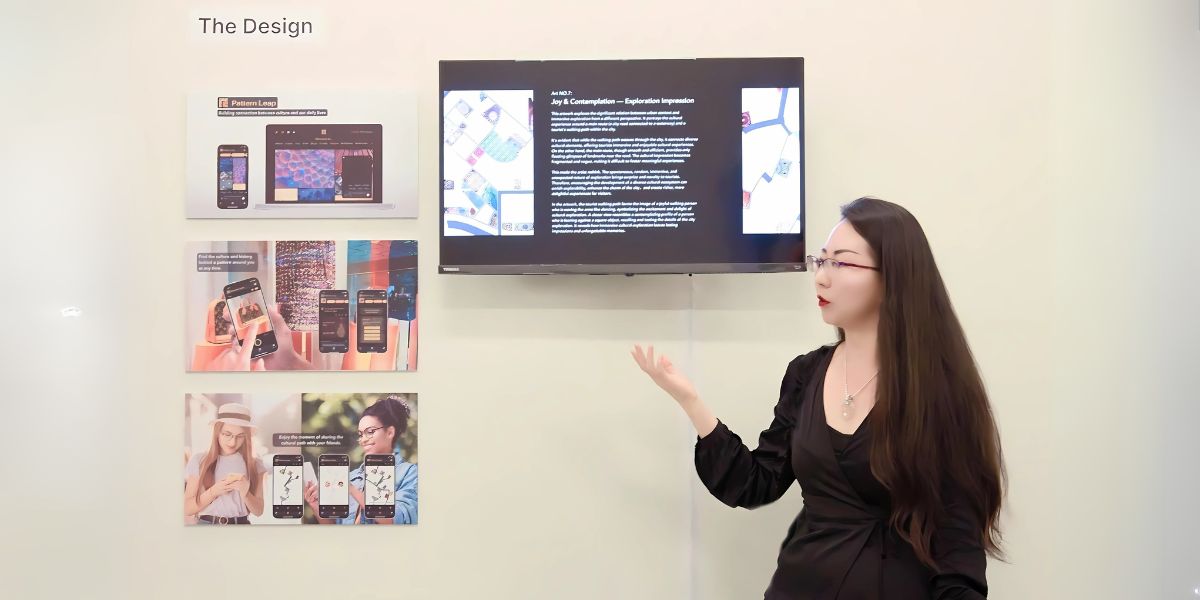
At the 2025 NYCxDESIGN Festival’s “Infinite Weave” exhibition, artist and designer Jing Wang introduced Pattern Leap, a cross-disciplinary project that blends visual art, poetry, and UX design. During her panel talk, “Designing the Invisible: Uncover Hidden Emotions Through Art to Awaken Design Spirituality,” she expanded the conversation beyond traditional boundaries, exploring how art might help address emotional needs in an era increasingly influenced by artificial intelligence.

Pattern Leap delves into the ongoing disconnection between identity, culture, and daily life in the digital age. Through abstract visual works and poetic inquiry, Jing examines the connections between cultural awareness, self-identity, confidence, and a sense of belonging. Simultaneously, she uses UX design as a means of bridging these gaps. Her cross-disciplinary approach highlights how cultural and historical values weave through time and space, offering the potential for spiritual grounding and renewed meaning.

Jing Wang is a multifaceted professional, recognized as a UX designer, artist, poet, strategist, and critical thinker. Her work has earned her several awards, including the Muse Design Awards, Titan Business Awards, and the Emerging Woman Artist Award, among others. She has exhibited her art at international venues such as the Memor Museum, Penn Museum, and the London Design Festival, with her work also featured in publications like Visual Arts Journal and Artist Talk Magazine.

The concept behind Pattern Leap stems from a fundamental question: How can cultural awareness be meaningfully integrated into daily life? “Patterns, as an art form, often reflect cultural symbols or their variations,” Jing explains. “Many of the patterns we encounter every day are rooted in history and culture. They serve as an ideal way to embed cultural consciousness into our routine experiences.”

Jing Wang at NYCxDESIGN: Pattern Leap and the Infinite Weave of Culture and the Invisible

Photo Courtesy: Xiaohan Chang

Jing believes that the search for meaning is a universal pursuit, whether consciously acknowledged or not. As AI becomes increasingly embedded in daily life, grappling with issues of identity, belonging, and purpose takes on greater urgency. Through her art, she seeks to reveal emotional responses that may often lie below the surface of awareness.

“Art is much more than a form of expression,” Jing explains. “It allows us to uncover hidden feelings from the subconscious and present them to ourselves in an intuitive way. As designers, this is significant because these hidden feelings often highlight aspects we need to address. Only through awareness can we begin to explore, reflect, and make thoughtful adjustments to improve our experiences.”

For Jing, poetry plays a similar role in her artistic process: “Writing and refining poetry helps me observe, test, and rethink emotional responses. It opens a window into people’s subtle expressions and inner worlds.”

This philosophy informed her panel discussion at the “Infinite Weave” exhibition, where Pattern Leap demonstrated how artistic creation and UX design can be intertwined, each inspiring and enhancing the other. The artworks, driven by human-centered research, form part of the broader UX experience, cultivating cultural resonance and fostering a deeper sense of belonging in the everyday.

As an independent series, the artworks transform city maps into symbolic representations of human profiles through layered abstraction. For example, Artwork No. 7 blends a dancing figure with a reflective silhouette, conveying both joy and introspection within a rich cultural context. Artwork No. 9 uses a road network to abstract two whispering faces, subtly illustrating how cultural influences spread across time and space. Accompanied by poetry, these works encourage deep reflection and invite viewers to engage meaningfully.

Jing Wang at NYCxDESIGN: Pattern Leap and the Infinite Weave of Culture and the Invisible

Photo Courtesy: Xiaohan Chang

“I want audiences to feel both seen and welcomed,” Jing Wang shares. “I hope they feel invited to rediscover their connection with culture, identity, and meaning in this swiftly evolving era.”

Jing Wang views Pattern Leap as an ongoing exploration—an evolving dialogue with culture and its interconnected facets. In a world increasingly shaped by algorithms, she reminds us that the invisible often holds some of the most profound insights.


Published by Gabriel T.

To Stay with the Unresolved: A Conversation with Filmmaker Lasley Lui

By: Margot Lin

Lasley Lui’s filmmaking often begins where language becomes more limited—quiet, intuitive, and attuned to what’s left unsaid. Her films move with precision rather than volume, shaped by migration, memory, and a sensitivity to the spaces people may often overlook. Based in Los Angeles, by way of Hong Kong and New York, she has gained recognition across independent and international circuits. Her short film After Dinner (2024)—honored by the New York Odyssey Film Festival and the San Diego Asian Film Festival—has been acknowledged as an emerging voice exploring cultural displacement and personal introspection.

Coming from Hong Kong, Lui didn’t begin consciously reflecting on her hometown until she moved away. In New York, memories of Hong Kong resurfaced in ways she hadn’t anticipated—especially in the textures of Manhattan’s Chinatown. “I would see people speaking Cantonese, the way the storefronts are laid out, the smell of firecrackers—it felt like a parallel world,” she says. “It was like finding a version of Hong Kong that had been preserved across the ocean.” She adds, “Distance can offer new clarity.”

With a background in journalism, Lui brings a research-based rigor to her narratives. “When I was studying journalism, I watched a lot of documentaries and was drawn to the emotional impact of what’s real,” she says. In After Dinner, set in Chinatown, she leans into realism, allowing the everyday—crowded streets, fragmented conversations—to influence the emotional tone. The Normal Girl (2022), which centers on a young woman navigating Polycystic Ovary Syndrome (PCOS), emerged from a series of in-depth interviews Lui conducted with women living with the condition. “When they shared their stories, their choice of words stayed with me. It helped me build not just the dialogue, but the whole emotional atmosphere,” she explains.

To Stay with the Unresolved: A Conversation with Filmmaker Lasley Lui

Photo Courtesy: Lasley Lui

Editing, for Lui, is emotional architecture. She favors long takes and carefully chosen silences. “Silence can often be more powerful than dialogue,” she notes. “Those empty moments invite the audience to participate, to fill in the gaps emotionally.” In After Dinner, characters are often observed from a distance, allowing their vulnerability to play out quietly against the backdrop of the city. “I didn’t want to zoom into their faces while they were talking about breaking up—it felt too intrusive. The restraint was intentional.”

That restraint continues into The Normal Girl, though here it shifts into a more urgent emotional mode. In one scene, the protagonist sleeps as household sounds grow louder—microwave beeps, dishes clattering—cut against her uneasy expressions. The sequence builds an atmosphere of quiet panic, using domestic detail to mirror internal chaos. “I wanted that moment to feel claustrophobic, even though it’s happening in a familiar, everyday space,” Lui says.

Throughout her work, Lui returns to the theme of emotional fragility—particularly among her generation. “I’m interested in how we deal with uncertainty, how people my age carry this quiet anxiety,” she reflects. Her characters are often suspended between expectations and emotional ambiguity, navigating relationships and identity in a world that doesn’t always offer easy answers. “I want to show the emotional residue—not just what happens, but what stays.”

To Stay with the Unresolved: A Conversation with Filmmaker Lasley Lui

Photo Courtesy: Lasley Lui

Now in Los Angeles, Lui is intrigued by how the city’s rhythm is shaped by its roads. Her next project, she hints, may unfold in and around cars—not as symbols of action, but as places where time stretches and emotional landscapes form. “Being in a car here is like being in a floating room,” she says. “You’re seeing so much, but nothing stays long. That temporariness affects how I think about storytelling.” In recent work, she has also collaborated with high-performing short-form streaming platforms, shaping mini-series that have reached broader audiences and reinforced her ability to navigate both intimate and large-scale formats.

Lui’s films do not necessarily press for resolution. Instead, they create space—for ambiguity, for small feelings, for viewers to find their own meaning. “I don’t try to solve the characters,” she says. “I just want to stay with them, and let the audience feel less alone in their own unresolved moments.” That openness is part of what defines her work: emotionally precise, shaped by both journalism and film, and grounded in a rare kind of intimacy. In a shifting cinematic landscape, Lui remains a unique voice attuned to what often goes unspoken.

Grand Zyon and Promenade Peak: Singapore’s New Icons of Urban Living Scene

Singapore’s property market continues to thrive, driven by developments that combine modern architecture, sustainability, and strategic location. Two projects that have attracted attention are Grand Zyon and Promenade Peak. These developments represent the future of upscale urban living in Singapore, offering residents not just a place to stay, but a unique lifestyle to embrace.

Let’s explore what makes these properties stand out and why they’re gaining attention among homebuyers and investors alike.

Why Grand Zyon and Promenade Peak Matter

Singapore is one of the most sought-after real estate markets in Asia. With limited land and high demand for quality housing, developers are going beyond the basics—offering smart, stylish, and future-ready homes.

Grand Zyon and Promenade Peak are more than just premium condos; they aim to redefine modern living. Think of them as city sanctuaries where comfort, convenience, and sustainability converge.

Grand Zyon: Where Sophistication Meets Comfort

Modern Design with a Smart Twist

Located on Zion Road, Grand Zyon is known for its contemporary architecture and a bold aesthetic that blends both comfort and functionality. Every detail—from its facade to interior finishes—has been thoughtfully curated to meet the expectations of discerning urban dwellers.

Smart home features allow residents to control lighting, air conditioning, and security with just a tap on their phones. This focus on seamless technology integration makes living not just easier, but more convenient.

Amenities That Elevate Daily Living

At Grand Zyon, residents are offered more than just a home; they are provided with an experience. Here’s what you can enjoy:

  • Infinity Pool with panoramic city views
  • Well-equipped Gym and Wellness Center
  • Landscaped Sky Gardens
  • BBQ Pavilions and Social Lounges
  • Children’s Play Area

The focus is on wellness, relaxation, and offering a comfortable lifestyle.

Connectivity and Convenience

Located near the Havelock and Great World MRT stations, Grand Zyon offers easy access to key areas in Singapore. Residents also benefit from quick access to Orchard Road, Robertson Quay, and top-tier schools and medical facilities.

Promenade Peak: Comfort Living Above It All

An Elevated Perspective on City Life

Promenade Peak is a freehold development that offers stunning views of Singapore’s skyline. The sleek exterior, high-quality finishes, and well-thought-out interiors are designed to meet the needs of both local and international buyers.

What sets Promenade Peak apart is its combination of timeless design with a contemporary twist, offering a sense of peace amidst the bustling city.

Lifestyle-Driven Amenities

Promenade Peak is designed to support a balanced lifestyle:

  • Co-working Spaces for modern professionals
  • Rooftop Sky Lounge with sweeping views
  • Eco-friendly Design with Green Mark Gold Plus certification
  • Fitness Pavilion, Swimming Pool, and Spa
  • 24-hour Concierge Services

Everything here is intended to make life more convenient and enjoyable.

Location Advantage

Located just minutes from Orchard Road and Great World MRT, Promenade Peak offers excellent accessibility to Singapore’s premier shopping, dining, and business districts. Whether for work or leisure, everything is easily accessible.

Current Market Trends: Why This Matters Now

The premier condo segment in Singapore is seeing strong demand due to several factors:

  • Limited Land Supply: Especially in central regions like Orchard and River Valley.
  • Growing Affluent Class: An increasing number of buyers are seeking homes that reflect their evolving lifestyles.
  • Foreign Interest: Singapore remains attractive to overseas investors due to its safety, transparency, and strong legal framework.
  • Smart Living: Homes like Grand Zyon and Promenade Peak meet rising expectations for technology and green living.

Investing in properties like these offers a premium lifestyle and potential for strong capital appreciation.

Benefits of Investing in Premium Developments

Here’s why properties like Grand Zyon and Promenade Peak are considered attractive investment options:

  • Prime Location ensures long-term value
  • Strong Rental Yield due to proximity to the CBD and expat demand
  • Freehold Status (in the case of Promenade Peak) offers long-term ownership security
  • High-Quality Finishing and Design minimize maintenance costs and increase appeal
  • Developer Reputation adds credibility to the purchase

Challenges to Be Aware Of

While both developments offer significant value, it’s important to keep in mind:

  • Higher Entry Price: Premium homes come with a premium price tag.
  • ABSD (Additional Buyer’s Stamp Duty) may apply for certain buyers, especially foreigners.
  • Loan Restrictions: Tighter lending rules may limit your financing options, especially for second property buyers.

Always consult with a property expert before making a purchase.

What Makes These Developments Stand Out

In a market full of new launches, Grand Zyon and Promenade Peak manage to stand out for several reasons:

  • Design-Focused Living that blends comfort and elegance
  • Proximity to Nature and City Life
  • Emphasis on Wellness through holistic amenities
  • Sustainability as a core design principle
  • Spacious Living for more privacy and comfort

These developments are more than just homes—they’re communities designed for tomorrow’s lifestyle.

Final Thoughts

Singapore’s urban landscape is evolving, and Grand Zyon and Promenade Peak are leading the way. These are not just properties; they are lifestyle destinations where comfort meets function, and where modern living is carefully redefined.

Project-Centred Education: The Effectiveness of Student-Based Versus Teacher-Based Learning

Project-Based Learning (PBL)

In our education systems, it’s vital that we monitor what methods facilitate a better learning experience for both students and teachers. In this article, we will examine how project-based learning affords scholars the opportunity to experience the topic in a practical manner. Through applied learning, we find that students develop crucial life skills such as critical reasoning, problem-solving and independence. In PBL, the teacher acts as more of a guide than the main authority source. Read this psychology article for a deep dive into project-based outcomes in learning.

BachelorPrint

If you are an academic or working professional, fortunately, there are resources available to help streamline your projects. BachelorPrint extends assistance with assignments at all study levels. You gain access to comprehensive printing services and assignment and bookbinding, including essays, theses and dissertations. They offer various tools that give you an added edge in your studies, such as editing, proofreading, and transcription services. Plus, they offer a free online plagiarism checker. In addition, you can obtain useful study guides for academic papers and writing, including style guides and information on research and citation.

Teacher-Based Learning

Traditional learning focuses on the teacher imparting theoretical and abstract concepts while the students take a more passive role. All the classroom lessons and lectures are standardised and follow a set structure. This method mostly depends on the student’s ability to memorise and retain information in a “parrot-style” manner during exams, tests and essays. Subsequently, students are individually graded and assessed through this rote approach. This teaching style tends to be boring, stressful, and fosters a pressure to perform against themselves and other learners.

Benefits of PBL

  1. Active Approach: Students get to work on projects in the real world, which allows them to feel engaged and empowered. They develop comprehension skills that will help prepare them for real life, such as logic, reasoning and reflection. This learning style supports independent thought if it’s an individual project and social skills, collaboration and teamwork if it’s a group project. 
  2. Holistic Capabilities: Pupils are encouraged to adopt a broad understanding across various subjects during their tasks. For instance, an assignment might require the integration of knowledge from maths, science and environmental studies. 
  3. Realistic Scenarios: One of the primary advantages is to connect education to reality. Therefore, the students learn for themselves how to solve relevant challenges that might come up in future in their daily lives or careers. 
  4. Adapting to Modern Life: By applying themselves analytically to challenges, students learn how to handle the stressors of modern living. They gain mastery over abilities such as versatility, creativity, communication and time management. These tools are necessary and crucial in both academic and work settings. 
  5. Self-Direction: PBL enables students to have increased autonomy over their education. They are responsible for the project from start to finish in terms of planning, research and implementation. They learn how to break a complex project up into manageable steps. Ultimately, this promotes a sense of ownership over their knowledge.

PBL as a Life Strategy

It is evident that project-based education is impactful at all school levels – from elementary to university level. In addition, it can be put to good use in all disciplines, subjects and courses. Scholars become active participants in their own learning process and thus develop accountability for their lives. In short, PBL prepares people for the real world. If this article interests you, you can visit the impact of technology on modern education and unveiling the educational revolution.

Dana Lekus — Celebrity Makeup Artist, Hairstylist, and Winner of International Beauty Awards

By: UFIRST Production

Dana Lekus is a renowned celebrity makeup artist and hairstylist, winner of prestigious international awards including Top Makeup Trainer, Beauty Community Leader – The Winner of International Beauty Awards XXIII (IBA). She is the lead beauty expert at global fashion weeks, an official sponsor of major international beauty pageants, and a respected judge at world beauty championships. 

Q: What are the challenges of working with celebrities?

A: Working with celebrities is always about balance — balancing creativity with the utmost delicacy. Many believe that being a celebrity makeup artist is simply about applying makeup to technical skills matter, but also emotional sensitivity and discretion. 

Q: What specific requirements do they have compared to regular clients? 

A: Sometimes it can be challenging, but I love the thrill of it. Every encounter is a chance to tell a story through makeup, to create a visual accent that reflects the person’s inner light. And if you know how to listen, feel, and act from the heart, even the most demanding shoots turn into inspiring artistic collaborations. There are times when a celebrity’s schedule is so packed that they show up for makeup half-asleep. I’ve done hairstyles while the client was literally dozing off in the chair. Or sometimes, all the attention is on the phone — and that’s totally understandable in today’s digital world. In such conditions, you have just seconds to make sure the eyeliner is flawless, the symmetry is perfect, and the look is polished. Only years of practice, a trained eye, and confidence backed by experience can help in such moments. Of course, every celebrity has their own style, facial features, and insecurities. Often, they come with a history of past makeup disappointments — maybe someone once “overdid” them or didn’t listen to their needs. My task is to see their beauty, reveal it, and make them feel stylish, authentic, and alive. It’s essential to me that when they look in the mirror after my work, they smile with joy. 

Q: How did you start working with celebrities? 

A: Celebrities almost never contact you directly. Usually, it’s their PR agents, managers, tour directors, or agencies who reach out. Often, you have no idea who the client is until the very last minute. You just get a brief: location, type of shoot, makeup style — and that’s it. The name might be revealed an hour before, or when you’re already standing there with your brush in hand. 

Q: Did they find you, or did you reach out to them yourself? Share a few unusual experiences with star clients. 

A: Stars choose me not because of a loud name, but for my style, approach, and the ability to listen. I often hear: “You were highly recommended to me” — and that means the world to me. 

When makeup becomes more than makeup:

  • Inspiring moments on the journey to beauty
  • There are moments in life you could never predict — and they stay with you forever.

Not long ago, I received an urgent message from acquaintances in New York: “Dana, we need you right now. Makeup artist. In an hour. Downtown Miami. Help us out.” I literally jumped in the car, not knowing what the event was. Within an hour, I was standing in the apartment of Lucía Ugarte — media icon, TV host, actress, and founder of Chicas Guapas TV. She was preparing for a major event. Lucía had just been featured on Forbes Founders — Top Women to Follow in 2025, alongside icons like Jessica Alba and Whitney Wolfe Herd. 

Lucía had a packed day: right after an interview, she was heading straight to the red carpet at a Miami fashion show. And we had just one hour to create her evening look. 

Dana Lekus — Celebrity Makeup Artist, Hairstylist, and Winner of International Beauty Awards

Photo Courtesy: William Benshimol
Makeup and hairstyling for Lucía Ugarte by Dana Lekus.

When you’re preparing a woman who inspires thousands of others — you’re not just applying makeup. You’re channeling energy, confidence, and power. It’s a moment when your work becomes a mission. 

That’s when the magic happens. I simply “read” her essence: natural, powerful, radiant. We focused on the skin and the eyes — soft contouring, delicate glow, and expressive eyes. I styled her hair in a sleek bun. The entire look took us just 50 minutes. When Lucía looked in the mirror, she smiled and said: “You saved my day.” 

Similar moments happened at other significant events as well. At Fashion Designers of Latin America (FDLA) in New York, I had the honor of working with another incredible woman — Fernanda Arriaga, also listed among Top Women to Follow in 2025 by Forbes Founders. 

Dana Lekus — Celebrity Makeup Artist, Hairstylist, and Winner of International Beauty Awards

Photo Courtesy: Adam Amadeo

Dana Lekus served as a volunteer makeup artist at New York Fashion Week, working in partnership with Good Look to create runway-ready looks for the shows 

Fernanda is an international entrepreneur, marketing expert, and the founder of Good Look, a global digital platform connecting users with top-tier makeup artists. I prepared her for a key appearance at FDLA — and this task was completely different: the look had to suit the runway, cameras, and official meetings. Confidence, style, and intelligence — all had to be conveyed through the makeup. 

I adore these kinds of challenges — when makeup becomes a visual signature of personality. Soft yet precise. Stylish yet not overpowering. Feminine yet professional. Beauty begins with confidence.

Working with incredible women like Lucía Ugarte and Fernanda Arriaga reminds me that makeup is not just cosmetics. It’s the art of highlighting personality, amplifying inner strength, and helping someone feel like they own the room. Beauty begins with confidence — and makeup is simply a tool to help express it. 

As part of creative projects and cultural events, I had the opportunity to collaborate and create looks for a number of well-known personalities. Among them are Latin American singer Lady Yuliana, TV host Stephanie Carrillo (Univision Vix, Premio Lo Nuestro Red Carpet), influencer and TV presenter Alexandra Olavarría, as well as Disney actress Amanda Mirus. 

I also had the privilege to act as a sponsor of Miss Peru USA 2025, where my team of volunteer makeup artists and hairstylists supported the contestants and winners by creating their beauty looks. Such creative collaborations and participation in significant cultural projects are always a source of inspiration for me and contribute to my ongoing growth as a beauty expert. 

A Practical College Planning Checklist for Future Students

Choosing to attend college is a significant decision for any high school student or adult seeking to further their education. This decision marks the beginning of a journey filled with excitement, challenges, and life changes. To navigate this complex process effectively, students and their families should consider multiple areas, including academic preparation, financial planning, and emotional readiness. This checklist aims to offer a comprehensive overview of key tasks and considerations for students as they move forward in their college journey.

Understanding Your Academic Goals

Before diving into applications and financial planning, it’s important for students to clarify their academic goals. These goals serve as a guiding framework throughout the college experience. Begin by reflecting on your interests and potential career paths. Different majors and programs have varied admission requirements and prerequisites. For example, students interested in engineering may focus on excelling in math and science, while those pursuing humanities might prioritize writing and literature. Researching potential majors can help solidify these aspirations.

It’s also beneficial to seek guidance from school counselors or teachers, who can offer valuable insights into the college application process and assist in shaping your educational journey. Conversations about potential colleges, desired majors, and their admission requirements will provide clarity as you move through this stage.

Creating a High School Course Plan

Once academic goals are clear, it’s helpful to create a high school course plan that aligns with those objectives. This plan should include electives that complement your interests and strengthen your college applications. College admissions boards often look favorably on students who challenge themselves with advanced courses when appropriate. However, maintaining a solid GPA throughout high school is just as important as taking advanced classes.

Extracurricular activities also play a role in college planning. Participation in clubs, sports, or volunteer work can highlight leadership skills and a commitment to the community. Colleges often look for well-rounded students who can contribute to campus life, so balancing academics with extracurricular activities can create a compelling application.

Preparing for Standardized Tests

Many colleges and universities use standardized test scores as one way to evaluate students during admissions. Consequently, preparing for these tests is an important part of the process. Familiarize yourself with the required tests for your target schools, typically the SAT or ACT. Understanding the format, reviewing practice questions, and adopting common test strategies can help improve scores, which may influence admissions decisions. Enrolling in test prep courses or working with tutors may be useful for some students.

Students may find that collaborating with a knowledgeable teacher can provide direct insight into strengths and areas for improvement. Online resources and study groups can also be valuable tools in your preparation. Regular practice and taking mock tests can build confidence ahead of the actual exam.

Financial Planning for College

Navigating the financial aspect of college can be daunting, but it is a crucial part of the planning process. Begin by estimating the total cost of attendance for prospective colleges. This includes tuition, fees, room and board, textbooks, and personal expenses. Once you have a ballpark figure, explore various funding options that can help alleviate the financial burden. One effective strategy is familiarizing yourself with paying for college tips, which can offer advice on scholarships, grants, and financial aid. Apply for financial aid as soon as possible, as many institutions operate on a first-come, first-served basis. The Free Application for Federal Student Aid (FAFSA) is a crucial starting point that unlocks numerous financial aid opportunities. In addition to federal loans and grants, investigate scholarships offered by your prospective colleges, local organizations, and private foundations.

Choosing the Right College

Choosing a college involves considering many factors. While academics, location, and tuition are important, it’s also vital to evaluate the campus culture and available resources. Visit campuses, attend information sessions, and virtually connect with current students to gain a sense of student life. Engaging with the community provides valuable insights into daily student life and can help determine if a school is a good fit for you. The size of the college may also influence your decision—larger universities often offer more resources and opportunities for research, while smaller colleges may provide a more intimate learning environment and a stronger sense of community. Each option has its advantages and disadvantages, so weigh these factors based on your preferences and comfort level.

Submitting Applications

After completing your research and visits, it’s time to prepare your applications. Most colleges will require a personal statement, letters of recommendation, transcripts, and test scores. Each document should reflect your experiences and aspirations. Crafting a thoughtful personal statement is important, as it allows you to differentiate yourself from other applicants. Ensure that you adhere to application deadlines, as failure to submit on time could affect your admission prospects. Maintaining an organized calendar of deadlines and requirements for each school will help alleviate stress and keep you focused on preparing strong submissions.

Preparing for Life on Campus

Once you’ve received your acceptance letters and made your final choice, it’s time to prepare for campus life. Familiarize yourself with logistics such as housing arrangements, meal plans, and campus resources. Explore available clubs, sports teams, and extracurricular activities that align with your interests, as they can significantly enrich your college experience. Connecting with peers before arriving can ease the transition—use social media to meet future classmates and roommates, fostering friendships before the academic year begins. Many colleges also offer orientation programs designed to help students acclimate to campus life, providing guidance and a sense of belonging before classes begin.

Emotional Preparedness for College

College marks a significant transition both academically and personally. Emotional readiness is an essential part of a successful college experience. Recognize that leaving home and entering a new environment can bring a mix of emotions, from excitement to anxiety. Developing emotional resilience can help you navigate challenges and thrive in this new phase of life. It may be helpful to explore the mental health support resources available on campus. Many universities offer counseling services, workshops, and peer support programs that can assist students during times of stress. Building healthy coping mechanisms before starting college can help manage academic and social pressures.

A Practical College Planning Checklist for Future Students

Photo: Unsplash.com

Weighing these factors and following a structured college planning checklist may increase the likelihood of a smooth transition into higher education. By staying proactive, organized, and engaged, students are more likely to have a fulfilling college experience that sets the foundation for future success.

What to Expect from AI SEO Services Today

AI has taken center stage in the digital marketing world, but when it comes to SEO, the expectations can be a bit fuzzy. What exactly does an AI SEO service do? Is it just about automating content? Can it actually help with rankings? If you’re investing in an AI-powered SEO strategy, you deserve clarity, not hype. Here’s what modern AI SEO services should realistically offer, what to be cautious about, and how to make the most of it.

Smarter and Faster Keyword Research

Gone are the days of endlessly brainstorming keywords and manually digging through search volumes. AI SEO services and tools can analyze huge data sets in seconds. They find relevant terms, assess intent, and even uncover trending topics your competitors haven’t discovered yet. But here’s the thing: AI can’t pick your goals for you. It can give you the data, but you still need a human to align it with your business objectives. With this combination, expect speed, insight, and out-of-the-box strategy.

Decent Content Generation

AI can whip up decent drafts, outlines, and ideas faster than any intern. It’s useful for:

  • Creating first drafts of blog posts
  • Writing product descriptions
  • Summarizing large volumes of content

However, “decent” doesn’t mean publish-ready. You’ll still need human editors to adjust tone, inject brand personality, and verify accuracy. Think of AI as a co-writer that needs supervision, not a ghostwriter who runs solo.

Technical SEO Recommendations

AI SEO tools today can crawl websites, flag issues, and recommend fixes at scale. From broken links and duplicate content to mobile-friendliness and page speed, these platforms can surface what’s holding your rankings back. What’s even better is that many of them can prioritize the fixes based on impact, helping you focus on what moves the needle fastest.

Better Competitive Analysis

Want to know what your competitors are doing right and wrong? AI makes it easier to:

  • Track ranking shifts
  • Identify backlink profiles
  • Analyze top-performing content

Some platforms can even predict competitor moves based on content trends and publishing patterns. That said, interpreting these insights still requires critical thinking. AI gives you the chessboard. You still need to play the game.

Predictive SEO Capabilities

Some advanced AI tools now offer forecasting features. Based on historical data and search trends, they suggest which keywords will rise, which content to refresh, and where to allocate your efforts. It’s not a crystal ball, but it’s closer than anything we’ve had before. Use this to stay ahead of the curve, especially in fast-moving niches.

Scalable Link Prospecting

AI can crawl thousands of potential link targets and sort them by relevance, authority, and traffic, saving countless hours. Some services even auto-draft outreach emails. Just be cautious: if your outreach sounds robotic, your chances of a reply drop fast. Use AI to find the contacts, then let a human take the conversation forward.

Real-Time Reporting

Tired of waiting a month for a report? AI-driven dashboards offer near real-time data tracking across keywords, traffic, backlinks, and site health. You can see what’s working—and what’s not—at a glance. It also helps catch ranking drops or technical issues before they spiral into bigger problems.

What AI SEO Still Can’t Do (Yet)

AI isn’t magic. It still struggles with:

  • Understanding niche industry jargon
  • Local SEO nuances and location-based relevance
  • Content that requires empathy, storytelling, or deep subject matter expertise
  • Custom strategies based on unique business models

And sometimes, it just gets things wrong. AI isn’t immune to outdated data or algorithm blind spots. You still need a sharp-eyed strategist keeping things on track.

How to Maximize an AI SEO Service

If you’re going to invest in AI SEO services, here’s how to get the most out of them:

  • Pair tools with talent—don’t choose one or the other.
  • Set clear KPIs: rankings, traffic, lead quality, etc.
  • Use AI to scale and speed up tasks, not to avoid human input.
  • Regularly review AI outputs for accuracy and brand consistency.

Also, make sure the service provider gives you transparency into how the AI works. Black-box tools with no visibility are a risk, not an asset.

Final Thoughts

AI SEO services today are powerful, but they’re not plug-and-play. They offer a huge edge in speed, data analysis, and scale. But without a thoughtful human strategy, they’re just fast tools without direction. Approach AI as an assistant, not a replacement. When paired with good content, smart humans, and clear goals, these tools can transform your SEO workflow and your rankings. Expect speed and scale, but keep the steering wheel in your hands.

Celebrating a Boundary-Pusher: Major Retrospectives and the Enduring Legacy of Alexander

Often serving as a complete record of an artist’s achievements, major retrospectives show the evolution of styles, topics, and methods spanning decades. These carefully chosen events provide a prism through which viewers may perceive a growing vision, sometimes long after the artist passes away. Exhibits across continents let viewers follow a creative arc across media or distance. Against this background, the international retrospectives honoring Alexander provide a panoramic glimpse of a half-century career.

Retrospective exhibitions have been common throughout Alexander’s work, highlighting his ongoing interaction with experimental techniques. Viewers who follow these retrospectives will see how mediums like holography, painting, and sculpture combine to create a larger story. A significant turning point is the forthcoming 2026 retrospective scheduled for the first quarter (date yet to be decided) at the VEFA Gallery in Torrance, California. Since Alexander died in 2023, it will be the first significant postmortem study of his American career. Those interested in both past and present events may consult the primary information hub on Alexander’s official website.

Viewers of a retrospective exhibition may chronologically tour an artist’s life work. It emphasizes how styles could change, develop, or merge throughout time to let visitors and historians see changes in medium and method. Retrospectives help place particular artworks in a larger perspective, showing how an artist’s vision interacts with historical or technical developments.

Early retrospectives by Alexander span the late 1980s and early 1990s, including exhibits at the Museo de Arte Contemporanea in São Paulo (1989) and the Modern Museum of Art in Santa Ana (1990). Solo shows at the Seoul Arts Centre Museum in 1991 and 1993 came next. Every exhibition showed a turn from conventional painting to holography and four-dimensional (4D) sculpture, guiding his growth path.

In the late 1980s, Alexander’s major 60-work exhibit in Brazil and Chile introduced a public unfamiliar with holographic media to several projects involving paintings, sculptures, and holograms. By offering technologically advanced creations in a context where classical and modern art had already solid footing, these retrospectives drew diverse audiences who encountered complex intersections of science and aesthetic form.

In 1992, multiple venues throughout London participated in a city-wide celebration of Alexander’s art. This format encouraged viewers to traverse different parts of the city to see separate elements of his oeuvre. The publication of a monograph by Edward Lucie-Smith accompanied the showcases, drawing attention to the conceptual depth in Alexander’s sculptures and holographic works. The combined effect affirmed his standing as a creative figure operating at the edge of conventional categorization.

Edward Lucie-Smith also curated a large-scale retrospective at the National Seoul Art Center Museum, assembling 150 pieces. Among these, “Kumdori”—created for the World’s Fair in Taejon—and the holographic “Christ Leaving The Cross” attracted visitor interest for their blend of religious imagery and cutting-edge technology. These additions offered a window into Alexander’s combined emphasis on thematic exploration and innovative methods.

The forthcoming 2026 exhibition at the VEFA Gallery will be the first major retrospective of Alexander’s work in the United States since his death. Continuing the international tradition of his showcases, it will gather pieces that reflect early, mid-career, and late explorations. Viewers seeking details on scheduling can visit the gallery’s website, which confirms the event is slated for the first quarter of 2026 (date yet to be finalized).

The show may include 4D sculptures, his noted holographic films, and later “Post-Contemporary Art” pieces that span complex aesthetic and technical dimensions. Curators are expected to offer lectures and guided tours, although final programming remains in development. With a focus on legacy, this retrospective will unify decades of production under one roof, allowing new audiences to consider the broader sweep of Alexander’s creativity.

Critics such as Edward Lucie-Smith and Peter Frank have observed that Alexander’s work merges scientific inquiry with artistic vision. While these observers have noted the occasional conceptual difficulty, they often point to his capacity for blending multiple media without committing exclusively to one approach. Critics sometimes label these works controversial for their blend of abstract religious motifs and technical ambition, yet they cite the same aspects as evidence of Alexander’s boundary-challenging inquiries.

Visitors stepping into Alexander’s exhibitions often encounter unfamiliar territory, particularly when confronted by large-scale holography that projects up to 28 feet in front of its plane. Some react with surprise, while others experience hesitation. Over time, many retrospectives have served an educational function, clarifying that the breadth of his career requires some navigational effort. Nevertheless, the curiosity these installations spark remains consistent in audience feedback.

Discussions around mixed-media and digital installations frequently refer to Alexander’s early experimentation with 4D concepts and holography. His work may have paved the way for artists utilizing augmented or virtual reality, particularly those integrating engineering or scientific knowledge. By merging conceptual art with emerging technologies, he signaled that the future of creative practice did not need to be confined to traditional painting or sculpture.

Beyond museum walls, Alexander’s output has stirred philosophical debate about how perception, space, and reality intersect. The suggestion of a fourth dimension in his sculptures raises questions that resonate in scientific, religious, and cultural forums. Contemporary thinkers sometimes interpret these themes as a vehicle for exploring existential considerations, bridging the gap between imaginative artistry and concrete technical design.

Over five decades, Alexander bridged painting, sculpture, holography, and conceptual design in ways that continued to invite scrutiny from critics, technologists, and the general public. The cyclical nature of his retrospectives, set to continue at VEFA Gallery in 2026, reinforces his role in threading new media into established genres. His work resonates with those who value experimental approaches grounded in physical craftsmanship and visual research.

Individuals can review the official archives and updates at Alexander’s official website. Publications such as Edward Lucie-Smith’s monograph and Peter Frank’s writings offer additional context. Readers seeking broader discussions about holographic art might consult resources like the World Art Survey or Global Culture Digest, which address emerging trends in mixed-media installations. Ultimately, the upcoming retrospective at VEFA Gallery underscores how exhibitions worldwide have preserved and interpreted Alexander’s distinctive path, adding another layer to the enduring account of his creative achievements.

The Role of Resilience and Adaptability in the Dance Career of Elisa Molinari

By: William Collins

A Journey Shaped by Challenges and Growth

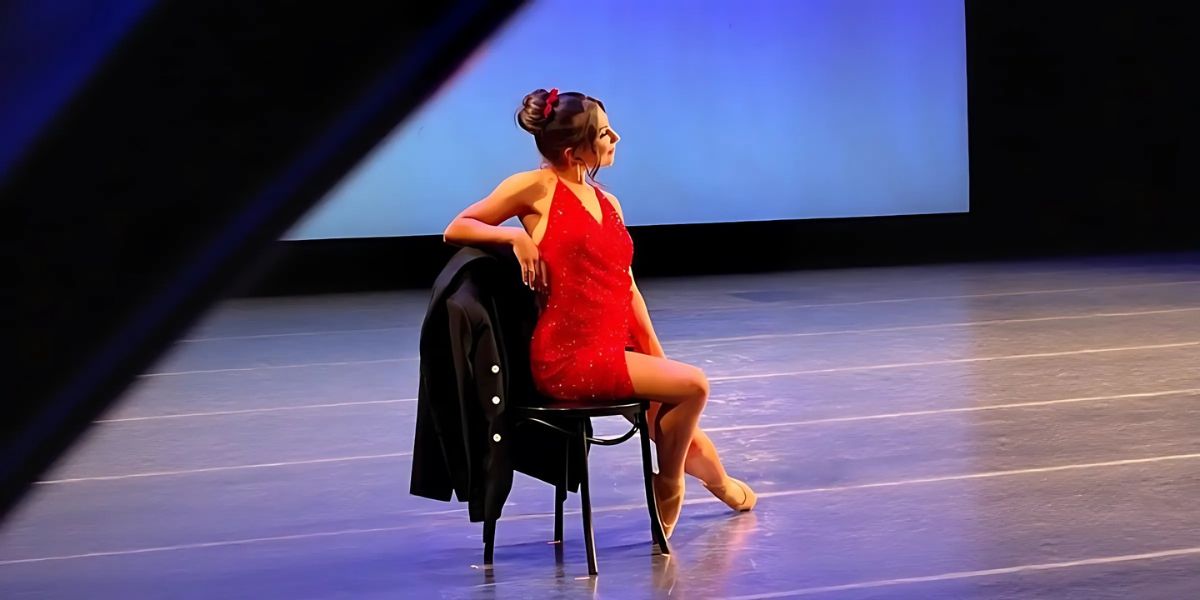
Elisa Molinari‘s career serves as a reminder that challenges often provide opportunities for growth. Starting ballet at the age of four in Genoa, Italy, she embarked on a path filled with intense training and competitions. Each experience became an opportunity to refine her skills and develop resilience. When she moved to Florence at thirteen, it marked a crucial point in her life. Leaving her family behind to pursue her passion wasn’t just a bold decision; it was a necessary step for advancing her training at the esteemed Accademia Internazionale Coreutica. Here, Elisa encountered rigorous instruction, honed her artistry, and learned to adapt to diverse teaching methods and choreography. This formative experience instilled a strong work ethic that can be seen in her performances today.

However, the journey was not without its obstacles. The demanding nature of classical ballet can challenge even the most dedicated dancers. Yet, Elisa has displayed a remarkable ability to navigate setbacks. Whether mastering intricate choreography or recovering from injuries, she has cultivated mental resilience to complement her physical training. Each challenge contributed to a deeper understanding of both dance and her own abilities. As she reflects, “It taught me discipline, resilience, and the importance of expressing emotion through my art.” These values are evident in her performances, where her ability to connect with audiences is clearly felt. For glimpses of her journey, you can visit her personal Instagram account here.

Significant milestones, such as her acceptance into the renowned Accademia Teatro alla Scala in Milan, reinforced her belief in her potential. This early recognition not only provided a confidence boost but also served as an affirmation that her dedication was being noticed on a global scale. Every award and scholarship she received, such as those from the Ajkun Ballet Theatre and U.K. Ballet, contributed to the development of her artistic identity. These accolades reflect the idea that persistence can lead to recognition, inspiring aspiring dancers everywhere.

Elisa’s artistic journey is constantly evolving. As she continues to advance in her career, she remains open to new experiences that encourage her growth. Whether exploring different dance styles or embracing challenging roles in productions like The Nutcracker and Romeo & Juliet, Elisa actively seeks ways to expand her skill set. Her recent promotion to Senior Artist at the Ajkun Ballet Theatre exemplifies her dedication to her craft, with her performances in major productions consistently demonstrating her commitment.

As she shines on the ballet stage, Elisa stays grounded. Her journey underscores the idea that resilience and adaptability are not just key to a dance career—they are essential life lessons. They remind us that every challenge has the potential to offer new avenues for growth, transformation, and discovery. For more updates on her latest projects and performances, you can also follow her dedicated dance account on Instagram at @eli_saballet.

Building a Future of Growth and Connection

Reflecting on her journey, Elisa Molinari envisions a future where her ambitions are deeply connected to her past experiences. With a focus on refining her skills and broadening her artistic repertoire, she hopes to continue evolving as an artist. Her aspirations extend beyond performances; she is keen to connect with audiences worldwide. This desire to engage with others is not limited to her dancing but also extends to sharing her knowledge with emerging dancers. Elisa understands the importance of supporting the next generation, and her goal of becoming a certified yoga and Pilates instructor aligns with this mission.

Yoga and Pilates have had a positive impact on her overall well-being and emotional resilience. Not only do they help in preventing injuries and maintaining flexibility, but they also promote self-awareness. Elisa is interested in incorporating these practices into her dance training, with a view to helping others achieve balance and strength in their lives. This dual focus on performance and mentorship highlights her commitment to fostering holistic growth in dancers. As she says, “It’s about creating a supportive community where everyone can grow together.”

As she progresses in her career, Elisa looks forward to roles that will challenge her both artistically and emotionally. Works like La Bayadère, which gave her her first soloist role, demonstrate her readiness for greater challenges. Each new role reflects her growth as an artist. Her recent international tour with the Ajkun Ballet Theatre in Kosovo further reinforces her belief in how dance can bridge cultural divides. Performing before diverse audiences has only deepened her passion for storytelling through movement.

Elisa Molinari’s career exemplifies resilience and adaptability—values that have shaped her artistic identity and will continue to guide her as she evolves. Each performance, competition, and training session contributes to a compelling narrative that resonates with others. As she looks toward the future, it is clear that she is committed to growth, not only as a dancer but as a person. Her strength lies not in perfection but in her capacity to adapt and persevere through challenges, making her a powerful force in the world of ballet.

To stay connected with Elisa’s latest achievements and insights into her dance journey, her community can follow her on Instagram. She shares not just her performances but also the experiences and lessons that contribute to her ongoing development, inviting others into her world of art. Through this connection, she hopes to inspire others to pursue their own dreams with determination.

As she charts her course, the future looks promising for this talented ballet artist. With a foundation built on resilience and adaptability, Elisa Molinari is well-positioned to make a lasting impact on the world of dance, both on stage and beyond.

The Role of Evidence in Proving Wrongful Death Claims

To succeed in a wrongful death claim, it is important to have solid evidence, such as medical records, autopsy reports, financial documents, and credible witness or expert testimony. This is especially significant for fatal accident compensation claims, where proving each element—duty, breach, causation, and damages—can be critical. By gathering and presenting evidence in an organized manner, you can strengthen your case and avoid common pitfalls. There are also key strategies for securing and using this evidence that could contribute to the success of your claim.

Understanding the Legal Standard for Wrongful Death

Before you can build a strong wrongful death claim, it’s essential to understand the legal standard courts use to determine liability. Courts generally require you to prove that the defendant’s negligence or intentional act contributed to your loved one’s death.

Legal standards in wrongful death cases often mirror those in personal injury lawsuits, meaning you must establish duty, breach, causation, and damages. The burden of proof typically rests on you, the plaintiff, and is usually based on a “preponderance of the evidence.” This means you must demonstrate that it is more likely than not that the defendant’s actions were a contributing factor in the death.

It’s important to avoid relying on assumptions and instead focus on clear, convincing facts that meet the legal criteria. Familiarity with these standards and the burden of proof can help guide your case strategy.

Types of Evidence Commonly Used in Wrongful Death Cases

While each wrongful death case may be unique, certain types of evidence are frequently crucial in proving liability and damages. You will want to gather significant documentation, such as photographs from the scene, eyewitness statements, accident reports, and related correspondence. These materials can help create a factual timeline and establish the circumstances that led to the death.

Legal procedural evidence, including police reports and findings from official investigations, can also support your claim by providing authoritative, impartial records. Financial records—such as pay stubs and tax returns—help quantify economic losses, supporting your request for compensation.

In addition, expert witness opinions can clarify technical aspects of the case, such as accident reconstruction or causation. By prioritizing comprehensive documentation and following proper legal procedures, you can build a stronger, fact-based wrongful death claim.

The Importance of Medical Records and Autopsy Reports

While physical evidence and eyewitness accounts establish the context of a wrongful death, medical records and autopsy reports provide authoritative proof of the cause and manner of death. These documents are essential in showing the direct link between the incident and the fatal outcome.

Medical records detail prior health conditions, treatments, and the victim’s state before the event, helping to address claims of pre-existing conditions. Autopsy reports offer forensic analysis that can clarify whether the injuries sustained align with the alleged cause of death.

When combined with surveillance footage, these elements can corroborate the sequence of events leading to the fatality. Together, they help create a detailed, credible narrative that courts often find compelling. Without such documentation, your claim may be at risk of being weakened by a lack of scientifically supported evidence.

Role of Eyewitness Testimony and Expert Witnesses

Eyewitness testimony and expert witnesses play distinct but complementary roles in establishing liability and causation in a wrongful death case.

Eyewitnesses provide direct accounts of the incident, which can help reconstruct what happened and who may be responsible. However, witness credibility must be evaluated carefully—issues like bias, memory lapses, or inconsistencies can affect their reliability in court.

Expert witnesses, such as accident reconstructionists or forensic specialists, provide professional opinions on complex aspects of the case, such as causation or the standard of care. Their testimony can add scientific rigor to your claim, often filling in gaps left by lay witnesses.

Collecting Physical and Digital Evidence

Physical and digital evidence can form the backbone of a wrongful death claim, so it is crucial to act promptly and methodically to secure it. Physical evidence—such as accident debris, defective products, or medical records—can deteriorate or be lost, so preserving it as early as possible is important. Taking photographs, collecting tangible items, and documenting the scene in detail are essential steps.

On the digital side, leveraging digital forensics to recover crucial data, such as surveillance footage, electronic communications, or vehicle black box data, can be valuable. It is important to request access to digital records before they are overwritten or deleted. Electronic logs, emails, and GPS data can provide important context and timelines that may help clarify the situation.

Demonstrating Damages and Losses to Surviving Family Members

Although proving liability is a central part of a wrongful death claim, it is equally important to demonstrate the full extent of the damages and losses suffered by surviving family members. It is not enough to show that the death occurred—you must also provide clear documentation of both tangible and intangible losses.

Financial impacts, such as lost income, benefits, and future support, need to be carefully documented. This may require expert testimony and detailed financial projections. Emotional impacts, such as grief, loss of companionship, and mental anguish, should not be overlooked. Statements, counseling records, and expert evaluations can help illustrate the emotional toll on surviving family members.

Both insurers and courts typically require concrete evidence linking the death to these damages. By providing organized proof of both financial and emotional harm, you can strengthen your case for fair compensation.

Preserving and Presenting Evidence in Court

Proper preservation and presentation of evidence in court are vital to the success of a wrongful death claim. You need to maintain a clear chain of custody for every piece of evidence, from accident reports to medical records. Any disruption in this chain could compromise the admissibility of evidence, making it easier for the opposing party to challenge your case.

Documenting who collected each piece of evidence, when, and how it was stored is critical. In court, it is essential to present evidence logically and connect each item to specific elements of your claim, such as causation or damages. Organizing exhibits in a way that the judge or jury can easily follow will help communicate your argument effectively.

Frequently Asked Questions

How Long Do I Have to File a Wrongful Death Claim?

Typically, you have two years to file a wrongful death claim, but the statute of limitations may vary by state. Filing in a timely manner is important to ensure your rights are protected.

Who Is Eligible to File a Wrongful Death Lawsuit?

You can file a wrongful death lawsuit if you are a surviving spouse or child. In some states, other family members, such as parents or dependents, may also be eligible, so it’s essential to check local laws.

What Compensation Can Be Recovered in Wrongful Death Cases?

You may be able to recover compensation for medical expenses, lost income, and emotional suffering. Compensation calculation depends on wrongful death statutes, which vary by state, so it’s important to consider each category carefully.

Can Wrongful Death Claims Be Settled Out of Court?

Yes, wrongful death claims can be settled out of court. Exploring settlement options and using negotiation strategies may allow you to reach a fair agreement. This approach can often save time and reduce the unpredictability of trial outcomes.

How Are Attorney Fees Handled in Wrongful Death Cases?

In wrongful death cases, attorneys often work on a contingency fee basis, meaning they only get paid if you win or settle the case. This makes legal representation accessible without the need for upfront payments.

Summary

When pursuing a wrongful death claim, the strength of your evidence is a significant factor in the outcome of your case. By gathering extensive medical records, securing expert testimony, and documenting damages, you can create a compelling narrative for the court. Don’t overlook physical and digital evidence—these details can often be decisive. Ultimately, presenting well-preserved and credible evidence helps ensure the court understands the loss and the defendant’s liability, potentially increasing your chances of achieving justice for your loved one.


Disclaimer: This article is for informational purposes only and does not constitute legal advice. The information provided is based on general principles of wrongful death claims and may not apply to your specific situation. Readers are encouraged to consult with a qualified attorney for personalized legal guidance regarding wrongful death claims or any legal matters.