
By: Gloria Armstrong
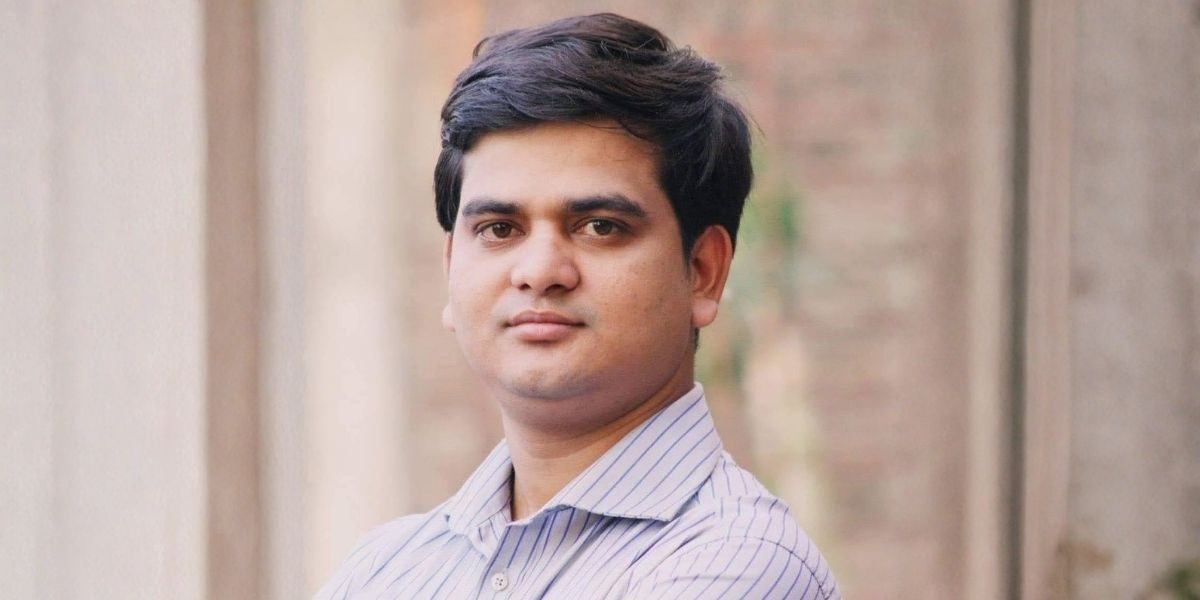
Md Firoz Kabir is rapidly emerging as a global voice in artificial intelligence-driven healthcare innovation, recognized for his groundbreaking work in developing diagnostic technologies that detect cancer and heart disease at earlier and more treatable stages. His research is gaining attention during a critical global health moment: cancer and cardiovascular disease together claim over 1.5 million American lives annually, making them the nation’s leading causes of death. Cancer alone caused approximately 613,000 deaths in 2023, while cardiovascular conditions claimed 919,000 lives, averaging one death every 34 seconds (CDC, 2024). These losses are paired with staggering financial burdens. Cancer care reached $209 billion in 2020, while cardiovascular disease cost $417.9 billion between 2020 and 2021. Diagnostic errors also impact 12 million U.S. patients annually, contributing to over $100 billion in malpractice expenditures (Johns Hopkins Medicine, 2023; AHRQ, 2024). Md Firoz Kabir’s work focuses on addressing public health challenges using AI systems that analyze medical images, patient signals, and clinical patterns with speed and precision. “My mission is to save lives through technology. Every model we build moves us one step closer to a healthcare system where early detection is standard and accessible for every community,” Kabir states.
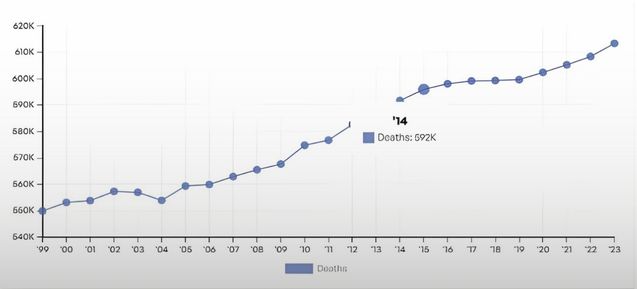
Photo Courtesy: CDC
Md Firoz Kabir’s journey into technological innovation began in Bangladesh, where his passion for computing took root at an early age. In 2006, still a school student, he purchased his first computer, a decision that would define the trajectory of his life. While peers used computers casually, Kabir saw something more profound. He explored operating systems, software, and eventually programming languages, filling notebooks with handwritten code, algorithms, and experimental logic. Even before completing high school, he gained foundational proficiency in programming and computational thinking. His curiosity matured into a determination to pursue computer science seriously. After formal studies, Kabir joined BRAC, one of the world’s leading humanitarian organizations, as a Computer Operator. There, he strengthened his technical abilities through hands-on experience with database operations, reporting systems, software workflows, and analytical tools. Alongside full-time work, he completed advanced training in software engineering, web technologies, and database management, all while nurturing a growing fascination for data science, machine learning, and healthcare analytics. The discipline and technical foundation he developed during these early years became the backbone of his later academic and research breakthroughs.
Md Firoz Kabir’s ambition led him to the United States, where he pursued advanced studies at the University of the Cumberlands, immersing himself in artificial intelligence, deep learning, and medical imaging. It was here that he sharpened his focus on leveraging AI for early disease detection, combining his computational background with a commitment to solving one of humanity’s most urgent challenges: the delayed diagnosis of life-threatening illnesses. According to him, his cancer research now encompasses the analysis of 20,000 lung and colon tissue images, processed using augmentation, normalization, and hybrid convolutional layers that employ 3×3 and 5×5 filters to capture multi-scale spatial features. He built advanced transformer-based diagnostic systems inspired by SE-MobileViT (2025), culminating in his improved architecture LightSE-MobileViT, which achieved 98.39% accuracy and a perfect ROC-AUC score of 1.00 on 981 oral cancer images, demonstrating exceptional discriminatory power between malignant and non-malignant tissue. These results position his framework as a favorable candidate for future clinical deployment, supporting pathologists with fast, reliable assessments and reducing human error in cancer diagnostics. His cardiovascular research further demonstrates his interdisciplinary expertise. According to Kabir, using 1,025 patient records and 14 clinical features, he employed normalization, SMOTE oversampling, and XGBoost-based feature ranking to address clinical imbalance and identify key predictive signals. His hybrid models integrate XGBoost, Capsule Networks, Convolutional Neural Networks, and Transformer Encoders, capturing both local feature dependencies and long-range temporal dynamics, demonstrating precision in early cardiac risk prediction. These integrated pipelines demonstrate durability, generalizability, and clinical relevance across diverse datasets, contributing to the growing demand for scalable, AI-assisted heart disease screening tools.
Kabir’s achievements extend far beyond technical development. He has worked closely with university professors across multiple disciplines, contributing to advanced research in artificial intelligence, medical imaging, and clinical analytics. His collaborative projects strengthened model development, validation, and academic publication efforts. According to him, his scientific influence is reflected in his 17-plus peer-reviewed journal publications, five conference papers, a published book chapter, and multiple manuscripts under review in high-tier Q1 journals. His research has been cited, shared, and acknowledged by scientists working in AI, oncology, radiology, and clinical diagnostics. Several of his studies, particularly his frameworks for cancer classification and heart disease prediction, have earned recognition from academic publishers and the AI-healthcare community. Alongside publishing, Kabir contributes significantly to scientific evaluation as a peer reviewer and scientific judge for reputable journals specializing in artificial intelligence, biomedical imaging, and clinical data analytics. His reviewer roles further strengthen his standing in the research community, demonstrating trust in his technical expertise and ability to evaluate complex scientific work.
Currently, Kabir is expanding his efforts toward real-world testing and deployment. He is working to build collaborations with hospitals, diagnostic centers, and interdisciplinary research institutions to transition his models from laboratory prototypes into clinical pilot studies. A key component of his current work is evaluating fairness, bias reduction, and demographic generalization, ensuring that his AI systems serve diverse populations without compromising predictive accuracy. This commitment is essential for ethical AI integration in healthcare, particularly within large and heterogeneous patient environments like the United States. Kabir is also exploring federated learning pipelines to enable secure, privacy-preserving collaboration between hospitals while maintaining compliance with medical privacy frameworks such as HIPAA. Additionally, his interest in device-friendly, lightweight AI models aims to make advanced diagnostics available in low-resource settings, including developing countries where medical imaging facilities and specialist physicians are limited.
Kabir’s long-term vision extends far beyond academic recognition. He imagines a future where AI-powered healthcare transcends borders, socioeconomic barriers, and technological limitations. His goal is to develop diagnostic systems capable of analyzing clinical images, laboratory results, and patient signals in real time, enabling anyone, anywhere, to detect disease risks in minutes rather than weeks. Such systems could prevent millions of deaths, reduce global healthcare burdens, and democratize access to cutting-edge medical technology. From a child in rural Bangladesh exploring his first computer to a U.S.-based researcher shaping the future of medical AI, Kabir’s life represents passion, resilience, and purpose. His continued work not only strengthens the scientific community but also reflects his belief that technology is most valuable when applied to protect human life. As global demand for early disease detection continues to rise, Kabir’s contributions serve as a beacon of innovation, offering real hope for a future in which intelligent, precise, and accessible diagnostic systems become the standard worldwide.
Disclaimer: The information presented in this article is based on claims made by Md Firoz Kabir regarding his research and technological developments. While efforts have been made to ensure accuracy, these claims have not been independently verified and may reflect ongoing research. Results presented are for informational purposes and may not yet reflect clinical deployment or broader generalizability.