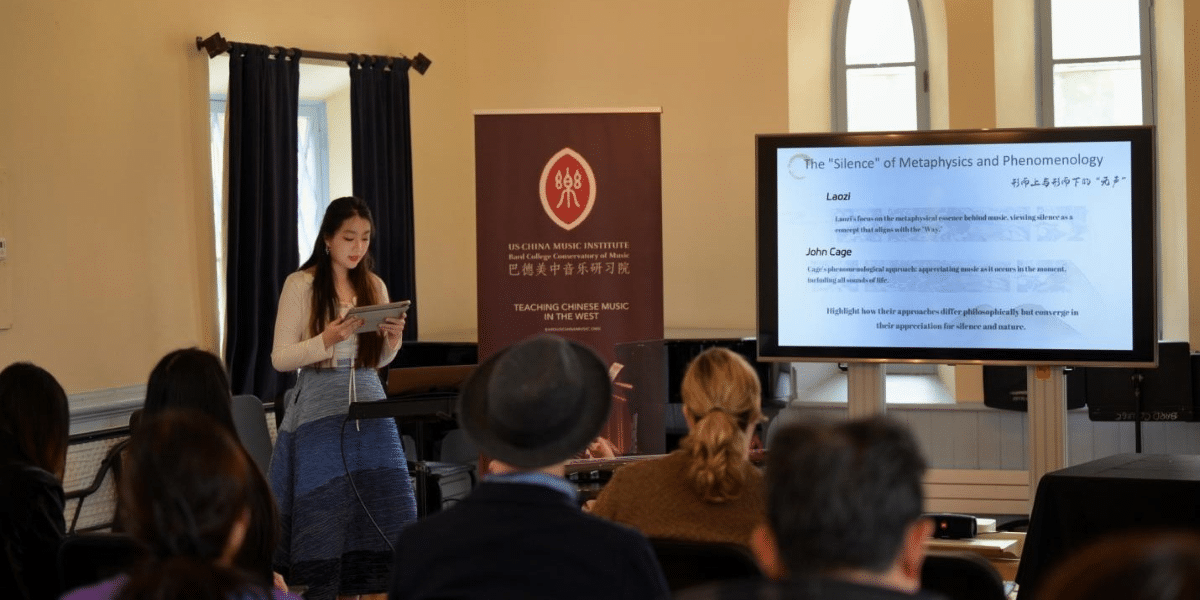


By: Dorian Thatcher
Exploring the Philosophical Underpinnings of John Cage’s Music
Wenrui Shi’s thesis, “The Greatest Music Has the Faintest Notes: The Influence of Eastern Philosophical Thought on John Cage’s ‘Chance Music,'” profoundly explores the intricate relationship between Eastern and Western musical philosophies. Her research delves into how John Cage, an iconic figure in 20th-century music, was profoundly influenced by Eastern philosophical thought, including Taoism, Zen Buddhism, and the principles of the I Ching.
John Cage’s avant-garde compositions integrated elements of indeterminacy, silence, and the natural world, reflecting the Taoist principle of “Da Yin Xi Sheng” (the greatest music has the faintest notes). Wenrui’s study highlights how Cage’s “Chance Music” embodies this concept, creating a dialogue between Eastern wisdom and Western artistic practice. This fusion challenged traditional Western musical norms and invited listeners to experience sound, silence, and chance in profoundly new ways, demonstrating the timeless relevance of Eastern philosophical insights in contemporary art.
Cultural Contributions and Innovations
Wenrui Shi has made significant contributions to the cultural preservation and innovation of Guqin music. As an accomplished performer and dedicated educator, she has played a pivotal role in promoting the Guqin, an ancient Chinese musical instrument, and its associated cultural heritage. Wenrui’s deep understanding of Chinese aesthetics and her innovative approach to Guqin music have revitalized this traditional art form, making it accessible and relevant to modern audiences.
Wenrui’s exploration of the art of “blank-leaving,” a crucial element of Chinese aesthetics rooted in Confucianism and Taoism, is particularly noteworthy. This principle, which emphasizes the space between notes and the silence that enhances the perceptual understanding of music, is central to Guqin music. By integrating “blank-leaving” into her performances and teachings, Wenrui has enriched the artistic and expressive qualities of Guqin music, allowing listeners to reflect on the mood and emotion of the music and fostering a deeper connection to the piece.
Lecture-Recital: Bridging Tradition and Modernity
Wenrui Shi’s lecture-recital, “The Greatest Music Has the Faintest Notes: ‘Blank-Leaving’ in Guqin Music and Its Contemporary Development,” held at the US-China Music Institute of Bard College Conservatory of Music, underscored her profound grasp of Guqin music and her innovative approach to traditional Chinese music. She demonstrated how “blank-leaving” creates a balance between sound and silence, drawing from Laozi’s idea of “Da Yin Xi Sheng.” During the recital, Wenrui performed classic Guqin pieces such as “Mozi’s Elegy on Silks,” “Swans on the Shoal,” and “Autumn Geese,” showcasing how the irregular mixed beats and free rhythm create a natural flow and express complex inner emotions. Her performances illustrated the profound cultural value and musical expression of “blank-leaving,” revealing its significance in achieving higher artistic expression and emotional depth.
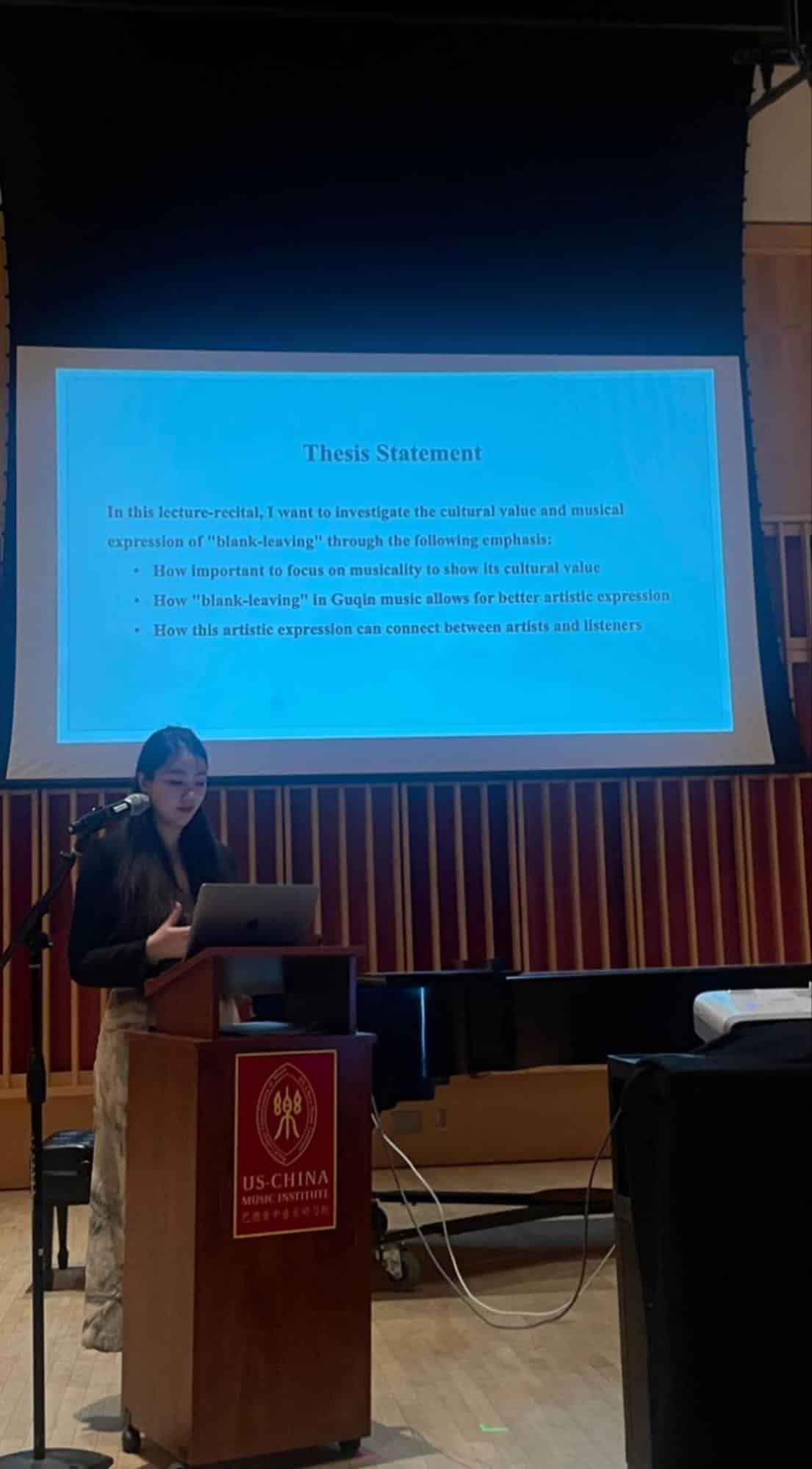
Photo Courtesy: Wenrui Shi
Educational Impact and Influence
Beyond her performance achievements, Wenrui Shi has significantly impacted the field of Guqin music through her educational endeavors. As a faculty member at Bard College and other institutions, she has influenced many students, integrating traditional Chinese music aesthetics with modern techniques. Her teachings on “blank-leaving” have provided valuable insights for future generations of musicians, fostering a deeper understanding and appreciation of this unique artistic form.
Wenrui’s previous lecture on “blank-leaving” at the 21st Century Guqin Music Seminar further solidified her reputation. In this presentation, she explored the cultural value and musicality of “blank-leaving” in both historical and contemporary contexts. She highlighted the differences between Chinese and Western approaches to music, emphasizing the unique spiritual mood (意境) achieved through the Guqin’s use of silence and space. This lecture received widespread acclaim from scholars and musicians alike, underscoring Wenrui’s expertise and her pivotal role in advancing the understanding and appreciation of Guqin music.
Cultural Significance and Future Impact
Wenrui Shi’s work continues to inspire and shape the future of Guqin music, ensuring that this ancient art form thrives in the modern world. Her research and performances bridge the gap between tradition and modernity, preserving the cultural heritage of Guqin music while introducing innovative elements that resonate with contemporary audiences. In recognition of her remarkable achievements and contributions, Wenrui Shi stands out as a leading figure in the realm of traditional Chinese music. Her profound artistry and scholarly endeavors embody both the preservation and evolution of cultural heritage. Wenrui’s ability to integrate the philosophical concepts of “blank-leaving” into her music and teachings highlights the timeless relevance of these ideas and their ability to enrich the cultural landscape.

Photo Courtesy: Wenrui Shi
Wenrui Shi’s achievements in Guqin music are not just a testament to her skill and dedication but also to her vision of cultural continuity and innovation. Her work ensures that the Guqin remains a living, evolving art form, deeply connected to its historical roots yet open to new expressions and interpretations in the contemporary world.
Published by: Martin De Juan