


Height tends to become a quiet concern long before anyone says it out loud. A routine school photo, a pediatric visit, or even standing next to classmates can trigger that subtle comparison. You notice it. Most parents do.
In the United States, growth tracking follows standardized data from the Centers for Disease Control and Prevention (CDC), which uses pediatric growth charts to map height percentile across age groups. Roughly speaking, children between the 5th and 95th percentile fall within a typical range, yet concern often starts when growth drifts lower or slows unexpectedly.
The American Academy of Pediatrics and the National Institutes of Health both emphasize that height reflects more than appearance; it signals overall development, including bone density, hormone balance, and nutrition status. Conditions like growth hormone deficiency may even show up first as slower-than-expected height gain.
Now, here’s the part that often gets overlooked: height growth isn’t random. It follows patterns. It responds to inputs. And that’s where education, something NuBest actively focuses on, starts to matter more than guesswork.
Understanding How Kids Grow Taller: The Science Behind Height
Height growth comes down to a mix of inherited potential and daily habits. Genetics sets a range, but environment decides where within that range growth actually lands. That distinction changes everything.
At the center of the process sits the pituitary gland, a small structure that releases human growth hormone (HGH). This hormone signals the liver to produce insulin-like growth factor 1 (IGF-1), which directly influences cartilage development at the growth plates (epiphyseal plates). That’s where bones lengthen, literally.
During puberty, growth speeds up. Rapid height increases, sometimes 3 to 4 inches per year, align with hormone surges and shifts in puberty timing. But here’s the catch: once those growth plates close (skeletal maturity), height stops increasing. No workaround exists beyond that point.
A bone age test, often used in pediatric endocrinology, helps estimate how much growth remains. It compares skeletal maturity against chronological age, and sometimes the results surprise families, either more time left than expected, or less.
Common myths still circulate. Stretching alone won’t increase height permanently. Supplements without nutritional gaps don’t magically trigger growth. And late growth spurts? They happen, but not as often as people hope.
What tends to happen instead is quieter: small, consistent improvements stacking over time, nutrition, sleep, and hormone regulation all working together.
Essential Nutrients That Support Healthy Height Growth
Nutrition drives the physical structure of growth. Without the right building blocks, the body simply can’t maximize its potential, even with perfect genetics.
Calcium directly supports bone mineralization. Vitamin D improves calcium absorption. Without both, bone density suffers, even if dietary intake looks adequate on paper.
Protein plays a different role. It fuels tissue growth, including collagen synthesis, which strengthens cartilage before it hardens into bone. In real life, that looks like steady, proportional growth rather than sudden spikes.
Then come the quieter contributors, zinc and magnesium. Zinc supports hormone regulation and cellular growth. Magnesium assists in nutrient metabolism and bone structure integrity. Deficiencies in either tend to slow things down, not dramatically, but noticeably over time.
A balanced multivitamin often fills nutritional gaps, especially in selective eaters. But absorption matters as much as intake. Nutrient bioavailability, the body’s ability to actually use what’s consumed, varies widely.
Most growth challenges tied to nutrition aren’t about extreme deficiencies. They’re about consistent underperformance in daily value percentages. Slight gaps, repeated over months or years, gradually shift outcomes. Explore foods that help increase height at HeightGrowth.net
Best American Foods That Help Kids Grow Taller
Walk through a typical American kitchen, and the building blocks for growth are already there, just not always used intentionally.
Dairy products like Horizon Organic milk deliver calcium and fortified vitamin D. Lean proteins from Tyson Foods, chicken breast, turkey support muscle and tissue development. Leafy greens bring magnesium and micronutrients often missing in processed diets.
Fortified cereals such as Cheerios play a surprisingly useful role. Many contain added iron, vitamin D, and B vitamins, making them a practical breakfast option, especially when paired with fortified milk.
The US Department of Agriculture (USDA) promotes the “balanced plate” approach:
- 50% fruits and vegetables
- 25% lean protein
- 25% whole grains
In practice, school lunches and busy schedules complicate that ideal. So adjustments matter, simple ones. Packing yogurt, adding boiled eggs, and swapping refined grains for whole grains. Small shifts.
Even traditional meals like Thanksgiving dinner, turkey, sweet potatoes, and greens, accidentally align with growth-supportive nutrition. It’s less about special foods and more about consistent patterns.
The Role of Sleep in Helping Kids Grow Taller Naturally
Sleep quietly controls one of the most critical growth triggers: hormone release.
The Sleep Foundation and American Academy of Sleep Medicine confirm that growth hormone peaks during deep sleep, particularly in the early night cycle. Disrupted sleep reduces that release window.
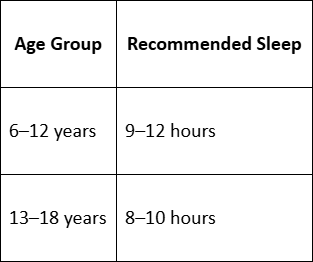
Recommended sleep durations look like this:
But real life doesn’t always follow guidelines. Screen exposure, phones, tablets, delays melatonin production, shifting the circadian rhythm later. That delay cuts into deep sleep cycles (REM and non-REM balance), where hormone release actually happens.
Bedtime consistency matters more than most expect. A difference of even 60–90 minutes between weekdays and weekends can disrupt the rhythm.
What shows up over time isn’t dramatic sleep deprivation. It’s subtle, lighter sleep, delayed onset, reduced hormone peaks.
Exercise and Sports That Promote Height Development
Physical activity supports height in indirect but measurable ways.
Weight-bearing exercises stimulate bone remodeling. Movement signals bones to strengthen and adapt. Over time, that contributes to structural growth, especially during developmental years.
Sports like basketball and swimming encourage full-body extension and posture alignment. Organizations like the YMCA and Little League Baseball provide structured environments where consistent activity becomes routine.
Posture, oddly enough, plays a visible role. Slouching compresses the spine, while proper alignment allows full height expression. That doesn’t increase bone length, but it changes how height presents day to day.
The American Academy of Pediatrics recommends at least 60 minutes of daily activity. In practice, what matters is consistency rather than intensity.
When to Consider Supplements for Height Support
Diet doesn’t always cover everything. Busy routines, picky eating, and nutrient gaps make supplementation a practical option in certain cases.
The US Food and Drug Administration (FDA) regulates supplements under the Dietary Supplement Health and Education Act of 1994, which ensures labeling transparency but does not require the same pre-approval as medications. That distinction matters.
Products like NuBest Tall are formulated to support height growth by combining calcium, vitamin D, zinc, and other micronutrients with researched bioavailability. Clinical research referenced by the National Institutes of Health supports the role of these nutrients in bone development and growth processes.
Still, dosage and safety remain important. Pediatric consultation, especially within pediatric endocrinology, helps determine whether supplementation aligns with individual growth patterns.
Supplements tend to work best when they fill a gap, not replace a diet.
Monitoring Your Child’s Growth Progress at Home
Tracking growth turns vague concerns into measurable patterns.
Using a CDC growth chart, height percentile becomes a clear indicator of development relative to peers. Regular height measurement, every 3 to 6 months, provides enough data to identify trends without over-monitoring.
Key indicators include:
- Consistent percentile tracking
- Sudden drops in growth curve
- Delayed puberty signs
- Signs of short stature
The American Academy of Pediatrics recommends annual checkups, where pediatricians evaluate BMI-for-age, developmental milestones, and overall physical examination results.
At home, even simple tools, a wall chart, a notebook, can reveal patterns that otherwise go unnoticed.
Building Healthy Habits That Help Kids Grow Taller Long-Term
Long-term growth doesn’t hinge on one factor. It reflects patterns repeated daily.
Balanced meals aligned with MyPlate guidelines, consistent sleep routines, and regular activity shape outcomes over time. The US Department of Health and Human Services and CDC both highlight these habits as foundational, not just for height, but for overall development.
Processed foods, high sugar intake, and sedentary habits tend to interfere, not instantly, but gradually. That’s usually how it shows up: slow shifts rather than sudden changes.
Family routines play a bigger role than expected. Shared meals, set bedtimes, active weekends. These patterns anchor behavior without needing constant correction.
Height growth, in the end, rarely follows a straight line. It moves in phases, influenced by timing, biology, and daily choices, sometimes predictable, sometimes not.