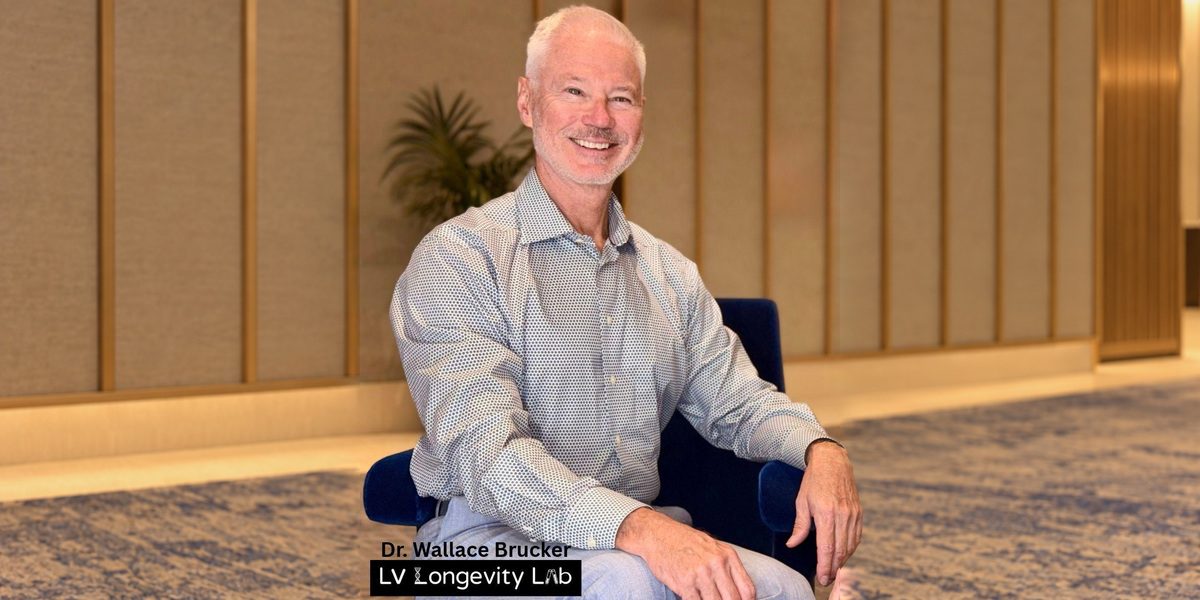

By: Dr. Wallace Brucker
As millions track sleep, heart rate, and glucose on wearables, LV Longevity Lab’s Dr. Wallace Brucker explains why biometric data only matters when a physician can interpret it and act on it
LAS VEGAS, NV, October 4, 2026. Americans have never had more data about their own bodies. Oura rings track sleep. Whoop bands measure recovery. Apple Watches log heart rate and estimate VO2 max. Continuous glucose monitors flag every spike. Yet for all this information, most people are left with the same uneasy feeling: their device is telling them something is off, and they have no idea what to do about it. According to Dr. Wallace Brucker, MD, founder of LV Longevity Lab in Las Vegas, that gap between data and action is one of the biggest missed opportunities in modern health.
“People are walking around with more health data on their wrist than a hospital had access to a generation ago,” said Dr. Brucker. “But data without interpretation is just noise. I have patients come in anxious because their recovery score is low or their HRV keeps dropping, and no one has ever helped them understand what it actually means for their health. That’s the problem I want to solve.”
Wearables have been a genuine breakthrough for awareness. They’ve made millions of people pay attention to sleep quality, resting heart rate, heart rate variability, activity, and even blood sugar, metrics that were once invisible. Dr. Brucker is quick to credit them for that.
“I love that patients are engaged. These devices have done something remarkable. They’ve made people curious about their own physiology,” he said. “A wearable that nudges you to walk more or shows you how alcohol wrecks your sleep is doing real good. I never want to discourage that. But awareness is the first step, not the last one.”
The trouble, Dr. Brucker explains, is that consumer devices are built to estimate and motivate, not to diagnose. A smartwatch’s VO2 max reading is an approximation. A recovery score is an algorithm’s best guess. And a single flagged metric, viewed in isolation, can cause needless worry or, worse, give false reassurance.
“A watch can tell you your resting heart rate is creeping up, but it can’t tell you why,” said Dr. Brucker. “Is it stress? A thyroid issue? Overtraining? Early cardiovascular change? A hormone imbalance? The number is a clue, not an answer. You need a physician who can connect that clue to real diagnostics and a real history to make it meaningful.”
That’s precisely the role Dr. Brucker plays at LV Longevity Lab. Rather than dismissing the data patients bring in, he treats it as a valuable starting point and then pairs it with clinical-grade testing that consumer devices can’t replicate. Where a watch estimates VO2 max, Dr. Brucker measures it directly using the clinic’s PNOĒ metabolic analyzer. Where a wearable hints at metabolic stress, he runs comprehensive blood panels, hormone evaluations, and inflammatory markers to look for underlying causes.
“The magic happens when you combine the two,” Dr. Brucker said. “Your wearable shows me patterns over time in your real life: how you’re actually sleeping, recovering, and moving. My testing shows me what’s happening inside at a level the device can’t see. Put those together, and suddenly we’re not guessing. We have a complete picture, and more importantly, a plan.”
That plan is where the data finally becomes useful. Based on both the patient’s biometric trends and their clinical results, Dr. Brucker builds a personalized longevity strategy that may include hormone optimization, metabolic and nutritional changes, targeted fitness and recovery protocols, and inflammation reduction. Because wearables provide continuous feedback, patients can follow their own trends alongside their clinical results.
“This is the part people miss: the goal isn’t to collect data, it’s to change outcomes,” Dr. Brucker said.
His advice to the data-rich but answer-poor is simple: don’t ignore what your device is telling you, but don’t try to decode it alone.
“If your smartwatch is telling you something’s wrong, listen, but then bring it to someone who can do something about it,” Dr. Brucker said. “The data is the beginning of the conversation. My job is to finish it.”
About LV Longevity Lab
LV Longevity Lab is a Las Vegas-based longevity and optimization medical practice led by Dr. Wallace Brucker, MD. Combining advanced diagnostic testing with personalized, evidence-informed treatment, the practice works with patients on energy, metabolism, hormones, and long-term health.
Media Contact
Margaret Brucker, LV Longevity Lab, Las Vegas, Nevada
Website: https://lvlongevitylab.com
Disclaimer: This article is for informational purposes only and is not intended to provide medical advice, diagnosis, or treatment. Wearable device data and biometric measurements should not be used as a substitute for evaluation by a qualified healthcare professional. Readers should consult a licensed medical provider regarding any health concerns, symptoms, test results, or treatment decisions.