Vera Sigma: Why Backlinks are still relevant?

By: Vera Sigma

Backlinks are considered valuable because they function similarly to endorsements in the broader community. Each link from another website acts as a nod of approval for your content. Numerous high-quality backlinks suggest to search engines that your content is worthwhile and credible, enhancing your site’s visibility and ranking. 

These backlinks, particularly from respected and relevant sources, are akin to receiving public support, boosting your website’s perceived reliability and relevance in search results.

But what are backlinks, and why do they still matter?

What Are Backlinks?

If you’re new to SEO, you might ask, “What is a backlink?” A backlink is a link from another website to yours. High-quality backlinks can boost your search engine ranking and visibility, leading to more website traffic.

Backlinking is just one part of SEO. Since it happens off your website, it’s known as off-page SEO, unlike on-page SEO, which deals with your site’s content. High-quality backlinks act like endorsements, recommending your content to others for specific topics.

Ultimately, backlinks help search engines assess your website’s authority and relevance for search queries. The more authoritative your content, the more Google rewards you, making backlinking essential for SEO.

Why Backlinks Are Important for SEO

Backlinks are crucial for SEO as Google treats them like endorsements. Typically, the more backlinks a page or site has, the more reliable it appears. But that doesn’t mean you can assure the  search results as there are so many factors that Google considers, especially if the content is relevant, high-quality and helpful to the community. Not only that, during these times, a lot of SEO agencies, experts, digital marketers and business owners are competing. So the chances of you getting at the first of search engine results are getting slimmer as time goes by.

As mentioned above, because of the high competition and content relevancy, you will be having a hard time getting ranked and one-way that can keep you up with the competition is by having backlinks on your page or website.

Are All Backlinks Valuable for SEO?

Not all backlinks are beneficial for SEO.

For example, nofollow links instruct search engines not to transfer link equity (SEO power) to the target site.

Nofollow links contain one of these attributes in their code:

  • rel=“nofollow”: Indicates the linking site does not endorse the target site.
  • rel=“sponsored”: Shows the link was paid for by the target site.
  • rel=“ugc”: Signifies the link is within user-generated content.

For example:

<a href=”https://www.yourwebsite.com/” rel=”nofollow”>This is a nofollow link</a>

Important Note

Links that don’t have a nofollow attribute automatically serve as follow or dofollow links, which will give link juice to your website.

Google may disregard backlinks from low-quality, irrelevant, or spammy sites because it doesn’t trust them to influence its results.

While it’s common to accumulate nofollow and low-quality backlinks over time, actively seeking them isn’t usually beneficial for SEO.

But that doesn’t mean it’s useless. Some digital marketers and agencies are still ok getting nofollow backlinks from other websites especially if those websites have high traffic, easily indexable and  importantly getting brand recognition. Take note, if you get a nofollow link from a reputable website, you should still be thankful because it’s there permanently.

More importantly, you should avoid building backlinks that violate Google’s link spam policies.

In the SEO community, these are sometimes called toxic backlinks. And, in the worst cases, they can lead to a Google penalty (or manual action) that actively harms your SEO.

Poor practices include:

  • – Paying for follow links with money, goods, or services
  • – Engaging in link exchanges (e.g., “link to me and I’ll link to you”)
  • – Using automated tools to generate links to your site
  • – Inserting keywords into anchor text in a spammy manner


Links can significantly impact your site’s success. Authoritative, relevant links can help you rank higher in search engine results pages (SERPs). However, despite following ethical practices and Google’s guidelines, you might still get unwanted backlinks.

How can you remove spammy or toxic links from your backlink profile? There are two methods:

1. Request the site owner to remove the link. Google requires this step when removing links.

2. Disavow the links.

Google’s Disavow Links tool can help manage your inbound links, but it should be used with caution. In this article, we’ll discuss how and when to use the tool, along with tips and common mistakes to avoid.

Summary

Backlinks are still very important but also do not forget to focus on high-quality content, technical optimizations and brand awareness as these are the factors that you should consider if you want to dominate your business online.

To learn more about marketing and advertising, visit our website at verasigma.com/resources.

Like us on Facebook: facebook.com/verasigma
Follow us on Twitter / X : x.com/verasigma
Follow us on Instagram: instagram.com/vera.sigma


Published By: Aize Perez

Icon Offices: Empowering Growth Amidst Tech Advancements

In today’s rapidly evolving business landscape, flexibility and innovative solutions have become vital in streamlining productivity and implementing new forms of technology. As drastic changes occur in business, global business solutions are required to enhance productivity and seamless operations.

Offering virtual and physical office space solutions, Icon Offices catalyzes business growth as technology advances.

Icon Offices, a leading provider of flexible workspace and global business solutions, has positioned itself at the forefront of the industry by offering a diverse range of services designed to meet the needs of modern businesses.

With their office space solution, Icon Offices offers private, shared office spaces and meeting rooms designed to meet the needs of modern businesses. Entrepreneurs and business owners can conduct business and cater to customers’ needs. At an affordable range, businesses can access self-contained office spaces furnished with desks and chairs and come with flexible agreements.

The London-based company’s offices are strategically positioned in significant commercial hubs where businesses can access local amenities, transport connectivity, a network of professionals, and wealth resources.

On top of office space solutions, Icon Offices allows business owners to incorporate companies in the UK. The online services offer a one-stop solution for businesses to form their own company and stay legally compliant by filing statutory documents. 

Business owners must have registration office addresses available during the process of incorporating companies. Where else could companies obtain a registered office address if not through virtual offices? No matter how big or small a company intends to extend its operations beyond its home borders, a virtual office is one way of remaining operationally visible at all times. This technology, therefore, becomes paramount for anyone planning on starting or expanding a business in any part of the world today. 

Virtual offices and remote work have seen significant growth in recent years. Various factors have driven this shift, especially technological advancements and the start of the global pandemic in 2019. According to Findstack statistics, 16% of companies globally fully operate remotely without an office.

Apart from professional business addresses, virtual offices offer additional services such as mail handling service (receiving parcels and letters anywhere) and VoIP landline phone system.

With mail handling services, you can flexibly receive mail from anywhere you are. Formal notification or mail sent by government agencies requires prompt acknowledgment, and through mail handling, the mail can be scanned and sent to your email address. 

Business owners can actively engage their customers through virtual numbers in this digital era where everything relies on connectivity. Virtual numbers offer a sense of local connection without the business being physically located in the area.

Icon offices embrace the concept of virtual communication, offering virtual numbers and call answering services so businesses do not miss a call from their customers and create efficient and seamless business operations. With features like call forwarding, auto attendant, and integration with other devices, Icon Offices increases productivity in their services and minimizes customer frustrations.

In conclusion, office space and global business solutions are how Icon Offices become the epitome of development and invention. Icon Offices blends innovative technology, sustainable practices, and flexibility to enable business growth.

Today’s fast-changing technological world perpetually challenges businesses in terms of how to manage diverse shifts occurring in industries; hence, it is beneficial for companies operating under variable environments to partner with institutions seeking to navigate the complexities of flexible working solutions and modern workplaces.


Published by: Khy Talara

Elecrow Launches Portable Monitor to Empower Devices as Laptops on Kickstarter

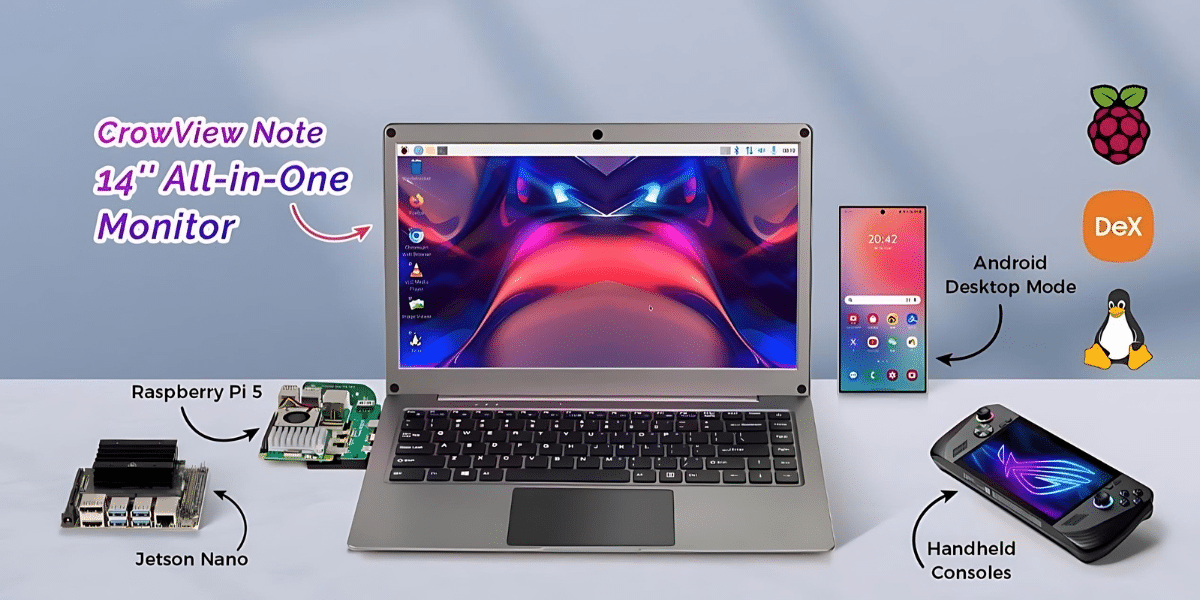
SHENZHEN, China — Elecrow, a leading supplier of open-source hardware and electronic products, announces the launch of its highly integrated portable monitor, CrowView Note, on Kickstarter. Designed to meet the demanding needs of single-board computer (SBC) developers, office workers, and on-the-go users, CrowView Note empowers devices as laptops. It is now available on Kickstarter with an exclusive 30% off discount.

CrowView Note is a 14″ monitor with a built-in keyboard, touchpad, speakers, and microphone, enabling it to elevate your device into a full-fledged laptop. It is compatible with smartphones, SBCs like Raspberry Pi 5 and Jetson Nano Developer Kit, mini PCs, and gaming consoles, providing a clean, organized workspace to enhance productivity anywhere. 

Elecrow Launches Portable Monitor for Laptops on Kickstarter_2

Photo Courtesy: Elecrow

“It’s an exciting moment to release CrowView Note for those who work closely with SBCs, need a more convenient and secure way to handle business, or want a multifunctional monitor that transitions from work to play with ease,” said Jan, PM of CrowView Note. “Developers have their own approaches to R&D with SBCs, and smartphones are increasingly used for both work and play. However, the small screens of smartphones can be limiting, and setting up SBCs with multiple peripherals can be cumbersome. Our goal is to simplify tech setups and enhance user convenience, making CrowView Note the ideal solution for a wide range of needs.”

Key Features of CrowView Note:

Full-Featured Type-C Port for Universal Connectivity

Featuring a full-featured Type-C port, CrowView Note can be connected to your phone or tablet PC for streamlined operation and comprehensive I/O support, including audio, video, display, and extended screen functions.

Simplified Phone-to-Laptop Transformation, Anytime, Anywhere

To unlock the desktop mode of your smartphone, you can connect it to CrowView Note. The larger screen delivers an immersive experience for video conferencing, email management, and web browsing, enhancing your phone’s efficiency and functionality.

5V/5A PD Protocol Output, Compatible with Multiple SBCs

CrowView Note’s Type-C port supports 5V/5A PD, providing stable power to any SBC that operates under 5V, eliminating the need for extra power sources to streamline your projects. Additionally, we designed adapter boards for Raspberry Pi 5 and Jetson Nano Developer Kit for plug-and-play experiences, making both R&D and everyday tasks smoother and more convenient.

Multiple OS Support for Work-to-Play Transition

CrowView Note is compatible with various operating systems like Windows, MacOS, Android, and Linux. It adapts easily to different tasks, making the transition from work to play effortless. With both Type-C and HDMI connections, users can quickly switch between systems using the F1 key.

Image Gallery

For more information, please refer to the Introduction Brochure Here.

About Elecrow

Founded in 2014, Elecrow is a leader in open-source hardware, electronic products, and one-stop PCBA manufacturing. With over 10 years of industry experience, Elecrow excels in providing a wide range of open-source hardware, displays, STEM education products, and IoT electronic solutions. Between 2018 and 2023, Elecrow launched several successful crowdfunding projects, delivering tech innovations to nearly 4,000 supporters and raising over $1,000,000. Dedicated to the mission of Make Your Making Easier, Elecrow continues to innovate and empower tech enthusiasts worldwide.

Media Contact: 

Victor, Marketing Manager

marketing@elecrow.com


Published by: Martin De Juan

Wenbo Zhu: Innovating Cloud Computing and AI

Wenbo Zhu is emerging as a significant figure in the evolving fields of Cloud Computing and Artificial Intelligence (AI). His innovative work is not only transforming these sectors but also promising to substantially benefit the national economy, educational interests, and welfare of the United States. This article delves into Zhu’s academic journey, his remarkable achievements, and his vision for the future, highlighting how his contributions are paving the way for advancements in technology and society.

Academic Excellence and Foundation

Wenbo Zhu’s educational background lays a robust foundation for his groundbreaking work in AI and Cloud Computing. Zhu graduated from New York University (NYU) with a Bachelor of Arts in Computer Science and Psychology, an institution ranked 25th in the United States and 31st globally according to U.S. News & World Report 2023. His academic journey continued at the University of Chicago, where he earned a Master of Science in Computer Science. The University of Chicago is esteemed, ranking 6th in the United States and 22nd in the world. This rigorous academic training from top-tier universities has equipped Zhu with the knowledge and skills essential for his innovative research and professional endeavors.

Zhu’s choice to pursue his master’s degree at the University of Chicago was influenced by the opportunity to work with Professor Haryadi S. Gunawi, a renowned expert in Cloud Computing for storage system analysis. This decision underscores Zhu’s commitment to excellence and his strategic approach to aligning himself with leaders in his field. His academic achievements, coupled with his practical experience, set the stage for his significant contributions to Cloud Computing and AI.

Recognized Expertise and Achievements

Zhu’s expertise in Cloud Computing and AI is widely recognized by his peers and professional organizations. His work has garnered endorsements from distinguished researchers globally, affirming his position as a renowned expert in these fields. Zhu’s research has led to several original contributions that have been recognized and utilized by other researchers and professionals, addressing critical challenges and providing innovative solutions.

Wenbo Zhu Innovating Cloud Computing and AI

Photo: Unsplash.com

For instance, Zhu has published multiple papers in renowned venues such as the Proceedings of ACM and SPIE. These publications demonstrate both the theoretical and practical importance of AI techniques in semantic analysis and machine learning applications. His work on optimizing distributed file management systems has made significant contributions to cloud management models, ensuring robustness and security in both normal and emergency conditions, such as cyber-attacks.

Zhu’s research has also been highly cited by other scientists, reflecting the impact and relevance of his work. His papers have been cited by prominent scholars, including Professor Mohammad Hijji, Assistant Professor of Computer Science at the University of Tabuk, and Professor Abdul Khader Jilani Saudagar, a professor in the information systems department at Imam Mohammad Ibn Saud Islamic University. This recognition underscores the importance and influence of Zhu’s contributions to the advancement of AI and Cloud Computing.

Leadership and Innovation at Green Ark LLC

In addition to his academic accomplishments, Zhu holds a pivotal role in the industry as the Co-founder and Chief Technology Officer at Green Ark LLC, a startup focused on AI technologies. His leadership at Green Ark LLC involves overseeing critical research and development projects, managing teams, and ensuring the successful implementation of innovative solutions. This dual affiliation with academia and industry positions Zhu uniquely to bridge the gap between theoretical research and practical applications.

Wenbo Zhu Innovating Cloud Computing and AI

Photo Courtesy: Wenbo Zhu

At Green Ark LLC, Zhu’s work focuses on developing safe and robust numerical optimization techniques for training large-scale AI systems. His efforts are critical in advancing the practical application of AI technologies, ensuring their security and efficiency. This role not only highlights Zhu’s technical expertise but also his ability to lead and inspire teams to achieve significant advancements in technology.

Future Contributions and Research Plans

Looking ahead, Zhu’s future plans include continued research and development in AI and Cloud Computing. He aims to enhance the security, efficiency, and robustness of these technologies, addressing some of the many pressing challenges in the field. Zhu plans to focus on applying AI techniques to optimize cloud computing infrastructures. This next step in his academic journey will further solidify his expertise and contribute to the advancement of these critical technologies.

Zhu’s vision for the future extends beyond academia. He intends to maintain his role at Green Ark LLC, facilitating the practical application of his research findings. This dual focus ensures that his work will continue to have a substantial impact both in theoretical research and real-world applications. Zhu’s commitment to innovation and excellence positions him as a leader who will drive significant advancements in AI and Cloud Computing, benefiting society at large.

Recognitions and Endorsements

Wenbo Zhu’s achievements have not gone unnoticed. He has received strong endorsements from independent experts in his field, highlighting his exceptional capabilities and contributions. These endorsements are a testament to Zhu’s pioneering work and its impact on the field of AI and Cloud Computing.

Wenbo Zhu’s exceptional contributions to the fields of Cloud Computing and Artificial Intelligence have garnered high praise from distinguished experts across the globe. Professor Song from Korea Advanced Institute of Science and Technology lauded Zhu’s work for significantly advancing academic knowledge while also offering practical solutions to nearly intractable problems, describing him as one of the excellent newly graduated researchers he has encountered. At Mahasarakham University, Professor Surinta recognized Zhu’s impressive published work and record of achievement, emphasizing that few recent scientists match his caliber. Professor Lorenz from the University of Haute-Alsace highlighted Zhu’s leadership in organizing an impressive roster of speakers from prestigious institutions, demonstrating his deep knowledge and dedication to his field. Professor Hlaing from the University of Information Technology in Myanmar commended Zhu’s hands-on experience and critical role in training large machine learning models, which are anticipated to be pivotal for the future of AI. Lastly, Professor Ntalianis from the University of West Attica acknowledged Zhu’s innovative meta-learning techniques for fine-tuning scheduling algorithms, which enhance the robustness and adaptability of distributed systems, providing significant improvements for cloud applications. These detailed endorsements from prominent academics collectively underscore Zhu’s impact and his standing as a leading expert in his field.

Conclusion

Wenbo Zhu’s contributions to the fields of Cloud Computing and Artificial Intelligence are both substantial and far-reaching. His academic excellence, recognized expertise, and leadership in the industry position him uniquely to advance these critical areas of technology. Zhu’s work addresses some of the many pressing challenges in AI and Cloud Computing, providing innovative solutions that are widely acknowledged and utilized by other researchers and professionals.

Wenbo Zhu Innovating Cloud Computing and AI

Photo: Unsplash.com

In summary, Wenbo Zhu’s pioneering work in Cloud Computing and Artificial Intelligence is paving the way for future advancements in these critical fields. His contributions are not only transforming technology but also promising to substantially benefit the national economy, educational interests, and welfare of the United States. As Zhu continues to innovate and lead, his work will undoubtedly drive significant advancements in AI and Cloud Computing, benefiting society at large.

Published by: Holy Minoza

Revolutionizing Cloud Computing: A Visionary Approach by Rajat Gupta

In the fast-evolving world of technology, the need for agility, scalability, and innovation has never been greater. As companies navigate the digital landscape, a revolutionary shift in architecture is taking place, one that promises to redefine the future of IT infrastructure: serverless architecture. Rajat Gupta, a seasoned leader in the IT industry, is at the forefront of this transformation, and his insights offer a glimpse into the future of cloud computing.

Transforming the IT Landscape

Rajat states that in today’s world, where change is the only constant, businesses must be ready to adapt at the speed of thought. Serverless architecture is not just a technological shift; it’s a mindset shift. It empowers organizations to focus on what truly matters—innovation, customer experience, and value creation—while leaving the complexities of infrastructure management behind.

Traditionally, businesses have relied on server-based models, investing heavily in physical or virtual servers. This approach, while effective in the past, often led to high costs, cumbersome maintenance, and scalability challenges. He asserts that the old way of doing things no longer suffices. In a world where customer expectations and market demands are constantly evolving, businesses need an architecture that can evolve with them.

The Power of Serverless Architecture

Rajat is a firm believer in the transformative power of serverless architecture. He explains that serverless is more than just a cost-saving measure; it’s a catalyst for innovation. By eliminating the need to manage servers, organizations can redirect their energy toward creating value and driving growth. It’s about being lean, agile, and responsive.

Serverless architecture allows businesses to scale automatically, pay only for what they use, and deploy new features with unprecedented speed. He says the potential impact is enormous. Imagine reducing operational costs by up to 70% and improving deployment speed by 50%. These are not just numbers; they represent a profound shift in how we approach IT operations.

Strategic Insights for Mastering Serverless Architecture

Drawing from his extensive experience, Rajat shares some practical tips for businesses considering a move to serverless:

1. Start Small, Scale Fast: One of the greatest advantages of serverless architecture is the ability to start small and scale rapidly. Identify a non-critical service within your organization, transition it to serverless, and use that as a learning ground. As you gain confidence, gradually expand to more complex applications.

2. Optimize Cold Start Times: Cold start times in serverless computing can impact user experience, especially in latency-sensitive applications. By pre-warming your functions or using AWS’s Provisioned Concurrency, you can significantly reduce cold start times, ensuring a seamless experience for your users.

3. Embrace a Microservices Mindset: Serverless architecture pairs exceptionally well with a microservices approach. Break down your applications into smaller, independent services that can be developed, deployed, and scaled individually. This not only enhances agility but also simplifies troubleshooting and maintenance.

4. Leverage Event-Driven Design: Design your architecture to respond to events. By embracing an event-driven approach, you can create applications that are more responsive and scalable, able to handle unpredictable workloads with ease.

Architecting for the Future

As businesses consider the transition to serverless, Rajat emphasizes the importance of strategic thinking. He advises that it’s not just about adopting new technology; it’s about reimagining your entire IT strategy. The key is to align your architecture with your business goals, ensuring that every decision you make drives value.

For those new to serverless, he offers practical guidance: start by identifying the areas where serverless can deliver the most impact. Whether it’s handling unpredictable workloads, accelerating time-to-market, or enhancing customer experiences, serverless architecture can be a game-changer.

While there is a learning curve, Rajat is confident that the long-term benefits far outweigh the initial investment. By embracing serverless, businesses position themselves to lead in a rapidly changing world.

Leading the Charge in Technological Innovation

In the realm of cloud computing, Rajat’s vision is clear: serverless architecture is the future. This is not just a trend; it’s a paradigm shift. Businesses that embrace serverless today will be the ones leading the charge in technological innovation tomorrow.

His message to fellow IT leaders is one of empowerment and inspiration. As we look to the future, we must be bold in our thinking and fearless in our pursuit of innovation. The opportunities before us are limitless, and it is up to us to seize them.

Conclusion

Rajat Gupta expresses his deep gratitude for the opportunity to share his insights into serverless architecture, which offer more than just technical guidance—they provide a roadmap for businesses ready to embark on a journey of transformation. The future belongs to those who dare to innovate. By embracing serverless architecture, we are not just building the infrastructure of tomorrow; we are shaping the future of business itself.

You can reach out to Rajat Gupta by email at rajatgupta82@gmail.com or connect with him on LinkedIn through the following link: https://www.linkedin.com/in/rajatgupta1609/

Published by: Martin De Juan

The Role of Programming in Technology Integration: A Deep Dive with Chas Bearse

Programming in technology brings diverse systems and tools together, making them work seamlessly. Without programming, our tech-driven world would be chaotic and disjointed. Understanding programming’s role in integration helps us appreciate how various technologies communicate and function as a cohesive unit. 

From smart homes to complex business solutions, programming is the glue that binds it all. Senior IT Consultant, Chas Bearse, lends his professional experience to exploring how programming acts as the backbone of technological integration. You’ll learn why it’s essential, the challenges it addresses, and how it continues to shape the future of tech.

The Foundations of Programming in Technology

Programming plays a crucial role in the integration of technology. It allows different systems to communicate and function as one cohesive unit. The journey of programming started with simple, machine-specific languages. Back in the day, programmers used assembly language, which is as close to the machine’s hardware as you can get. 

As technology advanced, so did the need for more human-friendly languages. In the 1950s, Fortran and LISP emerged, making it easier to write complex programs. Fast forward to the 1970s and 80s, and we see languages like C and Pascal hitting the scene. These languages became the backbone of many systems we still use today. 

In modern times, languages like Python, JavaScript, and Java dominate. They are versatile and can be used for everything from web development to data analysis. These languages are more like Swiss Army knives—multi-functional and indispensable.

Understanding programming isn’t just about knowing languages but grasping the fundamental concepts. These concepts are like the ABCs of tech—basic yet essential. Think of algorithms as the recipes of programming. They are step-by-step instructions on how to solve a problem. Just as a recipe tells you how to bake a cake, an algorithm tells a computer how to perform a task.

Data structures are ways to organize and store data. Imagine them as the shelves in a library. Each shelf has a specific way of organizing books, making it easier to find what you’re looking for. Common data structures include arrays, linked lists, and hash tables.

At the heart of every program lies logic. Logic is about making decisions. It’s like choosing the best route on a map. If you hit traffic, you’ll find an alternative path. In programming, logic helps the system decide the best course of action based on given conditions.

These core concepts form the bedrock of programming. They are the tools and principles that allow us to build complex systems and integrate various technologies seamlessly. 

Understanding these basics helps one to appreciate the intricate dance of code and machines that power our daily lives.

Programming as the Backbone of Technology Integration

Programming is more than just writing code; it’s a critical component that ties all technological systems together. Without it, various tech elements would remain isolated, lacking the ability to work in harmony.

Programming languages and protocols play a fundamental role in facilitating communication between different technological systems. At its core, programming is the universal translator in the tech world, enabling disparate devices and platforms to understand each other.

Think of protocols like universal rules or guidelines. They define how data is exchanged and understood across systems. HTTP (Hypertext Transfer Protocol) and FTP (File Transfer Protocol) are examples that help transfer data over networks.

Application Programming Interfaces (APIs) are like bridges connecting islands. They allow different software applications to communicate without knowing the intricate details of each other’s structure. For example, using an API, your weather app can fetch real-time data from a remote server.

Middleware acts as a glue that holds together different software components. It’s the mediator that ensures seamless interaction. For instance, in a business setting, middleware can help integrate customer relations management (CRM) systems with enterprise resource planning (ERP) software, enabling coherent data flow. By using these mechanisms, programming ensures that various systems can interconnect and function cohesively. 

Automation and Efficiency

One of the hallmarks of programming is its ability to automate tasks, leading to improved efficiency and productivity in technology integration. Imagine if every time you wanted to send an email, you had to type it out manually and hit send. 

“With programming, repetitive tasks can be automated,” says Chas Bearse. “Scripts and bots can send thousands of emails at the touch of a button. Programming enhances productivity by optimizing workflows.” 

Automated scripts can perform data backups, updates, and system checks without human intervention, saving countless hours. Human error is a significant risk in manual operations. Automated systems reduce this risk by performing consistent, error-free tasks. For example, in industrial manufacturing, robots programmed for precision reduce faults and ensure high-quality products.

Chas Bearse: Role of Programming in Technology Integration

Photo: Unsplash.com

The Role of Programming in Emerging Technologies

Programming is the backbone of AI and ML. These technologies rely on complex algorithms written in code to function. At the heart of AI and ML are algorithms that help machines learn from data. These algorithms are written in programming languages like Python, R, and Java. 

Programming languages enable the collection, processing, and analysis of vast amounts of data. This data is the fuel that powers AI and ML. Without efficient coding, handling large datasets would be impossible. Think of data as the raw materials and programming as the machinery that processes these materials into useful products.

Notes Bearse, “AI models need to be trained before they can function accurately.” 

Programming allows for the creation and tuning of these models. It’s like training a dog: you start with basic commands and gradually teach more complex tasks. Programming provides the commands that guide models through this training process.

Once AI models are trained, they need to be integrated into applications. This could be anything from a simple app on your phone to a complex system in a self-driving car. Programming ensures that these models work seamlessly within different platforms, providing reliable and accurate outputs.

Programming also plays a crucial role in the Internet of Things (IoT). In an IoT ecosystem, devices need to communicate with each other reliably. Programming ensures that these devices can send and receive data effortlessly.  IoT devices generate a huge amount of data. 

Programming creates systems that manage this influx effectively. This involves filtering, storing, and analyzing data to make it useful. Imagine a librarian cataloging and organizing countless books to ensure everything is in the right place.

“Programming allows for the automation of tasks within IoT systems. For example, your smart home devices can be programmed to adjust settings based on your preferences. It’s like having a personal assistant who knows your routine and prepares everything just the way you like it,” says Chas Bearse.

With so many connected devices, security is a top concern. Programming helps build robust security protocols that protect data and ensure only authorized devices can join the network. Think of it as setting up a high-tech security system for a fortress.

To ensure all devices work together harmoniously, programming integrates various hardware and software components. This makes sure that new devices can be added to the ecosystem without disrupting existing operations. It’s like adding a new member to a well-coordinated team without missing a beat.

Programming is the bedrock of technology integration. It’s the force that drives communication between disparate systems, fosters automation and ensures efficiency. As we look to the future, continuous innovation and adaptation in programming are essential. Developers must embrace new paradigms, tackle emerging challenges, and commit to ethical practices. The evolving landscape demands proactive thinking, resourcefulness, and a relentless pursuit of excellence.


Published By: Aize Perez

Smartphones of Tomorrow: Kush Desai’s Fusion of AI and Electrical Engineering

By: Joshua Finley

The field of smartphone devices is advancing rapidly, pushing the boundaries of what technology can achieve. With exciting new developments on the horizon, the combination of artificial intelligence (AI) and electrical engineering promises to transform these devices, significantly enhancing their functionality, efficiency, and user experience. Leading this innovative frontier is Kush Desai, a prominent figure whose expertise bridges these two dynamic fields.

Kush Desai, the Lead Electrical Engineer for iPhone at Apple Inc., has been instrumental in driving the next generation of smartphones. His role as the Lead Architect for the iPhone Pro and Pro Max rear wide camera electrical design highlights his expertise in integrating advanced technologies. Desai has not only overseen the project from conception to mass production but also initiated the development of HW-Design-Life-Cycle management tools. These tools, now employed across Apple’s Hardware Engineering community, significantly enhance design efficiency and accuracy. Additionally, he has designed and developed rugged mobile phones and AI-assisted home appliances, leading to successful product launches and FCC certification.

Desai’s impact extends beyond his primary role at Apple. His early work as an intern also included contributing to the industry-first 5x Zoom Telephoto Camera, which enhanced mobile photography capabilities. Additionally, at Renesas Electronics America, he developed an automated die-yield calculator, highlighting his dedication to solving complex challenges and boosting production efficiency. “Electronics was always black magic going on in a black box,” explains Desai. “It takes a lot of things to come together to work, and to engineer such systems, you need to learn a lot of aspects of circuits and network theory, theoretically and practically.”

Kush Desai’s journey from Ahmedabad, Gujarat, to leading Electrical Architecture and Design at Apple’s Cupertino Headquarters is nothing short of inspiring. His early influences, coupled with his academic excellence and hands-on industry experience, paved the way for his success. After completing his undergraduate degree at Vishwakarma Government Engineering College and earning a master’s in Electrical Engineering from San Jose State University, Desai’s career trajectory led him to Apple Inc. His path from a trainee engineer at elnfochips to a lead role at one of the world’s most admired tech companies is a testament to his dedication and skill. “My story is about firm faith, deep determination, and endless efforts,” Desai shares. “I made sure to be competitive at each step, winning small battles that helped me become a reliable engineering professional at Apple.

Kush Desai emerges as a pivotal figure in designing smart electronic devices. His innovative approach showcases the seamless integration of AI and electrical engineering, driving the evolution of these devices. Desai’s work pushes advancements forward, ensuring the next generation of hand-held devices delivers exceptional functionality and user experience. Recognized with awards such as “From CEO’s Desk,” “Pat on the Back,” and “Best Project,” his achievements highlight a relentless pursuit of excellence. His guiding principle is clear: “If you have a point to prove to yourself and not anybody else, you’re always one step closer to success.” Desai continues to lead the charge in this transformative field as smart devices evolve.

Published by: Holy Minoza

How Cloud Computing is Transforming Modern Business Operations

Key Takeaways:

  • Understand the extensive benefits of cloud computing for businesses of all sizes.
  • Discover real-life examples of cloud computing deployment.
  • Learn about the effective cloud computing services.
  • Gain insights into data security and cloud storage strategies.

The Basics of Cloud Computing

Cloud Computing has revolutionized business operations, offering scalable and efficient solutions for data storage, software deployment, and operational management. Cloud computing involves delivering various services through the Internet, often called “the cloud.” Companies like OneCloud provide these essential services, making it easier for businesses to manage their IT needs flexibly and cost-effectively.

Unlike traditional on-premise IT infrastructure, cloud computing allows users to access computing resources on-demand. This means businesses can quickly scale up or down based on their operational requirements, ensuring they always operate optimally.

Benefits of Cloud Computing

Cloud Computing offers a cost-effective solution for businesses, reducing the need for extensive spending on maintenance and hardware. By utilizing cloud service providers for processing and storage needs, businesses can redirect resources, potentially reducing expenses. This shift can also diminish the need for on-premise servers, potentially lowering electricity costs and reducing a company’s carbon footprint.

Additionally, cloud computing provides scalability, allowing companies to adjust their resource usage based on current demand, ensuring they only pay for what they need. This feature is particularly beneficial for businesses experiencing seasonal fluctuations or varying workload levels. The flexibility of cloud services also enhances collaboration, as employees can access data and applications from any location globally.

Choosing the Right Cloud Computing Service

Due to the abundance of vendors, choosing the finest cloud service can be overwhelming. It is critical to assess your company’s unique requirements and select a provider that provides appropriate solutions. Considerations include client support, customization possibilities, and ease of use. An easy-to-use interface and strong support are essential for a seamless cloud computing shift, so choose wisely.

It is also critical to comprehend the differences between public, private, and hybrid cloud services. The choice primarily relies on your firm’s size and style, as each type offers distinct benefits.

Data Security and Cloud Storage

Cloud Computing security is a common source of concern. But  trustworthy cloud service providers put strong security safeguards in place to shield data from hacks and breaches. It is imperative to evaluate a prospective provider’s security processes and confirm that they adhere to industry norms such as encryption, multi-factor authentication, and periodic security audits.

Proper data management strategies, such as regular backups and encryption, enhance security. According to another external resource on cloud solutions and data protection, businesses should also keep up with the current security trends and practices.

Future Trends in Cloud Computing

Cloud Computing is poised for growth with the integration of developing technologies such as machine learning and artificial intelligence. These technologies are expected to enhance organizational capabilities by supporting more sophisticated data analysis and decision-making processes. Cloud services equipped with AI can help streamline operations, automate routine tasks, and provide valuable insights.

Additionally, edge computing, which brings processing and data storage closer to the location of the data source, is likely to become more popular. This approach can enhance cloud services by offering quicker responses and more efficient solutions. Edge computing may particularly benefit sectors like manufacturing, healthcare, and IoT by reducing latency and bandwidth needs.

Summary: Moving Forward with Cloud Solutions

Cloud Computing has undoubtedly transformed modern business operations, offering unparalleled cost-effectiveness, scalability, and security benefits. By carefully selecting the right services and staying informed about future trends, businesses can harness cloud computing’s full potential to drive growth and innovation. As technology evolves, businesses embracing cloud computing will be better positioned to adapt to changing market dynamics and achieve long-term success.

Published by: Martin De Juan

The Impact of High-Precision Optical Equipment on Modern Engineering

The role of high-precision optical equipment has become increasingly pivotal in modern engineering. These advanced tools reshape industries, enabling engineers to achieve accuracy and detail previously thought impossible. In addition, incorporating advanced optical instruments into engineering methodologies has resulted in considerable progress across multiple sectors, including manufacturing and healthcare.

Keep reading this article for a more in-depth discussion about the undeniable impact of high-precision optical equipment on modern engineering.

Revolutionizing Measurement and Inspection

One of the most remarkable contributions of high-precision optical equipment is measurement and inspection. Tools such as laser scanners and interferometers allow engineers to measure distances, angles, and surfaces accurately. The importance of this degree of accuracy cannot be overstated in sectors where even minor discrepancies can result in substantial problems. For example, in the aerospace industry, accurate measurements are vital for guaranteeing the safety and functionality of aircraft parts.

Advancements in Imaging Technology

A prime example of cutting-edge optical technology is the innovative Bessel Beam Projector, which utilizes a unique beam profile to achieve high-resolution imaging and material processing. This instrument exemplifies how advanced optical equipment can enhance the capabilities of engineers, allowing for more detailed analysis and manipulation of materials at a microscopic level. The ability to create and control Bessel beams has opened new avenues in precision machining and medical imaging, showcasing the versatility of high-precision optical equipment.

Enhancing Manufacturing Quality

The impact of high-precision optical equipment extends to the manufacturing sector. Optical instruments such as coordinate measuring machines (CMMs) and optical comparators are integral to quality control processes. They guarantee that produced components adhere to precise specifications, thereby minimizing the likelihood of defects and improving the overall quality of the product. This level of precision is crucial in sectors like automotive and electronics, where the components’ accuracy directly influences the final product’s functionality and dependability.

Improving Assembly Line Efficiency

Beyond quality control, optical equipment is essential for enhancing the efficiency of assembly lines. High-speed cameras and laser alignment systems monitor and adjust manufacturing processes in real time, minimizing downtime and maximizing productivity. These tools enable manufacturers to detect and correct issues before they become costly, optimizing the production process.

Advancements in the Medical Field

In the medical field, optical equipment has revolutionized diagnostics and treatment. Ophthalmic equipment, in particular, has seen significant advancements with the development of high-precision optical instruments. Slit lamps, for instance, are essential tools in eye examinations, providing detailed views of the eye’s anterior segment. These instruments enable ophthalmologists to diagnose and treat conditions more accurately, improving patient outcomes.

Apart from slit lamps, other ophthalmic equipment, such as optical coherence tomography (OCT) scanners, have transformed eye care. OCT provides cross-sectional retina images, allowing for early detection of glaucoma and macular degeneration diseases. The ability to visualize internal eye structures in great detail has led to better treatment planning and more effective management of ocular conditions.

High-precision optical equipment also plays a crucial role in research and development. In scientific research, optical instruments like microscopes and spectrometers are indispensable for observing and analyzing materials at the atomic and molecular levels. These tools provide researchers with the insights needed to develop new materials and technologies, driving innovation across various fields.

High-Precision Optical Equipment on Modern Engineering_2

Photo: Unsplash.com

Advancements in Nanotechnology

The development of nanotechnology owes much to the precision offered by modern optical instruments. Methods like atomic force microscopy (AFM) and scanning electron microscopy (SEM) enable researchers to manipulate and examine materials at the nanoscale level. These advancements have led to breakthroughs in areas such as drug delivery, materials science, and electronics.

Implications for Engineering Education

Furthermore, integrating high-precision optical equipment into engineering education has profound implications. By providing students with access to advanced optical instruments, educational institutions can better prepare the next generation of engineers for the challenges of the modern world. Hands-on experience with these tools fosters a deeper understanding of their applications and limitations, equipping students with the skills to effectively leverage optical technology.

Educational initiatives integrating advanced optical technology connect theoretical understanding with practical implementation. Students trained on these instruments are better equipped to enter the workforce with a strong foundation in modern engineering practices. This preparedness is crucial as industries increasingly rely on precision technologies to maintain competitive advantages.

Conclusion

The impact of high-precision optical equipment on modern engineering is vast and multifaceted. These sophisticated tools are indispensable in today’s technological landscape, from enhancing measurement accuracy to advancing medical diagnostics and improving manufacturing quality. As modern optical instruments continue to evolve, their influence on engineering practices will undoubtedly grow, driving further advancements and innovations in the field. The future of engineering, bolstered by the continuous development of optical technology, promises a new era of precision, efficiency, and innovation.

Published by: Martin De Juan

Revamp Your Security: Employee Monitoring and DLP

Introduction

In the modern workplace, efficiency, productivity, and data security are paramount. As businesses grow increasingly digital, maintaining oversight of employee activities and safeguarding sensitive information has become more complex. This is where Employee Monitoring Software and Data Loss Prevention (DLP) Software come into play. These tools not only help businesses optimize productivity but also ensure that critical data remains secure.

In this blog, we’ll explore the benefits, features, and importance of Employee Monitoring Software and DLP solutions in today’s work environment.

Understanding Employee Monitoring Software

Employee Monitoring Software refers to tools designed to track, monitor, and analyze employees’ activities during work hours. These tools can capture various types of data, including website visits, application usage, emails, and even keystrokes. The goal is to provide employers with insights into how their employees are utilizing company resources, identifying areas for improvement, and ensuring compliance with company policies.

Key Features of Employee Monitoring Software

  • Activity Tracking:

– Monitors employees’ activities, such as the websites they visit, applications they use, and time spent on each task.
– Provides real-time or historical data to analyze productivity trends.

  • Time Management:

– Helps track how employees allocate their time, distinguishing between productive and unproductive hours.
– Features like time tracking and attendance monitoring are integral to ensuring that employees are meeting their work obligations.

  • Screenshot Capture:

– Periodically captures screenshots of employees’ screens, providing visual evidence of their activities.
– This feature can be crucial for verifying work processes or investigating any suspicious activities.

  • Keystroke Logging:

– Records keystrokes to monitor typing patterns, detect any unusual behavior, or track communication for security purposes.
– While controversial, this feature can be essential for protecting sensitive information.

  • Reporting and Analytics:

– Generates detailed reports on employee productivity, application usage, and potential security threats.
– Analytics dashboards provide a clear overview, helping managers make informed decisions.

  • Integration with Other Tools:

– Integrates seamlessly with project management, HR, and communication tools to provide a holistic view of employee performance.
– Enhances collaboration and ensures that monitoring efforts are aligned with overall business goals.

Benefits of Employee Monitoring Software

  • Increased Productivity:

– By identifying time-wasting activities and focusing on productive tasks, businesses can significantly enhance their overall efficiency.
– Employees tend to be more conscious of their work habits when they know they are being monitored.

  • Enhanced Accountability:

– Monitoring software ensures that employees are held accountable for their actions, reducing instances of misconduct or negligence.
– Helps in maintaining transparency and fairness within the organization.

  • Improved Resource Management:

– Provides insights into how resources (e.g., software licenses, internet bandwidth) are being utilized, allowing for better allocation and cost savings.
– Identifies bottlenecks or underutilized resources, enabling optimization.

  • Compliance and Security:

– Ensures that employees adhere to company policies and regulatory requirements, reducing the risk of non-compliance.
– Detects potential security threats early, such as unauthorized access to sensitive data.

  • Remote Workforce Management:

– In the era of remote work, monitoring software is essential for managing and evaluating the performance of remote employees.
– Ensures that remote workers are as productive as their in-office counterparts.

Importance of Data Loss Prevention (DLP) Software

While Employee Monitoring Software focuses on productivity and compliance, DLP Software plays a crucial role in safeguarding sensitive information from unauthorized access, leaks, or breaches. DLP solutions help businesses monitor and control data transfer, ensuring that confidential information remains secure.

Key Features of DLP Software

  • Data Classification:

– Automatically classifies data based on sensitivity, enabling organizations to apply appropriate security measures.
– Helps in identifying and categorizing personal, financial, or proprietary information.

  • Content Inspection:

– Analyses data in real-time to detect sensitive information, such as credit card numbers or social security numbers, before it leaves the organization.
– Prevents data breaches by blocking unauthorized transmission of classified data.

  • Policy Enforcement:

– Implements and enforces data security policies across the organization, ensuring compliance with industry standards and regulations.
– Alerts administrators if any policy violations occur, allowing for immediate action.

  • Data Encryption:

– Encrypts sensitive data both at rest and in transit, making it inaccessible to unauthorized users.
– Protects information even if it is intercepted or stolen.

  • Endpoint Protection:

– Monitors data movement across all endpoints (e.g., USB drives, external devices) to prevent data leaks through physical means.
– Controls which devices can be connected to company networks, reducing the risk of data exfiltration.

  • Reporting and Forensics:

– Provides detailed logs and reports on data movement, access attempts, and policy violations.
– Assists in forensic investigations in case of a data breach or leak.

The Synergy Between Employee Monitoring Software and DLP Solutions

While both Employee Monitoring Software and DLP solutions serve distinct purposes, they are complementary in nature. Together, they provide a comprehensive approach to managing employee productivity and protecting sensitive data.

  • Holistic Security:

– Employee Monitoring Software identifies risky behavior, such as accessing unauthorized websites or sharing confidential information.
– DLP solutions then prevent any data from leaving the organization, mitigating the risk of data breaches.

  • Proactive Compliance:

– Monitoring software ensures employees follow company policies, while DLP software enforces data security protocols.
– This dual approach helps businesses stay compliant with industry regulations and avoid costly penalties.

  • Enhanced Decision-Making:

– The combination of monitoring and DLP software provides management with valuable insights into both employee behavior and data security risks.
– Enables informed decision-making and strategic planning to improve overall business operations.

Ethical Considerations and Finest Practices

While the benefits of Employee Monitoring Software and DLP solutions are clear, it’s essential to approach their implementation ethically and transparently. Here are some right practices:

  • Transparency:

– Clearly communicate to employees about the use of monitoring software, explaining its purpose and how it benefits the organization.
– Avoid covert monitoring, as it can lead to mistrust and decreased morale.

  • Compliance with Laws:

– Ensure that the implementation of monitoring and DLP solutions complies with local labor laws and regulations regarding privacy and data protection.
– Regularly review and update policies to remain compliant with evolving legal standards.

  • Balancing Monitoring and Privacy:

– Strike a balance between monitoring employee activities and respecting their privacy. Focus on work-related activities and avoid intrusive practices.
– Consider using anonymized data or aggregate reports to protect individual privacy.

  • Employee Training:

– Provide training on data security right  practices and the importance of adhering to company policies.
– Encourage employees to take an active role in protecting company data.

Summary

In today’s fast-paced digital world, Employee Monitoring Software and DLP solutions are indispensable tools for businesses aiming to optimize productivity and protect sensitive information. These technologies not only help in enhancing workplace efficiency but also play a crucial role in safeguarding critical data from internal and external threats.

By implementing these tools ethically and transparently, businesses can foster a secure and productive work environment that benefits both the organization and its employees.


Published By: Aize Perez