Alexander Vanderhey: Tech Implementation in Developing Nations

By: SEO Mavens

 As the world hurtles forward on the wave of technological innovation, the stakes are high for developing nations. These countries stand at a crossroads where opportunity and challenge intertwine in ways never seen before. In this intricate dance of progress, few voices resonate as powerfully as Alexander Vanderhey’s. As the Chairman of Opulence Capital Management (OCM), Vanderhey offers a unique perspective on how emerging technologies can either uplift or destabilize these economies, making his insights both timely and crucial.

 “Emerging technologies have the potential to be great equalizers,” Vanderhey begins, “but their implementation in developing nations is far from straightforward. It’s a delicate balance of leveraging opportunities while addressing unique local challenges.”

 Vanderhey identifies several key areas where emerging technologies could have transformative impacts in developing nations. “Artificial Intelligence and the Internet of Things (IoT) are not just buzzwords,” he explains. “They represent real opportunities for developing countries to leapfrog traditional development stages and solve longstanding issues in innovative ways.”

 However, he is quick to point out the hurdles that come with these opportunities. “Infrastructure is often the first and most significant challenge,” Vanderhey notes. “Many developing nations lack the robust digital infrastructure needed to fully leverage these technologies. Addressing this requires not just capital, but strategic planning and often, public-private partnerships.”

 Another critical challenge Vanderhey highlights is the skills gap. “Emerging technologies require a workforce with specialized skills,” he says. “Developing nations often face a brain drain, with their top talent leaving for more developed economies. Creating educational programs and incentives to build and retain local tech talent is crucial.”

 Vanderhey also emphasizes the importance of regulatory frameworks. “As these technologies evolve rapidly, many developing nations struggle to create appropriate regulations,” he observes. “This can lead to either stifled innovation due to overly restrictive policies or potential exploitation due to lack of oversight. Finding the right balance is key.”

 Funding is another significant hurdle that Vanderhey addresses. “Implementing emerging technologies often requires substantial upfront investment,” he explains. “For many developing nations, allocating resources to tech initiatives while balancing other pressing needs can be challenging. This is where innovative financing models and international partnerships can play a crucial role.”

 Despite these challenges, Vanderhey remains optimistic about the potential of emerging technologies in developing nations. “We’re seeing exciting innovations across the Global South,” he enthuses. “From land registries in Ghana to AI-powered healthcare diagnostics in India, there are numerous examples of developing nations leveraging technology to address local challenges.”

 Vanderhey advocates for a tailored approach to technology implementation. “It’s not about transplanting Silicon Valley to developing nations,” he cautions. “It’s about understanding local contexts, needs, and cultural nuances and adapting technologies accordingly.”

 He also stresses the importance of collaboration. “No single entity can drive this transformation alone,” Vanderhey asserts. “It requires cooperation between governments, private sector, academia, and international organizations. Creating ecosystems that foster innovation and support local tech entrepreneurs is crucial.”

 Addressing concerns about the potential negative impacts of rapid technological change, Vanderhey acknowledges the need for ethical considerations. “As we implement these technologies, we must be mindful of issues like data privacy, algorithmic bias, and the potential for technology-driven inequality,” he warns. “Developing nations have an opportunity to learn from the mistakes of more developed economies and build more inclusive and ethical tech ecosystems from the ground up.”

 Looking to the future, Vanderhey sees great potential in South-South cooperation in the tech sphere. “There’s a growing trend of technology transfer and collaboration between developing nations,” he notes. “This peer-to-peer learning and innovation can be incredibly powerful, as solutions developed in one developing country are often more easily adapted to another, compared to those from more advanced economies.” 

Vanderhey remains bullish on the prospects of emerging technologies in developing nations, despite the challenges. “The road ahead is complex, but the potential rewards are immense,” he says. “With the right strategies, partnerships, and a commitment to inclusive growth, emerging technologies can be a powerful catalyst for development, helping nations not just to catch up but to lead in the global innovation race.”

 As the world grapples with rapid technological change, Alexander Vanderhey’s insights offer a nuanced perspective on how developing nations can navigate this complex landscape, turning challenges into opportunities for transformative growth.

Published by: Holy Minoza 

Pros of Using Project Management Software

Effective project management is not just desirable; it’s essential. From coordinating teams spread across continents to ensuring timely delivery of complex projects, the challenges are numerous. This is where project management software steps in, offering a powerful suite of tools to streamline processes, enhance collaboration, and boost overall project success rates.

Gone are the days of juggling spreadsheets, emails, and endless meetings. Project management software provides a centralized platform where every aspect of a project, from tasks and timelines to resources and budgets, is meticulously tracked and managed. This translates into improved visibility, increased efficiency, and, ultimately, a greater chance of achieving project goals. In this article, we delve into the advantages of leveraging project management software, exploring how it can transform the way you plan, execute, and deliver projects.

Advantage #1: Enhanced Collaboration

Project management software serves as a virtual hub where team members, regardless of their geographical location, can seamlessly collaborate. It facilitates real-time communication, document sharing, and task assignment, breaking down silos and fostering a sense of shared ownership.

  • Centralized Communication: All project-related discussions, updates, and feedback are consolidated within the software, eliminating the need to sift through endless email threads or rely on fragmented communication channels.
  • Document Sharing and Version Control: Team members can easily share and access the latest versions of project documents, ensuring everyone is on the same page and minimizing confusion.
  • Task Assignment and Tracking: Tasks can be assigned, tracked, and monitored within the software, providing clarity on individual responsibilities and progress.

Project Management Software

Photo: Unsplash.com

Real-Life Example: A global marketing team uses project management software to coordinate the launch of a new product campaign. Team members in different time zones collaborate seamlessly, sharing creative assets, providing feedback, and tracking progress in real-time, ensuring a successful and cohesive campaign launch. The utilization of project management software streamlined communication and file sharing, enabling the team to overcome geographical barriers and achieve a unified goal.

Advantage #2: Improved Project Planning

Project management software offers robust planning tools, enabling project managers to create detailed project plans, define milestones, and set realistic timelines. This proactive approach minimizes the risk of scope creep, delays, and budget overruns.

  • Gantt Charts: Visualize project timelines, dependencies, and critical paths, allowing for better resource allocation and proactive risk management.
  • Milestone Tracking: Set and track key project milestones, ensuring progress is monitored and potential roadblocks are identified early on.
  • Resource Management: Optimize resource allocation by identifying potential conflicts and ensuring the right people are assigned to the right tasks at the right time.

Real-Life Example: A construction company uses project management software to plan a complex building project. The software helps them create a detailed project schedule, identify potential bottlenecks, and allocate resources effectively, ensuring the project stays on track and within budget.

Advantage #3: Increased Visibility

Project management software provides a bird’s-eye view of project progress, empowering stakeholders to monitor key metrics, identify potential issues, and make informed decisions.

  • Dashboards and Reports: Access real-time dashboards and generate customizable reports to track project health, budget status, and resource utilization.
  • Risk Management: Proactively identify and mitigate risks by tracking potential issues and implementing contingency plans.
  • Data-Driven Decision Making: Make informed decisions based on real-time project data, ensuring resources are allocated effectively, and potential roadblocks are addressed proactively.

Real-Life Example: A software development team uses project management software to track the progress of a new product release. The software provides real-time visibility into task completion rates, bug reports, and overall project health, enabling the team to identify and address potential issues early on, ensuring a smooth and timely release.

Advantage #4: Time Management

Efficient time management is crucial for project success. Project management software helps teams stay on schedule by providing tools for task prioritization, time tracking, and deadline management.

  • Task Prioritization: Prioritize tasks based on importance and urgency, ensuring critical activities are completed on time.
  • Time Tracking: Track time spent on individual tasks, providing insights into resource allocation and productivity.
  • Deadline Management: Set and manage deadlines, ensuring tasks are completed on time and potential delays are identified early on.

Real-Life Example: A creative agency uses project management software to manage multiple client projects simultaneously. The software helps them prioritize tasks, track time spent on each project, and meet deadlines consistently, ensuring client satisfaction.

Advantage #5: Streamlined Communication

Effective communication is the cornerstone of successful project management. Project management software centralizes communication, ensuring everyone is informed and aligned.

  • Centralized Communication Platform: All project-related communication is consolidated within the software, eliminating the need to rely on multiple communication channels.
  • Real-Time Updates: Team members can share updates and progress in real-time, ensuring everyone is informed and aligned.
  • Reduced Miscommunication: Centralizing communication minimizes the risk of miscommunication and ensures everyone is on the same page.

Real-Life Example: A remote team uses project management software to collaborate on a research project. The software provides a centralized platform for communication, enabling team members to share findings, discuss challenges, and provide feedback in real-time, fostering a sense of connection and collaboration despite geographical distances.


Advantage #6: Cost Management

Keeping projects within budget is a constant challenge. Project management software offers tools for budget tracking, expense management, and cost forecasting, ensuring financial control.

  • Budget Tracking: Monitor project expenses in real-time, ensuring spending stays within allocated budgets.
  • Expense Management: Track and categorize project-related expenses, providing insights into cost allocation and potential areas for savings.
  • Cost Forecasting: Forecast project costs based on current spending and resource utilization, allowing for proactive budget adjustments.

Real-Life Example: A non-profit organization uses project management software to manage a fundraising campaign. The software helps them track donations, expenses, and overall budget status, ensuring transparency and accountability in financial management.

Advantage #7: Resource Management

Effective resource management ensures the right people are assigned to the right tasks at the right time. Project management software provides tools for resource allocation, workload management, and capacity planning.

  • Resource Allocation: Assign tasks to team members based on their skills and availability, ensuring optimal resource utilization.
  • Workload Management: Monitor individual workloads, ensuring no one is overloaded or underutilized.
  • Capacity Planning: Forecast resource needs based on upcoming projects and tasks, allowing for proactive hiring or resource adjustments.

Real-Life Example: An IT consulting firm uses project management software to manage its pool of consultants. The software helps them track consultant availability, skills, and project assignments, ensuring the right consultants are assigned to the right projects, maximizing efficiency and client satisfaction.

Advantage #8: Task Management

Breaking down projects into manageable tasks is key to successful execution. Project management software offers tools for task creation, assignment, and tracking, ensuring clarity and accountability.

  • Task Creation and Assignment: Create and assign tasks to team members, providing clear instructions and deadlines.
  • Task Tracking and Progress Monitoring: Track task progress in real-time, ensuring tasks are completed on time and potential roadblocks are identified early on.
  • Task Dependencies: Define task dependencies, ensuring tasks are completed in the correct order and potential bottlenecks are avoided.

Real-Life Example: A product development team uses project management software to manage the development of a new mobile app. The software helps them break down the project into smaller tasks, assign tasks to team members, and track progress in real-time, ensuring the project stays on track and is delivered on time.

Advantage #9: Risk Management

Proactive risk management is essential for project success. Project management software provides tools for risk identification, assessment, and mitigation, minimizing the impact of potential issues.

  • Risk Identification: Identify potential risks that could impact the project, such as resource constraints, technical challenges, or external factors.
  • Risk Assessment: Assess the likelihood and impact of each risk, prioritizing mitigation efforts.
  • Risk Mitigation: Develop and implement contingency plans to mitigate the impact of potential risks, ensuring project continuity.

Real-Life Example: An event planning company uses project management software to manage a large conference. The software helps them identify potential risks, such as venue availability, speaker cancellations, or inclement weather, and develop contingency plans to ensure the event runs smoothly regardless of unforeseen challenges.

Advantage #10: Reporting and Analytics

Data-driven insights are crucial for project evaluation and continuous improvement. Project management software provides tools for generating reports, analyzing project data, and identifying areas for optimization.

  • Customizable Reports: Generate reports tailored to specific project needs, providing stakeholders with the information they need to make informed decisions.
  • Project Data Analysis: Analyze project data to identify trends, bottlenecks, and areas for improvement.
  • Continuous Improvement: Leverage insights from project data to refine processes, optimize resource allocation, and enhance overall project performance.

Real-Life Example: A marketing agency uses project management software to track the performance of various marketing campaigns. The software generates detailed reports on campaign reach, engagement, and conversions, enabling the agency to identify successful strategies and optimize future campaigns for maximum impact.

Conclusion

In project management, the adage “time is money” rings especially true. Project management software emerges as an indispensable ally, offering a powerful arsenal of tools to streamline processes, foster collaboration, and mitigate risks. From enhanced planning and resource management to real-time visibility and data-driven decision-making, the benefits are manifold. By embracing this technology, businesses can unlock new levels of efficiency, productivity, and project success, paving the way for a brighter future.

Published by: Nelly Chavez

Lihong Hicken: Transforming Customer Feedback via AI Surveys

By: Joshua Finley

Lihong Hicken is at the front line in rediscovering how companies collect and put customer feedback to use in this fast-evolving era of artificial intelligence. The concept of static surveys we are very much used to—a couple of questions at times amounting to interrogation—is becoming a thing of the past. Instead, this AI survey concept from Hicken looks to drive interactive and insightful conversations between businesses and their customers. 

Rethinking the AI Survey 

“A lot of people don’t know what AI service is,” Hicken shares. Traditional surveys are static, with customers ticking off checkboxes without capturing the reason behind the feedback. Hicken’s AI approach flips this on its head by engaging customers in real-time, contextual conversations that mimic human interactions. “Your product has context, and that is amazingly delightful,” Hicken adds. The AI picks up the ability to ask follow-up questions, using user response data to fuel appropriate next questions—in other words, turning feedback into richer insights. This can give businesses insight into “why people rate and comment the way they do.”

Product Success & User Engagement 

In late August, Hicken’s team launched their AI survey tool on Product Hunt, reaching up to the second top product of the day and week. The latter underlined a fast-increasing demand for new ways to get hold of customers for feedback and assurance analysis. “It is hard to get feedback these days let alone get more profound insight,” she notes. The AI Survey Tool makes it easy for any user to construct insightful feedback mechanisms without necessarily having business experience. Hicken jokingly says it can be used outside business use cases, such as gauging feedback on a dating profile.

According to Hicken, the emerging trend in the customer feedback and user experience arena is AI; people approach this from several different directions. “There are laggers who are afraid of AI, those embracing it, and those interested but unsure of how to use it best,” she says. The need for education is obvious, and Hicken urges industry leaders to step forward and share experiences with AI. “Here’s what I learned, here’s what didn’t work, and here are some tips on how to use it,” she says, discussing the actual need for knowledge sharing with transparency and pragmatism to build confidence in adopting AI solutions.

Integrating Customer Feedback and Business Growth

Hicken views AI as the inevitable future but realizes not all employees would embrace it equally. She used her AI chat survey for the demonstration, showing how the tool doesn’t merely collect feedback but can also schedule sales meetings based on identified customer pain points. This all-inclusive capability is a new opportunity for small business owners who can envision real-time customer interaction translating into revenue growth. However, Hicken emphasizes the importance of businesses understanding that their employees, too, are at different comfort levels with AI. “When there’s a new thing, it’s totally worth investing time to educate your employees on ways to use AI to make them more productive,” she advises. In other words, creating a community where employees can share their experiences—what worked, what didn’t, and the challenges faced—will accelerate AI adoption and utility.

Gathering Real-Time Feedback: Data-Driven Decisions

One of Hicken’s strongest beliefs is the need for data-driven decisions, particularly with customer feedback as the guiding force. Most companies make decisions driven by either the HiPPO—the person with an opinion who is paid the most—or a democratic vote, both of which can dilute innovative ideas. However, Hicken insists that the richest data comes from real-time customer insights. “Traditionally, this kind of data is very hard to come by,” she says, adding that most businesses have to rely on surveys taken once a quarter or even once a year. By contrast, continuous, real-time feedback allows companies to improve and grow alongside the needs of their consumers.

Common Pitfalls in Feedback Systems

Despite the numerous feedback systems available, companies often make mistakes when implementing them. “A lot of times, people don’t know how to properly get customer feedback,” Hicken notes. She identifies a common error as relying too heavily on Net Promoter Score (NPS) questions simply because they are popular rather than continuously seeking deeper customer insights. Businesses often treat customer feedback like “a pile of laundry” – something to tackle in bulk rather than continuously improving upon.

Conclusion

Hicken’s insights underline the transformative potential of AI in creating engaging and effective user experiences. Whether using real-time feedback to drive business decisions, educating employees on AI adoption, or overcoming common pitfalls in customer feedback, her approach is leveraging technology to create better outcomes for companies and their users.

For more insights on AI and customer experience, connect with Lihong Hicken on LinkedIn.

Published by: Martin De Juan

Redefining Design: Tomas Cabezon at the Forefront of AI Innovation

In the heart of New York City, within the historic Chrysler Building, Tomas Cabezon is revolutionizing the intersection of design and technology. As the pioneering Lead of Zenda’s Computational Design Team, Tomas combines his unmatched expertise in design with cutting-edge technology to produce revolutionary software that redefines industry standards. His journey, from the streets of Bilbao to leading one of the most innovative design teams in the tech industry, is a story of creativity, curiosity, and a relentless drive to innovate.

From Bilbao to the Forefront of Computational Design

Tomas Cabezon’s journey began in Bilbao, Spain, where he grew up near Frank Gehry’s iconic Guggenheim Museum. This early exposure to exceptional design shaped his belief in the transformative power of creativity. Witnessing how Gehry used computer-aided design software, originally intended for aviation, to construct the museum sparked Tomas’s lifelong fascination with how technology can enhance creative processes.

After studying in China under Professor Kostas Terzidis, a leading figure in creative coding, Tomas discovered the world of randomness and algorithms in design. This exposure unlocked a new dimension of creativity, where designs could be communicated through code and brought to life instantly. This moment proved pivotal, setting Tomas on a path that eventually led him to Carnegie Mellon University (CMU), where he earned a Master of Computational Design on a prestigious Fulbright Scholarship.

During his time at CMU, Tomas conducted pioneering research on the role of machine learning in creative processes, investigating how technology could empower rather than replace human designers. His findings, presented at international conferences such as the Computer-Aided Architectural Design Research in Asia (CAADRIA) Conference and the Association for Computing Machinery’s (ACM) Creativity & Cognition Conference, positioned him as an influential voice in the field of computational design and creative technologies. His research challenged the traditional boundaries of design, offering a glimpse into a future where creativity and algorithms coexist in harmony.

Leading Innovation at Zenda: Where Design and Technology Converge

Tomas’s expertise found its perfect match at Zenda, a pioneering consultancy at the forefront of AI-driven enterprise solutions. As the leader of the Computational Design Team, Tomas is responsible for overseeing the development of Zenda’s Software as a Service (SaaS) product, an AI-powered platform designed to enhance business efficiency while maintaining a user-centered focus. Tomas’s commitment to blending cutting-edge technology with exquisite design principles has been a key driving force behind the platform’s success, and his work has led to the filing of multiple design patents, establishing Zenda as a leader in the field.

Tomas’s influence at Zenda extends far beyond the product’s surface-level aesthetics: the Zenda team has meticulously crafted a product User Interface (UI) that reflects their commitment to pixel-perfect design. Tomas’s ability to bridge the gap between design and development has fostered a collaborative environment where creativity and technical rigor thrive in tandem. The result is a highly interactive, multi-layered data visualization tool that not only streamlines complex business processes but also makes them intuitively accessible and actionable.

The Power of Human-Centered AI

At the core of Tomas Cabezon’s philosophy is the belief that artificial intelligence should enhance, not replace, human creativity. This principle is reflected in his work at Zenda, where AI is integrated to streamline processes, automate repetitive tasks, and analyze complex data—all while keeping the user experience front and center.

Tomas recognizes that while AI’s value lies in data-processing speed, its true potential is unlocked when it focuses on creating more meaningful and user-centered interactions. At Zenda, the platform’s AI capabilities are designed to adapt seamlessly to user needs, making technology feel natural and almost invisible. This empowers users to focus on higher-level tasks and make more informed decisions, ultimately enhancing their overall experience.

Under Tomas’s leadership, Zenda has positioned itself as a leader in the AI-driven design space by treating AI as a collaborator that enhances human intuition and creativity. While efficiency and cost-effectiveness are priorities, much like other companies in the industry, Tomas’s approach sets Zenda apart by ensuring that the true value of AI lies in its ability to serve the human experience. By focusing on bringing the user to the center, Tomas has reshaped enterprise software, setting a new standard for how AI can elevate both functionality and user experience without sacrificing either.

Redefining the Future: AI and Creativity

Tomas Cabezon’s leadership at Zenda exemplifies a new kind of leadership in the tech industry—one that values collaboration, creativity, and a deep understanding of both technology and human behavior. By placing design at the core of his leadership philosophy, Tomas is not only guiding Zenda to success but also setting a new standard for how AI and design can work together to create products that truly serve users.

Tomas Cabezon’s achievements have not gone unnoticed by the global design and technology communities. He has earned widespread recognition for his leadership in computational design, securing his place among the innovators of our time. His work has been extensively covered in renowned publications, including major newspapers and leading design and tech publications, further validating his significant influence in shaping the future of design. His design-centered leadership philosophy has not only guided Zenda’s ascent but has also set a new standard for how AI and design can work symbiotically to create truly user-driven products.

As Tomas continues to lead Zenda’s charge into the future, it is evident that his influence extends far beyond the products he creates. Through his visionary work, Tomas is reshaping the future of design and technology, ensuring that AI is not just a tool of efficiency, but a partner in human creativity. His remarkable journey—from the streets of Bilbao to leading innovation in New York City—stands as a testament to the transformative power of design, technology, and visionary leadership. In doing so, Tomas Cabezon is not just shaping the future—he is redefining it.

Published by: Holy Minoza

HIX AI: Next-Gen AI Search Engine Technology

By: SEO Mavens 

The digital age has ushered in a wave of transformative technologies, with artificial intelligence leading the charge in enhancing how we interact with online information. Among the notable advancements is HIX AI, a platform that has evolved from an AI writing tool to a cutting-edge AI search engine. This review explores the key aspects of HIX AI, shedding light on its features, advantages, and the impact it has on the search experience.

HIX AI: From Writing Assistant to Search Engine Powerhouse

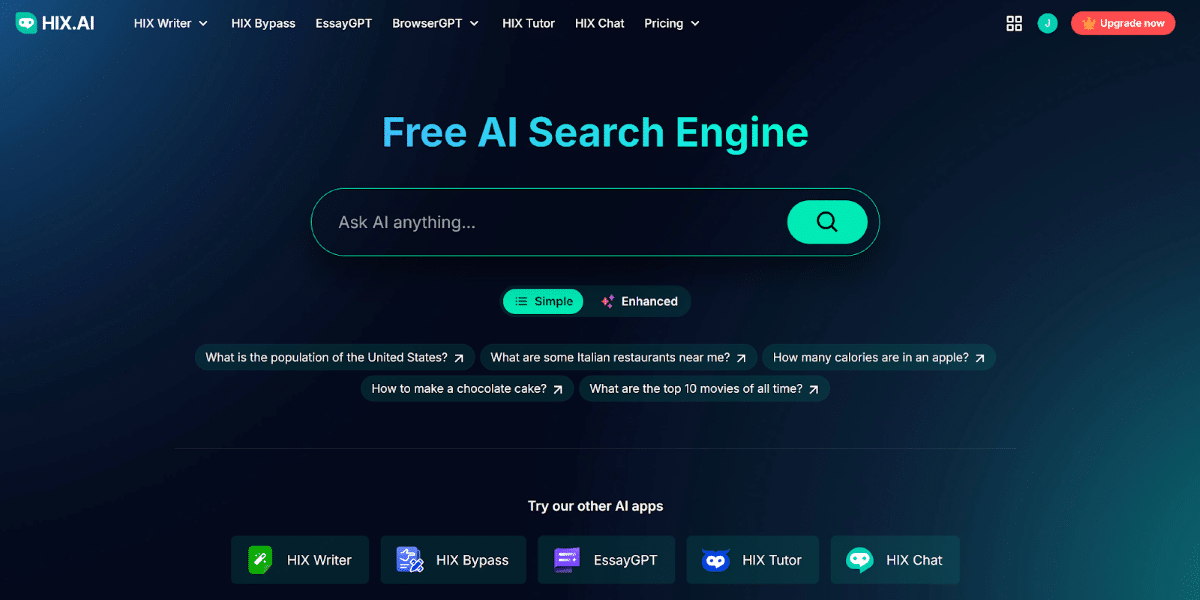
HIX AI originally gained prominence as an advanced AI writing tool, renowned for its ability to craft high-quality content efficiently. It served as a valuable asset for those needing assistance with content creation, from marketers to content writers. However, recognizing the increasing demand for sophisticated search capabilities, it has transitioned its focus. HIX AI now operates as a leading AI search engine, having rebranded its writing services under the name HIX Writer.

This strategic shift highlights HIX AI’s adaptability and commitment to meeting the evolving needs of users. By leveraging its AI expertise, the platform now offers an enhanced search experience designed to provide more precise and relevant information.

Exploring the Features of HIX AI

Immediate and Accurate Search Results

One of HIX AI’s defining features is its ability to deliver real-time search results. Utilizing advanced natural language processing (NLP) technology, HIX AI interprets user queries with remarkable accuracy, providing up-to-date information on a variety of subjects. This real-time capability ensures that users receive the latest data, whether they are checking current weather conditions, recent news, or specific location details.

Engaging Search Interactions

HIX AI differentiates itself through its interactive search functionality. Unlike traditional search engines, HIX AI engages users by asking clarifying questions to refine their queries. This interactive approach helps reduce ambiguity and improves the relevance of the search results. By mimicking a personal assistant, HIX AI offers a more dynamic and tailored search experience, enhancing user satisfaction.

Dual Search Modes

HIX AI offers two distinct search modes to cater to different user needs: ‘Simple’ and ‘Enhanced.’ The ‘Simple’ mode is designed for users seeking quick, straightforward answers. In contrast, the ‘Enhanced’ mode provides a deeper exploration of topics, offering detailed insights supported by a broader range of sources. This flexibility allows users to choose the mode that best fits their requirements, whether they need a brief fact or an in-depth analysis.

Credible Source Citations

A significant advantage of HIX AI is its dedication to providing reliable information. The platform sources data from authoritative references and includes citations in its search results. This feature is particularly useful for academics, researchers, and professionals who need verifiable sources to support their work. By ensuring the accuracy and credibility of its information, HIX AI helps users trust the results they receive.

Why HIX AI Stands Out in the AI Search Engine Landscape

Streamlined User Experience

HIX AI’s user interface is designed to be intuitive and accessible. The platform features a clean layout that simplifies the search process, allowing users to input queries and receive results with ease. This straightforward design ensures that users of all skill levels can navigate the platform efficiently, enhancing the overall search experience.

Speed and Depth of Results

The efficiency of HIX AI is evident in its ability to deliver both rapid and comprehensive search results. The platform draws on a wide range of reputable sources, including web pages, news articles, and academic papers, to provide well-rounded answers. This capability is particularly beneficial for users who require detailed information quickly.

Versatility and Adaptability

HIX AI’s versatility makes it a valuable tool for various user groups. Whether for academic research, content development, or everyday information needs, HIX AI caters to a broad audience. Its ability to handle a diverse range of queries and provide accurate, relevant results underscores its adaptability and broad applicability.

Comparing HIX AI with Other AI Search Engines

In the competitive arena of AI search engines, HIX AI distinguishes itself through its combination of real-time capabilities, interactive search features, and reliable source citations. While other platforms may offer similar functionalities, HIX AI’s emphasis on user engagement and the quality of its information sets it apart.

The transition from an AI writing tool to a sophisticated search engine demonstrates HIX AI’s commitment to innovation and responsiveness to user needs. As technology continues to advance, HIX AI’s focus on providing precise and relevant search results positions it as a leading player in the field of AI-driven search technology.

Practical Applications of HIX AI

Research and Academia

For students and researchers, HIX AI offers a valuable resource for conducting research and obtaining academic information. The platform’s accurate citations and access to a wide range of scholarly sources make it an essential tool for finding and verifying research material. The ‘Enhanced’ search mode is particularly useful for users requiring detailed and well-supported insights.

Content Creation and Development

Content creators can leverage HIX AI’s fast and comprehensive search capabilities to streamline their work. Whether drafting articles, preparing reports, or developing marketing content, the platform’s ability to quickly gather and summarize relevant information can enhance productivity. Additionally, the interactive search features help users refine their queries to obtain more specific data.

Everyday Information Retrieval

HIX AI’s real-time search results make it a practical tool for everyday information needs. Users can easily access up-to-date weather forecasts, news updates, and location-based information. The platform’s user-friendly interface ensures that even those with minimal technical expertise can find the information they need efficiently.

Future Outlook for HIX AI

Looking ahead, the future of HIX AI appears promising. The platform is expected to continue evolving, with potential advancements in natural language processing, additional search modes, and expanded access to diverse sources. HIX AI’s commitment to innovation and user satisfaction will likely play a crucial role in maintaining its position as a leading AI search engine.

The transition from an AI writing tool to a powerful search engine highlights HIX AI’s ability to adapt and thrive in a dynamic digital environment. As technology progresses, HIX AI is well-positioned to offer increasingly sophisticated solutions for accessing and interacting with online information.

Conclusion

HIX AI represents a significant advancement in the world of AI search engines. Its evolution from a writing tool to a comprehensive search platform underscores its adaptability and commitment to meeting user needs. With its real-time search capabilities, interactive features, and dedication to credible information, HIX AI offers a valuable resource for a wide range of users.

Whether for academic research, content development, or everyday information retrieval, HIX AI provides a versatile and effective solution for navigating the digital landscape. As the platform continues to innovate and expand, it is likely to remain at the forefront of AI-driven search technology, delivering reliable and relevant results to users around the globe.

Published by: Martin De Juan

How Entrepreneurs Can Go Public via a Direct IPO: A Faster, More Affordable Path

By: Gerald Evans

For many entrepreneurs, the idea of going public conjures up images of ringing the opening bell on a stock exchange, surrounded by bankers, lawyers, and underwriters. While an underwritten Initial Public Offering (IPO) has traditionally been the gold standard for companies seeking to raise capital from public markets, it’s not the only path. Increasingly, savvy entrepreneurs are opting for Direct IPOs, a little known alternative with fewer middlemen and less cost.

As experienced securities attorney Matheau J. W. Stout explained, “Direct IPOs are often overlooked by small cap and micro-cap companies, but they remain one of the fastest and easiest ways to go public.  In nearly 20 years of practicing securities law, a Direct IPO has often been the best choice for entrepreneurs looking to access institutional capital that is typically unavailable to the same companies if they remain private.”

This article explores what a Direct IPO is, the advantages it offers over the traditional underwritten model, and how entrepreneurs can prepare for a successful public listing.

What is a Direct IPO?

A Direct IPO, also known as a Direct Listing, allows companies to go public without the need for investment banks or underwriters to manage the offering. In a traditional IPO, underwriters buy shares from the company and resell them to institutional investors, earning hefty fees along the way. By contrast, a Direct IPO bypasses the underwriters, allowing existing shareholders to sell their shares directly to the public on a stock exchange.

This method has been used by companies like Spotify, Slack, which chose to forgo the traditional IPO route in favor of a more streamlined and cost-effective approach. While direct listings were initially popular among large, well-known companies, the model is increasingly becoming an option for smaller businesses and entrepreneurs.

How Entrepreneurs Can Go Public via a Direct IPO A Faster, More Affordable Path (2)

Photo: Unsplash.com

Why Choose a Direct IPO?

There are several reasons why entrepreneurs might prefer a Direct IPO over the traditional underwritten IPO:

1. Lower Costs

The most immediate and tangible benefit of a Direct IPO is the cost savings. Traditional underwritten IPOs come with significant expenses, primarily in the form of underwriting fees, which can range from 3% to 7% of the total offering size. For a company raising $100 million, that could mean $7 million in fees right off the top. In contrast, Direct IPOs eliminate the need for underwriters and their associated fees, leaving more capital for the company and its shareholders.

2. Faster Process

Going public via a Direct IPO can also be much faster. Traditional IPOs require months of preparation, from roadshows to pricing discussions, and back-and-forth negotiations with underwriters. A Direct IPO, on the other hand, skips many of these steps. There’s no need for pricing negotiations or extensive investor meetings. The company can list its shares directly on an exchange in a matter of weeks, making it an attractive option for entrepreneurs who are looking to go public quickly.

3. More Control Over Pricing

In a traditional IPO, the underwriters determine the initial offering price, often with a significant discount to attract institutional investors. This can lead to the company’s stock price “popping” on the first day of trading, where shares sell for significantly more than the IPO price, leaving money on the table for the company. In a Direct IPO, the price is determined by market supply and demand, which can lead to a more accurate reflection of the company’s value right out of the gate.

4. Transparency

A Direct IPO offers more transparency for both the company and the market. There are no complicated underwriting agreements, no allocation of shares to favored institutional investors, and no concerns about underwriters having conflicting interests. Instead, the company’s existing shareholders can sell their shares directly to the public, allowing for a more straightforward and honest transaction process.

Key Considerations for a Direct IPO

While a Direct IPO can be faster and less expensive, it’s not without its challenges. The success of a Direct IPO largely depends on having the right team in place to guide the company through the process. Here are the key factors entrepreneurs should consider:

1. Experienced Legal Counsel

Securities law is complex, and going public through any method requires strict compliance with regulations set by the Securities and Exchange Commission (SEC). For entrepreneurs choosing a Direct IPO, it’s critical to have an experienced securities lawyer on your team. They will handle the preparation of the S-1 registration statement, ensure that all required disclosures are made, and navigate any legal hurdles that arise during the listing process.

2. Strong Financial Advisors

Even without underwriters, having strong financial advisors is essential. These advisors will help assess market conditions, prepare financial projections, and position the company for success on the public market. While you won’t have the traditional “roadshow” to attract investors, your financial advisors can help you develop a strategy to build market interest in your shares.

3. Public Relations and Investor Relations Strategy

One of the biggest challenges in a Direct IPO is generating enough interest in the company’s shares without the help of underwriters and their networks of institutional investors. This makes having a well-thought-out public relations and investor relations strategy crucial. Your team will need to generate awareness among potential investors, and that requires clear, effective messaging about the company’s value proposition and growth potential.

4. Stable Shareholder Base

A Direct IPO is most successful when the company has a stable shareholder base willing to hold onto shares rather than flooding the market with stock on the first day of trading. This stability can help avoid price volatility and ensure a more successful transition to the public market.

How Entrepreneurs Can Go Public via a Direct IPO A Faster, More Affordable Path (3)

Photo: Unsplash.com

Conclusion: Is a Direct IPO Right for You?

For entrepreneurs looking to go public, a Direct IPO offers an appealing alternative to the traditional underwritten process. By cutting costs, speeding up the timeline, and giving the company more control over pricing, a Direct IPO can be a smart choice for businesses with strong existing shareholders and a clear growth story to tell.

However, success in a Direct IPO depends on having the right team of advisors—legal, financial, and communications—who can navigate the complexities of going public. With the right strategy and support, a Direct IPO can position entrepreneurs to unlock the benefits of being a public company while maintaining more control over the process.

If you’re an entrepreneur considering taking your company public, now might be the perfect time to explore whether a Direct IPO could be your path to market success. 

 Disclaimer: This content is for informational purposes only and is not intended as financial advice, nor does it replace professional financial advice, investment advice, legal advice or any other type of advice. You should seek the advice of a qualified financial advisor or other professional before making any financial decisions.

Published by: Holy Minoza

Turning Images into 3D Models: AI’s Role in Modern Design

By: SEO Mavens

Picture this (pun intended): you have a flat, boring image that needs to be transformed into a jaw-dropping 3D model.

It sounds like something straight out of a sci-fi movie, right? Well, thanks to the magic of Artificial Intelligence (AI), this futuristic fantasy is now a reality.

This article will take you through the incredible ways AI is reshaping the design world by turning simple images into intricate 3D models.

Whether you’re a seasoned designer or just dabbling in the creative arts, you’ll discover how AI can revolutionize your workflow and bring your visions to life.

The Role of AI in Modern Design

AI isn’t just a buzzword; it’s a game-changer.

In the design world, AI is making waves by automating tedious tasks, offering insights through data analysis, and, yes, transforming 2D images into stunning 3D models.

This technology leverages machine learning algorithms to understand visual data, making it easier for designers to focus on creativity rather than getting bogged down by technicalities.

How AI Converts 2D Images to 3D Models

The image-to-3D model process requires a number of steps.

First, AI algorithms analyze the image to understand its features—like edges, textures, and dimensions.

Then, using machine learning, these features are mapped onto a 3D space, creating a model that can be viewed from any angle.

The Tech Behind the Magic

The technology behind this transformation includes neural networks and deep learning algorithms.

Convolutional Neural Networks (CNNs) are particularly effective in this area, as they can identify spatial hierarchies in images.

This means they don’t just look at individual pixels but understand how groups of pixels interact to form shapes.

Practical Applications

  • Architecture: Architects can quickly create 3D models of buildings from 2D blueprints, saving time and reducing errors.
  • Gaming: Game designers can use AI to convert concept art into 3D assets, speeding up the development process.
  • Healthcare: Medical professionals can generate 3D models from 2D scans, aiding in more accurate diagnoses and treatment plans.

Benefits of Using AI for 3D Modeling

Let’s face it, designing is fun, but it can also be incredibly time-consuming. AI speeds up the process by automating the tedious parts. Designers can spend more time on creative tasks and less on repetitive ones.

Accuracy

AI algorithms are incredibly precise. They can detect minute details that the human eye might miss, ensuring that the final 3D model is as accurate as possible.

Cost-Efficiency

Using AI reduces the need for extensive manual labor, which translates to cost savings. Businesses can allocate resources more efficiently, investing in innovation rather than labor-intensive tasks.

How to Integrate AI into Your Design Workflow

There are numerous AI-powered tools available for designers. Some popular options include Blender with add-ons like AI Render, and Adobe Dimension, which integrates AI to assist with 3D modeling.

Training and Development

While AI can automate many tasks, it’s essential to understand its capabilities and limitations. Investing time in training can help you make the most out of these tools.

Collaboration

AI can act as an assistant, but human creativity is irreplaceable. Collaborate with your team to integrate AI seamlessly into your workflow, ensuring that it complements rather than replaces human effort.

Challenges and Limitations

The accuracy of AI depends heavily on the quality of data it’s trained on. Poor-quality images can result in less accurate 3D models.

While AI tools are designed to be user-friendly, there’s still a learning curve. Designers need to invest time in understanding how to use these tools effectively.

AI raises ethical questions about job displacement and data privacy. It’s crucial to address these issues to ensure responsible use of technology. 

Turning images into 3D models isn’t just a technological marvel; it’s a practical solution that’s revolutionizing modern design. AI is making this process faster, more accurate, and cost-efficient, allowing designers to focus on what they do best—being creative.


Published by : Khy Talara

Dr. Muhammad Atique’s Role in Shaping Digital Governance

Few thought leaders have tackled how technology can be harnessed for transparency, faster productivity, and a better quality of life on societal and individual levels. Enter Dr. Muhammad Atique, PhD—an expert who’s exploring the hidden potential of technology to shape a more peaceful, efficient, and transparent world. Let’s uncover the transformative insights he has brought to light.

The Intersection of Technology and Society

Dr. Muhammad Atique stands at the forefront of Digital Governance and Media, emerging as a pivotal voice in understanding the dynamic interplay between technology and society. With a PhD in Digital Government from Huazhong University of Science and Technology, Dr. Atique has dedicated his career to pioneering research that explores the nuances of technology adoption, digital transformation, and the shifting role of digital media in contemporary governance.

Impactful Research on Digital Innovations

His scholarly contributions are both substantial and impactful, comprising numerous internationally recognized publications that delve into critical topics such as e-governance, the influence of social media in public organizations, and the transformative potential of digital innovations in developing countries. Through his research, Dr. Atique not only enriches academic discourse but also offers actionable insights that inform practical applications in the public sector.

Exploring the Influence of Social Media and AI

Dr. Atique is also an accomplished author whose forthcoming book from US publisher, Digitally Hijacked: The Age of Influence (Subtitle: How Social Media and AI are Reshaping Our Reality), promises to be a significant addition to the dialogue surrounding technology and society. In this compelling work, he examines how social media and artificial intelligence are reshaping public perceptions, behaviors, and the very fabric of societal structures. This exploration into the digital landscape reflects his deep commitment to understanding the challenges and opportunities that arise in an increasingly interconnected world.

Bridging Theory and Practice

With over a decade of experience in broadcast journalism, coupled with his role as a visiting faculty member at various prestigious universities, Dr. Atique brings a unique synthesis of industry expertise and academic rigor to his work. His insights bridge the gap between theory and practice, making him a sought-after thought leader in the realms of technology, digital media, and public sector innovation.

Shaping the Future of Digital Society

As a thought leader, Dr. Atique is shaping the future of digital society through his innovative research, engaging writing, and active participation in global conversations surrounding digital governance. His work resonates with audiences across the globe, igniting discussions about the ethical implications of technology and the importance of maintaining a balance between innovation and societal well-being.

Commitment to Global Discourse and Collaboration

Recognized for his unwavering commitment to advancing global discourse, Dr. Atique is a fellow member of several esteemed organizations, including Advance HE (UK), the International Communication Association (ICA), and the American Society for Public Administration (ASPA). His affiliations underscore his dedication to fostering collaboration and knowledge-sharing across diverse fields. Additionally, Dr. Atique regularly contributes to platforms such as the American Society for Public Administration, Medium, and LinkedIn, where he shares insights and commentary on current trends in media, technology, and governance.

A Visionary Path Ahead

Dr. Muhammad Atique’s contributions to the fields of Digital Governance and Media are both profound and transformative. His academic endeavors and practical insights provide a roadmap for navigating the complexities of the digital age, ensuring that technology serves as a tool for empowerment rather than a source of division. With his ongoing commitment to advancing knowledge and fostering collaboration, Dr. Atique is poised to continue influencing the landscape of digital governance for years to come.

Learn more about Dr. Muhammad Atique and his transformational work and ideas about technology and society by visiting his website at https://explorewithdratique.com/. Follow his journey on LinkedIn and Medium.

Published by: Holy Minoza

Why Certified Alarms is Your Go-To for Security in Calgary: Comprehensive Solutions for Every Property

In an era where security is paramount, finding a trusted and reliable partner to safeguard your property is crucial. For those in Calgary, Certified Alarms stands out as the go-to choice for advanced security solutions tailored to every property’s unique needs. Certified Alarms is committed to delivering top-notch security services in Calgary that prioritize protection without compromising functionality or aesthetics, from commercial buildings to residential complexes.

Whether you are involved in new construction or looking to enhance the security of an existing building, Certified Alarms offers comprehensive, custom-tailored solutions designed to integrate with your property seamlessly. Let’s explore why Certified Alarms is the top choice for security Calgary services and how they can meet your specific security needs.

Expertise in Security System Design

One of the main reasons Certified Alarms is trusted for security services in Calgary is their ability to collaborate with architects, structural engineers, and designers to develop custom security systems. Their expertise in the early integration of security measures ensures that systems are highly effective, aesthetically pleasing, and functional for the long term.

Security often becomes a concern for new constructions after the building is completed. Still, Certified Alarms ensure it is incorporated from the ground up. They help clients avoid costly modifications by planning. Whether a residential complex or a large-scale commercial building, they provide security measures are in place before the property is even finished. This proactive approach to Calgary security services gives them an edge in the market.

Tailored Solutions for Existing Buildings

While Certified Alarms excels in working on new construction projects, they also provide highly effective security systems for existing buildings. Retrofitting security measures can often be a challenge, especially if the property is already operational. However, Certified Alarms specializes in designing and installing security solutions that blend seamlessly with the current architecture of the building, ensuring minimal disruption to the property’s daily operations.

Their solutions are both functional and visually appealing, making them ideal for businesses with customer-facing premises where aesthetics are essential. Whether you need a complete overhaul or incremental upgrades, Certified Alarms offers customizable security services in Calgary to protect your assets while maintaining your building’s visual appeal.

The Benefits of Leasing Security Systems

For many businesses in Calgary, the cost of acquiring high-quality security systems can be prohibitive. Certified Alarms recognizes this challenge and offers a unique leasing option that allows clients to install advanced security systems with a small initial investment. Instead of paying a large lump sum upfront, businesses can opt for a low-cost installation fee coupled with affordable monthly payments.

This leasing model is particularly advantageous for small and medium-sized enterprises (SMEs) that require top-tier security but need to manage their budgets carefully. By offering Calgary security services with a flexible leasing plan, Certified Alarms enables more businesses to protect their assets without overextending their financial resources.

Comprehensive Security Solutions

Certified Alarms provides an extensive range of security services in Calgary designed to meet the diverse needs of their clients. Their services include, but are not limited to:

  • Intruder Detection Systems: From motion sensors to surveillance cameras, Certified Alarms offers advanced intruder detection systems that ensure your property remains secure day and night.
  • Fire and Safety Systems: Protecting against fire hazards is essential for both commercial and residential properties. Certified Alarms offers integrated fire alarm systems that detect smoke and heat and alert the authorities at the earliest sign of danger.
  • Access Control Systems: Limiting and controlling access to certain areas of your property is key to maintaining security. Certified Alarms offers sophisticated access control solutions, including keyless entry, biometric scanners, and more.
  • Surveillance Systems: The company installs high-quality CCTV and surveillance systems, allowing businesses to monitor their properties in real time, both on-site and remotely.

Each of these services is tailored to the client’s individual needs, ensuring that every security solution is effective and customized to the property’s specific challenges.

Back-to-Base Monitoring Services

What sets Certified Alarms apart from other Calgary security companies is their commitment to providing reliable back-to-base monitoring services. This monitoring ensures that your property is under constant surveillance, with any breaches or emergencies immediately reported to a central command center.

Back-to-base monitoring is an added layer of protection that gives property owners peace of mind, knowing that a dedicated team is always watching over their premises. This service also enables faster emergency response times, ensuring that authorities are notified the moment a security breach or fire hazard occurs.

Why Certified Alarms?

When choosing a security service in Calgary, it’s essential to partner with a company that offers high-quality equipment and excels in providing comprehensive support and installation services. Certified Alarms checks all these boxes, making them the go-to choice for businesses and homeowners alike. Here’s why:

  1. Decades of Experience: Certified Alarms has provided security solutions to Calgary residents and businesses for years. Their deep understanding of the local market and building codes allows them to offer expert advice and tailored solutions.
  2. End-to-End Solutions: Certified Alarms doesn’t just install a system but lets you figure out the rest. They offer end-to-end solutions, from system design to installation, maintenance, and monitoring.
  3. Proactive Approach: By working closely with architects and designers, Certified Alarms ensures that security measures are integrated from the very beginning. This proactive approach saves time and money in the long run.
  4. Affordable Leasing Options: The company’s leasing option makes it easy for businesses to get the security they need without breaking the bank. This flexible payment plan means even smaller businesses can benefit from top-tier security systems.
  5. Comprehensive Monitoring: Certified Alarms offers reliable, round-the-clock monitoring, giving clients peace of mind knowing their property is protected 24/7.

Conclusion

Security should not be left to chance. Whether you are managing a commercial property, overseeing a new construction project, or upgrading the security of an existing building, Certified Alarms provides the experience, expertise, and technology you need. With a focus on delivering comprehensive security Calgary solutions backed by expert system design, flexible leasing options, and reliable monitoring services, Certified Alarms ensures that every property is protected.

Certified Alarms is the trusted name you can count on for businesses and property owners looking for security services in Calgary. Secure your property today by visiting Certified Alarms and exploring their extensive range of services.


Published by: Khy Talara

Balancing Innovation & Security in Evolving Payments

By: SEO Mavens

While exploring the digital landscape, I encountered the name Ramkishore Viswanatha Sekar, a Senior Engineer making significant strides in the payments industry. Ramkishore’s work in reshaping the global payments landscape captured my attention, particularly his strong emphasis on a crucial point: “While AI and technological advancements are driving the future, security must remain uncompromised.” This principle is central to Ramkishore’s work, reflecting his understanding that security cannot take a backseat in the race for innovation, especially in such a sensitive industry.

Through the open-source Android solutions that he has published in leading engineering knowledge sharing forums, Ramkishore has provided essential insights into how to securely integrate new technologies without sacrificing compliance or data protection. He has demonstrated how third-party commerce applications can coexist with payment apps in a secure, PCI-compliant environment, which is critical for maintaining both innovation and trust. It was this combination of innovation and an unwavering commitment to security that motivated me to explore his work further.

Exploring Key Areas of Innovation

Several important themes emerged from my exploration of Ramkishore’s contributions. One major takeaway was his focus on maintaining security while pushing the envelope of innovation. His work addresses the challenge of creating solutions that meet the rigorous demands of PCI and EMV standards while remaining scalable enough to support modern business needs.

Another significant focus has been on the global nature of payments. Ramkishore played an instrumental role in enabling international payment methods across the US, Canada, and Europe on GoDaddy’s Smart Terminals, facilitating seamless cross-border transactions. His ability to integrate these payment solutions underscores his strategic grasp of both local and global commerce.

Ramkishore’s contributions through open-source Android solutions showcase his vision for a more flexible yet secure payment ecosystem. By providing solutions that enable the secure coexistence of commerce and payment applications, he has helped create an environment where businesses can innovate without compromising on compliance or security.

Scaling MDM Systems with Android Expertise

Ramkishore’s deep expertise in Android has been crucial in solving complex business challenges, particularly at scale. Managing Mobile Device Management (MDM) for over 300,000+ Smart Payment Terminals globally is no small feat. He has demonstrated a keen ability to ensure that devices receive OTA updates in a timely, secure manner while maintaining high-performance standards across continents. His work balances the need for real-time transactions with robust security—a combination essential for businesses running large-scale payment systems.

Shaping the Future of Payments: Innovation Grounded in Security

Ramkishore envisions a future where IoT and AI-driven technologies will shape the evolution of in-store payments. However, his emphasis is clear: innovation should never come at the cost of security. He highlights the potential of IoT devices, such as audible transaction confirmers, to prevent fraud and improve the overall user experience, illustrating how technology can advance without compromising trust.

Looking ahead, Ramkishore believes AI-driven payment systems will continue to enhance how we transact, offering smarter, more secure solutions for handling payments. His work serves as a reminder that security must remain at the heart of these advancements. By laying the groundwork for secure, flexible, and future-focused payment systems, Ramkishore is ensuring that the future of commerce remains not only innovative but also safe.

As the payments landscape continues to evolve, Ramkishore’s contributions are not just influencing the present but also helping to define the future of global commerce. His technical expertise, coupled with an unwavering dedication to security, is why his work continues to draw attention and set the standard in the world of payments.


Published By: Aize Perez