BOIT: Revolutionizing Insurance with Cutting-Edge Insurtech Services and Solutions

BOIT Global, a Singapore-based Insurtech company, is revolutionizing the Insurance industry with its cutting-edge digital transformation services and solutions. Headquartered in Singapore, and expanding rapidly with a presence in Dubai, Malaysia, Indonesia and India, BOIT has quickly established itself as a trusted partner for Insurers seeking to enhance their digital capabilities. With ISO 9001:2015 and ISO 20071:2002 certifications for Quality and Information Security Management, BOIT is committed to delivering high-quality, reliable services that reflect its unwavering dedication to excellence and precision.

Founded by experienced technologists with over 25 years of expertise in the Insurtech domain, digital transformation, and business process automation, BOIT leverages its deep industry knowledge to help Insurance companies implement and manage advanced software solutions that streamline operations, improve customer experiences, and drive efficiency.

What sets BOIT apart in the competitive Insurtech landscape is its ability to harness the latest technologies. Specializing in Artificial Intelligence (AI), Machine Learning (ML), Cloud Computing, and Data Analytics, BOIT delivers innovative digital solutions specifically tailored to the Insurance sector. Additionally, BOIT’s strong presence in emerging markets reflects its commitment to addressing the distinct challenges and opportunities in these regions, offering customized solutions that drive business success and create sustained value.

Chintan Kothari, BOIT’s Co-founder and Chief Customer Officer, has been instrumental in shaping the company’s customer-focused service offerings. His dedication to building strong client relationships and providing personalized solutions has earned BOIT a reputation for reliability and excellence. Chintan’s visionary leadership, ability to anticipate industry trends, and innovative approach have been pivotal to BOIT’s success and rapid growth in the Insurtech space.

BOIT’s Insurtech services and solutions are thoughtfully designed to tackle the unique challenges faced by Insurance companies in today’s dynamic digital landscape. Innovation, quality, and customer satisfaction are the driving forces behind BOIT’s achievements and growth in the Insurtech industry.

BOIT offers a comprehensive suite of services and solutions that cater to the diverse needs of Insurers:

Digital Solutions & Products: BOIT delivers cutting-edge digital solutions that align with organizations’ business goals, ensuring they remain competitive in a rapidly changing digital environment. Their Insurance product suite and digital platform offerings showcase their deep industry expertise and future-proof technology, positioning clients to succeed in an increasingly tech-driven market.

Application Maintenance and Support Services: BOIT’s dedicated support team ensures high SLAs, optimal application availability, and round-the-clock uptime to keep business running smoothly. This enables Insurers to focus on core operations while trusting BOIT to maintain the integrity and performance of their software applications.

Resource Augmentation: BOIT provides access to a pool of skilled professionals with expertise in the Insurance domain and new-age technologies, allowing organizations to accelerate project delivery and supplement their existing teams. This flexible staffing model helps Insurers scale their operations efficiently.

Specialized Technology Services: BOIT’s seasoned experts offer strategic guidance to help organizations navigate complex technological challenges and seize emerging opportunities. BOIT also offers application reliability and quality through a range of testing services, including automation, performance, and security testing, ensuring that all systems meet the highest standards of functionality and security.

By providing customized solutions tailored to the specific needs of its clients, BOIT has earned its place as the go-to partner for Insurance organizations aiming to enhance their digital capabilities. Its strong focus on emerging markets and expertise in leveraging cutting-edge technologies position BOIT as a leader in the Insurtech industry, continually raising the bar for digital transformation. BOIT’s innovative approach and commitment to excellence have made it the preferred choice for Insurers looking to modernize and future-proof their businesses, driving long-term success and resilience in an evolving industry.

For more information about BOIT Global and its Insurtech solutions, visit BOIT Global’s website or connect with the company on LinkedIn. Through its commitment to innovation and excellence, BOIT Global is not just responding to the demands of the digital age but is actively shaping the future of Insurance, empowering its clients to thrive in a rapidly evolving technological landscape.


Published By: Aize Perez

AI, ML, Data Platforms, and Generative AI: Conceptual Applications in Decarbonization Efforts

By: Sagar Sidana, Spearheading the Fight Against Climate Change using AI and ML

In this interview, we speak with Mr. Sagar Sidana, an expert in artificial intelligence, machine learning, and data platforms, about the potential applications of these technologies in decarbonization efforts.

Interviewer: Mr. Sidana, thank you for joining us. Let’s start with the fundamentals. How could AI and ML models be adapted or optimized for decarbonization-related tasks?

Sagar: When it comes to AI and ML models in the decarbonization space, there are several potential approaches. Transformer models, which have been successful in natural language processing, could be adapted for time series forecasting in energy demand and renewable energy production.

Reinforcement learning algorithms could potentially be used for optimizing energy systems. These models can learn to make complex decisions in dynamic environments, which could be crucial for managing smart grids with high penetration of renewable energy sources.

Another interesting concept is the use of federated learning in this domain. It could allow for training models on decentralized data, which might be particularly useful when dealing with sensitive energy consumption data from various sources.

Interviewer: Interesting. Could you discuss the potential challenges in data processing and management when it comes to climate-related datasets? How might modern data platforms address these issues?

Sagar: Climate-related datasets present unique challenges due to their scale, complexity, and heterogeneity. We’re often dealing with massive amounts of data from diverse sources – satellite imagery, IoT sensors, weather stations, and more.

Modern data platforms could address these challenges in several ways:

  1. Scalable Storage and Processing: Cloud-native platforms could handle petabyte-scale climate datasets. These platforms allow for distributed processing, which could be crucial for computationally intensive climate models.
  2. Data Lakes and Lakehouses: Data lake architectures allow for storage of raw, unstructured data at scale. Some platforms bring ACID transactions to data lakes, which could ensure data integrity in these large, complex datasets.
  3. Stream Processing: Given the real-time nature of many climate-related data sources, stream processing engines could become increasingly important. They could allow for real-time analysis of sensor data, which might be crucial for applications like early warning systems for extreme weather events.
  4. Data Governance and Lineage: With the complexity of climate datasets, maintaining data provenance is crucial. Tools for maintaining data lineage could ensure transparency and reproducibility in climate research.

Interviewer: You mentioned IoT sensors. How could edge computing be leveraged in decarbonization efforts, particularly in relation to AI and ML models?

Sagar: Edge computing could play a crucial role in decarbonization efforts, especially in scenarios where real-time decision making is critical. Here are a few potential applications:

  1. Smart Grids: Edge devices could run lightweight ML models for local load balancing and fault detection. This could reduce the need for constant communication with centralized systems, potentially improving efficiency and resilience.
  2. Industrial IoT: In manufacturing and industrial settings, edge AI could be used for real-time energy optimization. Models running on edge devices could make instant decisions to adjust processes for optimal energy efficiency.
  3. Smart Buildings: Edge computing could allow for real-time analysis of building sensor data. ML models running on edge devices could make immediate adjustments to HVAC systems, lighting, and other energy-consuming systems based on occupancy and environmental conditions.
  4. Renewable Energy: For wind turbines and solar panels, edge computing could enable rapid adjustments based on local conditions. ML models could potentially optimize the angle of solar panels or the pitch of wind turbine blades in real-time.
AI, ML, Data Platforms, and Generative AI (1)

Photo Courtesy: Sagar Sidana

The key advantage of edge AI in these scenarios would be the ability to make instant decisions without the latency of cloud communication, which could be crucial for real-time energy optimization.

Interviewer: Interesting. Now, let’s talk about model interpretability. How could the ‘black box’ problem in AI models be addressed for critical decarbonization applications?

Sagar: Model interpretability is indeed a critical issue, especially when these models could be used to make decisions that have significant environmental and economic impacts. This challenge could be tackled on several fronts:

  1. Explainable AI (XAI) Techniques: Techniques like SHAP (SHapley Additive exPlanations) and LIME (Local Interpretable Model-agnostic Explanations) could provide post-hoc explanations for complex models like deep neural networks.
  2. Hybrid Models: There’s potential in hybrid models that combine the power of deep learning with more interpretable models like decision trees. For instance, in energy demand forecasting, a neural network could be used for feature extraction, followed by a decision tree for the final prediction, allowing for better interpretability.
  3. Attention Mechanisms: In sequence-based models used for time series forecasting, attention mechanisms could not only improve model performance but also provide insights into which parts of the input sequence the model is focusing on for its predictions.
  4. Causal AI: There’s potential in causal AI methods, which aim to uncover causal relationships rather than just correlations. This could be particularly important in climate science, where understanding causal mechanisms is crucial for developing effective interventions.
  5. Model Cards and Datasheets: Practices from the responsible AI community, such as creating model cards and datasheets, could be adopted. These could document the intended uses, limitations, and potential biases of models and datasets, promoting transparency and responsible use.

Interviewer: That’s comprehensive. Now, let’s turn our attention to Generative AI. How could this technology be applied in the context of decarbonization efforts?

Sagar: Generative AI is indeed one of the most exciting frontiers in artificial intelligence, and its potential applications in decarbonization are numerous. Here are a few key areas where we could see impactful applications:

  1. Materials Discovery: Generative models, particularly Generative Adversarial Networks (GANs) and Variational Autoencoders (VAEs), could be used to accelerate the discovery of new materials for clean energy technologies. These models could potentially generate and screen novel molecular structures for more efficient solar cells, better battery electrolytes, and more effective catalysts for carbon capture.
  2. Synthetic Data Generation: In climate modeling, we often face issues with data scarcity or gaps in historical records. Generative models could create synthetic climate data that maintains the statistical properties of real data. This could be particularly useful for training other ML models or for testing climate scenarios where we lack real-world data.
  3. Optimizing Energy Systems: Generative models could be used to create and optimize complex energy system designs. For example, generative algorithms could propose novel configurations for renewable energy farms, optimizing for factors like land use, energy output, and grid integration.
  4. Scenario Generation for Policy Making: Generative models could be employed to create diverse, plausible scenarios for climate change impacts and mitigation strategies. This could help policymakers understand the range of possible outcomes and design more robust policies.
  5. Generative Design in Architecture: In the built environment, generative design algorithms could create energy-efficient building designs, optimizing for factors like natural lighting, thermal performance, and material use.

Interviewer: Looking ahead, what do you see as the potential future developments in AI, ML, and Generative AI for decarbonization efforts?

Sagar: There are several exciting possibilities on the horizon:

  1. Multi-modal AI: We could see models that work across different types of data – text, images, numerical data, and even molecular structures. This could lead to more holistic solutions in areas like integrated energy system design.
  2. AI for Closed-loop Systems: There’s potential for AI models in closed-loop systems, where the AI could propose solutions, test them in simulations, learn from the results, and iterate. This could be transformative for adaptive climate mitigation strategies.
  3. AI-augmented Scientific Discovery: AI could increasingly augment human scientists in formulating hypotheses and designing experiments, potentially leading to breakthroughs in clean energy technologies.
  4. Explainable AI: As these models could be used for critical applications, we might see more focus on making them interpretable and explainable, ensuring transparency in decision-making processes.
  5. AI for Circular Economy Design: We might see more applications in designing products and systems for a circular economy, where AI models could optimize for recyclability and minimal waste throughout the product lifecycle.
AI, ML, Data Platforms, and Generative AI (2)

Photo Courtesy: Sagar Sidana

The key will be to develop these technologies responsibly, always keeping in mind their energy consumption and broader environmental impact. The goal should be to ensure that the benefits of using AI in decarbonization efforts significantly outweigh the resources required to develop and deploy these systems.

Interviewer: Thank you, Mr. Sidana, for this comprehensive overview of the potential applications of AI, ML, data platforms, and Generative AI in decarbonization efforts. Your insights into both the current possibilities and future prospects of these technologies are invaluable.

Sagar: It’s been my pleasure. The intersection of these advanced technologies with decarbonization efforts is a field full of potential. While the challenges are significant, I’m optimistic about the possibilities for AI, particularly Generative AI, to contribute to our progress towards a sustainable, low-carbon future. The key is to continue exploring these technologies responsibly, always keeping our ultimate goal of environmental sustainability at the forefront of our efforts.


Published by: Khy Talara

Chao Hu Drives RES to Global Recognition in Clean Energy

By Jayden Powell

Recently, under the leadership of Creative Director Chao Hu, Reverse Energy Solutions (RES), a significant player in the global clean energy sector, was invited to participate in two highly prestigious clean technology events. Dedicated to advancing clean energy innovation and application, RES stands out because of its outstanding technological achievements and forward-looking market strategies. As the company’s Creative Director, Chao Hu showcased RES’s innovative technologies and exceptional market capabilities on the international stage, garnering extensive attention from the industry and global community.

Chao Hu Drives RES to Global Recognition in Clean Energy

Photo Courtesy: Chao Hu / Chao Hu as Creative Director, Reverse Energy Solutions

The Los Angeles Cleantech Incubator (LACI) is a highly influential platform that has been established to accelerate the commercialization of clean energy technologies. Renowned for its stringent selection standards, LACI provides resources such as CEO coaching, financial modeling, and market guidance. It collaborates closely with government bodies and industry leaders to address climate change challenges. Ranked among the top ten global incubators, LACI’s authority and influence extend internationally, making it a key player in clean technology innovation and deployment.

Greentown Labs is one of North America’s largest climate technology incubators, committed to supporting the most innovative climate tech companies and driving solutions to global climate change. As a platform that brings together top climate technology experts and companies worldwide, Greentown Labs offers its member companies resources, market guidance, and opportunities for global collaboration. Earning recognition from Greentown Labs signifies world-leading capabilities in technological innovation and market adaptability. Greentown Labs’ authority is reflected in its high standards for technological innovation and its significant influence in promoting climate technology.

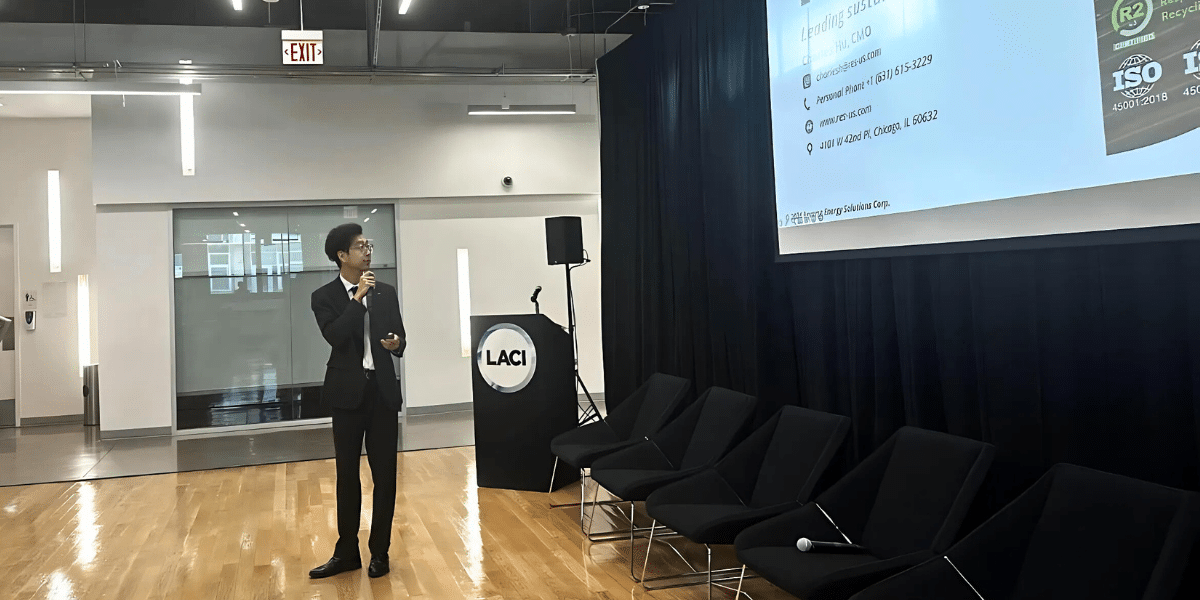
As Creative Director of Reverse Energy Solutions (RES), Chao Hu recently represented the company at LACI’s Fall Power Day and Greentown Labs’ 2024 Climatetech Summit. LACI’s Fall Power Day brought together leading clean technology experts, policymakers, investors, and business leaders from around the globe to promote clean energy technology marketization and policy collaboration. Chao Hu’s participation highlighted his central role in the company and RES’s leadership status in the industry. As Creative Director, he presented RES’s innovations in zero-emission technology and sustainable energy recycling, offering forward-thinking strategies and insights on leveraging technology to drive green economic transformation. 

Chao Hu Drives RES to Global Recognition in Clean Energy (2)

Photo Courtesy: Chao Hu / Chao Hu Showcase event in 2024 Climatetech Summit-Greentown Labs

The 2024 Climatetech Summit hosted by Greentown Labs attracted numerous experts, policymakers, and entrepreneurs in the climate tech field to discuss global challenges related to climate change and sustainable development. At the summit, Chao Hu showcased RES’s technological achievements in solar panel recycling and green energy management. He elaborated on the company’s innovative mobile recycling solutions, significantly reducing the cost of solar panel recycling and promoting the circular use of renewable energy. Chao Hu’s presentations and discussions further enhanced RES’s brand influence and collaboration opportunities in the global market. RES received broad recognition through these events, and Chao Hu’s leadership was further demonstrated, showcasing the company’s role in global climate technology innovation. 

Chao Hu’s exceptional leadership and strategic foresight have enabled RES to continuously expand its influence in the clean energy market, making it an innovative force to be reckoned with in the international clean technology field. RES’s successful participation in these two events enhanced its reputation and laid a solid foundation for future technology promotion and cross-border collaboration.

As a distinguished Creative Director, Chao Hu has also successfully planned and led a series of major international events. These include the Sino-American Influencer Mini-Series Cross-Border Innovation Forum, the 2023 and 2024 Sino-American Symposium on Academic, Economic, and Cultural Collaboration, and the 2024 Sino-American Symposium on Sustainable Development. These events focused on international cooperation, cultural exchange, and sustainable development, attracting global political, business, and academic leaders. With his outstanding creative planning skills and strategic vision, Chao Hu created multi-dimensional platforms for dialogue, fostering cross-cultural exchange, green technology cooperation, and educational innovation. The success of these events further showcased Chao Hu’s influence in the international creative and sustainable development sectors. It underscored his pivotal role in advancing Sino-American collaboration and global sustainable development.

Under his leadership, RES has actively participated in and organized high-profile events such as the Sino-American Symposium on Sustainable Development, focusing on green technology innovation and cross-border cooperation. With his unique creative thinking and keen market insight, Chao Hu successfully attracted the participation of high-ranking officials, business leaders, and academic elites worldwide. By designing thoughtful agendas and fostering innovative discussions, the summit delved into the latest advancements in clean energy technology, environmental policies, and sustainable development strategies, serving as a key bridge for Sino-American cooperation in green technology. This platform’s success strengthened RES’s reputation and influence in the international market and demonstrated Chao Hu’s exceptional leadership in cross-cultural exchange and international cooperation.

Additionally, Chao Hu has actively promoted RES’s presence at the world’s leading industry events. He led the company’s participation in major international exhibitions such as CES and RE+, showcasing RES’s latest solar panel recycling and zero-emission technology innovations. Chao Hu has successfully established RES as a prominent international brand, using these high-profile events to attract global attention and strategic partnerships. His contributions and leadership have enabled RES to continuously innovate and strengthen its leading position in the rapidly evolving clean energy sector.

In every significant engagement, Chao Hu has leveraged his exceptional creativity and execution to elevate the RES brand, earning widespread recognition within and beyond the industry. His efforts and accomplishments have laid a strong foundation for RES’s continued growth and innovation in the international clean energy market, driving the company’s contribution to global sustainability.


Published by: Annie P.

From Romania to the World Stage: Hote Raluca Daiana Ligia’s Robotics Journey

By: Maria Williams

Few names resonate, like Hote Raluca Daiana Ligia, when blending technical skill with a heart for societal change. A Romanian-born robotics and AI engineer, Ligia’s work has made waves across borders in robotics and addressing pressing global health challenges. Her journey from a small town in Romania to the forefront of robotics and AI development is a testament to her dedication to using technology for meaningful, real-world impact.

Building a Foundation in Robotics and AI

From an early age, Ligia showed an insatiable curiosity for engineering. This curiosity led her to earn her Bachelor’s and Master’s degrees in Mechatronics and Robotics Engineering from the Technical University of Cluj-Napoca in Romania. Her academic path laid the groundwork for understanding complex systems, AI applications, and robotic mechanics. But beyond technical skills, her studies sparked a mission: to tackle some of today’s most significant health and industrial challenges.

At the Fraunhofer Institute in Germany, she got the chance to bring her mission to life. Working on the BALTO disinfection robot during the height of the COVID-19 pandemic, she was part of a team that addressed a critical issue—sanitizing high-traffic areas without human intervention. BALTO’s autonomous operation was developed to address challenges in sanitizing high-traffic areas, with the goal of reducing potential virus transmission in settings where human safety was a concern.

Creating Solutions with a Purpose

For Ligia, problem-solving isn’t just about finding solutions; it’s about finding solutions that make a difference. Her projects, like the AI Garden and Grand Scenario, exemplify this approach. AI Garden was designed as a learning aid, enabling industry workers to upskill through AI-supported language learning. Meanwhile, the Grand Scenario project improved efficiency on assembly lines by integrating IoT with voice recognition technology. Both projects reflect her drive to create technology with the potential to enhance productivity, worker experience, and well-being.

Beyond her technical contributions, Ligia’s leadership in the field is evident. She actively shares her expertise, speaking at international tech conferences and mentoring young engineers. Through these roles, she is shaping a future generation of innovators, encouraging them to pursue engineering with the same passion and purpose she brings to her work.

From Romania to the World Stage Hote Raluca Daiana Ligia's Robotics Journey

Photo Courtesy: Hote Raluca Daiana Ligia

Looking to the Future with BALTO and Beyond

As Ligia charts her future, her vision is clear: She wants to expand BALTO’s influence across North America and continue to grow her consulting business, Ligia Hote Robotics. Ligia Hote Robotics aims to develop robotics-based innovations to support industries seeking modernization and improved safety measures.

Ligia’s journey is an inspiring reminder of the potential of robotics to solve everyday challenges. Her work reflects the belief that true innovation involves advancing technology and applying it thoughtfully to address societal needs. She is committed to making meaningful contributions through Ligia Hote Robotics and continues to focus on technology designed to create positive outcomes.

As Hote Raluca Daiana Ligia continues to break new ground, her story invites us to consider how technology can enrich lives, support industries, and improve health. Follow her journey on her official website to explore her ongoing contributions to robotics and AI and find inspiration for pursuing thoughtful innovation in your own field.


Published by: Annie P.

Enterprise Technology Visionary Swetha Chinta Launches Groundbreaking Book on AI-Driven Business Intelligence Strategies

By: James Brown

In the rapidly evolving enterprise technology landscape, few names resonate as powerfully as Swetha Chinta. With over 17 years of hands-on experience implementing and managing Oracle ERP Cloud and Oracle e-Biz Suite R12 projects, Chinta has cemented her status as one of the leading authorities in the field. Her latest initiative, the highly anticipated book in industry circles, “The AI-Powered Enterprise: Redefining Business Intelligence Strategies,” marks a significant milestone in her illustrious career, promising to transform how businesses harness artificial intelligence (AI) for strategic decision-making.

A Leader in Oracle ERP Solutions and Technological Innovation

Swetha Chinta’s career trajectory, encompassing roles such as Solution Architect, Technical Lead, and Fusion/Cloud Integration Consultant, highlights her capacity to manage high-impact projects from inception to successful client delivery. Her proficiency in Oracle ERP solutions has enabled firms to maximize value through numerous significant projects. As an experienced Project Manager, she adeptly led cross-functional teams worldwide to help achieve organizational goals. Her strategic approach helped projects be completed on schedule, maintained financial viability, and upheld high-quality standards. By expertly applying Agile methodologies and fostering strong team collaboration and effective client communication, she consistently helped firms improve their bottom lines.

These projects also demonstrated her ability to integrate advanced technologies like AI to achieve operational excellence and strategic advantage, forming the cornerstone of the knowledge she aims to convey to business leaders worldwide through her book.

Introducing “The AI-Powered Enterprise: Redefining Business Intelligence Strategies”

Swetha Chinta’s new book, “The AI-Powered Enterprise: Redefining Business Intelligence Strategies,” is a comprehensive exploration of AI’s transformative role in business intelligence. The book covers essential topics such as automation, machine learning, and natural language processing. Chinta illustrates how AI can strategically integrate into an organization’s core to drive decision-making.

The book goes beyond merely discussing technological adoption and emphasizes the importance of fostering a culture of resilience and adaptability within organizations. Through compelling case studies and real-world examples from various industries, Chinta demonstrates how forward-thinking companies have successfully redefined their BI strategies using AI-powered tools and approaches. These case studies offer readers practical strategies for transitioning to AI-centric business models. Moreover, the book explains the benefits of this shift, including better prediction of market trends, optimization of operations, and enhanced client retention through personalized experiences.

A Comprehensive Guide for Modern Enterprises

At its core, “The AI-Powered Enterprise: Redefining Business Intelligence Strategies” serves as both a comprehensive guide and a strategic roadmap for businesses across various industries seeking to leverage AI to enhance their BI capabilities. The book covers the fundamental principles of AI and BI, providing readers with a deep dive into how these technologies intersect and amplify each other’s potential. Chinta’s ability to balance technical depth with accessible explanations makes the book invaluable for business leaders and tech-savvy professionals looking to integrate AI into their business workflows.

One of the book’s standout features is its emphasis on practical implementation. Chinta provides detailed methodologies for integrating AI into existing BI frameworks, ensuring readers can apply the concepts and strategies discussed to their organizational contexts. Her insights into machine learning algorithms and advanced analytics techniques equip readers with the tools to harness AI’s full potential in driving business intelligence.

Inspiration and Vision Behind the Book

When discussing her motivation for authoring the book,” Swetha Chinta explained, “I noticed a considerable gap in the existing literature surrounding integrating AI with business intelligence. While many organizations recognize the value of data-driven approaches, there is a lack of understanding about how AI can significantly enhance these strategies. My objective was to create a detailed guide that demystifies the underlying technologies and provides actionable strategies for their effective implementation.”

Chinta envisions her book as more than just a technical manual, aiming to inspire a fundamental cultural transformation within businesses. “Artificial Intelligence serves as a powerful catalyst for change. By cultivating an environment prioritizing innovation, organizations can achieve unparalleled efficiency and focus more on their mission statements,” she added. Her dedication to empowering professionals and students is evident throughout the book, encouraging readers to harness AI’s potential to drive their organizations and careers forward.

A Lasting Impact on the Industry and Future Generations

“The AI-Powered Enterprise: Redefining Business Intelligence Strategies” is set to revolutionize how businesses integrate AI and business intelligence. Swetha Chinta’s thorough exploration of these subjects provides invaluable knowledge and practical tools for navigating the complexities of modern enterprise technology. Her book imparts essential lessons on streamlining complex implementations, managing significant product upgrades, and delivering scalable solutions that align seamlessly with organizational objectives. Her book is more than just a technology guide; it advocates cultivating a culture of innovation and adaptability within businesses.

Helping Companies Maximize Value in the Digital Age

Swetha Chinta exemplifies her commitment to fostering the next generation of technology leaders and startups through her active engagement in various community initiatives, such as being a judge and mentor for Hack Ohio at Ohio University. Her significant contributions to technology and data analytics have also been recognized with prestigious awards, including the Globee Business Awards for Women in Business.

Whether you are an experienced professional looking to enhance your business intelligence strategies or a business leader aiming to incorporate AI into your company’s framework, Swetha Chinta’s latest book provides the essential insights and inspiration needed to thrive in today’s digital landscape.

Published by: Martin De Juan

Key Features to Consider When Buying a Gaming Computer

Choosing the right gaming computer is crucial to ensure a smooth and immersive experience in the ever-evolving gaming world. With countless options on the market, it can be overwhelming to decide which features to prioritize. To help you make an informed decision, here are ten essential features to look for when you buy a gaming computer.

Powerful Graphics Card (GPU)

The GPU is the heart of any gaming computer. It handles rendering and graphical tasks, directly impacting your gaming visuals. Look for a GPU that supports high frame rates and resolutions. Top-tier options like NVIDIA’s RTX series or AMD’s Radeon RX series ensure ray tracing, smooth gameplay, and future-proofing for upcoming titles.

High-Performance Processor (CPU)

While the GPU handles graphics, the CPU ensures your games run smoothly. A multi-core processor, such as AMD Ryzen or Intel Core i5/i7/i9, is essential for handling AI, physics calculations, and general performance. Prioritize newer generations for better speed and efficiency.

Adequate RAM

Random Access Memory (RAM) affects how efficiently your system handles tasks. For modern gaming, 16GB is the sweet spot, though 32GB offers a more future-proof solution, especially for multitasking or streaming.

Fast Storage: SSD vs. HDD

Gone are the days when hard disk drives (HDDs) were the standard. Solid State Drives (SSDs) dramatically improve load times, making games and applications run faster. A combination of an SSD (for the operating system and games) and an HDD (for extra storage) is a balanced approach.

Cooling System

Gaming can generate substantial heat, and a good cooling system is essential to maintain performance and prevent hardware damage. Look for systems with efficient air or liquid cooling solutions to keep your components cool during long sessions.

Customizable RGB Lighting

While not necessary for performance, RGB lighting can enhance your gaming setup’s aesthetic. Many gaming PCs now come with customizable lighting options, allowing you to sync colors and effects with your gameplay.

Upgradability

Technology evolves rapidly, and a system allowing easy upgrades is crucial. Ensure your gaming computer has a spacious case, accessible slots, and compatibility with newer components so you can upgrade your GPU, RAM, or storage when needed.

High-Resolution Display Support

If you plan on playing games in 1440p or 4K, ensure your gaming PC can support these resolutions. Pairing it with a compatible high-refresh-rate monitor (e.g., 144Hz or 240Hz) will give you a competitive edge in fast-paced games.

Connectivity Options

A robust gaming PC should offer multiple connectivity options, including USB 3.0/3.1, HDMI, DisplayPort, and Ethernet. Wireless connectivity, such as Wi-Fi 6, ensures fast and stable internet for online gaming.

Audio Capabilities

Immersive audio is vital for an engaging gaming experience. Look for PCs with high-quality sound cards or compatibility with external audio solutions like DACs and amps. Many gaming computers also support 3D audio for more realistic soundscapes.

Conclusion

Investing in a gaming computer is a long-term commitment, and choosing the right one can significantly enhance your gaming experience. Focusing on these ten features ensures that your system delivers top-notch performance, is ready for the future, and provides an immersive gaming environment. Remember, your ideal setup depends on your gaming preferences and budget, so prioritize the most important features. Happy gaming!


Published By: Aize Perez

Leveraging Python and JavaScript: David Boutry’s Key Insights for Software Development Success

By: Martha Rodriguez

Choosing the right programming languages can make or break a development project. Harnessing the power of both Python and JavaScript could potentially offer the answer. These two languages are the cornerstones of modern software development, offering unique yet complementary strengths that streamline coding processes and can elevate project success. Python is praised for its simplicity and efficiency in handling data-centric tasks, while JavaScript stands out in creating dynamic and interactive user interfaces.

David Boutry explores actionable strategies to integrate Python’s robust backend capabilities with the versatility of JavaScript’s frontend magic. By learning to skillfully navigate and combine these languages, developers may be able to speed up their workflow and enhance the performance and scalability of their applications. Understanding how to effectively use these languages together can be essential for meeting the demands of modern software development.

Understanding Python and JavaScript in Software Development

Python and JavaScript are two of the most popular programming languages used today. They play vital roles in the software development process, each shining in its own domain. Together, they have the potential to form a powerful duo that may help bring digital visions to life through seamless design and functionality.

Python stands out in the world of server-side development. Its clean syntax and readability make it a favorite among developers. But what makes Python truly shine in backend development are its robust features and capabilities, which can be a catalyst for innovation on the server side, allowing for rapid development and deployment of web applications.

JavaScript is the heartbeat of interactive web applications. As the dominant language for front-end development, it brings life and interactivity to user interfaces. Frameworks, such as React, renowned for its performance and ability to handle fast-changing data, Angular, a Google-developed framework ideal for building complex, single-page applications with a clear structure, and Vue for its simplicity and flexibility, make it a strong choice for both small and large applications alike.

Each framework provides its benefits, but all share the common goal of simplifying the development process and potentially enhancing application performance.

“JavaScript continues to evolve, constantly pushing the boundaries of what is possible on the web,” says David Boutry. “Its role in crafting user-centric applications suggests that the web can remain an interactive and engaging environment.”

By understanding the strengths of Python and JavaScript, developers may leverage these powerful tools to craft sophisticated and responsive applications. The synergy between backend and frontend development is a process that requires both finesse and precision to orchestrate effectively.

Combining Python and JavaScript for Full-Stack Development

Full-stack development combines Python and JavaScript to empower developers to create seamless, robust applications designed to function smoothly on all fronts.

APIs (Application Programming Interfaces) connect different parts of a software application. Python excels at building RESTful APIs with frameworks like Flask or Django, handling data requests, and managing databases efficiently, potentially ensuring the application has consistent access to the data it needs.

Once Python APIs are built, integration with JavaScript front ends follows naturally. Techniques like Fetch API or WebSocket allow for real-time data flow and asynchronous updates, which are valuable for applications like live chat or online games. This synergy can enable innovative and dynamic solutions in full-stack development.

Best Practices for Leveraging Both Languages

Using both Python and JavaScript together brings versatility and power, allowing developers to tackle a wide range of projects. To fully harness their potential, it’s essential to follow best practices that help keep code organized and readable.

Start by maintaining consistency across both languages. Use the same naming conventions, code formatting, and commenting styles. For Python, following the PEP 8 style guide is recommended. PEP 8 emphasizes writing readable code through proper indentation, meaningful variable names, and consistent use of spaces over tabs. JavaScript projects may also benefit from modular structures and tools like Webpack or Babel.

Notes David Boutry, “Being patient makes it easier to read and helps you track down bugs more efficiently.”

Version control systems like Git are invaluable in helping teams work independently and merge changes safely. A clear workflow with defined roles for feature, release, and hotfix branches is recommended.

David Boutry’s Key Insights for Software Development Success (1)

Photo: Unsplash.com

The Future of Python and JavaScript in Software Development

Python and JavaScript stand as prominent languages in the world of software development, each offering substantial flexibility and power across a wide range of industries. Python’s future appears bright, driven by its ease of use and versatility. Its simplicity makes it accessible to newcomers while providing depth needed by experienced developers. As demand for data scientists and AI specialists grows, so could the demand for Python, thanks to its extensive libraries like Pandas and TensorFlow, valuable for data manipulation and machine learning. Python’s straightforward syntax has also made it a popular choice in educational institutions, fostering a new generation of developers.

Though traditionally not known for web development, Python is gradually gaining ground with frameworks like Django and Flask, offering powerful tools for building modern web applications. Beyond that, Python is expanding into areas like automation, IoT (Internet of Things), and cross-platform development with frameworks like Kivy and BeeWare. Its growing role in IoT devices promises potential new horizons for Python developers, further extending its influence.

JavaScript, meanwhile, remains central to web development. With its ability to run on both the client and server sides, it supports dynamic user experiences on the web. The rise of frameworks like Node.js has enabled JavaScript to expand from front-end to back-end development, enabling developers to create entire applications using a single language. Its expansive ecosystem, featuring tools like React, Angular, and Vue.js, can allow developers to craft highly interactive web applications. JavaScript’s ability to integrate with emerging technologies like WebAssembly opens doors for performance-intensive applications, from complex simulations to gaming.

JavaScript is also moving into cross-platform development. Tools like Electron enable developers to use their web development skills to build native desktop apps for Windows, macOS, and Linux. Together, Python and JavaScript are reshaping industries by offering developers tools to tackle diverse projects, promoting innovation and efficiency across sectors.

“These cross-platform capabilities represent possibilities for a future where technology boundaries blur, providing developers flexibility and power,” says Boutry.

The future of software development lies not just in these languages themselves but in the ecosystems they foster. As Python and JavaScript continue to evolve, developers who commit to continuous learning and adaptability may find themselves at the forefront of technological advancement. The combination of Python’s back-end efficiency with JavaScript’s front-end dynamism offers remarkable potential, encouraging developers to engage with communities, contribute to open-source projects, and experiment with these languages to stay ahead in this rapidly evolving landscape.


Published by: Khy Talara

ERP vs. Legacy Systems: Why Modern Manufacturers Need an Upgrade

Companies are continuously challenged to keep up with technological advancements in today’s fast-paced manufacturing landscape. A common dilemma is whether to stick with legacy systems or upgrade to modern Enterprise Resource Planning (ERP) solutions. 

While legacy systems have served manufacturers well for decades, there are compelling reasons why upgrading to an ERP for manufacturing is essential for modern manufacturers aiming to maintain competitiveness and efficiency.

Understanding Legacy Systems

Legacy systems are older software applications or platforms that have been part of a company’s IT infrastructure for many years. These systems were designed to meet the business’s specific needs at the time of their implementation. However, as technology evolves, these systems often need to be updated and able to meet current demands.

Limitations of Legacy Systems

  • Lack of Integration: Legacy systems typically operate in silos, leading to inefficient communication between different departments within a manufacturing company. This absence of integration can cause data duplication and errors, impeding the ability to make informed business decisions.
  • High Maintenance Costs: As these systems age, maintaining them becomes increasingly costly. Finding skilled professionals to manage and update legacy systems can be time and energy consuming, leading to higher operational expenses.
  • Inflexibility: Legacy systems are often rigid and unable to adapt to new business processes or integrate with modern technologies. This inflexibility can hinder a company’s ability to innovate and respond to market changes.
  • Security Risks: Older systems may not have the security features needed to guide against modern cyber threats, putting sensitive business data at risk.

The Rise of ERP Systems

Enterprise Resource Planning (ERP) systems represent a comprehensive software solution integrating various business processes into a single platform. These systems are designed to offer enhanced functionality, improved efficiency, and greater flexibility compared to legacy systems.

Advantages of ERP Systems

  • Seamless Integration: ERP systems provide a unified platform that enables seamless integration of all business processes, including finance, manufacturing, supply chain, human resources, and customer relationship management. This integration allows for more enhanced collaboration and data sharing across departments.
  • Scalability: Modern ERP solutions are scalable, allowing manufacturers to adapt quickly to business volume or scope changes. ERP systems can grow with the business, whether expanding operations or entering new markets.
  • Enhanced Data Analytics: ERP systems have advanced analytics capabilities, enabling manufacturers to gain valuable insights from real-time data. This allows for more informed decision-making and strategic planning.
  • Improved Compliance and Reporting: ERP systems help manufacturers easily comply with industry regulations and standards. These systems also streamline reporting processes, reducing the time and effort required to produce accurate reports.
  • Increased Security: Modern ERP solutions have robust security features to protect sensitive data from cyber threats. This ensures that business operations remain secure and uninterrupted.

Why Modern Manufacturers Need an Upgrade

In the current manufacturing environment, staying competitive means embracing innovation and efficiency. Here are key reasons why upgrading to an ERP system is crucial for modern manufacturers:

  • Adaptability to Market Changes: The manufacturing industry is subject to rapid changes driven by technological advancements and shifting consumer demands. ERP systems provide the flexibility to adapt to these changes quickly, ensuring sustained growth and competitiveness.
  • Streamlined Operations: By eliminating the silos associated with legacy systems, ERP solutions streamline operations, reduce redundancies, and enhance overall productivity. This leads to cost savings and improved profit margins.
  • Customer Satisfaction: Improved data analytics and integration allow manufacturers to better understand customer needs and preferences. This allows for higher-quality products and services, increasing customer satisfaction and loyalty.
  • Future-Proofing: Investing in an ERP system is a strategic move to future-proof a manufacturing business. As technology evolves, modern ERP solutions manufacturers will be better positioned to leverage innovations and maintain their competitive edge.

Conclusion

While legacy systems may have been effective in the past, the modern manufacturing landscape requires more agile, integrated, and secure solutions. Upgrading to an ERP system offers numerous benefits, including enhanced efficiency, scalability, and adaptability. For manufacturers aiming to thrive in an ever-evolving industry, embracing ERP technology is not just an option but a necessity. Investing in an ERP system today can pave the way for greater success and sustainability in the future.


Published by: Annie P.

Alison.ai Secures Seed Funding to Elevate Creative AI Ads

By: George Bently

In a major move signaling the growing importance of AI in advertising, Alison Technologies Ltd (Alison.ai) has closed a $13.3 million seed funding round. Led by Almaz Capital, with participation from Foresight Group, Cardumen Capital, Crescendo Venture Partners, and Alumni Ventures, the funding will enable Alison.ai to expand its presence in the U.S. and Western European markets and enhance its AI-driven platform that optimizes ad creative production.

With traditional advertising methods increasingly showing their limitations, Alison.ai is at the forefront of leveraging AI to address inefficiencies and improve ad effectiveness. The company’s proprietary technology automates the creation of video ads, helping brands drastically reduce the time and cost associated with producing high-quality campaigns.

Fueling Growth and Expansion

The newly secured investment provides Alison.ai with the e-resources it needs to accelerate growth in key markets. This expansion will allow the company to reach more brands looking to harness the power of AI to create better-performing ads. Investors see tremendous potential in the company’s unique approach to creative optimization and support its goal of transforming the advertising landscape.

“We are thrilled to lead this investment round in Alison.ai,” said Yoav Samet, General Partner at Almaz Capital. “The company’s unique application of AI in the creative content development process has the potential to revolutionize how businesses generate content at orders of magnitude faster speed and lower cost.” His comments reflect the confidence that both Alison.ai’s backers and its clients have in the company’s ability to reshape how brands approach their creative processes.

Gonzalo Martínez De Azagra, Founder and General Partner at Cardumen Capital, echoed this sentiment, expressing optimism about the company’s growth trajectory. “The company’s team has made significant progress in developing its creative optimization and generation solution, and we are confident that they will continue to execute their vision,” he said.

The Power of AI for Creative Optimization

Alison.ai’s technology offers a fresh solution to the challenges that have long plagued the advertising industry. Traditionally, marketers have relied on A/B testing to determine which ads will perform best—an approach that is both costly and time-consuming. Alison.ai eliminates this guesswork by using AI to generate fully optimized video creatives, incorporating not only customer data but also insights from competitors’ ads.

Alison.ai enables advertisers to produce polished video ads without the necessity of conducting numerous rounds of testing by directly incorporating data analysis into the creative production process. This cuts down on both production time and budget, enabling brands to bring their campaigns to market faster and with greater impact.

Toward the Future of Advertising

The $13.3 million seed funding arrives at a pivotal time for Alison.ai as it looks to further strengthen its AI-driven creative platform. Founded in 2021 by CEO Asaf Yanai and CTO Koby Berkovich, Alison.ai has quickly built a reputation for helping brands produce high-performing ad creatives with reduced costs and production times. The company’s core innovation lies in its ability to replace inefficient A/B testing methods by using AI to directly generate optimized video ads. With this fresh infusion of capital, Alison.ai plans to refine its platform and expand its offerings, making advanced creative optimization tools even more accessible to advertisers. By automating the ad creation process, Alison.ai not only minimizes budget waste but also delivers ads that are better tailored to meet specific campaign goals.

As the advertising landscape becomes increasingly data-driven, Alison.ai’s technology is positioned to make a significant impact. Its AI-powered approach offers brands a way to streamline creative production while maximizing ad effectiveness. Alison.ai is changing the way marketers develop and execute their campaigns by seamlessly integrating data and creativity, thereby establishing itself as a significant player in the future of advertising technology.


Published By: Aize Perez

Why Use Angular for Web Development in 2025?

From the abundance of programming languages and web development frameworks, choosing one as your continuous choice becomes difficult. However, open-source and scalable web development platforms are required for web development projects. Therefore, an open-source framework based on TypeScript, Angular, has been a go-to option for a few years. As we enter 2025, Angular remains a dynamic and flexible framework choice.

This blog explains why and when to use Angular for your web development projects in 2025. Keep reading to understand the ideal framework for your upcoming web development projects.

Key reasons for using Angular for Web development in 2025 

The primary reasons for using the Angular framework for your web projects include its dynamic ecosystem and comprehensive tools, two-way data binding system, component base architecture, cross-platform capabilities, and more. You can also hire Angular developers to leverage these features.

Here are some reasons to choose Angular in 2025:

 1. Dynamic Ecosystem and Comprehensive Tools

The rich ecosystem of Angular and its comprehensive tools are reasons to use Angular for your upcoming web development projects. Angular offers a complete development ecosystem, including debugging, testing, and web application development tools. The Angular Command Line Interface (CLI) is one of the strongest features. It offers user-friendly commands to design components, modules, and services.

Moreover, Angular’s integrated TypeScript environment is another reason it was selected for web projects in 2025. It provides increased editor support, type safety, and better refactoring capabilities. These are essential, especially in large-scale applications, to improve maintainability and reduce bugs.

 2. Two-Way Data Binding

Another valuable feature of Angular is its two-way data binding, making it a preferred choice for web developers in 2025. This feature enables automatic synchronization between view and model. If any change occurs in model data, it automatically updates the view and vice versa. It significantly reduces the need for additional code. 

By leveraging two-way data binding, developers can focus on other essential tasks, enhancing productivity and user experience.

3. Component-based Design

Angular uses a component-based architecture. In this design, every component is considered a building block for your web application, i.e., your web applications are broken down into modular units. Each unit has its CSS, HTML, JavaScript (or TypeScript) logic, facilitating the management and maintenance of your codebase.

Additionally, this approach allows programmers to work on different parts of web projects simultaneously. It also promotes reusability because one project’s components can be utilized in upcoming projects with minor changes.

4. Cross-platform Capabilities

Another key reason behind its selection is Angular’s cross-platform capabilities. It’s practical not just for web app development but also for building mobile and desktop apps. This cross-platform versatility is essential for 2025 due to the growing demand for applications that can be run seamlessly on various digital devices.

You can use these mediums based on Angular for creating apps:

  • Mobile apps can be designed with Ionic.
  • With Electron, you can develop desktop applications.


5. Flexibility and Maintainability 

Another reason to opt for Angular in the near future is its scalability and maintainability. This makes it ideal for complex and large-scale applications. With the help of tools like modular structure, lazy loading, and dependency injection, programmers can keep their codebase efficient and organized even with the project’s growing complexity.

Moreover, with new updates and features, maintainability is also required. Properties like clean architecture and TypeScript foundation ensure that your apps remain manageable.

6. Active Community and Enterprise Adoption

Google is backing Angular because it is regularly updated with new features, security patches, and performance enhancements. Moreover, Angular has an active and large community of web developers who contribute to its rich ecosystem with tutorials, plugins, and support for the community.

Large companies like Microsoft, Upwork, and IBM have used Angular to build their platforms, indicating their web development abilities. This makes it an ideal framework to select for your upcoming projects.

When to opt for Angular?

After getting a complete gist of why to use Angular for web development tasks, let’s get to know when to use Angular:

1. Large-scale Apps

If you plan to build a complex, large-scale web application, Angular is the ideal choice. Its component-based design and modular architecture make it ideal for handling large code bases.  

2. Real-time Applications

Angular can efficiently design real-time applications like live feeds, collaboration tools, and chat apps. Its event management and data binding capabilities enable real-time reflection of updates, avoiding manually refreshing the view.  

3. Cross-Platform Development

Angular cross-platform capabilities have covered you if you plan to design apps for multiple platforms like mobile, desktop, or web medium. It can significantly save your resources and time, enabling you to build a single app that runs effortlessly on all devices. 

4. PWAs

The dynamic design of Angular supports the development of reliable progressive web applications (PWAs) that can work offline as well. Additionally, these apps offer app-like user experience within the reach of the web.  

The Difference between Angular and AngularJS

Many programmers get confused about the difference between Angular and Angular JS when opting for the right framework in the web development journey. Although both these frameworks were created by Google, AngularJS is the original version based on JavaScript, while Angular is the recent version based on TypeScript.  

Out of these two, Angular offers better tools, improved mobile support, and enhanced performance, making it a better choice over AngularJS. 

Conclusion 

As we approach 2025, Angular continues to be a popular choice among web developers. Its rich ecosystem, two-way data binding, modular architecture, cross-platform capabilities, scalability, and active community support make it suitable for creating scalable and dynamic applications.  

Also, when working on large-scale apps, real-time applications, cross-platform development, and PWAs, Angular is an ideal framework. Considering all the above points, Angular will be the ideal choice for web development projects in 2025.  

Published by: Nelly Chavez