The No-Code Movement: How Data Visualization is Becoming More Accessible

By: Excelkits

Picture this: You’re a small business owner sitting on a pile of insightful data, yet every attempt to make sense of it feels like deciphering a foreign language. You’re not alone. Data is everywhere, but the tools to visualize it effectively have long been locked behind technical barriers—until now. Enter the no-code movement, tearing down those walls and empowering creators, businesses, and storytellers. At the forefront of this shift are platforms like Excelkits, transforming how we approach data visualization.

A Democratization of Data Visualization

For years, data visualization was the domain of experts like data scientists, graphic designers, and coders. You were left in the dust if you didn’t know how to write scripts or navigate complex software. The no-code movement changes this dynamic entirely. No-code tools allow users to bypass technical hurdles and focus on creativity and communication.

This isn’t just a trend; it’s a paradigm shift. Now, anyone with a dataset and a story to tell can create stunning, interactive visualizations without writing a single line of code. The result? A world where businesses, bloggers, educators, and entrepreneurs have equal access to the power of data storytelling.

Why No-Code Matters

Let’s face it—data is intimidating. Spreadsheets, rows of numbers, and complex formulas can overwhelm even seasoned professionals. No-code tools simplify the process, turning raw data into engaging visuals. Whether it’s a line graph showing quarterly growth or a heat map revealing customer behavior, these tools make it easier to communicate insights that matter.

But the real power of no-code lies in its inclusivity. You don’t need to hire a data scientist or learn Python to create professional-grade visuals. Instead, you can use intuitive interfaces and drag-and-drop functionality to bring your data to life. This accessibility saves time and resources and empowers more people to take ownership of their data.

The Role of Storytelling in Data Visualization

Data alone is meaningless without context. The rise of no-code tools coincides with an increasing recognition of the importance of storytelling. A well-crafted chart or graph isn’t just visually appealing—it’s a narrative, guiding the audience through complex information intuitively.

Take, for example, a journalist explaining climate change trends or a marketer showcasing customer engagement metrics. With the right tools, they can create visuals that inform and resonate. Storytelling turns data into experiences; no-code platforms allow everyone to craft those experiences with finesse.

From Small Businesses to Global Enterprises

The no-code movement isn’t just for hobbyists or small-scale projects. Large enterprises also embrace these tools to streamline workflows and empower their teams. Imagine a marketing manager using a no-code chart maker to create a campaign report in minutes or a product team visualizing user feedback in real time. The applications are endless.

The impact is even more profound for small businesses. No-code tools level the playing field, enabling smaller teams to compete with larger organizations. Platforms like Excelkits allow users to build sophisticated visualizations quickly without the need for expensive software or specialized skills. This democratization of technology gives businesses of all sizes a fighting chance to stand out in a crowded marketplace.

Bridging the Gap Between Insight and Action

One of the most exciting aspects of no-code data visualization is its ability to drive action. Clear visuals help decision-makers identify patterns, spot opportunities, and make informed choices faster. For instance, a nonprofit tracking donation trends can use interactive graphs to pinpoint effective fundraising strategies. Similarly, educators analyzing student performance data can identify gaps and tailor their teaching methods.

The key here is immediacy. No-code tools shorten the distance between insight and action by eliminating the need for technical expertise. This agility is crucial in a world where real-time decisions can differentiate between success and failure.

What’s Next for No-Code and Data Visualization?

The no-code movement is poised to grow even more powerful as technology evolves. Artificial intelligence and machine learning are beginning to integrate with no-code platforms, offering users advanced capabilities like predictive analytics and automated insights. Imagine a tool that visualizes your data and anticipates future trends or highlights anomalies you might have missed.

Moreover, collaboration features are becoming a cornerstone of no-code tools. Teams can now work together on visualizations in real-time, breaking down silos and fostering a culture of shared knowledge. This shift towards collective intelligence will only accelerate the adoption of no-code solutions across industries.

The Future is Accessible

The no-code movement is more than a technological innovation—it’s a cultural shift towards inclusivity and empowerment. By removing technical barriers, these tools make it possible for anyone to harness the power of data. The possibilities are endless, from authors crafting compelling narratives to businesses making data-driven decisions.

Excelkits embodies this vision, providing tools that empower creators to transform raw data into meaningful experiences. The future of data visualization is here, and it’s more accessible than ever. The question isn’t whether you’ll join the no-code revolution. It’s how you’ll use it to tell your story.

Published by: Holy Minoza

Why Context Matters in Video Translation: The Innovative Approach of AI-Powered Tools

Every second, millions of videos are shared and viewed across the globe. But how many of these truly resonate with diverse audiences? The challenge lies in translation—it’s not just about swapping words from one language to another; it’s about preserving meaning, emotion, and cultural relevance.

This is where AI-powered tools like the newly launched Vozo Video Translator with AI Pilot come in. By tackling the intricacies of context, emotion, and cultural resonance, this tool is redefining video translation in ways that traditional methods often fail to achieve.

The Challenges of Video Translation in a Globalized World

Videos are rich with layers of meaning. From tone of voice and facial expressions to cultural references and idiomatic phrases, there’s a lot to consider. Conventional translation methods—whether manual or automated—often fail to capture the subtleties of language. Here are some key challenges:

1. Loss of Nuance: Words can have different meanings depending on context. A direct translation might be technically correct but misses the emotional or cultural subtext.

2. Time and Cost Constraints: Traditional video translation methods, like dubbing or subtitling, require significant time and financial investment.

3. Inconsistent Voice Representation: Automated tools often produce monotone voices that lack the original speaker’s emotion, leaving audiences feeling disconnected.

4. Misaligned Visuals: Poor synchronization between translated audio and on-screen lip movements disrupts viewer immersion.

The stakes are high: according to research by CSA, 76% of consumers prefer to engage with content in their native language. Ineffective translations risk alienating audiences and eroding trust.

The Importance of Context in Video Translation

At the heart of any meaningful translation lies the ability to grasp context. It isn’t just about translating words—context is about understanding:

  • Cultural Nuances: A phrase in one language might have no direct equivalent in another or might carry entirely different connotations.
  • Tone and Style: Business presentations, marketing campaigns, and educational videos each require a tailored tone that aligns with their purpose.
  • Audience Expectations: A video aimed at a professional audience in Germany may require a formal tone, while the same message in Brazil might need a more conversational approach.


Failing to account for these factors can lead to misinterpretation and a loss of credibility.

How AI-Powered Tools Are Changing the Game

AI-powered video translation tools, like the Vozo Video Translator, are addressing these challenges head-on. By integrating advanced features like contextual analysis, voice cloning, and lip sync technology, Vozo offers a groundbreaking solution for multilingual communication. Let’s break down how this innovation works.

Context-Aware Translations

The AI Pilot feature in Vozo’s tool exemplifies how technology can leverage context to improve translations. It analyzes the content’s background, purpose, and tone to ensure translations resonate with the intended audience. For instance:

  • Idiomatic Understanding: Instead of translating idioms word-for-word, the AI adapts them to culturally appropriate equivalents.
  • Style Adaptation: Users can customize translations to match a specific brand voice, maintaining consistency across languages.

Authentic Voice Cloning

One of the standout features of Vozo Video Translator is its ability to replicate the original speaker’s voice. Vozo’s technology uses advanced voice cloning to retain:

  • Emotional Integrity: Ensuring the translated content feels as passionate or serious as the original.
  • Personality Consistency: Avoiding the flat, robotic tones common in many automated systems.


This not only enhances authenticity but also fosters a stronger emotional connection with viewers.

Advanced Lip-Sync Technology

Vozo’s advanced lip sync capabilities are a game-changer for visual coherence. The technology aligns translated speech with the speaker’s lip movements—even accounting for facial angles or obstructions. This creates a seamless viewing experience, allowing audiences to remain engaged without distractions.

Enhanced User Control

Vozo Video Translator not only automates the process but also empowers its users. Features like real-time proofreading, sentence-level editing, and style customization give users more control over the final output. Whether for a professional seminar or a lighthearted social media video, users can ensure the translation aligns perfectly with their needs.

What’s Next for Video Translation?

As AI-powered tools evolve, the possibilities for video translation are endless. Here are some future trends to watch:

  • Real-Time Translation: Tools may soon translate live video streams with context-aware accuracy.
  • Greater Language Support: Expanding capabilities to include dialects and lesser-spoken languages.
  • AI-Driven Creativity: Beyond translation, AI could help adapt content creatively to suit new markets—reworking jokes, slogans, or visuals to match cultural preferences.

Bridging Cultures Through Context

In today’s interconnected world, video translation is more than a technical challenge—it’s a cultural one. Tools like the Vozo Video Translator are leading the way by combining advanced AI with an understanding of context, ensuring that messages don’t just cross language barriers but resonate deeply with audiences.

For businesses, creators, and organizations, the lesson is clear: to truly connect with global audiences, context matters. And with innovative AI-powered tools, achieving this has never been more accessible.

Published by: Holy Minoza

A Closer Look at Polygraph Testing: History and Evolution

Polygraph testing, commonly known as lie detection, has a fascinating history that spans over a century. Initially developed as a tool for law enforcement, the lie detector has evolved significantly in its methodology, applications, and public perception. 

This post examines the history and evolution of polygraph testing, highlighting key developments and how they have shaped its current use.

Origins of the Polygraph

The idea of the usage of physiological responses to come across deception dates back to ancient civilizations. However, the contemporary lie detector origins may be traced to the early twentieth century, when it commenced to take a greater scientific method.

Early Developments

First Polygraph Machine: The first version of the modern polygraph was developed in 1921 by John Augustus Larson, a medical student and police officer. His invention measured blood pressure, heart rate, and respiratory changes to assess truthfulness.

Initial Applications: Larson’s lie detector was quickly followed by law enforcement organizations. It has become used to analyze crimes and collect records from suspects, marking a sizable shift in interrogation strategies.

These early developments laid the foundation for the lie detector integration into cutting-edge criminal justice practices.

Advancements in Polygraph Technology

Throughout the 20th century, the lie detector underwent numerous improvements in era and technique. These upgrades have greater accuracy and reliability.

Key Technological Innovations

Improved Measurement Techniques: The advent of more sensors and recording strategies allowed for extra-specific measurements of physiological responses. This brought about more unique and correct outcomes.

Computerized Systems: By the Nineteen Eighties, automatic lie detector structures became normal. These structures facilitated less difficult fact evaluation and storage, improving the performance of trying out and interpretation.

Standardized Procedures: Establishing standardized checking-out tactics and protocols helped boost the credibility of lie detector results, making them extra desirable in various fields.

These improvements substantially contributed to the evolution and popularity of lie detectors within felony and corporate environments.

Testing in Law Enforcement

As polygraph technology evolved, its software in law enforcement accelerated. Testing has become an imperative part of criminal investigations and employee screening.

Impact on Investigations

Crime Solving Tool: The lie detector has become extensively used to evaluate the credibility of suspects and witnesses. Law enforcement companies apply it to corroborate information and increase awareness of their investigations.

Pre-Employment Screening: Many police departments use polygraph checks for pre-employment screening, aiming to assess candidates’ integrity and truthfulness before hiring.

These programs have appreciably influenced how investigations are carried out, and the way law enforcement employees are selected.

Controversies Surrounding Testing

Despite its advancements, lie detector checking has faced extensive complaints and scepticism over time. Questions about its reliability and moral implications hold to spark debate.

Common Criticisms

Accuracy Concerns: Critics argue that lie detector assessments aren’t foolproof. Factors like tension or scientific situations can affect physiological responses, leading to false positives or negatives.

Legal Challenges: The admissibility of lie detector outcomes in court dockets varies broadly, with a few jurisdictions banning them. This inconsistency raises questions about their reliability and equity in felony proceedings.

Ethical Considerations: The use of a lie detector raises ethical concerns about consent, the capacity for coercion, and the implications of counting on physiological responses to determine truthfulness.

These controversies have brought about ongoing discussions about the future of lie detectors and their effects on society.

The Future of Polygraph Testing

As society and generations adapt, so too does the lie detector sector. Emerging technology and new studies might also shape the future of this practice.

Emerging Trends

Integration with AI: Advances in artificial intelligence might also improve the accuracy of lie detector tests by providing deeper insights into physiological responses and patterns.

Alternative Techniques: Researchers are exploring opportunity methods for assessing truthfulness, consisting of mind imaging and voice pressure analysis. These traits can also provide greater reliable alternatives within destiny.

Legal Reforms: As public opinion shifts and new evidence emerges, legal guidelines and rules regarding lie detectors in legal settings may be adjusted.

The future of lie detectors will probably be inspired by ongoing technological advancements and changing societal attitudes.

Final Thoughts

The records and evolution of lie detectors replicate a complicated interaction of technological advancements, prison concerns, and moral debates. From its early development in the 1920s to its contemporary programs in regulation enforcement and company settings, the lie detector has passed through considerable modifications. As society continues to adapt, so too will the lie detector, necessitating ongoing exams of its implications and effectiveness in assessing truthfulness.


Published by: Annie P.

AI Startups: How the US Became the World’s Leading Hub for Innovation

By: Maria Sigacheva

Maria Sigacheva, chartered certified accountant (ACCA), indirect tax manager at the Glencore, mentor, and board member at the Civil Mediation Council in the UK. 

The AI technology market is growing exponentially and could reach $826.70 billion by 2030 and over 70,000 AI start-up businesses worldwide.  

The US market has become a leading hub for startups such as Petal, Xant, and Paradox, with more than 4,643 companies and private investments surpassing $246 billion from 2013 to 2022. Following the US, the next prominent markets are China, the United Kingdom, Israel, Canada, France, India, Japan, Germany, and Singapore.

What makes one choose where to establish a start-up? The answer lies amongst three pillars: resources, regulations and network. 

Resources

AI technology seeks talented individuals with a data science background and well-developed STEM education (Science, Technology, Engineering and Mathematics). In December 2022, the White House announced unprecedented initiatives in STEM education and support to all students, building a solid foundation of future talents and growing the existing talents across the US. While resources are essential, they must be supported by a framework of regulations that foster growth and accountability.

Investments and Incentives

In the USA, there is an R&D tax credit available for AI developers, as well as an employee retention credit (ERC). Additionally, businesses may qualify for tax credits related to salaries, supplies, contract research, and cloud computing costs.

The US government has collaborated with the biggest businesses, who have donated generously towards the AI projects. Amazon Web Services invested $10 million, Intel $45 million, Google $120 million, Meta $10 million, OpenAi $1 million,  NVIDIA $10 million a year). The Department of State plans to invest $ 23 million in funding to promote the responsible use of AI globally ( as per White House announcement February 2024). 

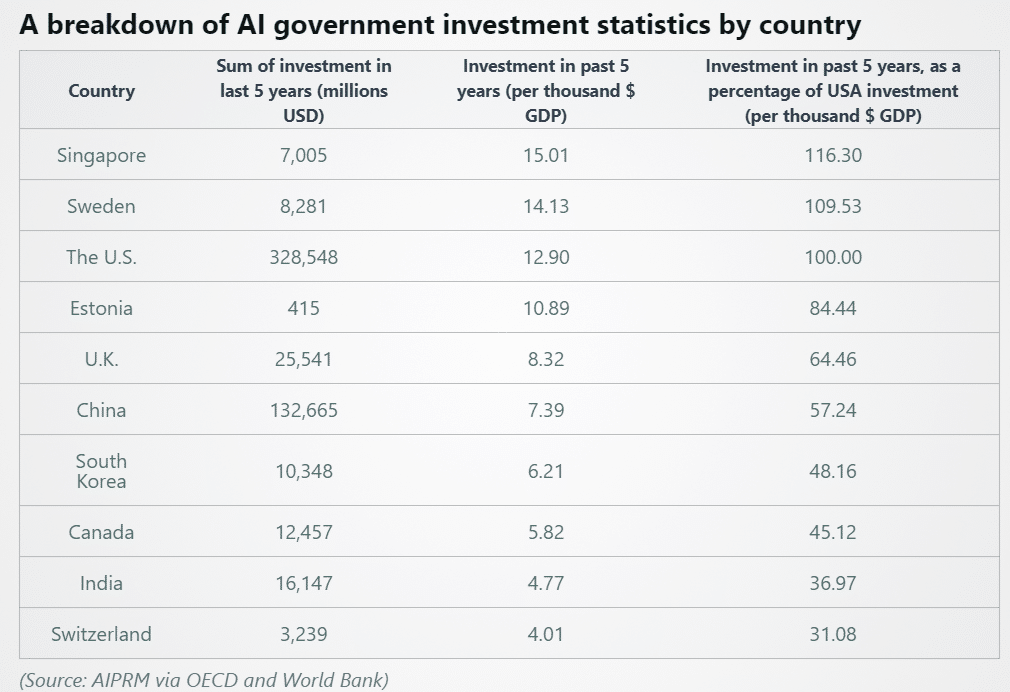
Based on the data provided by the World Bank and OECD (Organization of Economic Co-operation and Development), the US government has invested $328 billion between 2017 -2023, leading by far among other countries, including China and the UK:

AI Startups How the US Became the World’s Leading Hub for Innovation

Photo Courtesy: AIPRM via OECD and World Bank

Silicon Valley is one of the largest global hubs for private investment in the technology sector. In recent years, investments in AI startups have steadily increased, reaching 50% of the global funding for these companies in 2023. The total funding for AI startups in that year amounted to $42 billion, with OpenAI emerging as the top-funded learning platform. By 2023, OpenAI had raised $12 billion, with major investors including Microsoft and Amazon.

Regulations

The United States has been actively engaged in AI legislation, setting standards for safety and security in this field. According to a report from Stanford University, the number of countries with laws that mention the term “AI” has surged from 25 to 127.

The US government has passed numerous bills to standardize AI safety and innovation, including the landmark National Artificial Intelligence Initiative Act 2020. Since 2015, nine bills have been passed through Congress, one of which is Blueprint for an AI Bill of Rights; and at the state level, 14 legislations passed in Maryland, California, Massachusetts and Washington. 

The Executive Order on “Safe, Secure and Trustworthy Development and Use of AI” issued on 30 October 2023 has already set the volunteering commitments, accepted by Amazon, Google, Meta, Microsoft and OpenAi to comply with the new standards of safety, which includes sharing data of test results and any other critical findings with the US government. 

Currently, regulations in the US, Europe, and the UK tend to take a prescriptive approach, which may soon become mandatory.

A key factor in the success of start-ups is the presence of a dynamic ecosystem that includes other AI tech startups, academic partnerships, and government initiatives. This network fosters mentorship and collaboration, enhancing the development of AI technology.

Network

One of the initiatives in the US is the National AI Talent Surge, which encourages students and professionals to join the government program. Another non-profit organisation – The Centre for AI and Digital Studies is supported to conduct various research on AI technology in its reports but also serves as a significant collaborative platform. It is represented by 55 leading experts in AI policy from over 25 countries and is based in Washington, D.C.

Artificial intelligence (AI) has significantly advanced since 1951, when Christopher Strachey created the first successful computer program. Later, in 1997, IBM’s Deep Blue defeated Garry Kasparov in a chess match. AI has also played a crucial role in the development of RNA vaccines, modelling human speech, and the creation of ChatGPT. AI technology is growing exponentially.

As AI continues to grow, the U.S.’s strategic focus on resources, regulations, and networks positions it to remain a global leader in innovation, shaping the future of technology.

Sources:


Published by: Martin De Juan

A Guide to Working in Cybersecurity: Advice from Industry Leader Sankalp Kumar

By: James Brown

Cybersecurity has become a notable and developing field within tech. To gain insights into how to succeed in this industry, we spoke with Sankalp Kumar, a seasoned cybersecurity professional with over seven years of experience working for global leaders, including Big Tech and companies such as McAfee, Juniper, and Fraunhofer. Kumar has worked on projects related to attack detection systems and software security.

Kumar’s journey into cybersecurity was inspired by his early fascination with computers. As a child, he spent countless hours assembling and reassembling computer components, driven by a desire to understand how they worked. That curiosity became the foundation for a career in solving some of the most complex challenges in cybersecurity.

Here’s what Kumar had to share about breaking into the field, navigating the challenges, and thriving in the fast-paced world of cybersecurity.

Why did you choose cybersecurity as a career, and how did you start?

I’ve always been fascinated by problem-solving and understanding how systems work at a fundamental level. Cybersecurity appealed to me because it’s about protecting valuable digital assets while constantly staying one step ahead of evolving threats.

My journey began with a strong foundation in computer science, where I specialized in networking and security. Early in my career, I joined a company that focused on intrusion prevention systems. That gave me hands-on experience in tackling real-world security issues, and it fueled my passion for this field.

What skills are critical for a successful career in cybersecurity?

There’s a blend of technical and soft skills required:

  • Technical Skills: A deep understanding of networking, operating systems, and programming is essential. Familiarity with tools like firewalls, intrusion detection systems, and incident response frameworks is crucial. For specialized roles, knowledge of encryption, cloud security, or AI applications can give you an edge.
  • Problem-Solving: Threats are always evolving, so creative thinking is necessary to adapt quickly.
  • Continuous Learning: Cybersecurity is not static. New vulnerabilities and attack vectors emerge every day, so you need to stay curious and keep learning.

What’s your advice for someone trying to break into cybersecurity?

To start building a career in security, it’s helpful to first establish a solid understanding of computer science or IT. From there, you can focus on security as a specialization. Earning certifications such as OSCP and OSWE can help demonstrate your expertise. Gaining practical experience is also valuable—consider getting involved in open-source security projects, participating in Capture The Flag (CTF) competitions, exploring Bug Bounty programs, or setting up a personal security lab for hands-on learning.

Building connections within the industry can also be beneficial. Consider attending conferences, participating in professional groups, and learning from experienced mentors.

How has the field changed since you started?

When I began, cybersecurity was often seen as an IT function focused on protecting physical networks. Today, it’s integral to every aspect of business strategy, from securing remote workforces to protecting critical infrastructure.

We’re also seeing a shift towards proactive security, where AI and machine learning are used to help predict and prevent attacks before they occur. This requires professionals to have a broader understanding of data science and automation tools.

What are some common misconceptions about working in cybersecurity?

One misconception is that cybersecurity is purely a technical field. While technical expertise is vital, understanding human behavior, risk management, and communication are equally important. For example, phishing attacks exploit psychology, not just technology.

Another is the belief that cybersecurity is all about hacking. It’s much broader—it’s about building secure systems, training users, and ensuring compliance with regulations.

What’s the most rewarding part of your job?

Knowing that my work directly protects people, organizations, and even nations is incredibly fulfilling. Whether it’s stopping a critical attack or building a system that prevents breaches, the impact is tangible.

I also enjoy the intellectual challenge. Every day brings a new puzzle, and solving it gives a deep sense of accomplishment.

What’s your advice for advancing in a cybersecurity career?

Focus on developing a niche expertise. For example, you could specialize in areas like cloud security, incident response, or threat intelligence. Employers value depth as much as breadth.

At the same time, it’s important to nurture leadership skills. Cybersecurity professionals often collaborate with executives, requiring the ability to communicate complex technical risks in a way that aligns with broader business goals. Developing clear communication and strategic thinking can help build stronger connections within the organization and support overall career progression.

Lastly, it’s beneficial to stay updated. Reading industry publications, attending conferences, and pursuing advanced certifications are some ways to remain informed about current trends and developments.

What’s the future of cybersecurity?

The future presents both opportunities and challenges. As quantum computing and AI continue to evolve, they may influence the threat landscape, prompting a reevaluation of encryption and attack detection methods.

At the same time, privacy-preserving technologies and zero-trust frameworks are expected to gain importance. The industry will need professionals who can manage these complexities while maintaining ethical standards.

Key Takeaways from Sankalp Kumar

  • Focus on developing a solid technical foundation and enhancing it with practical knowledge.
  • Stay curious and continuously learn—cybersecurity evolves daily.
  • Enhance soft skills such as communication and strategic thinking to help support career growth.
  • Explore opportunities to specialize while also keeping a broader perspective on security as a whole.


Cybersecurity is a field that continues to evolve, offering potential opportunities for those interested in learning and adapting. As Kumar explains: “There is a growing demand for skilled professionals, and the contributions individuals bring to the field can be significant.”

Published by: Holy Minoza

Truvid Unveils Its New Interface: Redefining Video Management for the Digital Generation

By: Valuetech

Truvid, a video advertising technology solution that delivers state-of-the-art video experience with seamless content distribution and monetary growth, proudly announces the launch of its enhanced interface, designed to redefine user experience in today’s fast-paced digital landscape. With this change, their mission to connect inspiring content creators to publishers and brands just got easier.

The latest update prioritizes simplicity, innovation, and strategic capabilities, empowering users to captivate audiences with uplifting video experiences while seamlessly scaling their operations and achieving their goals. Truvid highlights how every interaction will become intuitive, impactful, and efficient. After all, user experience is everything in today’s digital generation. 

The changes aren’t available for everyone yet. Some of you are already enjoying the power of the new platform. But everyone can soon enjoy the same benefits as we gradually roll out the update to ensure everyone gets the VIP treatment.

What’s New with Truvid?

Seamless User Experience

Navigate effortlessly with Truvid’s intuitive UI. The dashboard received a massive upgrade,  combining simplicity with power where users can focus on creativity and strategy instead of troubleshooting complex and confusing interfaces. Maneuver seamlessly with less head-scratching on the users’s end.

Real-Time Analysis

Data is the backbone of any video strategy and the enhanced dashboard lets users access real-time analytics, enabling faster, data-driven decisions that maximize performance. Truvid’s sophisticated analytics portal allows for an optimized user experience where they can maximize video impact. Leverage real-time insights into audience engagement, advertising performance, and more power to unleash the true potential of video content.

Smarter Video Strategy

Apart from better UI and real-time data, one of Truvid’s latest features includes video packages and playlists, which help users organize and distribute content easily. Create themed collections to align with marketing campaigns, curate tailored viewer experiences, and boost engagement. After all, getting the right videos to the right audience at the right time is critical to powering up your video strategy and delivering dynamic content that resonates.

Transparent Billing

Truvid has also simplified account management to make it easier to maneuver the platform, ensuring a clearer overview of settings and usage. With detailed reporting and customizable insights, users can focus on performance metrics that matter, gaining the information needed to optimize every step of their video strategy. It’s best to know what works and what doesn’t so users can change their game plan.

Instant Access to Support

Lost, confused, and need answers? Our revamped Knowledge Base provides users with a streamlined way to find solutions quickly. Whether troubleshooting or learning about a new feature, everything you’re looking for is just a click away with improved search and categorization.

Empower the Future of Video

Truvid’s new interface is more than just a facelift – it’s a commitment to innovation and excellence, helping you make feel-good content easier. Whether you’re a content creator, marketer, publisher, or advertiser, Truvid offers limitless possibilities to achieve your goals. Maximize tools to drive engagement, streamline operations, and attain measurable results. Truvid is built to scale with your needs just as you grow your business.

Video is the most powerful tool in today’s digital landscape. Stay ahead of industry trends and keep up with creative approaches to not get left behind by your strongest competitors. With our new interface, users can power up their video strategy and build meaningful connections with their audiences.

Published by: Holy Minoza

Satheesh Reddy Gopireddy: Securing the Digital Frontier Through Innovation

By: Aman Jalan

In an increasingly interconnected world, where technology underpins critical systems across industries, the need for robust cybersecurity and seamless automation has never been greater. Amid this evolving landscape, Satheesh Reddy Gopireddy has emerged as a transformative force, blending technical expertise with a visionary approach to redefine the boundaries of cloud security and DevOps automation. His contributions have impacted multiple industries, positioning him as a valuable contributor to technological advancements worldwide.

Satheesh’s journey as an Automation Engineer and Cloud Security Specialist is characterized by his unwavering commitment to addressing some pressing challenges in modern technology. A key focus of his work has been the development of adaptive, intelligent systems to protect critical digital infrastructure. His research into digital immunity frameworks, inspired by biological immune systems, has equipped cloud environments to autonomously detect, respond to, and learn from emerging threats. By embedding machine learning algorithms into cloud systems, Satheesh has introduced a proactive layer of defense that evolves with the cyber threat landscape.

Another hallmark of Satheesh’s work is his pioneering integration of augmented reality (AR) into cloud security operations. Traditional approaches to monitoring cloud infrastructures often struggle to cope with complexity and scale. Recognizing this gap, Satheesh leveraged AR to create immersive 3D visualizations of cloud architectures, enabling security teams to monitor, detect, and respond to threats in real time. This innovative use of AR has enhanced situational awareness and significantly reduced incident response times, underscoring its transformative potential in cybersecurity.

The global nature of cloud deployments has introduced new challenges, particularly in meeting the diverse regulatory requirements of different jurisdictions. Satheesh addressed this issue by automating compliance through “Compliance as Code” (CaC). By embedding regulatory policies directly into CI/CD pipelines, his framework ensures continuous monitoring and enforcement of compliance standards, dramatically reducing violations and streamlining audit processes. His work in this area has been particularly impactful in industries like healthcare and finance, where regulatory adherence is non-negotiable.

Satheesh’s contributions extend beyond theoretical frameworks. His practical solutions have had measurable impacts across industries. In the financial sector, his AI-powered tools for vulnerability detection have improved security while reducing fraud incidents. In healthcare, his adaptive security models have ensured the privacy of sensitive patient data, maintaining compliance with stringent regulations such as HIPAA. In the realm of smart infrastructure, his efforts to secure cyber-physical systems have reinforced the resilience of critical services, from energy distribution networks to autonomous vehicles.

At the heart of Satheesh’s work lies a deep understanding of the interplay between automation and security. His AI-powered code review systems, integrated seamlessly into DevOps pipelines, have redefined efficiency and reliability, enabling rapid software development without compromising quality. By employing advanced techniques such as predictive analytics and anomaly detection, his solutions address vulnerabilities proactively, preventing issues before they escalate.

Satheesh’s vision for the future is as ambitious as it is inspiring. He envisions a world where technology and security evolve hand in hand, leveraging advances in AI to create transparent, adaptive, and scalable solutions. His push for explainable AI and zero-trust architecture reflects a commitment to advancing technology and ensuring that it remains accessible, reliable, and secure.

What sets Satheesh apart is his technical expertise and ability to anticipate and address challenges that others overlook. His work has far-reaching implications, safeguarding critical infrastructure while setting new standards for innovation. As industries navigate the complexities of digital transformation, Satheesh Reddy Gopireddy stands out as one of the leaders shaping the future of technology and ensuring that it serves society responsibly.

In a time when cybersecurity threats are growing more sophisticated and the demand for automation is at its peak, Satheesh’s contributions resonate as a call to action for the global tech community. By transforming challenges into opportunities, he has cemented his place as a visionary whose work strengthens industries inspires innovation, and protects the digital fabric of our interconnected world.

Published by: Holy Minoza

Entrepreneurship in IT: A Founder’s Guide to Innovation

In today’s rapidly evolving technological landscape, entrepreneurship in IT is a driving force behind business transformation. As technology increasingly becomes the foundation of industries worldwide, IT solutions are revolutionizing how businesses operate, communicate, and grow. At the forefront of this revolution are innovators like Kashif Ali, a seasoned entrepreneur and founder of multiple successful ventures in IT and telematics.

Kashif Ali’s journey is a testament to the power of innovation in IT. With over 15 years of experience and a portfolio of companies, including Najoom Al Thuraya Security Control Services LLC and Mux Tech Digital Telematics and IT Solutions LLC, he has consistently leveraged technological advancements to solve real-world problems and drive business success. In this article, we delve into Kashif Ali’s approach to IT entrepreneurship, focusing on identifying opportunities, fostering innovation, and overcoming challenges.

The Power of Innovation in IT Entrepreneurship

Innovation is the cornerstone of every successful IT company, and Kashif Ali believes that the key to sustained growth and competitiveness lies in continuous improvement and creative problem-solving. Whether it’s the development of groundbreaking software, process automation, or improving existing solutions, innovation is the lifeblood of IT entrepreneurship.

For Kashif, innovation takes several forms:

  • Disruptive Innovation: Kashif’s work in telematics has disrupted traditional vehicle tracking systems by introducing cutting-edge in-house solutions. His approach reduced third-party dependencies for fleet management and contributed to creating a system that is more efficient and scalable. His companies are involved in significant projects like SecurePath Dubai and ITC Asateel Abu Dhabi, reflecting his impactful contributions to the telematics landscape.
  • Incremental Innovation: Beyond disruptive breakthroughs, Kashif emphasizes the importance of making continuous, incremental improvements to existing technologies. He frequently seeks ways to enhance the efficiency of his software solutions by refining their performance, adding new features, and improving the user experience. For Kashif, small improvements can compound over time to deliver substantial value.
  • Business Model Innovation: Kashif’s ventures, particularly in fleet management, also reflect business model innovation. His companies have shifted the traditional approach to vehicle tracking by integrating software-as-a-service (SaaS) platforms, providing clients with greater flexibility and scalability. By offering subscription-based models, Kashif positions his businesses to remain competitive and adaptable in a rapidly changing market.
  • Process Innovation: As an entrepreneur, Kashif has always been focused on process innovation. From automating repetitive tasks within his companies to using artificial intelligence (AI) for data-driven decision-making, he continually seeks ways to streamline operations. This focus on efficiency has helped his companies maintain high performance and agility as they scale globally.

Identifying Market Opportunities

For Kashif Ali, the journey to entrepreneurship begins with identifying opportunities in the market. His ability to spot gaps in the market and develop solutions to address those gaps has been a significant factor in his success in IT.

  • Analyzing Market Trends: Kashif’s ability to stay ahead of market trends has been instrumental in shaping the trajectory of his ventures. He constantly keeps an eye on emerging technologies like AI, IoT, and blockchain to identify areas of potential growth. His entry into telematics was driven by his insight into the rising demand for efficient, real-time vehicle tracking solutions, which have now become a critical tool for fleet management worldwide.
  • Solving Existing Problems: Kashif’s ventures often stem from his desire to solve specific problems he has encountered. For instance, the decision to develop in-house telematics solutions for Najoom Al Thuraya Security Control Services came from his frustration with third-party solutions that were inefficient and costly. By addressing these inefficiencies, he developed a product that met his own business needs and offered solutions to broader market challenges.
  • Leveraging Personal Experience: Kashif draws heavily on his professional experience to drive innovation. His background in IT and telematics has given him firsthand knowledge of the challenges that companies face in managing their fleets, and he uses this insight to craft solutions that address these challenges effectively. His deep understanding of the industry allows him to anticipate trends and adapt to evolving needs.
  • Engaging with Customers: One of the key aspects of Kashif’s entrepreneurial strategy is staying connected with his clients. He believes in regularly engaging with customers to understand their pain points and how his solutions can better serve their needs. This customer-focused approach has helped ensure that the products he develops are both innovative and practical.

Nurturing a Culture of Innovation

For Kashif Ali, innovation is not a one-time event but an ongoing process. He fosters a culture of creativity and continuous improvement across his companies, encouraging his teams to think outside the box and embrace new ideas. This focus on innovation has been a critical factor in the sustained growth of his businesses.

  • Encouraging Creativity: Kashif believes that creativity should be at the heart of every IT business. He creates an environment where his teams feel empowered to explore new ideas, take risks, and experiment with new technologies without fear of failure. This emphasis on creative freedom encourages ownership and innovation among his employees.
  • Investing in R&D: A strong commitment to research and development (R&D) is central to Kashif’s business strategy. By continuously investing in R&D, his companies strive to remain at the forefront of technological advancements. Whether it’s developing new telematics software or enhancing existing systems, Kashif prioritizes ongoing innovation.
  • Fostering Collaboration: Collaboration is a key ingredient in driving innovation. Kashif encourages cross-functional collaboration within his companies, bringing together engineers, software developers, and business strategists to brainstorm and solve complex problems. This collaborative approach fosters diverse perspectives and more robust solutions.
  • Staying Agile: In the fast-paced world of IT, agility is essential. Kashif emphasizes the importance of adopting agile development methodologies, which allow his teams to iterate quickly, respond to market changes, and incorporate customer feedback into product development. This flexibility helps his companies remain competitive and responsive to evolving customer needs.

Overcoming Challenges in IT Entrepreneurship

Kashif’s journey as an entrepreneur has not been without its challenges. However, his ability to adapt and innovate has helped him navigate obstacles and build global businesses.

  • Competition: The IT industry is highly competitive, with new startups emerging daily. Kashif’s approach to staying ahead of the competition is rooted in differentiation. By focusing on developing unique value propositions and advancing technologies, he strives to ensure that his companies stand out in crowded markets.
  • Funding: Securing investment is one of the biggest hurdles for any startup. While Kashif has successfully bootstrapped some of his ventures, he also recognizes the importance of attracting investors. His focus on demonstrating market potential, articulating a clear vision, and building trust with stakeholders has supported his efforts to secure funding.
  • Talent Acquisition: Finding top talent is a common challenge in IT, and Kashif has developed a recruitment strategy to attract skilled professionals. By offering competitive compensation, fostering a positive company culture, and providing opportunities for growth, he has assembled strong, talented teams across his companies.
  • Scaling: Scaling a business across multiple countries requires careful planning and execution. Kashif has expanded his companies into markets in the UAE, USA, Bahrain, and Pakistan. His ability to adapt to regulatory environments, cultural nuances, and business landscapes has played a significant role in his success in scaling globally.

Scaling the Business

Kashif’s experience in scaling his companies across multiple regions offers valuable insights for IT entrepreneurs.

  • Automating Processes: Automation has been central to Kashif’s strategy for scaling his businesses. By automating repetitive tasks like software updates, customer service, and vehicle tracking processes, his companies aim to operate efficiently while minimizing costs.
  • Cloud Infrastructure: Kashif’s companies leverage cloud infrastructure to scale their operations. Cloud platforms, such as AWS and Google Cloud, provide the flexibility and scalability his businesses need, without requiring heavy upfront investments in infrastructure.
  • Customer Retention: For Kashif, retaining customers is as important as acquiring new ones. His companies prioritize delivering excellent customer service and improving products based on customer feedback to build long-term loyalty.
  • Expanding into New Markets: Kashif’s strategy for international expansion involves thorough market research, understanding local regulations, and adapting his products to meet the needs of specific markets. This targeted approach has supported his efforts to successfully enter new regions and grow his businesses globally.

Summary

Kashif Ali’s journey as an IT entrepreneur highlights the role of innovation in achieving business growth and adaptability. Through his commitment to identifying opportunities, fostering a culture of creativity, and addressing challenges, he has built a portfolio of companies that continue to lead in the telematics and IT sectors.

For aspiring IT entrepreneurs, Kashif’s story serves as an inspirational example of how creativity and problem-solving can drive success. By staying agile and focused on solving real-world problems, entrepreneurs can build companies that thrive in today’s competitive landscape. As the IT industry continues to evolve, founders like Kashif Ali will remain at the forefront of technological advancements, shaping the future of innovation and entrepreneurship.

Disclaimer: This content is for informational purposes only and is not intended as financial advice, nor does it replace professional financial advice, investment advice, or any other type of advice. You should seek the advice of a qualified financial advisor or other professional before making any financial decisions.


Published by: Annie P.

Bohdan Savchuk: Revolutionizing the Intersection of Application Security and IoT

By: Nadia Drake, Science Journalist

How Is Bohdan Savchuk Transforming IoT Cybersecurity?

Bohdan Savchuk, a Ukrainian QA Engineer and cybersecurity expert, is on a mission to redefine the future of application security within the Internet of Things (IoT). With over 12 years of experience and a rich academic and professional background, Savchuk has developed innovative solutions that address the critical vulnerabilities in IoT ecosystems. His approach integrates cutting-edge methodologies to secure IoT devices, ensuring safer digital environments for households, businesses, and national infrastructures.

Savchuk’s journey is rooted in his deep expertise in cybersecurity and his commitment to addressing the challenges of a connected world. His credentials include a Master’s degree in Cybersecurity, multiple certifications, and a robust portfolio of published articles and speaking engagements at international conferences.

Why Is IoT Security a Growing Concern?

The IoT has transformed how technology integrates into everyday life, with devices ranging from baby monitors to industrial sensors revolutionizing industries and homes alike. According to Deloitte’s Connectivity and Mobile Trends survey, U.S. households now own an average of 22 connected devices. While these technologies offer convenience and innovation, they also introduce significant security risks.

Nearly 50% of users with smart home devices worry about potential hacking and unauthorized control. Concerns about surveillance and data breaches are widespread, highlighting the urgent need for robust cybersecurity measures. The interconnected nature of IoT ecosystems means vulnerabilities in one device can compromise entire networks, presenting not just personal privacy risks but also broader national security concerns.

How Does Bohdan’s Approach Address IoT Vulnerabilities?

Savchuk’s application security approach is designed to fortify the cybersecurity framework of IoT devices through a systematic, multi-layered process. Leveraging advanced tools and methodologies, his solution identifies and mitigates vulnerabilities across the software development lifecycle.

Key components of his strategy include:

1. Static Application Security Testing (SAST): Analyzing source code to detect vulnerabilities early in development without executing the program.

2. Dynamic Application Security Testing (DAST): Simulating real-world scenarios to uncover exploitable flaws in running applications.

3. Veracode Web Application Scanning: Conducting lightweight and comprehensive scans to detect vulnerabilities in web applications.

4. OWASP ZAP (Zed Attack Proxy): Using an open-source tool to identify critical risks such as SQL injection and cross-site scripting.

5. Acunetix Scanner: Employing an automated web vulnerability scanner to identify over 4,500 potential issues in web applications.

This comprehensive framework not only protects individual IoT devices but also strengthens the resilience of interconnected systems, making it a critical asset for modern cybersecurity.

Why Is IoT Security Crucial for National Interests?

The implications of IoT vulnerabilities extend beyond personal data breaches. As IoT devices are increasingly integrated into critical infrastructures, such as government operations, healthcare systems, and military applications, securing these devices becomes a matter of national security.

A successful cyberattack on IoT systems could disrupt essential services, compromise sensitive information, or even undermine defense capabilities. Bohdan’s work emphasizes the importance of securing IoT ecosystems to safeguard critical infrastructure, protect national interests, and deter malicious actors.

Moreover, the interconnected nature of IoT networks means that a single vulnerability could cascade across multiple systems, amplifying the potential damage. By prioritizing strong cybersecurity protocols, Bohdan’s approach addresses these systemic risks, ensuring a secure and resilient digital future.

How Can Stakeholders Collaborate to Enhance IoT Security?

Achieving robust IoT security requires collaboration among governments, organizations, and individuals. Savchuk advocates for the adoption of industry standards, continuous innovation, and knowledge sharing to tackle the evolving landscape of cyber threats. His membership in the International Software Quality Association (ISQA) and his contributions as a speaker and author underline his commitment to advancing cybersecurity discourse.

Savchuk’s vision extends beyond technical solutions, emphasizing the need for holistic strategies that combine technological advancements with awareness and education. By fostering a culture of cybersecurity, stakeholders can collectively build trust and resilience in IoT ecosystems.

Contact Information

For more information about Bohdan Savchuk and his work in cybersecurity, visit his LinkedIn profile.

Savchuk’s expertise and innovative solutions are paving the way for a safer, more secure IoT landscape, demonstrating that the intersection of technology and security is not just a challenge but an opportunity to redefine the future.


Published By: Aize Perez

MO Yu Drives Tech-Enhanced Solutions for Healthy Living

By: LIANG Jiayi

As smart wearable technology continues to mature and gain popularity, the textile industry is experiencing unprecedented innovation. Domestic research institutions, universities, and textile and apparel companies actively participate in this trend, collectively promoting textile fabrics’ functional and intelligent development. MO Yu, an expert in textile engineering and intelligent manufacturing technology for apparel in China, has been engaged in textile fabric research for 17 years, accumulating extensive experience and a solid theoretical foundation. She is currently the Design Director of Shanghai Junmo Clothing Design Co., Ltd. A graduate of Donghua University in Shanghai, she holds a master’s degree and is pursuing a doctoral degree, demonstrating her dedication and passion for academic research.

MO Yu Drives Tech-Enhanced Solutions for Healthy Living

Photo Courtesy: Mo Yu

With her professional background in textile engineering and intelligent manufacturing technology for apparel, Ms. Mo leads her team in enhancing fabric functionality and developing new materials. She focuses on product innovation, emphasizing practicality and market adaptability, striving to create fabric products that better meet consumer needs. Her efforts have advanced textile fabric research and development technology, integrating scientific research results and specific techniques into fabric development, making her reputable in developing China’s textile manufacturing industry.

In recent years, the smart wearable device market has been growing rapidly. The global wearable device market is expected to reach a scale of approximately 60 billion USD by 2024. Among these devices, smart textiles, as an emerging product, have broad development prospects. Smart textiles combine traditional textile materials with modern electronic technology, capable of sensing, responding to, and adapting to environmental changes, providing potentially higher added value than traditional textiles. As one of the advocates and practitioners of smart wearable technology, Ms. MO Yu leads her team in combining smart technology with textile fabrics, promoting the intelligent development of the textile industry.

In developing textile fabrics, Ms. Mo’s team focuses on integrating smart wearable technology into product design and functionality development. They have successfully developed a series of smart textile products by introducing advanced sensor technology and intelligent algorithms. These products retain the basic functions of traditional textiles and achieve new functions, such as smart sensing and data monitoring, providing users with a more intelligent and convenient experience.

Smart sensing technology is the core of smart textiles, mainly including sensor technology, data transmission technology, and data analysis technology. Sensors embedded in textile materials can collect users’ physiological data in real-time, such as heart rate, body temperature, and respiratory rate. Data is transmitted to mobile devices or the cloud through wireless transmission technology, processed and analyzed by big data and artificial intelligence technologies, providing users with health status reports and warnings. The “Smart Wearable and Health Monitoring System Based on Smart Sensing Technology” developed by Ms. Mo’s team is based on this technical framework. Its core lies in high-precision physiological data sensors and efficient data processing algorithms, ensuring the accuracy and real-time nature of data collection. Additionally, the system integrates health monitoring functions and personalized health management services for users, demonstrating potential market competitiveness.

The launch of the “Smart Wearable and Health Monitoring System Based on Smart Sensing Technology” marks a major breakthrough in smart textile technology and provides new ideas for industry development. In the future, smart textiles are expected to be widely used in various fields, such as medical health, sports fitness, and special protection, contributing to comprehensive health management and precision medicine. The innovative achievements of Ms. Mo and her team have injected new vitality into the smart textile industry. With continuous technological advancements and the expansion of application scenarios, smart textiles are bound to become an important part of future smart wearable devices. It’s possible that in the near future, smart textiles will not only be synonymous with technology but also become effective assistants in enhancing quality of life and ensuring health and safety.

As an emerging product, smart textiles have broad development prospects, attracting the attention of research institutions and enterprises. The innovative achievements of Ms. Mo and her team in this field provide new ideas for industry development and pave new paths for developing smart wearable devices. With the continuous advancement of technology and the expansion of application scenarios, smart textiles are gradually becoming an indispensable part of future smart wearable devices. Shanghai Junmo Clothing Design Co., Ltd. will continue to commit to the research and promotion of smart textiles, driving the vigorous development of this emerging field and setting new industry benchmarks. Smart textiles will potentially integrate with more innovative technologies, creating a more intelligent and convenient future life.

Published by: Annie P.