Mohammed Ilyas Ahmed’s CyberGPT Pulse Podcast: Empowering Cybersecurity Professionals for Growth

In the ever-evolving landscape of cybersecurity, staying abreast of the latest trends, techniques, and technologies is paramount for professionals seeking to excel in their field. Recognizing this need for continuous learning and professional development, Mohammed Ilyas Ahmed, a prominent figure in the cybersecurity community, has launched the CyberGPT Pulse podcast. This podcast serves as a valuable resource, offering insightful discussions, expert interviews, and practical insights aimed at empowering cybersecurity professionals to thrive in an increasingly complex digital environment.

With its engaging format and diverse range of topics, the CyberGPT Pulse podcast has quickly emerged as a go-to platform for cybersecurity enthusiasts and experts alike. Each episode features Mohammed Ilyas Ahmed, along with guest speakers who bring a wealth of knowledge and experience to the table. From discussing emerging threats and vulnerabilities to exploring innovative cybersecurity solutions, the podcast covers a wide array of topics designed to cater to the diverse interests and needs of its audience.

One of the key strengths of the CyberGPT Pulse podcast lies in its ability to provide actionable insights and practical advice that professionals can implement in their day-to-day work. Mohammed Ilyas Ahmed and his guests offer valuable tips, best practices, and real-world case studies that resonate with listeners and help them navigate the challenges of the cybersecurity landscape more effectively. Whether it’s learning about the latest cybersecurity frameworks, mastering penetration testing techniques, or understanding the intricacies of incident response, the podcast equips its audience with the knowledge and tools needed to succeed in the field.

Moreover, the CyberGPT Pulse podcast serves as a platform for fostering collaboration and community among cybersecurity professionals. Through engaging discussions and interactive Q&A sessions, listeners have the opportunity to connect with industry peers, share their experiences, and learn from each other’s perspectives. This sense of camaraderie and shared learning enriches the podcast experience and strengthens the cybersecurity community as a whole.

One of the standout features of the CyberGPT Pulse podcast is its commitment to inclusivity and diversity. Mohammed Ilyas Ahmed ensures that the podcast features a diverse lineup of guests, representing different backgrounds, perspectives, and expertise within the cybersecurity field. By amplifying voices from underrepresented groups and shining a spotlight on their contributions, the podcast fosters a more inclusive and equitable cybersecurity community, where everyone has the opportunity to thrive and succeed.

In addition to its educational value, the CyberGPT Pulse podcast also serves as a platform for exploring the broader implications of cybersecurity on society, business, and technology. Through thought-provoking discussions on topics such as privacy, ethics, and the future of cybersecurity, the podcast encourages listeners to think critically about the impact of their work and the ethical considerations that accompany it. By fostering a deeper understanding of the social and ethical dimensions of cybersecurity, the podcast empowers professionals to approach their work with greater empathy, responsibility, and integrity.

Looking ahead, Mohammed Ilyas Ahmed envisions the CyberGPT Pulse podcast as a catalyst for driving positive change and innovation in the cybersecurity industry. With its commitment to excellence, inclusivity, and continuous learning, the podcast is poised to become an indispensable resource for cybersecurity professionals seeking to expand their knowledge, enhance their skills, and make a meaningful impact in an ever-changing digital landscape.

In conclusion, Mohammed Ilyas Ahmed’s CyberGPT Pulse podcast is not just a podcast; it’s a movement. By providing valuable insights, fostering collaboration, promoting diversity, and exploring the broader implications of cybersecurity, the podcast is empowering professionals to grow, thrive, and shape the future of cybersecurity. As the digital landscape continues to evolve, the CyberGPT Pulse podcast will undoubtedly remain a beacon of inspiration and innovation for cybersecurity professionals around the globe.


Published By: Aize Perez

Pioneer in Microservices, AI and API Development wins globally prestigious Titan Platinum Award

Emerges Triumphant in the 2023 TITAN Business Awards

The TITAN Business Awards, a prestigious competition dedicated to recognizing excellence within the business industry, is pleased to unveil the early victors for its second competitive season in 2023. The awards garnered more than 1,300 nominated entries from 58 countries, including the United States, China, Australia, Germany, Armenia, Philippines, Singapore, Switzerland, Spain, India, and the United Kingdom.

Amongst the impressive roster of participants, Dileep Kumar Pandiya stands out as a beacon of innovation and excellence, clinching the prestigious Information Technology – Technical Professional of the Year Platinum TITAN award. Dileep’s groundbreaking work in Microservices, Artificial Intelligence (AI), and API development within the B2B Sales industry has not only set new benchmarks but has also positioned him as a global icon in technology-driven business solutions.

The TITAN Business Awards, organized by the International Awards Associate (IAA), aim to recognize the remarkable achievements of businesses and entrepreneurs worldwide. Open to companies of all sizes and industries, the awards celebrate those who have demonstrated exceptional prowess in their respective fields, leveling the playing field for all participants.

Organized by the International Awards Associate (IAA), this prestigious competition welcomes submissions from entrepreneurs, SMEs, as well as large organizations. Regardless of whether these entities operate in the private or public sector, or if they are for-profit or non-profit organizations, their eligibility for victory remains unaffected. This equal opportunity is extended across diverse sectors within the marketplace.

“Dileep Kumar Pandiya’s pioneering efforts in Microservices, AI, and API development have not only revolutionized the B2B Sales industry but have also demonstrated the transformative power of technology in today’s business world,” remarked Thomas Brandt. “We eagerly await the future contributions of this season’s winners and look forward to the continued evolution of the industry.”

IAA extended invitations to several distinguished industry professionals to join as jurors. With these seasoned experts comprising the jury, rigorous and impartial evaluations were diligently maintained. Their primary responsibility was to discern exemplary entries and determine whether they merited TITAN honors. This dedication aligns seamlessly with the competition’s overarching mission to raise the bar for industry standards and practices, catalyzing advancement across sectors.

The Jury & Evaluation Process

Given the competition’s unwavering commitment to recognizing excellence, it places significant emphasis on impartiality and the incorporation of diverse perspectives throughout its rigorous judging process. To allow this, a diverse array of accomplished professionals was carefully selected to comprise the esteemed jury panel. These jurors hail from distinguished organizations, such as Xavier Moreano Calero (Netlife), Surabhi Shastri (Instagram / Meta), Vladimer Botsvadze (RETHINK Retail), Oliver Dietrich (Mission Mittelstand), and Sudha Ranganathan (LinkedIn).

In the pursuit of fairness, the competition rigorously adhered to the blind judging method. Jurors meticulously evaluated each entry in isolation, ensuring that decisions were based solely on their individual merits, free from any comparisons with other submissions. Assessments were guided by contemporary industry standards, serving as benchmarks throughout the judging process.

Participation of International Brands & Companies

The competition attracted a diverse range of entries from well-established companies, including some that are widely recognized. These participants showcased their industry leadership, thereby establishing a high standard for the level of competition in the field.

The participation of international brands and companies such as Microsoft, Teleperformance, and Octopus Energy, underscores the competition’s prestige and the high caliber of its entrants. Dileep Kumar Pandiya’s exemplary work in leveraging technology to drive business innovation places him among the distinguished circle of winners, showcasing his contributions on the global stage.

“This season’s entries reaffirmed a remarkable standard of excellence, illuminating the profound diversity, depth, and unwavering resilience prevalent within the business sector,” Thomas remarked. “We look forward with great anticipation to the submissions in the forthcoming season, as we continue to witness the industry’s dynamic evolution.”

About International Awards Associate (IAA)

Established in 2015, the International Awards Associate (IAA) is a global organization that is dedicated to recognizing professional excellence and outstanding achievements in various industries. As the organizer of a wide range of prestigious award programs such as the MUSE Creative Awards, MUSE Design Awards, Vega Digital Awards, NYX Awards, NYX Game Awards, TITAN Business Awards, TITAN Property Awards, London Design Awards, NY Product Design Awards, and many more, IAA aims to honor, promote and encourage professional excellence, from industry to industry, internationally and domestically, through award platforms that are industry-appropriate.

For more details on Dileep Kumar Pandiya’s groundbreaking achievements and his journey towards becoming a global icon in the tech industry, visit the TITAN Business Awards winners’ showcase at https://thetitanawards.com/winner.php


Published By: Aize Perez

Nyle Malik Is Making Strides in Tech for Good by Creating a More Equitable Business Landscape with Prosal’s Innovative RFP Approach

By: Monica Stevens

In a world where the term “innovation” is bandied about in the tech industry like confetti, it takes a certain kind of determination and vision to use technology not just for advancement but for creating tangible social good. Enter Nyle Malik, the Chief Technology Officer of Prosal — a startup that’s reshaping the Request for Proposal (RFP) process. Prosal is not just a company; it’s a movement championing transparency, inclusivity, and a fair shot for agencies of all sizes to thrive.

Before the conception of Prosal, Malik was deeply entrenched in software development within the Californian tech world. His international life experiences exposed him to the shared struggles of people across the globe. Noticing the skewed access to public business opportunities — largely tipped in favor of big players — he leveraged his expertise in machine learning to address the disparity through Prosal’s web platform.

“Procurement and RFPs are perfectly suited for an AI revolution,” Malik shares with a passion clearly audible in his voice. “We deal with long, complex documents that small teams find incredibly challenging to handle. By leveraging Large Language Models (LLMs), we simplify these documents, enabling quicker decision-making for agencies engaging in the RFP process. We’re not just tweaking the existing system; we’re reinventing it and leading a human-centered paradigm shift in economic accessibility.”

While competitors focus on issuers of RFPs, Prosal flips the script — its vision is for the creators and business owners — giving them the reins to navigate the often turbulent waters of business development with confidence. Malik’s approach merges a robust understanding of their needs with cutting-edge artificial intelligence for data-driven decisions.

The tangible impact of Malik’s vision is clear. In a notable milestone, Prosal recently secured a formidable $1.58 million in seed funding, allowing the company to scale its technology and reach. Its platform is the antithesis of exclusion; it’s where qualifications beat connections every time.

Prosal, under Malik’s technological stewardship, differentiates itself by genuinely understanding and catering to the pain points of over 6000 agencies that engage with its platform. “No one else was listening or attempting to solve their problems. We are entrenched in the Business Development ecosystem, pushing boundaries with enhanced AI-matching that saves our agencies hours of potentially wasted effort, transforming their businesses both on and off the platform.”

However, Malik’s contribution extends beyond the operational efficiency of RFP processes. His roots give him a rare and profound insight into the universal business challenges globally. This multicultural lens, combined with his technical acumen, has birthed a tech solution that’s not only innovative in its approach to streamlining the RFP process but is also fundamentally equitable.

Prosal’s business ethos is about transforming B2B hiring from a flaw-ridden, biased system to one that’s firmly anchored in the modern era — where the victory goes to the most deserving rather than the most connected. This ethos aligns with the burgeoning desire in the business world for ethics, fairness, and opportunity.

As the CTO of Prosal, Malik is not just tinkering at the edges; he’s spearheading a movement to re-engineer the RFP process to be the most effective and welcoming alternative to traditional methods. With Prosal’s innovative platform, companies are now empowered to expand their reach, connect with valued clients, and compete on a level playing field.

For those eager to join the Prosal journey or connect with Nyle Malik, explore further on LinkedIn. Prosal is more than just a company; it’s a beacon of progress in a world seeking technology that empowers and uplifts all.


Published By: Aize Perez

Harnessing DataOps and Composable Architectures to Build Data-Intensive Applications with Expert Insight from Andy Vidan at Composable Analytics

In this era of unprecedented data growth, companies are increasingly hunting for the holy grail of data management: a system that’s both robust and nimble, capable of sifting through vast digital oceans to catch the valuable insights swimming beneath. Enter the concept of DataOps, a method that stretches far beyond the confines of traditional ETL processes. To dissect and better understand this trend, we spoke with Andy Vidan, CEO of Composable Analytics, Inc., a company steeped in the practice of DataOps.

DataOps is not simply about enhancing ETL (Extract, Transform, Load) processes, as some might suggest. It represents a broader approach to building and operationalizing data-intensive applications. Data-intensive applications excel at handling and processing large volumes of data, optimizing for high throughput and low latency, often in real-time or near-real-time scenarios. They rely on efficient and scalable data storage solutions and incorporate built-in pipelines for data processing and analytics. Additionally, they prioritize fault tolerance and reliability, ensuring the integrity and observability of data.

To effectively implement DataOps and build data-intensive applications, organizations are turning to composable architectures. This approach emphasizes the assembly of smaller, modular components to create larger systems, enabling flexibility and scalability. Composable architectures align with the principles of DataOps, allowing for the efficient design, development, and deployment of complex applications.

How do organizations tame these data behemoths? This is where composable architectures emerge, championed by Lars Fiedler and Andy Vidan, founders at Composable Analytics, Inc., an MIT data and AI company. Composable Analytics banks on the clever assembly of smaller, modular components to architect larger systems, which offers unmatched flexibility and scalability.

“The Composable DataOps Platform is designed to meet the needs of forward-thinking organizations that demand better data access, quality, observability, agility, collaboration, and scalability,” says Vidan, talking to us from his office which, fittingly, has the air of a space finely tuned for collaboration and innovation.

Composable Analytics hasn’t stumbled upon this approach by accident. Founded in the fertile tech grounds of MIT in 2014, the team applied its vast expertise — ranging from big data systems, machine learning and analytics, to distributed systems and data fusion — to initially serve heavyweights like the Department of Defense and the Department of Homeland Security. This high-stakes playground revealed a crucial lesson: complex systems thrive when composable by design. Today, Composable serves several of the largest asset management and insurance firms in North America.

Vidan underscores the shortcomings of yesteryear’s monolithic data warehouses and lakes, which are increasingly seen as relics in the fast-paced digital landscape. Modern composable architectures, with their ethos of domain-based design, cloud-based scalability, and microservices orchestration, offer a departure from the past, enabling organizations to evolve alongside their user and application demands.

Imagine a world where you could effortlessly plug in new data modules like Lego blocks, scaling up or transforming your data operations with relative ease. This is the reality that composable architectures offer, enabling DataOps by fostering environments where design, development, and deployment of complex applications become a synchronized dance of agility and precision.

For enterprises eager to dive into a modern data strategy capable of managing limitless data volumes, Composable Analytics provides the Composable DataOps Platform, a brainchild of MIT’s quest for unrivaled data operations frameworks, that accelerates the development of data-driven applications while providing an overarching structure that is tailor-made for Enterprise AI solutions.

Looking to connect with the minds behind this transformative approach? Find Composable Analytics, Inc. on LinkedIn or dive deep into their world at DataFlowLabs, where the secrets to managing and understanding big data are further unraveled. As the data landscape continues to evolve at a breakneck pace, the insights from the Composable team stand as lighthouses guiding the way to a data-managed future that is not just streamlined, but truly composable.


Published By: Aize Perez

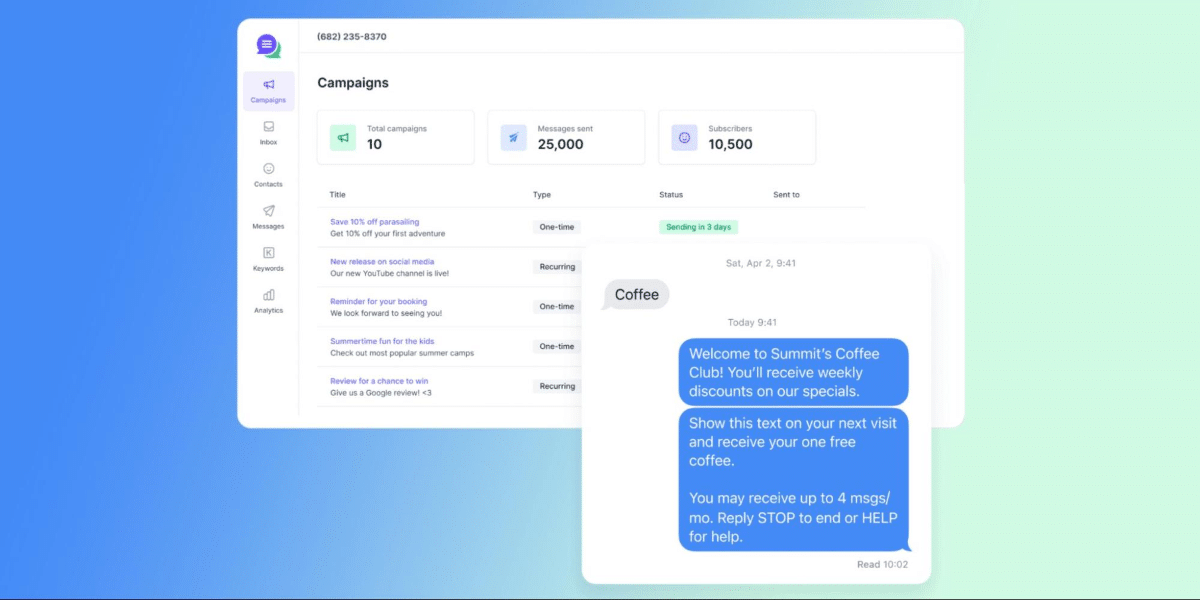
Navigating the Landscape of Affordable SMS Marketing Apps in 2024: A Deep Dive

In the fast-paced digital world of 2024, SMS marketing is still one of the stellarways for companies to stay in touch with their customers in a personal way. 

Even though there are more and more marketing channels available, SMS marketing still has the best combination of ease of use, speed, and high engagement rates. 

It is important for small and medium-sized businesses on a tight budget to find an SMS marketing solution that does not skimp on features but is still affordable. 

This article explores the affordable SMS marketing apps of 2024, highlighting their key features, affordability, and suitability for small businesses.

Textla: The Small Business Champion

For small businesses looking for a powerful yet affordable SMS marketing tool, Textla stands out as the clear choice. It is designed to meet the specific needs of small businesses by providing a simple, pay-as-you-go pricing structure that lets them be adaptable and grow. One thing that makes Textla stand out is its easy-to-use interface, which makes it possible for people who are not very good at marketing to create and manage SMS campaigns.

What really sets Textla apart is the wide range of features it offers that are tailored to small businesses. These include a simple CSV contact upload, segmentation capabilities, and insightful analytics to monitor campaign performance. Textla’s commitment to helping small businesses shows in its customer service, which offers personalized help to users to make the their SMS marketing strategies. Textla is a great option for businesses that want to connect with their audience but do not want to spend a lot of money. It is affordable, works well, and is easy for people to use.

SMSBump: E-commerce’s Best Friend

In the world of e-commerce, SMSBump is a game-changer for companies. When you connect it to popular e-commerce platforms like Shopify and WooCommerce, it makes it easier to create and send SMS marketing campaigns right from the e-commerce platform. The segmentation tools in SMSBump let you send very specific messages to customers based on their behavior, past purchases, and preferences. This makes each message more personal.

The pricing model for the app is flexible enough to meet the changing needs of e-commerce companies, with a pay-per-use system that grows as your campaign does. With tools like automated workflows, A/B testing, and ROI tracking, SMSBump lets e-commerce companies improve their marketing strategies in real time, making sure that each message they send helps them make money.

TextMagic: The Global Messenger

TextMagic provides a fashionable option for companies that want to connect with people all over the world. It is a very useful tool for businesses with customers all over the world because it can send SMS messages to more than 200 countries. The platform’s pay-as-you-go pricing is based on credits, which can be used to send messages anywhere in the world. This gives marketers more versatility and control over their marketing budgets.

One of the things about TextMagic is how simple it is. Its platform is simple to use, so it is easy to send a lot of SMS messages, set up two-way communication, and plan campaigns. TextMagic is a great option for businesses that want a reliable and affordable way to stay in touch with their customers around the world.

EZ Texting: The User-Friendly Choice

EZ Texting is great for businesses that are new to SMS marketing because it focuses on being simple and easy to use. Its interface is meant to walk users through the steps of making and sending SMS campaigns, which takes away the fear that comes with trying out new marketing technologies. 

Even though EZ Texting is simple, it does not skimp on features. It has keyword responses, drip campaigns, social media integration, and more that let businesses connect with their customers in a variety of ways. Companies of all sizes can use EZ Texting’s powerful features without breaking the bank thanks to its flexible pricing plans.

Conclusion

Though 2024 has come and gone, SMS marketing is still very important in the world of digital marketing. These choices are great for small to medium-sized businesses that need to find an affordable SMS marketing app with lots of features. Each app offers unique strengths, from Textla’s small business-focused solutions to TextMagic’s global reach.


Published By: Aize Perez

Navigating the Ebb and Flow: Understanding the Impact of Tides and Currents on Marine Navigation Apps

In the realm of maritime navigation, staying afloat goes beyond just knowing how to read a map. Today, marine navigation apps play a pivotal role in guiding sailors through the vast expanses of the open sea. In this article, we’ll delve into the practical aspects of the impact of tides and currents on marine navigation apps, exploring how these apps help sailors navigate the unpredictable waters.

Understanding the Basics of Tides and Currents

Before we dive into the digital realm of marine navigation apps, it’s practical to grasp the basics of tides and currents. Tides are the rise and fall of sea levels caused by gravitational forces between the Earth, Moon, and Sun. Currents, on the other hand, are the continuous, directional flow of seawater influenced by various factors, including tides, wind, and underwater topography.

Real-Time Tide and Current Information

One of the practical advantages of marine navigation apps is their ability to provide real-time information about tides and currents. The best marine navigation apps integrate up-to-date data, offering practical insights into the current state of tidal movements and water currents. This practical feature allows sailors to plan their routes based on the most recent and accurate information. 

Planning Routes Based on Tidal Patterns

Tides are dynamic and follow specific patterns influenced by the lunar cycle. The practicality of marine navigation apps lies in their ability to predict these tidal patterns. Sailors can plan their routes more effectively by taking advantage of the rising and falling tides. The best apps consider tidal variations, helping sailors optimize their journeys and avoid potential obstacles. 

Accounting for Tidal Range

The tidal range, or the difference between high and low tide, has a practical impact on maritime navigation. The best marine navigation apps factor in tidal range, allowing sailors to anticipate changes in water depth. This practical consideration is crucial for avoiding shallow areas or ensuring access to harbors and channels during different tidal phases. 

Navigating Through Tidal Currents

Beyond tides, marine navigation apps assist sailors in navigating through tidal currents. These practical currents can significantly affect a vessel’s speed and direction. The best apps provide real-time information on tidal currents, helping sailors adjust their routes to take advantage of favorable currents or navigate through challenging areas with caution.

Factoring in Tidal Stream Atlas Data

Tidal stream atlases offer practical charts depicting tidal currents in various regions. Many marine navigation apps integrate tidal stream atlas data, providing sailors with practical visual representations of current flows. This practical feature aids sailors in understanding the complexities of tidal currents and making informed decisions about their navigation routes. 

Avoiding Dangerous Overfalls and Eddies

Tidal movements can create practical challenges in the form of overfalls and eddies—areas where currents interact and may become turbulent. Marine navigation apps help sailors identify and avoid these practical hazards by providing information about potential overfalls and eddies. This practical knowledge enhances safety during navigation, especially in regions with complex tidal dynamics.

Optimizing Sail Plans for Tidal Conditions

For sailors relying on wind power, the interplay between tides and wind is a practical consideration. Marine navigation apps assist in optimizing sail plans based on tidal conditions. Understanding how tides may influence wind patterns allows sailors to make practical decisions about sail configurations, enhancing overall efficiency and speed.

Utilizing Time and Tidal Windows 

Timing is everything in marine navigation, and the best apps help sailors make practical use of time and tidal windows. These practical windows represent favorable conditions for specific maneuvers, such as entering a harbor or crossing a tidal gate. By aligning their journeys with practical time and tidal windows, sailors can navigate more efficiently and safely.

Providing Alarms for Tidal Changes 

To enhance practical situational awareness, marine navigation apps often include alarms or notifications for upcoming tidal changes. These practical alerts give sailors a heads-up about approaching high or low tide, allowing them to prepare for potential changes in water depth and current strength. This practical feature is especially valuable for nighttime navigation or when the crew is focused on other tasks.

Customizing Tide and Current Settings

The practicality of marine navigation apps extends to customization. The best apps allow sailors to tailor their settings to specific tidal and current preferences. Whether you prefer practical graphical representations or numerical data, customization ensures that the app aligns with your practical navigation style and preferences.

Enhancing Safety in Tidal Rapids

Certain regions are known for challenging tidal conditions, including tidal rapids. Marine navigation apps contribute to safety by providing practical information about these areas. Sailors can plan alternative routes or time their passages through tidal rapids more effectively with the practical insights offered by navigation apps.

Accessing Historical Tidal Data

Understanding historical tidal data is practical for sailors planning future journeys. Many marine navigation apps offer access to practical historical tidal information. By reviewing past tidal patterns, sailors can make informed decisions about the best times to navigate specific routes or anchor in certain locations.

Offline Access to Tidal and Current Information

In areas with limited connectivity, the best marine navigation apps offer practical offline access to tidal and current information. This ensures that sailors can access crucial data even when they’re away from internet coverage. The practicality of offline access is particularly valuable for long passages or remote sailing destinations.

Regular App Updates for Improved Tidal Accuracy 

Practicality is a continuous pursuit, and the best marine navigation apps prioritize regular updates. These updates often include improvements to tidal and current accuracy based on new data and technological advancements. By keeping their apps up to date, sailors can rely on the most practical and precise tidal and current information for their navigation needs.

In Conclusion

Navigating the open sea involves mastering the ebb and flow of tides and currents. Marine navigation apps emerge as practical allies in this endeavor, providing sailors with real-time information, predictive capabilities, and customizable features. By understanding the impact of tides and currents on these apps, sailors can navigate with confidence, optimizing their routes for safe and efficient journeys. Stay practical, stay informed, and let the best marine navigation app be your reliable guide through the ever-changing waters.


Published By: Aize Perez

Illuminating Innovations: The Integral Role of Solar Inverters in Solar Panel Systems

Solar energy has revolutionized the way we think about renewable energy. Central to this transformation is the solar inverter, a pivotal component in solar panel systems. This article delves into the integral role solar inverters play, their types, functions, and the advancements shaping this technology.

What Are Solar Panels?

Solar panels are devices that convert sunlight into electricity. They come in various types, including monocrystalline, polycrystalline, and thin-film solar panels, each with unique features and efficiency levels.

Illuminating Innovations: The Integral Role of Solar Inverters in Solar Panel Systems

Photo Courtesy: Bougerv

Understanding Solar Inverters

A solar inverter is the brain of a solar panel system, converting direct current (DC) generated by solar panels into alternating current (AC) used in homes and businesses. Its efficiency greatly impacts the overall system’s performance.

The Integral Role of Solar Inverters

Solar inverters not only convert energy but also maximize the electricity generated by solar panels. They ensure that the power output is optimized for household or commercial use.

Types of Solar Inverters and Their Functions

There are several types of solar inverters, each serving a specific purpose:

  • String Inverters: Connect multiple solar panels in a series.
  • Central Inverters: Ideal for large-scale solar installations.
  • Microinverters: Attached to individual solar panels for enhanced performance.
  • Hybrid Inverters: Combine solar and battery storage systems.

Advancements in Solar Inverter Technology

Recent innovations in solar inverter technology have significantly improved efficiency and reliability. Smart inverters with digital connectivity and remote monitoring are becoming increasingly common.

Advancements in solar inverter technology have been pivotal in enhancing the efficiency and functionality of solar energy systems. Here are some key developments in this field:

  1. Increased Efficiency: Modern solar inverters are more efficient in converting DC to AC power. This means a higher percentage of the solar energy captured by the panels is converted into usable electricity, reducing energy loss.
  2. Smart Inverters: The integration of smart technology into solar inverters has been a significant advancement. These inverters can communicate with the power grid, adapt to changing grid requirements, and effectively manage energy distribution. They can also provide valuable data analytics on system performance and energy usage.
  3. Microinverters: Unlike traditional inverters that connect to multiple panels, microinverters are installed at individual solar panels. This technology maximizes the output of each panel, as it doesn’t get affected by the performance of other panels in the array. This is particularly useful in situations where panels are partially shaded.
  4. Hybrid Inverters: These inverters combine solar and battery storage in one system. Hybrid inverters allow for energy to be stored during peak production times for use when solar energy is not available, such as during night or cloudy days. This ensures a consistent energy supply and can reduce dependence on the grid.
  5. Optimized Inverters: These inverters work alongside optimizers attached to each solar panel. They optimize the voltage of each panel before sending it to the inverter. This leads to improved system performance, especially in cases where some panels are shaded or operating at different efficiencies.

Integration of Solar Inverters with Solar Panels

The compatibility of solar inverters with solar panels is crucial. A well-matched system ensures optimal energy production and longevity.

Benefits of Using Solar Inverters

Solar inverters offer numerous benefits, including increased energy output, enhanced system performance, and prolonged lifespan of the solar panel system.

Solar inverters play a crucial role in solar power systems, converting the direct current (DC) electricity generated by solar panels into alternating current (AC) electricity, which can be used by household appliances and fed into the power grid. The benefits of using solar inverters include:

  1. Enables Usage of Solar Energy: By converting DC to AC, solar inverters make the energy produced by solar panels usable for common household appliances and for feeding into the electrical grid. Without inverters, the energy generated by solar panels would be largely unusable for standard home or commercial needs.
  2. Maximizes Energy Efficiency: Many modern solar inverters are designed to maximize the efficiency of energy conversion. They can optimize the power output from solar panels, ensuring that the maximum amount of solar energy is converted and used.
  3. Reduces Electricity Costs: By using solar energy to power appliances, homeowners and businesses can significantly reduce their electricity bills. Over time, the savings gained from using solar energy can offset the initial investment in solar panels and inverters.
  4. Eco-friendly and Sustainable: Solar inverters facilitate the use of clean, renewable energy, reducing reliance on fossil fuels. This contributes to the reduction of greenhouse gas emissions and promotes environmental sustainability.
  5. Grid Connectivity: Grid-tied solar inverters enable households and businesses to feed excess solar power back into the electricity grid, often resulting in credits from utility companies. This can further reduce electricity costs and even generate income in some cases.

Conclusion

The role of solar inverters in solar panel systems is indispensable. As technology advances, their impact on the efficiency and effectiveness of solar energy systems will continue to grow, making them a cornerstone of sustainable energy solutions.

Published by: Martin De Juan

Revolutionizing Manufacturing Through Predictive Analytics: The Vision of Prateek Shrivastava

In the rapidly evolving landscape of manufacturing, the integration of data science is becoming increasingly indispensable. Manufacturing analytics, driven by data science principles, enables companies to extract actionable insights from vast datasets, thereby enhancing operational efficiency, reducing costs, and improving product quality.

Prateek Shrivastava’s vision for the future of manufacturing is not just confined to optimizing current processes but also extends to revolutionizing the way companies approach product development and customer engagement. By harnessing the power of data science, Prateek is pioneering initiatives that not only predict equipment failures but also tailor the manufacturing process to meet the evolving needs and preferences of consumers. This customer-centric approach, driven by insights gleaned from big data analytics, is setting new standards in the industry, making products more reliable, efficient, and aligned with market demands.

Prateek, a thought leader in data science and manufacturing analytics at Cummins, brings a wealth of expertise and insight to the table. With a distinguished academic background and hands-on experience in data-driven roles across various industries, Prateek’s goal is clear: “My goal is to leverage data science to drive meaningful change and innovation in the manufacturing domain.”

His pioneering work has demonstrated the transformative impact of predictive analytics in manufacturing. Through proactive maintenance interventions fueled by telematics data, companies have minimized downtime, optimized resource utilization, and improved overall equipment effectiveness. As Prateek notes, “Predictive analytics isn’t just about improving efficiency; it’s about delivering superior customer experiences by ensuring product reliability and availability.

Under Prateek’s guidance, Cummins is exploring the integration of machine learning algorithms with IoT devices in the manufacturing process, a move that promises to enhance predictive accuracy and streamline operations further. This innovative approach not only reduces waste and inefficiency but also accelerates the time-to-market for new products, giving Cummins a competitive edge in a highly dynamic industry. By focusing on the intersection of data science and user experience, Prateek is not only addressing the immediate challenges faced by the manufacturing sector but is also laying the groundwork for a more agile, responsive, and customer-focused industry.

The implications of Prateek’s work extend beyond the confines of Cummins, offering a blueprint for how data science can be leveraged across the manufacturing sector to drive sustainable growth and innovation. As companies worldwide seek to navigate the complexities of the modern marketplace, the principles and practices championed by Prateek offer a roadmap for harnessing the transformative potential of data science. In doing so, Prateek Shrivastava is not just leading Cummins into a new era of manufacturing excellence; he is helping to redefine the very nature of manufacturing in the 21st century.

Looking ahead, the future of predictive analytics in manufacturing appears promising. Prateek envisions, “As technology continues to evolve, we’ll see even greater insights and capabilities in predictive maintenance and operational optimization. It’s an exciting time to be at the intersection of data science and manufacturing, driving innovation and shaping the future of the industry.” With Prateek Shrivastava leading the charge, Cummins remains at the forefront of this technological revolution, poised to unlock new frontiers of innovation and efficiency in the manufacturing domain.

Published by: Martin De Juan

Rajiv Tulsyan: Innovating Solutions Architecture for a Technologically Advanced Future

In the dynamic realm of technology, where innovation and expertise serve as the cornerstone of progress, Rajiv Tulsyan emerges as a distinguished Solutions Architect, reshaping the contours of enterprise-level technology strategies. His work is a beacon for professionals and enthusiasts in the tech industry, underscoring exceptional achievements and a forward-thinking approach to technology solutions.

The Genesis of a Tech Visionary

Rajiv Tulsyan‘s career is a testament to his unwavering commitment to excellence in Solutions Architecture. With a profound specialization in the design of distributed systems and the formulation of enterprise-level technology roadmaps, Tulsyan has demonstrated an unparalleled ability to navigate complex client requirements, achieving exceptional outcomes consistently. His expertise spans across Integration Solution Architecture, where he has delivered unparalleled results, marking him as a leader in his field.

A Legacy of Architectural Excellence

Tulsyan’s extensive experience in crafting sophisticated technological landscapes is notable. He possesses a unique talent for designing distributed systems and creating technology strategies that propel enterprises forward. His contributions as a published author, particularly through his insightful book “Transform Your Enterprise with Generative AI,” illustrate his thought leadership and deep understanding of emerging technologies like Generative AI and its impact on enterprises. Rajiv Tulsyan guides readers through an exploration of the fundamental principles and historical development of Generative AI. This journey encompasses a thorough understanding of machine learning, neural networks, and deep learning. The narrative vividly illustrates the transition from rule-based approaches to the current era of neural network advancements, highlighting the significant impact of hardware innovation throughout this transformative journey.

Innovation at the Core

Among his noteworthy accomplishments is the development of a business application leveraging Generative AI. This innovation enables businesses to extract actionable insights from publicly available data, showcasing Tulsyan’s ability to harness technology for strategic advantage. Furthermore, his role in designing accelerators that facilitate seamless code conversion across various programming languages underscores his commitment to efficiency and excellence in software development.

Expertise in Architecture and Beyond

Tulsyan’s proficiency is not limited to architectural paradigms; he is also adept in API platforms, data platforms, and Integration development platforms. His significant contributions to enhancing clients’ visibility and accessibility in the cloud marketplace, particularly through the development and implementation of Azure Marketplace offerings, have solidified his status as a key figure in cloud architecture.

Technical Mastery and Leadership

The depth of Tulsyan’s technical expertise is evident in his mastery of Java, Kubernetes, Docker, and API gateway technologies. His work with Fortune 500 clients on an international scale has leveraged integration and Generative AI technologies to provide cutting-edge solutions. As a mentor and leader, Tulsyan is passionate about fostering technical excellence, attracting talent to his teams, and promoting innovation and collaboration.

An Entrepreneurial Spirit

Rajiv Tulsyan‘s journey into technology began during his college years, where he showcased his entrepreneurial spirit by developing portals for Online IT exhibitions, online temples, and social challenges. These early initiatives garnered significant media attention and laid the groundwork for his future endeavors, highlighting his proactive problem-solving approach and his knack for creating solutions that resonate with diverse audiences.

Impacting the Tech World

With a remarkable career characterized by innovation, leadership, and technical prowess, Rajiv Tulsyan continues to drive technological evolution in enterprises worldwide. His contributions not only pave the way for new advancements but also inspire a new generation of tech professionals to explore the boundless possibilities within the realm of Solutions Architecture. Rajiv Tulsyan’s legacy is not just in the solutions he creates but in the visionary path he charts for the future of technology.

Published by: Martin De Juan

Yifeng Wang: Turning New Technology Into A New Delighted User Experience

By: Lanette

In the California Bay Area, a center of global innovation, Yifeng Wang stands out as a visionary UI/UX and product designer, revolutionizing complex enterprise user experience at an innovative tech startup. With a career spanning over 9 years, Yifeng blends design excellence with a deep understanding of business. His approach to design, focusing on users’ pain points and business objectives, has significantly impacted projects involving cutting-edge technologies like cloud computing, blockchain, VR/AR, and AI highlighting his commitment to enhancing the accessibility and practicality of these technologies. His work underscores the pivotal role of design in rendering new technologies not just usable but also enjoyable for both early adopters and the broader public.

Yifeng’s design journey has crossed conventional boundaries. Initially focused on designing human interaction with physical spaces, his perspective shifted during his graduate studies at UC Berkeley. Located in the heart of global tech innovation, UC Berkeley emphasizes design thinking as a means to address real-world challenges. This new environment offered Yifeng a fresh outlook on designs’ potential impact.

While at Berkeley, Yifeng had transformative experiences, notably at the 2019 MIT XR Reality Hack, where he led the design of an AR tool to improve public speaking skills, enabling users to practice in a mixed-reality setting. This tool not only won the best tool prize for its usability but also demonstrated the practical benefits of new technologies for the general public. Another pivotal experience was the 2019 Ford Future Mobility business case competition. As the sole designer among business analysts, Yifeng’s user-centered design approach was instrumental in developing a profitable multi-modal mobility ecosystem for Ford Mobility. His contributions significantly differentiated their proposal, leading to a first-place win, with judges specifically citing his user-centric approach as a key factor.

These experiences fueled Yifeng’s passion for applying his design thinking, honed in physical space design, to broader fields like UI/UX and product design. His focus shifted to making complex technologies like cloud computing, blockchain, VR/AR, and AI, particularly in enterprise applications, both accessible and enjoyable. Yifeng’s journey illustrates his commitment to transforming the interaction between users and cutting-edge technology, ensuring it is not just functional but also delightful.

“Embracing this transition has deepened my connection with end users” Yifeng reflects. He witnessed the fast evolution of technologies like cloud computing, blockchain, and AI and how they’ve reshaped everyday life. Mark Andreson’s notion that “software is eating the world” particularly resonates with him, underscoring the transformative power of technology. For Yifeng, design is pivotal in addressing the challenges of adopting new technologies, and enhancing their potential to benefit a broader audience. His distinct background, combining architecture design and involvement in technological innovation, equips him with a unique perspective. He crafts design solutions that are not only practical and impactful for businesses but also visually appealing and accessible to users. 

Yifeng’s commitment to integrating design with emerging technologies has been recognized with prestigious awards, including the New York Product Design Silver Award, and a finalist in the ETH Global FEVM Hackathon. His innovative designs, particularly in AI and blockchain, have set new standards in user experience, paving the way in these advanced fields. These accolades serve as a testament to Yifeng’s exceptional prowess and recognition as a leading product designer in the realm of new technology.

His project “Outfit Club” won the New York Product Design Silver Award in the Design for Sustainability category in 2023. This project addresses the waste caused by excessive returns in online shopping due to uncertainties about fit and style. Yifeng’s design, featuring a personalized avatar-based virtual try-on platform, merges advanced AI and 3D modeling to revolutionize the e-commerce experience, boosting consumer confidence and significantly cutting down on returns.

Yifeng Wang: Turning New technology Into A New Delighted User Experience

Photo Courtesy: Yifeng Wang

Yifeng’s design expertise was further demonstrated in SpendDAO, now DALN (Data as Labor Network), earning him a finalist spot in the ETH Global FEVM Hackathon. This project disrupts traditional data ownership models, granting users control over their credit card data using blockchain technology, a stark contrast to the norm of credit card companies profiting from consumer data without user awareness.

Designing SpendDAO, Yifeng navigated the complexities of blockchain technology and user education about data value. He remarks, “The most rewarding part is making new technology accessible to a wider audience.” This project reflects Yifeng’s ability to simplify complex technologies and his commitment to user empowerment and privacy.

With a wealth of design experience and influential awards, Yifeng is now channeling his talents into tackling more complex and ambitious user experience challenges. Contributing significantly to the rapid growth of the tech startups he works at, he is also extending his vast knowledge of new technology design to mentor AI and Web3 startup founders. His guidance is pivotal in their product development, helping them harness advanced technologies to enhance user experiences. Yifeng’s unique blend of curiosity, passion for innovation, and commitment to solving real-world user problems distinguishes him in the world of design. Yifeng’s journey is a testament to the transformative power of design, bridging complex technologies and user needs, keeping him at the forefront of innovation in the ever-changing tech landscape.


Published By: Aize Perez