A Month of Love, a Lifetime of Grace: One Man’s First Letter Before the Memories Fade

By: Elowen Gray

In a quiet room, with his mind beginning to slowly betray him, one man sat down for what might have been his final calling—to write. As the early shadows of memory loss crept in, he felt a gentle whisper from the Lord. A voice seemed to guide him, encouraging him to write down his story, to express gratitude while he still could.

This is not the story of a saint. It is not a tale of triumph or fame. My Fantasy Princess is something far more honest—it is the humble reflection of a man who lived through heartbreak, temptation, forgiveness, and the fleeting beauty of love. It is the first letter, from a man seeking peace with himself, and offering thanks to the God who never let him go.

Decades ago, in the mid-1980s, he met Lee—a young Filipina woman whose smile often warmed the coldest days. She wasn’t just a visitor; for one brief, golden month, she became his light. They danced barefoot on beaches, sang under the stars, prayed together in the towering redwoods, and walked hand-in-hand through sacred groves where God felt so close you could almost hear Him breathing.

The way he describes her is not one of idealization, but a genuine remembrance of the woman she was. He didn’t write to boast—he wrote to remember. He wrote to honor a girl who, in his words, “was beautiful not just in her face, but in her heart.” He writes of the incredible joy of holding her as they both thanked Jesus aloud, their prayers floating beneath the tallest trees on Earth.

But the story was always destined to be bittersweet. “We were lovers in spirit, not in flesh,” he wrote, describing those intensely emotional nights spent holding each other, both of them crying for what could never be. In their final hours together, Lee made an offer born of pain and love—a moment where most men might have fallen. Yet, he chose differently. With tears in his eyes, and a prayer on his lips, he said no. She would return home unspoiled. And as he put it, “I knew it broke her heart… but it would have broken mine even more to fail her when it mattered most.”

Was it love or fantasy? The question lingered in his thoughts. He was keenly aware of how life sometimes mixes truth and illusion. “Maybe she was just a frightened girl in a desperate situation,” he wondered. “Maybe she was too good to be true.” But no matter how many doubts crept in, one thing remained clear—his gratitude to the Lord for allowing him to experience a sliver of heaven in the midst of his otherwise broken life.

As his memory continued to slip, his writings turned into a letter—not to Lee, but to her imagined granddaughter. “Maybe you have a Lola in a nursing home somewhere,” he wrote, “read her my story. Let her be young and beautiful again, if only for an hour.”

A Month of Love, a Lifetime of Grace One Man’s First Letter Before the Memories Fade

Photo Courtesy: Robert Anderson

In his final pages, it becomes clear: this story isn’t about desire or regret. It’s about the mercy of God, the redemptive power of choosing integrity, and the quiet strength of letting go. “God gave me the strength to love her, to cherish her, and to walk away,” he wrote. “He forgave me my sins, and He gave me peace.”

There was no grand reunion. No fairy tale ending. Life after Lee was quiet, simple—marked by faith and quiet service. Yet, he carried a hope that went beyond time and memory. “One day, when the Lord calls me home, maybe I’ll see her again… dancing on the beach, singing her Tagalog songs, forever young beneath God’s endless sky.”

In a world that often seeks perfect endings, My Fantasy Princess stands apart. It reminds us that sometimes the most beautiful stories are the ones that leave us with reflection… and save your soul. That God’s grace can reach you in motel rooms, in camper vans, and in the darkest corners of your mistakes.

And even when memories fade… grace never does.

It lingers—gentle, forgiving, and everlasting—just like the love of the Lord who writes our names in His Book, long after we’ve forgotten our own stories.


Disclaimer: The views expressed in this article are those of the author and do not necessarily reflect the views of Robert Anderson or any associated entities. The content is for informational purposes only and is not intended as professional advice.


Ira Harris Shares His Journey of Resilience in Brown-Skinned Boy

By: Elena Mart

What makes Brown-Skinned Boy compelling is Harris’s ability to intertwine personal anecdotes with broader historical and cultural themes. The story begins with Ira’s childhood on a family farm in North Carolina, a time that is described with a sense of nostalgia and warmth. Readers are introduced to his grandmother, a woman of wisdom and tradition who teaches Ira the importance of resilience and community. Her lessons, grounded in folklore and herbal remedies, provide a sense of stability and comfort that contrasts with the realities of systemic racism.

Harris’s prose is rich and evocative, painting a vivid picture of the South. From the dappled sunlight of the woods where Ira gathers herbs to the sweltering heat of summer afternoons, each scene immerses readers in his world. The details are described in such a way that readers can almost feel the Southern humidity and hear the gentle rustling of leaves.

At the heart of the memoir is the love shared by Ira’s family. His mother, a figure of strength, works tirelessly to shield her children from the harshness of a segregated society while encouraging them to dream beyond the limitations imposed upon them. Ira’s relationship with his grandfather, a man of quiet dignity, adds another layer of emotional depth, showcasing the importance of generational wisdom in shaping character and values.

What sets this memoir apart is its ability to juxtapose tender familial moments with difficult realities. Harris does not shy away from recounting the impact of racism, from the humiliation of segregation to the fear of encounters with the Klan. However, even in these challenging moments, the narrative is imbued with a sense of hope. Ira’s resilience in the face of adversity and his determination to rise above the constraints imposed by society offer an uplifting arc that resonates deeply.

One particularly striking aspect of the book is its exploration of identity. Harris delves into the emotional complexities of growing up as a Black boy in a society that often fails to recognize his value. Through his reflections, readers gain insight into the internal struggles of self-worth, the desire for belonging, and the need for resilience. His experiences provide not only a window into the past but also a reflection of ongoing efforts for racial equality today.

Brown-Skinned Boy includes moments of lightness and joy as well. Descriptions of Ira’s childhood adventures—whether playing baseball with friends, exploring the woods, or working alongside his grandfather—add a warmth that balances the memoir’s heavier themes. These moments serve as reminders that even amid hardship, the beauty of life can be found.

Ultimately, this book is a testament to the strength of the human spirit. Harris’s journey from a curious boy to a resilient young man offers a narrative of perseverance and hope. It’s a story that may leave readers moved, inspired, and with a deeper understanding of the experiences of those who lived through segregation.

For anyone interested in a memoir that is as thought-provoking as it is emotionally impactful, Brown-Skinned Boy is a recommended read. Harris’s ability to blend personal narrative with universal themes ensures that this book will resonate with readers long after they’ve turned the last page.

Availability

This inspiring masterpiece is available on Amazon. 

Book Name: Brown-Skinned Boy

Author Name:  Ira Harris

Hard Cover Copies: Here

Ebook Version: Here

The Poetry of Truth: Life Lessons from Dekha Suna Anubhav Mere Andaj Mein

By: Nicole E. Adams

Poetry often speaks where plain words fail. It has the ability to reach the heart, capture unspoken feelings, and reveal truths that are difficult to express.

In Dekha Suna Anubhav Mere Andaj Mein (Hindi Edition), ‘Bhagwan’ Swaroop Khosla does more than write poems—he captures the essence of human life and transforms personal experiences into a mirror where every reader can see their own struggles, joys, and hopes. His poetry is not distant art; it is lived wisdom, drawn from realities of love, betrayal, loss, and resilience.

A Voice Born of Experience

Khosla’s writing feels personal because it comes from a life that has seen and felt much. Every verse reflects a story—sometimes his own, sometimes inspired by the world around him.

The beauty of the book lies in how these experiences are expressed in simple yet profound words. Readers often find themselves nodding along, recalling their own moments of happiness or grief. The rhythm of his poetry makes these truths flow naturally, making them relatable to anyone.

Love, Betrayal, and the Human Heart

One of the strongest themes in the book is the joy and pain of human relationships.

  • Love is portrayed not as fantasy, but as something real, fragile, and tested.
  • Betrayal cuts deep in his verses, echoing what many have silently endured.
  • Yet, he never writes in despair. Instead, his poems highlight how even heartbreak can become a lesson—shaping stronger, wiser human beings.

This sense of honesty and balance speaks directly to the heart.

Resilience in the Face of Struggle

Another powerful thread in Dekha Suna Anubhav Mere Andaj Mein is resilience.

Khosla acknowledges life’s obstacles—loss, loneliness, disappointment—yet his words always shift from sadness to hope. He reminds us that no matter how dark the night, light always follows.

This balance of realism and optimism is what makes his poetry stand apart. He does not deny suffering; instead, he shows how to live through it.

A Spiritual Reflection

The book also carries a strong spiritual voice. Khosla questions false faith, shallow rituals, and the misuse of religion—but always with the intention of guiding readers back to sincerity.

His devotion is not rigid preaching. Instead, it comes through heartfelt reflection, encouraging readers to:

  • Embrace kindness and humility.
  • Trust in the divine.
  • Look beyond material illusions to discover peace in truth and simplicity.

A Style That Connects

Khosla’s style makes his poetry stand out:

  • Written in rhymed verse with a natural, conversational tone.
  • Sprinkled with humor, sarcasm, and sincerity in equal measure.
  • Simple enough for every reader, yet always profound.

It feels less like reading poetry and more like talking to a wise friend who truly understands life’s struggles.

More Than Poetry—A Teacher of Life

Dekha Suna Anubhav Mere Andaj Mein is more than poetry on a page. It is a reminder that life itself is the greatest teacher:

  • Betrayal can teach strength.
  • Loss can lead to reflection.
  • Love—even when painful—can open us to compassion.

Khosla writes not just for art’s sake but to share truths he has lived. This makes his work deeply meaningful and universally relatable.

Final Word

For readers who seek connection, honesty, and inspiration, this book offers all three. It invites you to reflect on your own journey, recognize the patterns of struggle and healing, and embrace the idea that both pain and joy are part of growth.

Poetry, here, is not just words on paper—it becomes a companion, a teacher, and even a guide.

Dekha Suna Anubhav Mere Andaj Mein (Hindi Edition) by ‘Bhagwan’ Swaroop Khosla is available now on Amazon, at major online stores, and through leading retailers. Step into these pages and discover poetry that speaks with truth, heart, and wisdom.

Building Heroes: Joey Stefaniak on Tradesmen and the Power of Blue-Collar Grit

By: Ryan Caldwell

In a literary landscape filled with sleek spies and high-tech operatives, Joey Stefaniak’s Tradesmen: Protecting Our Homes and Way of Life takes a different route. His heroes aren’t CIA agents or billionaires with gadgets. They’re welders, carpenters, electricians, and plumbers—ordinary blue-collar workers who, in Stefaniak’s imagination, rise to become defenders of their communities. With a blend of grit, patriotism, and unflinching realism, Tradesmen stands out as an action-thriller that highlights a group of people often overlooked in fiction: the men and women who build, repair, and maintain the very backbone of America.

The Inspiration Behind the Story

For Stefaniak, the seeds of Tradesmen were planted in childhood. He recalls following his uncles—many of them tradesmen—around on job sites, fascinated by their tools, their knowledge, and the dignity of their work. Though he never entered the trades himself, his path brought him into close collaboration with builders, carpenters, and craftsmen while constructing houses and barns. Many of these individuals were veterans, carrying skills honed during military service into their civilian professions.

That intersection sparked his imagination. “I imagined a story where tradespeople could potentially be crime and terrorism fighters due to their physical skills, problem-solving talents, and access to places most people could not get into,” he explains. In Stefaniak’s vision, tradespeople possess a unique ability to blend in while moving through homes, businesses, and infrastructure. They could enter spaces unnoticed—well-positioned to uncover and combat threats.

Elevating the Everyday Hero

One of the central goals of Tradesmen is to celebrate and elevate groups often overshadowed in mainstream culture. “Blue-collar workers, many of whom are veterans, are the backbone of America,” Stefaniak emphasizes. “I wanted to create a forum to highlight their contributions and hard work.”

In the novel, these characters aren’t romanticized caricatures but layered, authentic individuals whose skills become essential in their fight against crime and corruption. By making veterans and tradespeople the protagonists, Stefaniak shines a spotlight on their resilience, ingenuity, and quiet heroism. The book underscores a truth many know but few see celebrated: society depends daily on their labor, yet rarely acknowledges their sacrifices.

“Toolbelt Warfare”: Turning Tools into Weapons

One of the book’s most striking features is what Stefaniak calls “toolbelt warfare.” Rather than relying on high-tech arsenals, his characters wield the very equipment of their trade as instruments of defense and survival.

“Working with tradespeople, it was easy to imagine using everyday tools as weapons,” he says. From torches and cutting saws to heavy machinery and the vehicles themselves, the arsenal is both practical and inventive. The idea transforms ordinary job-site tools into symbols of empowerment, bridging the gap between civilian life and battlefield strategy.

This creative twist grounds the story in realism while adding an unforgettable layer of ingenuity. It also becomes a metaphor: the skills we take for granted in everyday labor can, under the right circumstances, become the very tools that help protect freedom.

A Raw and Unapologetic Tone

Readers have described Tradesmen as raw, gritty, and unapologetic—a reflection of Stefaniak’s deliberate choice in shaping the narrative. “I want readers to come away with an awareness that many crimes and terrorist plots may slip under the radar,” he explains. The book confronts the unsettling reality that law enforcement and government agencies, no matter how capable, cannot address every potential threat.

The tone harkens back to early America, when local militias were formed to protect towns and neighborhoods. Stefaniak envisions his modern-day tradesmen carrying forward that same spirit of justice, loyalty, and civic duty. The novel doesn’t claim a utopia—it recognizes the messy, imperfect reality of modern society—but it suggests that ordinary people, united by shared values, can make a difference.

Rooted in Real Life

Though fictional, many elements of Tradesmen are drawn from Stefaniak’s own experiences. He admits that numerous characters were inspired by real individuals he has met or worked alongside in both trades and veteran communities. While their identities remain fictionalized, their essence brings authenticity to the story. Events in the book, too, are loosely based on encounters and observations from his life, abstracted into compelling narrative form.

This grounding in real-world people and situations gives the novel an unmistakable sincerity. It’s not just a thriller for entertainment’s sake—it’s also a tribute to the resilience of the American working class and the sacrifices of those who have served.

Values That Shape the Story

Beneath the action, Tradesmen is ultimately about values: justice, loyalty, and grit. These principles are not only central to the characters but also deeply personal to Stefaniak.

“Although I never served in the military, my grandfathers, father, and many relatives did so with distinction and loyalty,” he shares. “I’ve always admired—and, in some ways, envied—their opportunity to serve their country.”

That admiration shines through in his writing. The novel becomes both a homage to his family’s legacy and a reflection of his own desire to honor service, sacrifice, and integrity. In his imagined community of tradesmen-turned-heroes, he captures the timeless American spirit of defending one’s home and neighbors.

More Than Just a Thriller

While Tradesmen offers plenty of action, suspense, and high-stakes drama, it’s more than just an adrenaline-fueled story. At its core, it encourages readers to reconsider who they view as heroes. It challenges stereotypes about what makes someone capable of protecting a nation or a neighborhood. And it delivers a message that resonates far beyond its pages: true strength often resides in the hands of those who quietly build, fix, and serve every day.

In celebrating veterans and blue-collar tradespeople, Joey Stefaniak has created a world where overlooked workers could become the frontline defenders of American life. Tradesmen is a call for respect, resilience, and recognition—delivered through the gripping lens of a thriller that doesn’t hold back.

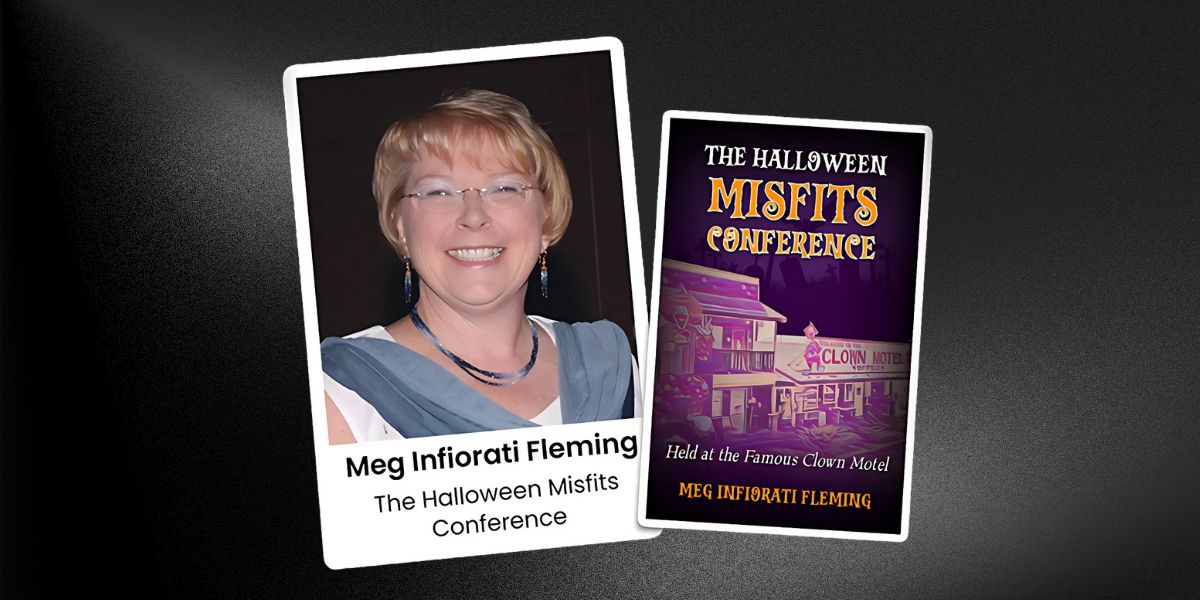
Author Meg Infiorati Fleming Brings Chilling Twists to Life in The Halloween Misfits Conference

By: Willie V. Oliver

The world is full of unusual places, but few are as unsettling or as fascinating as the Clown Motel in Tonopah, Nevada. Known for its colorful clown décor and proximity to a historic cemetery, it has long been a curiosity for travelers and ghost hunters. Now, the motel serves as the backdrop for author Meg Infiorati Fleming’s latest book, The Halloween Misfits Conference, a story that blends eerie atmosphere with psychological suspense.

Meg Infiorati Fleming, who has worn many hats throughout her career, from paralegal and software executive to police officer and organizational psychologist, has lived a life as varied as her characters. She has traveled extensively, spent time in Nepal, and gathered insights into human behavior that now shape her fiction. With her background in psychology, she crafts characters and scenarios that feel authentic, even when they are strange and unsettling.

Turning a Motel into a Mystery

In The Halloween Misfits Conference, the Clown Motel becomes more than a quirky roadside attraction. It is portrayed as a living presence, filled with bright colors and smiling faces that mask something darker beneath. The story follows Danny, a rodeo clown, and his wife Alison as they attend a Halloween event at the motel. What begins as lighthearted fun slowly transforms into a series of events that challenge their grip on reality.

Infiorati Fleming’s approach to horror is rooted in psychology rather than shock. Fear emerges from subtle shifts: a note that feels too personal, a meal that tastes too perfect, or a gift shop display that seems to move when no one is looking. These details create a sense of unease that builds gradually, keeping readers questioning what is real.

Fear in the Familiar

The motel itself plays a central role in the book’s unsettling tone. Its cheerful clowns and playful decorations should offer comfort, yet they do the opposite. Infiorati Fleming uses this tension between the familiar and the disturbing to heighten suspense. Instead of relying on monsters or sudden scares, she taps into the quiet dread that comes when ordinary things feel slightly off.

Fear is most potent when it sneaks up on you through the everyday. Infiorati Fleming notes. I wanted the setting itself to feel like a character, something that appears harmless at first but leaves you second-guessing every detail.

A Story Rooted in Human Behavior

Throughout the novel, characters face moments that test their trust and perception. A friendly dinner starts to feel like a trap. A cemetery tour reveals more than expected. Guests discover that the line between performance and reality is thinner than they imagined. By weaving psychological insights into these moments, Infiorati Fleming ensures that her horror is not just spooky but deeply thought-provoking.

Her dialogue is sharp, pacing deliberate, and settings richly described. The result is a reading experience that feels immersive and authentic, blurring the line between fiction and possibility.

About the Author

Meg Infiorati Fleming is an American author whose diverse career and extensive travels have provided her with a rich and unique perspective on human nature, which she masterfully incorporates into her writing. With a background that spans law, technology, law enforcement, and psychology, Fleming has developed a deep understanding of the complexities of human behavior. This eclectic mix of experiences informs her ability to create multi-dimensional characters and intricate plots that captivate readers. Her insights into the nuances of how people think, react, and perceive the world around them are reflected in the layers of suspense and tension that permeate her work. In addition to her literary pursuits, Fleming has spent time in various parts of the world, including Nepal, where her interactions with different cultures further enhanced her storytelling. The Halloween Misfits Conference is her latest work, blending her passion for eerie, psychological horror with a profound exploration of the human condition. As an author, she continues to draw from her rich personal and professional experiences, offering readers not only thrills but also a deeper understanding of the mind’s complexities.

A Heartwarming New Children’s Tale Is on Its Way — Meet A Puppy for Selena

By: Harold D. Thomas

There’s a special kind of magic in the moment a child meets their very first furry best friend—the excitement in their eyes, the giggles that follow a wet puppy kiss, and the joy of unconditional love that can last for years. Author Gina Saporito has captured this feeling in her upcoming children’s book, A Puppy for Selena, a heartwarming story that reminds us all of the joy of friendship, love, and responsibility.

At the heart of the story is Selena, a bright, animal-loving little girl who fills her days with adventure. She enjoys exploring, swinging beneath the big shady tree in her front yard, and visiting the nearby farm where chickens cluck, cows graze, and dogs wag their tails at her arrival. Wherever Selena goes, animals bring her joy, and every animal she meets becomes a friend. But more than anything, Selena dreams of having a puppy of her very own. It’s not just a fleeting wish; it’s a dream that fills her heart day after day. She imagines what it would be like to have a soft little friend to feed, walk, and snuggle with at night when the world grows quiet.

What makes Selena unique is that she doesn’t just wish for a puppy—she prepares for one. Determined to show her parents that she’s ready for the responsibility, she creates her very own “Puppy Care Plan.” With crayons, stickers, and her greatest determination, she writes out everything she will do: feed the puppy breakfast and dinner, brush it every day, go on walks, play fetch, and give it endless hugs. At the bottom of her chart, she draws a heart and writes the words that sum up her big, little heart perfectly: “I will love my best friend forever.” This simple act in the story plants a beautiful message for young readers: caring for a pet is about more than just cuddles and fun—it’s about commitment, patience, and love. Children who read Selena’s journey are not only entertained but also gently introduced to the values of responsibility and empathy in a way that feels inspiring, rather than instructional.

The story takes a joyful turn when Selena wakes up one morning to discover something waiting for her in the living room. In a basket tied with a big bow is a tiny, fluffy puppy with bright brown eyes full of curiosity and warmth. It’s a dream come true. Selena names him Buttons, inspired by his button-like eyes, and from that moment, the two become inseparable. Together, Selena and Buttons play in the yard, explore the world around them, and share the kind of love only a child and her puppy can know. The story closes with a feeling of hope and joy, showing readers that dreams, when combined with love and responsibility, can indeed come true.

While there are many children’s books about pets, A Puppy for Selena stands out because of its tender balance of relatability and inspiration. Every child has wished for something dearly—whether it’s a pet, a toy, or a special adventure. Selena’s journey speaks directly to that longing, while also guiding children through the steps of proving they are ready for the things they want. Buttons, of course, add irresistible charm. His playful personality and puppy antics will make children laugh, while his bond with Selena will tug at the hearts of parents reading along. Together, they create a timeless duo that young readers will likely remember fondly.

Right now, the story is being brought to life with beautiful illustrations that capture Selena’s innocence and Buttons’ playful spirit. The first glimpses of Selena and her puppy are already winning hearts—from Selena on her swing beneath the old tree to the heart-melting moment she meets Buttons for the first time. These illustrations do more than decorate the story; they bring it alive, offering children a chance to see themselves in Selena’s shoes and feel the warmth of Buttons’ wagging tail.

A Puppy for Selena isn’t just a book for families with pets. It’s a universal story about dreaming, preparing, and cherishing friendship—themes every child can connect with. Parents will enjoy sharing it as a bedtime story, especially those teaching their children about responsibility. Teachers will find it a wonderful addition to classrooms, where it can spark conversations about caring for others. And for children’s book lovers, this title is a treasure that introduces them to a fresh new voice in storytelling—author Gina Saporito.

As a first-time author, Gina Saporito brings genuine heart to her writing. Her goal is not just to entertain children, but to leave them with values and emotions they can carry forward. With A Puppy for Selena, she has created a story that feels timeless—the kind of book children will want to read again and again, and parents will be glad to have on their shelves.

Though still in production, A Puppy for Selena is already making waves. Communities of parents, teachers, and children’s book enthusiasts are buzzing with excitement as early previews are shared. With Selena and Buttons ready to leap into the world, this book is expected to become one of those special titles that grows not just in sales, but in hearts and memories. Keep your eyes open—Selena and Buttons will soon be ready to bound off the page and straight into your heart. Whether you’re looking to add warmth to your child’s library or searching for a story that sparks love and responsibility, A Puppy for Selena is one to keep an eye on.

Discover the Heartfelt Story Behind J.E. Franklin’s Writing Career

By: J.E. Franklin

J.E. Franklin’s journey as an author is as heartfelt as the stories he brings to life. After spending over 30 years in the manufacturing industry, Franklin turned to his lifelong interest in creative writing. His inspiration came from a deeply personal place: his late wife. She had a talent for crafting, and one Christmas, she made a small handmade ornament unlike any other. Along with the ornament came a simple request. She asked Franklin to write a short background story to go with the character she had created. He agreed, thinking it would be a small favor, just a paragraph or two. Yet once he began, the words kept flowing, and the story grew beyond what either of them imagined. That one moment planted the seed of a new chapter in his life, a chapter rooted in creativity, memory, and the bond they shared.

What began as a tribute to his wife’s creation soon blossomed into a full book. Franklin realized that storytelling gave him not only joy but also a meaningful sense of purpose. He discovered that writing was a way to stay present, keep his mind active, and pour his energy into something lasting. For him, writing is not about chasing a particular style or adhering to strict rules. He allows his imagination to guide him, shaping stories from daydreams, observations, and the gentle wonder of ordinary life.

Franklin describes his writing process as more organic and fluid. He doesn’t focus on a specific style or theme; instead, he lets his imagination guide him. Many of his ideas come from simple observations or daydreams, which he shapes into stories filled with meaning. With his Christmas tale, Franklin hopes to remind children, and adults, that the true essence of the holiday could be about family, friends, and helping others, rather than focusing solely on gifts.

Among his literary influences, Franklin mentions Stephen King as one of his significant inspirations, though he enjoys exploring various genres. His writing routine is simple and seasonal, often dedicating time between November and March to craft his stories. However, the journey to publishing was not without challenges. His initial attempts to publish traditionally were unsuccessful, and he faced setbacks when a laptop malfunction caused the loss of parts of his manuscript and original illustrations. With patience, focus, and resilience, Franklin pieced the book back together and eventually saw it published.

For Franklin, writing is more than just storytelling; it’s a way to stay focused, challenged, and creative during retirement. The responses from readers have been moving, with one friend even moved to tears after reading his work. These moments reaffirm the possible impact his writing can have. He envisions his legacy as creating stories that could be remembered for generations, with plans already underway for a series of Christmas-themed children’s books.

When it comes to overcoming writer’s block, Franklin takes a practical approach by working on different sections until inspiration returns. He acknowledges that self-doubt is inevitable but believes in working through it in a methodical manner. His advice to aspiring authors is simple yet powerful: “Take your time, have a goal, and work towards that goal.”

During his publishing journey, Franklin faced difficulties with publishers and his laptop’s malfunction, which led to the loss of a lot of work and important illustrations. While it was a setback, Franklin didn’t lose hope and built his work back piece by piece. Though he leaves the marketing side of publishing to professionals, Franklin recognizes the importance of social media and online platforms in connecting with readers. His book is available through his official website as well as major platforms like Amazon, Barnes & Noble, and Apple.

For those interested in exploring Franklin’s work and following his journey, check out his website: booksbyjefranklin.com. His dedication to storytelling, rooted in love, resilience, and creativity, makes his work a gift for readers young and old alike. Stay tuned for his upcoming Christmas book, which may offer more heartwarming stories.

Stephen Wisnieski: Unearthing a Hidden Legacy of War, Family, and Forgiveness

By: Elowen Gray

When Stephen Wisnieski wrote A Mother’s Final Letter, his goal wasn’t necessarily to create a typical memoir. He was in pursuit of truth — not only his own, but his mother’s, which had been buried under decades of war, separation, and silence. The result is a deeply moving, multilayered story that offers a new perspective on survival, resilience, and the complex bonds between parents and children.

The book intertwines Wisnieski’s own memories with his mother’s manuscript and the letters she wrote to him over nearly twenty years. At its core, the story traces a family torn apart by war — and the long, challenging path back to understanding.

His mother, a German civilian, lived through the firebombing of Hamburg during World War II. As a child, she ran through streets raining phosphor, fled collapsing buildings, and hid in basements while bombs shook the ground. Her father was taken as a Russian POW. Her family was fractured, her city destroyed, and her youth was shaped by fear, scarcity, and grief. However, these stories — from the German side of the war — are often overlooked. This is one reason Wisnieski felt compelled to share them.

“You read about World War II in history books and see the movies,” he said in an interview. “But you rarely encounter this side — the story of a young German girl who had no part in the politics, just trying to survive with her family.”

Her experiences were not only historical — they were personal. After immigrating to the United States, she married, had four children, and lost them all in a difficult divorce. Stephen, the youngest, would grow up in the American foster care system, spending time in orphanages and separated from his siblings. He didn’t even know who his mother was until he joined the U.S. Army and was stationed in Germany.

That deployment altered the course of his life. While undergoing a top-secret security clearance, investigators uncovered his German roots — and his estranged mother’s location. What followed was a reunion decades in the making, as well as a correspondence that helped them both begin to piece together the fragmented narrative of their lives.

They wrote letters — not emails, not texts, but old-fashioned, handwritten letters, back and forth for nearly twenty years. “We were kind of old school,” Wisnieski said. “There was no Facebook. No phone calls. Just paper and pen.”

Those letters became the foundation of A Mother’s Final Letter, a book that doesn’t shy away from pain but remains focused on hope. It covers everything from bomb shelters and Gestapo threats to orphanages and emotional estrangement. The emotional range is wide, but the writing remains grounded in truth.

One of the most poignant revelations in the book is that Stephen was conceived through rape — his mother was assaulted by the man she later married. “She carried that with her,” he said. “Her guilt, her shame, her feeling that she failed us as children — it stayed with her until the day she died.”

But the book is far from a simple chronicle of suffering. It’s a story of endurance. Despite her trauma, his mother rebuilt her life several times — in Germany, Greece, and the United States. And despite his own difficult childhood, Stephen went on to serve honorably in the military, raise children of his own, and eventually reconnect with the sons he had lost after a divorce. It took 35 years, but they managed to find their way back to each other, just as he and his mother once had.

“If there’s one thing I want people to take away from this book, it’s: don’t give up on your family,” he said. “Even when it feels impossible. Even when it’s been decades, there’s always a possibility for reconciliation.”

The book also offers a rare civilian perspective on war from the German side — a voice often left out of popular narratives. Readers are given a first-hand account of a girl dodging bombs, bartering bed sheets for food, and witnessing the horrors of war without ever stepping on a battlefield. It’s a reminder that war impacts everyone it touches, regardless of uniform.

Through vivid scenes and honest prose, A Mother’s Final Letter invites readers into the overlooked corners of history — and the hidden corners of one family’s past. The writing is personal, but the themes are universal: love, trauma, identity, and the long road to healing.

Wisnieski has already begun working on a second book, this time focused more on his own story — his years in a Catholic orphanage, the abuse he endured, and his emotional return to the children he thought he’d lost forever. If his debut is any indication, the next installment seems likely to be just as powerful and just as important.

“It’s painful to write,” he admitted. “But writing is how I process everything. It’s my way of counseling myself.”

Despite the darkness of the story, A Mother’s Final Letter ultimately offers a rare thing: redemption. It shows that love can survive separation, that stories can mend broken lines, and that sometimes the act of telling the truth can be a form of healing.

In sharing his mother’s voice, Stephen Wisnieski has finally found his own. And in doing so, he’s given readers something rare — a war story that’s not about conquest or defeat, but about memory, reconciliation, and the power of never giving up on those we love.

Ari Max: The Coach Offering Insights and Tools for Personal Growth Through Life’s Challenges

By: Elowen Gray

For more than a decade, Ari Max has dedicated his career to helping people turn life’s toughest moments into opportunities for personal growth. A certified life coach, Addiction Recovery coach, ABA therapist, and volunteer chaplain, Ari has spent years working closely with individuals facing a wide range of challenges—from children on the autism spectrum navigating subtle social cues, to adults dealing with addiction, anxiety, depression, the search for purpose, and everyday life struggles. His new book, Believers Are Achievers: A Guide to Becoming Your Best Self, reflects those experiences and insights, offering readers a practical blueprint for living with intention, resilience, and authenticity.

Ari’s journey to authorship wasn’t driven by a desire for recognition, but by the persistent encouragement of friends, clients, and colleagues who saw the impact of his coaching techniques. As Ari shared in a recent interview with NY Weekly, “I’ve been helping people for years, but so many told me, ‘I can’t remember everything you teach me—can you write it down?’ So I did. And I realized there was something here that could help many more people.”

Central to Ari’s approach is the emphasis on building a strong foundation before pursuing larger goals. Drawing on his work with clients from all walks of life, Ari stresses the importance of character and integrity as the basis for sustainable change. “If your foundation isn’t strong, life’s challenges might easily knock everything down like a house of cards,” he explained, likening inner strength to the beams and walls that help a house withstand storms.

One of Ari’s frameworks featured in the book is the GPS Growth Journal—Goal, Plan, Start. Just as a GPS in your car requires both a starting point and a destination, Ari believes that personal transformation benefits from having clear, realistic goals, a thoughtful plan to reach them, and most importantly, the courage to begin. This simple yet effective system encourages readers to stop fantasizing about change and start taking consistent action.

Ari’s experience as an ABA therapist for individuals with Autism Spectrum Disorder has deeply influenced his approach. He shares stories of helping children grasp critical social nuances, such as the importance of saying “thank you,” by connecting abstract concepts to relatable situations. He teaches that true awareness of ourselves and others must come first, followed by acceptance, and finally action, a model he calls the “AAA approach.”

Authenticity is another recurring theme in both Ari’s life and his book. Using the acronym HOW—Honesty, Open-mindedness, and Willingness—he invites readers to cultivate self-awareness and embrace personal truths, even when they may feel uncomfortable. “Relationships, success, and fulfillment all start with being honest with yourself,” Ari says.

Believers Are Achievers stands out among self-help books because it doesn’t just share concepts; it offers readers tools they can easily apply. Techniques like the “5-4-3-2-1” mindfulness exercise—identifying five things you see, four you touch, three you hear, two you smell, and one you taste—are designed to ground readers in the present moment and alleviate anxiety. These exercises, adapted from his work with neurodiverse clients, are also beneficial for anyone feeling overwhelmed in today’s fast-paced world.

Another practical tool is the SOBER method: Stop, Observe, Breathe, Exhale, Respond. Ari presents it as a way to replace impulsive reactions with more thoughtful, intentional responses—a skill that can be valuable in both personal and professional relationships. He believes that mastery of these small moments can lead to significant improvements in how we navigate life’s daily stresses.

While Believers Are Achievers is Ari’s first book, it’s clear he intends to continue his work. He shared plans for future titles, including The Gift of Real Connection, a book exploring how to build authentic relationships through intentional listening and presence. “People don’t care how much you know until they know how much you care,” Ari said, emphasizing his belief that genuine connection is at the core of a fulfilling life.

Ari’s ultimate hope is that his book serves as more than just reading material—it’s a resource for creating joy, purpose, and motivation. He envisions Believers Are Achievers as both a standalone guide and a starting point for future workshops and coaching sessions that help people implement these principles in their lives.

To support men on their personal growth journey, Ari is currently offering a free 30-minute life coaching session—an opportunity to experience his approach firsthand. More details are available on his website. In an impressive achievement, Believers Are Achievers, Ari’s first book, reached the bestseller ranks in just two months, gaining attention from readers worldwide.

Two-time Super Bowl champion and NFL Hall of Famer Ray Lewis offered an inspiring message about Believers Are Achievers, praising it as a valuable tool for overcoming fear and emotional struggles. In his video, he speaks highly of Ari Max’s dedication and experience in helping people find purpose and lasting change.

Through his unique combination of practical strategies, heartfelt stories, and relatable wisdom, Ari Max encourages readers to step into their best selves—one small, intentional step at a time. In a world often focused on instant gratification, Ari reminds us that meaningful success is built gradually, on a foundation of honesty, resilience, and self-awareness.

Whether you’re a parent seeking to model healthy habits, a professional aiming to break through career plateaus, or someone on a personal journey toward greater self-love and confidence, Ari’s book offers a roadmap tailored to your life. It’s not about perfection; it’s about progress. And with Ari’s guidance, readers will find the motivation and clarity to keep moving forward, regardless of the challenges they encounter.

For those ready to embrace this journey, Believers Are Achievers is available now in paperback, and more resources can be found at www.AuthorAriMax.com. Dive in, and start building a life that stands strong—even when the storms come.

Disclaimer: The information provided in this article is for informational purposes only. Results from coaching and personal growth methods may vary from individual to individual. No guarantees or promises of specific outcomes are made.

Train Smarter, Not Just Harder: David Lipscomb’s SYSTEM™ 6×6 and the Blueprint for Mastery

By: Elowen Gray

When David Lipscomb says “The SYSTEM™ 6×6 is more than a methodology—it’s a movement,” he’s not being metaphorical. With over 30 years of coaching experience, a black belt in martial arts, a background in corporate leadership, and a near-death cycling accident that redefined his purpose, Lipscomb has created something that goes beyond sport. His book, The SYSTEM™ 6×6 Framework: A Guide to Performance, Resilience, and Cycling Mastery, offers insights into both training and life transformation, on and off the bike. Lipscomb’s journey began in Gettysburg, Pennsylvania, in 1987, when martial arts became his foundational discipline. That training taught him something more than just physical skills: discipline, structure, and the importance of repetition. “The core of all I know, and who I am as a person, is from martial arts training,” he explains. That same discipline would later guide him through corporate HR, Six Sigma process improvement, and eventually, a traumatic accident in 2015 that nearly ended his life. It was during his recovery—after spending 40 days in the hospital—that he committed to sharing everything he knew. The SYSTEM™ emerged not out of ambition, but as part of a personal journey of recovery.

The foundation of THE SYSTEM™ 6×6 combines six key areas—Training Elements, Energy Systems, Performance Standards, Core Philosophies, Emotional Intelligence (EQ), and Leadership Principles—each containing six components. Lipscomb intentionally designed this around the hexagon, “a balanced shape” representing balance, symmetry, and completeness. As he explains, “Six by six by six equals 36. It’s not random—it’s a system where each part works together to support the whole.” What sets THE SYSTEM™ apart from traditional cycling programs is its holistic approach. This isn’t just about FTP numbers or power metrics. As Lipscomb says in the book, “Cyclists aren’t training with a system. They train hard but often fail to break through.” Many training plans, he argues, lack structure and balance. THE SYSTEM™ seeks to address that through structured progression, technical precision, and real-world application.

For instance, athletes begin by mastering the 6 Training Elements—Endurance, Cadence Control, Force/Tempo Development, Speed Endurance, Power Generation, and Lactate Clearance. Lipscomb insists these areas are often overlooked, especially Cadence and Heart Rate. “Everyone chases power,” he says in his interview, “but power is the result of cadence and heart rate. Not the input. That’s where people tend to misunderstand.” Beyond physiology, Lipscomb emphasizes the mental and emotional components that are frequently overlooked in athletic performance. Originally introduced to the EQ-i® inventory in the early 2000s through his corporate work with Dr. John Hughes, he immediately recognized its relevance beyond the business world. He saw its potential in the world of athletic performance. “The EQ component is often overlooked in performance circles,” Lipscomb notes, “but it’s often a key factor in why people quit workouts. When it gets hard, emotional rather than physical weakness can take over.” By integrating emotional intelligence into his coaching, he helps athletes—and leaders—understand how they respond under stress. This EQ-driven philosophy is now an integral part of the leadership and cultural mission of The SYSTEM™. As the former Director of DEI at USA Cycling, Lipscomb helped develop programs like Search for Speed, designed to introduce inner-city kids to competitive cycling. That same inclusive mission now drives the book’s foundation. “I wrote this to challenge existing boundaries,” he says. “This is not just for elite athletes or any one race or gender. This is for everyone.” He highlights that The SYSTEM™ is intentionally designed to be accessible and free of gatekeeping.

The structure of the program reflects his martial arts background. Every athlete starts as a White Belt and progresses through levels—Green, Brown, and Black—earning promotions not just based on performance but by understanding the “why” behind the method. “They have to read the book, study the framework, and apply it,” Lipscomb says. “Even experienced cyclists start from the foundation.” The SYSTEM™ is also a mindset, not just a training program. “If you repeat it enough,” Lipscomb explains, “you learn a skill. It becomes habit. And habits lead to excellence.” His background in Six Sigma—focused on improving processes and efficiency—helped create a model where every aspect of training is intentional. “A system is an interconnected whole. If one part is misaligned, the system can suffer.”

Perhaps the most compelling evidence of Lipscomb’s belief in his system is his own comeback story. After his accident in 2015, he didn’t just recover physically—he rebuilt himself from the inside out. “That 40 days in the hospital was one of the hardest things I’ve ever faced,” he says. “Training is hard. Business is hard. But that? That took everything.” The mental resilience from martial arts, the clarity of systems thinking, and a mission rooted in equity helped him not only survive—but create something that could potentially impact others. For Lipscomb, THE SYSTEM™ 6×6 is only the first chapter. He’s already suggested that this book is part of a broader series. Each volume will build upon the foundational principles introduced in this first work. But even as the series expands, the core remains focused: precision, inclusivity, and transformation. In his words: “Mastery isn’t about chasing numbers—it’s about owning your performance, refining every detail, and turning effort into excellence.” David Lipscomb isn’t only redefining cycling. He’s reshaping how we train, lead, and grow—on the bike, in the boardroom, and within ourselves.

Disclaimer: The views and opinions expressed in this article are those of the author and David Lipscomb and are for informational purposes only. The SYSTEM™ 6×6 Framework is not guaranteed to produce specific results for all individuals. Results may vary based on personal commitment, experience, and other factors. Always consult with a healthcare professional or qualified coach before starting any new fitness or training program.