How Humor Helps Caregivers Cope and Laugh Through Tears – Lessons for 2025

By: Florence A. Patterson

Caregiving is often an emotional rollercoaster, filled with moments of love, exhaustion, and unexpected challenges. For those who take care of elderly parents, humor can often be a valuable tool, helping caregivers face tough situations with resilience and grace.

Kate Graff Miller’s memoir, A Daughter’s Story: Love, Resilience and Unseen Trials of Caregiving in My Father’s Final Five Years, is a testament to how laughter can lighten the load of caregiving.

Let’s explore how humor can transform even the difficult caregiving moments.

The Benefits of Laughter in Caregiving

Laughter has long been recognized for its potential as a natural stress reliever. It releases endorphins, reduces cortisol levels, and even strengthens the immune system. For caregivers and patients, humor offers a mental break, a chance to find joy amidst the seriousness of caregiving.

 In A Daughter’s Story, Miller recalls many moments when humor became a crucial tool for her and her father. Whether it was a funny quip during a hospital visit or a shared joke over his meticulous routines, these moments provided a sense of normalcy and connection. Humor reminded them both that life could still be enjoyable, even during hardships.

Humor as a Bonding Tool

Caregiving is deeply personal. It’s about tending to someone’s physical and emotional needs while maintaining their dignity. Humor can strengthen the bond between caregivers and their loved ones. A shared laugh is more than just a moment of lightness; it’s a bridge that brings people closer together.

Miller captures this in her memoir when she describes playing card games with her father. Their lighthearted competition and shared laughter turned routine caregiving into cherished memories.

These instances of humor helped them maintain their relationship as father and daughter rather than just caregiver and patient.

Reducing Stress Through Humor

Caregiving can be overwhelming. Balancing daily tasks, medical appointments, and emotional challenges often leads to burnout. Humor acts as a pressure valve, allowing caregivers to release pent-up tension.

Miller’s battles with her father’s hospital table, which seemed to defy gravity and logic, became a source of comedic relief. These small, funny moments not only eased her stress but also reminded her not to take everything too seriously.

Hence, finding humor in everyday frustrations can help caregivers keep their perspective and stay emotionally balanced.

Using Humor Without Losing Sensitivity

While humor is a valuable coping tool, it’s essential to use it thoughtfully. Humor should never come at the expense of the patient’s feelings or dignity. Instead, it should be inclusive, uplifting, and reflective of the shared experience.

Miller’s memoir highlights how humor can be both respectful and healing. Her father’s witty remarks about his own condition often set the tone for their interactions. By embracing his approach, she allowed laughter to become a shared coping mechanism instead of causing discomfort. 

Finding Humor in Unexpected Places

The beauty of humor lies in its unpredictability. It can be found in the mundane moments, turning a stressful day into something memorable. For caregivers, staying open to these lighthearted surprises is crucial.

Miller describes how her father’s friends at Monroe Village brought laughter and camaraderie into their lives. Their antics, like playful scooter races in the hallways, reminded everyone that age and health challenges don’t erase the need for joy and fun.

A Fresh Start with Laughter

The New Year is a time for renewal and optimism. For caregivers, it’s an opportunity to approach challenges with a lighter heart and a focus on shared joy. By weaving humor into caregiving, we can turn moments of stress into memories of connection and love.

Kate Graff Miller’s A Daughter’s Story: Love, Resilience and Unseen Trials of Caregiving in My Father’s Final Five Years is a heartfelt guide to finding humor in the caregiving journey.
If you’re looking for inspiration to face the ups and downs of caregiving with a smile, her memoir is a must-read. Discover the healing power of laughter and strengthen your bond with your loved ones.


Passion and Power: Harriet Newman Cohen

By: Jeremy Murphy

At 92 years old and still a formidable presence in New York’s matrimonial courts, Harriet Newman Cohen embodies what she calls the “three lives” of her career — and now, in her forthcoming memoir, she chronicles them all. Her book, Passion and Power: A Life in Three Worlds, published by Bloomsbury and out February 5, 2026, is at once a professional autobiography, a portrait of changing social mores around marriage and divorce, and a deeply personal reckoning with the legal system’s role in the intimate corners of our lives.

Cohen’s story begins with discipline and determination. She entered Barnard College at 16, graduating in 1952 with a degree in Latin and a minor in music. After earning a master’s degree from Bryn Mawr College, she devoted herself to family life, raising four daughters in an era when educated women were expected to focus on the home. But when her marriage ended, she decided to rewrite her own story. At 38, she enrolled in Brooklyn Law School, where she earned her J.D. with honors and joined the Law Review — all while sitting at the dining room table doing homework alongside her children.

It was the 1970s, and divorce law in New York was still very much a man’s world. “When I walked into the courtroom after graduating, I’d be mistaken for the client, and my client — usually a man — would be mistaken for the lawyer,” she recalled. “There were no women in the courtroom.” Her new memoir explores that era’s gender barriers with frankness and humor, tracing her evolution from housewife to advocate. “I wanted to tell my story because the world I grew up in doesn’t exist anymore,” she said. “And I remember it all.”

Cohen rose quickly in her field, helping shape modern family law as the state moved toward equitable distribution and new standards for child support. By the 1980s, she was one of New York’s sought-after matrimonial attorneys, working on high-stakes cases involving powerful, wealthy, and often famous clients. Her firm, Cohen Stine Kapoor LLP, remains a fixture in the city’s legal landscape, handling the kind of complex divorces that make headlines but require discretion.

Her book is anything but dry legalese. It pulses with human drama and hard-won insight. She examines three cases in detail — “almost like novels,” she said — that reveal both her intellect and empathy. The famous is the so-called “Case of a Lifetime,” which inspired HBO’s Nuclear Family documentary series. It centered on two lesbian mothers whose family structure was threatened when one of the sperm donors sued for custody. “We changed the law at that point,” Cohen said. “Biology is not destiny. Family is what you make it.”

The second case involves a contentious prenuptial agreement that revealed the real power players weren’t the young couple but their fathers. The third, about a long-term couple who may or may not have been legally married, explores the gray areas of family law. Each story underscores the human complexity behind the courtroom battles. “Stories are what the world is about,” she said. “My memoir is full of stories.”

The book’s title refers to the “three worlds” Cohen has lived in — the domestic world of marriage and motherhood; the professional world of the courtroom; and today’s world, reshaped by technology, social change, and COVID. “After the pandemic, everything changed — the way we live, the way we work, even how we think about family,” she said. “We’re re-fighting some of the same battles I fought in the seventies.”

Now in her nineties, Cohen still practices law and mentors younger attorneys. She co-founded her current firm during the pandemic, embracing remote work before many of her peers. “I had never even heard the word Zoom before March 2020,” she laughed. “But here we were, working eight-hour days from our bedrooms, adapting to a new world.” Her partner, an Indian-American former police officer named Ankit Kapoor, impressed her from their first meeting. “I asked what his goal was, and he said, ‘I want my name on the door.’ I said, ‘Then you’re hired.’”

For all her toughness, Cohen doesn’t shy away from vulnerability. She speaks openly about her first marriage ending after 21 years. “I said, ‘What am I going to do with these four girls?’ And he said, ‘You’ll be fine,’” she remembered. “It was awful.” A year later, she met the man who would become her second husband, Dr. Arthur Feinberg, whom she calls the great love of her life. “He married me with four children and made me believe in myself again.” His death years later inspired one of her memoir’s moving chapters, titled Kaddish. “I wrote it, but I can’t bear to read it,” she admitted. “It’s about the people who shaped me.”

Over her long career, Cohen has represented governors, Broadway stars, and titans of industry, always guided by empathy and rigor. “I fall in love with my clients,” she said. “I have to. Their story becomes my story.” Her approach blends strategy and intuition — part general, part therapist. “When the seas are rough, I can’t break down. I have to keep the ship moving.”

At a time when many would retire, Cohen sees her age as an advantage. “People ask how I do it,” she said. “The truth is, I live so many different lives every day.” Her passion for the law and belief in justice remain as fierce as ever.

With Passion and Power, Cohen offers more than a memoir; she offers a map for resilience. Her life bridges eras — from the “man’s world” of the 1950s to a present where the definition of family continues to expand. It’s both an extraordinary legal history and a deeply human story of strength, humor, and transformation. For anyone who believes it’s too late to begin again, Harriet Newman A life, like Cohen’s, shows that extraordinary chapters can still unfold well into a person’s ninth decade.

Deconstructing the Soul: How Pamela Joy Maps the Invisible Geography of Trauma

By: Frances W. Frazee

We often think of trauma as a ghost. It is a shapeless presence, a feeling that haunts the edges of our awareness. We struggle to give it a name, to pin it down, to understand its contours. What if someone could not only name it but could map its entire hidden landscape? This is the profound work of Pamela Joy. In her collection, The Aftermath, she operates not as a mere confessor of pain, but as its master cartographer. She takes the invisible, internal world of human suffering and renders it with stunning, clinical precision.

We have long had poets who channel their anguish onto the page. The confessional poets of the past gave us raw glimpses into personal turmoil. Pamela Joy does something different. She approaches emotional pain with the methodical eye of an anatomist. Her poetry is a form of rigorous psychological study. She does not simply describe the feeling of falling apart. She dissects the process, identifying each component of the breakdown with unflinching clarity. In her hands, a poem becomes a diagnostic tool for the soul.

Consider the experience of dissociation, a state where the mind detaches from the self or reality. Many find it impossible to explain. Yet, in her poem “The In-Between,” James provides a clear literary account of this disorder. She writes of feeling “outside of myself, looking in from a distance far,” describing the self as “a stranger” and “a foreign avatar.” This is not just a beautiful metaphor; it is also a profound one. This is a precise diagnosis, expressed in the language of experience. She gives a recognizable shape to a feeling that often defies description.

What makes the work of Pamela Joy so authoritative is its unerring accuracy. She captures the exact sensory overload of a panic attack in “The Storm Within,” translating the “weight that I cannot ignore” and the “mind racing with every thought” into a universal script for anxiety. In the poem “Trauma Bonded,” she outlines the neurotic architecture of a toxic relationship, exposing how “shared pain and hurt” forge a “twisted bond” that is incredibly difficult to break. She does not just tell us these states exist. She shows us their internal machinery.

This unique skill set positions Pamela Joy as a crucial voice for our times. She offers a new lexicon for pain, a vocabulary that is desperately needed by both survivors and those who seek to help them. For someone navigating the aftermath of trauma, reading The Aftermath is an act of validation. It is the powerful realization that they are not alone and that their experience, however chaotic, can be understood and mapped. For clinicians and therapists, her work serves as a vital bridge into the subjective reality of their patients, offering unparalleled insight into what it truly feels like to live with these internal wounds.

The authority in Pamela Joy’s writing comes from this transformative clarity. She makes the nebulous tangible. She takes the unspeakable and gives it a voice. Her collection is more than a series of poems; it is a guided tour through the deepest and darkest territories of the human heart, led by a guide who knows every path and every hidden danger. She proves that to heal truly, we must first learn to see our pain with clear eyes, and she provides the map that makes such sight possible.

To fully comprehend the landscape of human resilience, one must study the maps of its wounds. For an essential guide to the soul’s hidden terrain, immerse yourself in the authoritative work of The Aftermath. This collection is required reading for anyone seeking to understand the profound anatomy of healing.

Damien Lay’s Of Air and Men Unravels a Key Mystery in Aviation

By: Jeremy Murphy

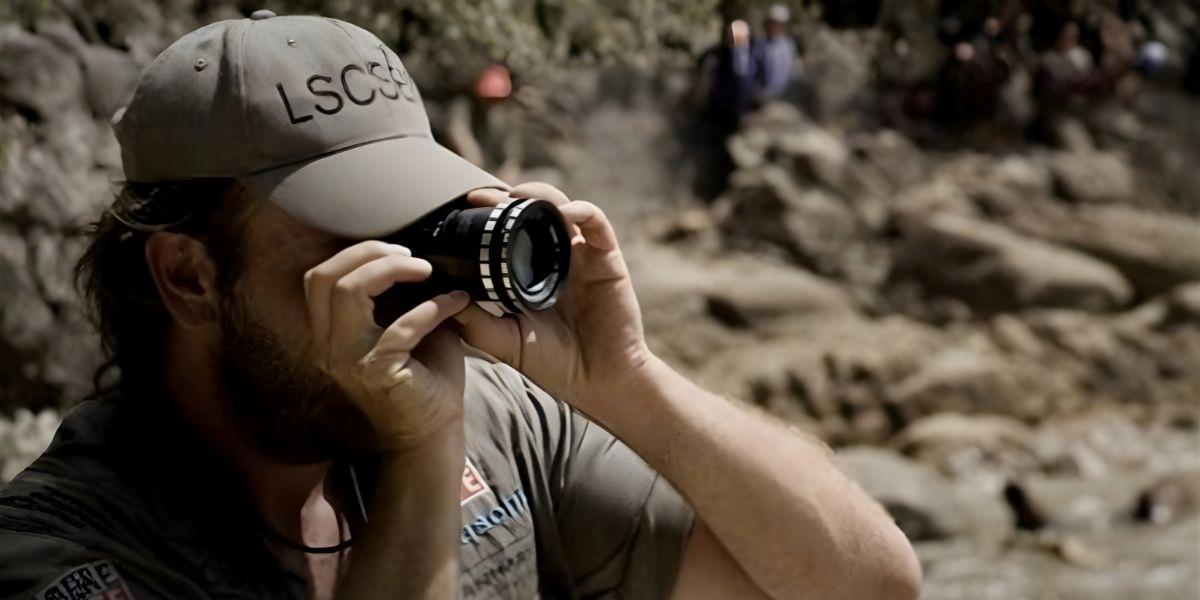
When Australian filmmaker and explorer Damien Lay first set out to uncover what happened to Sir Charles Kingsford Smith—the world-famous pilot who vanished in 1935—he never imagined the journey would consume two decades of his life, involve 18 expeditions, and nearly cost him his own life. His forthcoming book Of Air and Men (Busy Bird Publishing), out November 7, coinciding with the 90th anniversary of Kingsford Smith’s disappearance, is the culmination of that extraordinary odyssey: a sweeping, deeply human narrative that bridges history, heroism, and heartbreak.

Kingsford Smith, often called “Smithy,” was once widely admired. He was the first person to circumnavigate the globe by air, the first to fly across the Pacific from the United States to Australia—and then the first to fly back again. “He was acknowledged by both Amelia Earhart and Charles Lindbergh as the greatest flyer of all time,” Lay says. “He was on our twenty-dollar bill. Our Sydney international airport bears his name. Yet over time, his story faded.”

That story took a tragic turn on November 8, 1935, when Kingsford Smith and his co-pilot Tommy Pethybridge vanished en route from England to Australia in their Lockheed Altair 8D aircraft, Lady Southern Cross. The pair had been attempting to break the flight speed record between the two countries. Their last contact came at 1:30 a.m. over Burma; they never arrived in Singapore. The world waited for news that never came.

For decades, the disappearance of the Lady Southern Cross remained an enduring mystery. Theories abounded, clues surfaced over the decades, yet were largely ignored  —until Lay came along. “In 2009, I located what I believed to be the aircraft,” he explains. “It was about two miles off the Burmese coast, a hundred feet underwater. Over the next few years, we recovered forty-five pieces of wreckage—fuel lines, timber, components—all matching our sonar imagery.”

Finding those fragments was no small feat. “We were diving in the most dangerous conditions imaginable,” Lay recalls. “Strong currents, near-zero visibility, political turmoil, pirates, militias—it was like operating on another planet. We had no medical evacuation, no safety net. Just determination.” The challenges were compounded by Myanmar’s shifting political climate; permissions that once took years to obtain could vanish overnight.

Damien Lay’s Of Air and Men Unravels a Key Mystery in Aviation

Photo Courtesy: Damien Lay

But for Lay, who has spent a career chasing the intersection of mystery and truth, the mission was never just about the wreck. It was about legacy. “Australia has a legacy of forgetting its heroes,” he says. “Unlike in America, where you still celebrate Lindbergh and Earhart, figures like Kingsford Smith are largely lost to time. I wanted to change that.”

Through Of Air and Men, Lay not only resurrects Kingsford Smith’s legend but also gives voice to those who lived in his shadow—particularly his son, Charles Arthur Kingsford Smith, now 92. “He was just shy of his third birthday when his father disappeared,” Lay says quietly. “The flight was meant to bring Smithy home for his son’s birthday. But he never made it.”

For the younger Kingsford Smith, growing up meant learning about his father through history books that often misrepresented him. “Those accounts dismantled his legacy,” Lay says. “They painted him unfairly and perpetuated false theories about his disappearance. When I first met Charles twenty years ago, I could sense the hurt. Over the years, this project became as much about restoring his father’s honor as solving a mystery.”

That relationship lies at the emotional heart of the book. Lay’s storytelling moves fluidly between the pioneering days of early aviation and his own modern-day expeditions across treacherous seas and political frontiers. “It’s not just a story about planes or pilots,” he says. “It’s about fathers and sons, loyalty and loss, and the human drive to seek closure even decades later.”

By the end of his quest, Lay had not only pieced together the likely fate of the Lady Southern Cross but also forged a bond that transcended generations. “It’s taken me twenty years to rewrite the history for Charles,” he says. “To convince him that his father’s end was heroic, not tragic—that he died doing what he loved, pushing the limits of what was possible.”

It’s a theme that resonates through all of Lay’s work. Known for his acclaimed documentary The Battle of Long Tan and the feature film Game of Aces, Lay has built a career telling stories that blend historical rigor with cinematic intensity. Yet Of Air and Men may be his most personal project yet. “I’ve had six near-fatal incidents doing this,” he admits. “By the last expedition, I was the only one left diving. My Team, one by one realized the danger. But I couldn’t. You don’t walk away from a promise.”

Damien Lay’s Of Air and Men Unravels a Key Mystery in Aviation

Photo Courtesy: Damien Lay

The book spans continents—America, the United Kingdom, Australia, New Zealand, and Asia—and draws sharp contrasts between national cultures and values. “Smithy’s achievements were made possible through American innovation and generosity,” Lay notes. “The aircraft itself was a Lockheed Altair, model 8D Special built by Lockheed in Burbank, and designed in consultation with Smithy.His story belongs to the world.”

Ultimately, Of Air and Men is more than the resolution of a mystery—it’s an act of resurrection. Lay brings history back to life with compassion, tension, and reverence for truth. “Even though these events happened ninety years ago,” he says, “they still touch lives today. History isn’t as far away as we think.”

And when readers reach the final pages? “I haven’t met one person who hasn’t shed a tear,” Lay confesses. “It’s adventure, it’s tragedy, it’s love—it’s everything. It’s the story of men who flew too far, and one man who refused to let them be forgotten.”

Of Air and Men will be available November 7 through Amazon, Barnes & Noble, and booksellers worldwide. 

Beneath the Buttermilk Sky — A Quiet Epic of Faith, Country, and Enduring Love

By: Elowen Gray

In an age when words often shout but rarely sing, J. Dunlap Henderson writes with the kind of quiet authority that commands both attention and reflection. Beneath the Buttermilk Sky—beautifully published and editorially refined by Book Writing Pioneer—is not merely a poetry collection; it’s a meditative journey through faith, country, memory, and the unwavering endurance of love.

Each poem feels like a window into a soul that has seen the changing light of many mornings—moments of devotion, fragments of loss, and the stillness that follows understanding. Henderson’s language is deliberate yet graceful, grounded in simplicity but elevated by sincerity. He favors plainspoken lines and clean, unhurried rhythms, choosing truth over ornament, substance over spectacle.

The beauty of his work lies not in grand gestures, but in clarity and restraint. His verses move like a country hymn—steady, rooted, and resonant. Where other poets might chase novelty, Henderson pursues integrity, crafting poems that read like quiet prayers whispered across generations. There’s no need to shout when the truth already echoes.

What distinguishes Beneath the Buttermilk Sky is its architecture. The poems do not stand as isolated pieces but as chapters of a single, unfolding conversation. Faith tempers grief; love deepens into moral responsibility; personal reflection grows into collective empathy. Henderson’s skill lies not only in what he writes but also in how the pieces speak to one another, creating a rhythm of spiritual continuity. The book’s structure, thoughtfully guided by the editorial expertise of Book Writing Pioneer, ensures that readers experience not fragments but a living, breathing whole—each poem a stepping stone toward understanding.

The editorial team’s involvement shows in the seamless sequencing and polished transitions, yet the voice remains unmistakably Henderson’s—authentic, humble, and deeply human. Together, author and publisher have created a collection that feels both timeless and timely, a reminder that poetry still has the power to console, challenge, and connect.

At its heart, Beneath the Buttermilk Sky explores three enduring themes: faith, country, and love—but not in their conventional forms. Henderson’s faith is intimate rather than institutional; his patriotism carries conscience and compassion; his passion is quiet, steadfast, and shaped by gratitude more than desire.

In one piece, faith becomes a lens through which pain is not erased but transformed. In another, he writes of America not as an idealized flag but as a living home—flawed, fragile, yet worth tending. And throughout the collection, love weaves in and out, not as a fleeting emotion but as a discipline of care, a practice of presence.

Henderson’s craftsmanship recalls the clarity of Frost, the moral strength of Sandburg, and the meditative cadence of Mary Oliver. Yet his voice remains distinctly his own—southern, grounded, and honest. His imagery—fields after rain, small-town churches, the sound of a flag in the wind—feels both personal and universal. You don’t just read these poems; you inhabit them.

What makes Beneath the Buttermilk Sky linger long after the last page is the sense of balance it restores. Henderson does not shy away from the world’s heaviness, but he meets it with light. There is sorrow, yes, but never despair. There is memory, but also forgiveness. His words remind us that faith is not blind optimism—it’s endurance, the quiet courage to keep believing in goodness when the world grows dim.

Each section of the collection unfolds like a movement in a symphony: beginning in reflection, rising into conviction, and resolving in peace. The pacing is deliberate, inviting readers to pause, breathe, and return to what truly matters.

Beneath the Buttermilk Sky is a book that does not demand attention—it earns it. It is not just a volume of poetry but a companion for the long walk, the kind of book one keeps on the bedside table for the nights when the world feels too much. Open it on a calm evening, let the words settle, and see if your heart doesn’t feel a little steadier when you close it.

Read this if you long for:

  • Spiritual ballast without preaching
  • Patriotism with conscience and compassion
  • A love story told in quiet, enduring notes

In a time when noise often masquerades as meaning, Henderson reminds us that true art whispers. Beneath the Buttermilk Sky is not about spectacle—it’s about sincerity. It speaks softly but carries the weight of experience, the fragrance of old soil, and the light of forgiveness.

To read it is to remember that beauty still exists in restraint, that hope still lives in honesty, and that under every sky—whether blue, gray, or buttermilk—there remains a story worth telling and a faith worth holding.

America’s Split Soul: Faith, Family, and the Art of Remembering

America is a country built on contradictions. Its faith has always been loud and quiet, public and private, saintly and scarred. Its families carry both the ache of work and the promise of grace. Somewhere in that fragile balance lives the story of Whiskey Point and Methodists by David Holmes, a quiet yet stirring meditation on how belief, love, and memory shape the people we become.

Holmes does not set out to preach or even to resolve the tension between two spiritual worlds. Instead, he opens the door to a house divided, where an Irish Catholic family from the South Side of Chicago meets a polished Methodist clan from Oak Park. What follows is less about religion and more about the art of coexistence. The two worlds collide in kitchens and front parlors, in the smell of whiskey and the sound of hymns. Their faiths, like their tempers, do not always blend easily. Yet Holmes finds poetry in their uneasy harmony, writing with the compassion of a son who has learned to love both the rowdy and the restrained parts of his inheritance.

The book feels less like a memoir and more like a long conversation with the past. Holmes, once an accomplished cardiologist, brings the precision of a scientist and the wonder of a poet to his storytelling. His sentences pulse with memory. He remembers the rough edges of the stockyards, where his grandfather carried knives sharper than his laughter. He remembers the neat rows of church pews, where his mother’s voice rose in soft praise under stained glass. Each image feels like a relic, polished not for glory but for understanding.

In Whiskey Point and Methodists, belief is not confined to prayer. It breathes in the rhythm of labor, in the tenderness of marriage, in the resilience of a family that keeps finding new ways to stay together. Holmes suggests that America itself is a reflection of that same struggle. It is a place where faith can both divide and sustain, where the noise of survival hums beside the whisper of devotion.

His story never rushes to judgment. It lingers instead in the gray spaces where people are both broken and whole. The Catholic father who works with blood and bone learns grace in the small acts of care. The Methodist mother who values order learns patience in the chaos of love. Their union is not the triumph of one faith over another but the slow revelation that belief, in its truest form, is endurance.

Holmes writes with the tenderness of someone who has studied both the human heart and the human story. His background in medicine gives him an unusual lens for exploring emotional inheritance. He treats memory the way a surgeon might approach a scar: as something that once wounded but now defines. That same awareness runs through every page, asking what it means to remember without bitterness, to honor both the pain and the grace that made us.

Whiskey Point and Methodists become, in that way, a reflection on America’s larger split soul. The nation has always wrestled with its own competing creeds—industry and contemplation, wealth and humility, tradition and reinvention. Holmes does not claim to have answers, but his story reminds readers that reconciliation begins in the small gestures of empathy, in the choice to listen rather than divide.

It is fitting that Holmes, after a lifetime spent repairing hearts, now writes about the one thing that never stops breaking and mending—our shared need for belonging. His family’s journey across class, culture, and conviction mirrors a broader national truth. We are all, in some way, children of both whiskey and worship, striving to remember who we are without forgetting where we came from.

In a time when the country often feels fractured beyond repair, Whiskey Point and Methodists reads like a quiet benediction. It does not promise redemption, only recognition—the kind that comes when we finally see that faith, grit, and love are not enemies at all, but the same enduring rhythm that keeps America’s divided heart beating.

Alicia Charlery’s 7 Keys of Life: More Than a Book, It’s a Conversation That Stays With You

Some books try to impress you with fancy words. Others try to drown you in advice. Alicia Charlery: The 7 Keys of Life doesn’t bother with any of that. It sits down with you, metaphorically speaking, and starts talking. Before you know it, you’re leaning in, nodding along, and thinking, Yeah… I needed to hear that.

Charlery has a way of telling you the truth without making it feel heavy. She doesn’t sound like a lecturer or a guru perched on a mountaintop. She sounds like that one friend who’s been through enough life to know what matters, but still knows how to laugh about it.

She starts from a simple belief: we all come into this world with a code, a blueprint, a set of “keys” that can unlock the life we’re meant to live. For her, that belief goes back to her own birth date, September 9, 1989, which she calls her “cosmic message.” It’s not about superstition. It’s about paying attention to the little signs, the patterns, the quiet nudges that life gives us if we’re willing to notice.

The Seven Keys and Why They Work

The book is built around seven guiding principles. They’re not rigid “rules” so much as ways of looking at life differently.

One key digs into the power of language, not just the words we use with others, but the words we use with ourselves. Charlery even breaks down how certain words, like “understand,” carry meanings we take for granted. (Her point? The way you frame something in your mind can shift how you live it.)

Another key focuses on energy and not in the abstract, mystical sense people sometimes throw around. She means the real, day-to-day vibe you carry into a room, a conversation, or even a text message. Change your energy, and you might be surprised at how your life changes with it.

The rest of the keys weave through themes like self-respect, resilience, and clarity. Charlery mixes personal stories with real-life takeaways, so you’re never stuck wondering, But how do I actually use this?

Why It Feels Different

If you’ve ever read a self-help book that felt more like homework than inspiration, this is the opposite. Charlery’s writing has an easy flow. She’ll tell you something deep in one sentence, then follow it with a personal memory or a bit of humor that keeps things light.

She admits she’s not a “writer” in the formal sense. She’s a storyteller. That’s why this book feels more like a heart-to-heart than a lecture. She talks about moments when she got it wrong, when her energy was off, when she let fear or doubt get in the way. And somehow, hearing about those moments makes her advice hit harder, because you know it comes from experience, not theory.

It’s Not About Overnight Change

What’s refreshing is that Charlery doesn’t promise you’ll wake up a new person after one chapter. She knows growth is messy and real and takes time. Each key comes with small, doable steps, the kind that quietly change the way you move through your day until one day you realize you’re living differently.

She talks a lot about “energy matching,” the idea that what you put out is what you get back. And she doesn’t just say it; she shares real situations where shifting her energy turned things around. That mix of principle + proof is what makes her message stick.

The Heart of the Book

Underneath the lessons and keys, there’s something else running through every page: love. Love for yourself, love for the people who lift you up, love for the journey, even when it’s complicated. Alicia Charlery’s gratitude is clear. She thanks her loved ones, especially her husband, not just in passing, but as part of the framework that keeps her balanced.

By the end, you’re not just walking away with seven keys. You’re walking away with a reminder that you already hold them. You’ve just got to start using them.

Why You’ll Keep It on Your Shelf

This isn’t the kind of book you read once and forget. It’s one you’ll come back to when you’re in a rut, when you’re facing a big decision, or when you just need a reminder that you’ve got more control than you think.

Charlery doesn’t claim to have all the answers. What she does have is a way of helping you find your own and making you believe you’re capable of living the life you actually want.

And maybe that’s the real magic here: it’s not about changing who you are. It’s about becoming more of who you’ve always been.

‘Hidden Truths’: Stacy L. Parkman’s Debut Lifts the Curtain on a Buried Past

Some books come along quietly, without a lot of noise, but leave a deep mark once you’ve read them. Stacy L. Parkman’s ‘Hidden Truths’ is one of those books. It doesn’t try to overwhelm the reader with complicated language or big dramatic twists. Instead, it gives us people, real, flawed, hurting, loving people, set against one of the hardest times in American history, the antebellum South.

What makes the book so powerful is that Parkman writes with a sense of honesty and patience. She has been journaling for years, capturing small pieces of imagined lives, and with this novel, she pulls them together into a story that feels both personal and timeless. ‘Hidden Truths’ is about family, about secrets, and about what silence can do to us when it is forced, chosen, or inherited.

The Story

The novel begins in Covington, Louisiana, in 1851. Annie Wright is just six years old when we meet her, full of energy and curiosity. But her childhood has already been marked by loss: her sister Sarah has been sold away in a card game. It’s a memory that haunts Annie and her family, reminding us from the very start that this is a world where children can be torn from their loved ones without warning.

On the plantation, Annie crosses paths with Delphine Covington, the mistress of the big house. Delphine is trapped in a loveless marriage arranged for money and status. But she carries a dangerous secret. She is in love with Abraham, a man enslaved on her father’s land, and from that love comes a child, Andy. To protect him, Delphine pretends Andy is her husband’s son. “Andy is our little secret,” she whispers, and that line echoes throughout the book.

From this point, we see how secrets define the lives of everyone in the story. Annie learns that silence is expected of her, even as a child. Delphine knows silence is her only protection. Andy, though innocent, inherits silence as part of his life story.

People at the Heart of the Story

Parkman writes characters that feel alive. She doesn’t turn them into symbols or use them just to make a point. Instead, they feel like people you might know, each with their own struggles.

One of the most touching parts of the book is the friendship between Annie’s brother George and young Andy. On paper, they shouldn’t even be allowed near each other, one the heir of a plantation, the other a child born into slavery. But their bond grows naturally, and in one of the most moving scenes, Andy secretly teaches George and Annie to read. “I think you should possess the ability to know your letters,” he says, before adding, “Remember, it is our secret.”

That moment is about much more than letters. It shows the quiet courage of children who want more than the world allows them. It also shows how learning something most of us take for granted was dangerous, even life-threatening, for people in their situation.

Delphine herself is another unforgettable character. She lives a life of wealth and comfort but also of constant fear. Her love for Abraham and Andy pushes her into impossible choices. She is both part of the system that enslaves people and also a victim of its harsh rules. Abraham, meanwhile, is written with quiet dignity. He is not just a background figure in Delphine’s story; he is a man with his own presence, his own risks, and his own truth.

A World of Appearances

Parkman’s Louisiana is drawn in detail, from the white columns of the Covington plantation house standing like “silent sentinels,” to the busy ballrooms of New Orleans where everyone tries to keep up appearances. She shows us a society that is desperate to look strong and proper on the surface, even though its foundations are weak and rotting.

Later, when the story shifts northward, there is a sense of hope and change, but the past never fully lets go. Parkman makes it clear that history always travels with us, carried in memory and silence.

Light and Darkness

The novel does not shy away from cruelty. The Talbot brothers, angry men who carry a grudge, bring real danger to Annie and those around her. Their violence is not written to shock but to show how fragile life and safety were in those times. At one point, Annie almost loses her life after witnessing their cruelty, and her slow recovery becomes a symbol of survival.

But Parkman doesn’t let the story drown in darkness. For every act of cruelty, she shows us small acts of kindness and bravery. A brother protecting his sister. A child teaching letters by the creek. A forbidden love that refuses to be erased. These moments don’t erase the pain, but they remind us of the human spirit that survives even in the harshest conditions.

The Bigger Themes

What makes ‘Hidden Truths’ feel so relevant today is its focus on silence. Every major character has to live with some form of it. Delphine hides the truth to keep her child safe. Annie is forced into silence under threat. Andy grows up with silence pressed upon him before he even understands why.

Parkman asks us: What is the cost of silence? How do secrets passed from one generation to the next shape who we become? And when the truth finally comes out, what happens then?

These questions don’t belong only to the 19th century. Families today still carry secrets about trauma, about identity, about love that ripple across generations. In that sense, ‘Hidden Truths’ is not just a historical novel. It’s a story about how silence works in all of our lives.

Parkman’s Style

Stacy L. Parkman writes with a steady, careful hand. She doesn’t rush. She doesn’t use flowery language to impress. Instead, she takes her time, letting conversations, settings, and simple actions carry meaning. The kitchens, the fields, and the grand parlors are not just background scenery; they are places where lives are changed, where choices are made, where secrets live.

That patience is what gives the book its power. You don’t just read about history; you feel like you are walking through it alongside the characters.

A Beginning, Not an End

For Parkman, this novel is just the start. She has said she has filled journals for years, and ‘Hidden Truths’ is only the first story she has brought out into the world. If her debut shows anything, it’s that her voice will continue to bring us characters and stories that are both intimate and historically grounded.

Why It Matters

In the end, ‘Hidden Truths’ is not about nostalgia or looking back with rose-colored glasses. It’s about survival. It’s about the cost of keeping things hidden and the strength it takes to live with silence or to finally break it.

Parkman reminds us that history is not distant. It’s carried in people’s voices, their choices, their scars. And though truths may be hidden for a time, they are never gone.

By taking the private pages of her journals and shaping them into a public story, Stacy L. Parkman has given voice to lives that echo across time. ‘Hidden Truths’ is quiet in its telling, but it lingers long after the final page.

Experiencing the Passion Anew: Michael Haverkamp Sr. on Bringing the Story of Jesus to Life

By: Morgan Vale

For Michael Haverkamp Sr., the journey to writing From the Last Days of Darkness Through the First Day of Light was as much a spiritual experience as a literary one. Co-written with his son, Michael Haverkamp Jr., the novel presents the Passion and Resurrection of Jesus Christ through the eyes of St. John the Apostle, offering readers an intimate and immersive retelling of one of the most pivotal moments in human history.

Haverkamp Sr. attributes his inspiration first and foremost to divine guidance. “I would like to think that the Holy Spirit is the answer to that question,” he explains. Though he had long envisioned writing a book, the onset of the COVID-19 pandemic in 2020 catalyzed this religious project. During sleepless nights, he would awaken with vivid ideas for scenes or details and quickly write them down, fearing he might forget them by morning. One such idea involved depicting Jesus’ first appearance to Mary after His resurrection—a detail later reinforced by footnotes from his son referencing saints who shared the belief.

Several influences shaped Haverkamp Sr.’s approach. His son encouraged him to read The Diary of Saint Maria Faustina Kowalska, which deepened his understanding of divine mercy and the spiritual context surrounding the events of Holy Week. Additionally, he drew inspiration from religious novels based on the Old Testament, which skillfully intertwined scripture with narrative fiction. “I learned more about the Old Testament reading those books than I ever knew before,” he reflects. Crafting his own novel offered an even deeper understanding of the New Testament, revealing nuances he had previously overlooked.

The choice to tell the story from St. John’s perspective was deliberate and personal. Haverkamp Sr. had always favored first-person storytelling, and John provided a natural lens for the narrative. “He is certainly one of the best-loved apostles and was present during the key events of the Passion,” Haverkamp Sr. explains. John accompanied Jesus into Gethsemane, witnessed the Transfiguration, remained in the courtyard while Peter fled, and, most importantly, stood near the cross at the crucifixion. Through John, readers experience both the divine and human dimensions of these historic events.

Balancing biblical accuracy with creative storytelling presented its own challenges. Haverkamp Sr. meticulously reviewed relevant New Testament passages and worked closely with his son, Haverkamp Jr., and his sister, Jan, who edited the draft, to ensure consistency with scripture. The crucifixion scene proved particularly difficult. “It is very hard to capture the incredible pain that Jesus willingly suffered for our salvation,” he says. To maintain authenticity, they framed the narrative strictly around what John and the holy women observed, adding only dialogue that could plausibly occur within that context.

The novel spans from Holy Thursday to Easter Sunday, and Haverkamp Sr. was deliberate about which details to highlight. “We could only include things that St. John could have seen or heard,” he notes. Creative additions, such as conversations with the holy women at the crucifixion or St. Thomas at the well, provided opportunities to expand the narrative while remaining faithful to the biblical account, even including historically accurate elements like the posting of Roman guards at the tomb.

A central aim of the book is to connect with modern readers, especially those struggling with faith. “A lot of people might not pick up a Bible, but they may be tempted to read a novel that tracks a portion of the Bible in an easy-to-read format with relatable characters,” Haverkamp Sr. observes. He hopes the book offers both inspiration and reassurance: that readers can always trust in Jesus, no matter the challenges they face, and that His mercy is ever-present for those who seek it.

The novel is versatile in its applications. Many readers choose it as a personal devotional, particularly during Lent, while others use it in book clubs or Bible study groups. The endnotes provide ample material for discussion and reflection, enhancing its value as both a spiritual tool and an accessible, inspiring read. “Even if someone only reads it once, it should serve to inspire them to love Jesus more and appreciate His mercy,” Haverkamp Sr. says.

The collaborative dynamic between father and son was a cornerstone of the book’s development. Haverkamp Sr. wrote the first draft, and his son supplemented it with additional text, footnotes, and cross-references to ensure biblical fidelity. “Almost every addition or revision Mike Jr. suggested wound up in the book,” he notes. Their partnership blended spiritual devotion, scholarly care, and storytelling craft, resulting in a narrative that is both heartfelt and rigorous.

Ultimately, From the Last Days of Darkness Through the First Day of Light invites readers to journey through the darkness of Good Friday into the light of Easter Sunday, experiencing the Passion and Resurrection through the lens of one of Jesus’ closest disciples. Haverkamp Sr. hopes the book deepens understanding, illuminates human emotions, and inspires reflection on divine mercy and love. It is a testament not only to the historical events it depicts but to the timeless relevance of faith, hope, and devotion in the lives of contemporary readers.

In bringing the Passion and Resurrection to life, Haverkamp Sr. offers a work that is educational, meditative, and spiritually enriching—a novel designed to resonate with the mind, heart, and soul of anyone seeking a deeper connection to the story at the heart of Christianity.

Find your copy of From the Last Days of Darkness Through the First Day of Light today and experience Michael Haverkamp’s captivating journey. Available now at Amazon, Barnes & Noble, and other online stores!

Dive into this immersive story of transformation, hope, and discovery.

A Quintessential American Girl: How Avarea Alexander Turned Pain into Purpose and Awakening

By: Zach Miller

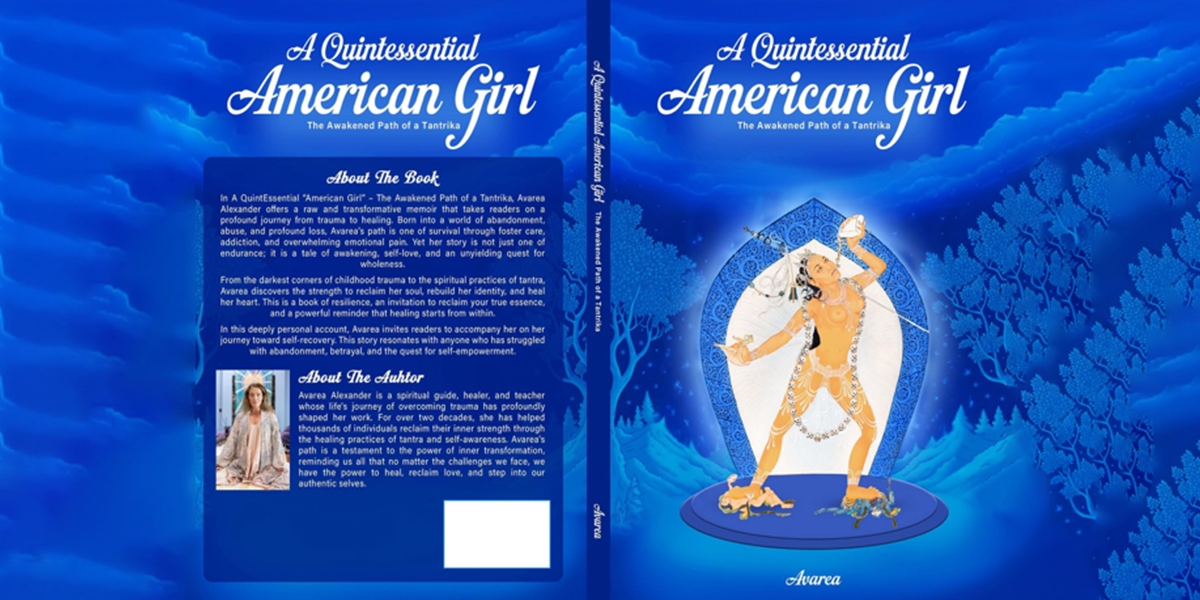
With the release of her memoir, A Quintessential “American Girl” – The Awakened Path of a Tantrika, spiritual guide Avarea Alexander has released a part of herself in the world. She writes with unflinching honesty about a life that began in abandonment and evolved into awakening. She writes of survival and pain. It is a book that does not hide from the truth but walks through it.

Avarea is a spiritual guide, a tantra practitioner, and a trauma-healing expert who has dedicated her life to helping others reclaim their inner strength. Through her nonprofit organization, Heartstar Ministry, and her center, Altar of Life, she leads others through purification, self-healing, and consciousness awakening. 

Her story is honest and personal. She grew up in foster care, surrounded by instability and emotional neglect. “Healing is not an abstract idea,” she writes. “It’s a daily choice to rise, to breathe, and to remember who we are.” 

These words summarize the message of her book: an invitation to rise above pain and rediscover power through love, spirituality, and truth.

Inside A Quintessential American Girl

A Quintessential American Girl is not merely a memoir. It is a mirror for anyone who has faced trauma and wondered if they could ever heal. The book takes readers through Avarea’s early years of suffering, addiction, and emotional collapse, followed by her spiritual rebirth through tantra and self-realization. Each page is both confession and revelation.

The book follows her path through three emotional phases:

  • Survival and Silence: Childhood trauma and the years spent moving from one foster home to another created emotional isolation. Avarea opens up about the confusion of being unseen and the hidden pain of survival.
  • Breaking and Reclaiming: Addiction, heartbreak, and spiritual emptiness became turning points. These chapters are written with clarity and focus on self-awareness.
  • Awakening and Service: Her eventual discovery of tantra and purification led her to reclaim her body, her faith, and her purpose. This is where the “tantrika” within her is born: a woman who learns to turn sacred energy into healing.

Her writing is clear, direct, and emotionally charged. She does not romanticize suffering. Instead, she uses it as a tool for understanding. Through detailed reflections and honest storytelling, Avarea shows how one can transmute pain into awakening.

The book also weaves in her experiences with spiritual cleansing, a process she later formalized through her Purification Pathway, a 28-day program offered through Heartstar Ministry. This connection between the memoir and her ministry gives readers something practical: a model for their own healing journey.

The Mission Behind the Memoir

Avarea’s mission is not limited to her identity as an exceptional author. Her book is a testimony and teaching, acting as a bridge between trauma recovery and spiritual evolution.

Through her ministry work, she guides others to:

  • Cleanse the body and spirit through ancient Essene practices of purification.
  • Heal emotional trauma with ritual, meditation, and breathwork.
  • Activate inner divinity through tantra and spiritual counseling.
  • Reclaim sovereignty as embodied souls, free from past conditioning.

Her philosophy is inspired by the Essene Gospel of Peace, which speaks of water as a divine element that purifies both the body and the soul. Avarea interprets this metaphor through modern wellness and spirituality. Her work, both in the book and through her retreats in Kaua’i, centers on one clear message: “You deserve to feel radiant, clear, and connected again.”

She describes herself as a “mid-wife to rebirthing souls,” a phrase that carries symbolic and spiritual weight. In A Quintessential American Girl, she lives that truth through storytelling. Every chapter feels like a rebirth, and every reflection offers guidance for readers walking through their own darkness.

Conclusion

“A Quintessential American Girl” is about perseverance. Through its pages, Avarea Alexander turns a story of pain into a map for awakening. Her life is living proof that trauma does not end a story.

Her ministry, her retreats, and her teachings continue the same message found in her book: that every soul can heal, every heart can return to peace, and every person can awaken their divine light.

In her voice and through her pages, readers find what it truly means to be a quintessential American girl: a survivor, a seeker, and a soul reborn.